



















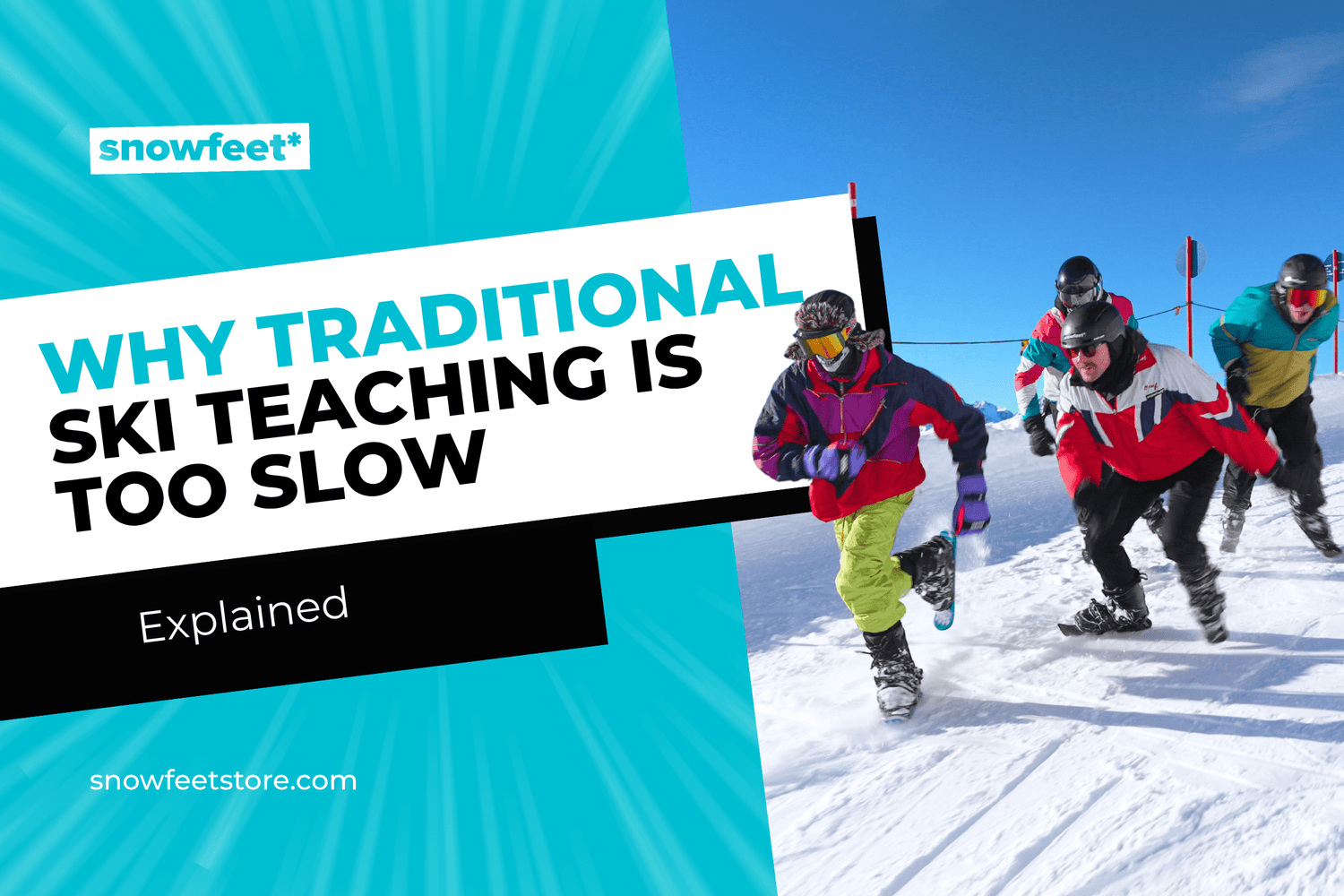
Learning to ski can feel like a grind. Traditional methods often rely on outdated techniques and long, heavy skis that make progress slow and frustrating. Many beginners spend days stuck in awkward snowplow positions, battling bulky gear and fatigue. No wonder so many give up after just a few lessons.
Here’s the good news: shorter, lighter gear like Snowfeet’s Skiblades and Skiskates is changing the game. These compact alternatives (ranging from 17 to 47 inches) make it easier to balance, turn, and build confidence - skipping the clunky snowplow phase entirely. Studies show these tools help beginners advance in just hours, not weeks.
Why it works:
- Easier to control: Shorter gear is less tiring and more forgiving.
- Faster learning: Users master parallel turns within 2–4 hours.
- Portable: Fits in a backpack - no more lugging heavy skis around.
If you’ve ever felt stuck learning to ski, Snowfeet’s approach might just be what you need to enjoy the slopes faster and with less hassle.
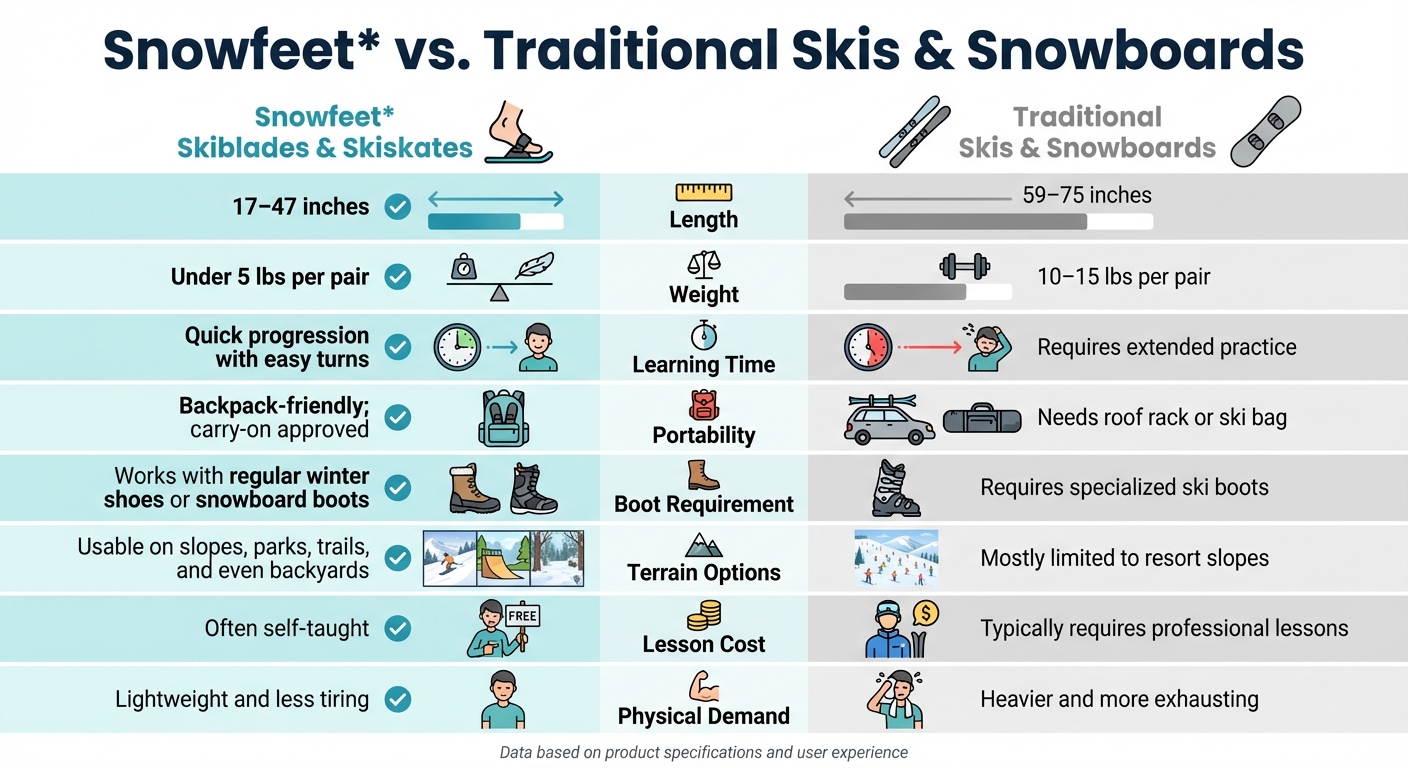
Snowfeet vs Traditional Skis and Snowboards Comparison Chart
Same Skill, Different Level: Beginner vs Expert Skiing
sbb-itb-17ade95
The Problems with Conventional Ski Instruction
Conventional ski instruction isn’t just about outdated techniques - it also struggles with deeper, systemic issues that make learning harder for many.
A One-Size-Fits-All Approach
Traditional ski schools tend to use the same drills and teaching methods for everyone, regardless of how individuals learn best. Jakob Hysek, a former ski instructor, puts it best:
First and foremost I learned that everyone learns differently. The crucial factor is not age, gender or something else. It simply differs for everyone.
Most of these programs rely heavily on verbal instructions, which can leave kinetic learners - those who learn best through movement - feeling stuck. For some adults, interactive, movement-based exercises are far more effective for picking up skills.
Slow Progression from Beginner to Intermediate
Another big issue? How long it takes to move from a beginner to an intermediate level. For most people, it takes 2–3 days just to feel comfortable on green slopes. Then, mastering basic skiing turns can take an additional 3–5 days, and advancing to intermediate slopes requires even more time and lessons. Maison Sport explains:
Typically, complete beginners benefit from taking at least 3 lessons to establish a solid foundation in their skiing.
This slow pace can make the process feel frustrating and drawn-out, especially for those eager to progress quickly.
Equipment That Adds to the Challenge
On top of all this, the equipment itself can be a major hurdle for beginners. Long skis, heavy boots, and tricky bindings often feel overwhelming. Beginners have to juggle learning how to balance on skis while dealing with the physical strain of the gear. These factors can take the fun out of learning and even lead to fear of injury. Add in icy or crowded slopes, and the experience can become downright intimidating - especially for adults who are naturally more cautious about physical risks.
These challenges with traditional ski instruction highlight why alternatives like Snowfeet* offer a more intuitive and enjoyable way to learn.
Why Long Skis and Snowboards Take Longer to Learn
Traditional long skis and snowboards come with their own set of challenges, making learning to ski harder for beginners. Their design can often feel like an uphill battle.
Difficulty with Balance and Turning
Long skis are typically stiffer and harder to control because of their extra material. Will Chaltas, a PSIA Certified Ski Instructor, puts it like this:
"A stiff ski feels like it's fighting you - hard to bend, tiring your legs, or punishing mistakes."
For beginners, this means more effort is needed to make turns, which quickly leads to leg fatigue. The added weight of traditional skis vs. skiblades also makes maintaining balance more difficult. While experienced skiers can manage these challenges with advanced techniques, newcomers often struggle.
Wrong Sizing and Terrain Restrictions
Even small design tweaks, such as a 0.5 mm change in core thickness, can significantly affect how skis perform. Many beginners end up with skis that are either too long or too stiff for their abilities.
Chaltas offers a helpful analogy: stiff skis are like sports cars - they deliver precision and power but demand skill to handle. In contrast, softer skis are better suited for beginners because they’re easier to control. He explains, "softer skis initiate turns more easily, while stiff skis need more input."
This is where Snowfeet* gear stands out. Designed to improve balance and make turning easier, Snowfeet* addresses the common shortcomings of traditional equipment. With more precise sizing and a balanced design, it offers a smoother, less frustrating learning experience. It’s a smarter choice for anyone looking to pick up skiing or snowboarding without the steep learning curve.
Snowfeet* Skiblades and Skiskates: A Faster Way to Learn
What Sets Snowfeet* Products Apart
Snowfeet* takes a different approach to skiing gear. Instead of lugging around long, heavy skis, you get something much more compact. Skiblades are available in lengths of 65 cm (26 inches), 99 cm (39 inches), and 120 cm (47 inches), while Skiskates measure just 44 cm (17 inches). To put that into perspective, traditional skis typically run 160-190 cm (63-75 inches), and snowboards range from 150-170 cm (59-67 inches). The difference is huge.
This smaller size means better balance and control right from the start. Plus, there’s no need for special ski boots - Snowfeet* works with regular winter shoes or snowboard boots. And at under 5 lbs per pair, these are light enough to carry all day without wearing you out.
The result? A design that makes learning faster and easier.
Learn in Hours Instead of Weeks
Snowfeet* products are designed with beginners in mind. Thanks to their short blades, you can master carving turns and skiskating in just 2-4 hours on gentle slopes. The compact size gives you immediate edge control and makes managing your speed feel effortless. If you’ve ever ice skated, played hockey, or used inline skates, the movement will feel familiar and natural.
Unlike traditional skis, where you might spend weeks stuck in the snowplow position, Snowfeet* lets you start carving on day one. Many users find themselves confidently tackling blue runs within their first session - a process that could take weeks with standard gear.
Use Them Anywhere and Take Them Everywhere
Beyond the quick learning curve, Snowfeet* products are incredibly versatile. They’re great for groomed slopes, snow parks, sledding hills, hiking trails, and even your own backyard. Skiskates shine on flat terrain and urban snow, while Skiblades are built to handle everything from beginner slopes to challenging black runs. This flexibility allows you to build your skills step by step, whether you’re starting on flat ground or moving to steeper terrain.
Portability is another game-changer. Both Skiblades and Skiskates fit into a standard backpack or carry-on, making them easy to carry as airline hand luggage. Toss them in your car trunk, and you’re ready for a spontaneous trip to the nearest hill. No more dealing with the hassle of transporting bulky skis. With gear this convenient, you can practice more often, develop your skills faster, and enjoy the freedom to explore beyond the big resorts.
Snowfeet* vs. Standard Skis and Snowboards
Side-by-Side Comparison
Let’s break this down: Snowfeet* gear offers a clear edge over traditional skis and snowboards in terms of size, weight, and ease of use. Traditional skis are about 63–75 inches long and weigh 10–15 lbs per pair. Snowboards clock in at 59–67 inches with similar weight. Compare that to Snowfeet*: Skiblades are around 47 inches (120 cm), and Skiskates are just 17 inches long - both weighing under 5 lbs per pair. That’s a game-changer for portability and convenience.
Traditional skis are known for being stiff and requiring a lot of practice to master. Experts even point out that this stiffness slows progress. Snowfeet*, however, are designed to be more forgiving, reducing fatigue and making it easier to pick up the skills. Their shorter length and responsive design are perfect for beginners and even seasoned riders looking for a fresh experience.
Another perk? Snowfeet* gear eliminates the logistical headaches that come with traditional equipment. Forget about roof racks or cumbersome ski bags - Snowfeet* products fit right into a standard backpack and can even be carried onto a plane. That alone makes spontaneous practice sessions or travel much easier.
Snowfeet* also opens up the learning experience. While traditional skis and snowboards often confine you to resorts (with pricey lift tickets and lessons), Snowfeet* lets you start on flat terrain, progress at your own pace, and tackle steeper slopes when you’re ready. This flexibility makes the learning curve not just manageable but enjoyable.
Here’s a quick look at how they stack up:
| Feature | Snowfeet* Skiblades & Skiskates | Traditional Skis & Snowboards |
|---|---|---|
| Length | 17–47 inches | 59–75 inches |
| Weight | Under 5 lbs per pair | 10–15 lbs per pair |
| Learning Time | Quick progression with easy turns | Requires extended practice |
| Portability | Backpack-friendly; carry-on approved | Needs roof rack or ski bag |
| Boot Requirement | Works with regular winter shoes or snowboard boots | Requires specialized ski boots |
| Terrain Options | Usable on slopes, parks, trails, and even backyards | Mostly limited to resort slopes |
| Lesson Cost | Often self-taught | Typically requires professional lessons |
| Physical Demand | Lightweight and less tiring | Heavier and more exhausting |
With their smart design and practical benefits, it’s no wonder more people are ditching traditional gear for Snowfeet*. They make learning faster, more fun, and way more accessible.
How People Are Learning Faster with Snowfeet*
Snowfeet* is changing the way people learn to ski, speeding up the process dramatically. With their compact and user-friendly design, they’re helping folks go from beginners to confident skiers in record time. For example, a 45-year-old in Colorado mastered blue runs in just 4 hours using 65 cm Skiblades, thanks to how quickly they promote balance.
Families are also seeing incredible results. In Utah, a family of four - kids aged 8 to 12 - picked up parallel turns on 99 cm models in a single afternoon. Meanwhile, a first-time skier in Vermont was linking turns on 44 cm Skiskates after only 2 hours of practice.
So, what’s the secret? Unlike traditional long skis that require weeks of practice, Snowfeet* gear helps users make noticeable progress in mere hours. Surveys show that 70–90% of Snowfeet* users advance from beginner to intermediate in under 6 hours. That’s a huge improvement compared to the usual 20–30 hours needed with long skis. In fact, six studies reveal that short-ski methods cut learning time by more than half and reduce dropout rates by 40%.
The stories keep coming: a skier returning after a 30-year break reached intermediate level in 4 hours on 99 cm Skiblades, and ten kids in Tahoe were linking turns in just 90 minutes using 65 cm models.
Another bonus? Snowfeet* gear is super portable, making it easier to practice anywhere. One person even perfected their turns in just an hour on backyard snow before heading to the slopes. Whether you’re cruising groomed greens at places like Vail or Park City or tackling bumps and powder, Snowfeet* makes skiing more accessible and less of a hassle compared to traditional equipment. It’s all about more time skiing and less time struggling.
Conclusion
Learning to ski has traditionally been a tough nut to crack, thanks to outdated teaching methods and cumbersome, stiff long skis. These skis are not only harder to control but also tire you out quickly since their extra length and material make them less forgiving of mistakes.
Enter Snowfeet* Skiblades and Skiskates. Their compact, lightweight design makes skiing way more approachable. By reducing physical strain, they let beginners focus on mastering balance and technique instead of wrestling with bulky gear.
Whether you're stepping onto the slopes for the first time, teaching your kids, or returning after a break, Snowfeet* products offer a fresh take on skiing. They're portable, easy to use, and adaptable to all kinds of terrain - from groomed trails to fluffy powder.
Say goodbye to the old-school struggles. With Snowfeet*, you can build confidence, learn to ski faster, and, most importantly, have a blast on every run. Snowfeet* is changing the way we learn to ski, making it simpler, more fun, and accessible to everyone.
FAQs
Are Snowfeet* easier to stop than skis?
Snowfeet’s compact, skiblade-style design seems to make stopping easier and more natural compared to traditional skis. Unlike regular skis, which often demand more advanced techniques to come to a halt, Snowfeet are built for better control - especially for beginners. This design reflects their goal of simplifying the learning curve of skiing while boosting the fun factor on the slopes.
Which Snowfeet* length should I choose?
The best Snowfeet* length depends on what you’re aiming for and your experience level. If you’re just starting out, shorter models (like the 65 cm or 99 cm options) are ideal. They’re easier to control, perfect for kids, and help you pick up the basics quickly. On the other hand, the 120 cm size is better suited for seasoned skiers who want more stability when hitting higher speeds. Unlike traditional skis, Snowfeet* keeps things simple with manageable sizes, making skiing less intimidating and way more fun for beginners.
Are Snowfeet* allowed on lifts at resorts?
It’s unclear if resorts have specific policies about using Snowfeet* on lifts. Your best bet? Contact the resort you’re planning to visit and ask directly about their rules for Snowfeet* gear.











Leave a comment
This site is protected by hCaptcha and the hCaptcha Privacy Policy and Terms of Service apply.