



















Short skis make learning to ski easier, faster, and more fun for beginners. Unlike long, bulky skis, short skis like Snowfeet* Skiblades and Skiskates are lightweight, easy to control, and portable enough to fit in a backpack. They eliminate common beginner struggles like crossing ski tips or needing a "pizza" stance, letting you jump straight into smooth turns. Plus, they’re less tiring, so you can stay on the slopes longer.
Here’s why short skis are a game-changer:
- Easy to Use: Quick, sharp turns and better balance make skiing feel natural.
- Faster Learning: Skip the awkward phases and master basic skills in hours.
- Portable: No roof racks needed - these fit in your bag or car trunk.
- Less Effort: Lightweight design reduces muscle strain, so you can ski longer.
Whether you’re starting out or looking to improve, short skis like Snowfeet* offer the control and convenience to make skiing more accessible and enjoyable. Ready to hit the slopes? Let’s dive into how they stack up against regular skis.
Benefits of Snowfeet* Short Skis vs. Traditional Skis
Easier Turning and Control
Traditional long skis can be a challenge for beginners, requiring wide, sweeping turns that often feel awkward and take a lot of effort. Snowfeet* short skis, ranging from 44 cm to 120 cm in length, make turning quick and sharp without the bulk of traditional equipment. Whether you're navigating narrow tree runs or tackling moguls, these compact skis let you change direction almost instantly - something that’s tough to do with standard skis measuring 5 to 6 feet (152 to 183 cm).
Their smaller surface area and well-balanced design help beginners stay steady, even on uneven snow. Many skiing experts note that the balance between length and stability in Snowfeet* short skis makes it easier for beginners to initiate turns with less effort. Unlike traditional skis, which demand precise weight shifts and strong leg muscles, Snowfeet* respond naturally to your movements, making them more intuitive for first-timers.
Compact Size and Easy Transport
Snowfeet* short skis don't just shine on the slopes - they're also a game-changer for convenience. Forget the hassle of roof racks or oversized vehicles to transport your gear. These skis fit easily into standard car trunks or even carry-on luggage, making them a breeze to bring along. Compare that to traditional skis, which, at 5 to 6 feet long, can feel like hauling around a small tree.
This compact size also saves you energy before you even hit the slopes. No more dragging heavy, awkward equipment across parking lots or through ski lodges. For those using public transportation or flying to ski destinations, Snowfeet* eliminate the stress of oversized luggage, making travel smoother and more enjoyable.
Shorter Time to Learn Basic Skills
Snowfeet* short skis also speed up the learning process for beginners. Thanks to their shorter length, you can master basic turns in hours rather than days. They eliminate the dreaded tip crossing, a common cause of beginner falls, and do away with the awkward "pizza" stance. The movements feel more natural - similar to walking or skating - which helps build confidence quickly.
What’s more, Snowfeet* are versatile. They handle groomed runs, powder, moguls, and even off-piste terrain, giving you the freedom to explore different types of slopes early in your journey. While traditional skis might offer a slight edge in stability at very high speeds, that’s not a concern when you’re just starting out. Snowfeet* provide a responsive, agile experience that makes you feel faster and more in control from the get-go.
Are Short Skis Better for Beginners?
Snowfeet* Models: Options for Different Skill Levels
Snowfeet* has something for everyone, whether you're just starting out or you're already carving up the slopes like a pro. Their lineup includes Skiskates (44 cm/17 in) and Skiblades in three sizes: 65 cm (26 in), 99 cm (39 in), and 120 cm (47 in). Each model is built with a specific purpose, so you can pick the one that fits your current skill level and skiing goals.
Compared to traditional skis, which can range from 150–183 cm, Snowfeet* models are much shorter, making them easier to control and helping you improve faster. Whether you need the portability of the 44 cm Skiskates or the stability of the 120 cm Skiblades for high-speed carving, there's an option that fits your style. Let’s break down what each model offers.
Snowfeet* Skiblades (65 cm, 99 cm, 120 cm)
Skiblades are designed to take you from beginner to advanced skiing with ease. Here's what each size brings to the table:
- 65 cm Skiblades: Perfect for beginners who want more surface area than Skiskates but still need something lightweight and easy to handle. These are great for building confidence on groomed trails or experimenting in snowparks.
- 99 cm Skiblades: A versatile choice for intermediate skiers. These are long enough to provide stability for carving and high-speed runs but short enough to avoid the tip-crossing struggles common with longer skis. Whether you're tackling groomed trails, moguls, or powder, this is the all-around option for skiers looking to improve their skills.
- 120 cm Skiblades: Made for advanced users, these deliver the power and performance of traditional skis without the bulk. They’re ideal for high-speed carving, aggressive turns, and even tricks. Unlike longer skis, these remain nimble in tight spaces while offering excellent edge grip for precise control.
Snowfeet* Skiskates (44 cm)
If you're looking for something ultra-compact, Skiskates are the way to go. At just 44 cm, they’re small enough to fit in a backpack, making them incredibly portable - something traditional skis can't compete with.
The short length also makes them easier to stop and turn, especially for beginners. They offer a skating-like experience on snow, so if you’ve tried inline or ice skating, the movements will feel familiar right away. No poles, no awkward “pizza” stance, and no worries about crossing your tips. Skiskates are perfect for anyone who wants to hit the slopes with minimal learning time.
Whether you go for the compact Skiskates or one of the Skiblade models, Snowfeet* makes skiing more accessible and fun, helping you progress quickly and confidently.
sbb-itb-17ade95
How to Teach Skiing Faster With Snowfeet* Short Skis
Snowfeet* short skis make it possible for beginners to nail down turning and stopping in just a few hours. The secret? Keeping it simple and letting the gear do the heavy lifting. Unlike traditional long skis, which require mastering techniques like the snowplow-to-parallel progression, short skis let learners dive right into natural, instinctive movements. Here’s how you can use practical drills to make this happen.
Basic Skills for Beginners
Start on flat terrain to help beginners get a feel for balance and movement. Have them walk and skate on the snow to sense the edges and find their center of gravity. With Snowfeet*, there’s no need for poles, so they can focus entirely on balance. The shoulder-width stance feels natural, like walking, making it easier than traditional skis.
Once they’re steady, introduce the hockey stop right away. Thanks to the short skis’ easy pivoting, beginners can quickly learn to flick both tails outward to stop. For turning, keep it simple: have them look where they want to go and shift their weight to the outside ski. The short ski radius takes care of the rest. Drills like J-turns (traversing the slope, then tipping one ski uphill to arc back) and garland runs (short traverses without linking turns) are perfect for Snowfeet* Skiblades. Their agility makes tight control easy, cutting learning time from days to just hours.
For absolute beginners, the 65 cm or 99 cm Skiblades are ideal. They’re lightweight, so students can practice longer without tiring out their legs. Plus, the short design virtually eliminates tip-crossing mistakes, making the learning process much smoother.
Moving to Advanced Techniques
Once the basics are solid, it’s time to step it up. Teach learners to edge their skis for carving. The short length makes carving effortless, even at slower speeds. As confidence grows, move to steeper slopes and introduce challenges like moguls and tree runs. The Snowfeet* 120 cm Skiblades shine here, offering quick direction changes and stability close to the snow, which gives them an edge over traditional long skis in tight, tricky terrain.
Progression with Snowfeet* is straightforward. Beginners can start on gentle green slopes with the 65 cm model, then transition to the 99 cm for linking turns, and finally, the 120 cm for carving on steeper terrain. The best part? They don’t need to switch to entirely new gear as they improve - just move up within the Snowfeet* lineup, building on the skills they’ve already mastered.
Snowfeet* vs. Traditional Skiing Equipment Comparison
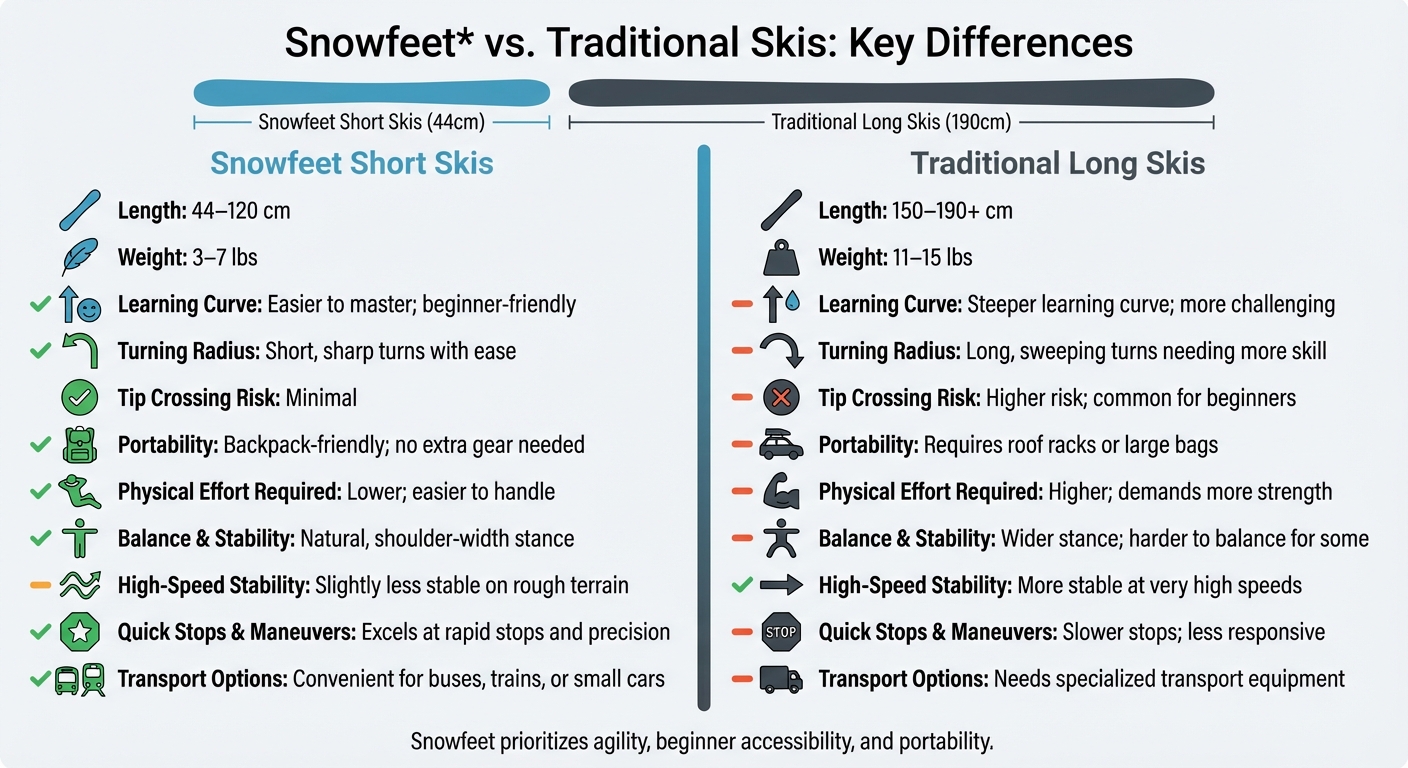
Snowfeet Short Skis vs Traditional Skis Comparison Chart
Snowfeet* short skis bring a fresh perspective to skiing, especially for beginners. Unlike traditional long skis, which typically measure 150–190+ cm and weigh around 11–15 lbs, Snowfeet* products are much smaller and lighter, ranging from 44 cm to 120 cm in length and weighing only 3–7 lbs. This makes them far easier to carry and transport, a huge plus for skiers on the go.
One standout feature of Snowfeet* short skis is their incredible control. Their design allows for quick, sharp movements, making them beginner-friendly and reducing the chances of those dreaded "crossing tips" that often lead to falls with traditional skis.
Portability is another area where Snowfeet* shines. Traditional skis often require roof racks, large ski bags, and plenty of trunk space. In contrast, Snowfeet* short skis fit neatly into a backpack, making them perfect for public transportation, compact cars, or even hikers heading to remote slopes.
Here's a breakdown of how the two compare:
Comparison Table
| Feature | Snowfeet* Short Skis | Traditional Long Skis |
|---|---|---|
| Length | 44–120 cm | 150–190+ cm |
| Weight | 3–7 lbs | 11–15 lbs |
| Learning Curve | Easier to master; beginner-friendly | Steeper learning curve; more challenging |
| Turning Radius | Short, sharp turns with ease | Long, sweeping turns needing more skill |
| Tip Crossing Risk | Minimal | Higher risk; common for beginners |
| Portability | Backpack-friendly; no extra gear needed | Requires roof racks or large bags |
| Physical Effort Required | Lower; easier to handle | Higher; demands more strength |
| Balance & Stability | Natural, shoulder-width stance | Wider stance; harder to balance for some |
| High-Speed Stability | Slightly less stable on rough terrain | More stable at very high speeds |
| Quick Stops & Maneuvers | Excels at rapid stops and precision | Slower stops; less responsive |
| Transport Options | Convenient for buses, trains, or small cars | Needs specialized transport equipment |
Snowfeet* short skis are designed for flexibility, ease of use, and a faster learning experience. While traditional skis may have an edge in stability at extreme speeds, Snowfeet* prioritizes agility, beginner accessibility, and portability - qualities that make them an excellent choice for most skiers.
Conclusion
Skiing doesn’t have to start with endless struggles and oversized, clunky gear. Snowfeet* short skis and skiskates make it easier for beginners to jump into the sport by eliminating many of the challenges traditional skis bring. With lengths ranging from just 44 cm to 120 cm, their compact and lightweight design makes them simple to control and easy to carry.
Unlike traditional skis that require awkward postures and plenty of strength, Snowfeet* allow newcomers to pick up basic turns in just a few hours. The shorter length provides a tighter turning radius, making movements feel natural and responsive right from the start. Plus, the reduced physical effort means you can focus on having fun while learning.
And let’s not forget the convenience. Snowfeet* fit into a backpack, so you can skip the hassle of roof racks or oversized bags. Whether you’re hopping on public transit, hiking to a hidden slope, or storing them in a small space, these little skis make it all so much easier.
FAQs
Do short skis work on icy or hard-packed snow?
Short skis, like Snowfeet* Skiblades, are great for icy or hard-packed snow. Their compact size gives you precise control and makes turning easier, which is a big plus when navigating slick surfaces.
Can I use Snowfeet* with regular ski boots?
No, Snowfeet skiblades are made to work exclusively with snowboard boots or similar types of footwear. Regular ski boots won’t fit their design.
What size Snowfeet* should a beginner choose?
Beginners should go for Snowfeet* sizes such as 44 cm (Skiskates) or 65 cm (short skis). These shorter options are much easier to handle, making them perfect for building confidence and picking up skills quickly. Their compact design makes learning smoother and way more fun compared to using traditional long skis or snowboards.











Leave a comment
This site is protected by hCaptcha and the hCaptcha Privacy Policy and Terms of Service apply.