



















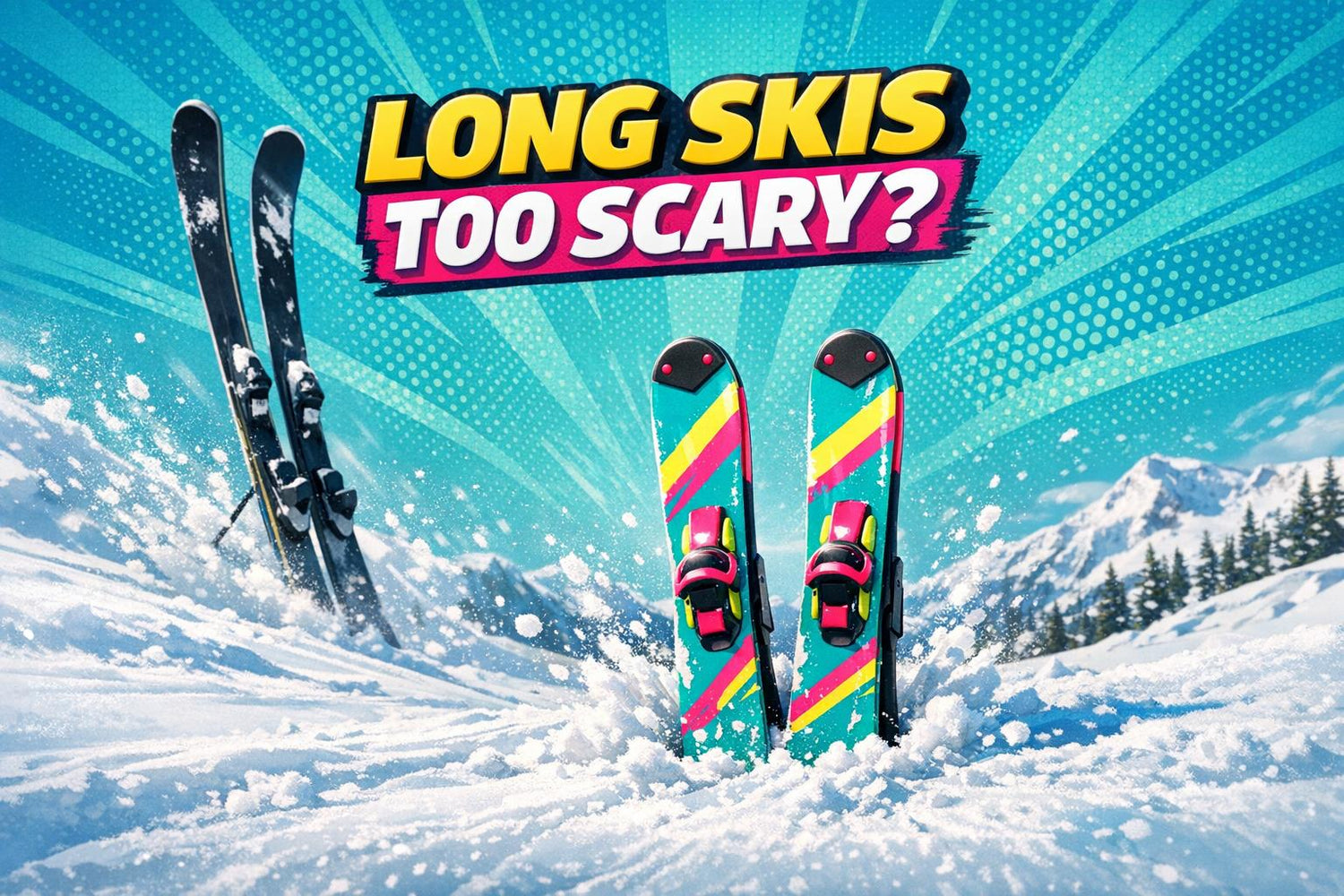
If you’re new to skiing, long skis can make the experience way harder than it needs to be. They’re tough to control, exhausting to use, and can even increase your chances of falling. The good news? Short skis are an easier, safer, and more fun option for beginners. Here’s why:
- Long skis demand strength and skill: Turning, stopping, and balancing are much harder on long skis, especially for beginners.
- Short skis are beginner-friendly: They’re lightweight, easy to control, and designed to help you learn faster. Many people improve within a day!
- Convenience matters: Short skis are portable enough to fit in a backpack - no bulky roof racks or heavy gear required.
Brands like Snowfeet offer short skis in sizes from 15 to 47 inches, perfect for learning and progressing quickly. Whether you’re trying Snowfeet Mini Ski Skates (38 cm, $250) or their Skiblades (up to 120 cm, $775), these skis make it easier to enjoy the slopes without the frustration of long skis. Ready to make skiing fun from the start? Snowfeet has you covered!
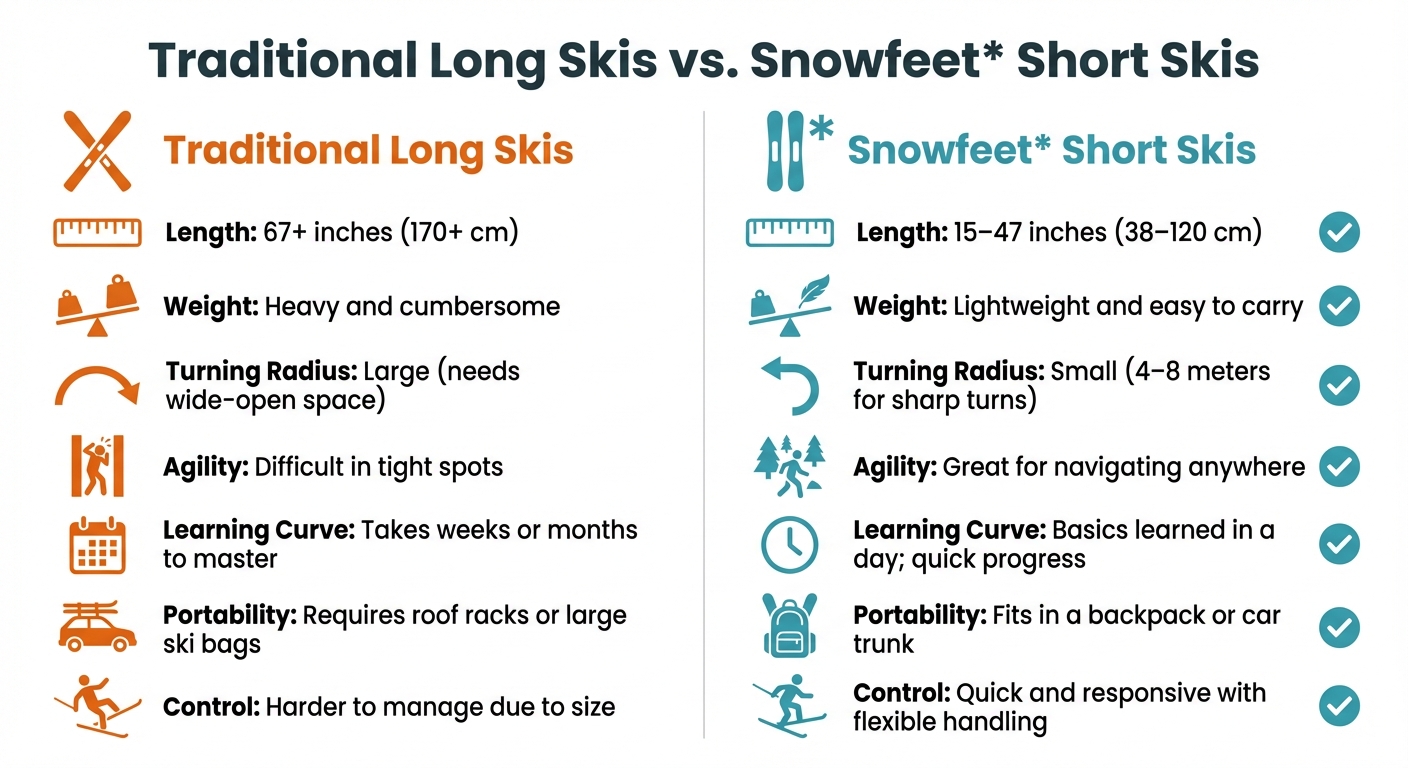
Traditional Long Skis vs Snowfeet Short Skis Comparison Chart
Problems with Long Skis for Beginners
Difficulty with Turning, Stopping, and Balance
Long skis can feel like a handful when you're starting out. Their extra length requires more technical skill and physical effort to maneuver - two things beginners are still working on. Even simple tasks like pivoting or executing a hockey stop become tricky because of their weight and size.
Certain types of skis make this even harder. Take race skis, for instance. They're built to be stiff and highly responsive, which might sound great, but it’s a nightmare for someone just learning the ropes. As the Snowfeet Team puts it:
"racing skis are suitable only for Olympic racers!"
While long skis do provide some stability front-to-back, experts warn that skis shorter than 35 inches (90 cm) can actually throw off your balance - especially if you don’t have experience with skating or hockey. These challenges only grow as the terrain or conditions become more complex.
Hard to Navigate Different Terrain and Crowded Areas
Long skis can be a real pain when it comes to navigating varied terrain. On moguls or tight trails, where quick, precise movements are key, their bulk can leave you stuck in frustrating situations. Verified user Sophia Kane shares her experience:
"I hate getting stuck on a hill in skis because they're so long and bulky. Since these are shorter, you can just skate right up".
In crowded areas, things don’t get much better. The slower response time of long skis makes it harder to adjust quickly, which means dodging other skiers or obstacles becomes a constant struggle.
Higher Risk of Falls and Injuries
Long skis aren’t just harder to control - they can also increase your risk of injuries. Their added length acts like a lever, putting extra strain on your knees and hips during turns. They’re also less forgiving, making it easier to catch an edge - a common cause of falls for beginners. The Snowfeet Team highlights this:
"Shorter skis are more forgiving, meaning you're less likely to catch an edge or lose balance".
This lack of forgiveness can quickly throw off your balance, creating a cycle of instability. And while long skis are stable at higher speeds, they’re tough to slow down or stop, leaving beginners vulnerable to out-of-control situations they’re simply not ready to handle.
Are Short Skis Better for Beginners?
Why Snowfeet* Short Skis Work Better for Beginners
Snowfeet* has reimagined ski design to tackle the common challenges beginners face with long skis - like difficulty in control and quick fatigue. These short skis are designed to respond instantly to your movements, making turns, stops, and navigation much easier. With a forgiving shape, including a wider center and tapered ends, they reduce the chances of catching an edge and require less effort overall. This means you can ski longer and with more confidence. Let’s take a closer look at the Snowfeet* lineup, which caters to every stage of your learning journey.
Snowfeet* Mini Ski Skates (38 cm): Perfect for First-Timers
If you’re completely new to snow sports, the Mini Ski Skates are a fantastic starting point. At just 15 inches (38 cm) and starting at $250, these are lightweight, easy to carry, and can be used with regular winter shoes - no clunky ski boots required. With a 4.9/5 rating, beginners often rave about how quickly they gain confidence using these on groomed slopes. They’re simple, approachable, and perfect for dipping your toes into skiing.
Snowfeet* PRO (50 cm) and Skiskates (44 cm): For Faster Progress
Ready to step it up? The Snowfeet* PRO (50 cm, $275) and Skiskates (44 cm, from $575) are designed to help you improve while staying beginner-friendly. The PRO model, just under 20 inches, features a fiberglass core and adjustable bindings to improve balance and control as you advance. Meanwhile, the Skiskates, at around 17 inches, are built with a durable wood core for better edge control and a smooth, skating-like feel. Both options are quick to respond, making it easier to dodge obstacles and refine your technique.
Snowfeet* Skiblades (65 cm, 99 cm, 120 cm): For Growing Skills
For skiers ready to move beyond the basics, the Skiblades series offers three lengths to match your progress. The 65 cm model (starting at $635) is agile and playful, perfect for freestyle and terrain parks. The 99 cm version (from $675) is great for carving while still being compact. Finally, the 120 cm model ($775) delivers a more traditional skiing experience while maintaining the maneuverability of shorter skis. All Skiblades come with wood cores, professional bindings, and turning radii between 4 and 8 meters, allowing for smooth, controlled directional changes. Unlike traditional long skis, these provide unmatched control without the bulk, helping many skiers transition from beginner to intermediate in just a day.
sbb-itb-17ade95
Snowfeet* Short Skis vs. Traditional Long Skis
Side-by-Side Comparison: Agility, Control, and Portability
If you're new to skiing, you'll notice a big difference between traditional long skis and Snowfeet* short skis. Traditional skis from well-known brands like Rossignol, Salomon, and K2 usually measure over 67 inches (170+ cm) in length. On the other hand, Snowfeet* short skis come in sizes ranging from 15 inches (38 cm) to 47 inches (120 cm). That size difference isn’t just about looks - it changes the entire skiing experience.
| Feature | Traditional Long Skis | Snowfeet* Short Skis |
|---|---|---|
| Length | 67+ inches (170+ cm) | 15–47 inches (38–120 cm) |
| Weight | Heavy and cumbersome | Lightweight and easy to carry |
| Turning Radius | Large (needs wide-open space) | Small (4–8 meters for sharp turns) |
| Agility | Difficult in tight spots | Great for navigating anywhere |
| Learning Curve | Takes weeks or months to master | Basics learned in a day; quick progress |
| Portability | Requires roof racks or large ski bags | Fits in a backpack or car trunk |
| Control | Harder to manage due to size | Quick and responsive with flexible handling |
Traditional long skis require wide, sweeping turns, which can feel awkward on crowded slopes or when weaving around other skiers. In contrast, Snowfeet* short skis are built for convenience - they’re compact enough to fit in a backpack, while traditional skis need bulky roof racks or large bags for transport.
But what about stability? Let’s tackle a common misconception.
Why Long Skis Aren't Actually More Stable
A lot of people think longer skis are more stable, but that’s not entirely true. While race skis might grip better at high speeds (think Olympic downhill runs), this kind of stability isn’t something most recreational skiers need - especially beginners. In fact, the added length can make controlling the skis harder, not easier.
Snowfeet* short skis offer a smart balance of stability and agility. Their lightweight design helps keep your weight centered, and the shorter length makes them more responsive. You won’t have to wrestle with long, stiff skis to make a turn. As the Snowfeet team explains:
"Short skis are the right first step to take on your way to the slopes. They are light, easier to control than longer skis."
Traditional ski brands often recommend skis that are 4–6 inches (10–15 cm) shorter than your height. Even beginner models still measure around 59–63 inches (150–160 cm), which is far longer than Snowfeet* options. By ditching this outdated advice, Snowfeet* short skis focus on making skiing fun and easy to learn. They’re designed for recreational use, prioritizing control and enjoyment over speed. No clunky, heavy equipment - just a smooth ride that lets you focus on having a good time.
Conclusion
Long skis can be a real hurdle for beginners, often making the learning process more frustrating than fun. Big-name brands like Rossignol, Salomon, and K2 still stick to those old-school sizing guidelines that favor height over practicality, leaving many newcomers struggling with skis over 67 inches (170+ cm) long.
That’s where Snowfeet* short skis come in. These skis tackle the problem directly, offering a smoother learning curve, easy handling, and unbeatable portability. With lengths ranging from 15 inches (38 cm) to 47 inches (120 cm), they focus on what truly counts - helping beginners go from zero to confident in just a day. As the Snowfeet team explains:
"Short skis are an excellent option for beginners because they are easy to control and maneuver, making it easier to learn the basics of skiing." – Snowfeet Team
Whether you opt for the ultra-portable Snowfeet* Mini Ski Skates (38 cm) starting at $250, the all-around Snowfeet* PRO (50 cm) for $275, or the advanced Skiblades (99 cm) priced at $675, you’re investing in gear that’s easy to carry, quick to respond, and designed to make skiing fun from the start.
Ready to hit the slopes without the hassle? Check out the full range at snowfeetstore.com and find the perfect short skis for your skill level today.
FAQs
Why are shorter skis a better choice for beginners?
Shorter skis are a great choice for beginners. Why? They’re lighter, easier to handle, and make turning, balancing, and stopping way less stressful. Plus, their smaller size feels less intimidating, helping new skiers gain confidence and pick up the basics faster than they would with longer skis.
Snowfeet offers some fantastic shorter options, like skiblades, skiskates, and mini skis. These are specifically made with beginners in mind. They’re super easy to maneuver, light to carry, and provide a smoother learning experience. If you're just starting out in winter sports, these could be the perfect alternative to traditional long skis.
Why are Snowfeet short skis better for beginners than traditional long skis?
Snowfeet short skis are a great choice for beginners. Why? They’re easier to control and handle than traditional long skis. Their smaller size takes away a lot of the stress, making it less intimidating to pick up the basics and start gaining confidence on the slopes.
Another big plus is their lightweight, portable design. Traditional skis can feel bulky and a bit overwhelming for newcomers, but Snowfeet keeps things simple and fun. They let beginners focus on enjoying the ride while learning the essentials of skiing - without the steep learning curve that comes with longer skis.
Can Snowfeet short skis handle different types of terrain?
Snowfeet short skis are built to handle just about anything you throw at them. From carving down groomed slopes to weaving through tree-lined trails, hitting the park, or even cruising through urban spots, these skis bring solid grip and smooth maneuverability. They’re ready for everything - whether it’s hard-packed snow or bumpy, uneven terrain.
Thanks to their compact size and lightweight build, they’re super easy to use. This means you’ll feel more in control and confident, whether you’re trying something new or just having fun. If you’re after a playful, beginner-friendly alternative to traditional skis or snowboards, Snowfeet short skis are a great pick.












Leave a comment
This site is protected by hCaptcha and the hCaptcha Privacy Policy and Terms of Service apply.