



















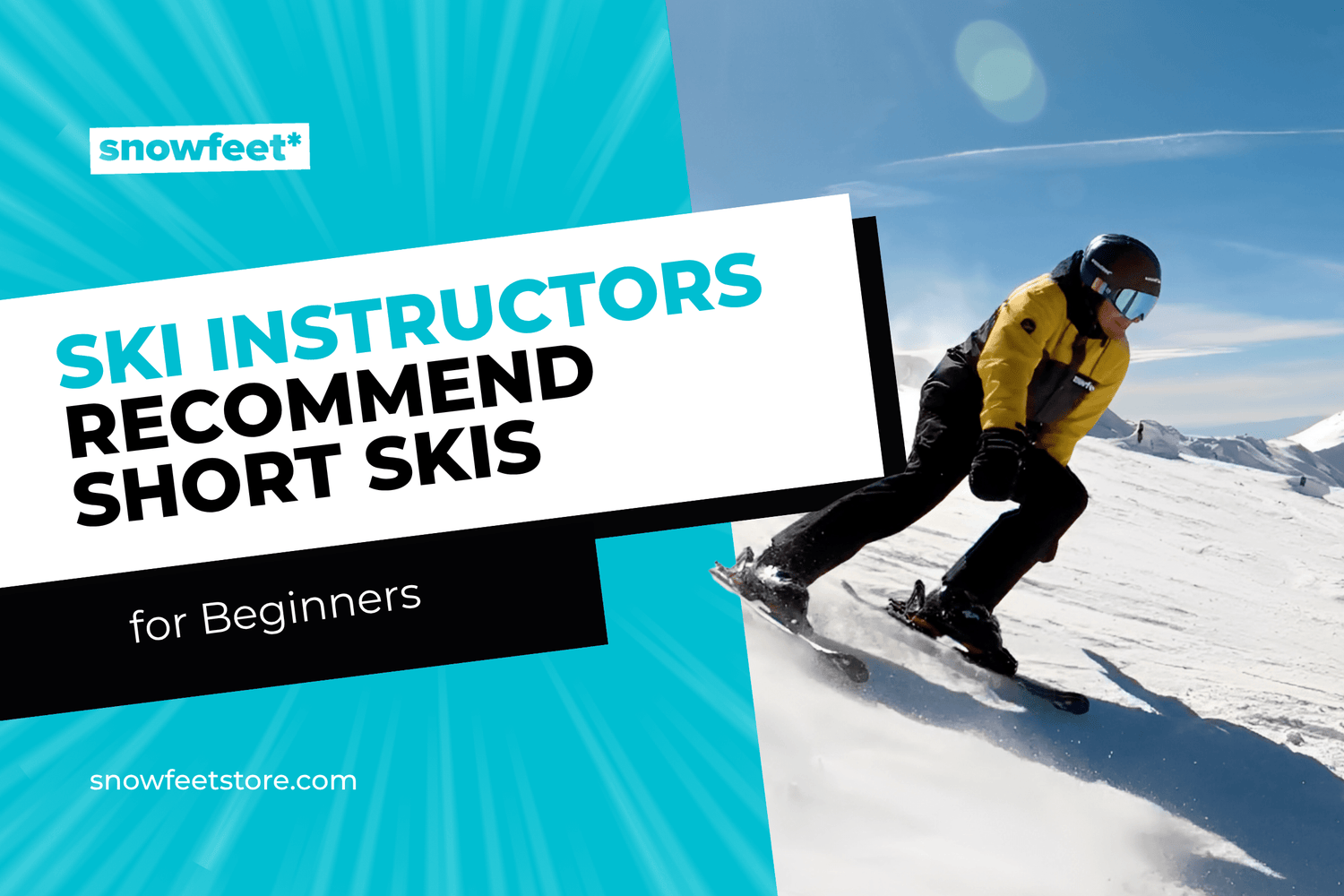
Short skis are the go-to choice for beginners, and there’s a good reason for it. They’re lighter, easier to control, and much less intimidating than long skis. If you’re just starting out, here’s what you need to know:
- Control: Short skis respond quickly to your movements, making it easier to turn and balance. This helps you build confidence faster.
- Safety: Fewer falls! Short skis are more forgiving, reducing the chance of catching an edge and taking a tumble.
- Less Effort: They’re lightweight, so you won’t get tired as quickly, allowing you to practice longer.
- Convenience: Compact sizes mean they’re easy to carry, store, and transport - no need for roof racks or oversized bags.
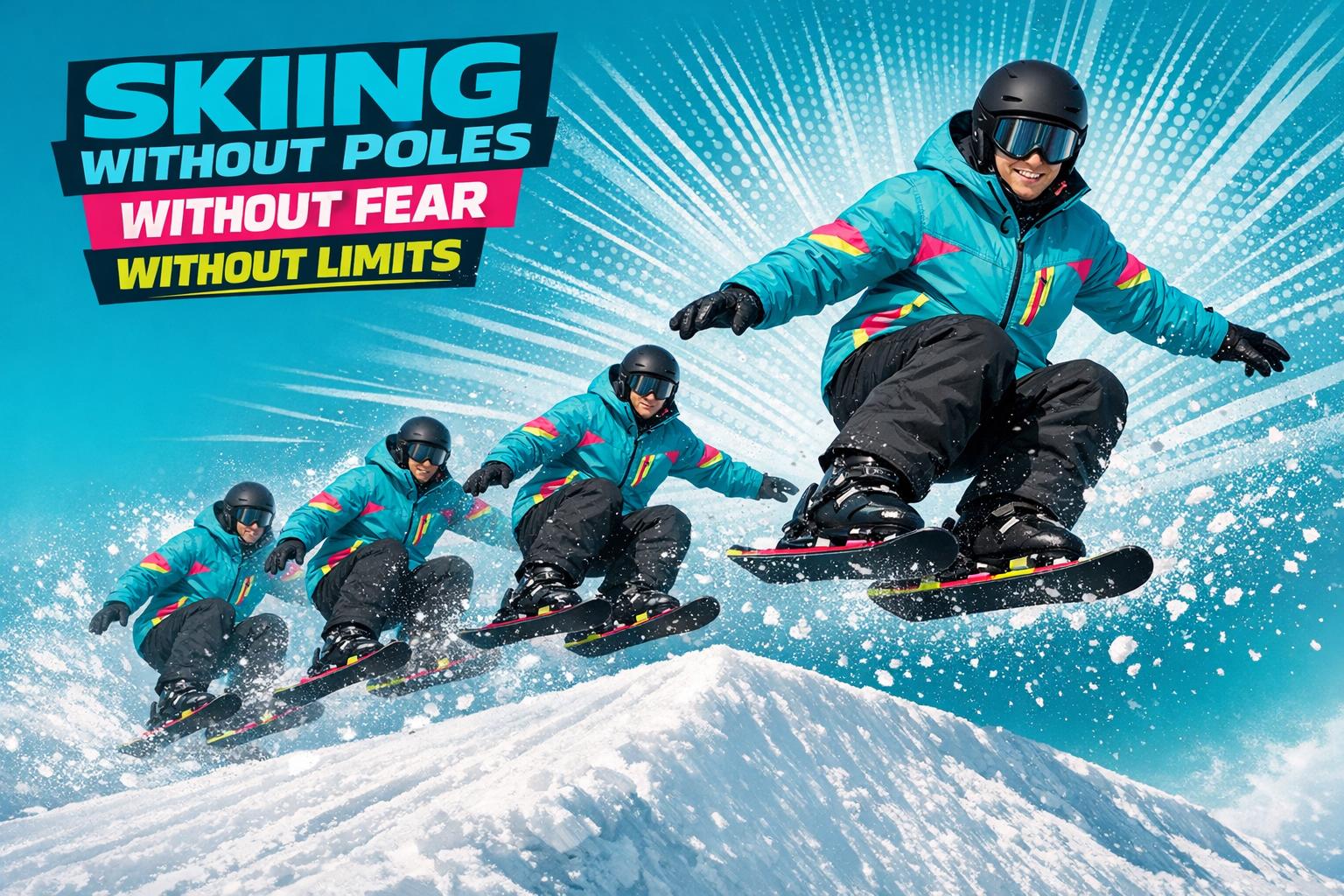
Products like Snowfeet Skiblades (26–47 inches) and Snowfeet Skiskates (just 17 inches) are designed with beginners in mind. Their user-friendly design makes skiing less frustrating and more fun from day one. Whether you’re learning to turn or tackling your first slope, short skis help you focus on the basics without the hassle of bulky gear.
Want to skip the struggle? Short skis might just be your best friend on the slopes. :)
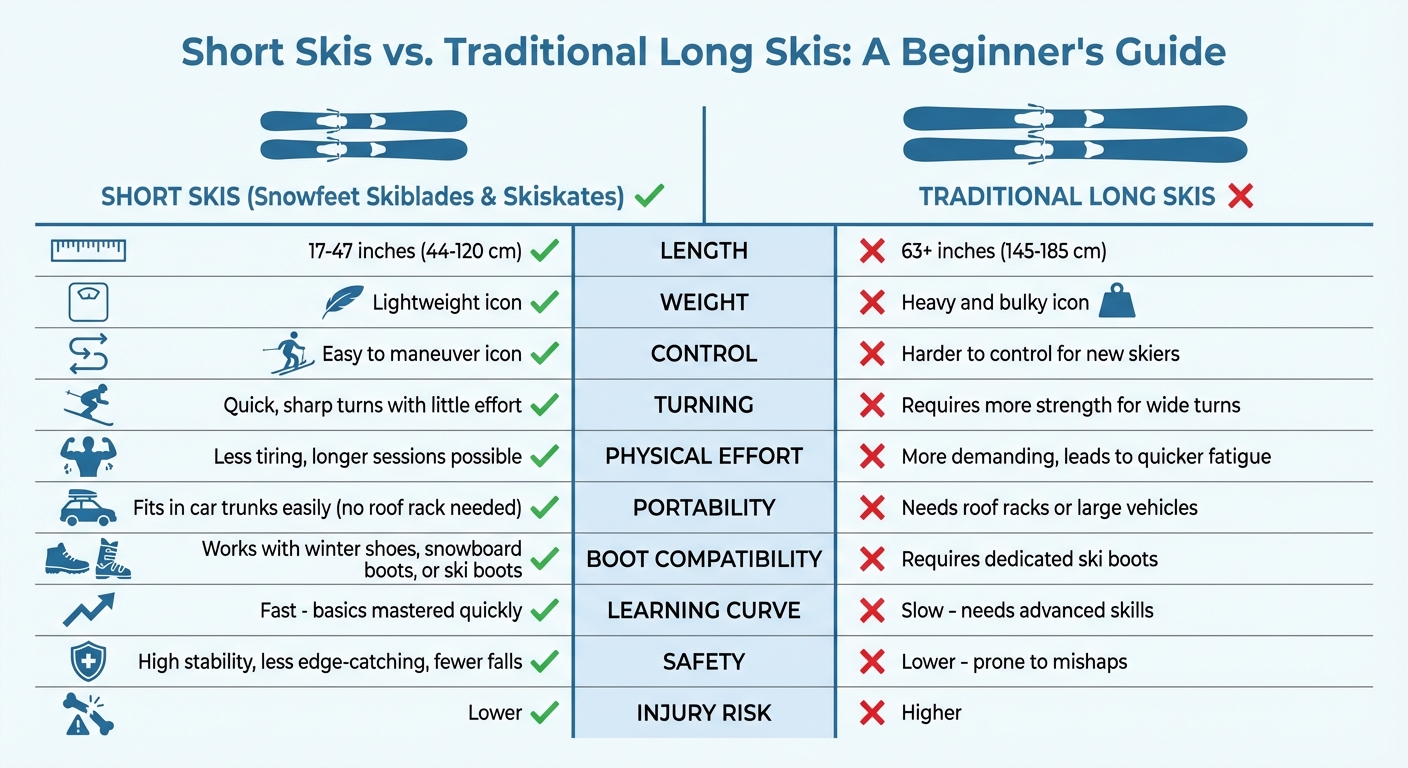
Short Skis vs Long Skis Comparison for Beginners
Problems with Traditional Long Skis for Beginners
Hard to Control and Turn
For beginners, traditional long skis can feel like a major hurdle. These skis, typically ranging from 55 to 73 inches in length, come with a large surface area that demands precise technique and balance - skills most new skiers are still working on. Turning can be especially tricky, as it involves maneuvering the entire length of the ski. This delay in responsiveness can make it harder to avoid obstacles, leading to muscle fatigue and making balance a constant struggle.
Another issue? Long skis are less forgiving when you make mistakes. Their stiffness increases the chances of catching an edge - when a ski suddenly digs into the snow and throws you off balance. This can lead to more frequent falls, making the learning process even more challenging.
More Falls and Frustration
The difficulty of controlling long skis often leads to more tumbles, leaving beginners frustrated and worn out. This is especially true on steeper slopes, where quick, precise movements are key for staying safe and controlling your speed. With long skis, even a small mistake can result in a fall, as correcting errors takes a lot more effort compared to shorter alternatives. All this extra work can tire you out faster, cutting your practice time short and stalling your progress.
Difficult to Transport and Store
Long skis, typically measuring 145–185 cm (around 5 to 6 feet), can be a hassle to transport and store. Fitting them into a standard car often requires folding down seats or using roof racks (like those from Thule). And don’t forget about the need for ski bags to keep them secure while traveling.
Storage at home isn’t much easier. Most closets aren’t built to accommodate such long equipment, leaving skiers - especially those in apartments or homes without garages - scrambling to find creative storage solutions. On the flip side, Snowfeet* products offer a much more compact and convenient alternative. For example, Snowfeet* Skiblades come in a 99 cm (39-inch) option, and Snowfeet* Skiskates are just 44 cm (17 inches) long. These smaller sizes fit easily into car trunks, closets, or even as carry-on luggage, eliminating the need for special racks or bulky storage setups.
Are Short Skis Better for Beginners?
Why Ski Instructors Prefer Short Skis for Beginners
Short skis have become a favorite among ski instructors for teaching beginners, offering a practical solution to the challenges posed by traditional long skis.
Easier to Control and Learn
Ski instructors often recommend short skis because they make learning the basics much simpler. Take Snowfeet* Skiblades, for instance. These range from about 26 to 47 inches and are perfect for helping beginners focus on technique without being overwhelmed by bulky equipment.
Short skis respond quickly to shifts in weight and body movement, which is key for building turning skills. Snowfeet* Skiskates, which are only about 17 inches long, allow first-timers to make sharp, controlled turns - something that’s tough to achieve with longer skis. Plus, their lighter weight means less physical strain, so beginners can practice longer and improve faster. This combination of ease and efficiency makes Snowfeet* designs a standout choice for anyone new to skiing.
Safer and More Forgiving
Better control means a safer experience, and short skis are designed to be forgiving. Their shape - often with a wider center and tapered ends - helps reduce the chance of catching an edge, which is a common reason beginners fall. And when mistakes happen, the shorter length makes it easier to regain balance without the added momentum that comes with longer skis.
Snowfeet* products are a great example of this. The 99 cm Skiblades strike a balance between stability and maneuverability, helping beginners avoid frequent or severe falls. This forgiving nature not only minimizes risks but also boosts confidence, encouraging beginners to push their limits without fear.
More Fun and Versatile on Different Terrain
Short skis aren’t just easier to use - they’re also more versatile. Their compact, lightweight design works well on a variety of terrains, from groomed runs to moguls, powder, and even tree-lined trails. Snowfeet* Skiblades handle these conditions with ease, making them a great option for beginners who want to explore beyond the basics.
What’s more, short skis add an element of playfulness to the experience. Snowfeet* Skiskates, for example, are perfect for tight spaces and crowded slopes where traditional long skis can feel clunky. This versatility means beginners can move past the bunny slopes faster, tackling more interesting terrain and keeping their skiing sessions exciting and rewarding.
Snowfeet* Skiblades: Better Performance for Beginners
Snowfeet* Skiblades come in three sizes - 26 inches (65 cm), 39 inches (99 cm), and 47 inches (120 cm). Their compact design makes learning to ski much easier compared to traditional long skis. These shorter lengths give beginners better control, reduce physical effort, and make quick turns a breeze.
Light and Easy to Carry
Forget the hassle of lugging around massive skis. Snowfeet* Skiblades are lightweight and compact, small enough to fit in your car trunk or carry over your shoulder. No need for roof racks or oversized vehicles. This makes them perfect for families or anyone who wants to spend more time skiing and less time dealing with gear.
Compatible with Different Boots
One of the standout features of Snowfeet* Skiblades is their versatility with footwear. Unlike traditional skis that require stiff, specialized ski boots, these skiblades work with winter shoes, snowboard boots, or even ski boots. This flexibility helps beginners save money by using the gear they already own, making skiing more approachable.
Snowfeet* Skiblades vs. Long Skis: A Quick Comparison
| Factor | Snowfeet* Skiblades (26–47 inches) | Traditional Long Skis (63+ inches) |
|---|---|---|
| Weight | Lightweight and easy to carry | Heavy and bulky |
| Portability | Fits in car trunks easily | Needs roof racks or large vehicles |
| Ease of Turning | Quick, sharp turns with little effort | Requires more strength for wide turns |
| Control | Easy to maneuver, great for beginners | Harder to control for new skiers |
| Boot Compatibility | Works with winter shoes, snowboard boots, or ski boots | Requires dedicated ski boots |
| Physical Effort | Less tiring, longer sessions possible | More demanding, leads to quicker fatigue |
Traditional long skis can be overwhelming for beginners. They’re heavier, harder to control, and require more energy, which can cut a ski day short. Snowfeet* Skiblades, on the other hand, make the experience smoother and more enjoyable for first-timers. Up next, we’ll dive into how Snowfeet* Skiskates take simplicity to the next level for beginners.
sbb-itb-17ade95
Snowfeet* Skiskates: The Simplest Option for First-Timers
Snowfeet* Skiskates, measuring just 17 inches (44 cm), are a fantastic choice for anyone new to skiing. They’re designed to eliminate the intimidation factor of traditional skis by offering a natural walking motion instead of requiring you to master complicated techniques. These compact skiskates make it easy to get started and enjoy the slopes from day one. Let’s dive into why they’re a game-changer for beginners.
Small and Easy to Pack
One of the best things about Skiskates is how portable they are. At just 44 cm long, they fit neatly into a standard backpack. That means no need for roof racks, oversized bags, or lugging heavy equipment through the parking lot. Whether you’re planning a quick trip to the slopes or just don’t have much cargo space, these skiskates are a hassle-free option. You can even stroll into the lodge, grab a coffee, and head to the lift without the usual gear struggles - something that’s nearly impossible with traditional skis or snowboards.
Great for Tight Spaces and Busy Slopes
Skiskates shine on crowded slopes. Their small size gives you excellent control, allowing for quick turns and smooth stops. Plus, being closer to the snow helps you feel more balanced and grounded. This makes them a safer choice for busy bunny hills or tight spaces where maneuverability is key. Their compact design isn’t just convenient - it’s practical for navigating crowded areas with confidence.
Comparison: Snowfeet* Skiskates vs. Snowboards
Here’s a quick breakdown of how Snowfeet* Skiskates stack up against traditional snowboards:
| Factor | Snowfeet* Skiskates (17 inches) | Traditional Snowboards |
|---|---|---|
| Portability | Fits in a standard backpack | Bulky; needs specialized carriers or roof racks |
| Ease of Learning | Easy - uses natural walking/skating motion | Difficult - requires mastering balance and edge control |
| Maneuverability | Excellent in crowded or tight spaces | Needs more room for turning |
| Equipment Needs | Works with regular winter or snowboard boots | Requires specific snowboard boots and bindings |
| Mobility Off-Snow | Walk normally to lifts and lodges | Must remove the board or shuffle awkwardly |
| Beginner-Friendliness | Very high - easy to control and balance | Moderate - takes time to get comfortable |
Learning to snowboard often means a lot of falling while you figure out how to balance sideways and control the edges. With Skiskates, you stand naturally, face forward, and can start gliding right away. For beginners, that means less time on the ground and more time enjoying the slopes.
Learning and Safety Benefits of Snowfeet* Short Skis
Snowfeet* short skis are game-changers for beginners. Thanks to their improved control and user-friendly design, they make learning faster and safer. It's no wonder ski instructors are increasingly recommending them for first-timers who want to build confidence without the frustration that often comes with traditional skis.
Learn Skills Faster
Snowfeet* short skis, ranging from 17 to 47 inches, are compact and easy to handle. Their smaller surface area makes turning feel more natural and helps you focus on key skills like speed control and balance.
Since these skis require less physical effort to maneuver, you can practice longer without getting tired. Fatigue often leads to sloppy form and slower progress, but with Snowfeet*, you stay in control and make the most of your time on the slopes. This means you’ll be ready for steeper, more challenging terrain much sooner than you would with traditional skis.
Lower Injury Risk
Safety is just as important as learning quickly, and Snowfeet* short skis deliver here too. Their wider center and tapered ends create a stable base, significantly reducing the chance of catching an edge - a common cause of falls.
"They are wider in the center and tapered at both ends, which makes them more stable and less likely to catch an edge. This can be a huge confidence booster for beginners." – Snowfeet Team
This forgiving design helps beginners stay upright more often, cutting down on falls and the risk of injuries. For those just starting out, fewer spills mean more confidence and more fun.
Comparison: Snowfeet* Short Skis vs. Traditional Long Skis
| Feature | Snowfeet* Short Skis (approx. 17–47 inches / 44–120 cm) | Traditional Long Skis |
|---|---|---|
| Maneuverability | High - swift, precise turns | Low - requires wide arcs |
| Learning Curve | Fast - basics mastered quickly | Slow - needs advanced skills |
| Safety & Forgiveness | High - stable, less edge-catching | Lower - prone to mishaps |
| Physical Effort | Low - less tiring | High - more demanding |
| Speed Control | Easy - responsive handling | Difficult - needs technique |
| Injury Risk | Lower - fewer falls | Higher - more loss of control |
In short, Snowfeet* short skis let you focus on having fun and building skills without constantly picking yourself up off the snow. For beginners, that’s a win-win situation.
Conclusion
If you're new to skiing, Snowfeet* short skis might just be your best bet. They’re designed for better control, quicker learning, and a safer experience on the slopes. From your very first day, you’ll feel more confident and ready to carve those turns.
Snowfeet* Skiblades, available in sizes ranging from 26 to 47 inches, and the compact 17-inch Snowfeet* Skiskates are ideal for beginners. Their lightweight and responsive design make them easier to handle than traditional skis. Whether you're gliding down Colorado's groomed runs or weaving through crowded slopes, these skis help reduce falls and keep the fun going.
The lightweight and stable build also means less fatigue and a lower risk of injury, so you can spend more time practicing and less time recovering. Snowfeet* makes skiing approachable and enjoyable right from the start.
If you’re ready to ditch the frustration and start having fun, check out the full range of Snowfeet* products at snowfeetstore.com. Prices start at $207 for the 50 cm Ski Skates (rated 4.9/5) and go up to $590 for the premium 99 cm Skiblades (rated 5.0/5). There’s something for every skill level and budget. Get started on your skiing adventure with confidence!
FAQs
What Snowfeet* size should I start with?
For those just starting out, Snowfeet short skis, measuring about 120 cm, are an excellent pick. They’re simple to handle, boost your confidence fast, and make it easier to master the basics. If you’re looking for something even smaller and more agile, consider Snowfeet Skiblades or Skiskates - both are compact options that offer great maneuverability.
Can I use Snowfeet* with my current boots?
Yes, Snowfeet skiblades and skiskates work with most standard ski boots. This makes them a great choice for beginners since you don’t need to invest in special boots to start enjoying Snowfeet products.
Are short skis stable enough on steeper runs?
Short skis are great for stability on steeper slopes, especially at moderate speeds. Thanks to modern designs - like Snowfeet Skiblades - they offer solid grip, balance, and control. This makes them a dependable option, even when tackling more challenging terrain.











Leave a comment
This site is protected by hCaptcha and the hCaptcha Privacy Policy and Terms of Service apply.