




















Skiing can feel like a hassle. Long skis are heavy, tough to control, and frustrating for beginners. They take a toll on your legs, make sharp turns tricky, and require expensive lessons to master. No wonder so many people give up.
But there’s a simple solution: short skis. These compact skis (as short as 38 cm) are lightweight, easy to handle, and quick to learn - most people get the hang of them in minutes. Plus, they’re portable enough to fit in a backpack and work with regular winter shoes or snowboard boots.
Why Short Skis Make Sense:
- Easy to Learn: Feels natural, like skating, with no steep learning curve.
- More Control: Perfect for tight turns and mixed terrains.
- Lightweight & Portable: No more lugging around bulky gear.
- Affordable: Starting at $190, they’re cheaper than most long skis.
If skiing has ever felt like too much work, short skis might just bring the fun back. They’re simple, versatile, and designed to make hitting the slopes easier for everyone.
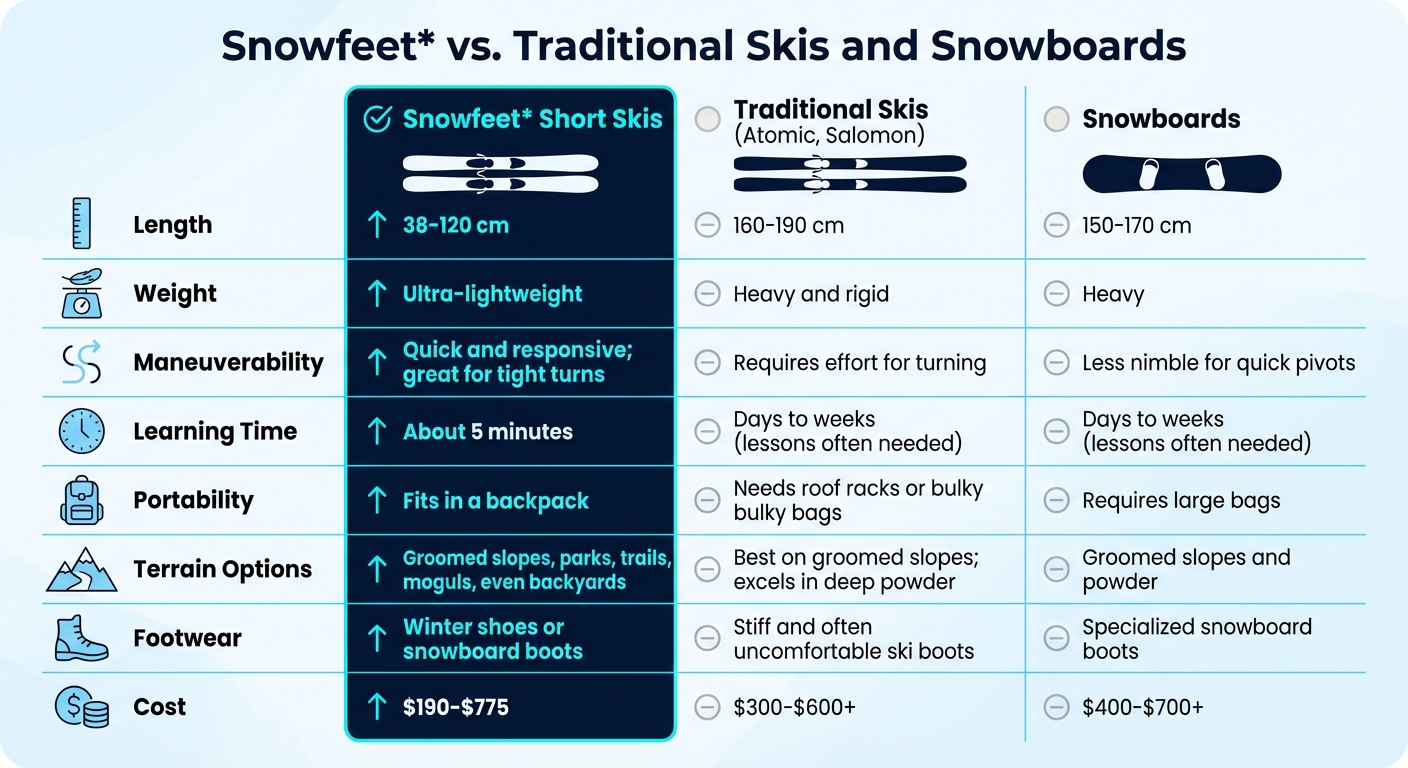
Snowfeet Short Skis vs Traditional Skis and Snowboards Comparison
Short Skis vs. Long Skis
Problems with Long Skis
Long skis might look impressive, but they often come with their own set of headaches. For many, especially beginners, skis over 160 cm (about 5 feet) can turn a fun day on the slopes into a frustrating workout.
Physical Strain and Risk of Injury
Long skis are heavier and harder to handle, which puts extra strain on your knees and legs. Every turn takes more effort, wearing you out faster. And if you take a tumble, the added length and weight can increase the force on your joints, making injuries more likely. This extra physical demand is especially discouraging for beginners who are still trying to get the hang of skiing.
Tougher Learning Curve
Mastering long skis isn’t easy. They require advanced skills like precise edging, shifting your weight perfectly, and controlling your speed - all things that take time to learn. For beginners, these skis are less responsive and harder to turn, making balance tricky. The result? More falls, more frustration, and less fun. Many newcomers throw in the towel before they ever get to enjoy the thrill of skiing. Plus, the added complexity can make navigating different terrains even harder.
Awkward Control and Limited Versatility
When it comes to tight spaces, long skis can feel downright clunky - like trying to steer a canoe with a broomstick. Sure, they’re great for stability at high speeds and floating through powder, but those perks are mostly useful for seasoned skiers tackling specific conditions. For everyone else, the lack of agility and limited maneuverability can make them more of a hassle than they’re worth.
How Short Skis Solve These Problems
Short skis change the game by swapping out bulky, hard-to-handle gear for equipment that moves naturally with your body. Snowfeet* products - ranging from 38 cm mini ski skates to 120 cm short skis - are designed to tackle the common headaches of skiing.
Easy to Learn and Control
You can pick up Snowfeet* in about five minutes. The movement feels as familiar as ice skating or inline skating. With models starting at just 38 cm, these short skis respond instantly to your body, making turns smooth and balance almost second nature.
"These skiblades are so much fun and easy to control. Never going back to regular skis." – Andrew B.
Another bonus? Snowfeet* work with snowboard boots or even winter shoes, so you can skip the stiff, uncomfortable ski boots. If you're a beginner, the Carbon Fiber Edition offers a slower, steadier ride to help build your confidence. With over 50,000 riders worldwide and more than 5,500 verified reviews averaging 4.9 out of 5 stars, the ease of use is well-documented.
This simplicity also means the gear is lighter and easier to carry.
Lightweight and Easy to Carry
Snowfeet* shine when it comes to portability. Unlike traditional skis that require roof racks or massive bags, Snowfeet* fit neatly into a regular backpack. For instance, the 44 cm Skiskates weigh just a fraction of what you'd lug around with traditional skis (which can be over 160 cm long). No more dragging heavy gear from your car to the slopes.
"Far more portable and affordable than traditional skis or snowboards." – Uncrate
This convenience opens up all kinds of possibilities. You can throw them in your bag for a last-minute trip, take them on a hike, or even bring them to a local sledding hill - no need for extra equipment or planning.
Works on Multiple Terrains
Snowfeet* don’t just solve portability issues; they also tackle the control and versatility problems of traditional skis. Thanks to professional metal ski edges, they’re accepted at most resorts. Their short length and skating-like motion make them perfect for navigating tight tree runs, terrain parks, hiking trails, and even your backyard.
"I hate getting stuck on a hill in skis because they're so long and bulky. Since these are shorter, you can just skate right up." – Sophia Kane
On flat areas or gentle uphills where traditional skis might leave you stranded, you can simply skate forward, just like you would on ice. These short skis handle light powder and snow parks with ease, freeing you from the restrictions of longer skis.
sbb-itb-17ade95
Snowfeet* vs. Traditional Skis and Snowboards
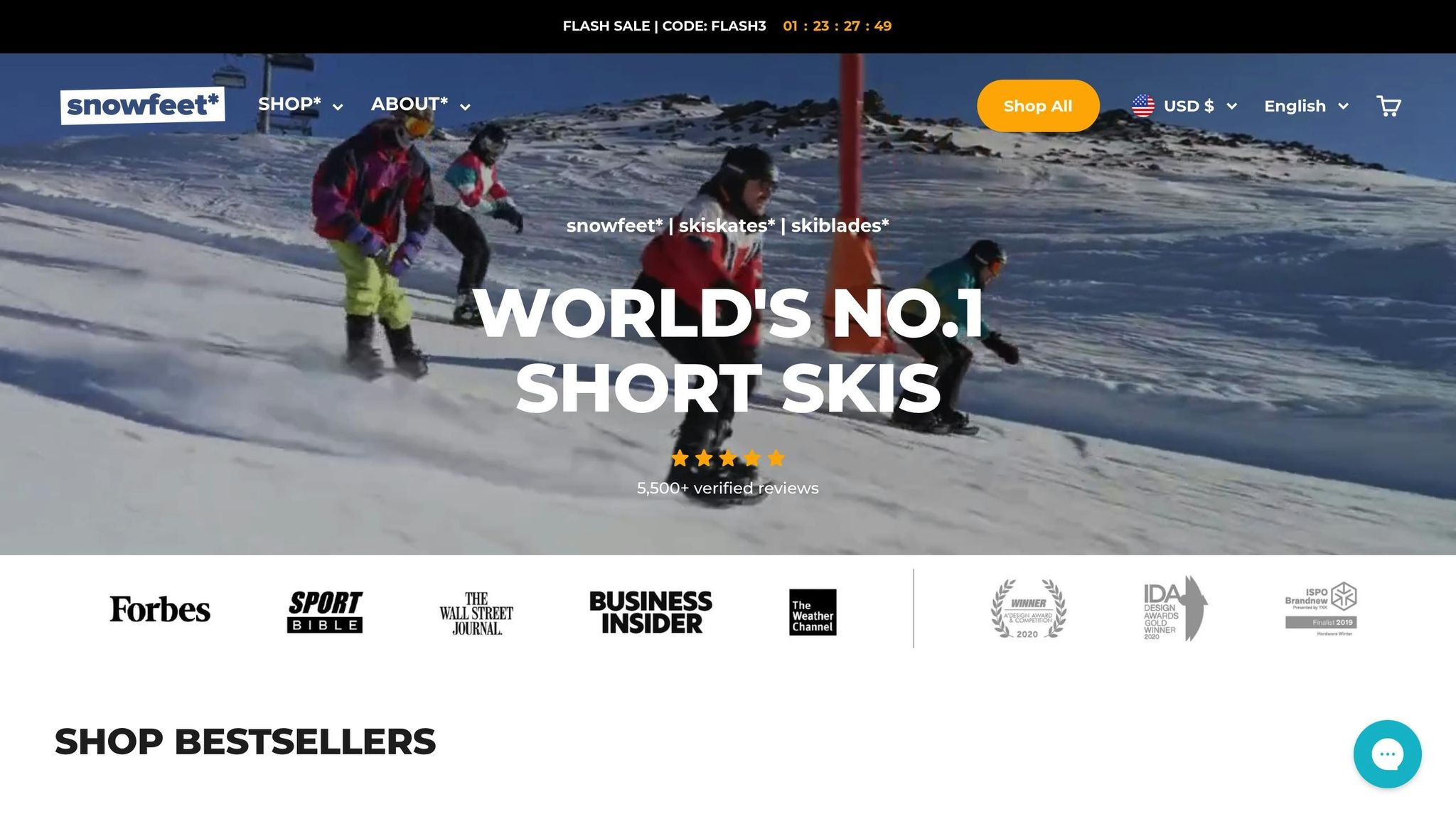
Side-by-Side Comparison: Snowfeet* vs. Traditional Gear
Let’s break it down: Snowfeet* short skis bring a whole new vibe to the slopes compared to traditional skis and snowboards. They’re compact, lightweight, and designed for agility. Here’s how they stack up:
| Feature | Snowfeet* Short Skis | Traditional Skis (Atomic, Salomon) | Snowboards |
|---|---|---|---|
| Length | 38-120 cm | 160-190 cm | 150-170 cm |
| Weight | Ultra-lightweight | Heavy and rigid | Heavy |
| Maneuverability | Quick and responsive; great for tight turns | Requires effort for turning | Less nimble for quick pivots |
| Learning Time | About 5 minutes | Days to weeks (lessons often needed) | Days to weeks (lessons often needed) |
| Portability | Fits in a backpack | Needs roof racks or bulky bags | Requires large bags |
| Terrain Options | Groomed slopes, parks, trails, moguls, even backyards | Best on groomed slopes; excels in deep powder | Groomed slopes and powder |
| Footwear | Winter shoes or snowboard boots | Stiff and often uncomfortable ski boots | Specialized snowboard boots |
| Cost | $190-$775 | $300-$600+ | $400-$700+ |
Snowfeet* short skis are not only lighter and easier to handle but also more affordable, with prices starting at $190. Compare that to the $300-$600 range for beginner skis or $400-$700 for snowboards, and you’re already saving both money and hassle.
But the real difference? It’s all about the experience.
Why Short Skis Are More Enjoyable
Snowfeet* aren’t just gear - they’re a ticket to a more relaxed and fun time on the slopes. Unlike traditional skis, which can feel clunky and intimidating, especially for beginners, Snowfeet* make skiing feel approachable and playful. Their shorter length and skating-like motion let you move with ease and confidence, even in tight spaces.
Forget the rigid posture and awkward falls that come with long skis or snowboards. With Snowfeet*, you can skate across flat terrain, pivot effortlessly in narrow tree runs, and recover from spills without battling oversized equipment. Sure, traditional skis are unbeatable in deep powder, but Snowfeet* dominate everywhere else - whether it’s groomed trails, terrain parks, or bumpy moguls. They’re perfect for trying out tricks or just exploring mixed terrain with freedom and creativity.
"Absolute game-changer! They're light, fast, and incredibly fun to ride." – Nathan F.
If you’re looking for gear that’s easy to carry, quick to learn, and packed with fun, Snowfeet* might just be your new favorite way to hit the slopes. Less hassle, more freedom, and a whole lot of fun - that’s the Snowfeet* difference.
Benefits of Switching to Snowfeet*
More Freedom and Playfulness
Snowfeet* bring a whole new level of freedom to the slopes. Unlike traditional skis, which can feel bulky and limiting, Snowfeet* are compact, ranging from just 38 to 120 cm. This smaller size lets you move more naturally, almost like you're skating. Tight tree runs? No problem. Moguls? Easy to carve. You can even skate up small hills - something that’s almost impossible with longer skis. Plus, they make it way easier to jump, twist, and experiment with tricks that traditional gear just doesn’t allow.
And here’s the kicker: you’re not tied to groomed slopes. Snowfeet* open up all kinds of terrain. You can use them on hiking trails, cross-country paths, sledding hills, or even right in your backyard. It’s like turning the whole outdoors into your personal playground.
Built to Last with Quality Materials
Durability is a big deal, and Snowfeet* deliver. Models like the Skiskates (44 cm, starting at $490) and Skiblades (65 cm, starting at $550) are built with wood cores that combine strength and flexibility. These cores hold their shape and responsiveness, even after countless runs in different conditions. Adjustable bindings mean you can count on them year after year, unlike traditional skis that can feel clunky and wear out quickly.
If you’re looking for something lighter on the wallet but still reliable, the fiberglass-reinforced polyamide models are a solid choice. They’re lightweight, affordable, and perform well across various terrains. And here’s the best part: Snowfeet* don’t need the constant maintenance that traditional skis often require. Whether you’re hitting groomed slopes or testing your skills in the snow park, they’re built to keep up without breaking down.
Suitable for All Skill Levels
Snowfeet* aren’t just durable - they’re for everyone. Whether you’re a total beginner, a seasoned pro, or someone with physical challenges, these are designed to work for you. The learning curve? Practically non-existent. Most people get the hang of them in just 5 minutes. And with a recommended age range of 5 to 105 years, they’re truly for all generations.
For beginners, the lightweight design and easy maneuverability take the stress out of learning. No need for pricey lessons or struggling with heavy, awkward gear. Experienced skiers, on the other hand, will love the freedom to try freestyle moves and explore mixed terrains without the hassle of long skis. Even if you’re recovering from an injury or dealing with joint pain, Snowfeet* are gentle on your body while still giving you that full-on skiing experience.
"Thank you for allowing me to rediscover the joy and happiness of skiing with such ease and with so much control." – Daniel Siouffi
Another bonus? The adjustable bindings work with winter shoes, snowboard boots, or ski boots. So, you’re not stuck shelling out for expensive, uncomfortable ski boots. This versatility makes Snowfeet* a comfortable, budget-friendly option for riders of all experience levels.
Conclusion: Change Your Skiing with Snowfeet*
Traditional skiing can feel like it’s pushing you away. Between the bulky gear, pricey lessons, and all the hassle, it sometimes feels like more work than fun.
Snowfeet* flips that script. These compact, lightweight mini skis are small enough to fit in your backpack, simple enough to master in about 5 minutes, and versatile enough for groomed slopes, hiking trails, or even your backyard. Forget lugging around heavy equipment or forking over hundreds for lessons. With over 50,000 riders already on board and a stellar 4.9/5 rating from 5,500+ verified reviews, it’s clear people are loving the change.
Tired of the old-school hassle? Snowfeet* might just be your answer. Starting at $190, they’re an affordable, no-fuss way to hit the snow. Plus, they work with your regular winter shoes or snowboard boots - so no more dealing with stiff, uncomfortable ski boots.
It’s time to shake things up. Snowfeet* bring the fun, freedom, and accessibility back to winter sports. Make the switch today and find out why these short skis are turning heads on the slopes.
FAQs
Why are short skis easier to learn on compared to traditional skis?
Short skis make picking up skiing way easier and a lot more fun compared to traditional long skis. Because they’re shorter and lighter, beginners can turn with less effort and keep their balance more easily. Long skis, on the other hand, can feel tricky to control and require more precision, which can be daunting for someone just starting out.
Take short skis like Snowfeet Skiblades, for example. They allow beginners to go from simply standing on skis to smoothly linking turns after just a few runs. That’s a huge difference from the weeks it often takes to get the hang of traditional skis. This faster learning curve makes skiing more enjoyable and keeps beginners motivated - skipping much of the frustration that can make people want to give up.
Are short skis suitable for all types of terrain?
Short skis, like Snowfeet’s Skiblades, Skiskates, and mini-skis (measuring 15 to 47 inches), pack a lot of versatility into a compact package. They shine on groomed trails, offering sharp carving and quick reactions that longer skis often struggle to deliver. Their shorter length makes them a dream for weaving through tight tree lines or tackling steeper sections with incredible agility. If you’re looking for a bit more stability, the 47-inch model strikes a nice balance, blending playfulness with control across different terrain.
Of course, short skis aren’t perfect for every scenario. They’re not the best choice for deep powder due to their smaller surface area, and they can feel a bit shaky at high speeds or on icy, hard-packed slopes. Long skis still reign supreme for deep powder days and big, open bowls. But for most U.S. ski resorts - where groomed runs, tree-filled paths, and park features are the main attractions - Snowfeet’s short skis offer a winning mix of control, portability, and ease of use. They’re a fun, approachable alternative to traditional skis or snowboards.
Are short skis a good choice for both beginners and experienced skiers?
Short skis are a great choice for a variety of skiers. They’re light and super easy to handle, which is a big win for beginners looking to gain confidence on the slopes. Plus, they’re just plain fun! Many experienced skiers love the way shorter skis let them make sharper turns and enjoy a more playful, agile ride.
Compared to longer skis, short skis make learning less intimidating and reduce physical effort, all while still offering plenty of excitement for seasoned skiers. Whether you’re new to skiing or just want to mix things up, short skis bring a little something extra to the table.













Leave a comment
This site is protected by hCaptcha and the hCaptcha Privacy Policy and Terms of Service apply.