



















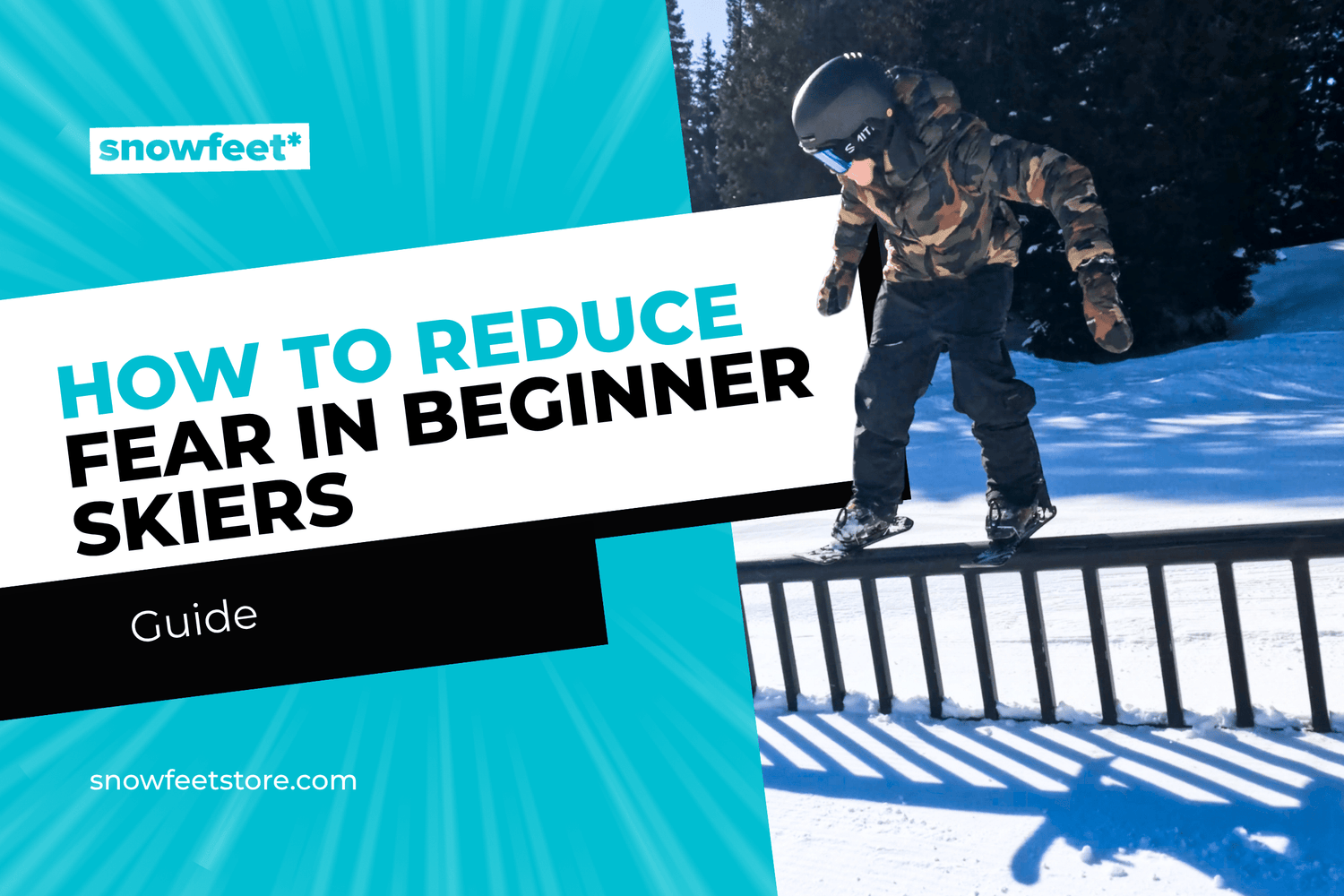
Skiing for the first time can be scary, but it doesn’t have to be. The secret to feeling more confident? Start with the right gear and a simple mindset. Long skis can feel awkward and overwhelming, but shorter, lightweight options like Snowfeet’s Skiblades and Skiskates make learning easier and less intimidating. These compact designs help you stay in control, avoid common beginner mistakes (like crossing ski tips), and build confidence faster.
Here’s the deal: Fear is normal - it’s your brain’s way of keeping you safe. But with the right approach, you can turn that fear into focus. In this guide, you’ll learn how to pick beginner-friendly gear, choose easy slopes, and practice techniques that help you feel steady and in control. Whether it’s breathing exercises, visualization, or gradual skill-building, we’ve got tips to help you enjoy the slopes without the jitters. Let’s get started!
Overcoming Fear in Skiing | 3 Simple Mindset Hacks for Nervous Skiers (Part 1)
Why Beginners Feel Fear on the Slopes
Fear is your brain’s way of keeping you safe. When you’re standing at the top of a slope for the first time, your body’s built-in alarm system kicks into gear. The amygdala - the part of your brain responsible for survival instincts - interprets speed, slippery surfaces, and unfamiliar movements as potential dangers. That uneasy feeling? It’s evolution trying to protect you. Understanding this natural reaction is the first step toward managing common fear triggers.
Some of the biggest triggers for beginners include the fear of losing control, the steepness of the terrain, and the awkwardness of handling unfamiliar equipment. Long skis, for example, can feel clunky and overwhelming, which only adds to the anxiety. This is where lighter, shorter gear - like Snowfeet* products - can make a difference. They help reduce that "trapped" sensation, making it easier to feel in control.
Here’s something encouraging: fear can actually make you a safer skier. It heightens your awareness, keeps you cautious, and helps prevent you from taking on challenges beyond your skill level. Kristen Ulmer, a fear expert who runs clinics at Alta, emphasizes that the best skiers aren’t fearless. Instead, they’ve learned to “ski scared,” using fear as a tool to sharpen their focus and reactions. The secret is to acknowledge your fear rather than resist it.
Trying to fight fear only makes things worse. Ulmer explains that accepting those moments of discomfort allows fear to fade naturally, helping you relax and regain control. When you stop battling fear, your body loosens up, your movements become smoother, and skiing feels more manageable. On the other hand, resisting fear drains your mental energy and often leads to more tension.
Beyond managing your gear, tackling fear also means getting used to skiing’s unique challenges. The unfamiliar body positions and slippery surfaces can amplify anxiety for beginners. Pre-trip practice - like using balance boards or visiting indoor snow domes - can help ease those nerves by simulating the experience in a low-pressure environment. While lighter gear like Snowfeet* can address equipment-related worries, practice is essential for building confidence. Once you accept that fear is both normal and helpful, you can channel it into deliberate, controlled movements instead of letting it spiral into panic.
How the Right Equipment Reduces Fear
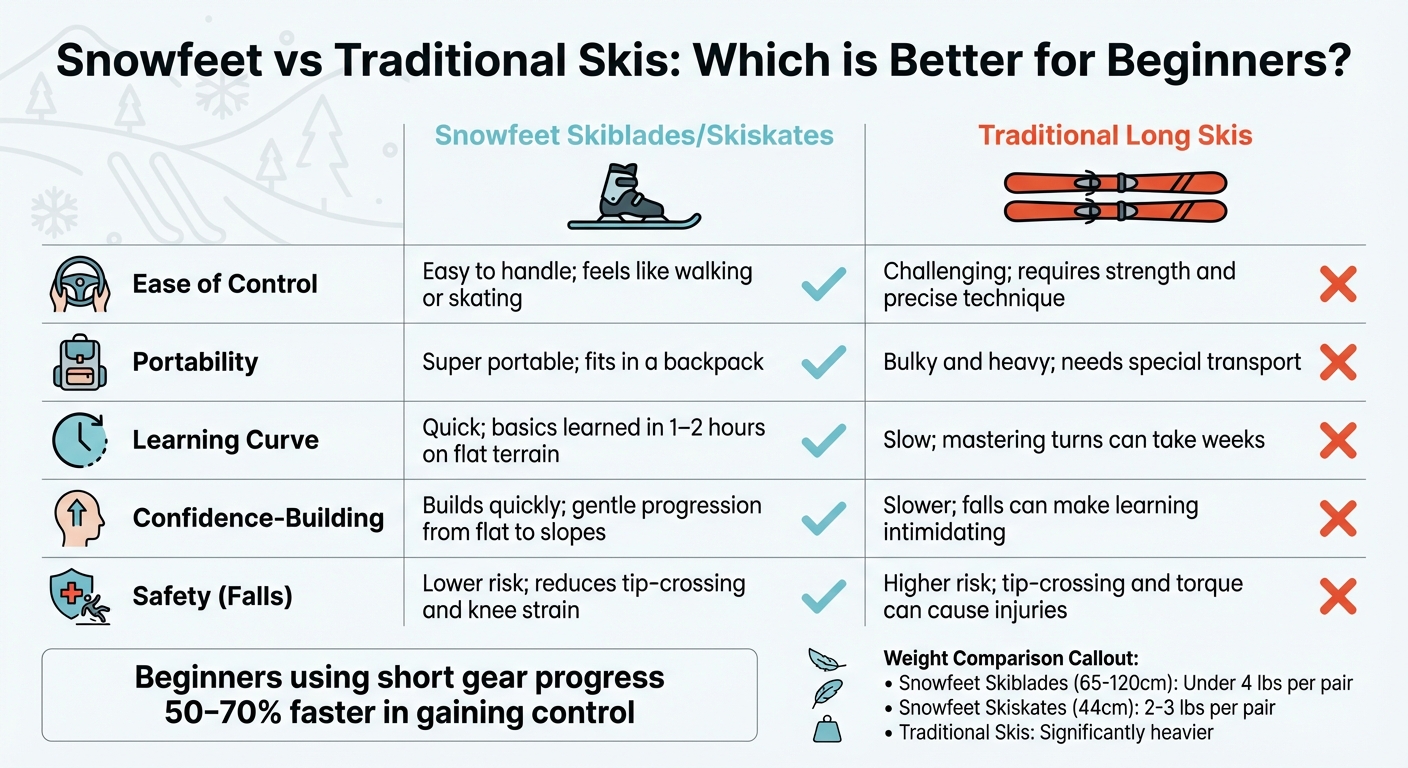
Snowfeet vs Traditional Skis: Beginner Equipment Comparison
The gear you choose can make or break your first skiing experience. Traditional long skis often feel clunky and overwhelming, especially for beginners. They require advanced edging skills and can leave you feeling out of control, which is the last thing you want when you're trying to learn how to stop or turn. On the flip side, shorter and lighter equipment gives you more control right from the start. This kind of gear helps ease you into the sport, making it less intimidating and more enjoyable.
Benefits of Lightweight and Short Equipment
Using lightweight, short equipment can make a huge difference in how you feel on the slopes. Traditional skis are heavier, which can wear out your legs quickly and make every move feel like a chore. In contrast, Snowfeet* Skiblades (available in 65, 99, and 120 cm lengths) weigh under 4 lbs per pair, and Snowfeet* Skiskates (44 cm) are even lighter at just 2–3 lbs. This lighter weight reduces physical strain, helping you stay relaxed and focused as you learn.
The compact design also eliminates common safety issues, like crossing ski tips. Snowfeet* gear allows you to pivot easily, giving you better control for quick stops and turns. In fact, ski instructors have noted that beginners using short gear tend to progress 50–70% faster in gaining control. This faster progress can make the slopes feel much less daunting.
Snowfeet* vs. Traditional Skis Comparison
| Feature | Snowfeet* Skiblades/Skiskates | Traditional Long Skis |
|---|---|---|
| Ease of Control | Easy to handle; feels like walking or skating | Challenging; requires strength and precise technique |
| Portability | Super portable; fits in a backpack | Bulky and heavy; needs special transport |
| Learning Curve | Quick; basics learned in 1–2 hours on flat terrain | Slow; mastering turns can take weeks |
| Confidence-Building | Builds quickly; gentle progression from flat to slopes | Slower; falls can make learning intimidating |
| Safety (Falls) | Lower risk; reduces tip-crossing and knee strain | Higher risk; tip-crossing and torque can cause injuries |
Beyond being easier to control, Snowfeet* gear is incredibly versatile, making it useful across all kinds of snowy terrain.
Using Snowfeet* Products on Different Terrains
Snowfeet* gear isn’t just easier to use than traditional skis - it’s also adaptable to various terrains. You can start small by practicing balance drills in your backyard or on a nearby sledding hill. From there, you can take the same gear to beginner ski runs at resorts. This flexibility makes learning smoother and less intimidating, no matter where you decide to practice.
For example, the 44 cm Skiskates attach directly to your winter boots, so you don’t need to invest in specialized ski boots right away. Once you’re more comfortable, you can move up to the 99 cm or 120 cm Skiblades. These longer options offer added stability for steeper slopes while still being easy to control. It’s a bit like using a balance board at home - you can gradually build your skills and confidence while adapting to different snow conditions, whether it’s powdery trails or groomed runs.
Choosing the Right Terrain for Beginners
Best Slopes for Beginners
Starting on the right terrain can make all the difference when you're new to skiing. Look for green circle runs - these trails are specifically designed for beginners and feature gentle slopes that naturally keep your speed in check. Wide, well-maintained trails are perfect for practicing turns without worrying about obstacles. Resorts like Aspen Snowmass (Gentleman's Ridge) and Vail (Golden Peak beginner area) are great options, offering low-angle, uncrowded runs that make learning less intimidating.
Steer clear of icy sections and crowded areas, as they can make it harder to stay in control and increase stress. A great time to hit the slopes is early in the morning when the freshly groomed "corduroy" snow is smooth and predictable. By mid-morning (around 10:00 AM–11:30 AM), the sun usually softens any icy spots, while the snow remains firm enough for easy, controlled turns.
If you're using Snowfeet*, you'll find their lightweight and compact design especially helpful on these gentle slopes. They reduce fatigue and eliminate the risk of tip-crossing - a common issue with longer skis that can lead to falls. Once you're comfortable on the green runs, you can start exploring more advanced terrain at your own pace.
How to Progress to Harder Slopes
Moving from green to blue slopes is a big step, but it’s important to take your time. Only make the jump when you’re confident in your ability to stop, turn both ways, and manage your speed without hesitation. Many U.S. resorts make this progression easier with clearly marked paths. For example, at Park City Mountain in Utah, beginners often start on the First Time area greens before moving to the Home Run blue run. Similarly, at Keystone in Colorado, the transition is from Schoolmarm greens to Independence blue.
Snowfeet* gear continues to shine as you move to more challenging terrain. Its stability and ease of use help make the shift to blue slopes feel less overwhelming. And if a blue run feels too tough, there’s no shame in heading back to a green slope to rebuild your confidence. With Snowfeet*, this gradual progression is smoother, giving you the support you need to enjoy the journey.
sbb-itb-17ade95
Building Confidence Through Practice
Step-by-Step Skills for Beginners
Confidence on the slopes starts with mastering the basics. Begin on flat ground, where falling feels less intimidating. Start by scooting with one ski, then both, to get comfortable with how the equipment moves. This step helps you understand your gear before tackling slopes.
Next, work on the wedge stance, also known as the "pizza" position, on flat terrain. This shape acts as your emergency brake, so practice stopping reliably before moving on. Once you’ve nailed stopping, practice shifting your weight to the outside ski to initiate turns. With Snowfeet* Skiblades or Skiskates, this weight transfer feels more natural - almost like walking - compared to the sometimes awkward mechanics of traditional long skis. Plus, their shorter design helps prevent your skis from crossing, which is a common beginner mistake that can lead to spills.
Another helpful tip? Practice falling and getting back up. Learning how to fall safely and recover quickly builds resilience. Snowfeet* gear makes this process easier thanks to its lightweight and compact design, which is much simpler to manage than traditional skis.
When you're ready, take your skills to gentle slopes. Focus on looking 10–20 feet ahead rather than staring at your ski tips. This small adjustment improves balance and helps you control your speed. By building a solid foundation on flat terrain, you'll feel more confident when you start sliding down those slopes.
Now, let’s talk about how expert guidance can speed up your progress.
How Ski Instructors Help Reduce Fear
A ski instructor can be a game-changer when it comes to building confidence. They’ll guide you to terrain that matches your skill level, ensuring you’re not overwhelmed right out of the gate. Dr. S. Gerald Hann, a clinical psychologist, explains:
"Simply approaching things causes our anxiety to reduce. The psychology jargon is 'habituation', but I prefer to simply call it 'getting used to it', or GUTI for short".
Instructors also catch bad habits early, preventing them from turning into fear-inducing patterns. Techniques like "follow the leader" keep your focus on proper form rather than worrying about the slope itself. This structured approach gives you small, manageable wins that build confidence step by step.
Using Snowfeet* gear makes lessons even more effective. The lightweight design and natural feel of the equipment help instructors focus on teaching core skills like edge control and weight distribution without the added challenge of bulky gear. This simplicity allows beginners to progress faster and enjoy a positive first experience on the slopes, leaving them excited to come back for more.
Methods to Manage Fear While Skiing
Breathing and Relaxation Methods
When fear kicks in, your body reacts - tight shoulders, clenched jaws, and shallow breathing. This tension makes skiing harder and fuels your anxiety. The solution? Deep diaphragmatic breathing. Instead of shallow chest breaths, focus on filling your stomach with air. This type of breathing calms your nervous system and helps you regain focus.
If you feel overwhelmed mid-run, find a safe spot to pull over. Take a moment to breathe deeply, relax your shoulders, and unclench your jaw. Think of it as hitting the "reset" button. The more you practice pausing and breathing when fear strikes, the more control you'll have over your emotions.
Using compact gear like Snowfeet* makes these resets easier. With their lightweight design, you can stop and regroup without dealing with bulky equipment, keeping your focus on calming your mind.
Using Visualization and Positive Thinking
Before starting a run, take a moment to visualize success. Close your eyes and imagine yourself skiing smoothly - making controlled turns, hearing the crunch of snow, and feeling the rhythm of your movements. This mental rehearsal helps your brain "practice" the motions, which can reduce anxiety and boost confidence.
Swap negative self-talk for positive cues. For instance, instead of thinking, "Don't fall", try saying, "Smooth turns" or "Stay balanced". Andrew Elsdon, a member of the Canadian Ski Instructors' Alliance, emphasizes the importance of mental preparation:
"Proper mental preparation is essential. Consistent visualization is also the key. It's not just information we seek, it's transformation in our skiing".
Breaking a challenging slope into smaller, manageable sections - like skiing to the next tree - can also make the task feel less intimidating. Each small success builds your confidence.
Pair these mental strategies with controlled speed to stay calm and steady as you progress.
Controlling Speed to Stay Comfortable
Managing your speed is a game-changer for beginners looking to reduce fear. To slow down, finish your turns by bringing your skis perpendicular to the slope, letting the incline do the work. Aim for smooth "S" turns rather than sharp "Z" turns to maintain a steady and predictable pace.
Snowfeet* gear can make speed control even easier. Unlike traditional long skis, which have a larger turning radius and higher "swing weight", Snowfeet* Skiblades (65, 99, and 120 cm) and Skiskates (44 cm) are shorter and lighter. This design allows for quick, tight turns and easier stops, which helps reduce the fear of losing control.
Keep your weight centered - leaning back increases speed and makes control harder. Instead of staring at your ski tips, focus on a spot 10–20 feet ahead. Try syncing your breathing with your turns: inhale as you transition and exhale as you finish the turn. This rhythm helps prevent the "freezing" response that fear often triggers, keeping your movements smooth and controlled.
Conclusion
Feeling a bit nervous on the slopes? That’s not a flaw - it’s completely normal. Every skier, from beginners to seasoned pros, feels fear at some point. The key isn’t to get rid of it but to learn how to use it. Kristen Ulmer, a former extreme skier and fear expert, explains that fear can actually sharpen your focus and improve your control if you embrace it rather than fight it.
Having the right gear can make a huge difference in managing that fear and building confidence. Traditional skis can feel bulky and intimidating, especially for beginners. That’s where Snowfeet* Skiblades and Skiskates come in. Their lightweight, compact design makes them easier to handle, reducing the chance of crossed tips. Plus, they mimic natural skating movements, making them intuitive for many first-timers. They’re also super practical - portable enough to toss in a backpack and designed to work with your regular winter boots, so no fancy equipment is required.
Pair beginner-friendly gear with manageable slopes and consistent practice. Start small, take deep breaths, and focus on controlled, smooth turns. Progress at your own pace - each run will help you build muscle memory and grow your confidence. Before you know it, you’ll be tackling the slopes with ease!
FAQs
Are Snowfeet* easier than long skis for beginners?
Snowfeet* products are often a better choice for beginners compared to traditional long skis. Their lightweight and compact design make them easier to handle, giving newcomers more control and helping them gain confidence faster. Unlike long skis, which can feel tricky to manage, Snowfeet* gear moves more naturally - kind of like skating or walking. This makes the learning process less overwhelming and much more beginner-friendly.
Which Snowfeet* length should I start with?
Beginners should go for shorter Snowfeet*, ideally under 160 cm. Why? They're easier to handle and less exhausting. The 65 cm and 99 cm Snowfeet* Skiblades are great for those just starting out. Their lightweight build and easy-to-control design make them perfect for learning. These shorter models are ideal for gentle slopes and help boost confidence, making them a smarter pick than traditional long skis or snowboards for new skiers.
Can I use Snowfeet* with regular winter boots?
Snowfeet* are specially designed to pair with regular winter boots, making them super convenient. They’re lightweight and portable, which means you can easily carry them around. Plus, they’re beginner-friendly, offering a less daunting alternative to traditional skis.











Leave a comment
This site is protected by hCaptcha and the hCaptcha Privacy Policy and Terms of Service apply.