







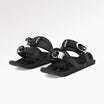












Learning to ski doesn’t have to be intimidating. Skiblades, also known as Snowfeet Skiblades, are short, lightweight skis designed to make skiing simpler and more fun for beginners and pros alike. With lengths ranging from 26 to 47 inches (65–120 cm), they’re easy to maneuver, quick to stop, and compatible with various boots - including ski, snowboard, and even casual winter boots.
Here’s why they’re a game-changer:
- Easier control: Shorter length means smoother turns and no crossed tips.
- Lightweight and portable: Fits in a backpack - no more lugging heavy gear.
- Quick learning curve: Many users master basic skiing in just one day.
- Works on all terrains: Groomed runs, moguls, terrain parks, and light powder.
Skiblades come in three lengths tailored to skill levels:
- 65 cm: Perfect for beginners or trick lovers ($635).
- 99 cm: Ideal for intermediates exploring more challenging runs ($675).
- 120 cm: Best for advanced skiers seeking stability and speed ($775).
Whether you’re starting out or looking for a playful alternative to long skis, Snowfeet Skiblades make skiing simpler and more enjoyable. Ready to hit the slopes with less hassle and more confidence? Let’s dive into the details.
How to choose Snowfeet* Snowblades | Skiblades | Skiboards | Short Ski
sbb-itb-17ade95
Why Snowfeet* Skiblades Make Ski Progression Easier
Building on their clear perks, here’s why Snowfeet* Skiblades stand out as a go-to option for smoother ski progression.
Better Control and Easier Turns
With a length of just 65–120 cm (26–47 inches), Snowfeet* Skiblades offer quick control and effortless stopping. When you compare skiblades vs traditional skis, which are often 150 cm (63 inches) or longer, and you’ll see why these skiblades are a game-changer. Their shorter length means less effort when turning or stopping, giving you more time to focus on improving your skills instead of battling oversized gear. Plus, their compact size helps prevent the dreaded crossed tips, making every run feel smoother.
This agility also makes them perfect for navigating tight spaces and tricky slopes.
Lightweight and Easy to Carry
Ever get tired of lugging around heavy ski gear? Snowfeet* Skiblades solve that problem. They’re so lightweight and compact that you can slip them into a regular backpack. No need for bulky ski bags or extra hassle. This portability doesn’t just make transportation easier - it also saves your energy, so you can spend more time on the slopes and less time recovering from carrying your gear.
Works with Multiple Boot Types
One of the coolest things about Snowfeet* Skiblades? They work with a variety of boots. Whether you’ve got ski boots, snowboard boots, or even casual winter shoes, these skiblades have you covered. This versatility is especially helpful for beginners who might find traditional ski boots stiff or uncomfortable. Plus, it keeps costs down by letting you use gear you already own.
With Snowfeet* Skiblades, you don’t just get better control and portability - you also get the freedom to choose the footwear that works best for you. That means hitting the slopes is easier, more comfortable, and way more fun right from the start.
Choosing the Right Snowfeet* Skiblades Length
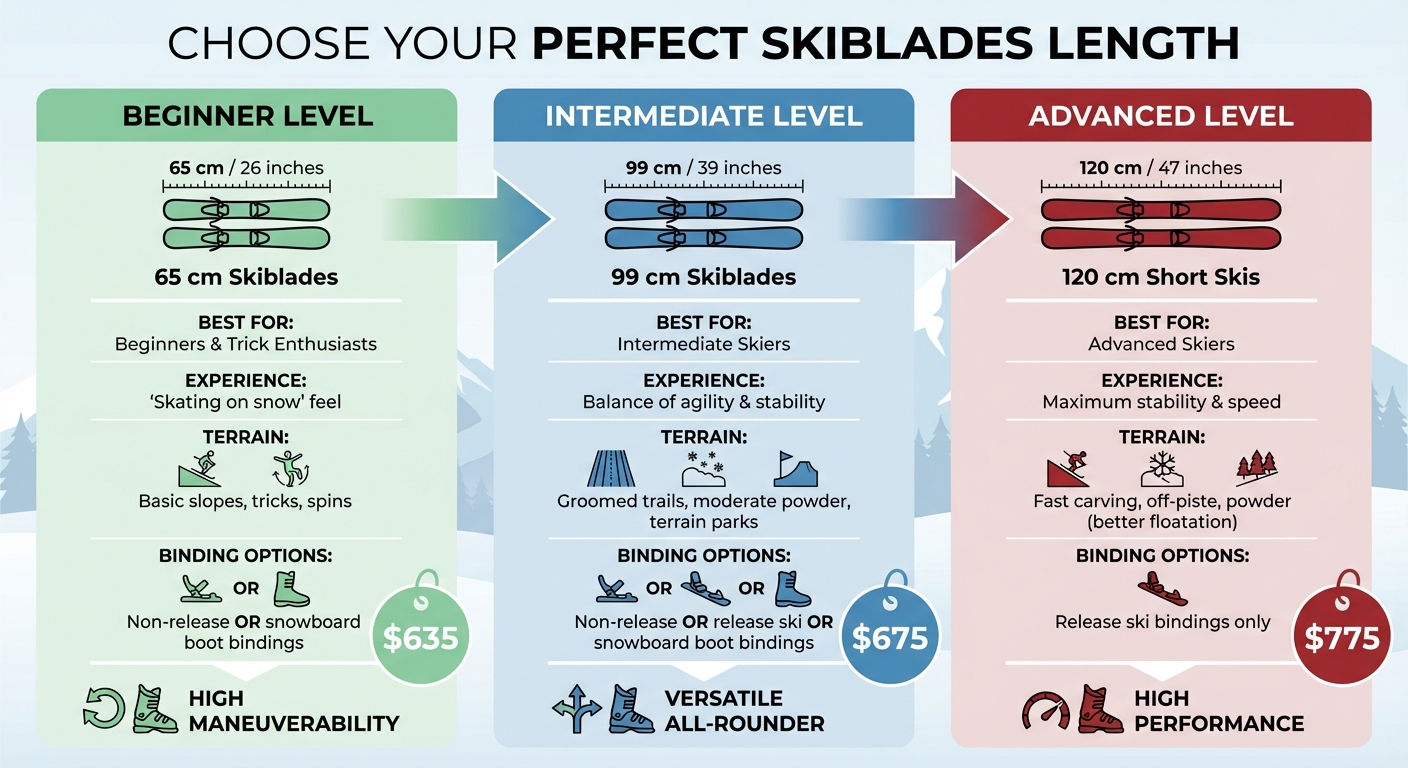
Snowfeet Skiblades Length Comparison Guide by Skill Level
Picking the right Snowfeet* Skiblades length is all about finding the perfect balance between control and versatility. The right choice depends on your skill level, the type of terrain you prefer, and what you want to achieve on the slopes. Snowfeet* offers three lengths, each tailored to help you progress and build confidence on the mountain.
65 cm Skiblades: For Beginners and Trick Enthusiasts
The 65 cm Snowfeet Skiblades are a great choice if you're new to skiing or want to focus on tricks and spins. At about 26 inches long, they provide a "skating on snow" experience, making it easier to learn balance and basic movements. If you've ever tried inline skating, you'll feel right at home with these. They’re compatible with both non-release bindings and snowboard boot bindings, giving you flexibility with your footwear. Prices start at $635.
99 cm Skiblades: For Intermediate Skiers
The 99 cm Snowfeet Skiblades are designed for skiers who have mastered the basics and are ready to take on more challenging maneuvers. At roughly 39 inches, they strike a balance between agility and stability, making them suitable for groomed trails, moderate powder, and even terrain park jumps. Whether you're carving or experimenting with freestyle, these skiblades are a versatile option. Available with non-release, release ski, or snowboard boot bindings, they start at $675.
120 cm Short Skis: For Advanced Skiers
If you’re an experienced skier looking for something lighter but still high-performing, the 120 cm Snowfeet Short Skis are an excellent option. Measuring about 47 inches, they offer outstanding stability for fast carving and off-piste adventures. The larger surface area improves floatation in powder, yet these skis remain more maneuverable than traditional long skis. They come exclusively with release ski bindings for added safety at higher speeds. Priced at $775, they're ideal for seasoned skiers ready to downsize without compromising on performance.
How to Progress Your Skills with Snowfeet* Skiblades
Step 1: Master Balance and Basic Movement
Start with the basics. Keep your knees slightly bent and your weight centered over the skiblades for better control and to absorb small bumps in the snow. Thanks to their lower center of gravity, Snowfeet* Skiblades are easier to balance on compared to traditional long skis from brands like Rossignol or K2.
Begin without ski poles so you can focus entirely on balance. Stay relaxed, keeping your body weight perpendicular to your skis. George Treble, a Level 4 Alpine Ski Instructor, offers this advice:
"The second golden rule is... balance your body weight perpendicular to your skis – don't lean back".
Leaning back makes it harder to control your skis and burns more energy. Once you’ve nailed your balance, move on to learning how to stop and turn on short skis.
Step 2: Learn to Stop and Turn
To stop and manage your speed, try the snowplow technique by forming a "V" shape with your skiblades. Once you’re comfortable, practice shifting your weight to turn: for a left turn, put weight on your right leg; for a right turn, shift to your left leg.
Avoid leaning too much into the turn. George Treble explains:
"The first golden rule is to balance on the outer ski whilst turning. So if you're turning left, balance on your right leg",.
This helps you maintain control and braking power. Stick to gentle slopes while practicing these skills, then gradually move to steeper terrain. Once you’re confident with stopping and turning, it’s time to refine your carving technique.
Step 3: Practice Carving and Speed Control
After mastering basic turns, focus on carving. To carve properly, position the leg for your turn slightly in front - right leg for a right turn, left leg for a left turn. Shift your weight to the outer edge of the lead leg and the inner edge of the trailing leg to engage the edges effectively.
On steeper runs, use S-shaped turns to control your speed instead of heading straight down. For advanced speed control, practice a "hockey stop" by sharply turning both skiblades to one side. The 120 cm model is great for carving, offering more stability and better floatation on light powder. Tilt the skiblades onto their edges instead of sliding to maintain control.
These carving techniques highlight the agility of Snowfeet* Skiblades, giving them an edge over traditional skis.
Step 4: Try Freestyle and Challenging Terrain
Once you’ve got the basics down, push yourself with freestyle tricks and tougher terrain. Snowfeet* Skiblades are ideal for tricks like the "Corkscrew" spin, riding on one leg, and rotations from 180 to 1080 degrees. The 65 cm model is perfect for moguls and quick, sharp turns because of its high maneuverability. If you’re into snowparks and jumps, try snowboard boot bindings for more flexibility compared to stiff ski boots.
For deeper carving, snowparks, or light powder (up to 4 inches), the 99 cm or 120 cm lengths provide the stability you need for all-mountain terrain while staying more agile than traditional long skis. The Snowfeet Team sums it up well:
"I believe most skiers would enjoy skiing with 100 cm short skis much more than with long ones because it's easier, less restricting, and much more fun".
Maintaining Your Snowfeet* Skiblades
Basic Care and Maintenance
Taking care of your Snowfeet* Skiblades is as simple as nailing the basics of skiing they help you enjoy. After each day on the slopes, make it a habit to wipe down the metal edges with a dry cloth to prevent rust. The Snowfeet Team puts it best:
"Keep the metal edges dry after each use to prevent them from rusting."
At the end of the season, lightly oil the edges before storing them. This step helps shield them from corrosion during the off-season.
Another key tip: wax the base after every use. A quick layer of liquid wax not only prevents snow from sticking but also improves your glide, no matter the snow conditions. When it comes to edge tuning, you can use a sharpening stone or head to a professional ski service. Focus on the base edges, and don’t worry if a little plastic gets shaved off - that’s totally normal and won’t mess with performance. Lastly, check the binding straps now and then. Use a screwdriver to make sure they’re tight enough to keep your boots secure. Stick to this routine, and your Skiblades will stay sharp and ready for anything.
Using Skiblades on Different Terrain Types
Snowfeet* Skiblades are built for versatility, thanks to their shorter length (65–120 cm). This compact design makes them super nimble, perfect for quick turns and tight spots. Shorter models are great for agility, while longer ones offer a balance of speed and stability. Whether you're carving on groomed slopes, hitting snowparks, or exploring backcountry trails, a fresh coat of wax before heading out ensures you’ll glide smoothly across all kinds of snow.
Switching from Traditional Skis or Snowboards
Making the leap from traditional skis, snowboards, or skiboards to skiblades isn’t just about the gear - it’s about adjusting your technique. Unlike traditional skiing, where leaning forward is the norm, skiblades require you to keep your weight centered or even slightly back. This is because there’s no extended front section to rely on. When it’s time to stop, evenly distribute your weight across both feet to create the friction you need. The shorter length and lower center of gravity make skiblades incredibly responsive, giving you more control. It’s this unique combination that makes Snowfeet* Skiblades a great option for both beginners and seasoned skiers.
Conclusion
Snowfeet* Skiblades bring a fresh twist to skiing, offering unmatched control and flexibility. Whether you're a beginner trying out the 65 cm (26-inch) model or an experienced skier opting for the 120 cm (47-inch) version, these skiblades are designed to make your time on the slopes easier and more enjoyable. Their lightweight build and compact size make them much simpler to handle compared to traditional long skis, while the wider base provides extra stability - perfect for beginners who want a smoother learning curve.
The streamlined design helps skiers progress faster, requiring less physical effort for turns and stops. And here's the best part: many users report getting the hang of the basics in just one day! That means less time struggling and more time carving down the mountain. Plus, their versatility shines whether you're cruising groomed trails, tackling mixed terrain, or hitting freestyle features.
Safety is also a key feature. When used properly, Snowfeet* Skiblades are just as safe as traditional skis, making them a secure yet thrilling choice for winter sports enthusiasts. Their compact size not only enhances maneuverability but also makes them super convenient to carry and store - no more lugging around bulky gear.
Ready to try something new? Check out the Snowfeet* lineup and find the right skiblades for your skill level and goals. It's time to simplify your gear and amp up the fun on the mountain!
FAQs
Are skiblades allowed at most ski resorts?
Most ski resorts across the U.S. and Europe welcome skiblades, including Snowfeet. That said, each resort may have its own rules, so it’s smart to double-check with your chosen destination before you go.
Which binding type should I choose for my boots?
Snowboard-style bindings are a top pick for skiblades like Snowfeet. They offer a solid, adaptable connection that boosts control and stability. This makes skiing more approachable for beginners while allowing advanced skiers to fine-tune their skills. Plus, these bindings can adjust to fit different boot sizes, ensuring a snug and comfortable fit that inspires confidence. On the other hand, traditional ski bindings - built with long skis in mind - don’t pair well with the shorter, more agile design of skiblades.
Do skiblades work well in deep powder?
Skiblades can handle deep powder pretty well, especially shorter models like Snowfeet's 99 cm Skiblades. These are built to offer decent flotation and are specifically designed for such conditions. That said, when it comes to very deep snow, traditional powder skis usually outperform skiblades because of their wider and longer build, which helps them glide more effortlessly.











Leave a comment
This site is protected by hCaptcha and the hCaptcha Privacy Policy and Terms of Service apply.