



















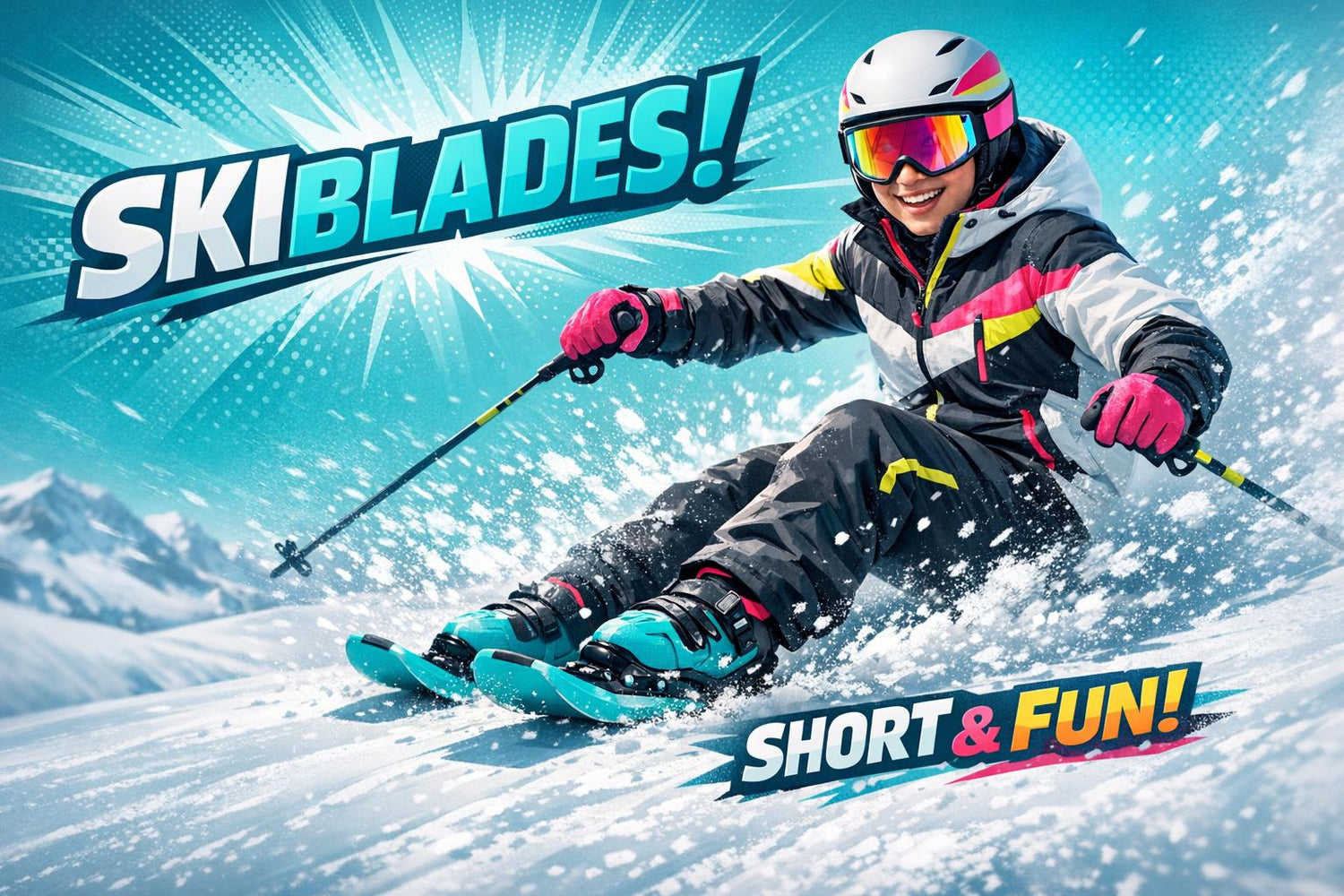
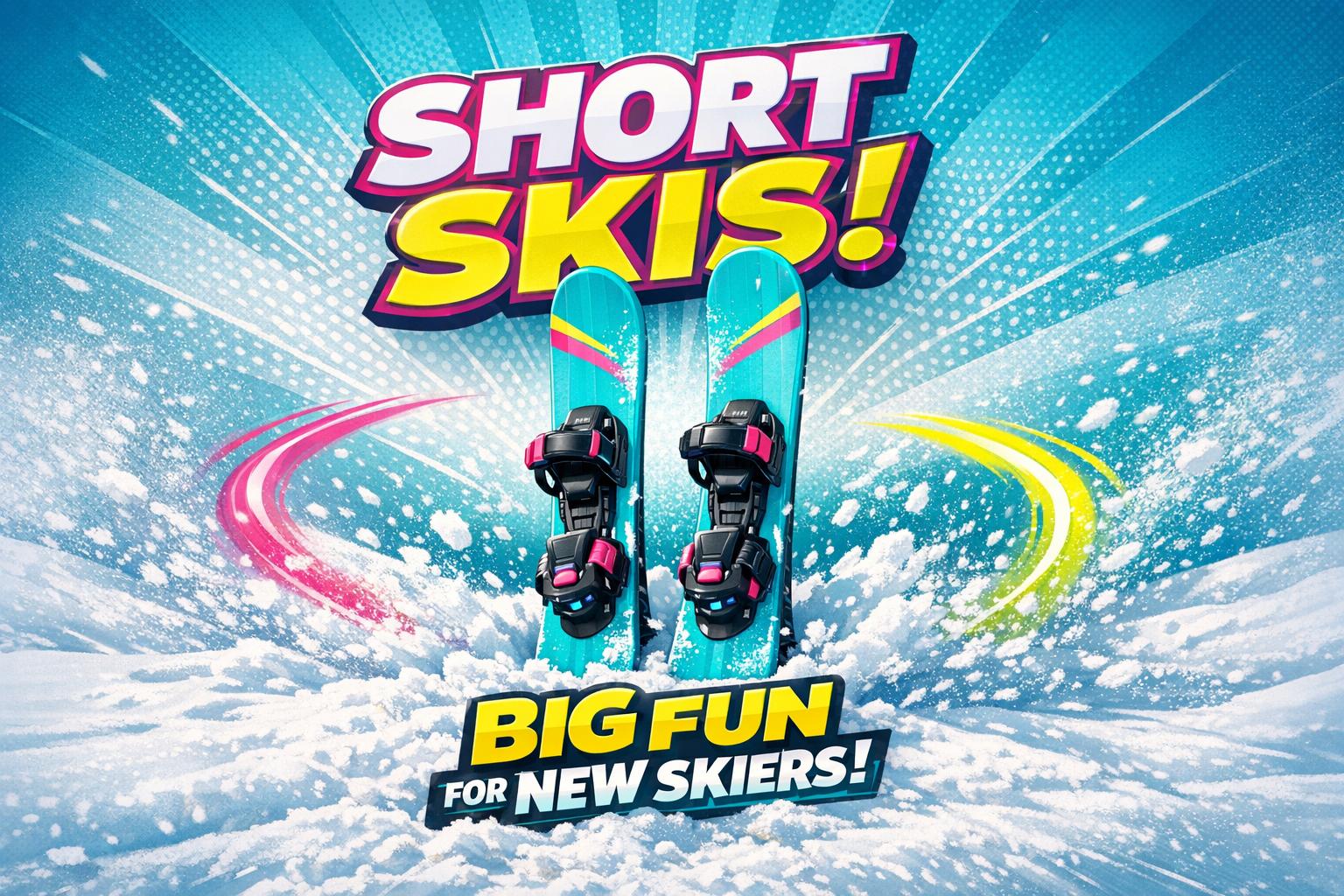
Skiblades, also called snowblades or skiboards, are short skis (65–120 cm) designed for ease, portability, and fun. Unlike longer skis (150–200 cm+), skiblades are simple to learn - most people can get the hang of them in hours. They’re light, easy to carry (even in a backpack), and work with regular winter or snowboard boots.
Why choose skiblades?
- Beginner-friendly: Quick to learn, no lessons needed.
- Portable: Small enough to fit in your car trunk or backpack.
- Less tiring: Lighter and easier to maneuver than long skis.
- Versatile: Great for slopes, moguls, and even backyard fun.
That said, skiblades aren’t perfect for everything. They’re less stable at high speeds and struggle in deep powder, where longer skis shine. If you’re all about speed or tackling serious powder, stick with traditional skis. But for casual skiers or anyone looking for a playful, hassle-free experience, skiblades are a game-changer.
Quick Comparison:
| Feature | Skiblades | Long Skis |
|---|---|---|
| Learning Curve | Hours | Days or weeks |
| Portability | Backpack-friendly | Requires roof racks |
| Weight | Lightweight | Heavy |
| Boot Compatibility | Winter/snowboard boots | Ski boots required |
| Stability at Speed | Lower | High |
| Powder Performance | Light powder only | Great for deep powder |
| Price Range | $550–$775 | $400–$1,200+ |
If you want to spend less time learning and more time enjoying the slopes, skiblades might be your new favorite gear. :)
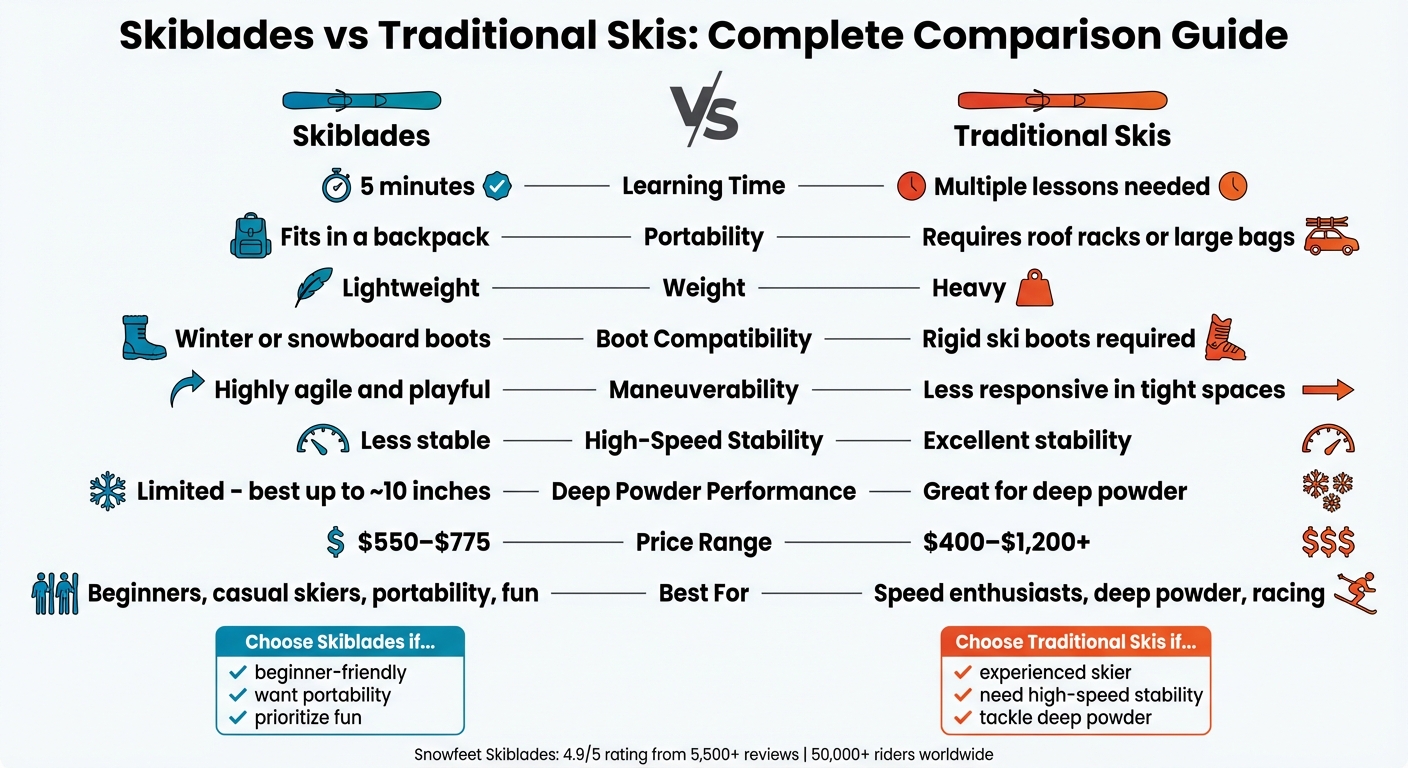
Skiblades vs Traditional Skis: Complete Comparison Guide
Snowboarder tries Snowfeet* | Which Snowfeet* Short Ski is the Best? | Snowblades 44, 65, 99 Review
1. Skiblades (e.g., Snowfeet* Skiblades)
Snowfeet Skiblades come in three sizes - 65 cm (about 26 inches), 99 cm (about 39 inches), and 120 cm (about 47 inches) - each offering a distinct skiing experience while keeping the core perks that make skiblades so appealing. These compact, lightweight skis are a refreshing alternative to the bulk of traditional skis. Let’s dive into why Snowfeet Skiblades stand out when it comes to ease of learning, portability, versatility, and pure fun.
Learning Curve
One of the best things about Snowfeet Skiblades is how beginner-friendly they are. Unlike traditional skis that can take a lot of practice to master, these shorter skis are much easier to control. Their compact design reduces leverage, making it simpler to stabilize and maneuver. Many first-timers find themselves cruising down groomed runs with confidence in no time - less struggle, more skiing.
Portability
When it comes to portability, Snowfeet Skiblades are a game-changer. Their small size makes them super easy to transport - whether you’re tossing them into your car trunk, packing them in a backpack, or taking them on public transportation. Traditional skis, often 150 cm to over 200 cm long, require more storage space and can be a hassle to lug around. With skiblades, you can even hike to remote slopes without breaking a sweat.
Versatility
Snowfeet Skiblades shine across a variety of terrains. Whether you’re carving up groomed runs, tackling moguls, hitting the terrain park, or gliding through light powder, these skis are up for the challenge. The 65 cm version is perfect for tight, sharp turns in smaller spaces. The 99 cm model strikes a balance between agility and carving performance, while the 120 cm option offers a smoother, more traditional skiing feel without sacrificing maneuverability. No matter the conditions, there’s a size to match your style.
Fun Factor
If there’s one thing Snowfeet Skiblades excel at, it’s delivering fun. Their design encourages freedom of movement, making it easy to pull off tricks, quick turns, and even spins. Think of it as blending skiing with a skating-like experience. Plus, they’re less physically demanding than traditional skis, so you can spend more time enjoying the slopes and less time feeling fatigued. Whether you’re zipping through tight corners or trying out new moves, these skiblades are all about keeping the joy in skiing.
2. Traditional Skis
Traditional skis are all about performance, but they can be a bit of a hurdle for beginners because of their size and weight. While skiblades focus on being lightweight and versatile, traditional skis stick to their roots, demanding more skill and commitment. Their longer design makes them heavier and harder to handle, both on and off the slopes.
Learning Curve
Getting the hang of traditional skis takes dedication. Their length and weight mean beginners need to work on key techniques like balance, edging, and stopping. These skis often require formal lessons and plenty of practice before newcomers feel confident. Unlike Snowfeet Skiblades, which simplify these challenges for a more enjoyable experience, traditional skis can feel like a steep climb for those just starting out.
Portability
Transporting traditional skis isn’t exactly a breeze. Their length typically requires roof racks or special carriers, making them inconvenient for casual skiers. Lugging them from the parking lot to the lodge can feel like a workout, and forget about fitting them in a regular car trunk or using public transportation. For those looking for a quick, hassle-free trip to the slopes, traditional skis can be a headache compared to the compact and easy-to-carry Snowfeet Skiblades.
Versatility
Traditional skis come in various designs to suit different conditions. Narrow skis handle hardpack and icy surfaces well, while wider models are made for floating through deep powder. However, this often means skiers need multiple pairs to tackle different terrains. Traditional skis shine when it comes to high-speed stability and carving on open runs, but they’re not as nimble or playful in tight, varied spaces. Unlike Snowfeet Skiblades, which focus on adaptability and fun, traditional skis lean heavily toward performance.
Fun Factor
For advanced users, traditional skis deliver speed and stability, but they can be exhausting for beginners due to their weight and the technical skills required. They’re not the best choice for someone looking for a playful, carefree experience. In contrast, Snowfeet Skiblades offer a lighter, more approachable alternative, emphasizing fun and ease. These differences highlight the trade-offs between the two, setting the stage for a deeper dive into their pros and cons.
sbb-itb-17ade95
Pros and Cons
Choosing between skiblades and traditional skis comes down to what you value most - ease of use, portability, or high-speed performance.
Skiblades, particularly Snowfeet models, are all about simplicity and fun. You can learn the basics in just about 5 minutes. Their compact size means you can toss them in a backpack, making them super easy to carry around. With over 50,000 riders worldwide and an impressive average rating of 4.9/5 from more than 5,500 verified reviews, Snowfeet Skiblades have gained plenty of fans. They’re incredibly versatile, working well on groomed slopes, snow parks, trails, and even sledding hills. Plus, they’re compatible with winter or snowboard boots, so you don’t need to invest in stiff ski boots.
That said, they do have their limits. They’re not as stable at high speeds and perform best in light powder (up to about 10 inches deep). The shortest models also come with non-release bindings, which stay attached during falls. If you're all about speed or deep powder, traditional skis might be more your style.
Traditional skis, on the other hand, are built for speed and stability. They shine in deep powder and are perfect for carving or professional racing techniques. But they’re not exactly beginner-friendly - learning to ski often requires multiple lessons. They’re also bulkier to transport, usually needing roof racks or large ski bags. And while they perform well on open slopes, they can feel clunky in tight spaces or moguls compared to the nimble skiblades.
Here’s a quick comparison to help you decide:
| Feature | Snowfeet Skiblades | Traditional Skis |
|---|---|---|
| Learning Time | About 5 minutes | Multiple lessons needed |
| Portability | Fits in a backpack | Requires roof racks or large bags |
| Weight | Lightweight | Heavy |
| Boot Compatibility | Works with winter or snowboard boots | Requires rigid ski boots |
| Maneuverability | Highly agile and playful | Less responsive in tight spaces |
| High-Speed Stability | Less stable | Excellent stability |
| Deep Powder Performance | Limited (best in light powder up to ~10 inches) | Great for deep powder |
| Price Range | Around $550–$775 | Typically $400–$1,200+ |
| Versatility | Great for slopes, parks, trails, and backyards | Best for groomed slopes |
For beginners or casual skiers looking for something fun, easy, and portable, Snowfeet Skiblades are a fantastic pick. Meanwhile, traditional skis are a better fit for speed enthusiasts or those tackling deep powder. Both options have their strengths - so it’s all about what kind of ride you’re after!
Conclusion
If you're a beginner or a casual skier, Snowfeet Skiblades could get you on the slopes in just five minutes - no lessons required. They’re compact enough to toss in a backpack, skip the hassle of stiff ski boots, and take you anywhere from groomed trails to snow parks or even the local sledding hill. Praised by many, Snowfeet has made skiing easier and more enjoyable for everyone.
That said, while Snowfeet Skiblades shine in terms of fun and accessibility, traditional skis still dominate when it comes to high-speed runs, deep powder, or professional racing. But for most recreational skiers, the bulky gear, steep learning curve, and transport challenges of traditional skis just don’t stack up against the freedom and playful vibe that skiblades bring to the table.
FAQs
Are skiblades safer than traditional skis for beginners?
Skiblades are often seen as a friendlier option for beginners compared to traditional skis. Thanks to their shorter and more compact design, they help keep your center of gravity lower, making it easier to stay balanced and in control. Plus, their design naturally limits top speeds, which can make falls less intense and the overall experience less intimidating for those just starting out.
Another big plus? Skiblades are lighter and much easier to handle. This makes them less likely to lead to high-speed crashes and puts less strain on your joints. Many beginners appreciate the extra edge control and quicker stopping ability that skiblades offer, which can make learning the ropes feel a lot more forgiving. On the flip side, traditional skis - while fantastic for more advanced skiers - are longer, can build up more momentum, and often lead to harder falls and more stress on your body.
Can skiblades handle different snow conditions?
Skiblades are built to handle just about any snow condition. Whether you're gliding down groomed trails, tackling bumpy moguls, or floating through fresh powder, they’ve got you covered. For deeper or uneven snow, longer models - like the 99 cm skiblades - offer added stability and control, making them a solid choice for a mix of terrains.
Thanks to their compact size and clever design, skiblades are a fun and practical alternative to traditional skis. They’re an easy and playful option for both beginners looking to build confidence and seasoned skiers wanting to switch things up on the slopes.
What should beginners know before trying skiblades?
Skiblades, often called short skis, are a fantastic option for beginners. They’re lightweight, simple to use, and way easier on the wallet compared to traditional ski gear. Plus, they attach to regular winter boots, so you can skip the expense of buying specialized ski boots or bindings. With lengths ranging from 25 to 47 inches, their compact size makes balancing and controlling them a breeze, helping first-timers hit the slopes with confidence.
When starting out, picking the right size is key. Shorter skiblades, like Snowfeet’s 25-inch version, offer better control, which is great for beginners. If you’re feeling adventurous as you improve, slightly longer ones can give you more speed. Pair them with snug, waterproof boots that provide solid ankle support, and stick to gentle, groomed slopes while you practice. Keep your weight centered and your stance relaxed - this helps with smoother turns and reduces fatigue.
What’s great about skiblades is how quickly they help you learn. Their shorter length makes it easier to pick up the basics, so you can enjoy the slopes without the steep learning curve that often comes with traditional skis or snowboards. It’s all about having fun and gaining confidence right from the start!











Leave a comment
This site is protected by hCaptcha and the hCaptcha Privacy Policy and Terms of Service apply.