



















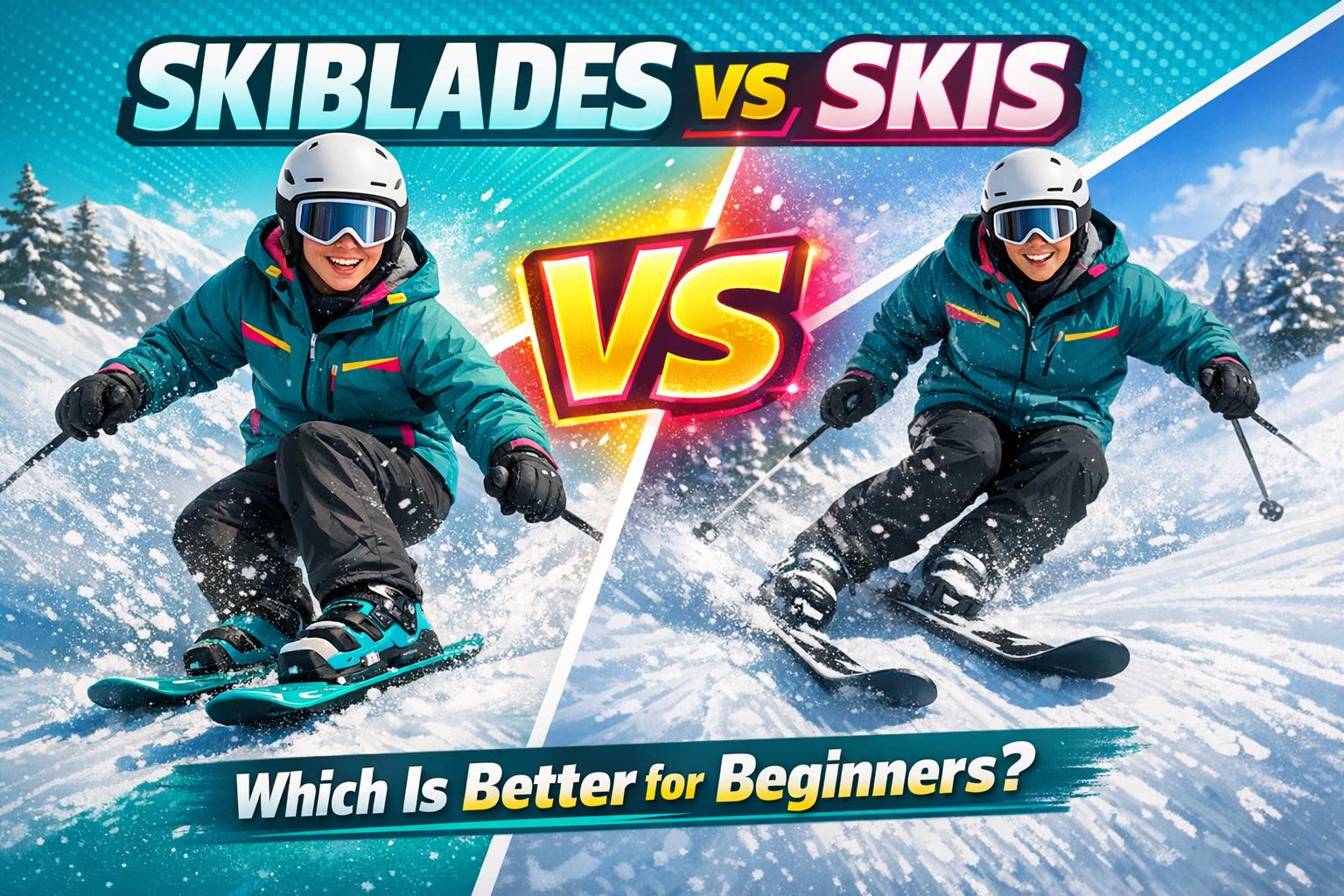
Short skis, like Snowfeet* Skiblades and Skiskates, are a fantastic option for beginners learning to ski. Why? They’re easier to control, less tiring, and help you skip the awkward beginner phases, like the snowplow. Unlike longer skis, which demand more balance and effort, short skis let you focus on building confidence and mastering turns faster.
Here’s the deal:
- Short skis (17–47 inches): Easier to turn, lighter, and portable. Great for groomed runs but not ideal for powder or high speeds.
- Long skis (5–6 feet): Stable at high speeds and better for deep snow, but harder to manage for beginners.
If you’re just starting out, short skis are a game-changer. They’re simple to use, help you learn quicker, and fit in a backpack! But if you’re aiming for advanced carving or powder adventures, you’ll need the stability and performance of longer skis or powder skis.
| Feature | Short Skis | Long Skis |
|---|---|---|
| Learning Curve | Easier for beginners | Takes more time and effort |
| Control | High, easy to turn | Requires skill and strength |
| Stability at Speed | Low, can feel twitchy | High, great for fast carving |
| Portability | Light, fits in a backpack | Bulky, needs roof racks |
| Powder Performance | Poor, sinks easily | Excellent, floats in deep snow |
For new skiers, short skis offer a smoother, less intimidating way to hit the slopes. They’re perfect for learning the basics and having fun on groomed runs. Long skis? Save those for when you’re ready to tackle speed and powder. :)
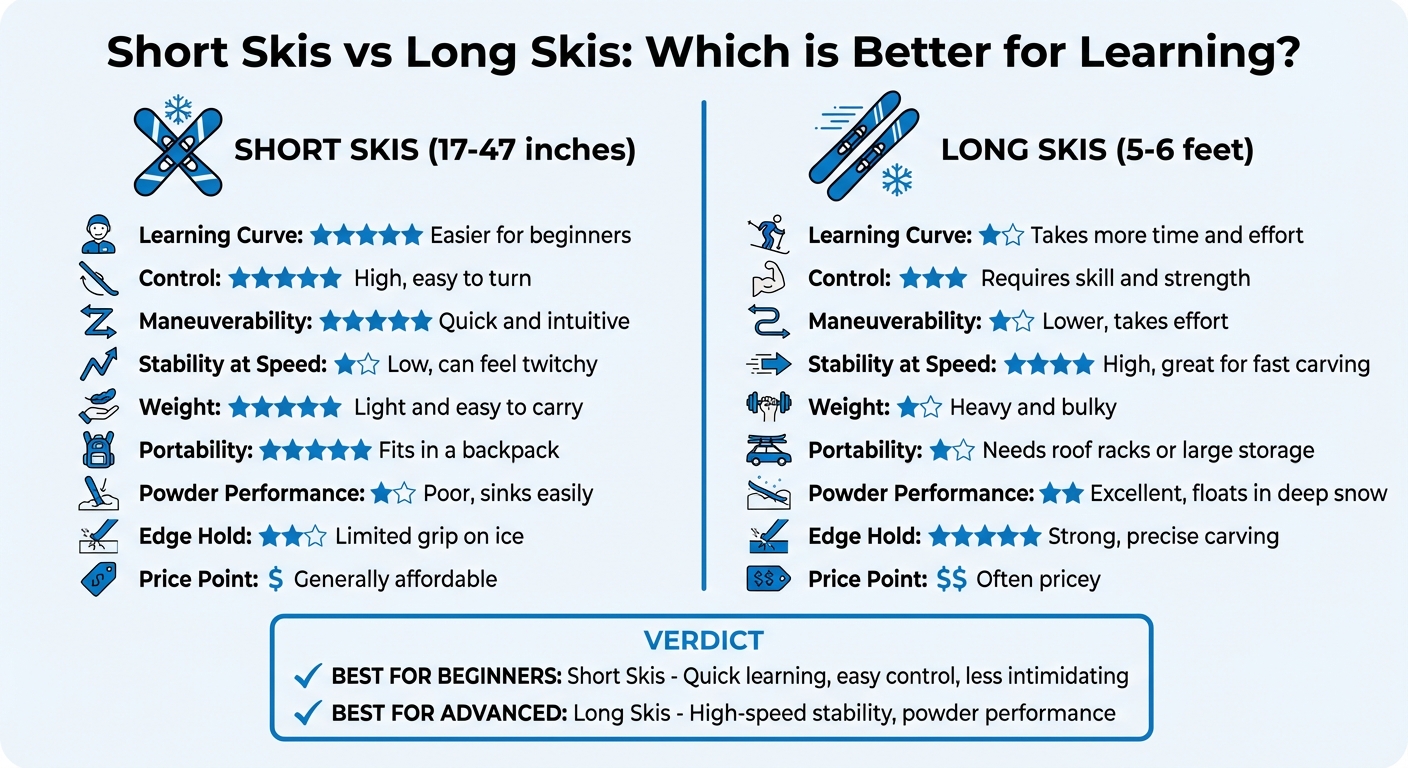
Short Skis vs Long Skis Comparison for Beginners
1. Short Skis (Snowfeet* Skiblades, Skiskates)
Control and Maneuverability
Snowfeet* Skiblades and Skiskates tackle one of the biggest rookie problems: crossed ski tips. That’s a common culprit behind many falls when using traditional skis. With lengths ranging from 17 to 47 inches, these short skis are much easier to pivot and turn compared to the longer options from brands like Rossignol or Salomon. Their lighter swing weight also means your legs don’t tire as quickly, giving you quicker reactions to changing terrain.
The compact design is perfect for tight spaces. Whether you're dodging crowds at Vail or navigating narrow forest trails, the shorter length allows for instant edge engagement. This means your turns happen exactly when you need them, making for a smoother, more intuitive ride.
Learning Curve
Snowfeet* products make learning to ski less intimidating. Beginners often skip the awkward snowplow phase and jump straight to learning parallel turns and hockey stops. The shoulder-width stance feels more natural - closer to walking or skating - compared to the wider, more technical stance required for traditional skis.
If you’ve skated before, the 17-inch Skiskates (priced at $575) will feel like second nature. They mimic skating movements on snow, and the natural side-sliding motion makes braking easy. Plus, the low rotational weight helps beginners recover quickly from balance wobbles - a big advantage over managing the heft of longer skis. And as your skills improve, these skis adapt right along with you.
Versatility
While traditional long skis are built for powder and high-speed carving, Snowfeet* Skiblades (26–47 inches) shine on groomed runs and in terrain parks, where quick, precise turns are key. Even if you find yourself in a backseat position, these skis handle it better than longer ones, as you’re not dealing with the leverage of extended lengths.
With prices ranging from $575 to $775, Snowfeet* offers options that grow with you. The 99 cm (39 in) Skiblades and 120 cm (47 in) Short Skis are ideal for progressing your skills while keeping the responsive feel that makes learning faster and more fun compared to traditional gear.
sbb-itb-17ade95
2. Traditional Long Skis
Control and Maneuverability
Traditional long skis, which typically measure from chin to head height, demand a lot more from the skier compared to shorter skis. They require precise balance, physical strength, and constant forward pressure to stay stable. Without that forward pressure, they can feel wobbly pretty quickly. For beginners, this can make them feel heavy and tough to handle, especially at slower speeds. Turning on long skis isn’t exactly effortless either - the extra length means it takes more effort to switch edges and initiate a turn. And if you happen to lean back - a common mistake for new skiers - the tips can become unstable, making things even trickier to control. Compared to the easy maneuverability of Snowfeet*, these skis can feel like a workout.
Learning Curve
Getting the hang of traditional long skis takes time, especially for beginners. To make turning on any type of ski easier, most beginners start with skis that are 4–6 inches shorter than their height. But even then, the added weight and length of traditional skis mean turns can feel slow and tiring.
"Because longer skis typically weigh more and create longer turns, they can tire legs quicker than shorter options." - Renoun Skis
Some athletic beginners might opt for slightly longer skis to get more use out of them as they improve, but that choice comes with a steeper learning curve. While these skis are great for experienced skiers, they’re not exactly beginner-friendly.
Stability and Speed
When it comes to stability and speed, traditional long skis shine - if you’ve mastered the right techniques. They’re incredibly stable at high speeds and provide excellent edge grip for carving aggressively. Plus, their larger surface area makes them float better in powder, which is perfect for wide-open bowls and deep snow. But here’s the catch: maintaining that stability requires constant forward pressure. If you get tired or your technique slips, managing these skis becomes a real challenge. For beginners, who aren’t zipping down the slopes at high speeds, the stability advantage of long skis is more of a "someday" benefit rather than an immediate one. Snowfeet*, on the other hand, offers the kind of control that’s much more practical for those just starting out.
Are Short Skis Better for Beginners?
Pros and Cons
When deciding between short skis and traditional long skis for learning, it’s helpful to weigh the strengths and weaknesses of each. Both have their perks, but they cater to different needs and experience levels. Here's a closer look at the trade-offs.
Short skis, like Snowfeet* Skiblades and Skiskates, are perfect for quick learning and easy handling. They’re less demanding physically and don’t require the same level of precision as traditional long skis. Plus, their compact size makes them super portable - no need for a roof rack, and they can even fit in a backpack. The downside? They don’t perform well in deep powder and can feel unstable at higher speeds. But for beginners focused on nailing basic turns and gaining confidence on groomed runs, these limitations are hardly a dealbreaker.
On the other hand, traditional long skis shine when it comes to stability at high speeds and handling powder. They’re ideal for seasoned skiers who want to carve aggressively or venture off-piste. However, they’re heavier, less portable, and require more advanced technique. For beginners, the benefits - like better edge grip on ice and superior floatation in powder - aren’t immediately useful, and the added length and weight might feel more like a hindrance than a help.
Here’s a quick side-by-side comparison to make things clearer:
| Feature | Short Skis (Snowfeet* Skiblades/Skiskates) | Traditional Long Skis |
|---|---|---|
| Learning Curve | Quick and intuitive | Slower, needs technical guidance |
| Maneuverability | High; easy to turn | Lower; takes effort and skill |
| Stability at Speed | Low; feels "twitchy" | High; built for speed and carving |
| Weight | Light and easy to carry | Heavy and bulky |
| Portability | Fits in a backpack or small car | Needs roof racks or large storage |
| Powder Performance | Poor; sinks easily | Great; offers floatation |
| Edge Hold | Limited; less grip on ice | Strong; precise carving possible |
| Price Point | Generally affordable | Often pricey |
For beginners focused on learning the basics and enjoying groomed runs, short skis like those from Snowfeet* provide a simpler, more approachable way to get started. They’re designed for ease and confidence, making them a fantastic choice for anyone new to the slopes.
Conclusion
Short skis are a game-changer for beginners and intermediates looking to improve their skiing skills quickly. Snowfeet* products make it easier to initiate turns, giving you more opportunities to practice and build muscle memory without the hassle of managing longer skis.
Your choice ultimately depends on your goals and where you are in your skiing journey. For beginners mastering basic turns on groomed slopes or intermediates refining their technique, short skis let you focus on edge control and pressure application without the added weight and complexity of long skis. Plus, their portability makes hitting the slopes less of a hassle, so you’re more likely to practice often - and that means faster progress.
While long skis excel in advanced carving and powder conditions, they require more advanced skills to handle effectively.
Snowfeet* products are designed to break down the barriers that often make learning on traditional gear frustrating. Whether you opt for the ultra-agile 44 cm Skiskates or the 120 cm Short Skis for a bit more stability, you’re setting yourself up for a smoother learning curve and quicker improvement.
Choose equipment that matches your current skill level. With short skis, you’ll be on the fast track to mastering the slopes. Just be sure to learn how to stop on short skis safely before you pick up too much speed.
FAQs
Will short skis teach bad habits on long skis?
Short skis, like the Snowfeet models, are much easier to handle, especially for beginners. They’re forgiving and let you focus on mastering the basics - like turning and maintaining balance - without feeling overwhelmed. Plus, they help reduce the chances of picking up bad habits early on.
Now, while longer skis are great for stability when you're flying down the slopes, they demand a more advanced skill set. Starting with short skis helps build your confidence and nail proper form. This makes it way easier to transition to longer skis later on, setting you up for solid technique in the long run.
What short ski length should I start with?
Short skis, ranging from 65 to 120 cm, are a great choice for beginners. Options like Snowfeet Skiblades (99 cm) or Skiskates (44 cm) offer excellent control, helping new skiers pick up techniques faster and build confidence on the slopes.
Do I need special boots or bindings for Snowfeet*?
Nope, you don’t need any special boots or bindings to use Snowfeet*. They’re made to work with your regular winter boots or snowboard boots. This makes them super convenient and easy to use, whether you’re just starting out or you’ve been skiing for years.











Leave a comment
This site is protected by hCaptcha and the hCaptcha Privacy Policy and Terms of Service apply.