



















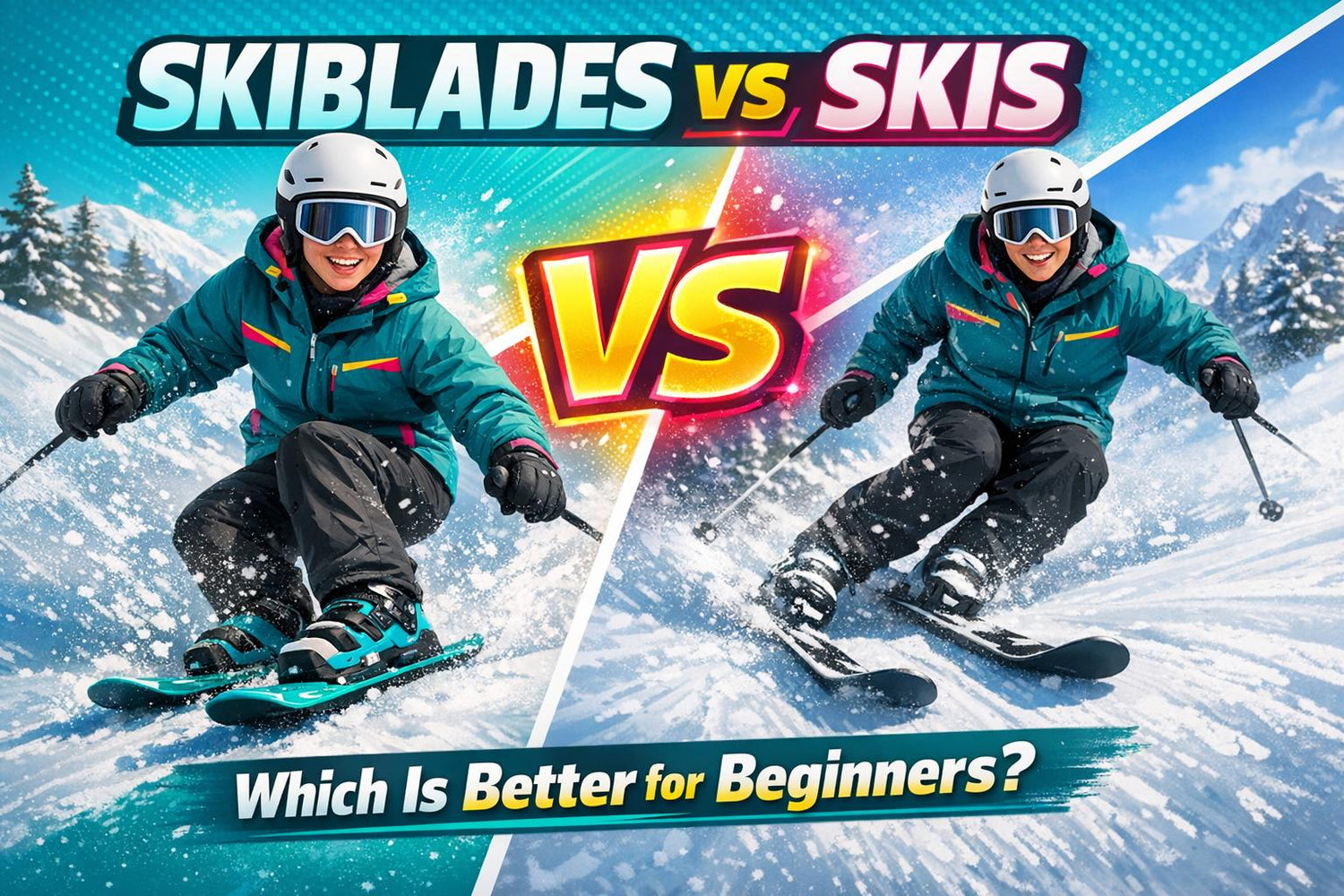
If you’re new to skiing, the choice between skiblades and skis can feel like a big decision. Here’s the bottom line: skiblades are shorter, lighter, and easier to handle, making them a great option for beginners. They’re less intimidating than skis and help you learn faster by avoiding common rookie mistakes like crossed tips. Plus, they’re portable and work with regular winter boots - no need for extra gear.
Key points to consider:
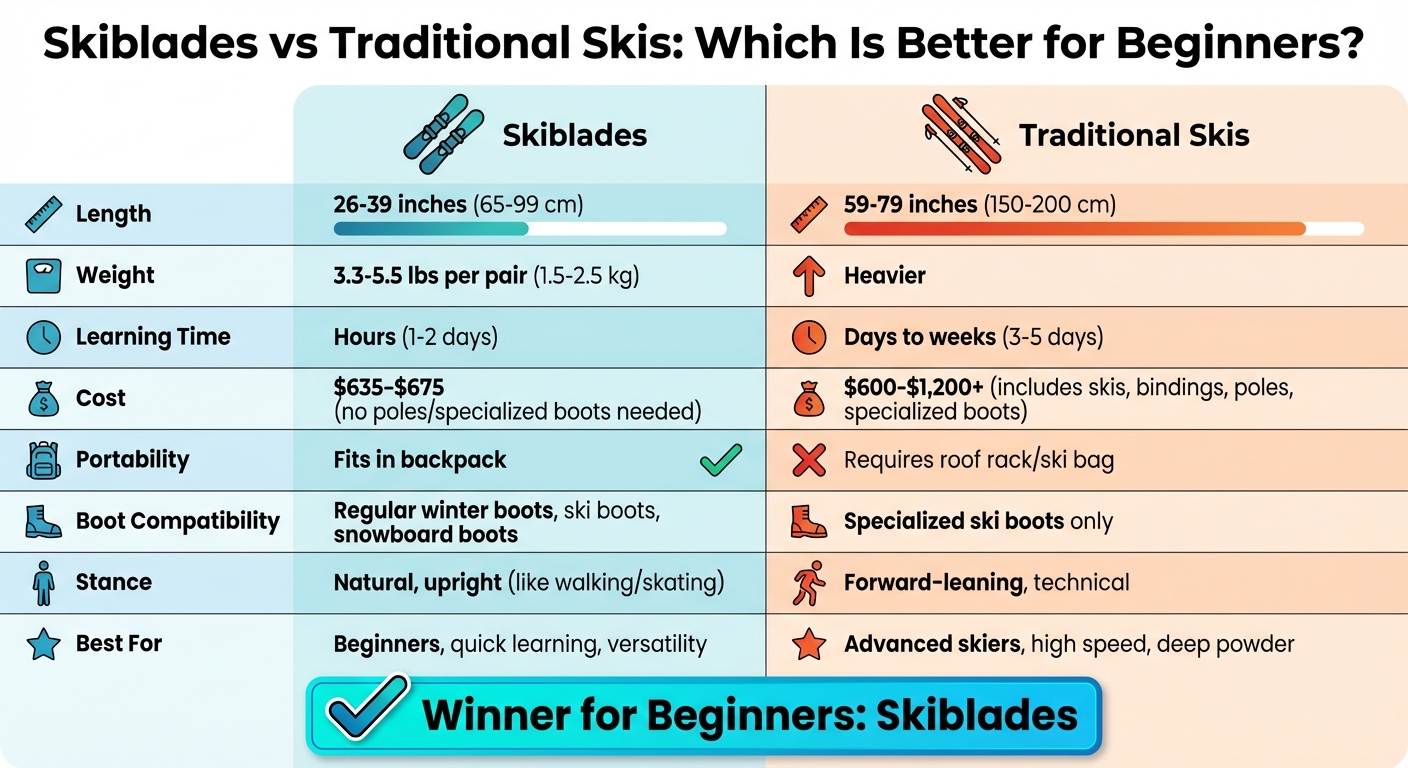
- Ease of Use: Skiblades are shorter (26–39 inches) and feel more like skating, while skis are longer (59–79 inches) and require more technical skills.
- Portability: Skiblades are lightweight and can fit in a backpack. Skis are bulkier and often need roof racks or large storage.
- Learning Curve: Most beginners get comfortable with skiblades in hours, while skis can take days of practice.
- Cost: Skiblades (around $635–$675) are often more budget-friendly since they don’t require poles or specialized boots.
If you want a simple, fun way to hit the slopes without the hassle, skiblades - especially Snowfeet* models - are a solid choice. Let’s dive into the details!
Skiblades vs Traditional Skis Comparison for Beginners
Snowfeet* Snowblades | Skiboards | Skiblades | Short Skis - All you need to know
What Are Skiblades and Skis?
Let’s talk about the basics: skiblades and traditional skis. Skiblades are compact and easy to maneuver, while traditional skis are longer and cater to more experienced skiers. Here’s what sets them apart.
Skiblades: Short Skis in Detail
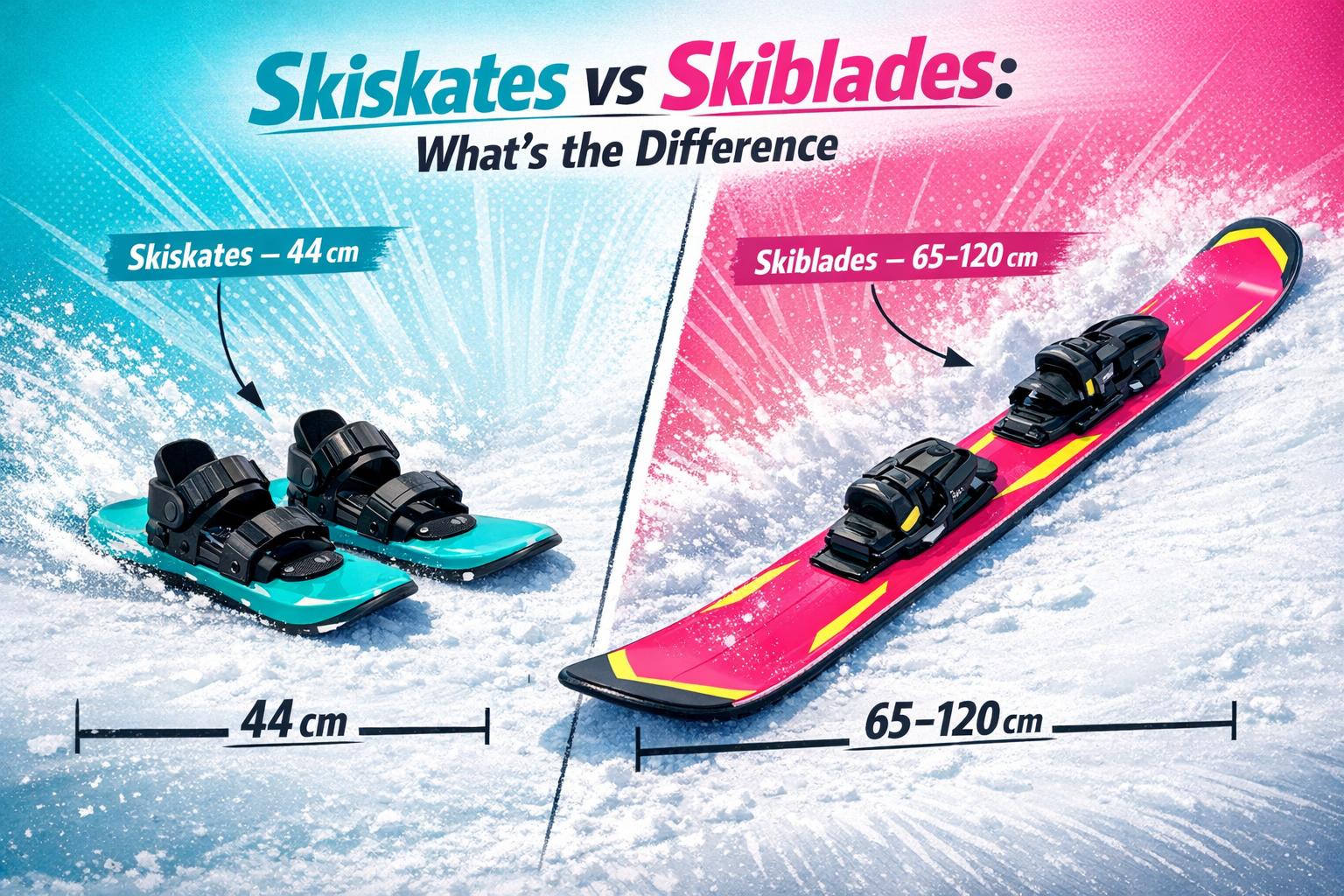
Skiblades, sometimes called snowblades, are short skis ranging from 26 to 39 inches (65–99 cm) in length. One standout feature of Snowfeet* Skiblades is their versatility - they’re compatible with regular winter boots, ski boots, or even snowboard boots. That means you can skip the expense of buying specialized footwear. Their twin-tip design, with wider ends, makes them stable and beginner-friendly. Plus, Snowfeet* uses durable materials, so these skiblades perform well whether you’re cruising groomed trails or trying out varied terrain.
Traditional Skis: The Longer Option
Traditional skis, on the other hand, are much longer - typically between 59 and 79 inches (150–200 cm). They require specialized ski boots paired with compatible bindings. Thanks to their length and sidecut design, traditional skis excel at maintaining stability at higher speeds and handling deep snow. However, they’re better suited for advanced skiers due to their steeper learning curve and the need for specific gear.
Key Factors for Beginners: Skiblades vs Skis
When you're new to the slopes, three things are crucial: how easy the gear is to control, how convenient it is to carry, and how quickly you can start having fun. Skiblades and traditional skis take very different approaches to these needs.
Control and Turning Ability
One of the biggest beginner headaches is dealing with crossed ski tips. Skiblades, which are much shorter (26–47 inches) than traditional skis (59–79 inches), completely avoid this problem. Their compact size eliminates the "lever effect", so you don’t need to put in a ton of effort to make a turn. Snowfeet* Skiblades allow for a natural, shoulder-width stance - similar to walking or ice skating - making movement feel smooth and intuitive. On the other hand, traditional skis often require beginners to master technical stances like the "pizza" wedge just to control speed and direction.
Carrying and Storage
Portability is another huge win for skiblades. Snowfeet* Skiblades, at under 39 inches long and lighter than traditional skis, can easily fit in a backpack. This means you can carry them from your car to the slopes without breaking a sweat. Traditional skis, in contrast, often require roof racks, bulky ski bags, and a lot of awkward maneuvering through crowded areas. When the day’s over, skiblades fit neatly into a closet, while traditional skis might take over your garage. Their compact size makes impromptu ski trips easy - just toss them in your car and go.
How Fast You Can Learn
With skiblades, most beginners find their footing within hours. Traditional skis, however, often require days of lessons to feel comfortable. Snowfeet* Skiblades’ compact design and skating-like motion let you skip the tricky "pizza" wedge phase altogether. Instead, you can focus on simple weight shifts to turn. The gear’s responsiveness means you’re not wrestling with long, cumbersome equipment - you’re progressing faster and having more fun. For beginners, skiblades make learning less frustrating and way more enjoyable compared to traditional skis.
sbb-itb-17ade95
Performance Comparison: Skiblades vs Skis
Where You Can Use Them
Snowfeet* Skiblades are versatile enough for groomed runs, moguls, terrain parks, and even hiking trails. Traditional skis, on the other hand, are usually designed for specific conditions - like powder skis for deep snow, racing skis for high-speed performance, or all-mountain skis for mixed terrains. This specialization often means you might need multiple pairs of traditional skis to cover different scenarios. For beginners who just want to enjoy the slopes without worrying about matching their gear to the terrain, skiblades offer a more flexible option. Now, let’s see how they compare when it comes to speed and balance.
Speed and Balance
When it comes to performance, traditional skis are built for speed and stability, especially at high velocities - perfect for those aiming for professional racing. Snowfeet* Skiblades, however, focus on control. As the Snowfeet Team puts it:
their shorter length means there's less material to control, making them perfect for beginners or those who may not have a lot of experience on the slopes.
The wider tip and tail of skiblades provide a stable platform, making it easier to balance. In contrast, traditional skis often feature a narrow center for carving long turns, which can be tricky for novices to master. Plus, skiblades are lightweight and compact, reducing leg fatigue over the course of a day - something any beginner will appreciate.
Skill Development Over Time
When it comes to building skills, the learning curve for skiblades is much quicker. Snowfeet* Skiblades help beginners gain confidence fast, allowing them to go from zero to enjoying the slopes in just a few hours. With traditional skis, it can take days or even weeks to feel comfortable, which might leave some beginners feeling frustrated during their vacation. While traditional skis do unlock advanced techniques like high-speed carving and professional racing as you improve, skiblades deliver an immediate, fun, and confidence-boosting experience. For beginners looking to enjoy winter sports without the steep learning curve, skiblades are the way to go.
Why Snowfeet* Skiblades Are Better for Beginners
Design and Build Quality
Snowfeet* Skiblades are built with beginners in mind. Their compact size - ranging from 26 to 39 inches (65 cm to 99 cm) - helps prevent those frustrating crossed-tip falls. Plus, they’re super lightweight, weighing between 3.3 and 5.5 lbs per pair (about 1.5 to 2.5 kg). This makes them easier on your legs, so you can spend more time enjoying the slopes without feeling wiped out.
The adjustable bindings are another win. They fit a wide range of boot sizes (US 4.5 to 14.5), meaning one pair can work for multiple family members. And here's the kicker: many Snowfeet* models are compatible with snowboard boots or even regular winter shoes. No need to shell out for pricey, stiff ski boots! Their parabolic shape, steel edges, and wide base also make carving easier and more stable while reducing the risk of tip collisions.
Real Beginner Results
Snowfeet* Skiblades aren't just well-designed - they deliver quick results for beginners. Most people can get the hang of basic control in just 1–2 days. That’s largely because the stance feels more natural, like walking, so you can skip the tricky "pizza and french fries" phase. For comparison, traditional skis often take 3 to 5 days to master for first-timers. With skiblades, you’re gaining confidence and having fun much faster.
Cost Comparison
When it comes to price, Snowfeet* Skiblades hold their own. They’re priced around $635 to $675, which is comparable to the lower end of a traditional ski setup (usually $600 to $1,200 for skis, bindings, and poles). But here’s where they save you money: you don’t need poles or specialized boots. Maintenance is simpler, too. The smaller surface area makes waxing and edging something you can handle at home, saving on long-term upkeep costs.
For beginners who want to try different terrains without investing in multiple types of skis, Snowfeet* Skiblades offer a great mix of performance and affordability. It’s a smart choice for anyone dipping their toes into skiing without breaking the bank.
Conclusion
When it comes to keeping things simple and fun on the slopes, the choice between skiblades and traditional skis boils down to ease of use, portability, and overall enjoyment. Traditional skis, which are usually over 59 inches (150 cm) long and much heavier, require more physical effort and a forward-leaning stance. For many beginners, this setup can feel unnatural, leading to frustration and a steeper learning curve.
Snowfeet* Skiblades offer a refreshing alternative. With lengths ranging from 26 to 39 inches (65 cm to 99 cm), they’re much lighter and easier to handle. Plus, their upright stance makes them more intuitive for beginners to pick up quickly. This design helps you bypass many of the struggles that come with learning traditional skiing.
Once you’ve got the basics down, the benefits keep adding up. Snowfeet* Skiblades are portable, work with a variety of boots, and don’t require extra equipment. Whether you’re carving smooth trails, hitting the terrain park, or just goofing around in your backyard, these skiblades are ready for whatever you throw at them.
For beginners eager to get on the slopes without the hassle, Snowfeet* Skiblades stand out as a fantastic choice. They make learning faster, require less gear, and help you enjoy the snow with less effort.
FAQs
Do skiblades work on all ski resorts?
Yes, you can use skiblades at most ski resorts, but it’s a good idea to check ahead for any specific rules or restrictions. Skiblades work well on groomed runs, in terrain parks, and even in light powder, making them a solid choice for a variety of conditions. That said, if you're planning on high-speed runs or venturing into backcountry terrain, longer skis or snowboards might be a better fit. Snowfeet* skiblades are a fun, beginner-friendly option that suits most resort environments.
Are skiblades safe at higher speeds?
Skiblades can be safe at higher speeds if used responsibly. Their design prioritizes agility and control, making them easier to handle, especially for beginners, which helps reduce the chance of falls at moderate speeds. That said, as your speed ramps up, safety largely depends on your skill level, technique, and ability to stay in control. Just like with skis or snowboards, wearing proper safety gear and staying aware of your surroundings are key to minimizing the risk of injuries when going fast.
Will skiblades help me transition to long skis later?
Skiblades are a great stepping stone for anyone looking to transition to longer skis. Their shorter length and lighter weight make them easier to control, which is especially helpful for beginners learning the basics like balance and turning. These core skills translate well to traditional skis, making it easier and less intimidating to step up to longer equipment with confidence.











Leave a comment
This site is protected by hCaptcha and the hCaptcha Privacy Policy and Terms of Service apply.