



















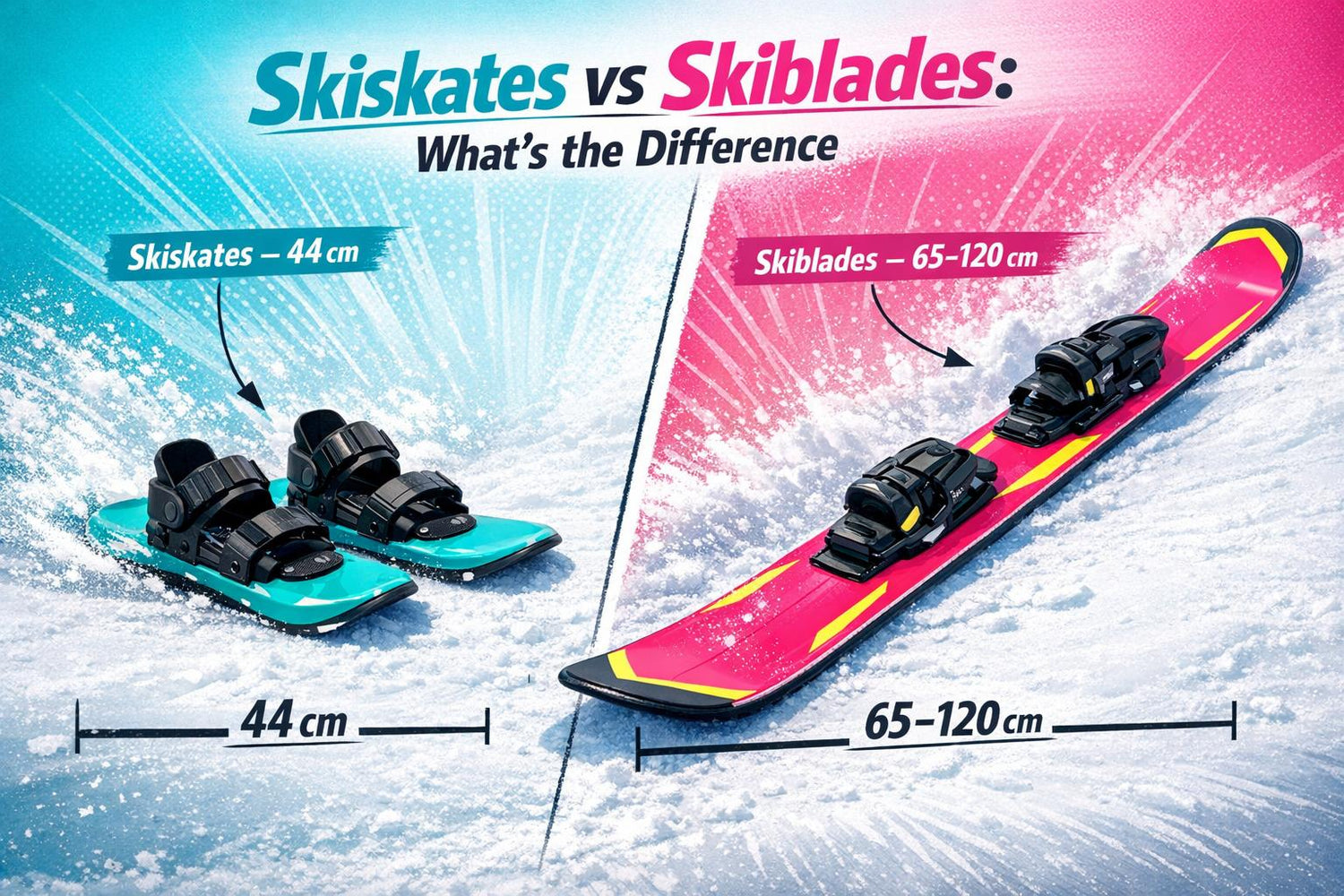
Looking for compact skis that fit in your backpack but still deliver a fun experience on the slopes? Skiskates (44 cm) and Skiblades (65–120 cm) are two great options, but they serve different purposes. Here’s the short version:
- Skiskates: At just 44 cm, these are the smallest skis available. They combine skiing and skating, making them ideal for quick turns, tricks, and tight spaces. Perfect for skaters or hockey players who want a similar feel on snow. Price: $460+.
- Skiblades: These come in three lengths (65 cm, 99 cm, 120 cm) and offer a more stable, ski-like experience. The longer the blade, the better it handles speed and varied terrain. Great for beginners and advanced riders alike. Price: $635–$775.
Both options are lightweight, easy to carry, and compatible with ski or snowboard boots. Whether you want skating-style agility or a mini-ski vibe, there’s a model for you. Let’s break it down further.
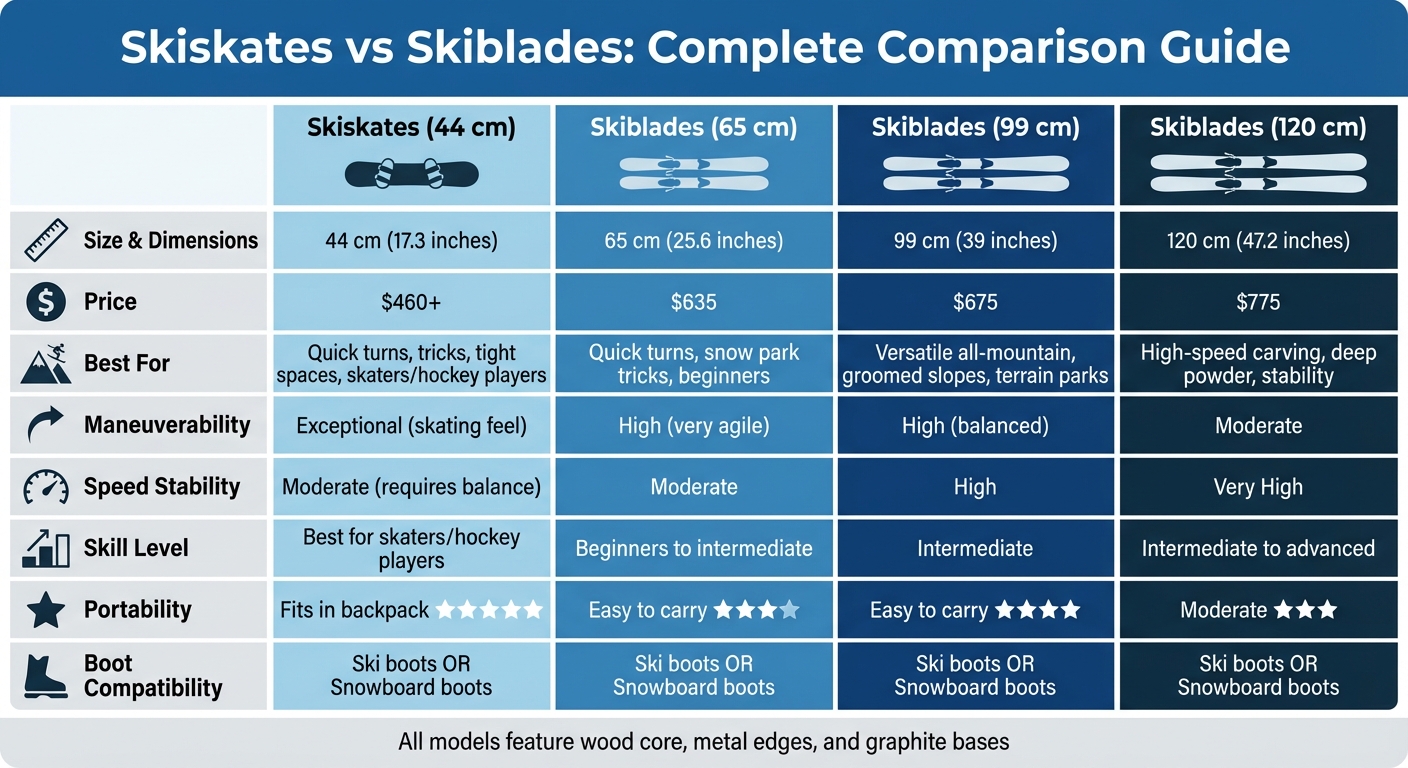
Skiskates vs Skiblades Comparison Chart: Size, Performance, and Price Differences
All you need to know - Snowfeet* | Skiskates | Skiboards | Snowblades | Skiblades FAQ
What Are Snowfeet* Skiskates?
Snowfeet* Skiskates are the world’s shortest skis, measuring just 44 cm (about 17 inches) long. They combine the best of skiing and ice skating, letting you glide across snow with a motion similar to ice hockey or rollerblading. Designed for use with ski or snowboard boots, they provide excellent control and stability on the slopes.
These Skiskates are crafted using European-sourced sustainable wood, metal-reinforced edges, and a graphite-coated base. This thoughtful construction ensures they deliver quick, precise performance. Their compact size means you can easily stash them in a backpack - no need for bulky gear or roof racks. They’re perfect for anyone tired of lugging around traditional ski equipment.
The standout feature? Maneuverability. Their small size allows for jumps, twists, and tricks in snow parks - moves that would be much harder with longer skis. They’re also ideal for groomed slopes, bumpy terrain, and even narrow trails where regular skis can feel clunky. Thanks to their intuitive design, most people can pick up the basics in just 5 minutes.
Snowfeet* Skiskates offer two binding options: snowboard boot bindings for flexibility or ski boot bindings for added stability. With over 50,000 riders worldwide and a flawless 5.0/5 rating from verified reviews, they’ve clearly made an impact. Pricing starts at $460 (regularly $490) for the wood core model.
Now that we’ve covered their portability and performance, let’s dive into how Snowfeet* Skiblades bring a whole new level of carving and speed to the slopes.
What Are Snowfeet* Skiblades?
Snowfeet* Skiblades are compact yet powerful skiing tools available in three lengths - 65 cm, 99 cm, and 120 cm. Designed for agility and stability, they deliver a ski-like experience in a smaller package. With a wood core, metal edges, and graphite bases, these skiblades offer excellent control and speed, making them perfect for carving turns and handling higher speeds.
Each size serves a specific purpose:
- 65 cm model: Ideal for quick turns and tricks in snow parks, thanks to its compact design.
- 99 cm model: A versatile option suited for groomed slopes, terrain parks, and light powder. It strikes a balance between stability and maneuverability.
- 120 cm model: The most stable of the three, built for high-speed carving, deep powder, and uneven terrain.
What sets Skiblades apart is their thoughtful design. They feature distinct sidecuts for responsive turning and twin tips for switch riding and freestyle tricks. These elements make tight carving and smooth transitions a breeze. Plus, they’re handmade in Europe using certified sustainable wood, ensuring durability and performance in all snow conditions.
Skiblades are compatible with standard ski boots, providing a secure fit for advanced maneuvers. They’re tailored for intermediate and advanced skiers looking for the technical precision of skiing without the bulk of traditional skis. Whether you're tackling moguls, hitting jumps, or cruising groomed runs, these skiblades offer a unique mix of portability and performance.
Prices start at $635 for the 65 cm model, $675 for the 99 cm, and $775 for the 120 cm. Like Skiskates, Skiblades reflect Snowfeet*'s dedication to creating compact, high-performance gear for winter sports enthusiasts who value both fun and precision.
Design and Size Differences
When it comes to length, Skiskates and Skiblades couldn’t be more different. Skiskates are just 44 cm (17.3 inches) long, making them the shortest skis in the world. On the other hand, Skiblades come in three lengths - 65 cm (25.6 inches), 99 cm (39 inches), and 120 cm (47.2 inches) - giving you options to match your riding style and the terrain you prefer. Beyond size, materials, bindings, and portability also set these Snowfeet* products apart.
Both Skiskates and Skiblades feature wood cores with cap construction and metal edges, offering great edge control and durability across various snow conditions. They’re compatible with both ski and snowboard boots, unlike traditional skis, which require ski boots. This is a step up from the original fiberglass-reinforced Snowfeet* mini ski skates, making these newer models more versatile and sturdy.
Portability is another area where Skiskates shine. Thanks to their compact 44 cm size, they fit neatly into a regular backpack, making them perfect for quick trips or easy storage. While Skiblades are longer, they’re still much smaller than traditional skis, which usually start at around 150 cm (59 inches). However, the 120 cm Skiblades will need a bit more storage space compared to their smaller counterparts.
Here’s a quick comparison of the key design and size differences:
Design and Size Comparison Table
| Feature | Skiskates (44 cm) | Skiblades (65 cm) | Skiblades (99 cm) | Skiblades (120 cm) | Traditional Skis |
|---|---|---|---|---|---|
| Length | 17.3 inches | 25.6 inches | 39 inches | 47.2 inches | 59+ inches |
| Core Material | Wood core | Wood core | Wood core | Wood core | Wood/Metal/Composite |
| Construction | Cap construction | Cap construction | Cap construction | Cap construction | Various |
| Binding Options | Ski boots OR Snowboard boots | Ski boots OR Snowboard boots | Ski boots OR Snowboard boots | Ski boots OR Snowboard boots | Ski boots only |
| Portability | Fits in backpack | Easy to carry | Easy to carry | Moderate | Requires large bag/rack |
| Price | From $460 | From $635 | From $675 | $775 | $400-$1,200+ |
sbb-itb-17ade95
Performance and Functionality
At just 44 cm, Skiskates bring an ice-skating vibe to the slopes, letting you pull off quick pivots, spins, and sharp direction changes. This makes them perfect for snowparks and fast, precise maneuvers. Skiblades, on the other hand, offer a skiing experience with varying levels of agility and stability depending on their length. The 65 cm version strikes a balance between skating and skiing, while the 99 cm and 120 cm models provide more stability as they get longer. Thanks to their compact size, Skiskates and Skiblades can make impressively tight turns - something that longer skis simply can't match.
Skiskates carve turns much like ice skates or rollerblades, with razor-sharp precision. Skiblades, while also capable of short, precise turns, don't quite match the sharpness of Skiskates. As the Snowfeet team explains:
"One reason people are choosing short skis over regular ones is to be able to manoeuvre with these more easily, not to feel heavy on their feet".
In contrast, traditional skis require much broader, sweeping turns that take up more space on the slope. Beyond turning ability, speed stability is another key factor that separates these models.
Speed stability improves as the length increases. Skiskates need careful weight distribution - especially over the middle of your feet or heels - to stay steady at higher speeds. Skiblades handle speed better, with the 99 cm version earning its nickname as the "Ultimate Short Ski." The 120 cm model even rivals traditional skis in terms of stability, making it a solid choice for those who prioritize confidence on groomed runs.
Each model shines in different terrains, too. Skiskates thrive on groomed slopes, snowparks, and hiking trails, thanks to their small size. Skiblades are built for all-mountain adventures, performing well on groomed runs, moguls, and forest paths. They also handle light powder better than Skiskates. However, both struggle in deep powder due to their shorter lengths. On icy surfaces, Skiskates feel like ice skates, while Skiblades deliver more traditional carving control.
Performance Comparison Table
| Feature | Skiskates (44 cm) | Skiblades (65 cm) | Skiblades (99 cm) | Skiblades (120 cm) | Traditional Skis |
|---|---|---|---|---|---|
| Maneuverability | Exceptional; skating feel | High; very agile | High; balanced | Moderate | Low; bulky |
| Turning Radius | Extremely tight | Short/Tight | Short/Tight | Moderate | Wide |
| Speed Stability | Moderate; requires balance | Moderate | High | Very High | Very High |
| Groomed Slopes | Excellent | Excellent | Excellent | Excellent | Excellent |
| Snowparks | Exceptional | Excellent | Very Good | Good | Fair |
| Moguls | Good | Excellent | Excellent | Very Good | Challenging |
| Powder | Poor | Fair | Fair | Fair | Excellent |
| Learning Curve | Fast for skaters | Fast for most | Fast for most | Moderate | Slow |
Best Uses and Skill Levels
Picking the right Snowfeet* model can make all the difference in how much fun you’ll have and how well you perform on the slopes. Let’s break it down:
Skiskates (44 cm) are a perfect fit for those who already have experience with ice skating, rollerblading, or ice hockey. If you’re used to moving on blades, these will feel like second nature. The Snowfeet Team says, "Skiskates can be a bit challenging because they are very short, but it helps to know how to skate. The learning process is fast, though". These are great for snowparks, groomed slopes, and smaller hills where quick turns and jumps are part of the fun. They give you a unique "skating-on-snow" vibe, but you’ll need good balance to get the most out of them. If that sounds like a challenge, you might want to look at Skiblades instead.
Skiblades, on the other hand, are more versatile and cater to a wider range of skill levels. The 65 cm model offers a nice balance between skating and skiing, making it a great option for beginners who want more stability than Skiskates provide. For intermediate riders, the 99 cm model is a confidence booster, helping to refine technique. Advanced riders love the 120 cm version for its ability to carve sharp turns and tackle tight forest trails.
If you’re brand-new to skiing and don’t have a skating background, Skiblades are the way to go. Their wider base makes them more stable and forgiving, giving beginners an easier time compared to traditional long skis. Plus, they’re a good choice for those with knee injuries. As the Snowfeet Team puts it, "Skiboards are amazing skis for beginners and even for skiers with knee injuries, since it doesn't take too much of strength to carve or take turns".
Terrain also plays a big role in choosing the right model. Skiskates shine on groomed runs and in parks but aren’t ideal for deep powder. Skiblades, however, can handle groomed slopes, moguls, and even forest paths with ease. Both options are more compact than traditional skis, making them easier to store and quicker to grab for spontaneous adventures.
Lastly, Skiskates come with flexible binding options, allowing you to use your existing ski or snowboard boots, depending on the binding version you choose. This adds an extra layer of convenience and adaptability.
Why Snowfeet* Beats Traditional Skis and Snowboards
Let’s face it - traditional skis and snowboards can be a hassle. They’re heavy, awkward to carry, and come with a laundry list of extra gear that can drain your wallet fast. Snowfeet* flips the script. Forget about roof racks or paying oversized luggage fees when traveling. These compact alternatives are easy to bring on public transport or carry by hand - try doing that with 170 cm skis! This streamlined design not only makes travel and storage a breeze but also helps cut down on overall costs.
Speaking of costs, the difference is huge. Entry-level traditional ski setups can cost anywhere from $400 to $800, and that’s just for the skis. Add boots and bindings, and you’re looking at an extra $200–$400. Snowfeet*, on the other hand, starts at just $250 for their Mini Ski Skates. Even their top-tier 120 cm Short Skis come in at $775, which competes with mid-range traditional setups. So, with Snowfeet*, you’re getting high performance and unmatched convenience at a fraction of the cost.
But it’s not just about the price - it’s about the experience. Snowfeet* makes skiing simpler and safer. The learning curve is much easier compared to traditional skis. You don’t have to master the “pizza and french fries” stance. Instead, skiskating feels intuitive, especially if you’ve ever ice-skated or rollerbladed. As the Snowfeet Team explains:
"I believe most skiers would enjoy skiing with 100 cm short skis much more than with long ones because it's easier, less restricting, and much more fun".
This ease of use also translates to more freedom of movement, without the bulk of traditional gear.
Another huge plus? Safety. With less weight and leverage attached to your feet, falls are generally less risky compared to long skis or snowboards. Snowfeet* products are built with fiberglass reinforcement, making them lightweight yet incredibly durable. Whether you’re tackling groomed slopes, snowparks, hiking trails, or even just playing in your backyard, these little powerhouses can handle it all.
Price Comparison
| Equipment Type | Price Range (USD) | Additional Costs |
|---|---|---|
| Traditional Skis (Entry-Level) | $400–$800 | Boots ($200–$400), Bindings ($100–$300) |
| Traditional Snowboard (Entry-Level) | $300–$600 | Boots ($150–$350), Bindings ($100–$250) |
| Snowfeet* Mini Ski Skates (38 cm) | From $250 | None (works with winter shoes) |
| Snowfeet* Skiskates (44 cm) | From $575 | Optional (compatible with existing boots) |
| Snowfeet* Skiblades (65 cm) | From $635 | Optional (compatible with existing boots) |
| Snowfeet* Short Skis (120 cm) | $775 | Optional (compatible with existing boots) |
Conclusion: Choosing the Right Snowfeet* Option
Here’s the takeaway: Snowfeet* offers a new way to enjoy winter sports, blending design, performance, and portability. If you’re after that skating-on-snow vibe, Skiskates (44 cm) are your best bet. They’re quick, agile, and perfect for tricks or navigating bumpy terrain. Plus, they’re super portable - ideal for anyone who’s comfortable with inline skating or ice hockey moves.
For a more ski-like experience, Skiblades are the way to go. The 65 cm version is beginner-friendly and great for park tricks. The 99 cm strikes a balance between carving and versatility, while the 120 cm excels at stability and handles powder like a pro.
What’s great about Snowfeet* is that you can’t really go wrong. Both options beat traditional setups when it comes to portability, ease of learning, and sheer fun. They’re made with care in Europe, featuring quality wood cores, metal edges, and graphite bases. And they’re way more affordable than traditional skis or snowboards that require pricey boots and bindings.
Your choice boils down to your riding style. Want freedom and portability? Go with Skiskates. Prefer responsive carving and a ski-like feel? Pick a Skiblade length that suits your skills. Either way, you’re getting gear that’s lighter, easier to use, and a lot more fun than bulky traditional setups.
Snowfeet* makes winter sports simple, budget-friendly, and exciting. Whether you’re cruising groomed trails, exploring off-piste, or just having some casual fun in the snow, these compact, high-performance options deliver more than you’d expect. It’s time to leave behind the heavy, expensive gear and embrace a whole new way to enjoy winter. Snowfeet* changes the game - now go out and enjoy it!
FAQs
Which is easier for a total beginner: Skiskates or Skiblades?
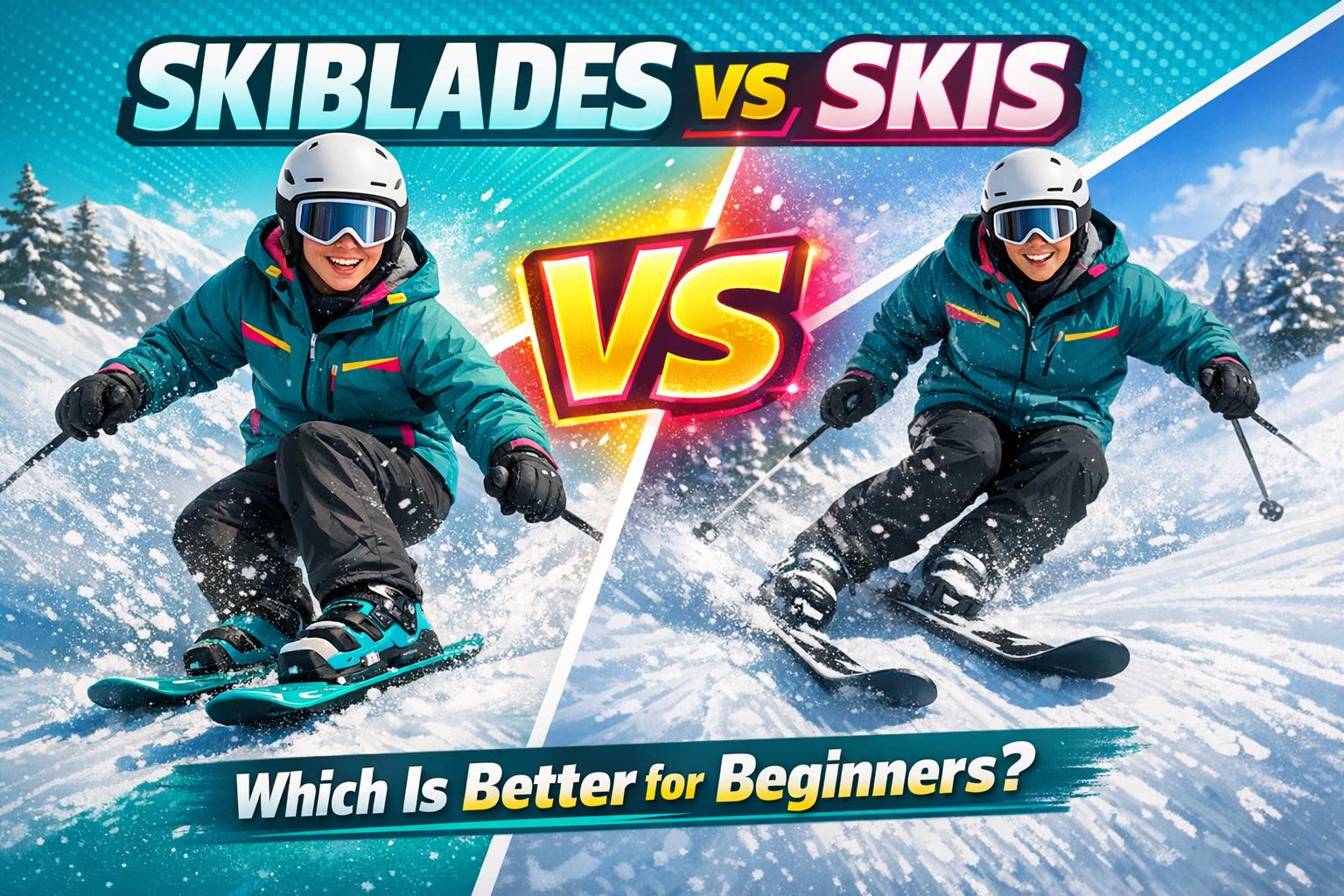
Skiblades tend to be a better choice for beginners compared to skiskates. Their longer length - typically 65 cm to 99 cm - provides more stability, making them feel more natural, especially if you’ve tried skiing or snowboarding before. On the other hand, skiskates, which are only 44 cm long, demand greater balance and coordination because of their skate-like design. If you’re new to snow sports and want an easier learning curve, skiblades are the way to go.
What boot and binding setup do I need for each?
Snowfeet* skiskates come with non-release bindings that work with regular winter footwear, such as snow boots. This makes them straightforward and user-friendly, especially for casual riders. On the other hand, skiblades typically include snowboard-style or adjustable bindings, which provide better control - great for carving or tackling deeper snow. Deciding between the two comes down to your skill level, the type of terrain you’ll be on, and whether you prioritize ease of use or performance.
Which length Skiblades should I get for my terrain and speed?
The best skiblade length depends on how you like to ride and your skill level. If you're into tricks, moguls, or tackling technical terrain, go for 65 cm skiblades - they're quick and super nimble. Prefer higher speeds, carving down slopes, or floating through powder? Check out 99 cm or 120 cm skiblades for a smoother and more stable experience. Snowfeet skiblades are a solid choice for beginners and offer a fun, versatile alternative to traditional skis or snowboards.











Leave a comment
This site is protected by hCaptcha and the hCaptcha Privacy Policy and Terms of Service apply.