



















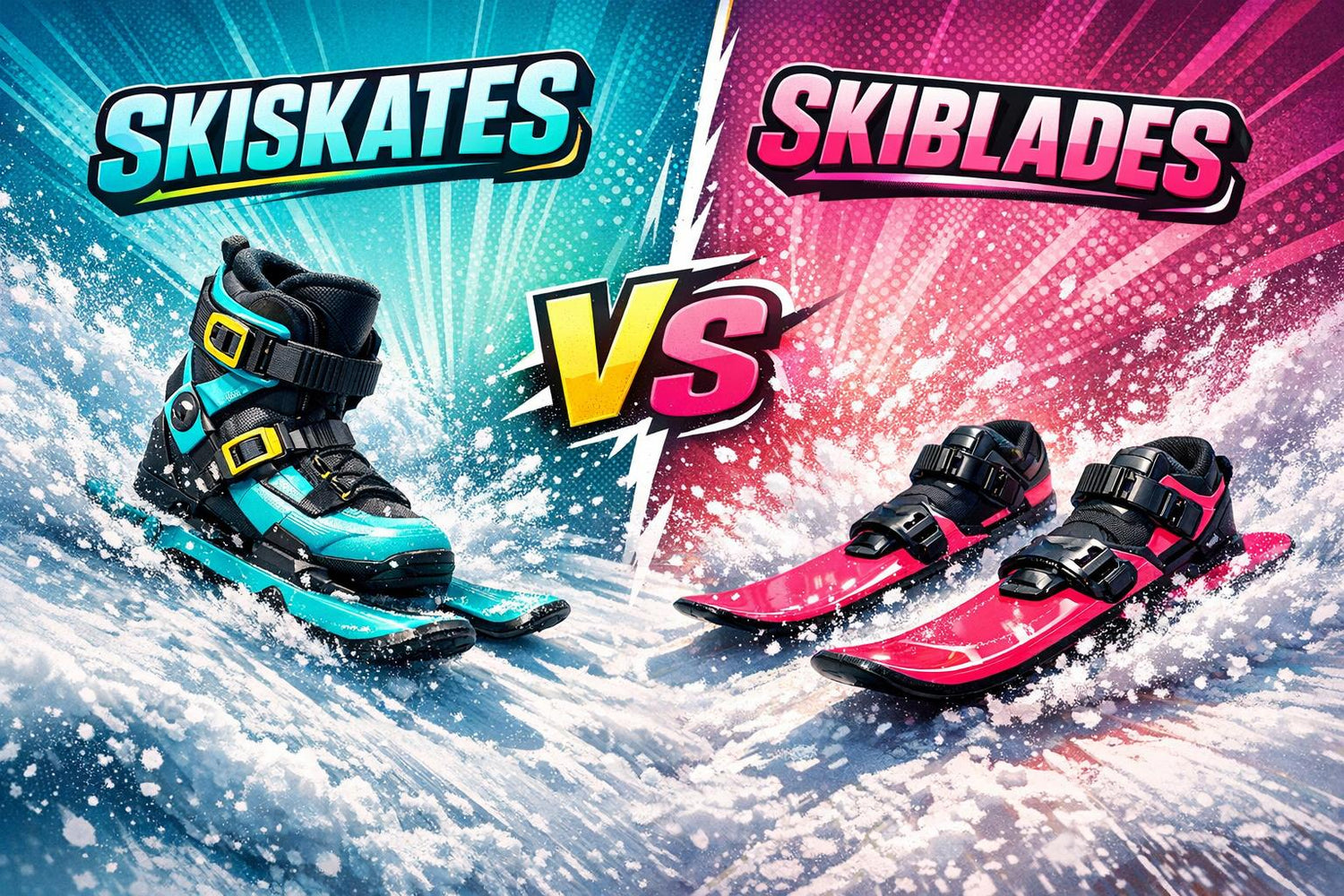
If you’re trying to decide between Skiskates and Skiblades, here’s the quick takeaway:
- Skiskates (44 cm) are ultra-compact, lightweight, and feel like skating on snow. Perfect for tricks, quick turns, and portability. They fit in a backpack and work with regular winter or snowboard boots. Starting at $490, they’re great for groomed slopes and casual fun.
- Skiblades (65–120 cm) offer more stability and a ski-like experience. They’re better for carving, speed, and handling light powder. With sizes tailored to different terrains, prices range from $550 to $790.
Quick Comparison:
| Feature | Skiskates (44 cm) | Skiblades (65–120 cm) |
|---|---|---|
| Length | 17.3 inches (44 cm) | 25.6–47.2 inches (65–120 cm) |
| Portability | Fits in a backpack | Compact but bulkier |
| Best Terrain | Groomed slopes, parks | Groomed slopes, light powder |
| Skill Level | Intermediate to advanced | Beginner to advanced |
| Price Range | From $490 | From $550 to $790 |
Choose Skiskates if you want something portable and playful, or go with Skiblades for more control and versatility. Both are easier to learn than traditional skis and don’t require clunky boots. Keep reading for more details on each option!
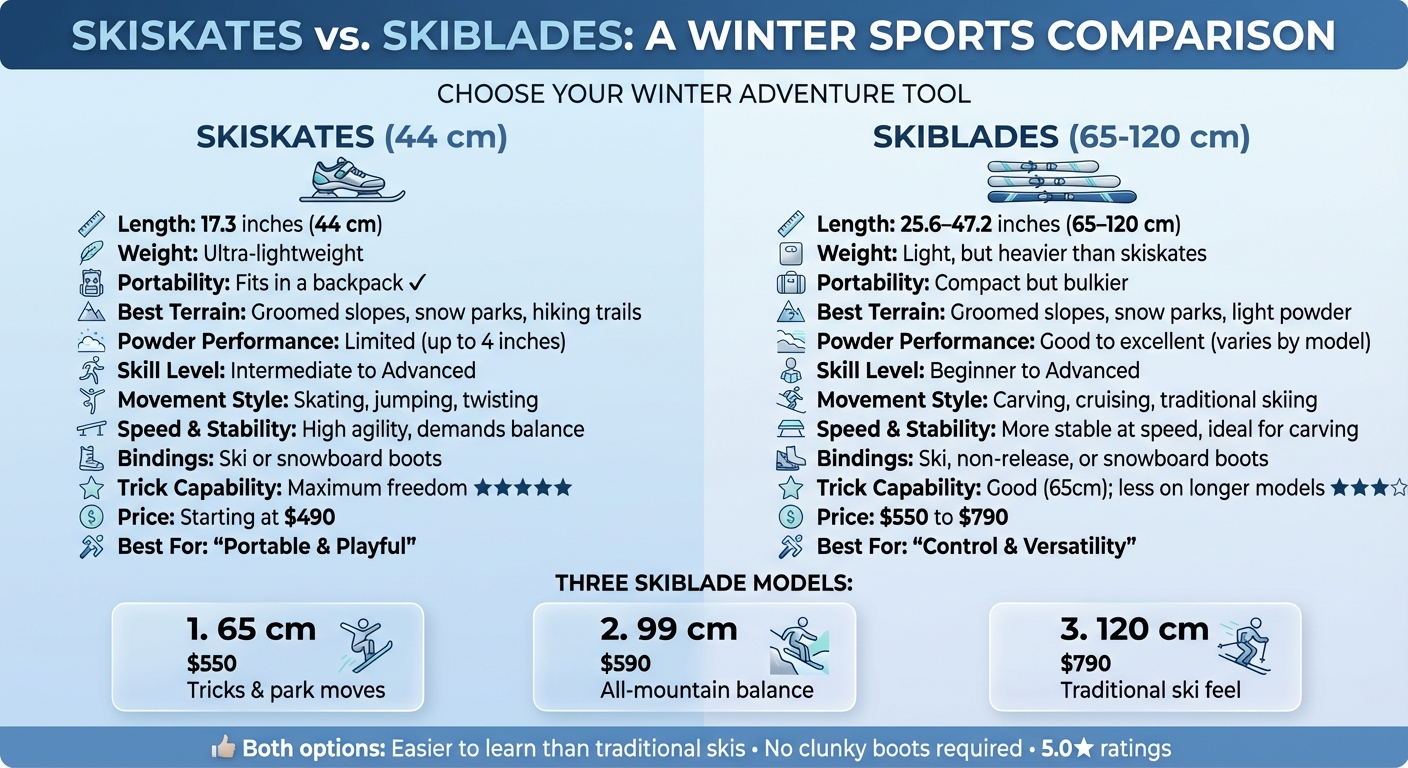
Skiskates vs Skiblades Comparison Chart: Length, Price, Terrain and Features
Snowfeet* Skiskates: Compact Design and Easy Transport
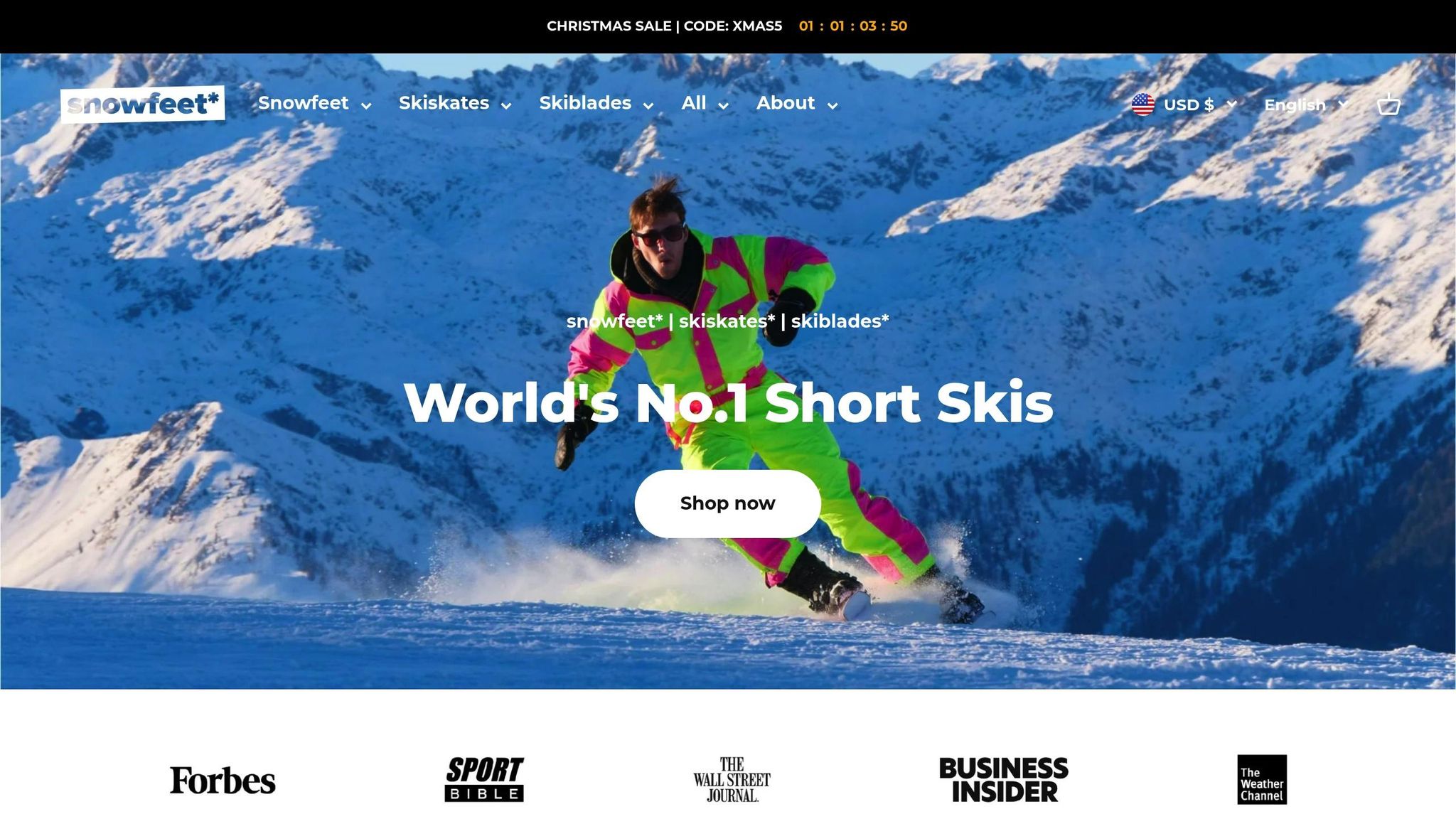
Key Features of Snowfeet* Skiskates
Snowfeet* Skiskates pack impressive performance into a small, travel-friendly design. Measuring just 17.3 inches (44 cm) in length, they’re easy to stash in your backpack. Built with a high-quality wood core and cap construction - similar to standard skis - they deliver durability and reliability. The metal ski edges ensure solid grip and control, especially on groomed slopes.
You can choose between bindings for ski boots (sizes 4.5–14.5 US) or snowboard boots (sizes 6–14.5 US), giving you both performance on the slopes and comfort for walking around the resort. Their compact size also makes them versatile, letting you explore hiking trails, snow parks, backyard hills, or even sledding slopes - places where full-length skis might feel like overkill. With more than 50,000 riders worldwide and a stellar 4.9 out of 5-star rating from over 5,500 verified reviews, it’s clear that Snowfeet* Skiskates are built for real-world fun.
Benefits of Snowfeet* Skiskates
Their portability changes the game. Forget about roof racks, bulky ski bags, or the hassle of hauling traditional skis. Snowfeet* Skiskates fit right into your backpack, so you’re always ready for action.
"I hate getting stuck on a hill in skis because they're so long and bulky. Since these are shorter, you can just skate right up."
Learning to use them is quick and easy. If you’ve ever ice skated or inline skated, you’ll feel right at home. Many people pick up the basics in just a few minutes, and even complete beginners often feel confident within a day. They’re lighter on your legs, easier to control, and less intimidating for newcomers. Plus, no more worrying about tangled ski tips or awkward falls - Skiskates are designed to keep things simple and safe.
Starting at $490 for the 44 cm wood core model, they offer a cost-effective alternative to the hassle and expense of traditional ski gear. And let’s be honest - who doesn’t love the idea of hitting the slopes without all the extra baggage?
Snowfeet* Skiblades: Performance and Stability for All Skill Levels
Key Features of Snowfeet* Skiblades
Snowfeet* Skiblades come in three lengths - 65 cm, 99 cm, and 120 cm - each tailored for different riding styles and terrains. Built with a durable wood core and cap construction, they’re crafted to rival the quality of high-end traditional skis.
- 65 cm: Perfect for tricks and park moves, this model is nimble and thrives in light powder (up to 4 inches).
- 99 cm: Strikes the ideal balance between agility and stability, making it great for deep carving and powder runs.
- 120 cm: Designed for those seeking a more traditional ski feel, it offers excellent carve control and stability.
Binding options vary to suit each model’s purpose. The 65 cm pairs with non-release or snowboard bindings, the 99 cm works with standard release, pro, or snowboard bindings, and the 120 cm is optimized for pro ski bindings. Both the 99 cm and 120 cm models are built to handle powder conditions, while the 65 cm excels in lighter snow.
Benefits of Snowfeet* Skiblades
What sets Snowfeet* Skiblades apart? Their longer, firmer base provides better balance and control compared to skiskates, while their compact size makes turning smoother and eliminates the hassle of crossed tips. For riders chasing a traditional ski experience, these skiblades hit the mark.
The 99 cm and 120 cm models are especially suited for intermediate and advanced riders, delivering speed, precision carving, and reliable performance across various terrains.
"Going fast I was in complete control of every move, turns and stops." – Daniel Siouffi, Verified User
Snowfeet* Skiblades merge the compact convenience of skiskates with the performance of traditional skis. Whether you're perfecting jumps in the park or gliding through fresh powder, they’ve got you covered. Prices start at $550 for the 65 cm, $590 for the 99 cm, and $790 for the 120 cm. With consistent 5.0/5 star reviews across the board, these skiblades prove they’re worth every penny.
Skiskates vs. Skiblades: Direct Comparison
Comparison Table: Skiskates vs. Skiblades
Snowfeet* has carved out a niche by blending traditional skiing with modern mini ski designs. Here’s a side-by-side look at how their Skiskates and Skiblades compare:
| Feature | Snowfeet* Skiskates (44 cm) | Snowfeet* Skiblades (65–120 cm) |
|---|---|---|
| Length | 44 cm | 65 cm, 99 cm, 120 cm |
| Weight | Ultra-lightweight (wood or fiberglass core) | Light, but heavier than Skiskates |
| Portability | Fits in a standard backpack | Compact; 65 cm fits in gear bags, larger sizes less portable |
| Best Terrain | Groomed slopes, snow parks, hiking trails | Groomed slopes, snow parks, light powder (99+ cm models) |
| Powder Performance | Limited (up to 4 inches) | Good to excellent (varies by model) |
| Skill Level | Intermediate to Pro (great for skaters) | Beginner to Advanced |
| Preferred Movement | Skating, jumping, twisting | Carving, cruising, traditional skiing |
| Speed & Stability | High agility; demands balance | More stable at speed; ideal for carving |
| Bindings | Works with ski or snowboard boots | Options for ski, non-release, or snowboard boots |
| Trick Capability | Maximum freedom for spins and jumps | Good for tricks (65 cm); less so on longer models |
| Price Range | From $575 | From $635 (65 cm) to $775 (120 cm) |
Both options reflect Snowfeet*’s commitment to portability and performance. Skiskates are perfect if you’re seeking the feel of skating on snow, while Skiblades offer a mix of stability and versatility, bridging the gap between mini skis and traditional setups.
Which Is Right for You?
The table above highlights the main differences, but let’s break it down further to help you decide.
Skiskates are a great fit if you’re already skilled at ice hockey, inline skating, or rollerblading. The transition is quick - just a few minutes for experienced skaters. Their lightweight, backpack-friendly design makes them perfect for quick getaways or hitting the backcountry. Plus, they’re ideal for groomed slopes and snow parks, offering unmatched freedom for tricks and jumps.
Skiblades, on the other hand, are better suited for those looking for a more traditional skiing feel. Beginners will appreciate the added stability, while the different size options cater to various styles. The 65 cm model shines in parks and light powder, the 99 cm strikes a balance for all-mountain use, and the 120 cm model delivers a near-classic ski experience with excellent carving control. They’re also easier on the knees, requiring less effort to turn.
In short, go with Skiskates for maximum portability and a skating-inspired ride. Opt for Skiblades if stability and a more traditional skiing experience are what you’re after. It all comes down to your priorities: do you value skating freedom or a stable, ski-like feel?
sbb-itb-17ade95
Why Snowfeet* Beats Traditional Skis and Snowboards
Advantages of Snowfeet* Over Traditional Gear
Skiing has been around for ages, but who says bigger is always better? Snowfeet* flips the script, offering a lightweight, fun alternative to traditional skis and snowboards without all the bulk.
Let’s talk portability - this is where Snowfeet* really steals the show. Forget roof racks and oversized bags. Snowfeet* skiskates and skiblades are so compact they fit right into a standard backpack. That’s right, no need to wrestle with awkward gear or pack the car like a game of Tetris.
And here's a game-changer: the learning curve. With Snowfeet*, you can get the hang of it in just about 5 minutes. If you’ve got experience in ice skating or hockey, you’ll feel right at home almost instantly. Compare that to traditional skiing, which often demands pricey lessons and a lot of patience. Plus, you can use Snowfeet* with your regular waterproof winter boots - no clunky, uncomfortable ski boots required. This simplicity opens up a whole new world of possibilities, taking you beyond the confines of the resort.
Speaking of versatility, Snowfeet* isn’t just for the slopes. These mini skis perform on hiking trails, sledding hills, forest paths, and even in your own backyard. Traditional skis? They’re mostly stuck on groomed resort runs.
Then there’s safety and ease of movement. The shorter design of Snowfeet* means no more awkwardly crossed ski tips, and falls are less risky since there’s no long ski to twist your legs around. Getting back up is a breeze, and navigating bumpy terrain feels way less intimidating. If you’ve got knee issues, the reduced strain is a huge bonus.
Pros and Cons Table: Snowfeet* vs. Traditional Gear
Here’s a quick side-by-side look at how Snowfeet* stacks up against traditional skis and snowboards:
| Feature | Snowfeet* Products | Traditional Skis & Snowboards |
|---|---|---|
| Portability | Fits in a backpack; ultra-lightweight | Requires roof racks or large bags; heavy |
| Learning Time | 5 minutes to a few hours | Days or weeks; often requires professional lessons |
| Footwear | Regular winter boots or snowboard boots | Stiff, expensive plastic ski boots |
| Terrain Options | Slopes, trails, hills, backyards | Primarily groomed resort slopes |
| Uphill Movement | Can skate up small inclines | Nearly impossible without removing gear |
| Maneuverability | High agility; easy turns and tricks | Lower agility; tips can cross; awkward in tight spaces |
| Deep Powder | Limited performance (best with longer models, such as 99–120 cm) | Excellent performance with proper skis |
| Price Range | $190–$775 | $400–$1,200+ (plus boot costs) |
| Fall Safety | Safer; easier to stand back up | Higher risk of leg/knee injuries due to longer leverage |
| Fun Factor | Skating freedom; park tricks; versatile | Traditional carving focus; limited movement styles |
The takeaway? Snowfeet* offers unbeatable portability, faster learning, and the freedom to explore beyond the slopes. Sure, traditional skis might have the upper hand in deep powder, but for most casual riders, the compact, versatile design of mini skis is a no-brainer. As Uncrate perfectly sums it up:
"Far more portable and affordable than traditional skis or snowboards."
Conclusion: Choosing the Right Mini Ski Gear
Key Takeaways
When it comes to mini skis, your choice between skiskates and skiblades boils down to the kind of experience you’re after. Skiskates, measuring just 44 cm, are perfect for those who love the feel of skating - ideal for hockey players or inline skaters looking to pull off quick maneuvers or tricks. Plus, their compact size means they can fit right into your backpack. On the other hand, skiblades, ranging from 65 to 120 cm, offer a more classic skiing vibe. They’re great for carving turns and even handling light powder, with the 99 cm model standing out as a favorite for its balance of control and freedom.
Both options beat traditional skis in portability, ease of learning (you can get the hang of them in as little as 5 minutes), and versatility. Snowfeet* has proven that mini skis can pack a ton of fun into a smaller package. Forget about needing specialized ski boots - these are great for all kinds of terrain, whether you're cruising down a groomed slope or exploring your local trails. Whether you’re carving, skating, or just enjoying the snow, Snowfeet* gear makes winter adventures lighter and more fun.
Explore Snowfeet* Products
Ready to gear up? Snowfeet* offers a range of mini ski options to suit your style. Check out their store for affordable choices starting at $190, including standout models like the 44 cm Skiskates and the 99 cm Skiblades.
Enjoy free priority shipping (around 3 business days!), and you can pick bindings that work with either ski or snowboard boots. Don’t forget to grab some wax and accessories to keep your gear in top shape. The snow is waiting - time to hit the slopes and skate your way into winter fun!
How to choose Snowfeet* Snowblades | Skiblades | Skiboards | Short Ski
FAQs
What’s the difference between Skiskates and Skiblades?
Skiskates and Skiblades, both compact mini-skis from Snowfeet, offer distinct experiences thanks to their differences in size, bindings, and riding styles. Let’s break it down:
Skiskates are the smallest of the two, measuring just 17 inches (44 cm). They come with non-release bindings that work with either ski boots or snowboard boots. If you’re after a snow experience that feels like skating, these are your go-to. Plus, their small size makes them super portable and beginner-friendly - perfect for anyone looking for a quick, fun way to hit the slopes without a steep learning curve.
Skiblades, on the other hand, are a bit more like traditional skis. They come in longer lengths - 25.5 inches (65 cm), 39 inches (99 cm), and 47 inches (120 cm) - and feature bindings specifically made for ski boots. This gives them a more stable feel, making them great for freestyle tricks or smoother downhill runs.
Both options are built with Snowfeet’s lightweight and durable materials, so the choice really comes down to what you’re looking for: the ultra-maneuverability and portability of Skiskates or the stability and ski-like feel of Skiblades.
Which is better for beginners: skiskates or skiblades?
For those just starting out, Snowfeet skiblades are a fantastic option. These mini-skis, roughly 15 inches (38 cm) long, are lightweight, easy to carry, and beginner-friendly. Their forgiving design makes it simpler to pick up basic skills like gliding and turning. Plus, with prices starting at $140, they’re a budget-friendly way to dive into snow sports.
Built with a durable wood-core construction, Snowfeet skiblades are lighter than traditional skis, which can help ease the nerves of first-timers. Their compact size isn’t just practical for carrying around - kids and adults alike will find them less intimidating. While skiskates (slightly longer at 17 inches/44 cm) are awesome for tricks and groomed trails, they demand a bit more confidence and skill, which might feel overwhelming for beginners.
If you want an easy, versatile, and affordable way to enjoy the slopes, Snowfeet skiblades are definitely worth a look.
How do Skiskates and Skiblades compare to traditional skis when it comes to portability?
Skiskates (about 17 inches) and Skiblades (25–47 inches) are a game-changer when it comes to portability. Traditional skis, which usually measure between 71 and 85 inches, can feel like hauling a small tree around. But Snowfeet's compact designs? They slide right into a regular backpack - no need for a bulky, dedicated ski bag. Perfect for quick day trips or those spur-of-the-moment adventures.
What really sets Snowfeet apart is their lightweight fiberglass-composite build and the fact that they work with your regular winter boots. No heavy bindings. No special gear. Just toss them in your car or carry-on, and you're good to go. Unlike traditional skis that hog space and demand extra effort to transport, these are a breeze to pack and carry.











Leave a comment
This site is protected by hCaptcha and the hCaptcha Privacy Policy and Terms of Service apply.