



















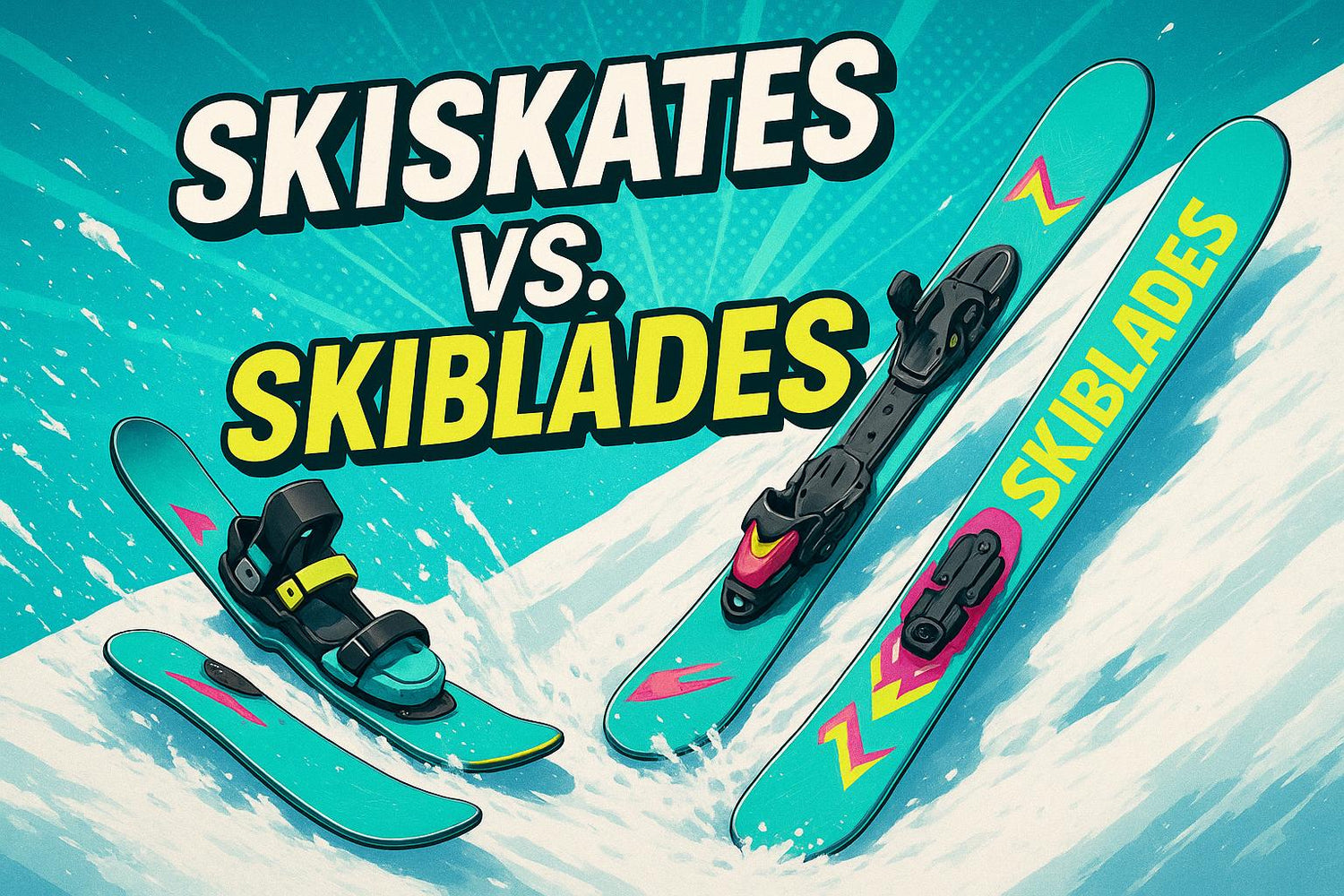
Looking for a lighter, easier way to enjoy the slopes? Snowfeet’s skiskates and skiblades are compact alternatives to bulky skis. Skiskates, at just 17.3 inches long, blend skiing and skating for quick, agile moves. Skiblades, available in 25.6, 39, and 47.2-inch lengths, offer more stability and a skiing-like feel.
Quick Takeaways:
- Skiskates: Best for skaters or freestyle riders who want portability and agility.
- Skiblades: Ideal for beginners or speed lovers, with more control and options for powder or steeper runs.
Comparison Highlights:
- Size: Skiskates are ultra-compact (fits in a backpack). Skiblades are longer but still portable.
- Skill Level: Skiblades are beginner-friendly; skiskates suit those with skating experience.
- Terrain: Skiskates excel on groomed runs and parks. Skiblades handle powder and varied slopes better.
- Price: Skiskates start at $490, while skiblades range from $635 to $775.
Pick skiskates for a skating-like experience or skiblades for a more skiing-oriented ride. Both are easier to learn and carry than traditional gear, making winter sports more fun and accessible.
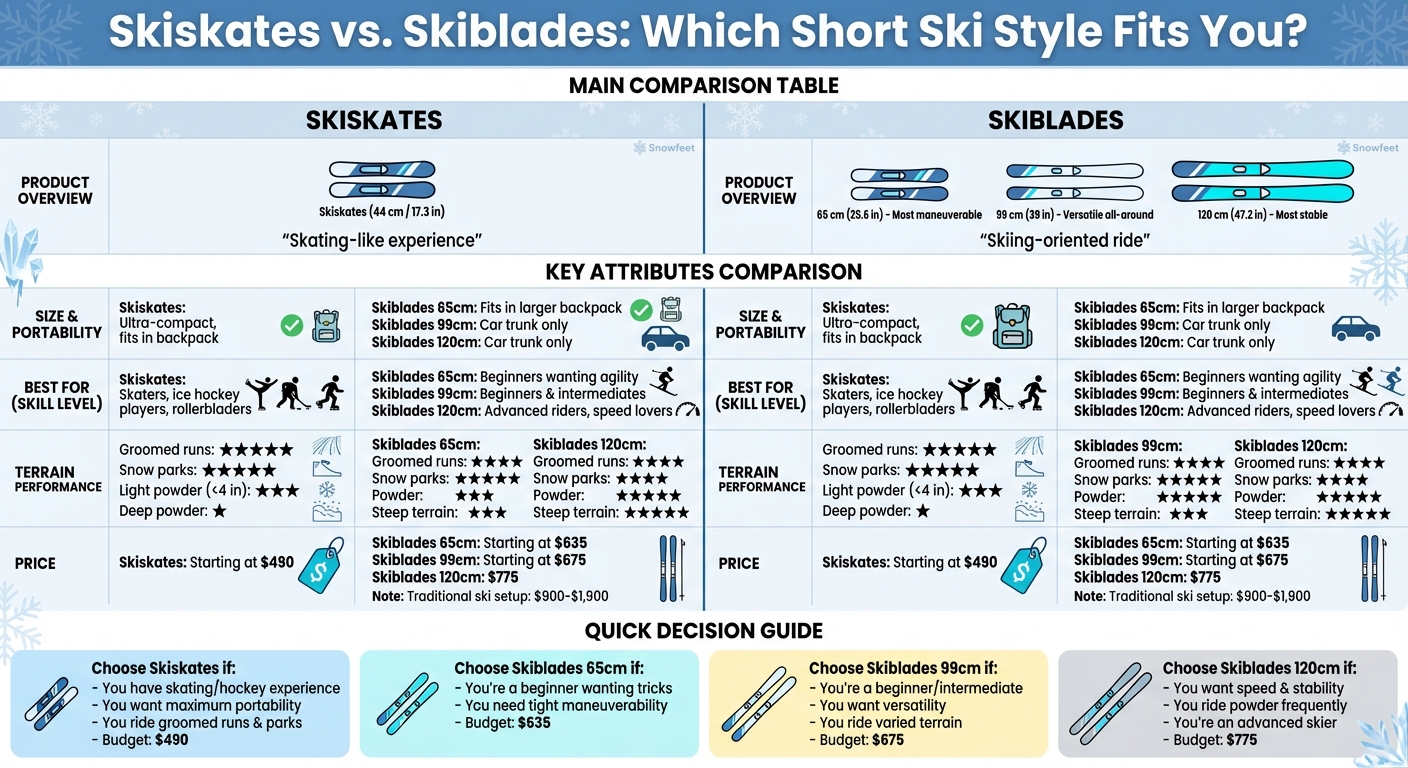
Skiskates vs Skiblades Comparison Chart: Size, Terrain, Skill Level & Price
All you need to know - Snowfeet* | Skiskates | Skiboards | Snowblades | Skiblades FAQ
What Are Skiskates?
Skiskates, created by Snowfeet*, are essentially "skates for snow." At just 17.3 inches (44 cm) long, they’re the shortest skis you’ll find. Think of them as a blend of skiing and skating - offering a ride that feels like a mix of rollerblading and ice hockey. Once you get the concept, it’s easy to see why they’re perfect for specific riding styles.
Unlike traditional skis that focus on straight downhill runs, skiskates let you move in multiple directions. You can carve smooth turns, jump, and tackle flat or uneven terrain without a hitch. This flexibility makes them stand out compared to the heavier, bulkier gear you’d typically associate with big-name ski brands. Let’s break down their design and performance to show what makes Snowfeet* skiskates a game-changer.
Skiskate Construction and Design
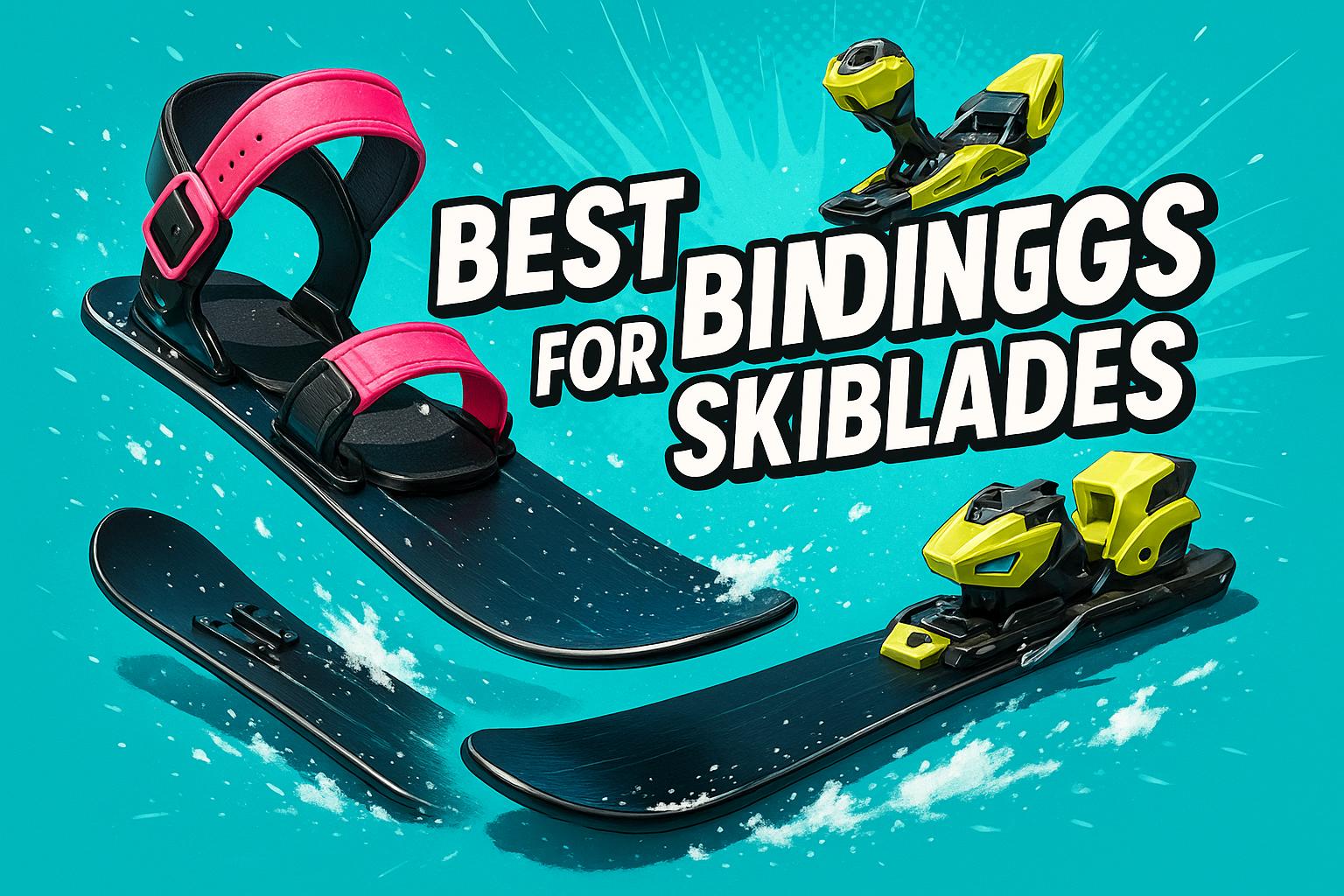
Snowfeet* skiskates are built with the same quality materials you’d find in traditional skis. They feature a wood core, metal edges, and cap construction. The bindings are locked and non-release, giving you solid edge grip on packed snow. Plus, they’re adjustable and work with both ski boots and snowboard boots - no need to buy new footwear. Starting at $490, they’re designed to be durable and work seamlessly with the gear you already own.
Where to Use Skiskates
Skiskates shine on groomed runs, in snowparks, and on narrow trails. They’re perfect for terrain parks, short hikes, or areas where traditional skis might feel clunky. They can even handle up to 4 inches (10 cm) of powder, though they’re not built for deep backcountry snow or icy, steep slopes. Most ski resorts in the U.S. and Europe allow their use without any hassle.
How Skiskates Feel to Ride
Riding skiskates feels responsive and quick, like inline skating. If you’ve played ice hockey or spent time rollerblading, they’ll feel surprisingly familiar. For beginners, there might be a short adjustment period, but the learning curve is fast and fun. You’ll be carving sharp turns and zipping around with confidence in no time, much faster than you would with traditional skis.
What Are Skiblades?
Skiblades - also known as snowblades, skiboards, or mini skis - are shorter, wider alternatives to traditional skis. They combine the control of full-length skis with a compact, nimble design, offering a playful yet stable experience. The term "Skiboards" was first introduced in 1996 to describe this hybrid of skis and snowboards, featuring twin tips and a wider profile than the skis of that time. Snowfeet* offers skiblades in three lengths - 65 cm (25.6 inches), 99 cm (39 inches), and 120 cm (47.2 inches) - each designed for specific riding styles and terrain preferences.
While traditional skis can be 5 to 6 feet long, skiblades are much shorter and easier to handle. This makes them beginner-friendly while still delivering a fun, dynamic ride for intermediate and advanced skiers. They offer the carving ability and control of regular skis but with more freedom for jumps, quick turns, and adapting to different terrains. Here’s a closer look at the different Snowfeet* skiblade models and what makes each one special.
Snowfeet* Skiblade Lengths Explained
Snowfeet* offers skiblades in three lengths, each tailored to different skiing styles and terrains:
- 65 cm Skiblades (starting at $635): These are the most compact and highly maneuverable option, perfect for quick turns, tricks, and navigating tight spaces like tree runs or moguls. They perform best on groomed slopes, packed snow, and in snow parks. With bindings for non-release or snowboard boots, they’re a great choice for anyone new to skiing who wants a lightweight, easy-to-handle option.
- 99 cm Skiblades (starting at $675): A versatile middle-ground option, these skiblades provide enough surface area for stability while maintaining agility. They’re great for groomed slopes, moderate powder, and terrain parks, making them ideal for all-around use. Available with non-release, release ski, or snowboard boot bindings, they’re perfect for intermediate to advanced skiers looking for a well-rounded experience.
- 120 cm Skiblades ($775): The longest option from Snowfeet*, these skiblades offer a more traditional skiing feel with added stability. They’re built for higher speeds and provide better floatation in powder. Featuring release ski bindings for added safety, they’re ideal for skiers transitioning from regular skis or those who enjoy cruising on groomed runs, light powder, or moderate off-piste terrain.
Where to Use Skiblades
Skiblades are incredibly versatile and can be used on groomed slopes, in snow parks, or even on forest trails. The 65 cm model is perfect for tight, technical areas like moguls or tree runs. The 99 cm skiblades are great for a mix of terrains, offering flexibility whether you’re carving on packed snow or testing out a terrain park. If you’re venturing into light backcountry or cruising open runs, the 120 cm skiblades are your go-to choice. Their compact design also makes them ideal for crowded slopes and narrow trails where quick maneuvering is key.
How Skiblades Feel to Ride
Riding skiblades is a unique blend of smooth control and playful agility. They let you carve clean turns with ease, while their shorter length allows for quick direction changes. As you move up in length, you’ll notice increased stability at higher speeds. Beginners will appreciate how easy they are to learn on, while experienced skiers can enjoy mixing in tricks, jumps, and creative carving. Snowfeet* skiblades offer a lightweight, streamlined experience that’s easier to handle than traditional skis, making them a fun and versatile option for all skill levels.
sbb-itb-17ade95
Skiskates vs. Skiblades: Direct Comparison
Let’s break down the main differences between skiskates and skiblades to help you figure out which Snowfeet* product fits your riding style, skill level, and the terrain you plan to take on.
Size and Portability
Skiskates are the ultimate in compact design, measuring just 44 cm (17.3 in). Their small size makes them super easy to carry - they can slide into a standard backpack, fit neatly in your car trunk, or even stow away in an airline overhead bin. If you’re a traveler trying to keep your gear light, these are a no-brainer.
Skiblades, on the other hand, come in three lengths - 65 cm, 99 cm, and 120 cm - offering more variety. The 65 cm version can still squeeze into a larger backpack and might fit in an overhead bin, depending on your bag and airline. The 99 cm and 120 cm models, however, are better suited for car trunks. Even the longest skiblades are far easier to transport than traditional skis, which can stretch 5 to 6 feet.
| Product Type | Length | Fits in Backpack | Fits in Car Trunk | Fits in Overhead Bin |
|---|---|---|---|---|
| Skiskates | 44 cm (17.3 in) | Yes | Yes | Yes |
| Skiblades (Short) | 65 cm (25.6 in) | Yes (larger pack) | Yes | Possibly |
| Skiblades (Medium) | 99 cm (39 in) | No | Yes | No |
| Skiblades (Long) | 120 cm (47.2 in) | No | Yes | No |
Now let’s look at how they stack up for different experience levels.
Learning Difficulty by Skill Level
For beginners, skiblades are a friendlier option. Their shorter length and wider base provide solid stability and control, helping new riders feel confident right away. If you’re just starting out, the 99 cm or 120 cm skiblades are great choices for their extra support.
Skiskates, however, shine for those with experience in skating sports like ice hockey, rollerblading, or ice skating. The movements feel natural, making the transition easier. That said, complete beginners might find skiskates trickier to master due to their narrower base, but most pick up the technique quickly.
| Rider Background | Recommended Product | Why It Works |
|---|---|---|
| Complete beginner (no experience) | Skiblades 99 cm or 120 cm | Provides maximum stability and control |
| Ice hockey or rollerblading skills | Skiskates 44 cm | Familiar movements make learning smoother |
| Intermediate skier seeking agility | Skiblades 65 cm or 99 cm | Combines control with easy maneuverability |
| Advanced skier wanting speed | Skiblades 120 cm | Stability for carving at higher speeds |
Now that we’ve covered skill levels, let’s dive into how they perform on different terrains.
Riding Style and Terrain Match
Skiskates deliver a skating-like experience with playful, quick movements. They’re perfect for groomed slopes, snow parks, hiking trails, and even frozen lakes. However, they’re best for light powder (up to about 4 inches) and can struggle in deeper, ungroomed snow.
Skiblades, on the other hand, offer a more traditional skiing vibe with added agility. They handle a variety of terrain, including groomed runs, snow parks, and forest paths. The longer models (99 cm and 120 cm) are especially great for powder and steeper slopes. Plus, their twin tip design lets you ride both forwards and backwards.
| Terrain Type | Skiskates (44 cm) | Skiblades (65 cm) | Skiblades (99 cm) | Skiblades (120 cm) |
|---|---|---|---|---|
| Groomed slopes | Excellent | Excellent | Excellent | Excellent |
| Snow parks | Excellent | Excellent | Excellent | Very good |
| Light powder (<4 in) | Good | Very good | Excellent | Excellent |
| Deep powder | Poor | Fair | Excellent | Excellent |
| Steep terrain | Fair | Good | Very good | Excellent |
| Tree runs/moguls | Excellent | Excellent | Very good | Good |
Boot Compatibility and Comfort
One of the standout features of Snowfeet* products is their boot flexibility. Unlike traditional setups that require stiff, specialized ski boots, both skiskates and skiblades work with snowboard boots, ski boots, or even regular winter footwear. This versatility means you can choose whatever makes you most comfortable without splurging on extra gear.
Safety and Control
Both skiskates and skiblades reduce the risk of tip crossing, a common issue with longer skis that can lead to falls. Their shorter tips make for a smoother, more confident ride.
Skiskates are quick and responsive, ideal for moderate speeds. Skiblades, meanwhile, offer more control at higher speeds. The 65 cm model strikes a nice balance between agility and stability, while the 99 cm and 120 cm versions provide excellent control for faster, more advanced riding. The 120 cm skiblades even include release bindings, which disengage during falls for added safety - just like traditional ski bindings.
How to Choose Your Snowfeet* Product
Find the perfect Snowfeet* gear by aligning your riding style and terrain preferences with their specially designed options.
Best for Skaters and Freestyle Riders
If you're into ice hockey, rollerblading, or ice skating, the 44 cm Skiskates are your go-to. They offer a skating-like experience with incredible agility, making them great for spins, jumps, and pulling off creative tricks in snow parks. The Snowfeet* team describes them as "more professional and faster, mainly optimized for slopes".
Logan @xskyskaterx shared, "They're fast for those who ski".
Their compact size makes them easy to pack into a standard backpack, which is a huge plus for travelers who want to skip the hassle of lugging around traditional skis. Plus, they work with your existing winter boots, so no need for special footwear.
Freestyle riders might also consider the 65 cm model for its nimbleness or the 99 cm version for added stability, depending on their preferences.
Best for All-Mountain Resort Riding
For groomed runs and packed snow, the 65 cm and 99 cm Skiblades are excellent choices. The 65 cm model is quick and responsive, perfect for sharp turns on smooth trails. On the other hand, the 99 cm model offers more stability, making it ideal for varied terrain. Unlike traditional skis, which often require stiff, specialized boots, Snowfeet* products work with the winter footwear you already own, giving you more freedom and comfort on the slopes.
These models are a great fit for riders who want a balance of style and performance, with the ability to handle higher speeds when needed.
Best for Speed and Powder
If you're all about speed or love carving through fresh powder, the 120 cm Short Skis are a solid pick. They provide excellent stability at high speeds while staying more maneuverable than traditional long skis. With their twin-tip design, you can ride forwards or backwards, and the release bindings add an extra layer of safety during falls.
For powder enthusiasts, the POWDER 99 cm skiboards are a standout option. They’re designed to glide effortlessly through deep, soft snow. While many traditional ski brands suggest you need skis over 170 cm for powder and speed, Snowfeet* proves you can achieve top-notch performance in a smaller, more portable package.
As the Snowfeet* team explains, "Even if, as an expert, you may think you've already mastered everything, skiboards may offer you some extra experience. Maybe carving fast turns with your hand dragging in the snow or riding through the forest paths, there are no bad conditions for these."
Price Comparison
Snowfeet* products start at $575 for the 44 cm Skiskates, $635 for the 65 cm Skiblades, $675 for the 99 cm Skiblades, and $775 for the 120 cm Short Skis. Traditional ski setups, which include skis, bindings, and specialized boots, typically range from $900 to $1,900. Snowfeet* offers a complete setup that works with your existing boots - whether they’re winter, snowboard, or ski boots - giving you better value and more flexibility. While brands like Salomon, Rossignol, and K2 focus on bulky, expensive gear, Snowfeet* delivers a lightweight, portable alternative perfect for modern riders who value convenience and freedom on the slopes.
Conclusion
Deciding between skiskates and skiblades comes down to your riding style and the terrain you plan to tackle. Skiskates, measuring 44 cm, are ideal for skaters, freestyle lovers, or anyone who prioritizes portability - they’re so compact they can fit right in your backpack. Skiblades, on the other hand, come in lengths of 65 cm, 99 cm, and 120 cm, offering a more classic skiing feel with varying levels of speed and stability based on the size you pick.
What makes Snowfeet* stand out? It simplifies your gear while boosting performance. Unlike traditional setups from brands like Salomon, Rossignol, or K2, Snowfeet* lets you use your own winter boots. With a lightweight setup starting at $575, it’s more portable and easier to master.
Whether you’re carving groomed runs, hitting terrain parks, or floating through powder, there’s a perfect match for you. Go for the 44 cm skiskates if you want skating precision, the 65 cm or 99 cm skiblades for all-around versatility, or the 120 cm skiblades if speed and powder performance are your thing. Each option offers unmatched convenience and flexibility compared to traditional ski gear.
With Snowfeet*, you get gear that fits in your backpack and works with your boots - ready for wherever the snow takes you.
FAQs
How do skiskates and skiblades compare for different types of terrain?
Skiblades, with their longer lengths - ranging from 65 cm to 120 cm - and their wider build, shine on varied terrain. Whether you're gliding through powder, tackling off-piste areas, or navigating uneven surfaces, skiblades offer better float and stability. They’re a solid pick for adventurers who want to venture beyond the groomed trails.
Skiskates, in contrast, are much shorter at just 44 cm. Their compact size makes them a dream for groomed runs, terrain parks, or any tight, controlled spaces. They’re lightweight, super portable, and easy to handle. However, they’re not the best choice for deep powder or rough terrain. If agility and convenience are your priorities, skiskates are a fantastic option.
Which is easier for beginners to learn: skiskates or skiblades?
Skiskates are often a better starting point for beginners compared to skiblades. Thanks to their smaller size and straightforward design, they feel a lot like rollerblades or ice skates. If you've ever tried either of those, you'll probably find skiskates easier to get the hang of.
Skiblades, however, come with a bit of a learning curve. Their longer length means you’ll need more balance and control, which can be tricky when you’re just starting out. So, if you’re new to the slopes and want something that’s simple to pick up, skiskates are a solid option to help you get moving with confidence.
Can I use my regular winter boots with Snowfeet skiskates and skiblades?
Snowfeet skiskates and skiblades are built to fit most standard winter boots or snowboard boots. Thanks to their clever bindings, you don’t need special ski boots to enjoy them. This means less hassle and more flexibility for your snowy escapades. Just strap them on, and you’re good to go!











Leave a comment
This site is protected by hCaptcha and the hCaptcha Privacy Policy and Terms of Service apply.