



















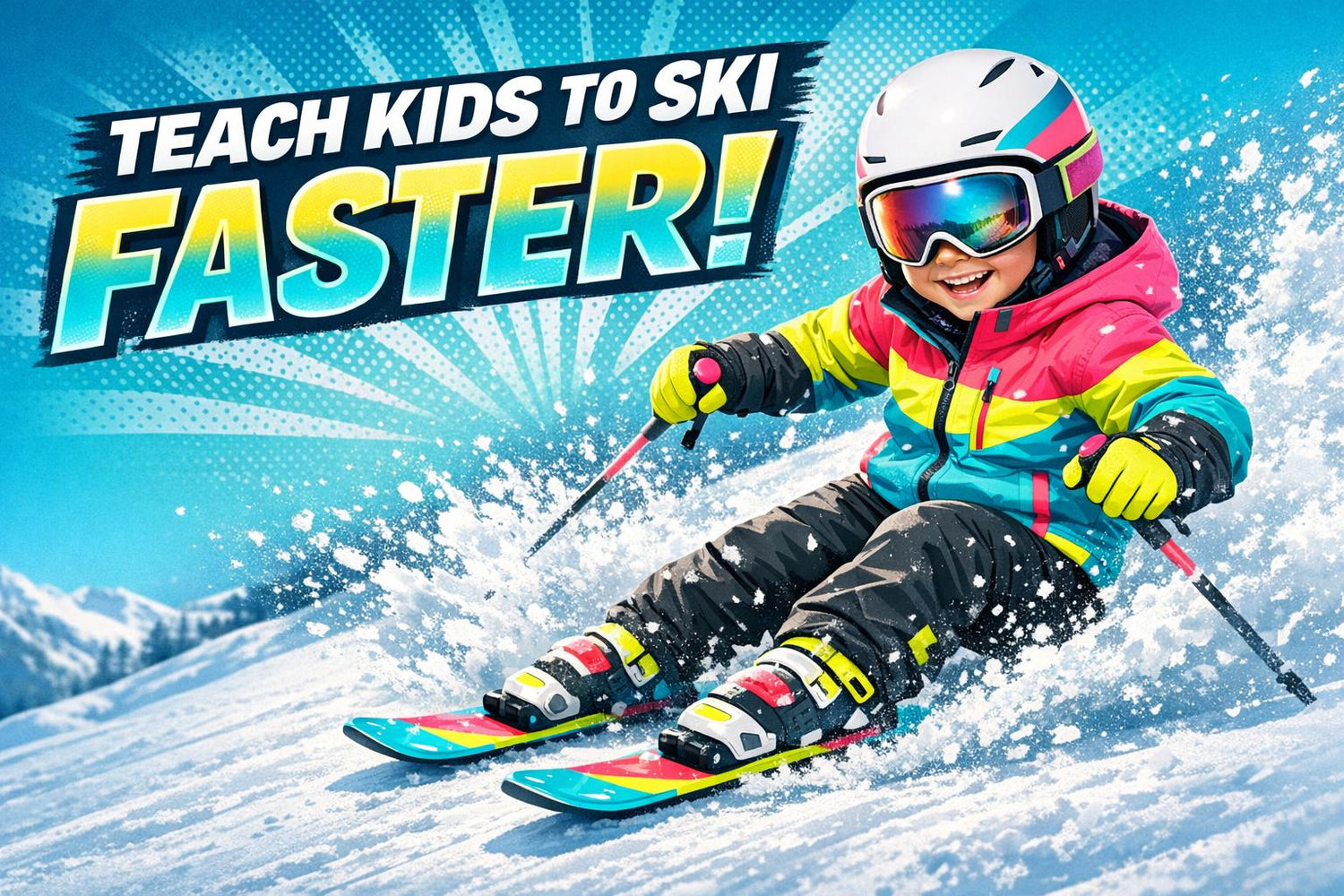
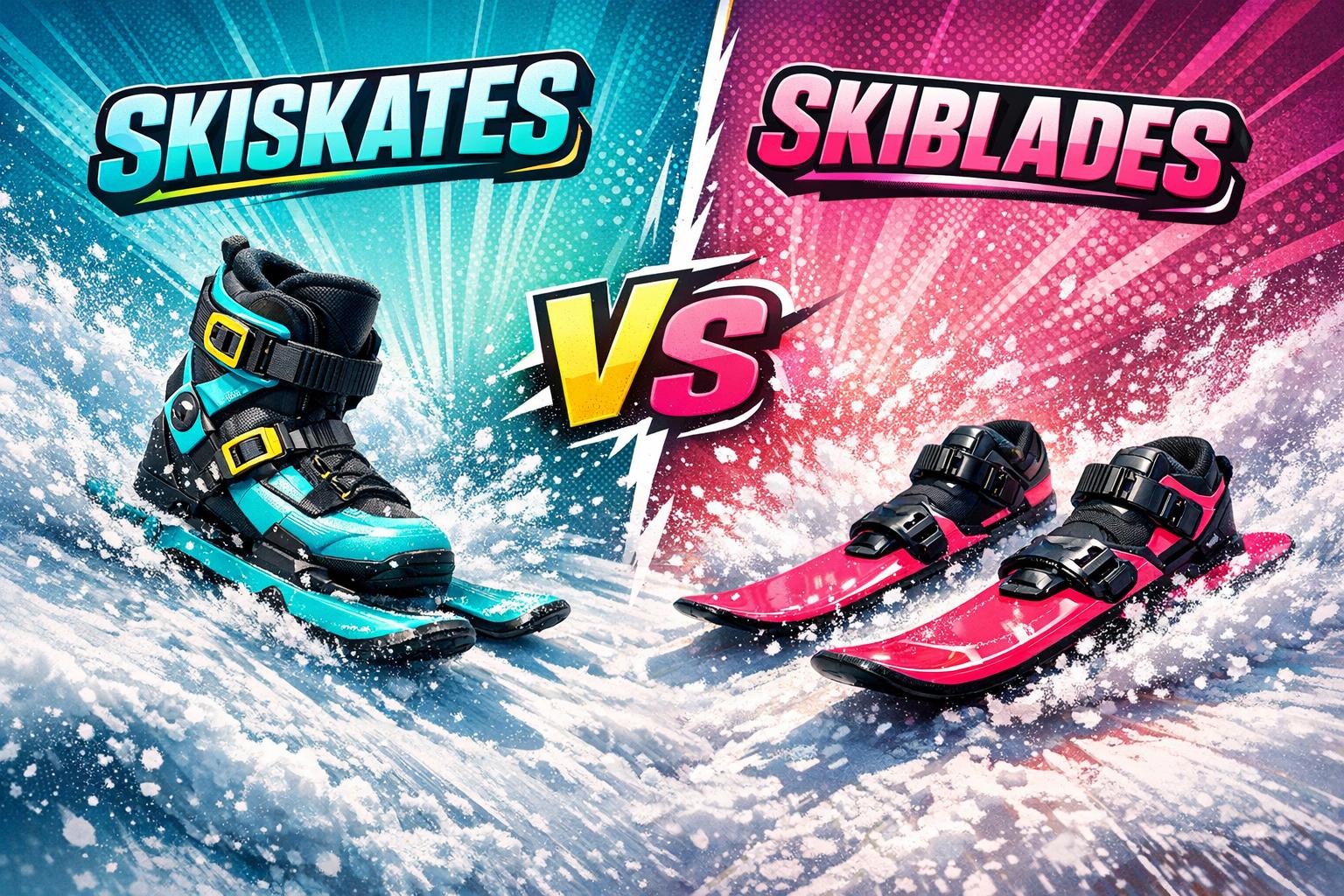
Teaching kids to ski can feel overwhelming, but short skis make it easier, faster, and more fun. Unlike long, clunky skis, short skis are lightweight, easy to control, and perfect for learning. Snowfeet’s short skis, like Skiblades (26–39 inches) and Skiskates (17 inches), let kids master the basics in minutes instead of weeks. Plus, they’re portable, work with regular winter boots, and are designed for quick turns and easy stops. Whether your child is 5 or 15, these skis help build confidence and keep skiing fun.
Why Short Skis Work Better for Kids:
- Easier to Handle: Shorter and lighter than regular skis, making them less intimidating.
- Faster Learning: Kids can skip the awkward “pizza wedge” phase and start turning and stopping naturally.
- More Fun: Less frustration means more smiles on the slopes.
- Portable: Small enough to carry in a backpack - no roof racks needed.
Snowfeet offers several models tailored for kids, starting at $190. Whether your child is a beginner or ready for more advanced slopes, short skis are a smart choice for quicker progress and stress-free family ski days.
Skiing with Kids! Tips from a ski instructor on how to help your children ski better
How Short Skis Speed Up Learning for Kids
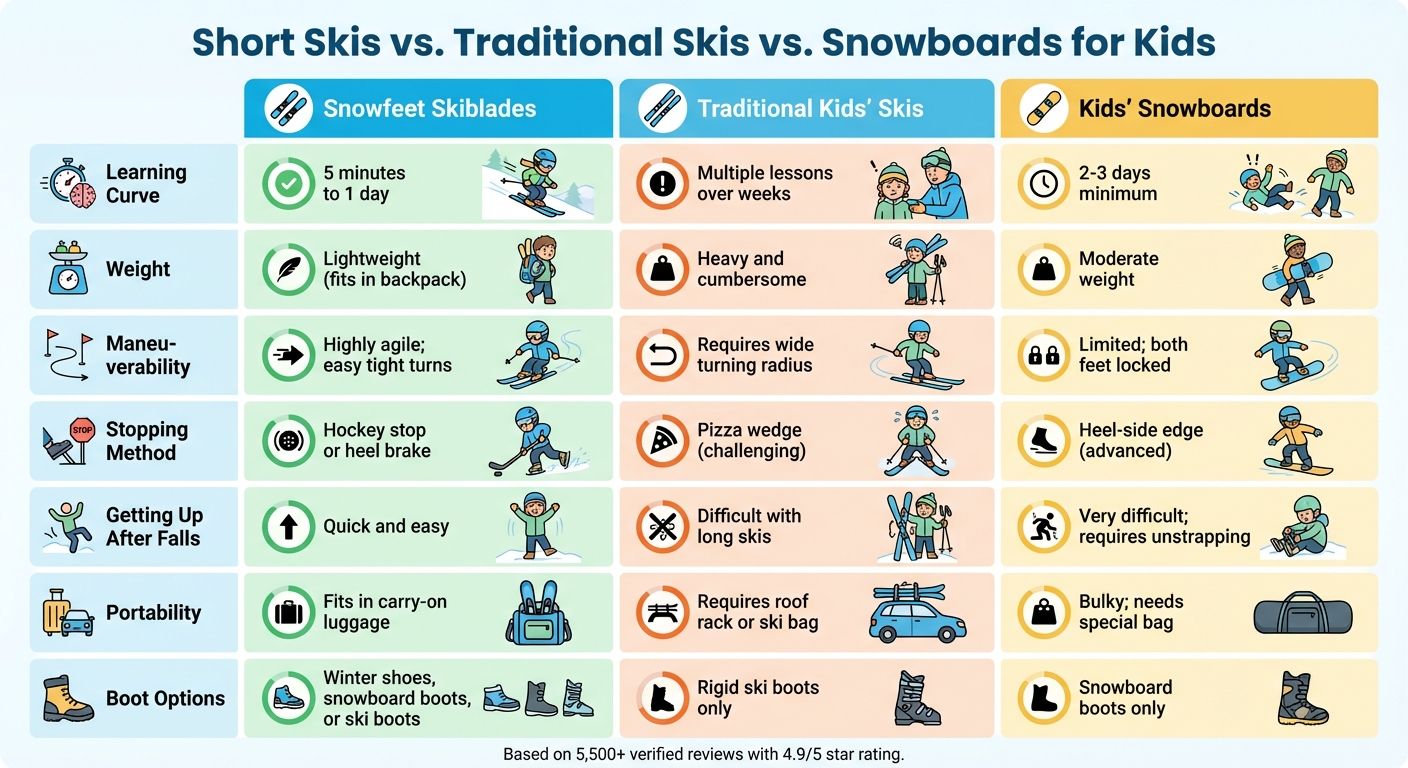
Short Skis vs Traditional Skis vs Snowboards for Kids: Learning Comparison Chart
Better Maneuverability and Control
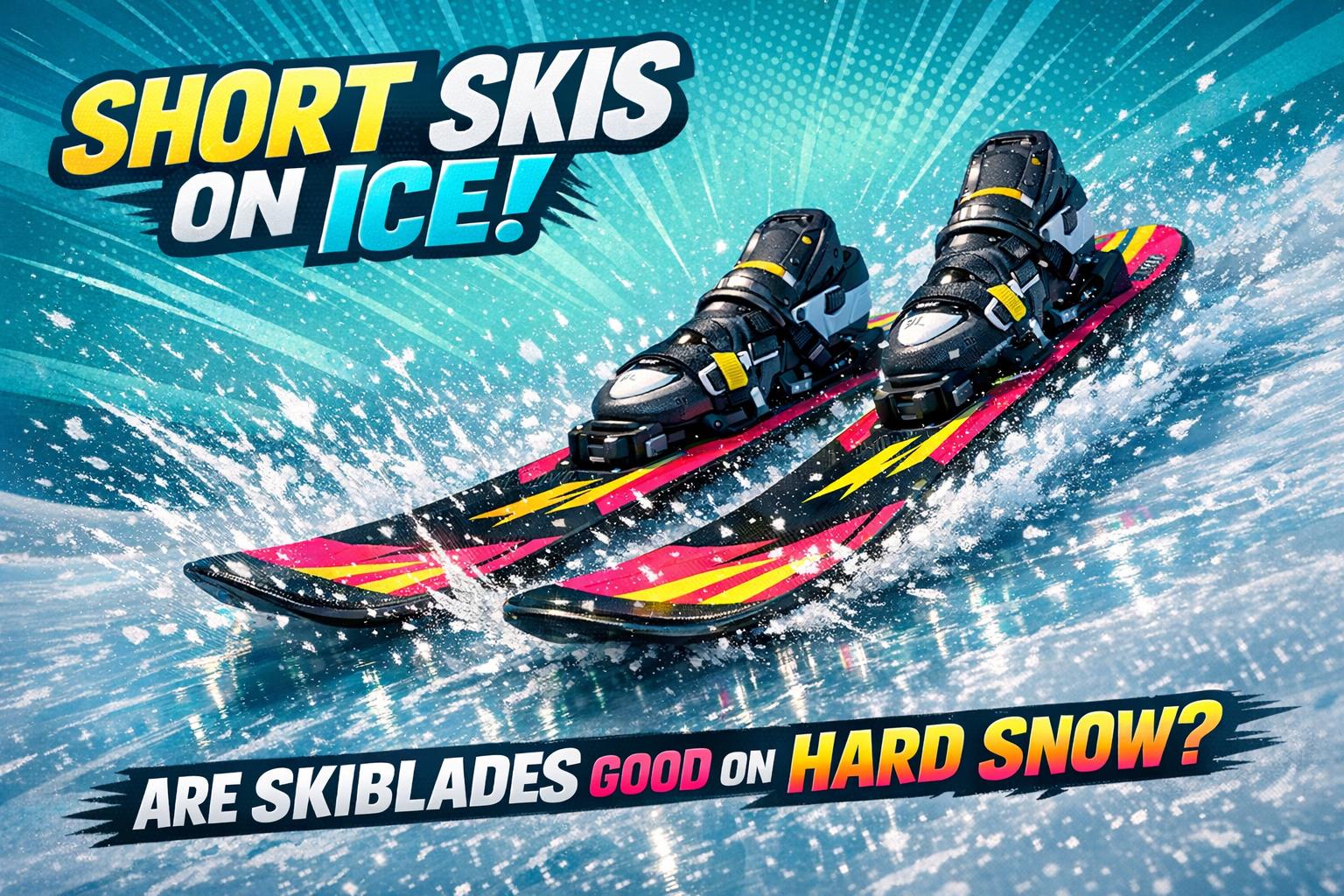
Snowfeet* short skis are a game-changer for kids learning to ski. Their compact size and lightweight design make them easier to handle, helping kids pick up skiing techniques faster. Traditional skis can be long and bulky, but Snowfeet* Skiblades measure just 26 inches (65 cm) or 39 inches (99 cm). This smaller size means less gear to manage, making it easier for kids to pivot, adjust, and recover quickly on beginner slopes.
The lightweight construction is another big win. Traditional ski gear can feel heavy and awkward for little legs, but Snowfeet* equipment is light enough to carry in a backpack. Less fatigue means kids can stay on the slopes longer, giving them more time to practice and improve.
Stopping is also simpler with short skis. Instead of struggling with the "pizza" wedge technique used in traditional skiing, kids can use a natural hockey stop or the built-in heel brake. For those familiar with ice skating or street hockey, this movement feels intuitive, cutting down the time it takes to learn.
Quicker Skill Development
Short skis don’t just make skiing easier - they speed up the learning process. Many kids can move from beginner to intermediate levels in just one day. Snowfeet* Skiblades allow for sharper, more precise turns right from the start, skipping the awkward wedge phase. The parabolic shape and narrow design - especially in the 17-inch (44 cm) Skiskates - respond instantly to small movements, giving kids immediate feedback and boosting their confidence.
Professional instructors often recommend short skis for young learners. Overly advanced gear can frustrate beginners, while shorter skis keep things simple and fun. Parents teaching their kids also appreciate the 26-inch (65 cm) Skiblades. They’re light enough for parents to move alongside their children, offering guidance without being weighed down by heavy equipment.
Short Skis vs. Traditional Skis and Snowboards
When you compare short skis to traditional skis or snowboards, the advantages become clear. Traditional skis are designed for speed and stability on groomed trails, which isn’t ideal for beginners focusing on basic turns and stops. Snowboards, on the other hand, lock both feet to a single board, making balance recovery tricky and requiring extra effort near flat areas like lifts.
| Feature | Snowfeet* Skiblades | Traditional Kids' Skis | Kids' Snowboards |
|---|---|---|---|
| Learning Curve | 5 minutes to 1 day | Multiple lessons over weeks | 2–3 days minimum |
| Weight | Lightweight (fits in backpack) | Heavy and cumbersome | Moderate weight |
| Maneuverability | Highly agile; easy tight turns | Requires a wide turning radius | Limited; both feet locked |
| Stopping Method | Hockey stop or heel brake | Pizza wedge (challenging) | Heel-side edge (advanced) |
| Getting Up After Falls | Quick and easy | Difficult with long skis | Very difficult; requires unstrapping |
| Portability | Fits in carry-on luggage | Requires roof rack or ski bag | Bulky; needs special bag |
| Boot Options | Winter shoes, snowboard boots, or ski boots | Rigid ski boots only | Snowboard boots only |
The numbers back it up: Snowfeet* boasts over 5,500 verified reviews with an average rating of 4.9 out of 5 stars. Parents frequently highlight how quickly their kids gain confidence on these short skis. As one happy user, Andrew B., put it:
"These skiblades are so much fun and easy to control. Never going back to regular skis".
Choosing the Right Snowfeet* Short Skis for Your Child
What to Consider When Choosing
Picking the right short skis for your child depends on their skill level, skiing style, and where they’ll be skiing. With Snowfeet*, you don’t need to stress over the typical height-to-ski-length ratios. For beginners, shorter models like the 26-inch (65 cm) Skiblades are a great choice. They’re easy to control, helping kids pivot smoothly, recover from wobbles, and stop without struggling through the awkward wedge technique.
If your child sticks to groomed runs, any Snowfeet* model will work. For backyard fun on smaller hills, the 17-inch (44 cm) Skiskates are ultra-compact and perfect. For light powder, the 39-inch (99 cm) Skiblades handle up to 4 inches of fresh snow, while the 47-inch (120 cm) Short Skis provide added stability for more varied conditions.
One of the biggest perks for families is boot compatibility. Unlike traditional skis that require stiff plastic ski boots, some Snowfeet* models work with winter or snowboard boots. This flexibility means fewer gear headaches and more comfort for kids, plus they won’t outgrow their boots as quickly. Once you’ve considered these factors, it’s time to match them to the right Snowfeet* model.
Snowfeet* Models and Which to Choose
Snowfeet* offers four main models, each tailored to different needs. Here’s a breakdown to help you decide:
- 17-inch (44 cm) Skiskates ($490): These are like ice skates for the snow. They’re super agile, making them perfect for athletic kids who love tricks in snow parks or quick turns on gentle slopes.
- 26-inch (65 cm) Skiblades ($550): A favorite for teaching, these are ideal for beginners. They’re easy to handle, and their length allows parents or instructors to move alongside kids for hands-on guidance. Plus, they’re compatible with both ski boots and snowboard boots.
- 39-inch (99 cm) Skiblades ($590): For kids ready to step up their skiing game, these offer a more traditional feel while keeping things manageable. They’re great for groomed runs and can handle light powder with ease.
- 47-inch (120 cm) Short Skis ($790): The longest option, these are designed for kids transitioning from beginner to intermediate. They’re stable, responsive, and perfect for carving deeper turns without the bulk of regular skis.
For younger kids with smaller feet (U.S. sizes 9 to 5), the Mini Ski Skates start at $190. They’re specifically designed for little ones just starting out, making skiing accessible and fun even for preschoolers.
Boot Compatibility and Buying Tips
Boot compatibility is where Snowfeet* really shines. The 26-inch (65 cm) and 39-inch (99 cm) Skiblades come with bindings that work with either ski boots or snowboard boots. The 17-inch (44 cm) Skiskates are just as versatile, but the 47-inch (120 cm) Short Skis require ski boots with their Pro bindings.
This versatility makes life much easier for families. One pair of snowboard boots can work across several Snowfeet* models as your child grows and improves. Plus, investing in Snowfeet* can save you money on rentals. They’re compact enough to fit in a backpack or carry-on, so you can skip the hassle of roof racks or checked baggage fees.
Bindings are adjustable to fit U.S. sizes 4.5–14.5 for ski boots and 6–14.5 for snowboard boots. For the littlest skiers, the Mini Ski Skates are designed to fit U.S. sizes 9 to 5, ensuring even the youngest adventurers can enjoy the slopes safely.
sbb-itb-17ade95
Step-by-Step Guide: Teaching Kids to Ski with Short Skis
Starting on Flat Ground
Kick things off with about 10–15 minutes on flat ground to help your child get comfortable. Using the lightweight and responsive Snowfeet* short skis, have them stand with their legs shoulder-width apart, knees slightly bent, and their upper body leaning forward just a bit. This stance keeps their balance steady and helps avoid tipping backward.
To get a feel for the skis, have them practice shifting their weight by rocking side to side, briefly lifting each ski. Then, try a staggered stance - placing one foot slightly ahead of the other - to create a more stable base. With Snowfeet* Skiblades, like the 26-inch (65 cm) model, kids can easily practice skating motions thanks to the skis’ lightweight and maneuverable design.
Practicing on Gentle Slopes
Once they’re feeling steady on flat ground, it’s time to move to a gentle slope. Look for a wide, mellow hill - like a magic carpet area - that has a flat run-out at the bottom. Start by having them side-step a few feet uphill, turn their skis perpendicular to the slope, and then glide down a short distance (about 5–10 feet) to get used to controlled movement.
Teach them how to stop by forming a small wedge with their skis. Show them how to bring the ski tips closer together while keeping the tails apart and their knees soft. They can also try a step-brake by angling one ski sideways. Snowfeet* short skis react quickly, so they’ll notice the effect right away, making it easier to grasp these basics.
Moving to Turns, Carving, and Lifts
Once they’ve nailed the basics, it’s time to introduce turns and carving. Encourage them to shift their weight from one foot to the other - Snowfeet* short skis are super responsive, so even small movements translate into smooth turns. Start with wide, gentle turns on easy terrain, and as their confidence grows, they can work on tighter turns.
For carving, teach them to tip their skis slightly on edge by pressing gently on their downhill foot. Use simple cues like “push your knee toward the turn” to help them engage the metal edges without overcomplicating things. Snowfeet* short skis make it easier to manage lifts too - no bulky gear to deal with. Remind them to keep their ski tips up as they approach the chairlift and slide forward smoothly when it’s time to unload.
If steeper slopes feel intimidating, no worries - just head back to easier terrain to rebuild confidence. The quick control of Snowfeet* short skis makes it simple to adjust the difficulty and keep the learning process fun and stress-free. With these skis, every stage of learning feels smooth and enjoyable!
Safety, Comfort, and Family Logistics
Safety Tips for Kids Learning with Short Skis
Safety first! Make sure your child is wearing a properly fitted helmet and dressed in layers to stay warm and protected. Stick to groomed beginner slopes until they’ve got the basics down. Short skis like Snowfeet* are a great option for learners since they’re lighter and easier to handle. Plus, if your child takes a tumble, it’s less intimidating compared to falling with traditional skis or snowboards.
Don’t forget about the boots! They should provide solid ankle support and fit snugly, especially for smaller feet, so your child can maintain better control on the slopes.
Keeping Kids Comfortable on the Slopes
Once safety is covered, it’s all about keeping your little skier cozy. Start with a moisture-wicking base layer, add an insulating mid-layer, and finish with a waterproof outer shell. Pay attention to signs of discomfort, like red cheeks, shivering, or complaints about cold fingers and toes. One perk of Snowfeet* is that many models work with snowboard or regular winter boots, which are far more comfortable for kids’ feet than traditional ski boots.
Keep sessions short - 15 to 20 minutes at a time - with plenty of breaks for snacks or hot cocoa. The lightweight design of Snowfeet* short skis means kids won’t tire as quickly. They’re easier on the knees and require less effort to maneuver, making the whole experience more enjoyable for everyone.
Family-Friendly Logistics with Snowfeet* Gear
When it comes to family ski trips, Snowfeet* gear is a game-changer. Their compact size makes travel a breeze. These short skis fit right into a standard backpack, so you can skip the hassle of roof racks or cramming long skis into the trunk. Even better, kids can carry their own gear - no more lugging around heavy equipment for everyone.
Snowfeet* offers models ranging from $190 for the Mini (38 cm) to $775 for the 120 cm Short Skis. Adjustable bindings fit U.S. sizes 6–13, so one pair can grow with your child or be shared among siblings. They’re also easy to store, and most ski resorts welcome them since they have the same metal edges as traditional skis. With their portability and simplicity, Snowfeet* gear takes the stress out of family ski days, letting you focus on having fun together on the mountain.
Conclusion: Why Snowfeet* Short Skis Are Best for Teaching Kids
Teaching kids to ski doesn’t have to feel like a constant battle with oversized gear. Snowfeet* short skis make the learning process faster, smoother, and way more fun compared to traditional long skis or snowboards. Ski instructors often recommend shorter skis for young learners because they’re easier to control, help build confidence, and reduce safety concerns. Thanks to their lightweight and compact design, kids won’t tire as quickly, and their excellent maneuverability makes turning, stopping, and balancing feel natural right from the start. Unlike traditional skis that can overwhelm beginners, Snowfeet* helps kids focus on enjoying the experience rather than wrestling with their equipment. Plus, they’re compatible with both winter and snowboard boots, giving you flexibility and comfort.
Snowfeet* also scores big on convenience, especially for busy families. These short skis are small enough to fit in a backpack, so no need for roof racks or bulky gear bags. Even better, kids can carry them on their own! And since they come with the same metal edges as traditional skis, most ski resorts welcome them without issue.
With a stellar 4.9/5 rating from over 5,500 verified reviews and a community of more than 50,000 riders worldwide, Snowfeet* has earned its spot as a favorite for teaching kids to ski. It’s not just about learning - it’s about making skiing accessible, fun, and hassle-free for families everywhere. Snowfeet* blends performance with practicality, redefining what beginner skiing can be.
FAQs
Why are short skis better for teaching kids to ski?
Short skis are a fantastic tool for teaching kids to ski. Why? They're lightweight, easy to handle, and incredibly maneuverable. These qualities make it easier for children to stay balanced and master turns, which means less frustration and quicker progress on the slopes.
Compared to traditional long skis, options like Snowfeet Skiblades or Skiskates are much more beginner-friendly. They’re designed to be forgiving, helping kids build confidence as they learn. Plus, they make skiing more fun and approachable, no matter the skill level.
Are short skis a good option for all ages and skill levels?
Short skis, like Snowfeet's Skiblades and Skiskates, are a fantastic option for skiers of all ages and skill levels. With lengths ranging from 17 to 47 inches, these compact skis are easier to handle, put less strain on your knees, and help you pick up the basics faster compared to traditional skis, which usually start at over 59 inches.
Snowfeet short skis are designed to suit everyone - from little ones just starting out to seasoned skiers looking to fine-tune their skills. The Mini Kids line is perfect for children as young as 3, while older kids, teens, and adults can enjoy models that go up to 47 inches. Plus, unlike traditional skis that often require pricey, specialized boots and can cost upwards of $400, Snowfeet short skis are lightweight, start at just $150, and work with regular winter boots. This makes them a super convenient and budget-friendly choice for families and ski schools.
Why are Snowfeet short skis better for teaching kids to ski compared to traditional skis?
Snowfeet short skis are a game-changer for teaching kids how to ski. Thanks to their lightweight design, compact size, and user-friendly features, they make learning easier and way more fun. Unlike traditional skis, these shorter versions offer better control, quicker turns, and a smoother learning experience, helping kids build confidence on the slopes faster.
Measuring as short as 44 cm, these skis are super easy to handle, cutting down on the frustration that often comes with bulky, traditional skis. Plus, they’re designed to work with regular winter boots - no need to splurge on pricey ski boots! Their small size also means they’re simple to carry and store, making skiing hassle-free for kids of any skill level.











Leave a comment
This site is protected by hCaptcha and the hCaptcha Privacy Policy and Terms of Service apply.