



















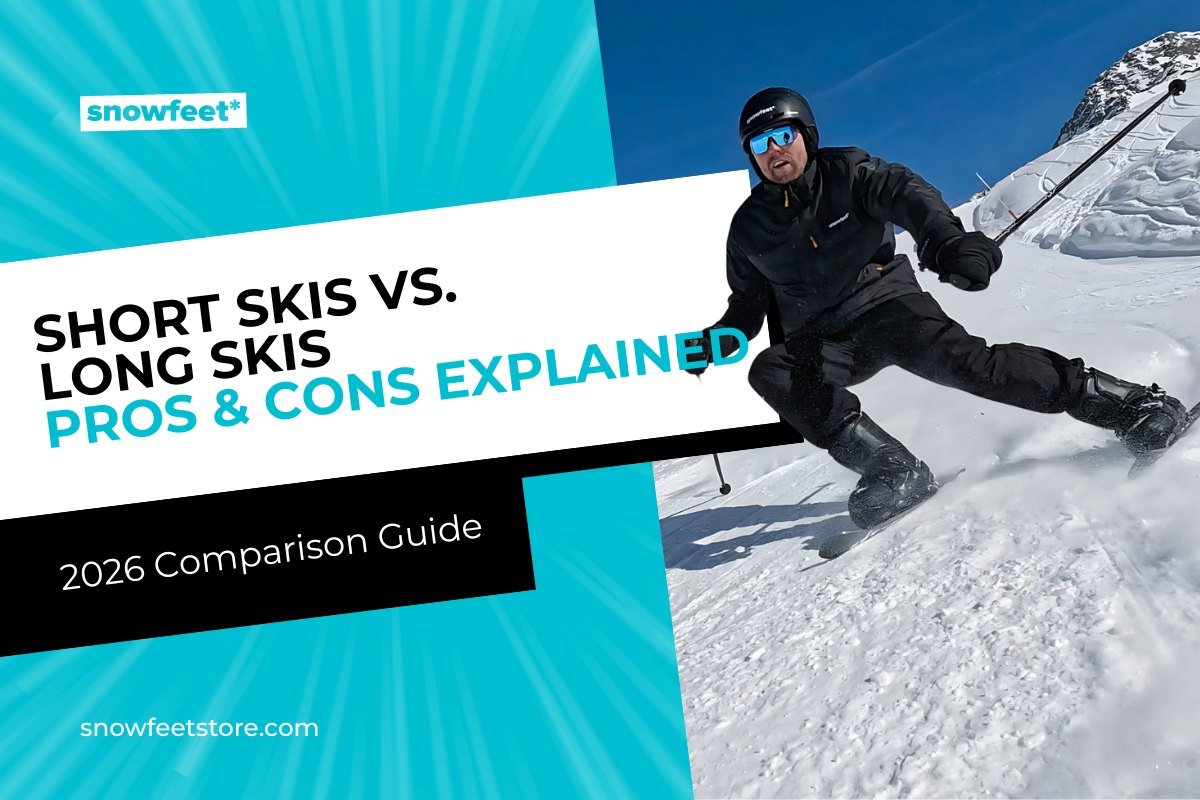
Quick Summary:
In this article, you will discover whether compact short skis or traditional long skis are the right match for your skiing style, skill level, and mountain goals. You'll learn how nimble short skis (like Snowfeet models) can transform your slope experience with backpack-friendly portability, quick learning curves, and effortless turns, while gaining a clear picture of when traditional long skis are still worth the bulk for high-speed carving and deep powder float. By walking through real-world pros and cons, myth-busting breakdowns, and a tailored size guide based on your height, weight, and boot preferences, you will walk away with the exact insights you need to choose your ideal pair and hit the snow with confidence.
Short skis or long skis? Here’s the deal:
- Short skis (like Snowfeet models) are lightweight, easy to turn, and beginner-friendly. They work with regular boots, fit in a backpack, and feel like ice skating on snow. Perfect for tight spaces, terrain parks, and casual fun. Downsides? They’re wobbly at high speeds and not great in deep powder.
- Long skis offer stability at high speeds, better grip on icy slopes, and float in deep powder. They’re ideal for racing and advanced skiers. But they’re heavy, harder to control in tight areas, and exhausting for beginners.
Bottom line: If you want convenience, quick learning, and playful skiing, go short. If you’re chasing speed or powder days, go long.
Quick Comparison:
| Aspect | Short Skis | Long Skis |
|---|---|---|
| Portability | Backpack-friendly | Bulky, needs roof racks |
| Ease of Learning | Great for beginners | Steep learning curve |
| Turning | Quick and easy | Requires effort |
| Speed Stability | Wobbly at high speeds | Stable at high speeds |
| Deep Powder | Less effective | Excellent float |
Want to know which skis suit your style? Let’s break it down further.
Short Skis vs. Long Skis
What Are Snowfeet* Short Skis?
Snowfeet* short skis are compact, ranging from just 17 inches (44 cm) to 48 inches (123 cm) long. That’s much shorter than standard skis, which are usually over 67 inches (170 cm). These skis give you a gliding experience that feels more like ice skating than traditional skiing. They’re designed to be lightweight, easy to use, and super portable - some models are small enough to fit in a backpack, making them great for travel or impromptu adventures. Let’s break down what makes Snowfeet* stand out.
Main Features of Snowfeet* Short Skis
Snowfeet* short skis are built with lightweight materials like fiberglass or wood cores, so they’re easy to carry and won’t leave your legs feeling like jelly after a full day on the slopes. They’re also incredibly responsive, which means you can pick up the basics quickly - no need to master tricky techniques like the snowplow that’s often required with longer skis.
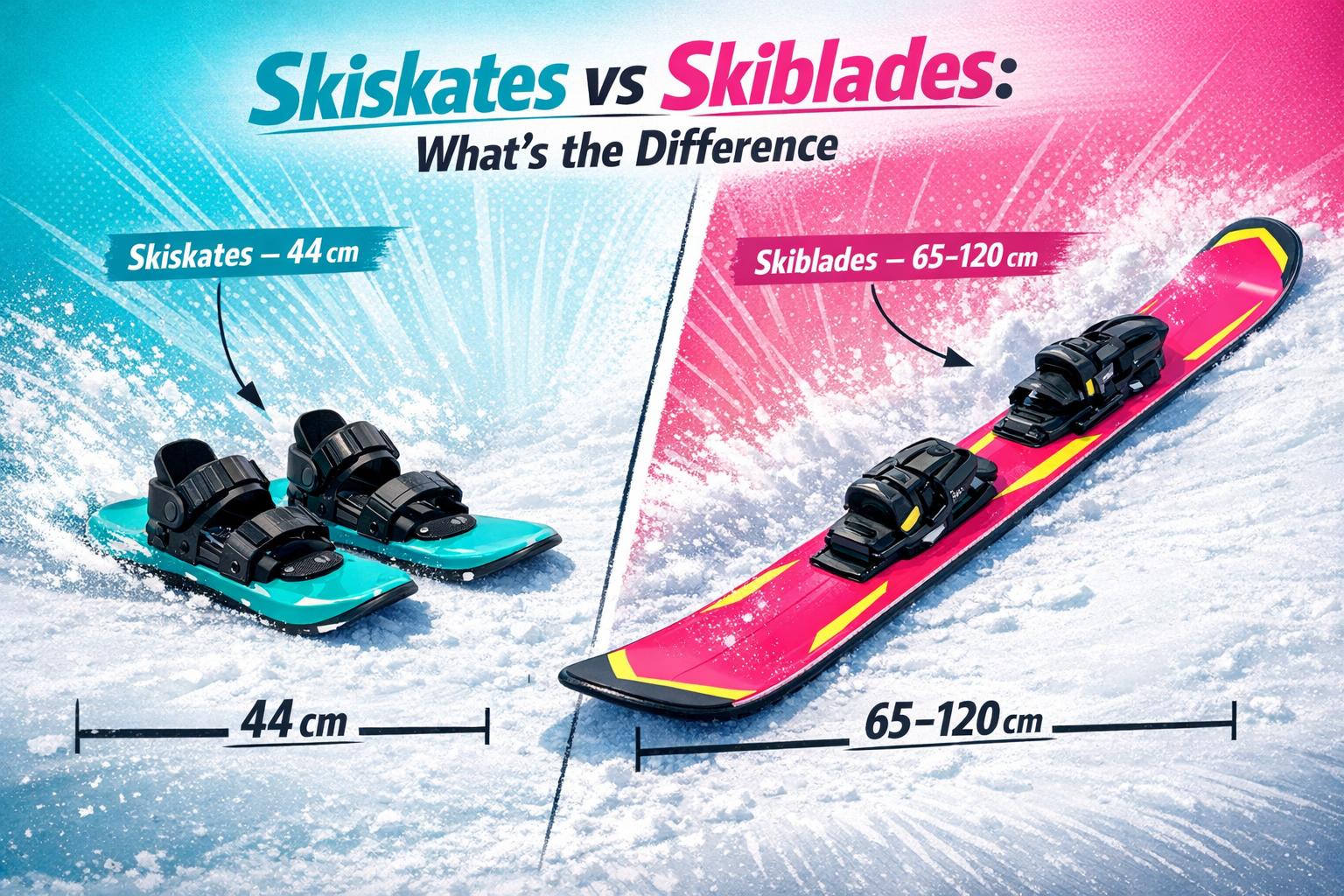
The bindings are versatile, too. Smaller models, like the 50 cm Ski Skates, work with regular winter boots, while larger skiblades (65 cm to 123 cm) are fitted with bindings for ski or snowboard boots. This flexibility means you can skip the hassle of specialized ski boots and stick with what’s comfortable. Plus, their compact size makes them easy to stash away - no roof racks or bulky gear to deal with. Whether you’re carving up groomed slopes, hitting terrain parks, or tackling moguls, these skis deliver sharp turns and smooth control without the extra effort that comes with longer skis.
Snowfeet* Models by Size
Snowfeet* offers a variety of models to suit different skill levels and needs:
| Model | Size | Price | Intended Use |
|---|---|---|---|
| Ski Skates | 44 cm (17") | From $550 | The ultimate skates for ski slopes. Short enough to fit in a backpack. |
|
Snowfeet Skiskates |
50 cm (20") | $299 | The easiest way to start skiskating, with a natural feel, adjustable bindings, and enough length for better balance. |
| Skiblades | 65 cm (26") | From $590 | Great for terrain parks, tricks, and agility |
| Skiblades | 99 cm (39") | From $690 | Versatile for all-mountain use with added speed |
| Short Skis | 123 cm (48") | $950 | Ideal for intermediate and advanced riders on varied terrain |
The 44 cm and 50 cm models are perfect for beginners or anyone looking for maximum portability. If you’re into freestyle tricks or want a mix of fun and performance, the 65 cm and 99 cm skiblades are a great pick. For those who prefer a bit more stability but still want to avoid the bulk of traditional skis, the 120 cm short skis are a solid option. Across the board, Snowfeet* keeps it simple: less hassle, more fun on the slopes.
What Are Traditional Long Skis?
Traditional long skis usually measure over 67 inches (170 cm) and can go up to 75 inches (190 cm) or more. Brands like Rossignol, Salomon, and K2 have been producing these skis for years, making them a familiar sight at ski resorts. Their design prioritizes high-speed stability, better flotation in powder, and sharp carving ability. This is thanks to features like a longer effective edge, greater weight, and a larger surface area, which all contribute to their performance across different conditions.
When Long Skis Are Used
Long skis shine when you're racing down groomed slopes at high speeds. Their length and weight help absorb vibrations, keeping you steady and in control. Advanced and expert skiers often pick them for deep powder days because the extra surface area helps them stay on top of the snow. They're also a go-to for racing and carving on hard, icy terrain, where the extended edge provides excellent grip for wide, sweeping turns. These skis are perfect for skiers who crave speed and stability, but they cater to a more experienced crowd and specific conditions.
Problems with Long Skis
Long skis come with their share of challenges. For starters, they're heavy and bulky, making them tough to carry and maneuver. Skiing on them can be exhausting since their weight demands strong legs and plenty of stamina. They’re also harder to control in tight spots like moguls, tree runs, or crowded areas, where quick turns are essential. Beginners often find them frustrating due to the steep learning curve - small mistakes can easily lead to falls. Plus, the added length puts more strain on your knees, increasing the risk of joint fatigue. In contrast, Snowfeet* short skis offer a lightweight, easy-to-handle alternative without the hassle and fatigue of traditional long skis.
Short Skis: Pros and Cons
Snowfeet* short skis bring a lot to the table, offering some unique perks compared to traditional long skis. The standout feature? Maneuverability. These skis are incredibly easy to turn, which makes them a dream for weaving through tight trees, tackling moguls, or navigating busy slopes where longer skis might feel awkward. Another big plus is their portability - they’re compact enough to pack in a backpack, so no need for roof racks or extra storage space.
Beginners will love the natural balance they offer, with no crossed tips to worry about. Learning to use them is straightforward, almost like skating on snow. And with prices ranging from $299 to $950, they’re a budget-friendly alternative to traditional setups from big names like Rossignol or Salomon. Their lightweight build also means less strain on your knees, leaving you with more energy to enjoy the slopes. Compared to the bulkiness of long skis, these advantages shine.
That said, short skis aren’t without their challenges. They’re less stable at high speeds, so if you’re flying down a groomed run, they might feel a bit wobbly. Deep powder isn’t their strong suit either - less surface area means they can sink more easily in very deep snow. And on steep, icy slopes, the shorter edges might not grip as well as traditional skis, which can be a concern for those who prioritize edge control.
 Product Link: Snowfeet* Short Skis | 123 CM | Skiblades Skiboards Snowblades
While long skis are built for stability and speed, Snowfeet* short skis focus on control, ease of use, and portability. Here’s a quick breakdown of their pros and cons:
Pros and Cons Table for Short Skis
| Pros | Cons |
|---|---|
| High Maneuverability: Great for quick turns and tight spaces | Speed Stability: Can feel unstable at very high speeds |
| Extreme Portability: Easy to pack; no roof racks needed | Deep Powder Performance: Struggles in very deep snow due to limited surface area |
| Beginner Friendly: Easier balance and no crossed tips | Edge Grip: Short edges may lack bite on icy, steep terrain |
| Versatile Fun: Perfect for mixing skiing, skating, and tricks | Physical Effort: Can tire out muscles not typically used with long skis |
| Cost-Effective: Cheaper than most traditional long-ski setups | |
| Less Knee Strain: Lightweight design reduces joint fatigue |
For recreational skiers, the advantages often outweigh the drawbacks. Whether you’re cruising groomed runs, hitting the terrain park, or playing around in moderate powder, Snowfeet* short skis offer a fun and hassle-free way to enjoy the slopes - without the bulk or fatigue of traditional skis.
Long Skis: Pros and Cons
Long skis, typically over 67 inches (170 cm), shine when it comes to stability at high speeds on groomed runs and providing excellent float in deep powder. Their extended edges also deliver better grip on icy or hard-packed slopes, giving skiers added confidence on steep terrain. But like anything, they come with their own set of trade-offs. Let’s dive deeper into what makes long skis both a blessing and a challenge.
While their performance in certain conditions is undeniable, long skis can be a hassle. They’re heavy and awkward to handle - transporting them often means needing a roof rack or a large vehicle. Forget about tossing them in a backpack for a spontaneous trip. As the Snowfeet Team puts it: "Long skis are for most skiers too clunky and heavy. In a snowpark or on a slope, you will have more fun with short skis, which are easy to control and fun to slide." That added bulk doesn’t just make transportation tricky; it also increases strain on your knees and hips, leading to quicker fatigue during a day on the slopes.
When it comes to tight spaces - like moguls, tree runs, or crowded slopes - long skis can feel like trying to steer a bus through a narrow alley. They demand more effort to turn, and for beginners, managing speed and direction can feel overwhelming. Unlike the nimble Snowfeet* short skis, which let you glide and pivot with ease, traditional long skis might feel like they’re fighting against you every step of the way. This makes them less appealing for casual skiers who prioritize fun and ease over raw performance.
For most recreational skiers, the size, weight, and handling challenges of long skis often outweigh their benefits. Unless you’re racing or tackling deep powder regularly, their bulkiness can feel more like a burden. On the other hand, Snowfeet* short skis offer a more accessible and enjoyable alternative, combining agility and control without the physical strain or logistical headaches of traditional long skis.
Pros and Cons Table for Long Skis
| Pros | Cons |
|---|---|
| High-Speed Stability: Great control on groomed runs at high speeds | Heavy and Bulky: Hard to transport; needs roof racks or large storage |
| Deep Powder Float: Wide surface area keeps you from sinking in powder | Joint Strain: Adds stress on knees and hips, increasing fatigue |
| Icy Terrain Grip: Strong edge hold on hard-packed or icy slopes | Poor Maneuverability: Challenging to turn in tight or twisty areas |
| Powerful Carving: Perfect for long, sweeping turns | Exhausting: Weight and effort required can wear you out quickly |
| Steep Learning Curve: Tough for beginners to control speed and direction |
sbb-itb-17ade95
Snowfeet* Short Skis vs Traditional Long Skis: Side-by-Side Comparison
When it comes to portability, Snowfeet* short skis leave traditional long skis in the dust. The 65 cm model fits snugly in a backpack, while the 99 cm and 120 cm versions are still light and compact enough to carry with ease. Compare that to traditional long skis, which are typically over 67 inches (170 cm) and require bulky ski bags or roof racks for transport. If you're planning a spur-of-the-moment trip, Snowfeet* is the no-brainer choice.
Snowfeet* also shines in ease of use, especially for beginners. Their shorter length and lighter weight make it easier to master turns, balance, and speed without the physical strain that often comes with long skis. Traditional skis, on the other hand, demand more technical skill and can leave you feeling wiped out after just a few runs. With Snowfeet*, you’ll be gliding and carving in no time, no sweat required.
 Product Link: Snowfeet* 99 CM | Skiblades | Snowblades Skiboards Short Skis
Here’s a quick look at how the two compare:
| Aspect | Snowfeet* Short Skis | Traditional Long Skis |
|---|---|---|
| Portability | Backpack-friendly (26–48 inches); no special bags needed | Bulky bags required (over 67 inches); needs roof racks |
| Learning Curve | Quick and forgiving; great for beginners | Steeper learning curve; more practice needed |
| Turning | Easy, quick edge-to-edge transitions | Requires more effort and balance |
| Terrain Parks & Moguls | Agile and perfect for tricks and tight spaces | Clunky and harder to control in narrow areas |
| Deep Powder | Less effective; smaller surface area | Better floatation with larger surface |
| Speed Stability | Ideal for slow to moderate speeds | Handles high speeds well on groomed runs |
For recreational skiers who stick to groomed runs, love terrain parks, or just want to have fun without getting worn out, Snowfeet* short skis are a game-changer. Unless you're diving into deep powder or racing at top speeds, the bulk and hassle of traditional long skis just don’t seem worth it.
If convenience, quick learning, and versatility are what you’re after, Snowfeet* short skis are the way to go. Up next, we’ll tackle some common myths to clear up any lingering doubts.
Common Myths About Long Skis vs Short Skis
"Longer skis are always more stable."
This idea might sound logical, but stability isn't just about ski length - it’s about how well pressure is distributed. When you’re tired, longer skis can actually become less stable, leading to flapping or chatter. On the other hand, shorter skis are easier to manage because there’s less surface to control. Take Snowfeet* short skis, for example. With sizes ranging from about 26 to 48 inches, they offer the stability recreational skiers need without the fatigue that comes with longer equipment.
"Short skis make you go slower."
Another common belief is that shorter skis mean sacrificing speed. But in reality, for most skiers, the speed difference is minimal. In fact, shorter skis are better for quick, sharp turns. On groomed runs or in terrain parks, Snowfeet* models keep up just fine while offering enhanced control and agility.
"Long skis are better for everyone."
This one’s a bit of a blanket statement. Long skis are great for specific situations, like deep powder or racing, but they can feel bulky and tiring during regular resort skiing. Snowfeet* short skis, however, provide a more convenient and enjoyable experience for everyday use. They’re portable, easy to handle, and just plain fun, making them a smart choice for most recreational skiers.
"Short skis are only for beginners."
Not true at all. While Snowfeet* short skis are beginner-friendly, their lightweight build and responsive control make them perfect for advanced skiers too. Whether you’re navigating moguls or weaving through tight glades, these skis perform well across all skill levels. Plus, their design helps reduce fatigue, so even experienced skiers can enjoy longer runs without tiring out.
Snowfeet* short skis prove that you don’t need traditional long skis to have a great time on the slopes. They’re versatile, easy to use, and perfect for most recreational skiers.
 Product Link: Snowfeet* 65 CM | Skiblades | Skiboards Snowblades Short Mini Skis
Which Snowfeet* Short Skis to Choose
Pick a Snowfeet* model that matches your skill level and the type of slopes you’ll be skiing on.
Best Options for Beginners
If you’re new to the slopes, go for the Snowfeet Ski Skates (50 cm, about 20 inches) or the Skiskates (44 cm, about 17 inches). These shorter, lightweight models are easy to control and pair with standard winter or snowboard boots, so you don’t need to splurge on ski boots.
The 44 cm Skiskates are particularly great if you’ve tried ice skating or inline skating before, as the movements are very similar. Many beginners can progress to an intermediate level within a single day. For skiers under 5'10" who stick to groomed trails and gentle slopes, these shorter skis provide excellent maneuverability without feeling overwhelming. Ready to take it up a notch? Check out the advanced options below.
Best Options for Intermediate and Advanced Skiers
Once you’ve got the basics down, the Skiblades in 65 cm (about 26 inches) or 99 cm (about 39 inches) are a solid step up. The 65 cm Skiblades strike a perfect balance - they’re agile and playful but offer more stability for tackling steeper slopes or trying out beginner tricks.
For skiers looking for even more power, the 99 cm Skiblades deliver outstanding edge control and stability at higher speeds, all while staying far more nimble than traditional long skis. They’re a great fit for moguls and terrain parks. Advanced skiers or those weighing over 180 lbs might prefer the 123 cm Short Skis (about 47 inches). These skis combine the carving ability of traditional skis with better balance and lighter handling. They excel on mixed terrain and faster runs but still allow for playful tricks that long skis can’t manage.
Conclusion
Choosing between short skis and long skis really depends on what you want out of your time on the slopes. Long skis excel in high-speed performance and deep powder, but they can feel like overkill for the average skier.
On the other hand, Snowfeet* short skis are changing the game. They’re easier to control, require less effort, and help you improve fast - some people go from beginner to intermediate in just one day. When your legs start to tire, shorter skis stay steady, while longer ones might start to wobble and chatter. Plus, their compact size makes them perfect for exploring tight tree runs, landing tricks in terrain parks, and packing light.
Whether you’re trying out the 44 cm Ski Skates or stepping up to the 123 cm Short Skis for advanced carving, Snowfeet* models offer unmatched agility and portability compared to traditional skis. They’re easier on your knees, more affordable, and versatile enough to handle various terrains. It’s a fresh take on skiing that’s ready for you to experience.
If you’ve always thought skiing meant hauling around bulky 170+ cm skis, it’s time to think again. Snowfeet* short skis make skiing more accessible, more fun, and way less of a hassle. So, grab a pair, hit the slopes, and see for yourself what all the buzz is about!
FAQs
What Snowfeet* size should I choose for my height and weight?
When picking the right Snowfeet* size, think about your height, weight, and skill level on the slopes. If you're a beginner, a lighter skier, or buying for kids, the shorter skis (65 cm or 99 cm) are a solid choice - they're easier to control and more maneuverable. On the other hand, the 123 cm model is better for taller, heavier, or more seasoned skiers who want more speed and stability. Choosing the right size will help you stay safer, feel more in control, and have way more fun out there.
 Product Links: Snowfeet* 65 CM | Skiblades | Skiboards Snowblades Short Mini Skis / Snowfeet* 99 CM | Skiblades | Snowblades Skiboards Short Skis / Snowfeet* Short Skis | 123 CM | Skiblades Skiboards Snowblades
Can I use Snowfeet* short skis with regular winter boots?
Yes, Snowfeet short skis are made to be used with regular winter boots. This design makes them super convenient - no need for specialized ski boots!
 Product Link: Snowfeet* 50 CM | Ski Skates
Are short skis safe and stable enough for steeper runs?
Short skis, like those from Snowfeet, can be a safe and stable option for tackling steeper slopes - when used properly. Their standout features are control and agility, which align perfectly with modern skiing techniques. While longer skis are often associated with better stability at high speeds, short skis provide enough stability for skilled skiers on steep terrain. They focus on giving you more maneuverability and a fun, dynamic experience rather than sheer speed. With the right technique, they’re both effective and safe.
Editor: Karolina R.
Last Update: August 4, 2026











Leave a comment
This site is protected by hCaptcha and the hCaptcha Privacy Policy and Terms of Service apply.