



















Short answer: It depends on what you’re looking for. Skiskates are compact, lightweight, and easy to use - perfect for quick trips, tight spaces, and a skating-like experience on snow. Skis, on the other hand, are best for deep powder, high speeds, and serious downhill runs.
Here’s the breakdown:
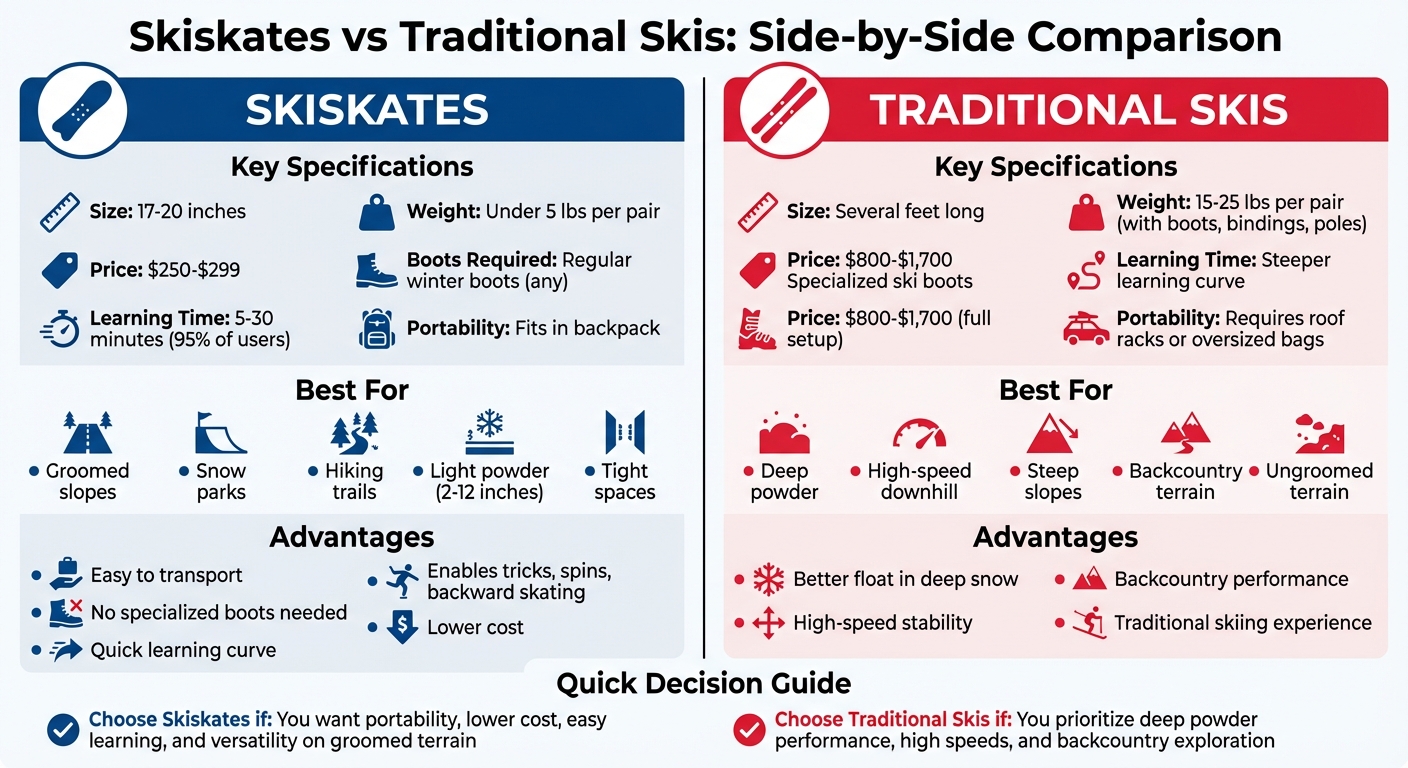
- Skiskates: Small (17-20 inches), fit in a backpack, work with regular winter boots, cost $250-$299, and are great for groomed slopes, snow parks, and light powder. They’re easier to learn and feel similar to ice skating.
- Skis: Long, heavy, require special boots, cost $800-$1,700 for a full setup, and excel in deep snow, steep slopes, and backcountry terrain.
Quick Comparison
| Feature | Skiskates | Skis |
|---|---|---|
| Size | 17-20 inches | Several feet |
| Portability | Fits in a backpack | Requires roof racks or bags |
| Boots Needed | Regular winter boots | Specialized ski boots |
| Price | $250-$299 | $800-$1,700 (full setup) |
| Best For | Groomed slopes, parks, trails | Deep powder, high speeds |
| Learning Curve | Easy (5-30 mins) | Steeper learning curve |
If you want something fun, easy to carry, and less expensive, skiskates might be your thing. But if you’re chasing speed, deep snow, or big mountain skiing, stick with skis.
Skiskates vs Traditional Skis: Complete Comparison Guide
Main Differences Between Skiskates and Traditional Skis
Size and Portability
The size difference between skiskates and traditional skis is hard to miss. Snowfeet* skiskates are just 17.3 inches (44 cm) to 20 inches (50 cm) long, while traditional skis from brands like Rossignol or Salomon can span several feet. This size difference completely changes how you transport and store your gear.
With Snowfeet* skiskates, you can toss them into a regular backpack - no need for roof racks, oversized bags, or extra storage space like you’d need for traditional skis. If you’ve ever wrestled with fitting skis into a car or paid extra airline fees for ski equipment, the compact design of skiskates is a game-changer. Plus, their design makes your snow adventures simpler and more spontaneous.
Ease of Use
One of the biggest distinctions between the two is how easy they are to use. Many people pick up skiskating basics in just 5 minutes. The motion feels natural, especially if you’ve ever ice skated or inline skated. The shorter length also eliminates a common beginner headache - crossed tips - since there’s no long plank to trip you up.
Another bonus? Snowfeet* skiskates work with any winter footwear, whether it’s snow boots, snowboard boots, or ski boots. Traditional skis, on the other hand, require stiff, specialized boots that aren’t exactly versatile. For seasoned skiers, skiskates unlock a world of fun tricks, jumps, and backward skating that can feel clunky or outright impossible on long skis. This mix of portability and ease of use makes Snowfeet* a solid pick for anyone looking to shake up their winter routine.
That said, terrain plays a big role in how each performs.
Terrain Compatibility
Each option shines in different environments. Snowfeet* skiskates thrive on groomed slopes, snow parks, hiking trails, forest paths, sledding hills, and even your own backyard. Their compact size makes them perfect for tight spaces, letting you spin, jump, and navigate narrow trails - things that would be tough with long skis strapped to your feet.
Traditional skis, however, are the go-to for deep powder, high-speed downhill runs, and steep, ungroomed terrain where stability is key. While Snowfeet* skiskates handle groomed slopes, parks, and light powder (up to 4 inches) with ease, they’re not ideal for deep snow. If you’re heading into untouched backcountry powder, traditional skis or longer skiblades, like Snowfeet's 99 cm models priced at $590, will give you better float and control. But for recreational riders who want variety and convenience, Snowfeet* skiskates offer unmatched versatility across a range of terrains.
Is Skiskating the next big winter sport? | Snowfeet*
Benefits of Skiskates Over Traditional Skis
Snowfeet* skiskates bring a fresh twist to winter sports, offering several advantages over traditional skis.
Lightweight and Compact Design
One of the standout features of Snowfeet* skiskates is their lightweight and compact design. Unlike traditional skis from brands like Rossignol or K2, which can be bulky and cumbersome, skiskates are easy to carry - just grab them with one hand. Their small size makes storage a breeze; you can tuck them into a closet without needing extra space. Plus, they attach directly to your regular winter boots, so there’s no need to invest in pricey, specialized ski boots. This simplicity means less hassle and more time enjoying the slopes.
Lower Cost
A traditional ski setup - skis, bindings, and boots - can quickly add up in cost. Snowfeet* Mini Ski Skates, priced at $250, offer a much more affordable alternative. You don’t have to worry about buying separate boots or paying for binding installations, which means long-term savings. The adjustable bindings also make them versatile enough to fit multiple users, making them a smart choice for families or groups of friends. They’re proof that winter fun doesn’t have to break the bank.
A New Kind of Fun
Snowfeet* skiskates bring a whole new level of excitement to winter sports. Their unique design allows for moves like spins, backward gliding, and navigating narrow trails - things that can be tricky with longer skis. If you’ve ever ice skated, rollerbladed, or played hockey, you’ll find the skating motion on snow feels surprisingly familiar. Whether you’re hitting a backyard hill after fresh snowfall or exploring a snow park, skiskates open up new possibilities for winter adventures. They blend the best of skiing and skating, offering a versatile and thrilling way to enjoy the season.
sbb-itb-17ade95
Common Myths About Traditional Skis
The belief that longer skis are inherently better has been around for years, but when you dig into how they actually perform on the slopes, this idea starts to fall apart.
Myth: Longer Skis Are More Stable
A lot of people think that longer skis automatically mean better stability. This idea likely comes from downhill racing, where straight-line speed is key. But here's the thing: stability isn’t just about speed. It’s about control, balance, and how quickly you can recover from a wobble. And that’s where traditional skis, with their added weight, can actually slow you down.
Snowfeet* Skiskates take a different approach. Their shorter, stiffer design keeps your center of gravity close to your feet, giving you a stance that feels natural - kind of like walking or ice skating. This makes it easier to turn on a dime, stop when you need to, and weave through tight spaces. It’s proof that stability comes from smart design, not just ski length.
Myth: Skiskates Are Only for Beginners
Another common misconception is that skiskates are just for newbies. But that couldn’t be further from the truth. Snowfeet* Skiskates, especially the advanced PRO models ($275), are built for serious performance. With features like a durable wood core and full glide surfaces, these skiskates are made for carving, tricks, and more.
Experienced athletes love the skating motion for training and pushing their limits. Whether you’re hitting packed slopes, freestyle parks, or even powder, the PRO models let you do it all. They’re perfect if you’ve already mastered traditional skiing and want to try something new and exciting. Skiskates aren’t just an alternative - they’re a whole new way to take on the mountain.
Conclusion: Why Snowfeet* Skiskates Are the Better Choice
Snowfeet* Skiskates bring a fresh, lightweight alternative to traditional skis. At under 5 lbs per pair, they easily fit into a backpack, unlike traditional skis that weigh 15 to 25 lbs per pair - and that’s not even counting the bulky boots, poles, and bindings.
The price? Way more approachable. A full traditional ski setup can set you back $800 to $1,700, factoring in skis, boots, bindings, and poles. In comparison, Snowfeet* Skiskates cost just $249 to $299 and are ready to go with the winter or snowboard boots you already own. If you’re renting skis at $30 to $50 a day, your skiskates pay for themselves in just 10 trips.
But it’s not just about saving money or cutting down on gear. These skiskates perform impressively across various terrains. Over 95% of users pick up the basics in under 30 minutes, and they handle everything from groomed slopes to powder, whether it’s 2 inches or a foot of snow. If you’ve ever ice skated or inline skated, the motion will feel second nature. Plus, their shorter design gives you better control, especially in tight spaces or packed terrain parks.
Whether you're just starting out or have years of skiing experience, Snowfeet* offers a fun, simpler way to hit the slopes. Ditch the bulk and steep costs - discover a whole new way to enjoy the mountain with Snowfeet*.
FAQs
Are skiskates allowed at most U.S. ski resorts?
Most ski resorts in the U.S. permit the use of Snowfeet and skiskates, but policies can differ. To avoid surprises, it’s a good idea to contact the resort directly and confirm their rules before heading out.
Do I need poles with Snowfeet* Skiskates?
Nope, you don’t need poles with Snowfeet* Skiskates. These are built to be used on their own, which makes them way easier to handle than traditional skis. Thanks to their smart design, even beginners can control and move around with ease - no extra gear required.
What skills help you learn Snowfeet* Skiskates faster?
If you’ve got some skating experience or solid balance skills, you’ll probably pick up Snowfeet* Skiskates pretty quickly. The movements are a lot like skating, so that muscle memory gives you a head start. Being strong in your core and having experience with winter sports like snowboarding or ice skating can also make a big difference. The more comfortable you are balancing on snow or ice, the faster you’ll get the hang of Snowfeet* Skiskates' easy-to-learn design.











Leave a comment
This site is protected by hCaptcha and the hCaptcha Privacy Policy and Terms of Service apply.