




















If you’ve ever felt like skiing is a bit too bulky or rigid, skiskating might be your new favorite winter sport. Snowfeet Skiskates, at just 44 cm long, offer a lighter, more playful way to glide on snow. Unlike traditional skis that rely on long forward strides, skiskates mimic the side-to-side motion of ice skating. They’re easier to carry, quicker to learn, and less stressful on your knees. Perfect for groomed slopes, hiking trails, or even your backyard, they’re a fun alternative to traditional skis.
But here’s the catch: while skiskates shine in light powder and tight spaces, they don’t handle deep snow as well as long skis. Traditional skis, with their length and stability, are still the go-to for steep slopes and serious powder days. So, if you’re after convenience and a playful ride, skiskates are a win. If you’re chasing speed and deep powder, stick with long skis.
| Feature | Skiskates (44 cm) | Long Skis |
|---|---|---|
| Portability | Lightweight, fits in a backpack | Bulky, needs car racks or ski bags |
| Ease of Use | Learn in minutes, intuitive | Requires lessons, more effort |
| Knee Stress | Less impact, easier on the body | Higher impact, more demanding |
| Snow Performance | Best for light powder, groomed trails | Excels in deep snow, steep slopes |
So, what’s your vibe? A casual, fun ride or a deep-powder adventure? Either way, there’s gear for that. :)
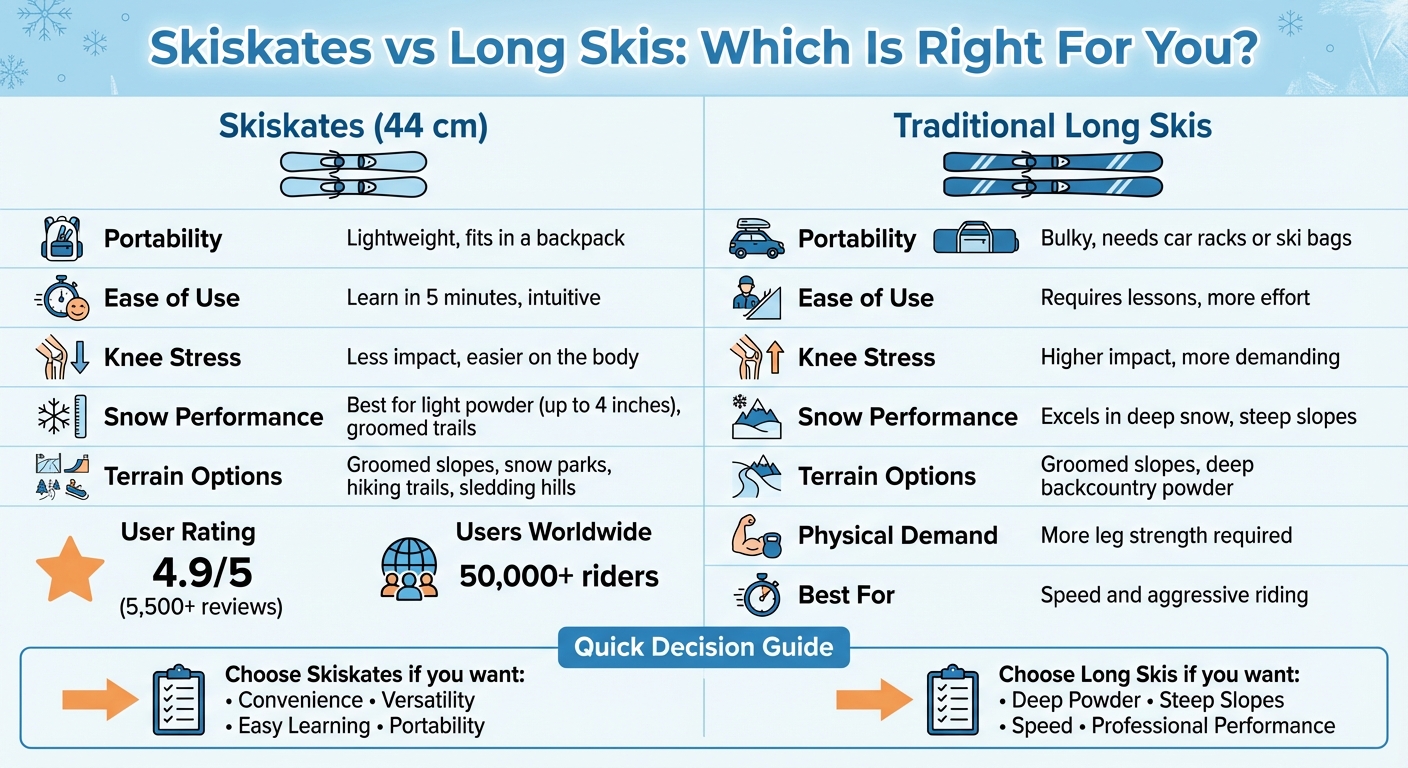
Skiskates vs Traditional Long Skis: Feature Comparison Chart
How similar is skiing to skating?
1. Snowfeet* Skiskates (44 cm)
At just 44 cm long, Snowfeet* Skiskates bring a fresh twist to winter sports. These compact skates are all about staying active - every movement you make directly impacts your ride. The design offers instant feedback, making the experience both engaging and responsive.
Thanks to their lightweight build, you can toss them in a backpack and head to remote spots without lugging around heavy equipment. Plus, they’re compatible with standard winter or snowboard boots, saving you the hassle (and cost) of buying special footwear.
"These skiblades are so much fun and easy to control. Never going back to regular skis." - Andrew B., Verified User
Most people pick up the basics in just five minutes, especially if they’ve dabbled in inline skating or ice hockey. Forget struggling with long, clunky skis - these skiskates let you feel every movement, boosting your confidence from the start. Their easy-to-learn nature pairs perfectly with their versatility, making them a hit on all sorts of terrains.
Whether you're cruising down groomed slopes, exploring hiking trails, or even zipping around your backyard, these skiskates deliver. They’re best for light powder up to about 4 inches deep, offering a playful and agile ride that keeps you engaged the entire time. With over 50,000 riders worldwide and a stellar 4.9/5 rating from more than 5,500 reviews, it’s clear these skiskates are winning over winter sports fans everywhere.
2. Traditional Long Skis
Traditional long skis rely on a forward stride to build momentum and glide smoothly across the snow. This style focuses on long, deliberate strides, which is a stark contrast to the quick, skating-like movements that define Snowfeet*. This difference in motion highlights why Snowfeet* can feel like a more approachable option for many.
The length of traditional skis provides stability, but it also adds weight and bulk. This means they demand more leg strength and a refined technique, which can put extra stress on the knees. Many skiers describe the experience as "clunky" compared to using shorter equipment. Unlike Snowfeet*, which are easy to pick up and use, long skis often require formal lessons to master essentials like weight distribution, edge control, and turning.
"They are actually much more easier for older skiers than the long clunky skis. Snowblades are very light and easy to control, so you don't need to put too much pressure on your knees to turn or stop." – Anna, Snowfeet Team
That said, traditional skis shine in specific conditions. They’re ideal for deep powder and steep slopes, where their extended length helps them stay afloat and maintain control. Built for speed and aggressive riding, they’re the top choice for professional disciplines like Super G slalom. But this specialization comes with trade-offs. They aren’t practical for hiking trails, sledding hills, or casual backyard fun. Plus, transporting them can be a hassle, often requiring a roof rack or a large ski bag.
While Snowfeet* offer a quick and easy way to hit the slopes, traditional skis demand a significant investment of time and effort to develop the skills needed for confident skiing.
sbb-itb-17ade95
Advantages and Drawbacks
When choosing between Snowfeet* Skiskates and traditional long skis, it’s all about weighing the pros and cons to match your winter plans. Here's a quick comparison of their key features:
| Feature | Snowfeet* Skiskates (44 cm) | Traditional Long Skis |
|---|---|---|
| Portability | Fits in a backpack; super light and compact | Needs car racks or large storage space |
| Terrain Options | Great for groomed slopes, snow parks, hiking trails, and sledding hills | Excels on groomed slopes and handles deep snow better |
| Learning Difficulty | "Learn in 5 minutes" – intuitive for ice or inline skaters | Often requires lessons and can be tricky to control due to length |
| Physical Requirements | Easier on the knees and simpler to recover balance after falls | More physically demanding and can feel bulky |
| Powder Performance | Handles light powder up to about 4 inches | Superior flotation in deeper snow |
Let’s break things down further to see how these differences play out on the slopes.
The standout feature of Snowfeet* Skiskates is their portability. These little guys are so light and compact, they can slip into a backpack or car trunk - no need for those awkward roof racks. This makes them perfect for spur-of-the-moment trips, hiking to remote trails, or even hopping on public transport. Their easy-to-carry size doesn’t just make life simpler; it also opens up more opportunities for adventure.
Another major win for Snowfeet* Skiskates is how friendly they are on your body. They’re easier on the knees and require less leg strength for turns. As Cameron Asbell puts it, “It doesn’t put stress on your knees as much, also making it easier to control and regain balance when falling.” If you’re not looking to exhaust yourself or you’re just out for casual fun, these skiskates are a great choice. Traditional skis, on the other hand, can feel heavy and demanding, especially for beginners or those wanting a more laid-back experience.
When it comes to snow conditions, Snowfeet* Skiskates shine in light powder - up to about 4 inches. For deeper snow, though, traditional skis take the lead with their better flotation. But here’s the thing: Snowfeet* aren’t just about powder. They’re incredibly versatile, performing well on groomed slopes, in terrain parks, on sledding hills, and even hiking trails. This makes them a go-to for anyone craving a fun, dynamic winter adventure without the hassle of bulky gear. Skiskating is all about keeping things playful, and Snowfeet* deliver that in spades.
Conclusion
Snowfeet* Skiskates bring a fresh twist to winter sports, focusing on fun and versatility over deep powder performance. If you’re after gear that fits in a backpack, works on more than just groomed slopes, and doesn’t require pricey lessons, these 44 cm Skiskates are a fantastic option. They’re easier on your body, simple to pick up, and open the door to winter adventures that traditional skis can’t quite match - all without the hassle of lugging around bulky equipment.
That said, long skis still have their place, especially for those chasing big mountain powder days. But for recreational riders who prioritize convenience, versatility, and just plain fun, Snowfeet* Skiskates offer something totally different.
So, what matters most to you? Do you crave the freedom to explore diverse terrain with gear that’s lightweight and portable? Or is deep backcountry powder your happy place? Your answer will guide you. For everyday winter fun, skiskating stands out with its ease and adaptability.
FAQs
How are skiskates different from traditional skis?
Skiskates, like Snowfeet, offer a refreshing twist on winter sports thanks to their compact size, nimbleness, and simplicity. Traditional skis usually span 54–66 inches in length, but skiskates are a fraction of that - just 15–18 inches. This petite size makes them incredibly agile and playful, perfect for weaving through varied terrains with ease.
What sets skiskates apart even more is their convenience. Unlike traditional skis that often require dedicated boots and bindings, skiskates are lightweight, portable, and work seamlessly with regular winter or snowboard boots. You can toss them into a backpack without hassle and hit the slopes without a steep learning curve. They’re a fantastic option for beginners or anyone looking for a fun, no-fuss way to embrace winter adventures. Skiskates bring a sense of freedom and practicality that long skis just can’t match.
Can you use skiskates in deep snow or on steep slopes?
Skiskates work best on groomed trails, slopes, and parks where their nimbleness really stands out. They’re a great choice for blending skating and skiing on different terrains, but they’re not the go-to option for deep powder or steep, challenging slopes.
Thanks to their compact size, skiskates excel at quick turns and offer excellent control on packed snow. However, for powdery conditions or tough inclines, traditional skis or snowboards tend to perform better. Skiskates are all about making winter sports more fun and accessible, especially when portability and simplicity matter most.
Do skiskates put less stress on your knees compared to traditional skiing?
Yes, skiskates like Snowfeet are gentler on your knees compared to traditional skis. Thanks to their compact design and unique movement style, they put less strain on your knee joints, offering a more comfortable and safer experience for winter sports lovers.
Unlike traditional skis, which are heavier and require forceful turns that can stress your knees, Snowfeet skiskates are lightweight and agile. This design allows for smoother, more natural movements, making them a great choice for anyone wanting to hit the slopes without putting too much pressure on their knees.











Leave a comment
This site is protected by hCaptcha and the hCaptcha Privacy Policy and Terms of Service apply.