



















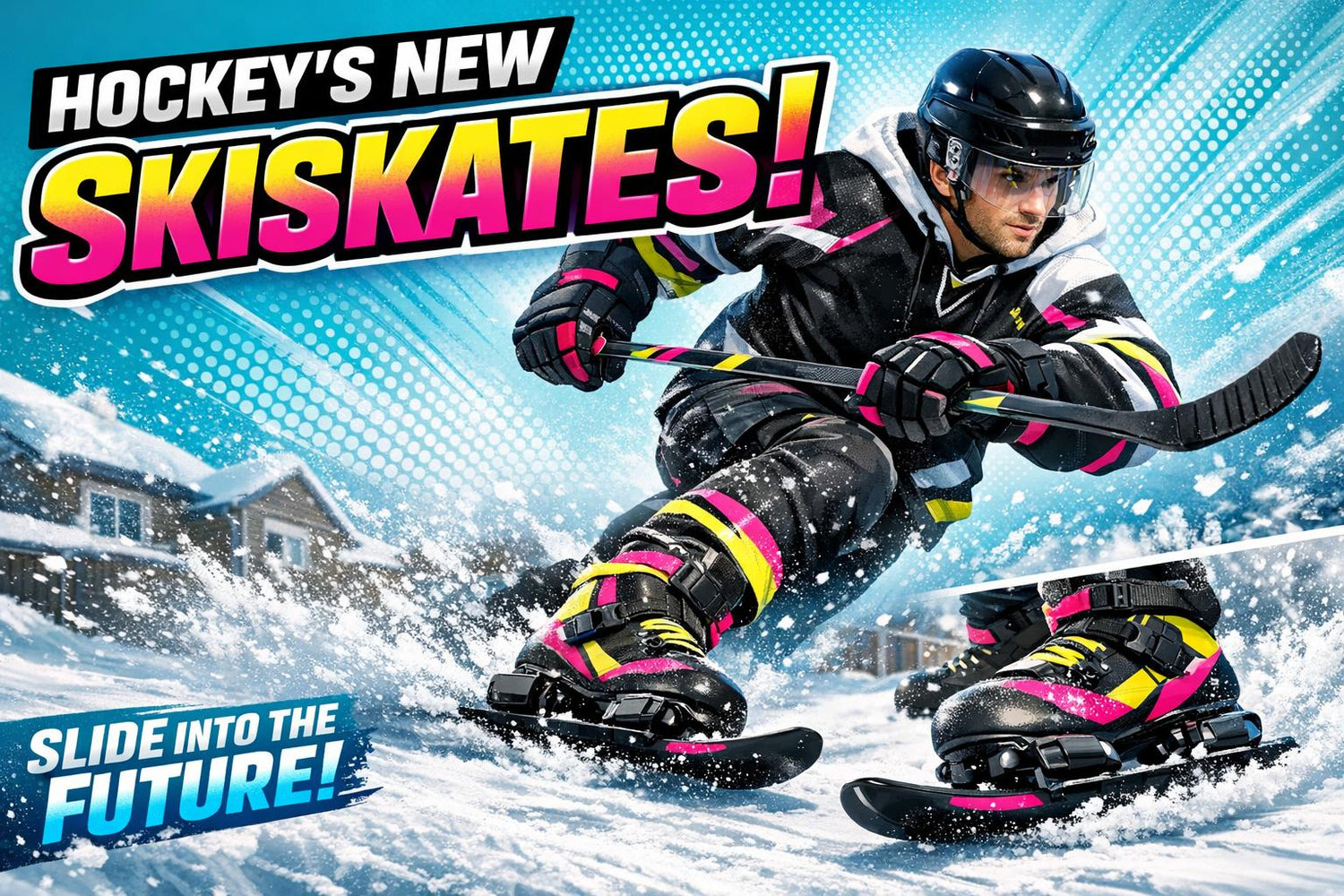
Hockey players are ditching long skis and snowboards for Skiskates - compact, 17-inch mini skis that feel like ice skates on snow. Why? They’re easy to use, fit in a backpack, and let you pull off moves like hockey stops and quick turns without the hassle of bulky gear. Whether you’re hitting a sledding hill, a backyard snow patch, or a ski resort, these let you skate on snow without missing a beat.
Here’s what makes Skiskates a game-changer for hockey players:
- Familiar motion: They mimic ice skating mechanics - lateral pushes, sharp stops, and quick edge changes.
- Portable: At just 17 inches long, they’re easy to carry and store, unlike skis or snowboards.
- Convenient: Use them with your regular winter boots; no special gear needed.
- Versatile: Perfect for slopes, trails, or even a snowy backyard.
With over 50,000 users and thousands of glowing reviews, hockey players are loving how Skiskates let them bring their ice skills to the snow - effortlessly.
The Problem: Traditional Winter Gear Doesn't Work for Hockey Players
Long Skis and Snowboards Restrict Movement
Let’s face it - traditional skis and snowboards just don’t cut it for hockey players. Skis, typically 170–185 cm long, act like anchors, making lateral movement and sharp, quick turns nearly impossible. And those are the bread and butter of hockey skating! Snowboards? They lock both feet together, completely eliminating the independent leg movement you need for acceleration, edge control, and those signature hockey stops. Basically, they force you to use techniques that feel totally foreign compared to what you’re used to on the ice.
And if that wasn’t enough, there’s the whole issue of lugging this stuff around.
Traditional Gear Is Heavy and Hard to Transport
Hockey players already have enough to carry - massive bags filled with pads, helmets, and sticks. Adding full-length skis or a snowboard to the mix? It’s a logistical nightmare. Those things are bulky, heavy, and let’s not forget the rigid boots that make walking (or even standing) awkward. Plus, you’ll need extra car space, like a roof rack or a larger vehicle, just to haul it all around.
Now imagine something compact enough to fit in a backpack. Sounds way more practical, right? Especially when you’re juggling practice schedules, tight living spaces, and team travel.
And traditional gear has another big limitation - it’s tied to resorts.
Limited Use Beyond Ski Resorts
Here’s the deal: long skis are great for groomed resort slopes, but that’s about it. They’re a pain to use on narrow hiking trails, local sledding hills, or even in your backyard after a fresh snowfall. Maneuvering them in tight spaces? Forget it. And quick, spontaneous snow sessions? Not happening. Transporting them for anything other than a full day at a resort just isn’t realistic.
For hockey players who want to cross-train or enjoy some quick snow fun without committing to a full-blown resort trip, traditional gear becomes more of a hassle than it’s worth.
The Solution: How Snowfeet* Skiskates Work for Hockey Players
Skiskates Mimic Ice Skating Movements
Snowfeet* Skiskates are built to feel just like ice skates - except on snow. The mechanics are the same: push sideways with your legs to move, shift your weight to carve turns, and evenly distribute your weight over both feet to pull off a solid hockey stop.
"To start your ride, skate like a hockey player. Push your legs sideways." - Snowfeet Team
This familiar motion makes it easy for hockey players to adapt, while the design keeps things simple and practical.
Compact Design That Fits Anywhere
Measuring only 44 cm (17.3 inches) in length, Snowfeet* Skiskates are small enough to fit in a regular backpack. Unlike traditional skis that can stretch 150–180 cm or more, these skiskates eliminate the need for roof racks or bulky storage solutions. Their portability makes them a breeze to carry and store, whether you're heading to the slopes or just playing in the backyard.
Ready for Any Snow-Covered Surface
For hockey players craving agility off the ice, Snowfeet* Skiskates are up for the challenge. They work on a variety of snowy terrains - ski slopes, snow parks, hiking trails, sledding hills, and even fresh snow in your backyard. Their short length makes navigating tight spaces a cinch, unlike traditional skis that can feel awkward and unwieldy. And if you need to skate uphill? No problem - something that's nearly impossible with long skis.
"I hate getting stuck on a hill in skis because they're so long and bulky. Since these are shorter, you can just skate right up." - Sophia Kane
This versatility has turned snowy landscapes into training grounds for hockey players. Plus, with professional metal edges that meet resort standards, most ski resorts are happy to welcome Skiskates onto their lifts.
Hockey Player Tries Snowfeet* Skiskates | See What He Thinks | Skiboards | Short Ski | Mini Ski
sbb-itb-17ade95
How Skiskates Compare to Traditional Winter Gear for Hockey Players
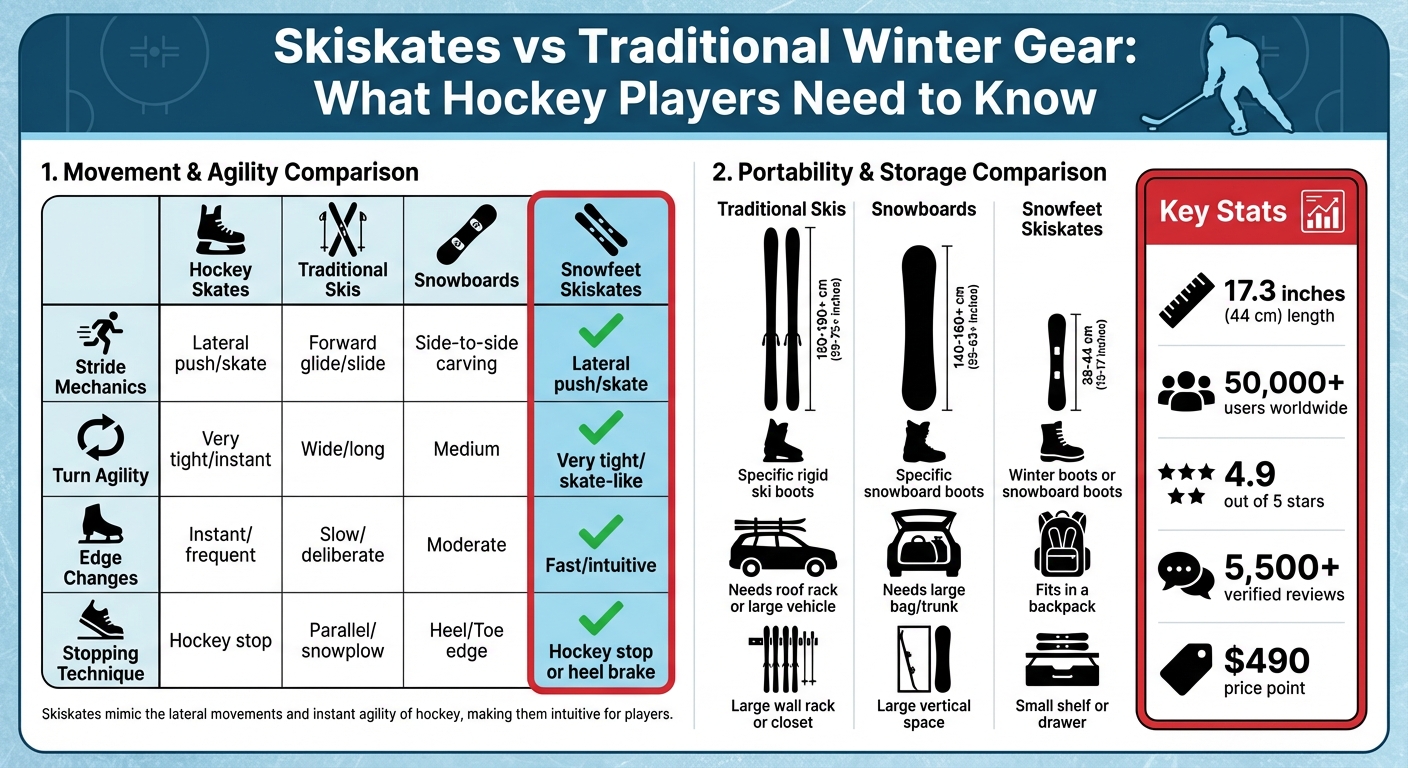
Skiskates vs Traditional Winter Gear Comparison for Hockey Players
Movement and Agility Comparison
The main difference between Snowfeet* Skiskates and traditional winter gear lies in how you move. Hockey players rely on lateral pushes, quick edge changes, and instant stops - movements that feel completely different when using long skis or snowboards.
| Feature | Hockey Skates | Traditional Skis | Snowboards | Snowfeet* Skiskates |
|---|---|---|---|---|
| Stride Mechanics | Lateral push/skate | Forward glide/slide | Side-to-side carving | Lateral push/skate |
| Turn Agility | Very tight/instant | Wide/long | Medium | Very tight/skate-like |
| Edge Changes | Instant/frequent | Slow/deliberate | Moderate | Fast/intuitive |
| Stopping Technique | Hockey stop | Parallel/snowplow | Heel/Toe edge | Hockey stop or heel brake |
Traditional skis encourage gliding with wide, sweeping turns, while snowboards limit independent leg movement. Snowfeet* Skiskates, on the other hand, allow you to skate on snow using the same mechanics as ice skating. This seamless transition means hockey players can perform familiar moves without having to adjust their technique for snowy terrain.
The compact 44 cm design eliminates the bulk of traditional gear, making it easier to twist, jump, ride backward, and execute a proper hockey stop - skills that are awkward or nearly impossible with longer skis. Skiskates also shine on narrow hiking trails and forest paths, where maneuvering with skis is a challenge. This level of agility not only makes them versatile but also easier to carry and store.
Portability and Storage Comparison
Transporting traditional winter gear can be a headache. Skis typically range from 150 to over 190 cm (59–75+ inches) in length, requiring a roof rack or oversized bag. Snowboards, while slightly shorter, still demand significant storage space.
| Feature | Traditional Skis | Snowboards | Snowfeet* Skiskates |
|---|---|---|---|
| Gear Length | 150–190+ cm (59–75+ inches) | 140–160+ cm (55–63+ inches) | 38–44 cm (15–17 inches) |
| Boot Requirements | Specific rigid ski boots | Specific snowboard boots | Winter boots or snowboard boots |
| Transport Ease | Needs roof rack or large vehicle | Needs large bag/trunk | Fits in a backpack |
| Storage Needs | Large wall rack or closet | Large vertical space | Small shelf or drawer |
Snowfeet* Skiskates, at just 17 inches long, easily fit into a standard backpack. This eliminates the need for bulky ski bags or roof racks. Plus, they’re compatible with regular waterproof winter boots or snowboard boots. Their compact size not only simplifies transportation but also makes them a practical choice for hockey players looking for gear that matches their fast-paced style.
Cost and Accessibility
Traditional ski setups - skis, bindings, boots, and poles - are generally a pricey investment. Snowfeet*, however, offers a more wallet-friendly option. For instance, their 44 cm wood core Skiskates are priced at $490.
Thanks to their intuitive design, Skiskates require minimal training, making them a great fit for hockey players who already understand edge control and lateral movement. They’re versatile enough for groomed resorts, sledding hills, hiking trails, cross-country paths, or even your backyard. With over 50,000 users worldwide and a 4.9 out of 5-star rating from more than 5,500 verified reviews, Snowfeet* has proven to be a convenient and practical alternative to traditional winter sports gear.
Conclusion: Why Hockey Players Are Choosing Skiskates in 2026
Hockey players are turning to Snowfeet* Skiskates because they perfectly match their skating skills. With a design that mimics ice skate mechanics, these skiskates let you perform lateral pushes, quick edge changes, and even the classic hockey stop - all without learning new techniques. Just strap them on and you're ready to roll.
Another big win? Portability. At only 17.3 inches long, these skiskates easily fit into a regular backpack. No need for roof racks or dealing with clunky gear.
"You have to keep the front-back balance, so it feels very natural to those who play ice hockey, ice skate, or even use inline skates."
– Snowfeet Team
And it’s not just about convenience - users love them. With over 50,000 riders and glowing reviews, Snowfeet* has proven it’s not a passing fad. Hockey players are embracing skiskates for their freedom, versatility, and the sense of familiarity they bring - whether you're cruising down groomed slopes, navigating forest trails, or just having fun in your backyard.
FAQs
Why are hockey players choosing Skiskates for snow sports?
Skiskates are bringing a fresh twist to snow sports, especially for hockey players, by offering incredible agility and control. With their ultra-short 17-inch length and lightweight build, they let players transfer the same quick moves and sharp edge control they rely on during ice skating straight to the snow. The result? Tighter turns, faster moves, and an overall more exciting ride.
What sets Skiskates apart from traditional skis or snowboards is their compact size and ease of use. They’re small enough to carry around effortlessly, making them ideal for spontaneous trips to the slopes. Plus, for hockey players, the motion feels second nature - like skating, but on snow. Skiskates strike the perfect balance of portability, adaptability, and performance, making them a go-to option for athletes who want to take their skating skills off the rink and onto the mountains.
Can I use Skiskates with any type of winter boots?
Yes, Snowfeet Skiskates are built to fit snugly onto nearly any kind of winter or snowboard boots. Thanks to their universal bindings, you don’t need to invest in specific footwear. Simply strap them onto your go-to winter boots, and you’re all set to glide through the snow!
What types of terrain are best for using Skiskates?
Skiskates shine on groomed slopes, trails, and park-style terrain, where their compact design offers great control and quick maneuverability. They’re a solid choice for most moderate snow conditions, making them a versatile option for winter fun.
That said, they’re not ideal for steep runs or deep powder - those are better left to traditional skis or snowboards. Thanks to their ice-skating-inspired movement, Skiskates are perfect for anyone wanting a fun, portable way to enjoy the snow.











Leave a comment
This site is protected by hCaptcha and the hCaptcha Privacy Policy and Terms of Service apply.