




















Hockey players, here’s the deal: if you can skate, you can hit the slopes - no ski lessons needed. Thanks to Snowfeet’s short skis like Skiskates (44 cm) and Skiblades (up to 120 cm), your hockey skills transfer almost perfectly to snow. The skating motion, balance, and edge control you’ve mastered on the ice work seamlessly with these compact skis. Plus, they’re easy to use, portable, and affordable (starting at $190).
Here’s why they’re a game-changer:
- Familiar Technique: Use the same side-to-side push, balance, and hockey stop as you do on ice.
- Quick Learning Curve: Most users get the hang of it in 5 minutes.
- Portable & Convenient: Fits in a backpack and works with regular winter or snowboard boots.
- Affordable Gear: Prices range from $190 to $775, much cheaper than traditional ski setups.
Snowfeet products are perfect for hockey players looking to enjoy the slopes without the hassle of learning traditional skiing. Ready to give it a shot? Start with gentle runs, and let your skating skills do the rest.
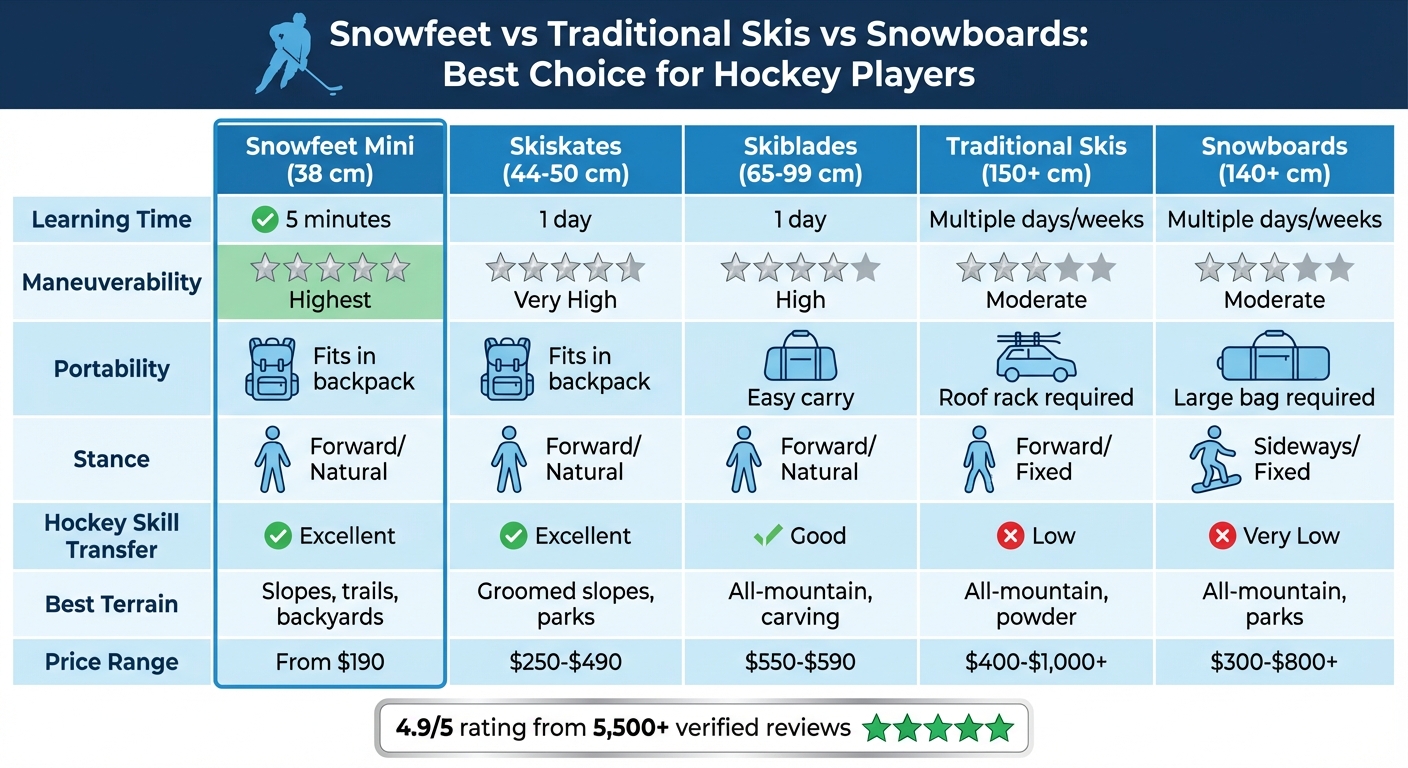
Snowfeet vs Traditional Skis vs Snowboards Comparison for Hockey Players
How Hockey Skills Transfer to Skiing
Hockey Skills That Help with Skiing
If you’ve spent time on the ice playing hockey, you’ve already got a leg up when it comes to using Snowfeet* products. Your ability to control edges - something you do naturally when digging your skate blades into the ice - translates directly to skiing. The same technique applies when angling the metal edges of Snowfeet* Skiskates or Skiblades on the snow. Even the hockey stop is nearly identical: balance your weight evenly on both feet, angle the edges, and voilà - you’re stopping just like on the rink.
Another hockey skill that comes in handy is lateral agility. The side-to-side push you use to gain speed on the ice works beautifully with Snowfeet*. Keeping your knees bent, your stance shoulder-width apart, and shifting your weight smoothly makes maneuvering these short skis a breeze. The 44 cm Skiskates, in particular, feel strikingly similar to hockey skates.
And let’s not forget balance. As a hockey player, you’re already a pro at staying stable on a narrow blade. That same front-to-back stability is crucial when using Snowfeet*. The key difference? Instead of leaning forward like in traditional skiing, you’ll want to keep your weight centered or slightly back. Once you adjust, you’ll feel right at home on the snow.
New Aspects of Skiing for Hockey Players
While your hockey skills give you a solid head start, skiing does introduce some new challenges that you won’t encounter on the ice.
For starters, downhill speed feels very different. On the ice, you control your pace entirely, but on a slope, gravity takes over. You'll accelerate quickly unless you make frequent turns or use terrain features to manage your speed.
Then there’s the terrain itself. Unlike the smooth, predictable surface of a rink, ski slopes can be full of surprises - bumps, dips, and changing angles. To handle these variations, keep your knees bent and your legs loose, so you can absorb the changes in terrain. It’s best to start on gentle, groomed runs to build confidence before tackling steeper slopes.
Snow conditions also play a big role. Snowfeet* perform best on groomed slopes and can handle light powder up to about 4 inches. But icy patches require sharper edge control, and softer snow means adjusting your weight distribution. Regular maintenance - like keeping the metal edges dry and waxing the base - ensures a smoother ride.
Why Snowfeet* Products Work Best for Hockey Players
Snowfeet* products aren’t just a good match for hockey players - they’re practically made for you.
The shorter length of Snowfeet* gear, from the 44 cm Skiskates to the 99 cm Skiblades, makes them feel like a natural extension of your hockey skates. Unlike traditional skis, which can stretch over 60 inches and require entirely different movement patterns, Snowfeet* let you stick to the skating techniques you already know.
Their compact design also makes them incredibly agile. As Snowfeet* puts it, their products are "long enough to ski, short enough to skate". That means you can pull off crossovers, quick direction changes, and tight turns with ease - just like you would on the ice.
Another major perk? Footwear flexibility. Traditional ski boots can feel stiff and uncomfortable, especially if you’re used to hockey skates. Snowfeet* work with snowboard boots or even waterproof winter shoes, giving you better ankle mobility and a more natural feel. Plus, you can adjust the bindings yourself with a simple screwdriver before hitting the slopes. It’s convenience and comfort rolled into one.
Choosing the Right Snowfeet* Gear for Hockey Players
Snowfeet* Product Options
Snowfeet* has a lineup of gear designed for different skating and skiing preferences. Let’s break it down:
- Mini Ski Skates (38 cm): These are the most compact option. They strap right onto your winter boots or snowboard boots, making them great for casual fun on sledding hills or smooth runs. At $250, they’re an affordable way to dive into skiskating.
- Skiskates (44 cm): These are a favorite for hockey players. They closely replicate the feel of hockey skates and are compatible with both ski and snowboard boots. With a durable wood core for speed and strength on resort slopes, they’re priced from $575.
- Skiblades (65 cm and 99 cm): If you’re after more stability at higher speeds, these offer a short-ski experience while staying agile. The 65 cm model starts at $635, while the 99 cm version is available from $675. Both are great for quick turns and park features.
- Short Skis (120 cm): These combine the feel of traditional skiing with standout maneuverability. Priced at $775, they include release bindings and are perfect for groomed slopes or light off-piste adventures. They’re a solid pick for hockey players wanting a versatile ride.
Product Recommendations by Skill Level
Choosing the right gear depends on your experience and skating style. For hockey players just getting started, the Mini Ski Skates (38 cm) or Skiskates (44 cm) are excellent options. The 44 cm Skiskates, in particular, feel like hockey skates, making it easy to use familiar moves like the hockey stop.
As you progress and start exploring more terrain - think terrain parks, tree runs, or carving groomers - you might want to step up to the Skiblades. The 65 cm model is perfect for tricks and quick turns, while the 99 cm version provides added stability and better float in light powder. For those aiming to tackle all-mountain terrain or wanting a more traditional ski experience, the Short Skis (120 cm) deliver a great balance of performance and maneuverability.
Snowfeet* vs Traditional Skis and Snowboards
When compared to traditional skis or snowboards, Snowfeet* gear stands out - especially for hockey players. One of the biggest advantages? The learning curve. Traditional skis often require formal lessons and hours of practice just to get the basics down. But with Snowfeet*, you can lean on your existing skating skills and hit the slopes almost immediately. Many professional skaters say they feel right at home on Snowfeet* gear and can’t imagine switching back to traditional skis.
Another huge plus is portability. Traditional skis can be 5–6 feet long, requiring roof racks or oversized bags for transport. Snowfeet*, on the other hand, are compact - some models even fit in a backpack. This makes them super convenient for chairlifts or tossing in your car. And instead of being stuck in stiff ski boots, Snowfeet* works with comfy snowboard boots or even regular winter shoes.
Here’s a quick comparison:
| Feature | Snowfeet* (38–120 cm) | Traditional Skis | Snowboards |
|---|---|---|---|
| Length | 15–47 inches | 55–75+ inches | 55–65+ inches |
| Learning Curve | ~5 minutes (for skaters) | Hours to days | Moderate to steep |
| Portability | Fits in a backpack | Requires roof rack/large bag | Bulky board bag |
| Boot Type | Winter shoes or snowboard boots | Ski boots only | Snowboard boots only |
| Best Terrain | Groomers, parks | All mountain | Groomers, parks |
| Movement Style | Hockey skating style | Parallel carving | Sideways stance |
Snowfeet* gear makes it easy for hockey players to transition to the slopes, offering portability, comfort, and a familiar skating motion - all without the hassle of traditional gear.
Step-by-Step Guide for Hockey Players Using Snowfeet*
Getting Ready Before Hitting the Snow
Before you head out, grab a screwdriver and adjust your Snowfeet* bindings to fit your boots snugly. It's a good idea to test the setup at home to avoid any surprises on the slopes. This prep work ensures a smooth transition from the rink to the snow, giving you that familiar, comfortable feel.
To warm up, stick to what you know best - hockey drills. Stand with your feet shoulder-width apart, knees slightly bent, and your center of gravity low. Want to go a step further? Place one foot slightly ahead of the other to mimic the gliding stance you'll use on snow. These simple exercises help your body tap into muscle memory, making it easier to apply your skating skills when using Snowfeet*.
First Time on Snow with Snowfeet*
Once you're geared up and ready, start on a gentle, groomed slope. Skip the deep powder (anything over 4 inches) and steep runs for now - ease into it. Use the side-pushing motion you're used to from hockey to get moving. It’ll feel natural in no time.
Keep your weight centered - leaning too far forward can cause the tips to catch, leading to an unexpected tumble. Need to stop? Try a hockey stop by angling the edges and balancing your weight. Turning works just like it does on ice: angle your skiskates and shift your body in the direction you want to go. Mastering these basics will help you feel more in control before tackling more challenging terrain.
Leveling Up: Resort Terrain and Beyond
Once you've nailed the basics, it's time to step it up. Start with green runs - Snowfeet*, thanks to its metal edges, handles these with ease. Feeling confident? Move on to blue runs or even check out terrain parks. The 44 cm Skiskates and 65 cm Skiblades are perfect for these adventures.
Don't forget to take care of your gear after each session. Dry the metal edges and wax the base to keep everything performing at its best. And if you take a fall, no worries - Snowfeet* offers better stability than traditional skis, making it easier to recover and keep going.
With over 5,500 verified reviews and a stellar 4.9 out of 5 rating, you’re in good company. Thousands of hockey players have already made the leap to Snowfeet* - and now it’s your turn to join the fun.
sbb-itb-17ade95
Snowfeet* Short Skis vs Traditional Skis and Snowboards for Hockey Players
Traditional Skis vs Snowfeet* for Hockey Players
Traditional skis, typically over 150 cm long, present a challenge for hockey players. Their length and forward-leaning glide demand techniques that clash with the side-to-side motion hockey players are used to on the ice. On the other hand, Snowfeet* short skis - ranging from 38 cm to 99 cm - are a game-changer. They mimic the skating motion you already know. You can push laterally, execute hockey stops, and keep your weight centered just like you would on the rink. This makes transitioning from ice to slopes almost effortless with Snowfeet*.
Snowboards vs Snowfeet* for Hockey Players
If skis don’t suit hockey players, what about snowboards? Well, snowboards come with their own set of challenges. They lock you into a sideways stance, which can feel awkward if you’re accustomed to facing forward. Pro skater Logan (@xskyskaterx) summed it up perfectly:
"I can't skateboard, surf, snowboard or do anything that goes sideways because of my blading background... Snowfeet happened... I can rip all of my inline tricks on these!"
Logan’s experience highlights how Snowfeet* allow hockey players to transfer their ice skills directly to the slopes. Unlike snowboards, which require relearning balance and edge control, Snowfeet* maintain a natural forward stance with independent leg movement. This setup mirrors the stability and agility you’ve already mastered on the ice.
Comparison Table: Pros and Cons
Here’s a quick breakdown of how Snowfeet* stack up against other options:
| Feature | Snowfeet* Mini (38 cm) | Skiskates (44-50 cm) | Skiblades (65-99 cm) | Traditional Skis (150+ cm) | Snowboards (140+ cm) |
|---|---|---|---|---|---|
| Learning Time | 5 minutes | 1 day | 1 day | Multiple days/weeks | Multiple days/weeks |
| Maneuverability | Highest | Very High | High | Moderate | Moderate |
| Portability | Fits in backpack | Fits in backpack | Easy carry | Roof rack required | Large bag required |
| Stance | Forward/Natural | Forward/Natural | Forward/Natural | Forward/Fixed | Sideways/Fixed |
| Hockey Skill Transfer | Excellent | Excellent | Good | Low | Very Low |
| Best Terrain | Slopes, trails, backyards | Groomed slopes, parks | All-mountain, carving | All-mountain, powder | All-mountain, parks |
| Price Range | From $190 | From $250-$490 | From $550-$590 | $400-$1,000+ | $300-$800+ |
Snowfeet* have earned rave reviews, with over 5,500 verified users giving them an average rating of 4.9 out of 5. One fan, Andrew B., shared:
"These skiblades are so much fun and easy to control. Never going back to regular skis."
It's clear that Snowfeet* are a favorite among hockey players looking for a seamless way to enjoy the slopes without leaving their skating skills behind.
Hockey Player Tries Snowfeet* Skiskates | See What He Thinks | Skiboards | Short Ski | Mini Ski
Conclusion: Why Snowfeet* Is the Best Choice for Hockey Players
If you’re a hockey player planning to hit the slopes in 2026, Snowfeet* makes it an easy transition. You already have the essentials - balance, edge control, and that smooth skating stride. Snowfeet* simply shifts those skills from ice to snow. With more than 50,000 riders worldwide and a stellar 4.9 out of 5 rating from over 5,500 verified reviews, the numbers speak for themselves. This perfect mix of hockey skills and smart design makes Snowfeet* stand out as the ultimate choice for hockey players.
The best part? Your hockey skills directly carry over to the snow. That means you can skip the awkward learning curve and dive straight into the fun. The skating motion feels natural, and yes, you can even pull off a hockey stop to brake on the slopes.
Snowfeet* also wins on portability and cost. The gear fits easily into a backpack, so there’s no need for roof racks or bulky bags. Plus, it’s far more budget-friendly than traditional ski setups. No lessons, no extra expenses - just grab your Snowfeet*, and you’re set. For hockey players ready to take on the mountains, Snowfeet* offers the perfect blend of familiar technique and hassle-free convenience.
FAQs
How are Snowfeet products better suited for hockey players than traditional skis or snowboards?
Snowfeet products are crafted to align with the skills hockey players already have - things like balance, agility, and edge control. This makes shifting to skiing a whole lot smoother. Unlike traditional skis or snowboards, Snowfeet Skiskates (around 17 inches) and Skiblades (ranging from 26 to 47 inches) are shorter, lighter, and strap right onto any winter shoes - or even hockey skates. No need for heavy boots, bindings, or poles. It’s all about keeping hockey players comfortable and confident on the slopes without having to learn an entirely new sport.
What’s more, Snowfeet gear is super compact and portable. You can toss it in a backpack and use it pretty much anywhere - on a hill, a trail, or even a cross-country route. Compare that to traditional skis and snowboards, which often require a pile of specialized equipment and a bigger investment of both time and money. With Snowfeet’s one-size-fits-all system (fits US sizes 6–13), hockey players can hit the slopes using the skills they already have, skipping the hassle of heavy gear and rigid setups.
What are the best Snowfeet options for beginners looking to try skiing?
For those just starting out, Snowfeet Skiskates (44 cm) and Snowfeet Skiblades (65 cm) are fantastic options. Their shorter length makes them much easier to handle, and their design feels similar to hockey skates. This makes them a natural choice for beginners, especially if you’re already comfortable on skates. Plus, they’re lightweight and super portable - perfect for newcomers who might not want to invest in bulky gear right away.
These skates are built to make learning a breeze. They tap into skills like balance and edge control, which hockey players often already have. If you want a simple, fun, and low-pressure way to dip your toes into skiing, Snowfeet’s compact gear is a solid starting point!
Are Snowfeet suitable for all types of snow and terrain?
Snowfeet are built to handle a mix of snow conditions and terrains, making them a fun option for everything from resort skiing to backcountry outings and even cross-country trails. Their short length and lightweight design give you more control, making it easier to navigate different environments.
That said, no snow gear is perfect for every situation. Deep powder or icy slopes can be tricky with Snowfeet, but for most casual adventures, they deliver a smooth and enjoyable ride. Plus, their compact size and hockey skate-like feel make them an easy and exciting choice for anyone looking to try something different on the slopes.













Leave a comment
This site is protected by hCaptcha and the hCaptcha Privacy Policy and Terms of Service apply.