




















Skiskates are a game-changer for hockey players who want to skate on snow. These compact, 17.3-inch-long skis combine the movement of ice skating with the fun of snow sports. They’re lightweight, fit in a backpack, and work with regular winter or snowboard boots. If you’re comfortable on skates, you’ll pick these up in minutes.
Why hockey players love skiskates:
- The motion feels just like skating - push sideways, carve turns, and stop with a hockey stop.
- Their short length makes tight turns and quick direction changes easy.
- No need for bulky ski gear - just strap them on and go.
Key features:
- 44 cm length for agility and portability.
- Durable wood core with metal edges for precise control.
- Compatible with both ski and snowboard boots.
Whether you’re on groomed slopes, snow parks, or even your backyard, skiskates are a fun, easy way to bring your skating skills to the snow. Prices start at $190, and most hockey players can master them in under a day. Ready to skate on snow? Skiskates are your new go-to gear.
Hockey Player Tries Snowfeet* Skiskates | See What He Thinks | Skiboards | Short Ski | Mini Ski
Skiskates vs. Ice Skates, Skis, and Snowboards
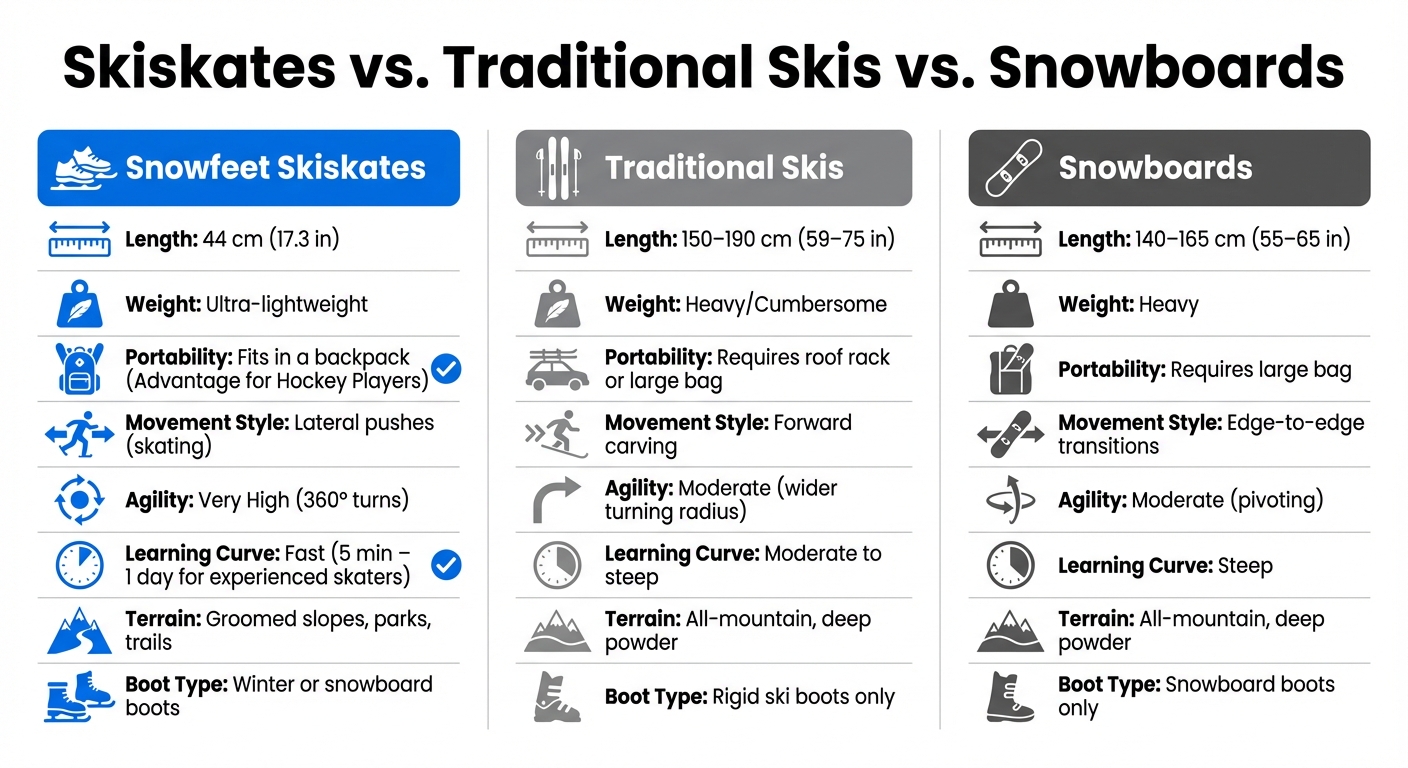
Skiskates vs Traditional Skis vs Snowboards Comparison Chart
Design and Construction
Snowfeet* Skiskates are just 44 cm (17.3 in) long - much smaller than the 150–190 cm length of traditional skis. This compact size makes them incredibly portable and easy to handle. Plus, they’re lightweight, cutting down on the bulk and heft that skiers often deal with.
Despite their small size, these skiskates pack a punch when it comes to durability. They’re built with a wood core, much like professional-grade skis, and feature metal edges for precise carving. The bindings are non-release and work with both ski and snowboard boots. And here’s the kicker - they fit neatly into a regular backpack. Compare that to regular skis, which usually require roof racks or oversized bags, and you can see why their portability is such a game-changer.
Movement and Control
Thanks to their clever design, Snowfeet* Skiskates offer a movement style that feels totally different from skiing. Instead of relying on gravity to glide downhill, you push off laterally, much like you would on ice skates. Keeping your weight centered over the middle or back of your feet helps avoid snagging the short tips in the snow, making the experience feel intuitive - especially if you’re already comfortable on skates.
Carving turns is straightforward: you tilt the skiskates onto their metal edges, just like you would on ice. Their short length allows for super-tight turns and unmatched 360° maneuverability. Stopping is also simple - you can perform a hockey stop by turning your feet perpendicular to the slope and digging in the edges. Compare this to snowboards, where you need to shift edges while standing sideways, or traditional skis, which require broader, parallel turns. Skiskates make control feel effortless.
Comparison Table
Here’s a quick look at how Snowfeet* Skiskates stack up against traditional skis and snowboards:
| Feature | Snowfeet* Skiskates | Traditional Skis | Snowboards |
|---|---|---|---|
| Length | 44 cm (17.3 in) | 150–190 cm (59–75 in) | 140–165 cm (55–65 in) |
| Weight | Ultra-lightweight | Heavy/Cumbersome | Heavy |
| Portability | Fits in a backpack | Requires roof rack or large bag | Requires large bag |
| Movement Style | Lateral pushes (skating) | Forward carving | Edge-to-edge transitions |
| Agility | Very High (360° turns) | Moderate (wider turning radius) | Moderate (pivoting) |
| Learning Curve | Fast (5 min – 1 day for experienced skaters) | Moderate to steep | Steep |
| Terrain | Groomed slopes, parks, trails | All-mountain, deep powder | All-mountain, deep powder |
| Boot Type | Winter or snowboard boots | Rigid ski boots only | Snowboard boots only |
If you’re a hockey player or someone who loves skating, Snowfeet* Skiskates offer a movement style that feels familiar and a level of portability that’s hard to beat. Whether it’s the ease of learning, the agility, or the convenience of packing them into a backpack, they bring something fresh to the winter sports scene.
How to Switch from Hockey Skates to Snowfeet* Skiskates
If you're used to hockey skates, transitioning to Snowfeet* Skiskates can feel surprisingly natural. With a few tweaks to your technique, you'll be gliding on snow in no time.
Adjusting Your Stance and Balance
Moving from ice to snow doesn't require a complete overhaul of your skills, but there are some key differences. Start with your legs about shoulder-width apart - this helps with stability. Place one foot slightly ahead of the other, which gives you better balance on uneven snow.
Weight distribution is where things get interesting. Unlike traditional skiing, where leaning forward in your boots is common, Snowfeet* Skiskates work best when your weight stays centered or slightly back. Leaning too far forward can throw you off balance since these skiskates don't have the long tips you'd find on regular skis. Keep your knees bent and ready to absorb any bumps - this will help you stay steady and in control.
Once you've got your stance down, it's time to fine-tune your movement and turning.
Movement and Turning Techniques
Start by using the same lateral pushes you use on the rink. Stick to flat, well-groomed snow at first. The metal edges on the skiskates grip the snow in a way that feels a lot like skating on ice, so you'll have that familiar sense of control. When it comes to turning, tilt the skiskates onto their edges to carve through the snow - it’s similar to how you’d handle tight turns playing hockey. Thanks to their compact 44 cm length, these skiskates let you make sharp, precise turns with ease.
If you’re skating backward, shift your weight slightly toward your toes and lift your heels a bit. This adjustment helps you maintain control and balance while moving in reverse.
How to Stop on Skiskates
Stopping on Snowfeet* Skiskates is all about adapting the hockey stop. The main difference? Spread your weight evenly across both feet instead of relying on just one edge. To pull it off, build up some moderate speed on a gentle slope, then twist your feet and hips to face uphill. The metal edges will dig into the snow, bringing you to a smooth stop.
For a more gradual slowdown, you can use a gentle heel brake or the snow plow technique. If you're tackling steeper terrain, try a side-slip - just tilt the edges and let yourself slide sideways to control your descent. Whichever method you choose, practice on soft, groomed snow to build confidence and sharpen your edge control. It’s all about getting comfortable with the feel of the skiskates under your feet.
sbb-itb-17ade95
Why Snowfeet* Skiskates Work Best for Hockey Players
Benefits of Snowfeet* Skiskates
Snowfeet* Skiskates combine the quickness of hockey movements with the convenience of portability. Measuring just 44 cm, these are some of the shortest skis in the world and can easily fit into a backpack. Plus, you don’t need to splurge on heavy ski boots - your regular waterproof winter boots or snowboard boots will do the trick. With a strong community of fans backing the product, Snowfeet* has earned its place among winter sports enthusiasts.
"These skiblades are so much fun and easy to control. Never going back to regular skis."
– Andrew B., Verified User
One of the best parts? The learning curve is practically non-existent for hockey players. If you’re used to skating, you can get the hang of these in about 5 minutes. The familiar skating motion, combined with the ability to stop like you would on ice and control edges precisely, makes the transition to snow almost seamless. These features make Snowfeet* Skiskates stand out from traditional winter sports gear.
Snowfeet* Skiskates vs. Traditional Ski and Snowboard Brands
Let’s face it - traditional skis, like those from Rossignol, Salomon, or K2, are long. Really long. Typically, they measure between 150 and 190+ cm, which makes them a hassle to carry around. Snowboards, on the other hand, lock both feet onto one board, requiring you to learn a whole new balancing act. Snowfeet* Skiskates eliminate both of these issues. Their compact size allows for independent leg movement, letting you make sharp, precise turns without dealing with the bulkiness of a long base.
Their design also helps reduce leg fatigue. Unlike traditional skis that require a forward-leaning stance, Snowfeet* Skiskates let you keep your weight centered or slightly back, which feels more natural and less tiring. This makes them perfect for freestyle tricks, quick direction changes, and the kind of fast, dynamic moves hockey players are already great at.
And here’s the kicker: while traditional skis and snowboards are mainly for resort slopes, Snowfeet* Skiskates are versatile enough to handle groomed slopes, hiking trails, sledding hills, and even your backyard. This flexibility opens up a whole new world of winter fun, especially for hockey players looking to practice their skills in different environments.
Pros and Cons Table
| Feature | Snowfeet* Skiskates | Traditional Skis | Snowboards |
|---|---|---|---|
| Length | 38 - 50 cm | 150 - 190+ cm | 140 - 165+ cm |
| Portability | Fits in a backpack | Requires roof rack/bag | Requires large bag |
| Learning Curve | 5 - 60 minutes (skaters) | Days/Weeks of lessons | Days/Weeks of lessons |
| Agility | High (lateral movement) | Moderate (forward carving) | Moderate |
| Footwear | Winter/snowboard boots | Rigid ski boots | Snowboard boots |
| Weight | Lightweight | Heavy | Heavy |
| Trick Potential | High (independent legs) | Low (long base) | Moderate (fixed stance) |
| Leg Fatigue | Low (centered weight) | High (forward lean) | Moderate |
| Terrain Versatility | Slopes, trails, backyards | Resort slopes only | Resort slopes only |
Setup, Safety, and Best Conditions for Skiskates
Choosing Boots and Adjusting Bindings
Snowfeet* Skiskates are available in two versions: one designed for standard ski boots and another for snowboard boots. If you're a hockey player, snowboard boots might be the better pick. Why? They offer more comfort, flexibility for tricks, and are easier to walk in compared to the more rigid ski boots.
To get started, adjust your bindings at home with a screwdriver and the boots you plan to use. The snowboard binding version comes with two straps - one for your ankle and one for your toe. If your shoe size is below a US 6, you may need to use alternate strap holes and trim any extra material for a snug fit.
Don't forget the safety leashes that come with non-release bindings. These leashes ensure your skiskates stay attached if you fall, which is especially handy on steeper terrain. Non-release bindings on skiskates under 100 cm are designed to stay secure and won’t detach unexpectedly.
Once your bindings are set, you’re ready to hit the slopes safely. But first, let’s talk about some key safety tips.
Safety and Maintenance Tips
To maintain control and reduce the risk of falling, keep your weight centered or slightly shifted back. Adopt a shoulder-width stance with bent knees, and for added stability, position one foot slightly ahead of the other.
When it’s time to stop, try a hockey stop by pushing the skiskate edges sideways, similar to stopping on ice. For gradual slowing, use the built-in heel brake that comes with Snowfeet* Skiskates. One bonus of skiskates? Falling is generally safer compared to traditional skis or snowboards since there are no long boards to cause leverage injuries.
After each session, wipe the metal edges dry and apply a thin layer of oil to prevent rust. Keep the base edges sharp using a tuner or sharpening stone for better control and smoother turns. Regularly wax the base - ideally daily during a ski trip - to avoid snow sticking and to maintain speed. These simple maintenance steps will keep your skiskates in top shape for your next adventure.
Best Snow Conditions and Terrain
Now that your skiskates are ready to go, let’s talk about where they shine.
Snowfeet* Skiskates perform best on groomed slopes, snow parks, and trails. They’re also great for sledding hills, hiking trails, or even your backyard. While they can handle light powder up to about 4 inches (10 cm), deeper snow calls for longer models like the Skiblades (99 cm or 120 cm). Steer clear of extremely steep slopes and ungroomed terrain with bumps or deep holes, as the shorter length of skiskates can make these conditions tricky. If you do venture onto ungroomed terrain, shift your weight toward your heels and lift your toes to keep the tips from catching.
Most ski resorts allow Snowfeet* Skiskates since they feature standard metal edges, just like regular skis. If anyone questions you, simply explain that these edges meet standard resort safety requirements. Now, you’re all set to enjoy the slopes!
Conclusion
For hockey players looking to take their skills from the rink to the slopes, Snowfeet* Skiskates offer a winter adventure that feels second nature. At just 44 cm (17.3 inches) long, these compact skates fit easily into a backpack and glide down slopes with the precision and agility of skating on ice. Their performance has already turned heads, earning recognition as an ISPO Innovation Finalist and winning the A'design competition.
The learning curve? Practically non-existent. Most hockey players get the hang of skiskating in a single day, with some picking up the basics in as little as five minutes.
Snowfeet* offers options to suit your preference and budget, with wood-core models priced at $490 and fiberglass models starting at $190. This range makes them a go-to choice for hockey players eager to explore snow in a whole new way.
With Snowfeet* Skiskates, you're not just sliding down the mountain - you’re skating on it. They’re lighter, more responsive, and far easier to handle than traditional bulky gear, letting you move as naturally as you do on the ice. For hockey players ready to embrace the slopes, this is the gear that bridges the gap.
FAQs
How are skiskates different from traditional skis when it comes to portability and ease of use?
Skiskates, like Snowfeet’s 44 cm models, are a dream when it comes to portability. At just under 20 inches long and super lightweight, they can slip right into your regular backpack. Compare that to traditional skis, which are over 5 feet long and need extra gear like roof racks or ski bags to haul around. With skiskates, you’re free to take them just about anywhere - no hassle, no bulky equipment.
Using skiskates is surprisingly simple, too. They’re designed to feel a lot like ice skating on snow, which makes them especially intuitive for hockey players. Thanks to their short length and easy-to-use bindings, even beginners can pick up basic turns and stops pretty quickly. Unlike traditional skis, which can take a while to master, skiskates let you dive into the fun with less effort and more confidence.
What are the best terrains and conditions for using skiskates?
Skiskates shine on well-groomed, packed snow. Their compact 44 cm blades are designed to grip and glide with ease, making them perfect for resort runs, maintained trails, and slopes with ski lifts. These surfaces provide the control and stability that hockey players and skaters love for quick turns, sharp stops, and familiar skating moves.
If freestyle is more your style, skiskates are a blast in terrain parks, half-pipes, and trick zones. Their lightweight build makes them ideal for pulling off tricks, short-radius turns, and playful riding. They’re built for fun and dynamic movement.
That said, skiskates aren’t the best choice for steep backcountry slopes or deep powder. Their shorter length and narrow surface area make it tough to stay afloat in soft snow. Stick to moderate slopes and avoid terrain that demands the braking power of traditional skis or snowboards.
Why are skiskates a great option for hockey players looking to try snow sports?
Skiskates are a fantastic option for hockey players because they let you bring your ice skills straight to the slopes. With their compact, lightweight design (just 17 inches), Snowfeet Skiskates make it easy to maintain that low, balanced stance hockey players are used to. They’re perfect for quick edge-to-edge turns and that forward-leaning posture you rely on during a game. The best part? They create an "ice-skating on snow" feel, so the transition from rink to snow feels natural and instinctive.
Unlike traditional skis, which can feel bulky and awkward, skiskates are all about speed and agility. They allow for dynamic movements and sharp stops - just like on the ice. And compared to snowboards, skiskates give each foot its own blade, letting you keep that independent motion hockey players need for precision and control. On top of that, they’re super portable, easy to carry, and work with your regular winter boots. It’s a convenient and fun way to take your hockey skills off the ice and onto the snow!













Leave a comment
This site is protected by hCaptcha and the hCaptcha Privacy Policy and Terms of Service apply.