




















If skiing feels awkward and snowboarding isn’t your thing, there’s a better way to enjoy winter as a hockey player. Snowfeet’s Skiskates (44 cm) and Skiblades (65 cm) are compact alternatives to traditional skis that let you bring your skating skills to the slopes. They’re small, portable, and easy to use - perfect for sharp turns, quick stops, and that familiar skating motion.
Key Takeaways:
- Skiskates (44 cm): Shortest option, great for agility and tricks. $490–$590.
- Skiblades (65 cm): More stable, combines skating feel with carving. Around $635.
- Both fit in a backpack, work with snowboard or ski boots, and take minutes to get comfortable with.
Forget the hassle of long skis and clunky boots. These let you skate on snow, no steep learning curve required.
Hockey Player Tries Snowfeet* Skiskates | See What He Thinks | Skiboards | Short Ski | Mini Ski
1. Snowfeet* Skiskates (44 cm)
At just 17 inches (44 cm) long, Snowfeet* Skiskates are the shortest skis in the world, designed specifically for hockey players looking to break free from bulky gear. These tiny skis let you translate your ice skating skills directly to the slopes, using the same side-push motion you're already comfortable with. Their compact size makes it easy to pull off sharp twists, jumps, and even 360-degree spins.
Thanks to their design, you can keep your balance just like you would on ice, giving you natural control for moves like a hockey stop. If you need to slow down gradually, there's a built-in heel brake. The parabolic shape and narrow waist make carving through groomed runs and moguls a breeze, while the metal edges ensure you can handle tight, precise turns. With a 5.0/5 rating from 111 reviews, these Skiskates are a favorite for their agility and trick-friendly performance.
Rebecca from Pointe-Claire, CA, shared that her 12-year-old son, an experienced ice skater, was "zipping down the hill in minutes" and even doing jumps within 30 minutes of trying them. Similarly, Jonathon Langan from Sacramento said his girlfriend, a figure skater, tackled steeper blue runs on her first outing with "not one fall."
These Skiskates are easy to carry, fitting into a standard backpack, and they work with both ski and snowboard boots. Prices range from $490 to $590, depending on the binding type. Built to last, they feature a certified sustainable wood core, metal edges, and graphite bases for speed and durability.
"In my opinion, Skiskates is the best product for slopes we developed so far. I love how easy they are to ski and skate and how many different kinds of tricks I can perform without much effort and almost no restrictions."
- Zbyněk, Snowfeet* founder
Perfect for groomed slopes, snow parks, and tight trails where traditional skis might struggle, these Skiskates shine on maintained runs and can even handle light powder up to 4 inches deep. If you're a hockey player craving agility and a skating-like experience on snow, the 44 cm Skiskates deliver on all fronts. Up next, see how Snowfeet* Skiblades take this performance even further.
2. Snowfeet* Skiblades (65 cm)
Looking for something that combines stability with the quick, nimble feel of hockey skates? The 65 cm Skiblades might just be your perfect match. At 26 inches long, they’re small enough to fit in your backpack, yet long enough to give you better balance and carving power than the shorter 44 cm Skiskates. They blend the agility of skating with enough length to handle speed and sharp turns, making them a natural fit for anyone with ice skating skills.
For hockey players, these Skiblades are a breeze - most pick them up in about 5 minutes. The weight distribution feels intuitive, with a middle-to-back balance, unlike the forward-leaning stance you’d need with traditional skis. Andrew B., a verified user, summed it up nicely:
"These skiblades are so much fun and easy to control. Never going back to regular skis."
Unlike the shorter 44 cm Skiskates, the 65 cm Skiblades are designed to work with ski or snowboard boots, ditching the need for traditional ski gear. The snowboard-style bindings add comfort and ankle flexibility, which hockey players especially appreciate. Starting at around $635, they offer excellent performance for the price.
These Skiblades shine on groomed slopes, snow parks, and moguls. While they don’t float as well in deep powder compared to full-length skis, their shorter length makes them far more responsive on resort terrain. You can pull off quick spins, tight turns, and twists that would be tough to manage with traditional 150+ cm skis.
With glowing reviews and a perfect 5.0/5 rating from verified buyers, the 65 cm Skiblades hit the sweet spot between compact and traditional skis. They’re portable, easy to use, and incredibly fun. Up next, we’ll compare these compact options to traditional skis and snowboards.
sbb-itb-17ade95
3. Traditional Skis and Snowboards
Traditional skis, typically measuring over 120 cm in length, come with their fair share of challenges. For starters, they’re bulky and heavy, making transportation a bit of a hassle. Most of the time, you’ll need a roof rack or a large gear bag to get them to the slopes. Snowfeet* products, on the other hand, are compact enough to fit right into a backpack, offering a much easier alternative.
Another major hurdle is the movement style required for traditional skiing. Unlike the lateral cuts used in hockey, long skis are built for wide, sweeping turns that rely heavily on the toes. Quick, sharp movements - like those familiar to ice skaters - just aren’t their strong suit. Plus, forget about pulling off a hockey stop with traditional skis. The stiff plastic boots lock your ankles in place, making the whole setup feel restrictive for anyone used to the agility and responsiveness of skating.
If you’re a hockey player, the learning curve for traditional skiing can be steep. While Snowfeet* products can be mastered in just a few minutes, skiing often requires professional lessons and several days of practice to get the hang of it. Sure, traditional skis shine in deep powder and professional racing scenarios, but on groomed resort trails - the kind most recreational skiers stick to - their extra length can actually become a drawback.
Then there’s the cost. Traditional setups come with specialized boots, bindings, and rental fees that add up quickly. In the U.S., renting ski gear at a resort typically costs $40–$60 per day. In comparison, Snowfeet* products are a one-time purchase starting at $490. And let’s not forget the comfort factor - or lack thereof. Traditional ski boots are notoriously clunky and uncomfortable, especially when you’re walking around the lodge or parking lot.
For hockey players who crave freedom of movement, quick turns, and skating-like control, traditional skis and snowboards just don’t cut it. Designed for a completely different style of movement, they often feel limiting. That’s why compact alternatives like Snowfeet* Skiskates and Skiblades have become the preferred choice for over 50,000 riders worldwide.
Pros and Cons
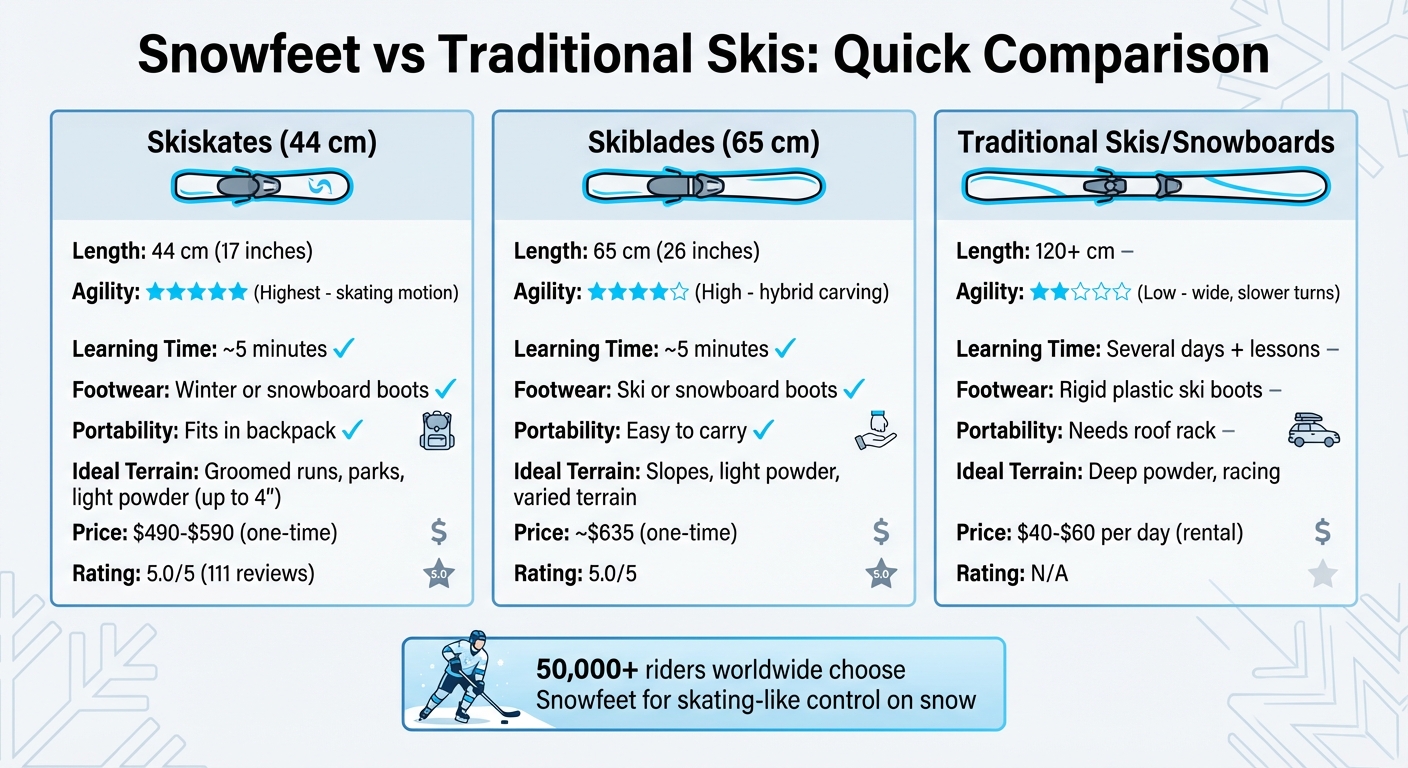
Snowfeet Skiskates vs Skiblades vs Traditional Skis Comparison Chart
Hockey players will immediately notice that Snowfeet* gear brings a level of agility and control that traditional options just can't match. Let’s break down how Snowfeet* stacks up against more conventional equipment.
The Snowfeet Skiskates (44 cm)* are all about delivering a skating-like experience that hockey players love. Thanks to their compact design, they pair perfectly with winter or snowboard boots. These skates shine on groomed runs and handle light powder up to about 4 inches deep.
If you're looking for something with more carving power and jump stability, the Snowfeet Skiblades (65 cm)* are a great pick. They’re designed to work with ski or snowboard boots and come in at around $635. While slightly larger than the Skiskates, they still offer that quick, responsive feel hockey players crave - and can handle a broader range of terrain.
Now, compare that to traditional skis and snowboards. Sure, they’re better for deep powder and racing, but they come with a lot of baggage - literally. You’ll need bulky accessories, stiff plastic boots, and possibly a roof rack just to transport them. Plus, mastering them often requires days of lessons. And don’t forget the recurring costs: daily rentals at U.S. resorts typically run $40 to $60, which adds up fast compared to a one-time Snowfeet* purchase starting at about $490.
Here’s a quick side-by-side comparison to make things clearer:
| Feature | Skiskates (44 cm) | Skiblades (65 cm) | Traditional Skis/Snowboards |
|---|---|---|---|
| Agility | Highest (skating motion) | High (hybrid carving) | Low (wide, slower turns) |
| Learning Time | About 5 minutes | Very quick | Several days of lessons |
| Footwear | Winter or snowboard boots | Ski or snowboard boots | Rigid plastic ski boots |
| Portability | Fits in a backpack | Easy to carry | Needs a roof rack |
| Ideal Terrain | Groomed runs, parks | Slopes, light powder | Deep powder, racing |
| Price | Starting at ~$490 | Starting at ~$635 | $40–$60 per day (rental) |
Snowfeet* gear simplifies the experience without sacrificing fun or performance. Whether you're a hockey player or just someone looking to hit the slopes without the hassle, they’re a game-changer.
Conclusion
Snowfeet* gear takes your hockey skills and transforms them into an exciting snow experience. If skiing feels like more trouble than it’s worth, Snowfeet* Skiskates and Skiblades offer a refreshing alternative. For those craving maximum agility and that unmistakable skating feel, the 44 cm Skiskates are a fantastic choice. They let you push off, perform hockey stops, and glide across snow just like you would on ice - all at a price that feels like a smart, one-time buy. If you prefer a bit more stability without giving up responsiveness, the 65 cm Skiblades are a solid option. They handle varied terrain with ease while still keeping that quick, controlled feel hockey players love.
Traditional ski gear, as we’ve covered, often demands you adapt to a completely different style. Snowfeet* flips the script, letting your hockey instincts shine instead of forcing you to start from scratch.
Whether you’re carving down a groomed slope at a U.S. resort or zipping down your neighborhood hill, Snowfeet* gear is all about convenience. It’s compact enough to fit in your backpack, works with the boots you already own, and gets you on the snow in just five minutes - bringing that skating freedom you’ve been searching for to winter terrain.
FAQs
Why are Skiskates a great alternative to traditional skis for hockey players?
Skiskates are an awesome option for hockey players because they offer the same quick turns and edge-to-edge control as skating, but in a smaller, lighter package. Measuring just 44 cm and weighing about 3.5 lbs, they’re way easier to carry and handle compared to traditional skis, which can be over 150 cm long and weigh 6–8 lbs with bindings. The best part? You can clip them onto your regular winter boots - no need to invest in special gear.
Their design lets hockey players keep their natural stance and agility, making the transition from ice to snow feel seamless. And if you’re watching your wallet, Skiskates are a steal. Prices range from about $140 to $330, which is a fraction of the $1,500 or more you’d spend on a full ski setup. Whether you’re after a portable, budget-friendly way to hit the snow or just want to keep that hockey-like control, Skiskates are a fun and practical choice.
Can I use my ski or snowboard boots with Snowfeet Skiblades?
Yes, you can! Snowfeet Skiblades are built to be compatible with your regular ski boots. They use the same binding systems found on traditional skis, so there’s no need to invest in special footwear. Just clip in and you’re good to go.
Prefer snowboard boots? No problem! Some Snowfeet models are designed to work with those too, giving you extra flexibility and making it even easier to try out this compact, fun alternative to skiing or snowboarding.
Can Skiskates handle deep powder snow?
Skiskates are all about agility and quick maneuvers, thanks to their compact 17-inch (44 cm) size. They’re perfect for that skating-like feel on groomed trails or packed snow. But here’s the catch - they’re not built for deep powder. Their shorter length just doesn’t provide enough floatation to handle softer, deeper snow. To get the most out of Skiskates, stick to hard-packed or moderately groomed terrain where they perform at their best.












Leave a comment
This site is protected by hCaptcha and the hCaptcha Privacy Policy and Terms of Service apply.