




















Hockey players, here’s the deal: If you’re looking to hit the snow this winter, skiskating might be your perfect match. It’s like skating, but on snow. Instead of long skis, you use short skiskates (38–50 cm) that let you pull off moves like hockey stops and quick turns - just like you would on ice. Plus, they’re easy to learn (about 5 minutes!) and fit in your backpack. No bulky gear, no lessons, no problem.
Here’s why skiskating is a great fit for hockey players:
- Skating feel: The motion mimics ice skating, so you’ll feel right at home.
- Agility: Skiskates are compact, making sharp turns and fast direction changes a breeze.
- Portability: They’re small and lightweight - perfect for local hills or parks.
- Budget-friendly: Prices start at $190, and they work with regular winter boots.
Quick tip: If you’re all about speed and wide-open slopes, skiing might still be your go-to. But for hockey-specific training and backyard fun, skiskating is a no-brainer. Ready to bring your hockey skills to the snow? Let’s dive into the details.
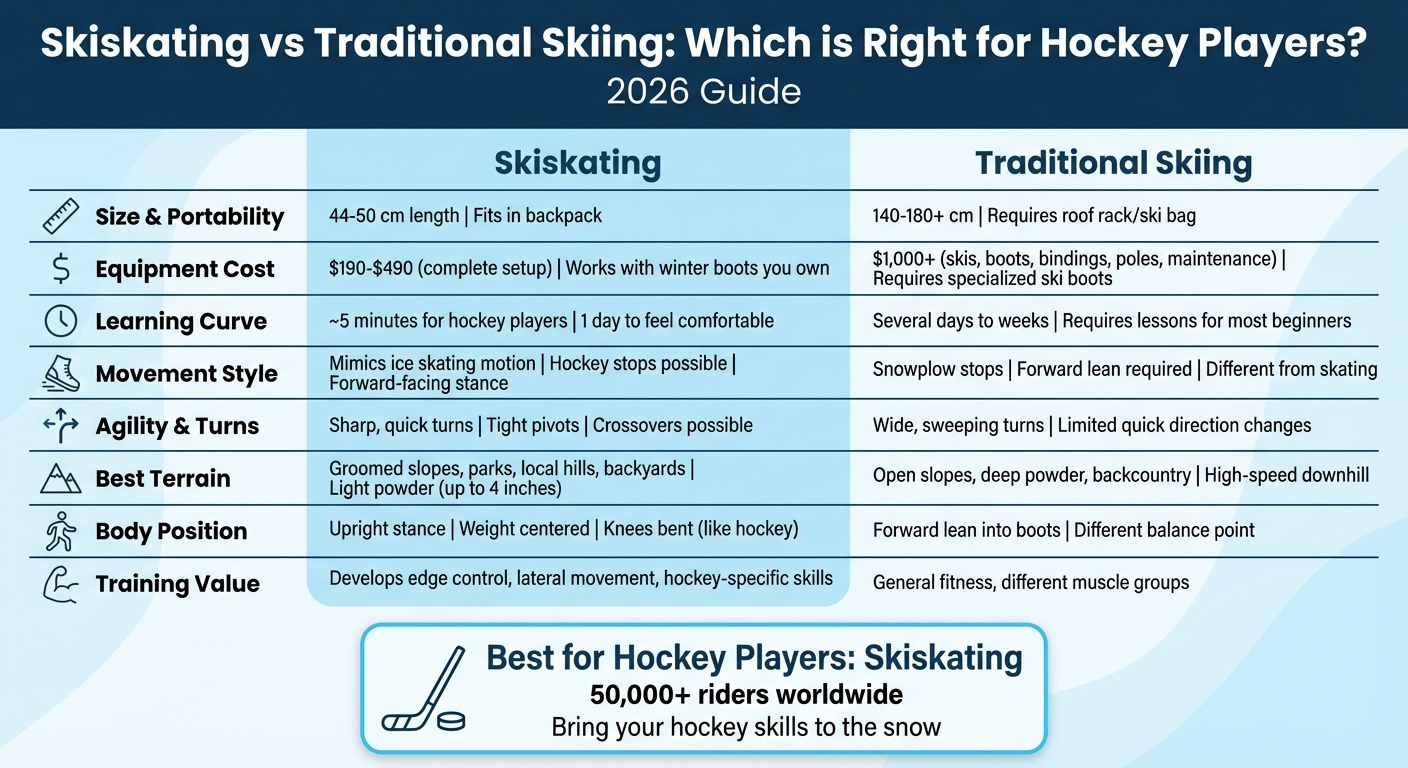
Skiskating vs Traditional Skiing: Complete Comparison for Hockey Players
Movement Mechanics: Skiskating vs Skiing for Hockey Players
Edge Control and Stopping Techniques
Stopping is where skiskating really sets itself apart from traditional skiing. With Snowfeet Skiskates (44 cm) and Snowfeet PRO (50 cm), you can pull off a hockey stop by using the metal edges laterally while keeping your weight centered. It’s a natural move for hockey players. Compare that to traditional skis, which rely on a snowplow stop, or Snowfeet models that even come with a heel brake for added control. Thanks to their compact size, Snowfeet make edge engagement and release quicker, and the PRO models' narrower base helps with smoother, faster turns - perfect for those split-second decisions.
Quick Turns and Direction Changes
Hockey players thrive on sharp, fast direction changes, and skiskating delivers just that. With their short length (44–50 cm), Snowfeet products let you make tight, quick turns that long alpine skis just can’t handle. While traditional skis are great for wide, sweeping turns on open slopes, they’re not designed for the kind of agility hockey players need. As one Snowfeet Team member explained:
"The movement is closer to skating rather than regular skiing. They are especially suitable for hockey player, ice skaters, or rollerbladers."
Unlike snowboards, which lock you into a sideways stance, skiskating keeps your feet independent and forward-facing - just like skating. This means you can crossover, pivot, and push laterally, mimicking your on-ice moves, but with added maneuverability for downhill runs. The result? A setup that feels natural and keeps you in control, no matter how quickly you need to react.
Body Position and Balance
Skiskating maintains the upright, balanced stance hockey players are used to on the ice, making the transition to snow feel seamless. Keep your weight centered over the middle or back of your feet, knees bent, and your center of gravity low. This “ready” position, with a shoulder-width stance and one foot slightly ahead for stability, mirrors what you’d use on the ice. Traditional skiing, on the other hand, forces you to lean forward into the boots, and snowboarding locks you into a sideways stance - both of which can feel awkward for hockey players. With skiskating, just stay upright, keep your legs shoulder-width apart, and avoid leaning too far forward. It’s as close as you’ll get to skating on snow.
Equipment and Performance Comparison
Size, Weight, and Construction
When it comes to size, Snowfeet and traditional skis couldn’t be more different. Snowfeet Skiskates are incredibly compact - measuring just 44 cm for the standard version and 50 cm for the PRO model. Compare that to traditional alpine skis, which typically range from 140 cm to over 180 cm. This dramatic size difference directly impacts performance. The shorter length allows for quick, sharp movements, much like the tight pivots and rapid direction changes hockey players make on the ice. Long skis just can’t compete when it comes to this level of agility.
Weight is another game-changer. Snowfeet are lightweight, making them easy to carry and even easier to maneuver. This lightness boosts both speed and reaction time on snow. As Logan (@xskyskaterx) puts it: "When my friends want to hit the mountains I have to rent some bulky skis that make me feel like a baby giraffe... And then Snowfeet happened... They are fast and agile, convenient and light”. For hockey players who thrive on adaptability and quick moves, this combination of portability and performance is a game-changer. The compact size and lightweight design make Snowfeet an ideal choice for anyone looking for agility and convenience.
Boot and Binding Systems
Snowfeet go a step further by simplifying the boot and binding setup. Unlike traditional skis that require stiff, heavy alpine boots, Snowfeet work with the gear you probably already own - whether it’s your winter boots, hiking boots, or snowboard boots. This means no need for specialized ski boots that make walking awkward and cumbersome.
The bindings on Snowfeet use adjustable non-release straps, similar to snowboard bindings but with a slimmer profile. This design allows for more ankle flexibility, which feels natural for hockey players and anyone used to ice skating or inline skating. As the Snowfeet Team explains, "You have to keep the front-back balance, so it feels very natural to those who play ice hockey, ice skate, or even use inline skates”. This flexibility is key for executing the kind of movements hockey players rely on, whether they’re on the slopes or just walking around.
Speed Control and Terrain Use
Snowfeet are built for controlled speed across a variety of terrains. They shine on groomed slopes, snow parks, sledding hills, and even hiking trails. They can handle light powder up to about 4 inches (10 cm), though they’re not designed for deep powder or extreme backcountry conditions where longer skis perform better. For hockey players, this versatility is a huge plus. Snowfeet allow for quick turns, tight maneuvers, and a skating-like motion, whether you’re carving down a resort slope or practicing in your backyard.
On the other hand, traditional skis are designed for high speeds and wide-open terrain, making them better suited for downhill racing. But they lack the nimbleness and reactive movement that hockey players often prefer. Snowfeet’s ability to mimic the dynamic motion of skating makes them a perfect match for those who value agility over raw speed.
Benefits for Hockey Players in the United States
Off-Ice Training Applications
For hockey players in the U.S., Snowfeet skiskates provide a unique way to train off the ice. Their design - emphasizing lateral pushes, a V-shaped stance, and sharp edge control - closely mimics the movements players use during games. This makes them a fantastic tool for honing skills like edge work, quick turns, and bursts of speed, all without the hefty price tag of consistent ice time.
Coaches across the U.S. can easily incorporate Snowfeet into winter training routines. Whether it’s on local hills or neighborhood slopes, players can practice drills like tight turns, lateral shuffles, and quick stops - movements that directly translate to on-ice performance. Pairing these sessions with other dryland exercises like slide boards or plyometric training helps maintain skating-specific muscle strength throughout the winter. Plus, the portability of Snowfeet makes them even more practical for athletes on the go.
Easy Transport and Storage
When it comes to convenience, Snowfeet are hard to beat. The standard Skiskates are just 44 cm long, with the PRO model slightly larger at 50 cm. These compact sizes mean they can easily fit in a backpack or the trunk of a car - no need for bulky roof racks or oversized ski bags. For busy hockey families, this is a game-changer. Unlike traditional skis, which can be over 150 cm long and require dedicated storage space, Snowfeet are perfect for urban and suburban households. They’re also ideal for group training sessions, where portability is key.
Price and Budget Considerations
Snowfeet are also a win for the wallet. The entry-level 38 CM model starts at $190, the 50 CM version comes in at $250, and the premium 44 CM wood-core Skiskates are priced at $490. Compare that to a traditional ski setup, which can easily exceed $1,000 when you factor in skis, boots, bindings, poles, and maintenance.
Another cost-saving perk? Snowfeet attach directly to winter or snowboard boots you likely already own. You won’t need specialized footwear or pricey lift tickets, as these skiskates perform just as well on local hills, hiking trails, or even in your backyard. They’re a budget-friendly way to keep up training without draining your wallet. Plus, with most models accommodating U.S. shoe sizes 6–13, a single pair can often be shared among family members. For hockey households, that’s a smart investment that balances cost with performance.
sbb-itb-17ade95
How to Choose: Skiskating or Traditional Skiing
Different Player Types and Objectives
For recreational hockey players, Snowfeet's compact design and ability to pair with regular winter boots make it a no-brainer for quick trips to nearby hills - no resort fees or specialized gear required. On the other hand, competitive athletes focused on off-season training might find the 44 cm Skiskates or 50 cm Snowfeet PRO more appealing. These options mimic the skating motion you’d use on the ice, including hockey stops and sharp edge control. Plus, Snowfeet bindings accommodate a wide range of US shoe sizes, making them perfect for families who want to share equipment. Traditional skiing setups, however, require dedicated boots, skis, and bindings for each individual. Choosing between the two often comes down to local snow conditions, which we’ll dive into next.
US Snow Conditions and Terrain Types
Snowfeet products shine on groomed, hard-packed snow - the kind you’ll find at most U.S. resorts and local hills. This type of surface allows hockey players to fully utilize their edge control skills. The Snowfeet PRO (50 cm) can even handle light ungroomed terrain and powder up to about 4 inches deep, thanks to its raised tips and tails. But if you're dealing with deeper powder, traditional long skis (150 cm or more) or the 99 cm Skiblades (priced around $675) are the better bet for extra flotation. That said, since most hockey training happens on groomed surfaces, shorter skiskates are usually the smarter choice.
For terrain parks, Snowfeet really stands out. The 44 cm Skiskates are perfect for quick turns, spins, jumps, and even riding backward - similar to what you’d do on ice. In contrast, traditional skis from brands like Rossignol or Salomon can feel bulky and limiting when you need to make those fast, sharp directional changes. Snowfeet’s agility makes it an excellent tool for skill development, which leads us to the next point.
Skill Development and Sport Growth
Hockey players usually pick up skiskating in just a day, thanks to their existing balance and edge control skills. If you're new to the concept, the 38 cm Snowfeet Basic is a great starting point to ease into the skating motion on snow. Once you’re comfortable, upgrading to the 50 cm Snowfeet PRO gives you more versatility for tackling different terrains. For advanced players, the 99 cm Skiblades offer improved carving ability while still being more maneuverable than traditional skis.
This progression in equipment not only boosts your performance on the snow but also aligns perfectly with the training routines essential for hockey. Skiskating is quickly gaining traction as a winter sport, with over 50,000 riders worldwide and recognition like the A’design award. Snowfeet’s mission to bring skiskating to the Olympics reflects the growing interest in alternatives to traditional skiing and snowboarding, making it a fun and community-driven training tool for hockey fans everywhere.
Snowfeet* & Skiskates Tutorial - How to Become a PRO Skiskater
Conclusion
By 2026, Snowfeet skiskates are shaping up to be a must-have for hockey players looking to fine-tune their on-ice skills during the winter months. The skating motion, sharp hockey stops, and precise edge control feel intuitive right from the start. These skiskates align perfectly with the skills players already have, while helping to build the agility needed for the rink. It’s a fresh way to blend snow training with hockey-specific movements.
What makes Snowfeet even better? They’re compact, lightweight, and easy on the wallet. Measuring just 44 cm for $490 or 50 cm for $275 (Snowfeet PRO), these skiskates fit snugly in a backpack and work with standard winter boots. For U.S. hockey families, this means no more worrying about roof racks, rental costs, or bulky ski setups. Whether it’s a local hill, park, or even your own backyard, Snowfeet open up countless opportunities for off-ice conditioning that directly enhances on-ice performance.
"Absolute game-changer! They're light, fast, and incredibly fun to ride." - Nathan F., Verified Rider
The Snowfeet YouTube channel is packed with clips of players pulling off quick turns and hockey stops on groomed trails, showing just how close skiskating is to the real thing. Unlike traditional skiing, Snowfeet deliver the agility and control hockey players crave. Compact, convenient, and built for hockey-specific training, they’re a no-brainer for anyone serious about improving their game while making the most of winter.
FAQs
How can skiskating benefit hockey players compared to traditional skiing?
Skiskating with Snowfeet short ski skates (44 cm Skiskates and 50 cm PRO) gives hockey players a fresh way to train on snow. These skates closely replicate the lateral pushes, quick edge changes, and low stances used on the ice. Weighing as little as 3.5 lbs, their compact and lightweight design makes sharp turns and side-to-side movements a breeze - perfect for hockey-specific drills. Plus, you can strap them right onto your regular hockey boots, making the switch from ice to snow almost effortless.
Compared to traditional skis, which are longer, heavier, and require a forward-facing stance, Snowfeet skates provide greater lateral agility that better mirrors on-ice movements. They’re also easier to carry, more affordable (starting at about $140), and incredibly versatile. Whether it’s groomed slopes or your backyard, Snowfeet skates let players train almost anywhere - no bulky gear or steep learning curve required.
Why are Snowfeet skiskates better than regular skis for hockey players?
Snowfeet skiskates are a game-changer for hockey players looking to transition from ice to snow. With a compact design - just 17 inches (44 cm) for Skiskates and 20 inches (50 cm) for the PRO version - they allow for quick, precise movements that feel a lot like skating on ice. This makes it easier to nail tight turns, sharp pivots, and lateral cuts - key moves for any hockey player. Plus, their low center of gravity gives you better agility and control compared to traditional skis.
But it’s not just about performance. Snowfeet skiskates are lightweight, portable, and easy on the wallet. They attach directly to your regular winter shoes or snowboard boots, so you can skip the hassle (and expense) of bulky ski boots and bindings. At just 3.5 pounds, they’re easy to carry and ideal for small hills or even your backyard. Starting at $140, they’re a budget-friendly option for hockey players who want to keep their skills sharp during the winter months.
Can Snowfeet skiskates handle deep snow, or are they better suited for specific conditions?
Snowfeet skiskates are built to shine on packed or groomed snow, making them a great fit for ski slopes, trails, or other firm surfaces. However, they’re not meant for deep powder since their compact size and design work best on harder terrain.
These skiskates are especially appealing to hockey players looking to bring their quick, agile skating moves to the snow - without the hassle of bulky skis or snowboards.













Leave a comment
This site is protected by hCaptcha and the hCaptcha Privacy Policy and Terms of Service apply.