


















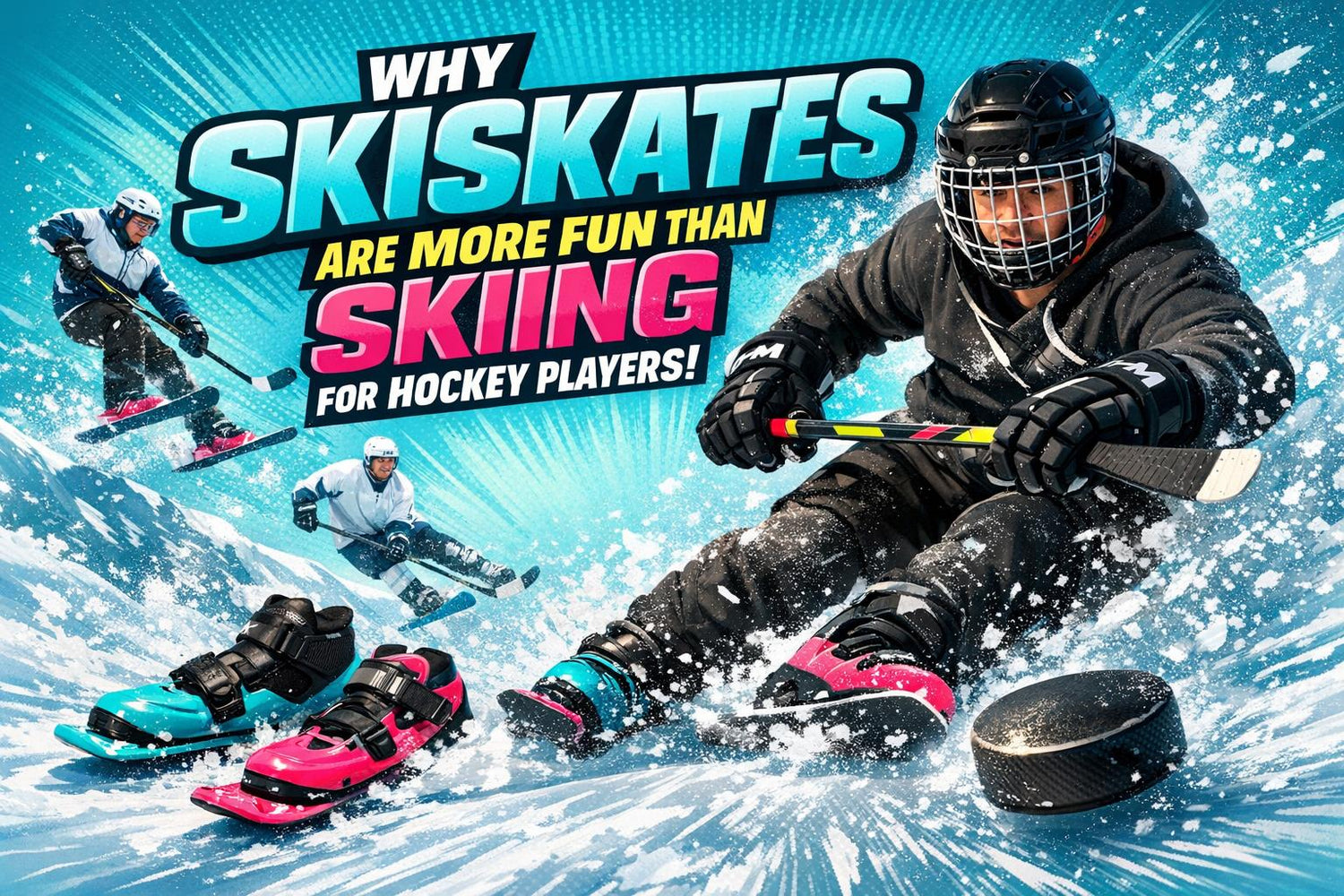
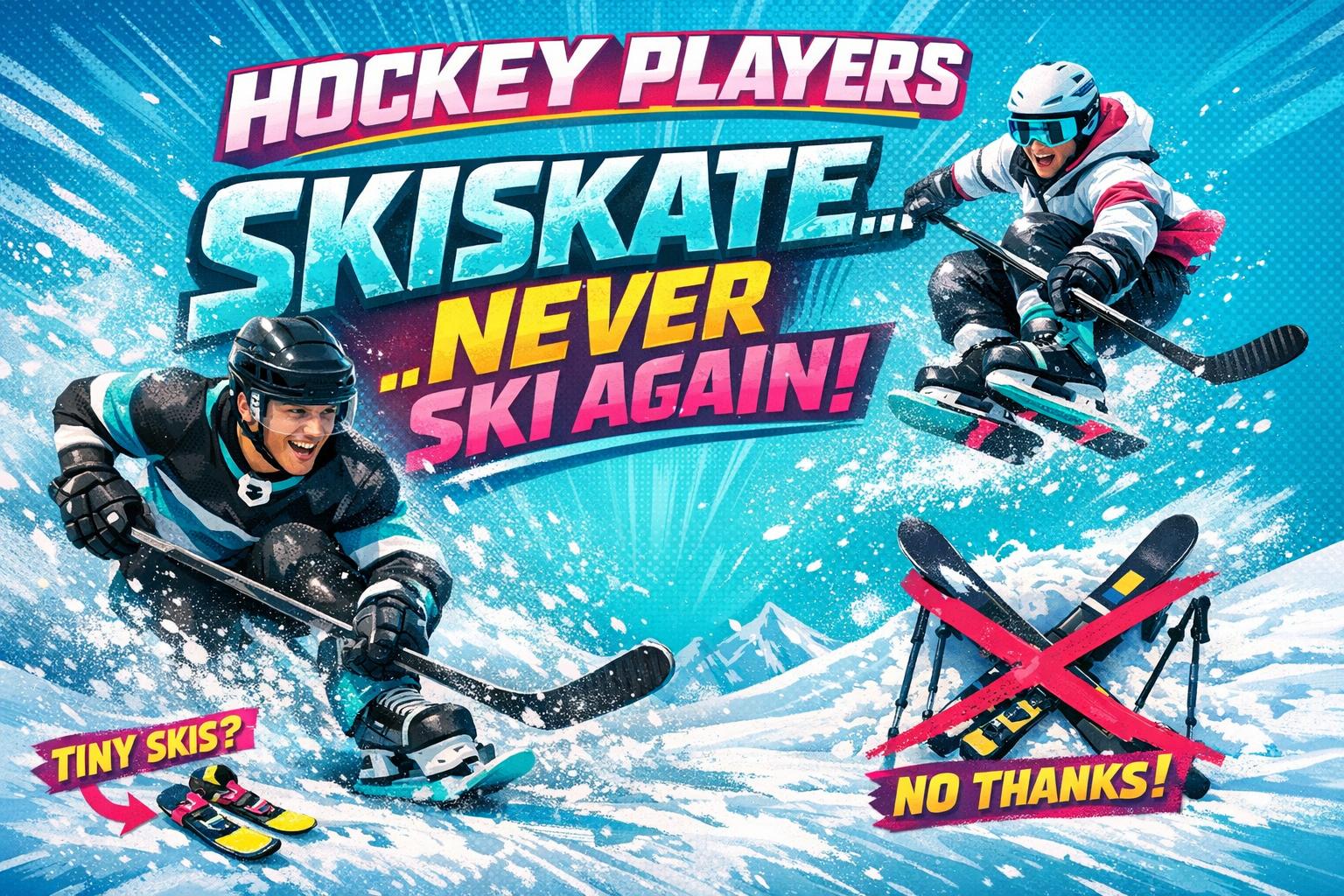
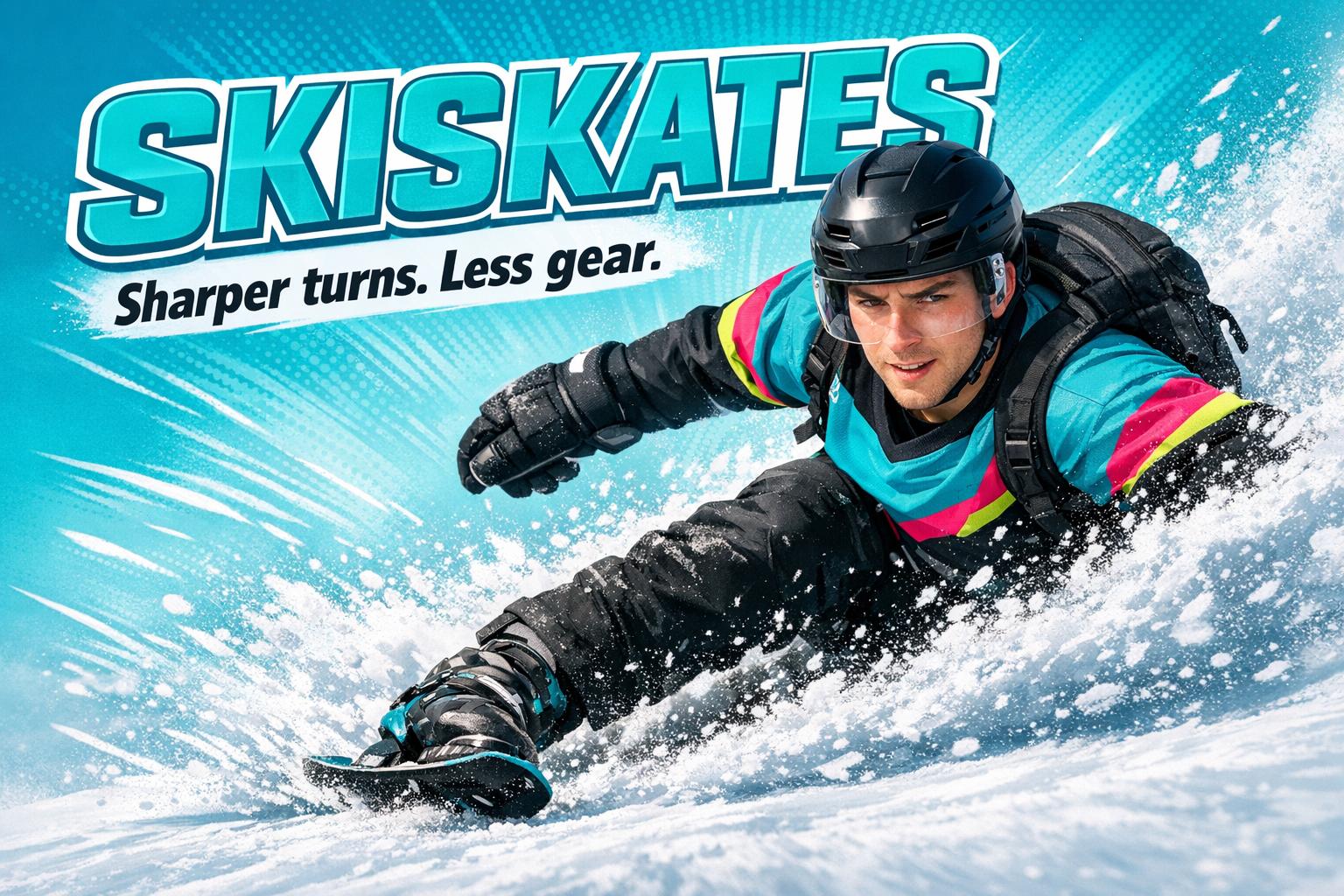
If you’re a hockey player, you’ll love this: Skiskates bring the feel of ice skating to the slopes. At just 17.3 inches long, they’re compact, lightweight, and let you move like you’re on skates - quick turns, hockey stops, and all. You can master them in minutes, especially if you’ve spent time on the ice.
Here’s the deal: Skiskates are easier to carry, fit in a backpack, and work with ski or snowboard boots. They’re perfect for groomed runs, snow parks, and even trails. On the other hand, traditional skis are heavier, longer, and focus on downhill carving, which might feel awkward if you’re used to skating.
Quick Highlights:
- Skiskates: 17.3 inches, portable, skating-like motion, $330 (discounted from $490).
- Traditional Skis: 60+ inches, heavy, designed for wide turns, $400–$1,000+.
Bottom line: If you’re a hockey player who loves agility and quick moves, Skiskates are your go-to. They make the snow feel just like the rink - only more fun. 😊
1. Snowfeet* Skiskates (44 cm)
Maneuverability
At just 17.3 inches long, Skiskates give you the freedom to move like you're ice skating on snow. They let you spin, twist, and make sharp cuts - moves that traditional alpine skis, with their 59–71 inch length, just can't handle. Thanks to their wood core and steel edges, you get a secure grip for quick, precise turns. Unlike the wide, sweeping turns you'd be stuck with on longer skis, Skiskates open up a whole new world of possibilities, like navigating tight forest trails or weaving through crowded slopes. As Zbyněk, the founder of Snowfeet*, explains:
"In my opinion, Skiskates is the best product for slopes we developed so far. I love how easy they are to ski and skate and how many different kinds of tricks I can perform without much effort and almost no restrictions."
The lightweight design only adds to their agility, making them a favorite for anyone who values freedom of movement.
Weight
Skiskates are built to keep you moving without wearing you out. Their lightweight construction means your legs stay fresh, even after a full day on the slopes. Unlike traditional skis that can feel bulky and tiring, these are compact enough to fit in a backpack. But don’t let the small size fool you - they’re made with the same durable wood core and cap construction as regular alpine skis, ensuring responsiveness and durability without the extra weight.
Skill Transfer for Hockey Players
If you’ve got hockey skills, Skiskates will feel like second nature. They’re designed to make the transition from ice to snow seamless. The braking technique? It’s just like stopping on the ice - dig your edges in sideways. Giovanni from Italy, a hockey player, shares his experience:
"I used to play ice hockey so Skiskates are perfect for me. It's exactly like ice skating on snow."
The 44 cm base keeps your balance right where it needs to be, either centered or slightly back on your heels. This setup mirrors the natural stance of a hockey player, with bent knees and evenly distributed weight, so you don’t have to relearn how to position your body. You’ll be comfortably gliding in no time.
Fun Factor
With more than 40,000 skiskaters around the world, it's clear that Skiskates bring a whole new level of fun to the slopes. They strip away the restrictions of traditional long skis, letting you jump, spin, and pull off tricks effortlessly. For hockey players who thrive on agility and quick turns, snow parks become the ultimate playground. It’s all about the freedom to move how you want, without the hassle of cumbersome gear.
Currently priced at $330.00 (down from $490.00) and fitting US boot sizes 4.5–14.5, Skiskates are perfect for carving groomed runs or venturing into backcountry trails. They’re designed to keep up with your fast, sharp, and unrestricted style.
2. Traditional Alpine Skis
Maneuverability
Traditional alpine skis, often stretching beyond 60 inches in length, are great for carving wide, sweeping turns. But if you're used to the quick, lateral movements of hockey, they can feel limiting. For beginners and intermediate skiers, there's the added challenge of avoiding the dreaded ski tip crossing - a common issue that can send you tumbling. While these skis are built for smooth downhill rides, they lack the side-to-side agility that hockey players naturally develop on the ice. Plus, their length and design can make them feel clunky and harder to manage when you're not heading straight downhill.
Weight
One of the biggest drawbacks of traditional skis? They're heavy and awkward to carry around. Lugging them to the slopes can feel like a workout in itself, and after a full day of skiing, that extra weight can really wear you down. The Snowfeet Team sums it up perfectly:
"You are able to move freely as opposed to wearing heavy clunky skis."
This bulkiness doesn’t just make transport a hassle - it also limits your ability to make quick, precise movements on the slopes. And let's be honest, no one wants to end the day with legs that feel like jelly.
Skill Transfer for Hockey Players
If you're a hockey player looking to bring your skills to the mountains, traditional skis might leave you frustrated. Hockey's signature sideways pushes and sharp stops just don’t translate well to these skis. Instead, you're forced to adopt a downhill technique that feels foreign compared to the balanced, centered stance you're used to on the ice. Longer skis also make it easier to cross tips, which can be a nightmare for beginners still figuring out weight distribution. As the Snowfeet Team puts it:
"Many people find turning with Snowfeet* or Skiskates* easier than turning with those long clunky skis."
Fun Factor
When it comes to having fun on the slopes, traditional skis can feel a bit... restrictive. They're designed for controlled downhill runs, not the playful, dynamic moves hockey players thrive on. Their weight and length make it tough to jump, spin, or pull off tricks, locking you into a style that prioritizes stability over creativity. If you're someone who loves the light, free-flowing feel of skating, traditional skis might feel like they're holding you back.
Hockey Player Tries Snowfeet* Skiskates | See What He Thinks | Skiboards | Short Ski | Mini Ski
sbb-itb-17ade95
Pros and Cons
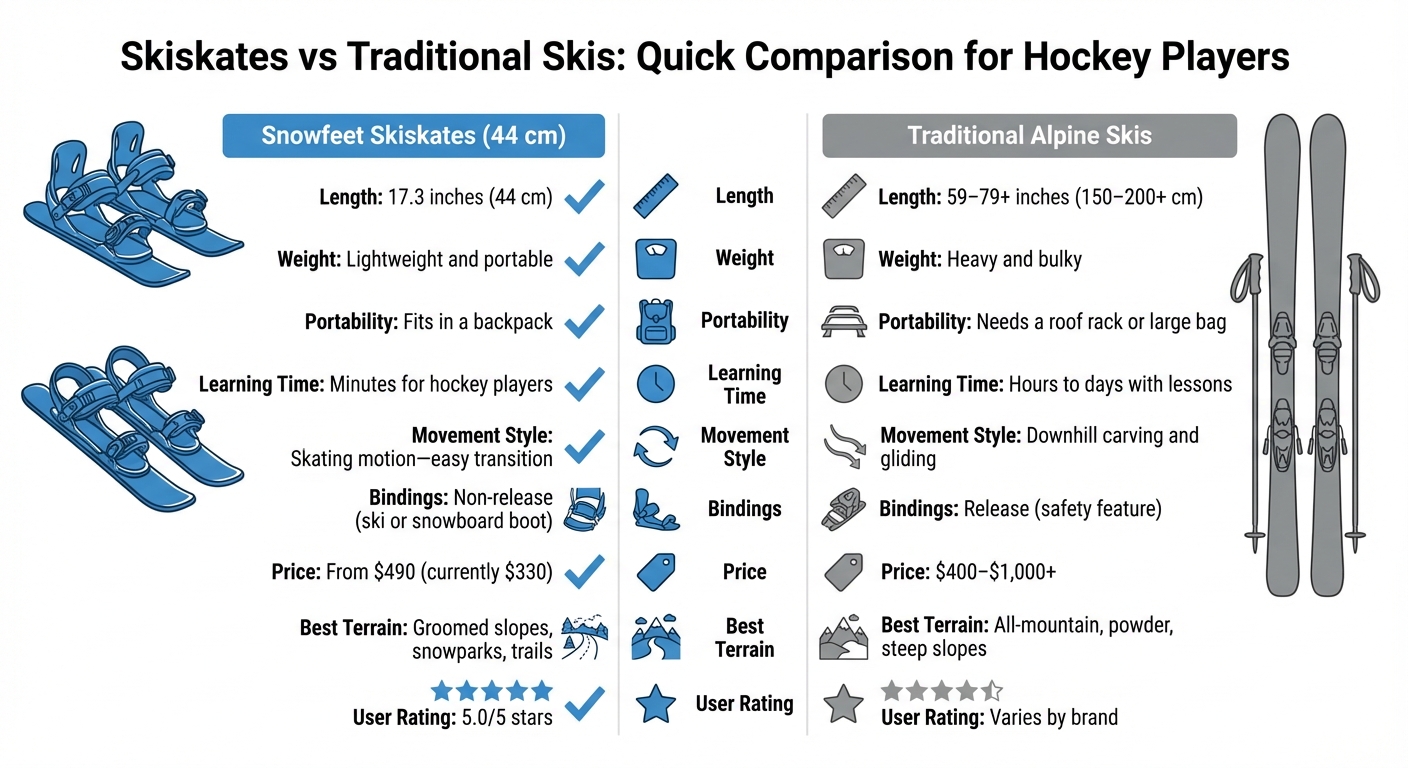
Skiskates vs Traditional Skis Comparison for Hockey Players
Here’s a quick look at the strengths and challenges of each option to help you decide what fits your style best.
Snowfeet* Skiskates (44 cm) are all about portability. Their compact size means you can toss them in a backpack - no need for a roof rack. They’re lightweight, so your legs won’t feel like jelly after a day on the slopes. Plus, they’re super nimble, making spins, jumps, and quick turns a breeze - something traditional skis just can’t match. They also work with both ski boots and snowboard boots, adding some flexibility. On the flip side, their smaller size demands a sharp sense of balance, and the bindings don’t release, which could be a safety consideration.
Traditional Alpine Skis, on the other hand, shine when it comes to stability. They’re perfect for wide-open runs and deep powder, offering a smooth ride for high-speed carving. Safety-wise, they’re equipped with release bindings, which can reduce injury risk. However, they’re heavy, bulky, and not easy to lug around. They also have a steeper learning curve, often requiring lessons to master, and hockey players might find the transition to this style of movement a bit tricky.
| Feature | Snowfeet* Skiskates (44 cm) | Traditional Alpine Skis |
|---|---|---|
| Length | 17.3 inches (44 cm) | 59–79+ inches (150–200+ cm) |
| Weight | Lightweight and portable | Heavy and bulky |
| Portability | Fits in a backpack | Needs a roof rack or large bag |
| Learning Time | Minutes for hockey players | Hours to days with lessons |
| Movement Style | Skating motion - easy transition | Downhill carving and gliding |
| Bindings | Non-release (ski or snowboard boot) | Release (safety feature) |
| Price | From $490 | $400–$1,000+ |
| Best Terrain | Groomed slopes, snowparks, trails | All-mountain, powder, steep slopes |
| User Rating | 5.0/5 | Varies by brand |
This breakdown makes it clear why Snowfeet* Skiskates are a hit with hockey players - they bring that skating vibe straight to the slopes.
Conclusion
For hockey players wanting to take their ice skills to the slopes, Snowfeet* Skiskates (44 cm) are a natural fit. They let you use the same skating motion you’ve perfected on ice, making the transition to snow feel second nature. Experts agree that skiskates align seamlessly with the movement patterns hockey players already know, which means less time learning and more time enjoying the ride.
At 17.3 inches long, these skiskates are all about agility. Whether it’s quick turns, hockey stops, or precise maneuvers, they’ve got you covered. Plus, their compact size makes them incredibly easy to carry around - no bulky gear here.
While traditional skis are great for powder and high-speed carving, they require a completely different skill set. Skiskates, on the other hand, let hockey players translate their on-ice expertise directly to the snow, no steep learning curve required.
At $575, Snowfeet* Skiskates offer a portable, easy-to-master option that captures the fast, dynamic feel of hockey. They’re not just an alternative to skiing - they’re designed specifically for hockey players who want to enjoy snow sports their way. With Snowfeet*, you can hit the slopes with confidence and style.
FAQs
Why are skiskates better than traditional skis for hockey players?
Skiskates, like Snowfeet Skiskates, are a fantastic option for hockey players who want to take their ice skating skills to the slopes. Unlike traditional skis, which are long and built for speed, these are compact - just 17 inches long - and super lightweight. That means they’re perfect for quick turns, sharp stops, and all those dynamic moves hockey players are used to on the ice.
While regular skis focus on speed and stability, they don’t offer the kind of agility hockey players need. Skiskates, on the other hand, deliver a fun, controlled experience that feels natural for skaters. And here’s the bonus: their small size makes them easy to toss in a backpack, so you’re not lugging around bulky gear. For hockey players, skiskates are a great way to enjoy the snow without losing that skating edge.
What hockey skills make it easier to use Skiskates?
If you’re a hockey player, you’ll be glad to know that many of your ice skills carry over effortlessly to using Skiskates. The same techniques you rely on - like maintaining solid body positioning, balancing with precision, and managing your weight distribution - are just as crucial on snow as they are on ice. Plus, your knack for sharp turns, quick stops, and nimble moves gives you a real edge when you’re out there using Skiskates.
Skiskates (think of them like Snowfeet*) are designed to mimic the feel of ice skates, making them a natural fit for hockey players who want to take their skills to the slopes. Their lightweight, compact design lets you pull off those dynamic movements you already know so well, creating a smooth and exciting transition from rink to snow.
Can Skiskates handle different types of snow conditions?
Skiskates work best on groomed slopes, packed snow, and terrain that's flat or only slightly uneven. Their small size gives you great control and agility in these conditions, making them perfect for quick, sharp movements. But they're not built for deep, rough, or highly unpredictable snow - so keep that in mind.
If you want the best experience, stick to well-maintained trails or snow surfaces that feel similar to an ice rink. That’s where skiskates really shine. They’re especially appealing to hockey players who want to bring their on-ice skills to the snow.











Leave a comment
This site is protected by hCaptcha and the hCaptcha Privacy Policy and Terms of Service apply.