



















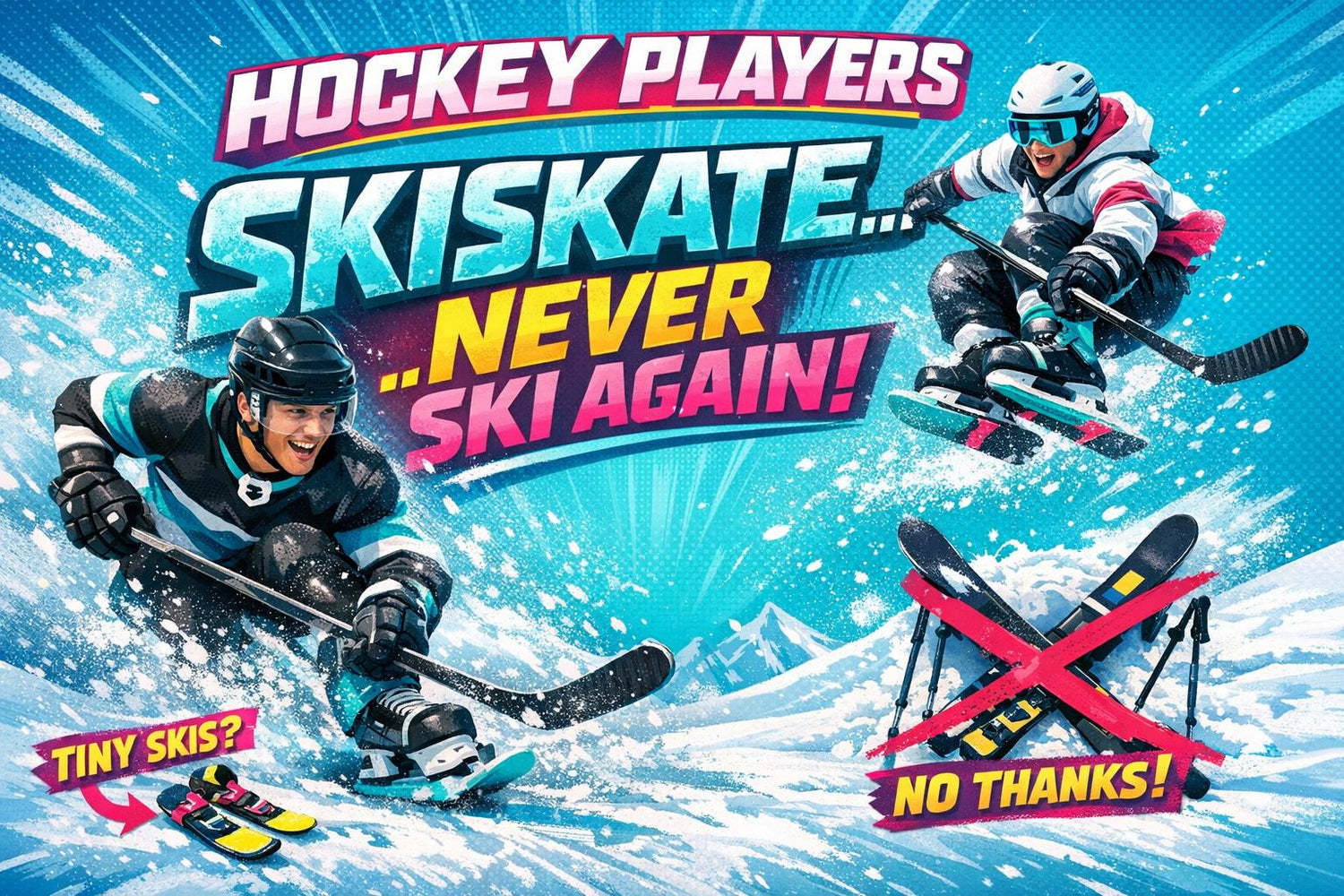
Hockey players are ditching skis for Snowfeet Skiskates - and it’s easy to see why. These compact skates (just 17.3 inches long) feel like ice skating on snow, making them a no-brainer for anyone used to the rink. Unlike skis, which can feel clunky and awkward, Skiskates let you glide, stop, and turn with the same muscle memory you’ve mastered on ice.
- Fast Learning Curve: If you can skate, you can Skiskate - most people get the hang of it in 5 minutes.
- Portable: Toss them in a backpack. No roof racks or oversized bags needed.
- Comfortable: Use snowboard boots or even your winter shoes - no stiff ski boots required.
- Versatile: Works on slopes, trails, parks, or even your backyard.
With over 50,000 riders and a 4.9/5 rating from thousands of reviews, Skiskates are changing the game for hockey players who want to hit the snow without starting from scratch. Why stick with skis when you can skate the way you’re used to?
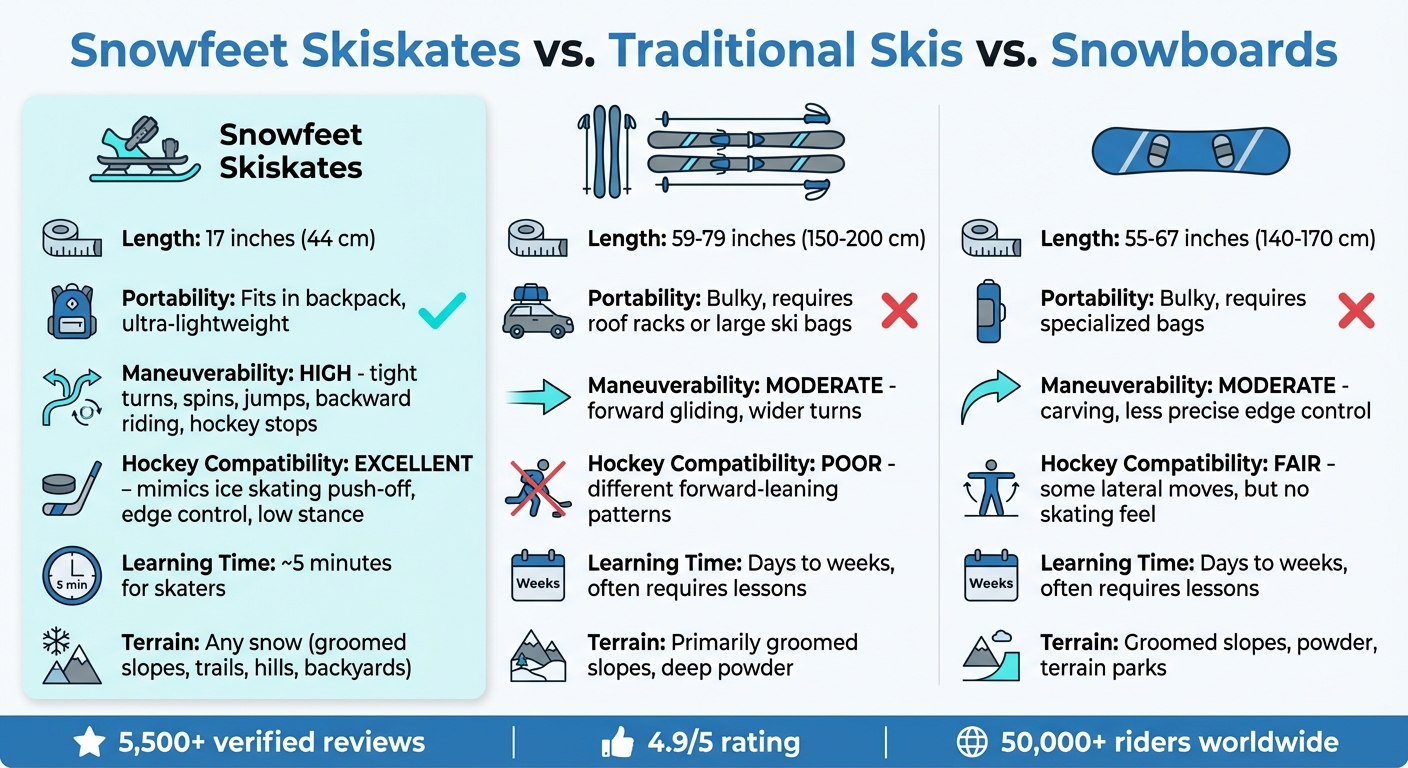
Snowfeet Skiskates vs Traditional Skis vs Snowboards Comparison
The Problem: Why Traditional Skiing Doesn't Work for Hockey Players
Bulky and Difficult-to-Transport Gear
Traditional skis are long. We’re talking 5 to 6.5 feet (150–200+ cm) of equipment that’s awkward to carry around. Getting them to the mountain often means dealing with roof racks or oversized ski bags - not exactly convenient. For hockey players, who are used to grabbing their gear and being ready to go, this is a hassle. Then there are the ski boots: stiff plastic monsters that are notoriously uncomfortable to walk in. Combine all this, and you’ve got equipment that feels more like a burden than a tool for fun. Plus, the sheer size and awkwardness of traditional skis can interfere with the kind of fluid, athletic movement hockey players thrive on.
Movement That Feels Completely Foreign
Hockey players are used to quick, sharp pivots and explosive direction changes. Skiing, on the other hand, is all about smooth, linear gliding. The long skis force wide, sweeping turns, which feel unnatural for someone accustomed to the tight, agile moves of the rink. Even stopping is different - traditional skiing relies on techniques like the "pizza" or parallel stops, which are a far cry from the precise edge control hockey demands. This disconnect makes skiing feel less like a natural extension of their skills and more like starting from scratch.
Too Much Time to Master
For hockey players, picking up skiskating takes about five minutes - seriously, it’s that intuitive. That’s because the movements align perfectly with what they already know from skating. Traditional skiing? Not so much. It can take hours or even days of lessons to get the hang of it. You have to adjust to new balance points, unfamiliar stopping techniques, and an entirely different way of moving. For athletes who already excel at edge control and balance on the ice, this steep learning curve feels like a waste of time. Snowfeet* Skiskates, on the other hand, offer a quick, natural transition that fits their existing skill set.
Why Snowfeet* Skiskates Solve These Problems
Move Like You're on Ice
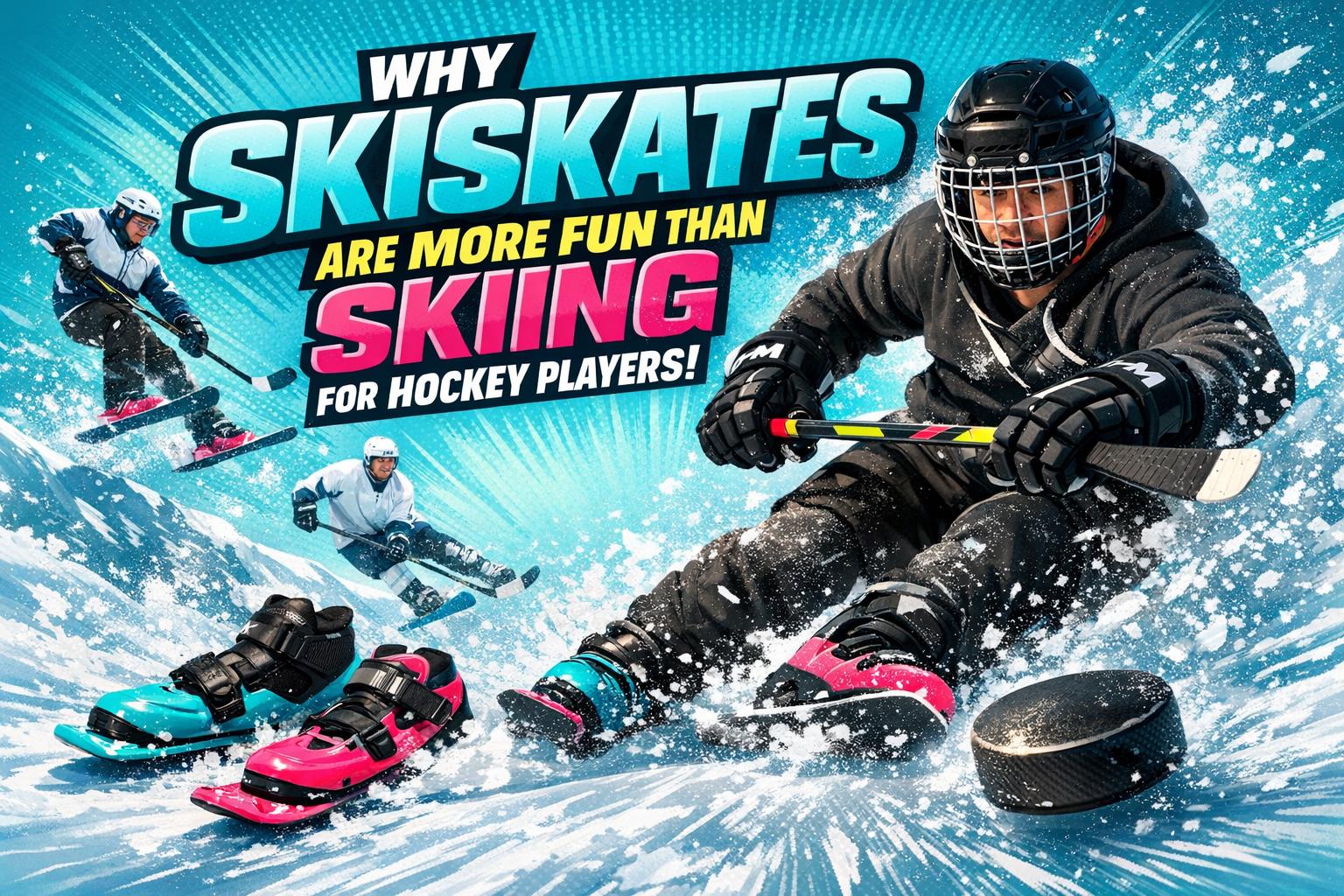
Snowfeet* Skiskates are a game-changer for hockey players who want to bring their skills to the snow. Their compact design lets you skate with a natural stride, unlike the stiff, gliding motion you get with longer skis. This means sharp turns, quick pivots, and even spins feel effortless - moves that are tricky with traditional skis. Plus, with metal edges for precise control, you can nail those hockey stops with ease. And the balance? It’s almost identical to ice skating, so there’s no weird adjustment phase. As Cameron Asbell, a Skiskates user, shared:
"I learned how to do them on my first day and they were a blast... the skating mechanic is beyond compare."
Instead of learning a whole new sport, hockey players can simply transfer their skills from the rink to the slopes.
Easy to Carry Anywhere
Forget the hassle of lugging around heavy ski gear. Snowfeet* Skiskates are so compact they fit right into a regular backpack. No need for roof racks or oversized ski bags. Whether you’re heading to the mountains or just hitting a nearby hill, you can grab your gear and go. Verified user Def Acres sums it up perfectly:
"Super easy, super light; don't need to lug my skis around and you can wear them pretty much all day. Best purchase this season !!"
Their lightweight wood core makes them easy to handle without compromising performance. Portability and practicality - what’s not to love?
Works on Any Snow Surface
Snowfeet* Skiskates aren’t picky about where you use them. Groomed slopes, ski resorts, snow parks, or even your backyard - they handle it all. While traditional skis are mostly suited for groomed runs, these skiskates thrive on packed snow and are perfect for narrow trails and tight spots where longer skis can be a pain. Thanks to their metal edges and graphite base, you get the grip and speed you need across different terrains. Just keep them waxed, and you’re good to go for smooth rides every time.
Hockey Player Tries Snowfeet* Skiskates | See What He Thinks | Skiboards | Short Ski | Mini Ski
sbb-itb-17ade95
Snowfeet* Skiskates vs. Traditional Skis and Snowboards
When it comes to hockey players hitting the slopes, Snowfeet* Skiskates bring something fresh to the table compared to traditional skis and snowboards. Let’s talk size first. Traditional skis? They’re typically 59 to 79 inches long. Snowboards? Slightly shorter at 55 to 67 inches. But Snowfeet* Skiskates? They’re just 17 inches. That’s a game-changer in more ways than one.
Their compact size makes life so much easier. Forget about wrestling with roof racks or lugging around oversized bags. Instead, you can toss your Skiskates into a backpack and head out the door. But the real magic is in how they move. Unlike traditional skis that lock you into a forward-leaning carve or snowboards that keep you sideways, Skiskates let you mimic the push-offs, stops, and edge control you’re already used to on the ice.
Feature Comparison Table
| Feature | Snowfeet* Skiskates (44 cm) | Traditional Skis | Snowboards |
|---|---|---|---|
| Length | 17 inches (44 cm) | 59-79 inches (150-200 cm) | 55-67 inches (140-170 cm) |
| Portability | Fits in backpack, ultra-lightweight | Bulky, requires roof racks or large ski bags | Bulky, requires specialized bags |
| Maneuverability | High: tight turns, spins, jumps, backward riding, hockey stops | Moderate: forward gliding, wider turns | Moderate: carving, less precise edge control |
| Hockey Compatibility | Excellent: mimics ice skating push-off, edge control, low stance | Poor: different forward-leaning patterns | Fair: some lateral moves, but no skating feel |
| Learning Time | ~5 minutes for skaters | Days to weeks, often requires lessons | Days to weeks, often requires lessons |
| Terrain Options | Any snow: groomed slopes, trails, hills, backyards | Primarily groomed slopes, deep powder | Groomed slopes, powder, terrain parks |
It’s easy to see why hockey players are making the switch. Skiskates let them take their ice skills straight to the snow without the steep learning curve of traditional gear. With 5,500+ verified reviews and an impressive 4.9/5 rating, it’s clear that hockey players aren’t just giving Skiskates a try - they’re sticking with them. While skis and snowboards might still shine in deep powder or specific conditions, Skiskates offer something they can’t: a seamless transition for hockey players who want to feel right at home on the snow.
Next, we’ll dive into firsthand stories from hockey players who’ve made the leap to Skiskates.
What Hockey Players Say About Switching to Skiskating
Hockey players who’ve tried skiskating often rave about how naturally it fits with their skills. Michael, a Snowfeet* customer, summed it up perfectly:
"It is very similar to ice skating. I would say start out on a more beginner run to get the hang of it. They accelerate quickly... It's not hard to learn, and easy where it's flat."
His feedback highlights how the edge control you’ve mastered on ice transitions effortlessly to snow. The adjustment feels smooth and intuitive, making it easy to pick up.
Another big win? Portability. Sue, another happy customer, shared how the compact design adds a whole new level of convenience:
"I have these and they are incredibly fun, I walk up a snow-packed canyon road with my dog and ski down."
Now, compare that to hauling around a pair of 6-foot skis - quite the difference, right?
Durability is another standout feature, especially for hockey players who demand gear that can handle their aggressive style. Claudette praised the quality after her first run:
"I am very impressed with the quality of the product. The materials appears durable, easy to put on."
When you’re used to hockey equipment built for sharp stops and quick turns, having gear that’s tough enough to keep up is a must. Skiskates aren’t just for casual fun - they’re built to handle the same intensity you bring to the rink.
Conclusion: Why Hockey Players Don't Return to Traditional Skiing
Once hockey players try Snowfeet* Skiskates (44 cm), traditional skiing just doesn’t compare. These skiskates let you perform sharp hockey stops on snow while skipping the clunky techniques of traditional skis. It’s like taking the skills you’ve perfected on the rink and unleashing them on the slopes.
And let’s talk about convenience. These skiskates are so compact you can toss them in a backpack and head to any snow-covered trail, park, or slope - no bulky gear or complicated logistics required. The natural front-back balance, precise edge control, and quick turns feel instantly familiar to hockey players, making the transition seamless.
With over 50,000 riders around the world and a stellar 4.9 out of 5-star rating from more than 5,500 verified reviews, it’s clear these skiskates are changing the game. When something feels this effortless and delivers so much fun, why would anyone go back to the old way?
FAQs
How are Skiskates more portable than traditional skis?
Skiskates, such as Snowfeet Skiskates, are a game-changer when it comes to portability. At just about 17 inches (44 cm) long, they’re a far cry from the bulkiness of traditional skis. Forget the hassle of roof racks or oversized bags - Skiskates are so compact and lightweight that you can toss them in a backpack or carry them under your arm without breaking a sweat.
This ease of transport makes them a fantastic option for hockey players or winter sports fans who want to hit the slopes without lugging around heavy gear. Switching between activities is a breeze, and you won’t feel weighed down by cumbersome equipment. If you’re after a fun, simple way to enjoy the snow, Skiskates might just be your new favorite thing.
Are Skiskates suitable for all types of snow conditions?
Skiskates shine on groomed and packed snow, making them a great choice for smooth, controlled surfaces like ski slopes or trails. Their compact design gives you agility and precision, but they’re not the best fit for deep powder or rough, uneven terrain - these little guys aren’t built for floating over snowdrifts or tackling rocky patches.
If you’re a hockey player or just someone who loves winter sports, Skiskates offer a fresh twist on snow fun. They combine the glide of skating with the thrill of skiing, delivering a portable and exciting way to hit the slopes that traditional skis or snowboards just can’t replicate.
Why are Skiskates a great choice for hockey players?
Skiskates are an ideal fit for hockey players because they mimic the same movements used on the ice, making it feel like second nature to switch from rink to snow. They give players precise control, letting them carve sharp turns and stop on a dime - just like during a game.
What’s more, Skiskates are small and lightweight, so they’re easy to carry and use just about anywhere. Unlike traditional skis or snowboards, there’s no need for bulky equipment, making them a simple and hassle-free option for winter fun. For hockey players craving a portable and exciting way to enjoy the snow, Skiskates check all the boxes.












Leave a comment
This site is protected by hCaptcha and the hCaptcha Privacy Policy and Terms of Service apply.