



















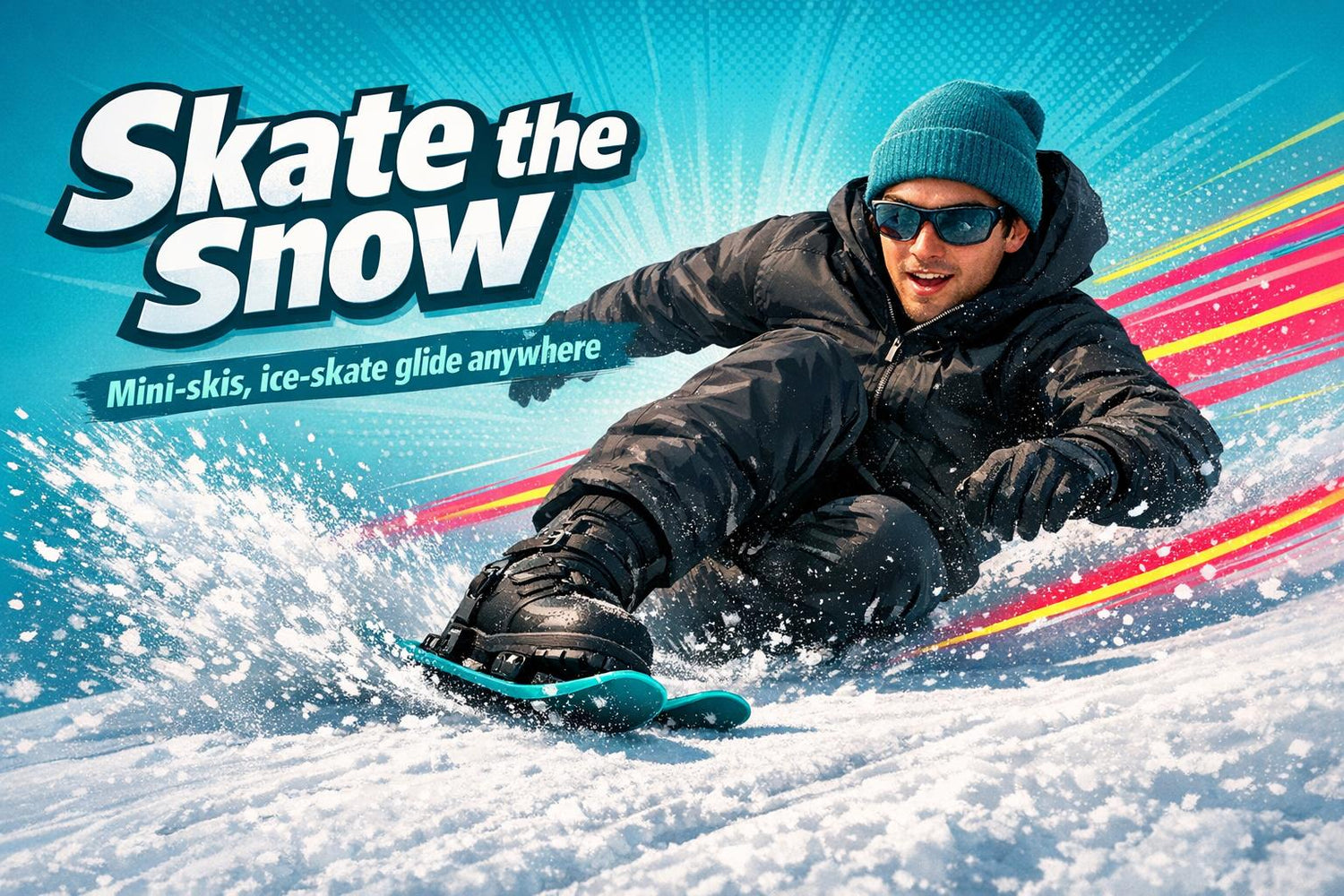
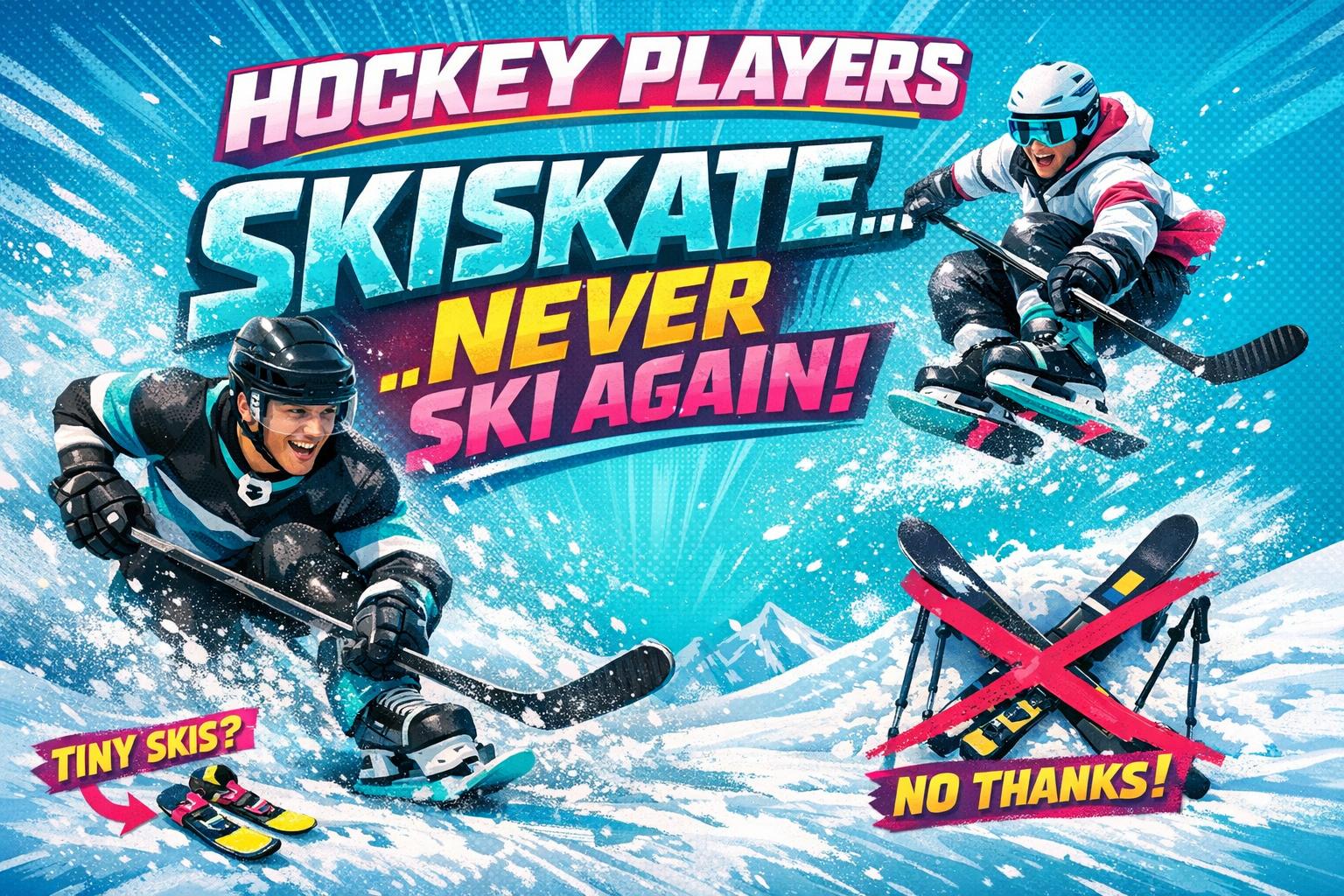
Ever wish you could ice skate without being stuck at a crowded rink? Snowfeet lets you do just that - on snow. These compact, under-20-inch mini skis strap onto your regular winter boots, giving you the freedom to glide, carve, and stop like you're on ice, but out in nature. They’re lightweight, easy to carry, and work on ski slopes, hiking trails, or even your backyard. Plus, you can learn the basics in just 5 minutes.
Here’s why they’re game-changers:
- Portability: Fits in a backpack - no need for bulky ski gear.
- Ease of Use: Works with regular winter boots; no special shoes required.
- Quick Learning Curve: Pick it up in minutes, unlike skiing or snowboarding.
- Cost-Effective: Starting at $190, they’re a fraction of the cost of skis.
- Versatility: Perfect for slopes, trails, or sledding hills with just 4 inches of snow.
Snowfeet combines the smooth motion of skating with the fun of snow sports - minus the hassle of traditional gear. Ready to hit the snow?
The Problem: Barriers to Traditional Winter Sports
Challenges of Ice Skating
Ice skating might look graceful and fun, but getting to that point can be a hassle. First, there’s the expense - rink fees and rentals add up quickly. Then you’ve got the unpredictability of weather, especially for outdoor rinks. On top of that, the whole process can eat up a lot of your time. Think about it: driving to the rink, waiting for rentals, and squeezing onto a crowded ice surface. Instead of skating when it suits you, you’re stuck working around the rink’s hours and rules. Not exactly the picture of freedom, right?
And if you think ice skating is tricky, skiing and snowboarding bring a whole new set of challenges.
Drawbacks of Traditional Skiing and Snowboarding
Skiing and snowboarding don’t just hit your wallet - they hit your patience, too. The gear alone is a major investment: skis, bindings, and boots aren’t cheap. And let’s talk about those boots. Ski boots are notoriously uncomfortable, tough to walk in, and just add to the physical effort before you even get on the slopes.
Then there’s the equipment itself. Skis are long, awkward, and a pain to transport unless you’ve got a roof rack or extra storage space. Once you’re on the mountain, their size can make them harder to control, especially for beginners. Instead of feeling the thrill of gliding downhill, you might find yourself battling exhaustion.
Learning to ski or snowboard isn’t a quick process, either. Kids typically need 3 to 5 days of lessons to get the hang of it, and adults often take even longer. Professional instruction isn’t optional for most beginners, and the cost of lessons can quickly add up.
And let’s not forget the dependency on ski resorts. You’re tied to their schedules, fees, and facilities. Planning a trip means factoring in travel time, admission costs, and lift tickets - not exactly ideal for a spontaneous day of fun. It’s a lot of effort and expense just to enjoy the slopes.
How Snow Skating Replicates Ice Skating
The Physics Behind the Glide
Snowfeet brings the feel of ice skating to the slopes with its compact, lightweight design, metal edges, and a base that’s under 20 inches long. Both Snowfeet and Skiskates share this short base length, which is less than 20 inches (50 cm). This smaller size eliminates the bulk of traditional skis, giving you the freedom to move your feet independently.
The metal ski edges are key here. They act like the blade of an ice skate, gripping the snow to allow sharp turns and precise control. With these edges, you can carve through groomed runs and even pull off a hockey stop by angling the edges just right to create friction. Snowfeet’s fiberglass-reinforced construction (38 cm) and Skiskates’ wood core (44 cm) keep them light yet durable. This thoughtful design makes it possible to glide smoothly and naturally, much like skating on ice.
Natural Motion and Control
What sets Snowfeet apart is how it mimics the natural movement of skating. Unlike traditional skiing, which depends on a forward-leaning posture, Snowfeet lets you build momentum by pushing side to side - just like a hockey player or inline skater. This motion keeps your weight centered over the middle or back of your feet, much like ice skating, and reduces the chance of catching the tip.
Stopping is just as straightforward. Tilt the metal edges and spread your weight evenly to pull off a hockey stop. Need extra help? There’s an integrated heel brake for added control. It’s all about blending skating instincts with the thrill of snow.
Snowboarder tries Snowfeet* | Which Snowfeet* Short Ski is the Best? | Snowblades 44, 65, 99 Review
Comparison: Snow Skating vs. Traditional Winter Sports
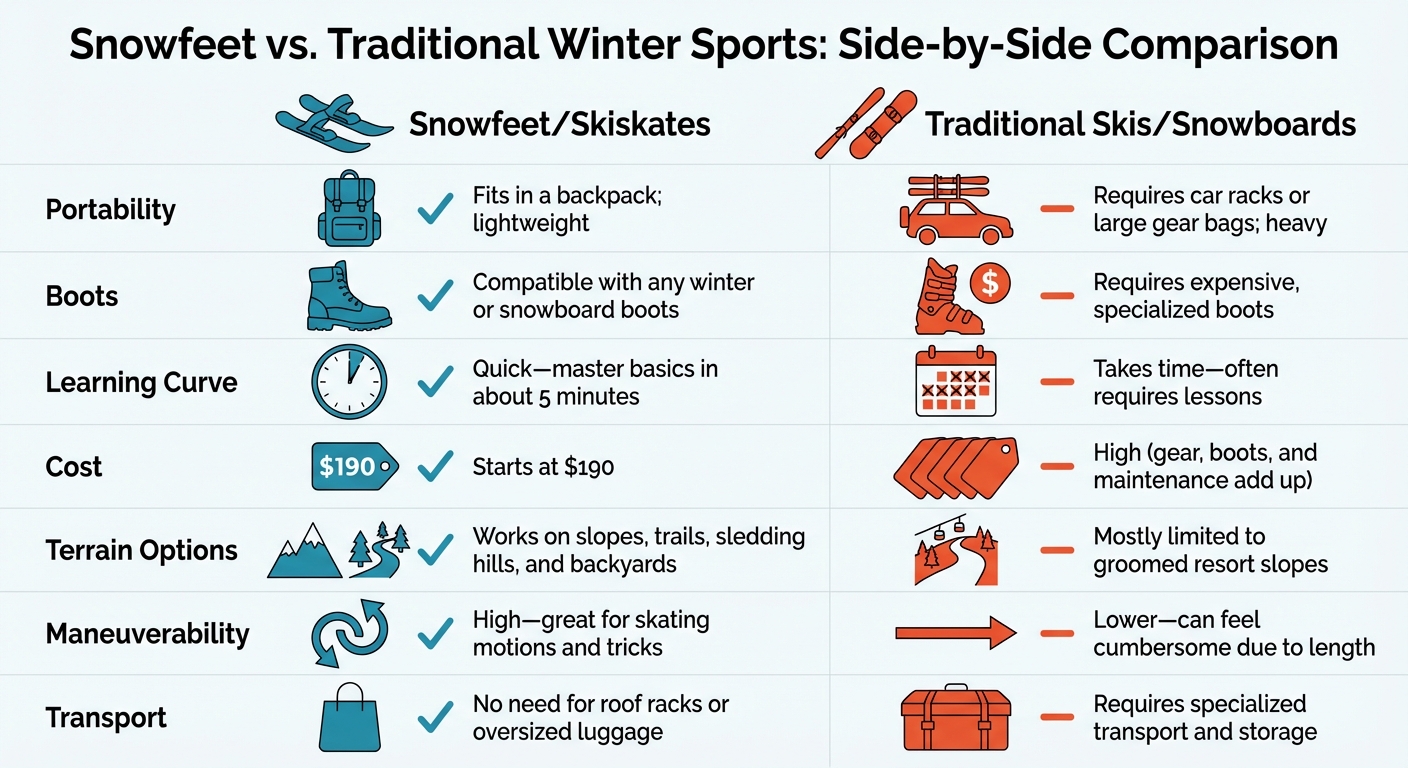
Snowfeet vs Traditional Skis and Snowboards Comparison
Let’s dive into why Snowfeet might just outshine traditional winter sports gear.
Why Snowfeet Stand Out
When it comes to portability, Snowfeet are in a league of their own. Unlike traditional skis, which can measure 59 to 71 inches (150–180 cm) and need bulky roof racks or oversized gear bags for transport, Snowfeet are compact enough to fit in a backpack. That means no more struggling with heavy equipment - just grab them and go.
Another big win? Boot compatibility. Snowfeet work with any waterproof winter or snowboard boots, so there’s no need to invest in pricey, specialized ski boots. This not only saves money upfront but also makes them super convenient for casual users. Getting ready for the slopes has never been easier.
And here’s the kicker: they’re incredibly easy to learn. Most people pick up the basics in just 5 minutes thanks to their intuitive skating motion. Compare that to skiing or snowboarding, which often require days of lessons before you feel confident.
What really sets Snowfeet apart is their versatility. While traditional skis and snowboards are mostly limited to groomed resort slopes, Snowfeet can handle a variety of terrains. Whether it’s ski slopes, hiking trails, sledding hills, or even your backyard (as long as the snow is about 4 inches deep), they’re ready for action. Plus, you’re not tied to expensive lift tickets or resort schedules - freedom at its finest.
Snow Skating vs. Traditional Skiing and Snowboarding
| Feature | Snowfeet / Skiskates | Traditional Skis / Snowboards |
|---|---|---|
| Portability | Fits in a backpack; lightweight | Requires car racks or large gear bags; heavy |
| Boots | Compatible with any winter or snowboard boots | Requires expensive, specialized boots |
| Learning Curve | Quick - master basics in about 5 minutes | Takes time - often requires lessons |
| Cost | Starts at $190 | High (gear, boots, and maintenance add up) |
| Terrain Options | Works on slopes, trails, sledding hills, and backyards | Mostly limited to groomed resort slopes |
| Maneuverability | High - great for skating motions and tricks | Lower - can feel cumbersome due to length |
| Transport | No need for roof racks or oversized luggage | Requires specialized transport and storage |
sbb-itb-17ade95
Why Snowfeet is the Best Choice for Snow Skating
Design and Construction
Snowfeet are built with fiberglass-reinforced material, striking a balance between being lightweight and tough enough to handle rough use. The metal ski edges give you an ice-skate–like grip, making sharp turns and quick stops feel effortless.
The adjustable binding system is a game-changer. It works with any winter or snowboard boots, so you can skip the stiff, clunky ski boots. This setup allows for natural weight distribution, giving you the freedom to glide, jump, and twist with ease - something you just can't get with long skis.
For added control, there's an optional heel brake. This feature lets you slow down gradually by spreading your weight evenly, making stops feel less daunting. It's especially handy for navigating tricky surfaces and can even help reduce the risk of falls. With regular waxing and edge tuning, Snowfeet deliver that smooth, sharp performance you'd expect from a high-quality pair of skates. All in all, their thoughtful design ensures top-notch performance on any snowy terrain.
Terrain Adaptability
One of Snowfeet's standout features is their ability to handle a wide range of terrains. Whether you're on groomed ski slopes, snowparks, sliding hills, hiking trails, or cross-country paths, these mini skis hold their own. They can even tackle powder up to 4 inches (10 cm) deep, giving them an edge over traditional skis that are often limited to specific conditions.
Measuring just 38–44 cm in length and being lightweight, Snowfeet are perfect for places where long skis just don't fit - think narrow forest trails, local sledding spots, or even your backyard. Their short, nimble design makes it easy to navigate bumpy terrain or tight spaces, opening up opportunities for spontaneous snow adventures. Plus, the sturdy metal edges keep you in control whether you're cruising on smooth slopes or tackling uneven backcountry trails.
Getting Started with Snowfeet
Equipment and Sizing
Getting into Snowfeet is surprisingly straightforward. No need for fancy gear or a trip to the ski shop - just grab your Snowfeet and a pair of waterproof winter boots with solid ankle support. The standard 38 cm Snowfeet model accommodates sizes 6–13 US (38–47 EU). For smaller feet or kids, the Snowfeet Mini is perfect, fitting sizes from kids (size 10 US) to adults (size 6 US).
Adjusting the bindings to fit your boots is a breeze. All you need is a screwdriver to move the straps to the right position for a snug fit. Doing this at home saves you from fumbling with tools in the cold. Plus, the lightweight design means you can toss them in a backpack - no need for bulky roof racks.
If you’re looking to level up, the 44 cm Skiskates are another option. These require ski boots or snowboard boots and are built with a wood core, similar to traditional skis, for better performance. That said, the standard Snowfeet are still the easiest to use, especially since they work with the boots you already own.
Now, let’s dive into how quickly you can get the hang of the skating motion on Snowfeet.
Learning Curve and Accessibility
Once your gear is set up (which takes just minutes), you’re ready to glide. If you’ve ever ice-skated or played hockey, Snowfeet will feel like second nature. Most people pick up the basics in just 5 minutes, thanks to the natural crossover from skating to snow.
Start with a shoulder-width stance, knees slightly bent, and one foot ahead for balance. Unlike skiing, you’ll want to avoid leaning on your toes. Instead, keep your weight centered or slightly back to stay stable.
For beginners, groomed flat surfaces like ski slopes, snow parks, or sledding hills are ideal. Snowfeet work best on smooth terrain and can handle up to 4 inches (10 cm) of powder. Steer clear of steep slopes and uneven terrain until you’re more comfortable. To stop, you can use a hockey-style turn by sliding both feet sideways, or rely on the built-in heel brake for a slower, more controlled stop. Pro tip: Regular waxing keeps the base slick and prevents snow from sticking, and drying the metal edges after each use helps avoid rust.
Snowfeet are built to handle the occasional tumble, with durable plastic construction and adjustable bindings that save you from investing in pricey ski boots. It’s all about keeping things simple and accessible while having fun on the snow.
Conclusion
If you’ve ever wished you could bring that ice skating vibe to the mountains, Snowfeet makes it happen - without the hassle of bulky gear. The smooth glide, the natural flow, and those quick, sharp turns you love about skating? They all translate beautifully to snow. Whether you’re carving down groomed slopes, exploring forest trails, or just having fun on the local sledding hill, Snowfeet are compact, lightweight, and ready to go. Toss them in your bag, strap them over your winter boots, and you’re all set - no need for pricey ski boots, roof racks, or hours of lessons.
Snowfeet also solve some of the biggest headaches of traditional winter sports. Skiing and snowboarding are great, sure, but they come with their own set of challenges - high costs, heavy equipment, and a steep learning curve. Snowfeet strip away those barriers while keeping the fun front and center. Plus, their unique design gives you a level of freedom and access that skis just can’t match, letting you explore everything from backcountry trails to your neighborhood hill.
Whether you’re a seasoned skater looking to extend the fun into winter or a total newbie who’s never felt at home on skis, Snowfeet offer an easy, quick-to-learn way to hit the snow.
Give Snowfeet a try this winter - it’s a whole new way to enjoy the season. Feel the freedom of snow skating and take your winter adventures to the next level.
FAQs
How are Snowfeet more affordable and convenient than traditional skiing?
Snowfeet are a budget-friendly and hassle-free alternative to traditional skiing. Priced at just $140, these mini skis are a fraction of the cost of a typical ski setup. Think about it - no need for separate skis, bindings, or those pricey ski boots that can easily run you several hundred dollars. Instead, Snowfeet strap right onto your regular winter shoes, saving you both money and the hassle of extra gear.
Thanks to their small size (just 15–20 inches long) and lightweight design, Snowfeet are super easy to carry around. Toss them in your backpack, and you're good to go. Setup is a breeze too - no fiddling with multiple pieces of equipment or endless adjustments. In just minutes, you can be gliding down slopes or even enjoying the snowy hill in your backyard. Snowfeet pack all the fun of skiing into a simpler, more affordable, and space-saving option.
Can I use Snowfeet in deep snow, or are they only for groomed trails?
Snowfeet work best on groomed snow and packed surfaces, offering a smooth, skate-like experience. However, they’re not built for deep, loose powder. The narrower base makes gliding in such conditions tricky. To get the most out of them, stick to well-maintained trails or compacted snow areas.
What do I need to know to get started with Snowfeet?
Getting started with Snowfeet is simple, even if winter sports are completely new to you. To enjoy that smooth, skating-like glide on snow, you'll just need to focus on a few basics.
First up, balance is key. Keep your feet about shoulder-width apart, bend your knees slightly, and center your weight. This stance keeps you steady and helps you handle small bumps or turns like a pro.
Next, work on controlling your edges and shifting your weight. To make turns, lean into the inside edge of your Snowfeet, and to slow down, apply even pressure to both feet or use the heel brake. It’s all about small, controlled movements.
Finally, practice a skating motion. Push off with each foot, one at a time, just like you would when ice skating or playing hockey. This lets you move forward easily - no poles, no fancy equipment, just you and the snow.
What makes Snowfeet so beginner-friendly? Their compact size (just 15–18 inches long) and lightweight design (under 3.5 lbs) make them way easier to handle than traditional skis or snowboards. If you’re comfortable standing in winter boots and can navigate flat or gently sloped snow, you’ll pick this up in no time. Plus, no bulky gear means more freedom to glide and enjoy!











Leave a comment
This site is protected by hCaptcha and the hCaptcha Privacy Policy and Terms of Service apply.