




















If you love ice skating but want to try something new this winter, you’re in luck! Snow skating (or "skiskating") lets you glide on snow just like you do on ice. Using short skis like Snowfeet Skiskates or Snowfeet PRO, you can skate on snowy trails, slopes, or even your backyard - all while wearing your regular winter or snowboard boots. It’s easy to learn, especially if you already know how to ice skate, and most people get the hang of it in just 5 minutes.
Why Snow Skating Rocks:
- Quick to Learn: Feels similar to ice skating, so no steep learning curve.
- Compact Gear: At 17–20 inches, Snowfeet fits in a backpack - no bulky skis or boards.
- Affordable Fun: Starts at $275, much cheaper than traditional ski setups.
- Versatile: Great for slopes, sledding hills, or trails.
With over 50,000 riders worldwide and glowing reviews, Snowfeet is making winter sports more fun and accessible. Ready to skate on snow? Let’s dive in.
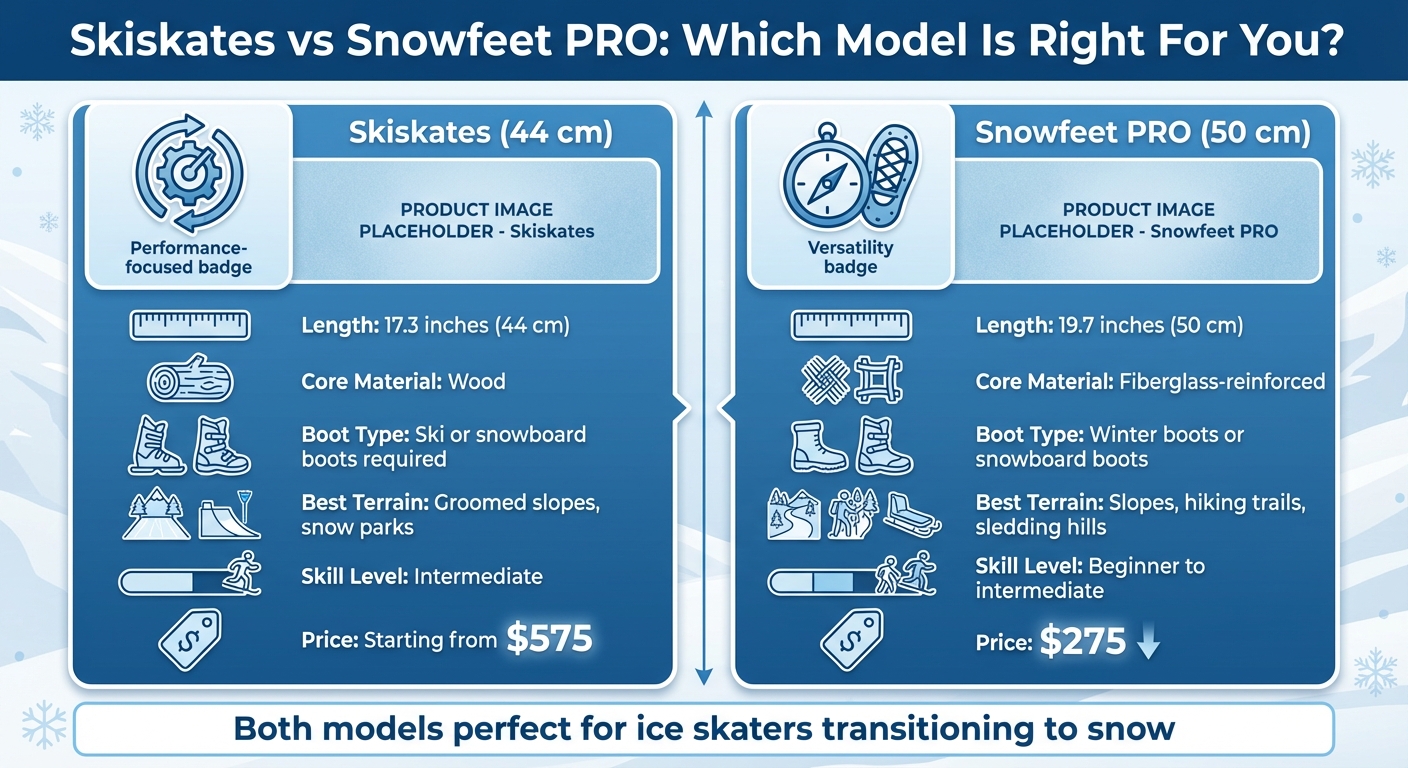
Snowfeet Skiskates vs PRO Comparison Chart
How Ice Skating Skills Transfer to Snow Skating
Balance and Gliding: What Carries Over
If you’ve spent time on the ice, you’ll find that many of the skills you’ve mastered translate smoothly to snow skating. Let’s break it down.
Your ability to balance on one foot while skating on ice is a huge advantage when using Snowfeet’s short skis. Whether you’re on their skiskates or Snowfeet PRO, the edge control and weight-shifting techniques you’ve already perfected are key to staying steady and in control.
The push-off and gliding motion you know so well from ice skating? It’s basically the same on Snowfeet. The glide-waxed bases ensure a smooth ride, similar to how you glide effortlessly on ice. That familiar V-shaped push-off you use on the rink creates forward momentum here too, making the transition feel natural. And unlike cross-country skis, which have grip zones that can interrupt your glide, Snowfeet’s design keeps things fluid.
Even your stance carries over. Keep your knees slightly bent, your feet at shoulder width, and your weight centered - just like you would on the ice. And yes, the hockey stop works on snow too! Simply turn your skates perpendicular to your direction, distribute your weight evenly, and use your edges to come to a clean stop.
This easy transition is why so many ice skaters pick up snow skating faster than those starting from scratch with other winter sports.
Why Ice Skaters Learn Snow Skating Faster Than Skiing or Snowboarding
Here’s the deal: ice skaters often skip the frustrating learning curve that comes with traditional skiing or snowboarding. Why? Because snow skating feels much closer to what you already know.
Classic skiing can feel awkward for skaters because it involves a diagonal, walking-like stride. Snowboarding, on the other hand, requires mastering linked turns and edge transitions - techniques that are completely different from skating. But snow skating? It uses the same lateral, side-to-side motion you’re already comfortable with.
Another big plus is the equipment. Traditional skis can be over 5 feet long, making them clunky and hard to maneuver. Snowfeet, at just 17–20 inches, allow for quick, precise movements. Your natural arm swing for propulsion fits right in, making the adjustment even easier. Many ice skaters report feeling confident after just one session because they’re simply applying what they already know.
So if you’re an ice skater looking to try something new this winter, snow skating might just be your perfect match.
Snowfeet* & Skiskates Tutorial - How to Become a PRO Skiskater
Snowfeet* Products: Which Model to Choose
If you're ready to take your ice skating skills from the rink to the snow, Snowfeet* offers two standout options: the 44 cm Skiskates and the 50 cm Snowfeet PRO. Both are designed to bring the agility and precision of skating to the slopes, but each model has its own unique strengths.
Skiskates (44 CM) vs. Snowfeet PRO (50 CM): Side-by-Side Comparison
The Skiskates (44 cm) are all about performance. With a wood core, these mini skis provide a pro-level experience on groomed slopes and in snow parks. At 17.3 inches long, they’re quick, agile, and responsive - ideal if you’re looking for that sharp, skate-like feel. Pricing starts at $575.
On the other hand, the Snowfeet PRO (50 cm) is a more versatile and beginner-friendly option. Measuring 19.7 inches, the extra length offers better stability, making it perfect for building confidence on the snow. Its fiberglass-reinforced core keeps it lightweight but durable. A key feature? You can wear your regular waterproof winter boots - no need for specialized ski boots. Starting at $275, it’s an affordable way to enjoy slopes, hiking trails, sledding hills, or even your backyard.
Here’s a quick comparison of the two models:
| Feature | Skiskates (44 cm) | Snowfeet PRO (50 cm) |
|---|---|---|
| Length | 17.3 inches | 19.7 inches |
| Core Material | Wood | Fiberglass-reinforced |
| Boot Type | Ski or snowboard boots required | Winter boots or snowboard boots |
| Best Terrain | Groomed slopes, snow parks | Slopes, hiking trails, sledding hills |
| Skill Level | Intermediate | Beginner to intermediate |
| Price | Starting from $575 | $275 |
Both models let you pull off familiar ice skating moves like the hockey stop and sideways push. If you’re an ice skater, you’ll likely feel at home on these within minutes.
Why Snowfeet* Beats Traditional Skis and Snowboards
Now that you know the specs, let’s talk about why Snowfeet* is a game-changer compared to traditional skis and snowboards.
First up: portability. Traditional skis are massive - often 5 to 6.5 feet long - and require a roof rack or oversized ski bag for transport. Snowfeet*, on the other hand, fit easily into a standard backpack. Setup is a breeze, too, so you can hit the snow without the hassle.
Then there’s the learning curve. Skiing often involves a diagonal stride that feels awkward for ice skaters, while snowboarding requires mastering turns with both feet strapped together. Snowfeet products let you use the same side-to-side motion you already know from skating, meaning most users can get the hang of it in just five minutes.
Cost is another big win. Traditional ski setups can run anywhere from $800 to $1,500, but even the premium Skiskates come in at a much lower price point. With over 5,500 verified reviews averaging 4.9 out of 5 stars, it’s clear Snowfeet has earned its reputation among winter sports fans.
Finally, there’s the versatility. Unlike traditional skis or snowboards, which are largely limited to groomed slopes, Snowfeet products thrive in a variety of settings. Whether you’re on ski slopes, snow parks, hiking trails, cross-country paths, or local sledding hills, Snowfeet delivers. As Uncrate described, they’re "far more portable and affordable than traditional skis or snowboards."
For ice skaters looking for an easy, budget-friendly way to transition to snow, Snowfeet* is a no-brainer.
How to Snow Skate: Tips for Ice Skaters
Basic Snow Skating Techniques
If you’re an ice skater, you’ll find that many of your skills transfer to snow skating with just a few tweaks. Start by standing with your feet shoulder-width apart, knees bent, and your weight centered or slightly back. According to the Snowfeet Team, "Don't place your weight over your toes as you would with skis, because you will fall. Instead, place your weight over the middle or back of your feet." Unlike skiing, leaning forward can throw you off balance since Snowfeet* don’t offer the same length for support.
For better stability, try a staggered stance - keep one foot slightly ahead of the other. This adjustment helps you balance more effectively, especially when moving forward. To get going, use a hockey-style skating motion: push your legs sideways to build momentum. As the Snowfeet Team puts it, "The best way to start your ride is to skate like a hockey player."
When it’s time to turn, lean into it just like you would on ice. Angle your Snowfeet* onto their metal edges and shift your body in the direction you want to go. Stopping, however, takes a bit more finesse. A hockey stop works, but it’s trickier with Snowfeet. "Stopping is a little bit harder with Snowfeet so distribute your weight evenly over both feet to make you stop easier and slower", suggests the Snowfeet Team. For steeper slopes, you can also rely on the built-in heel brake to slow down gradually and stay in control. These small adjustments will help you navigate a variety of snow conditions with confidence.
Handling Different Snow Types
When you’re just starting out, groomed runs are the way to go. These smooth, predictable surfaces let you practice carving and build speed with ease. They’re perfect for honing your edge control and getting comfortable with the feel of Snowfeet*.
As you improve, you may want to try ungroomed terrain, but this requires a shift in technique. Move your weight slightly to your heels and lift your toes a bit to avoid catching in softer snow. Keep your knees loose and your center of gravity low to handle bumps and uneven patches. One tip: steer clear of deep powder. The short base of Snowfeet* isn’t designed for floating on deep snow, so it’s best to stick to firmer surfaces.
For icy conditions, sharp metal edges are your best friend. Before heading out, use a sharpening stone or visit a professional ski service to ensure your edges are tuned and ready for hard-packed snow. This will give you the grip you need to stay steady when things get slick. After each session, take care of your gear - dry the metal edges thoroughly and apply a light coat of oil to prevent rust. A little maintenance goes a long way in keeping your Snowfeet* ready for action.
sbb-itb-17ade95
Benefits of Snow Skating vs. Skiing and Snowboarding
Snowfeet* brings a fresh twist to winter sports, combining convenience, portability, and ease of use in ways that traditional ski and snowboard gear simply can’t match.
Easy to Carry and Store
Let’s face it - hauling around traditional skis or snowboards can be a headache. Skis typically measure 5 to 6.5 feet long, and snowboards aren’t much shorter. Transporting them often means dealing with bulky racks, oversized bags, or awkward setups. Snowfeet* changes the game. At just 17 to 20 inches (44 to 50 cm), they’re compact enough to slip into a standard backpack. Forget the hassle of roof racks or oversized car trunks - just toss them in your bag or store them in your car’s trunk, and you’re good to go.
Storage at home is a breeze, too. Traditional gear usually takes up a corner of your garage, a dedicated wall mount, or prime basement real estate. Snowfeet*? They tuck neatly into a closet or even under your bed. If you’re living in a small apartment or driving a compact car, this space-saving design makes a real difference. And the best part? Their lightweight and compact build doesn’t just make life easier off the slopes - it also enhances your performance on them.
Faster Learning and Lower Barriers to Entry
Traditional skiing and snowboarding can feel like a steep learning curve. It often takes days of lessons before you feel steady on the slopes. With Snowfeet*, that’s not the case. If you’ve ever ice skated, you’ll find the motion strikingly similar, which means you can pick up the basics in no time. Even complete beginners often feel confident after just one day of practice.
Another huge perk? You don’t need to invest in stiff, uncomfortable ski boots. Snowfeet* work perfectly with regular waterproof winter boots or snowboard boots, sparing you the cost and discomfort of specialized footwear. Plus, their lightweight design is easier on your knees and legs, reducing physical strain compared to traditional ski setups.
With over 50,000 riders worldwide and an impressive average rating of 4.9 out of 5 stars from more than 5,500 verified reviews, it’s clear that Snowfeet* is making winter sports more accessible and enjoyable for everyone. Whether you’re a seasoned skater or a total newbie, this gear opens up a whole new way to hit the slopes.
Getting Started: Setup and First Use
What Boots and Safety Gear You Need
Snowfeet* are designed to work with standard waterproof winter boots or snowboard boots, so there’s no need to buy special ski boots. They come in sizes that match standard US measurements, with the standard models fitting most adults and the Mini version catering to smaller sizes.
"We recommend waterproof shoes that fix your ankle firmly." - Snowfeet Team
If you're heading to ski slopes, snowboard boots are your best bet for better control and stability. But for hiking trails, sledding hills, or even your backyard, regular winter boots with solid ankle support will do just fine.
Safety-wise, Snowfeet* are equipped with built-in metal edges and a heel brake to help you stop when you need to. For beginners, adding a helmet and wrist guards to your gear is a smart move.
Once you’ve got your boots and safety gear sorted, you’re ready to set up your Snowfeet* for that first ride.
How to Set Up Your Snowfeet* Equipment
With the right boots and safety gear in hand, here’s how to get your Snowfeet* ready to roll:
Start by adjusting the bindings at home to save yourself the trouble on the slopes. All you need is a standard screwdriver and the boots you’ll be using. Loosen the screws, slide your boot into place, and tighten everything up for a secure fit.
If you’re using smaller shoes, tweak the toe and ankle strap settings to ensure they’re snug. For larger snowboard boots (sizes 12-13 US), the standard straps might be too short, but no worries - Snowfeet* offers extra-large replacement straps that can handle bulkier boots.
Before hitting the snow, check that the metal edges are sharp and the base is waxed. Models with a wood core come pre-waxed, but fiberglass-reinforced versions benefit from regular waxing to keep snow from sticking and to maintain a smooth glide. After each session, dry the metal edges thoroughly to avoid rust. For long-term storage, apply a thin coat of oil to the edges to keep them in top shape.
Conclusion: Try Snow Skating This Winter
If you're an ice skater, snow skating with Snowfeet* could be your next favorite winter activity. It takes the balance and edge control you already have and applies it to the slopes, all with gear compact enough to toss in your backpack.
Unlike traditional skiing or snowboarding, Snowfeet* keeps things simple and portable. Both the 44 cm skiskates and the 50 cm Snowfeet PRO are designed to work with your regular winter boots or snowboard boots. Whether you're on groomed slopes, snowy trails, or even your local hill, these skates let you glide anywhere there's snow - no need for pricey lift tickets or crowded resorts.
What makes Snowfeet* stand out? Its clever design has earned the trust of thousands of users worldwide. Plus, the learning curve is minimal. If you're comfortable on ice skates, you'll likely feel at home on Snowfeet* in just a few minutes.
So, why not take your skating skills to the snow this winter? Head over to the Snowfeet YouTube channel for tips and tricks, pick the model that suits your vibe, and discover how much fun snow skating can be. It’s your chance to glide through winter with the same freedom you love on the ice. Give it a try!
FAQs
How are Snowfeet skates different from traditional skis and snowboards?
Snowfeet skates are shaking things up for winter sports lovers. Unlike traditional skis that stretch 5-6 feet long and need clunky boots and bindings, Snowfeet skates are a compact 17-20 inches and strap right onto your regular winter boots. That means they’re way lighter, easier to lug around, and far cheaper - starting at just $140, compared to the $500+ price tag for a full ski setup.
Now, let’s talk snowboards. They’re bulky, require special boots, and a full kit can easily set you back over $1,500. Snowfeet skates? They’re lightweight, portable, and versatile enough for groomed runs, snowy trails, or even your own backyard. Plus, they’re beginner-friendly and offer a gliding motion that feels a lot like ice skating. Perfect for anyone who wants a fun, easy-to-learn winter activity without all the hassle.
Bottom line: Snowfeet skates bring together portability, affordability, and ease of use, giving you a fresh, exciting snow experience that skis and snowboards just can’t compete with.
What kind of boots work best with Snowfeet skates?
Snowfeet skates are made to fit snugly onto most winter shoes or snowboard boots. To get the most out of them, go for waterproof shoes that offer solid ankle support - think durable winter boots or snowboard boots. This way, you'll stay comfortable, stable, and well-protected while cruising through the snow.
Is snow skating with Snowfeet easy for beginners to learn?
Snow skating with Snowfeet is a great option for beginners, especially if you’ve tried ice skating or roller skating before. The compact ski designs - Skiskates (17 inches) and Snowfeet PRO (20 inches) - are short enough to let you stand naturally, with your feet shoulder-width apart and a slight bend in the knees. This setup makes it easy to get the hang of things since the movement is a lot like ice skating.
Unlike traditional skis that can be over 5 feet long and require separate boots, bindings, and poles, Snowfeet keep things simple. They’re lightweight, compact, and attach directly to your winter shoes or snowboard boots. No extra gear to lug around! Plus, they’re budget-friendly, starting at just $140. If snowboarding feels tricky because of the sideways stance, you’ll love Snowfeet’s forward-facing design - it’s comfortable, familiar, and one of the easiest ways to dive into snow fun.












Leave a comment
This site is protected by hCaptcha and the hCaptcha Privacy Policy and Terms of Service apply.