



















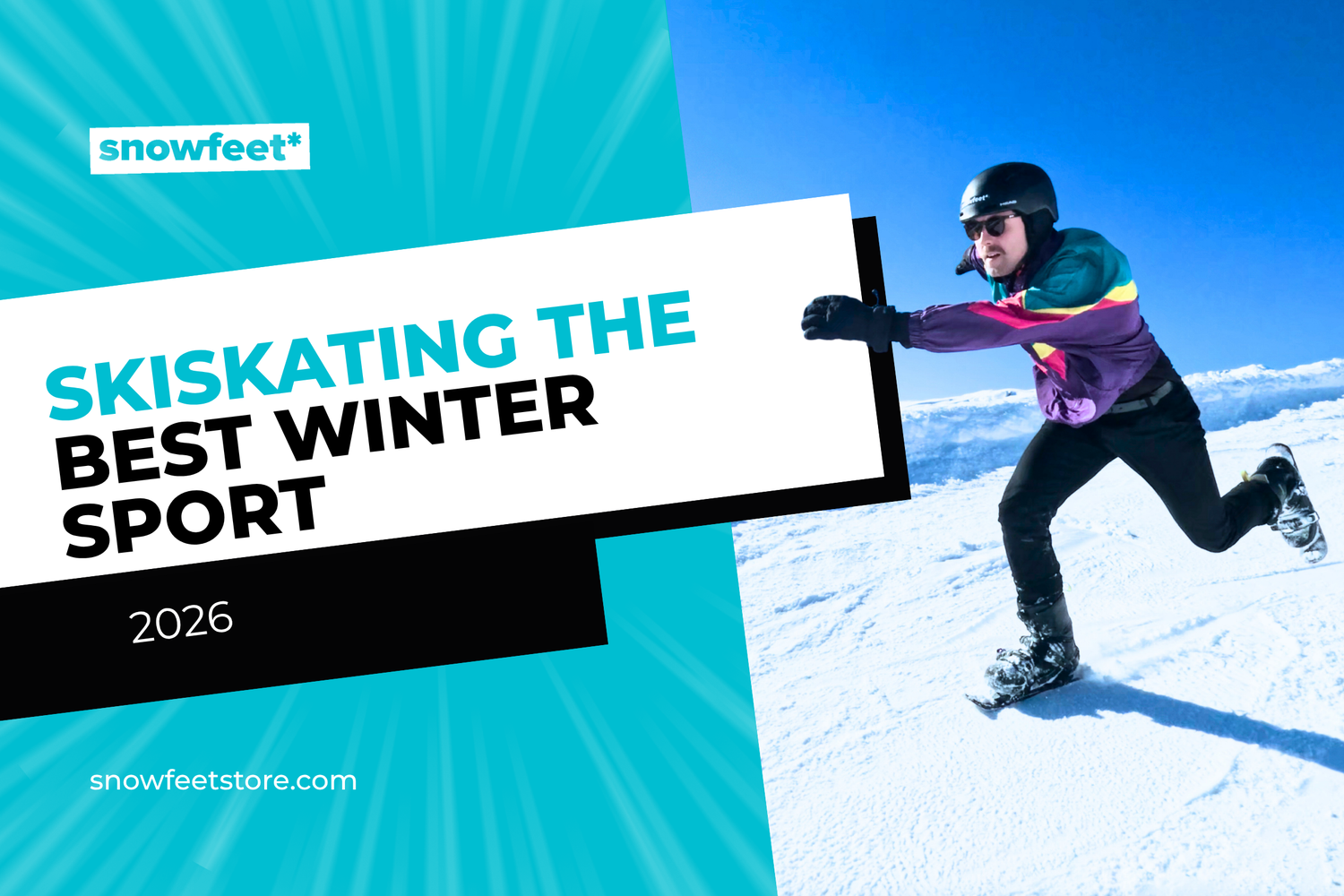
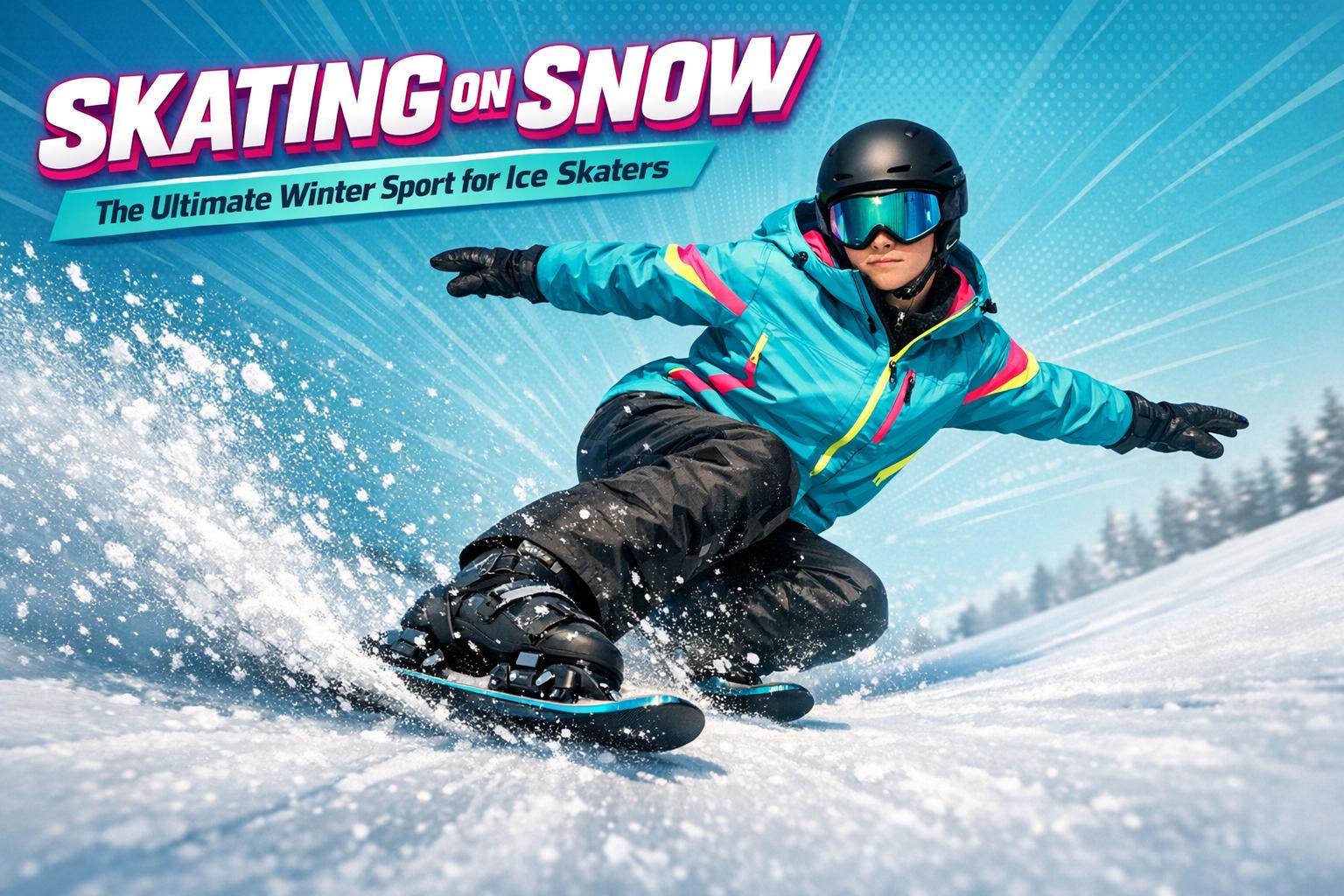
If you’re an ice skater frustrated by closed rinks, long drives, or overcrowded venues, skiskating might be your perfect winter fix. It’s like ice skating, but on snow - using the same movements you already know. With skiskates, you can glide, stop, and turn just like on ice, but on snowy trails, hills, or even your backyard.
Why skiskating works for ice skaters:
- Easy to learn: Your ice skating skills transfer directly to skiskating. Most people get the hang of it in minutes.
- Portable gear: Skiskates are only 17 inches long and fit in a backpack - no bulky skis or roof racks.
- Regular boots work: No need for stiff ski boots; use your winter or snowboard boots.
- Affordable: Starting at $190, they’re cheaper than skis or snowboards, which often cost $800+.
Skiskating is growing fast, with over 50,000 riders worldwide and rave reviews (4.9/5 average). Ready to turn snow-covered terrain into your new skating playground? Let’s dive in.
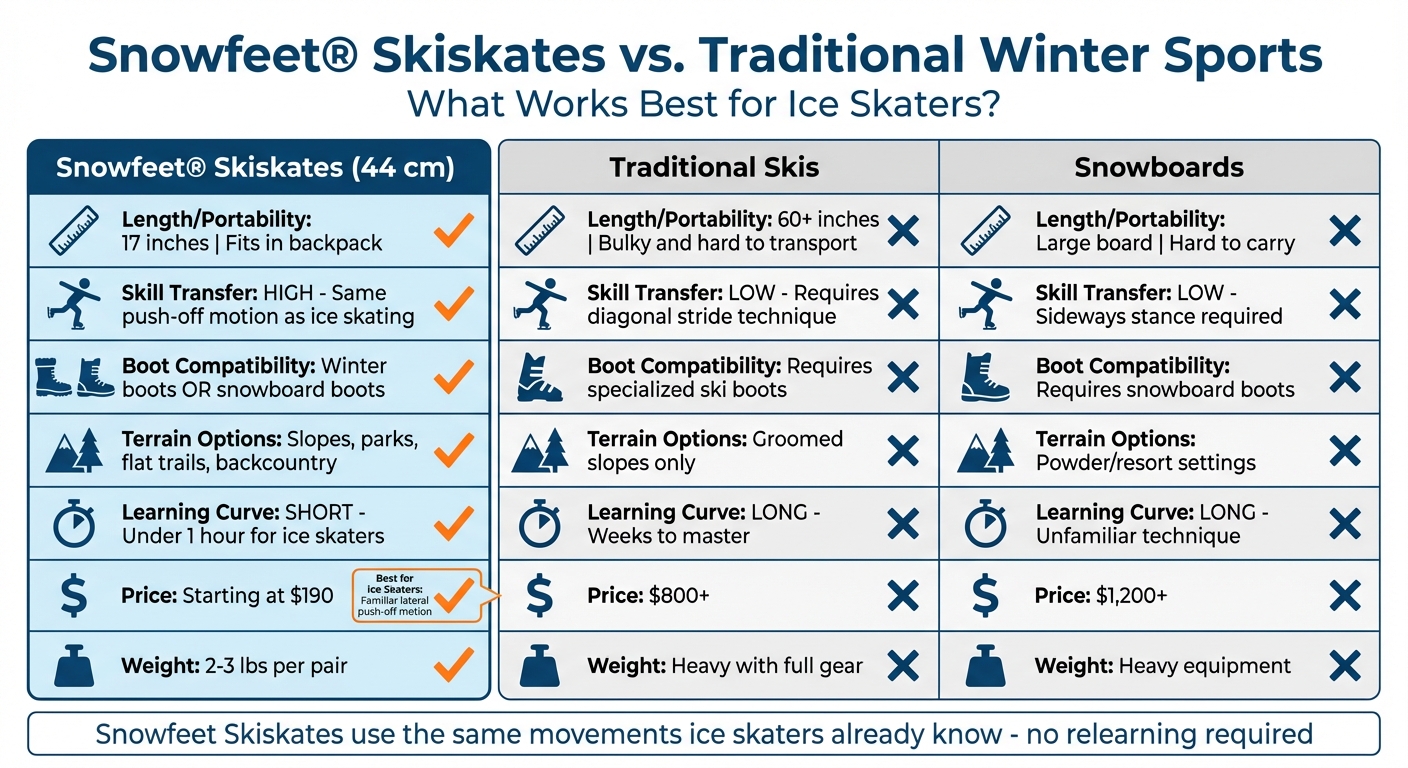
Snowfeet Skiskates vs Traditional Skis and Snowboards Comparison for Ice Skaters
The Problem: Ice Skaters Have Few Good Winter Options
Ice Rinks Are Often Closed or Hard to Access
Ice skating in winter comes with its fair share of challenges. Ice rinks tend to have seasonal closures, limited hours, or are simply too far away for regular visits. On top of that, they’re often overcrowded. Sure, there are natural options like frozen lakes or rivers, but those only work when the weather decides to play nice - which, let’s be real, isn’t often. It’s frustrating when your skating plans depend on luck rather than reliability. These hurdles leave many skaters searching for alternatives that let them keep their skills sharp.
Why Traditional Skis and Snowboards Don't Work for Ice Skaters
Here’s the thing: traditional skis and snowboards just don’t cut it for ice skaters. For starters, skis are heavy and come with a ton of gear that feels clunky compared to the light, fluid motion of skating. They also demand a completely different skill set. All that front-back balance you’ve perfected with hockey stops and quick turns? It doesn’t translate. Instead, you’re stuck lugging around bulky equipment that forces you to start from scratch.
And let’s not forget the learning curve. Skiing techniques can take weeks to get the hang of, which is a stark contrast to the natural ease ice skaters feel on skiskates. Plus, traditional skis are designed for downhill runs, not for exploring flat trails or weaving through narrow paths. That means you’re either stuck indoors or limited to specific terrains. Snowfeet* skiskates? They solve all of these problems, letting you glide through winter without the hassle of traditional ski gear.
How Skiskating Fixes These Problems
Skiskating Uses the Same Movements as Ice Skating
Here’s the genius of skiskating for ice skaters: it uses the exact same movements you already know. The lateral push-offs, edge control, and that natural side-to-side glide you’ve mastered on ice? All of it translates perfectly to snow.
"The best way to start your ride is to skate like a hockey player." - Snowfeet Team
Unlike traditional skiing, which forces you to learn a forward-facing stance and a completely new way to balance, skiskating feels familiar right from the start. The dynamic lateral movements, those quick edge transitions, and even hockey stops - it’s all second nature. You’re not starting from scratch; you’re simply taking your ice skills to a snowy playground. This smooth transition is what makes Snowfeet* Skiskates such a game-changer.
How Snowfeet* Skiskates Make Skiskating Easy
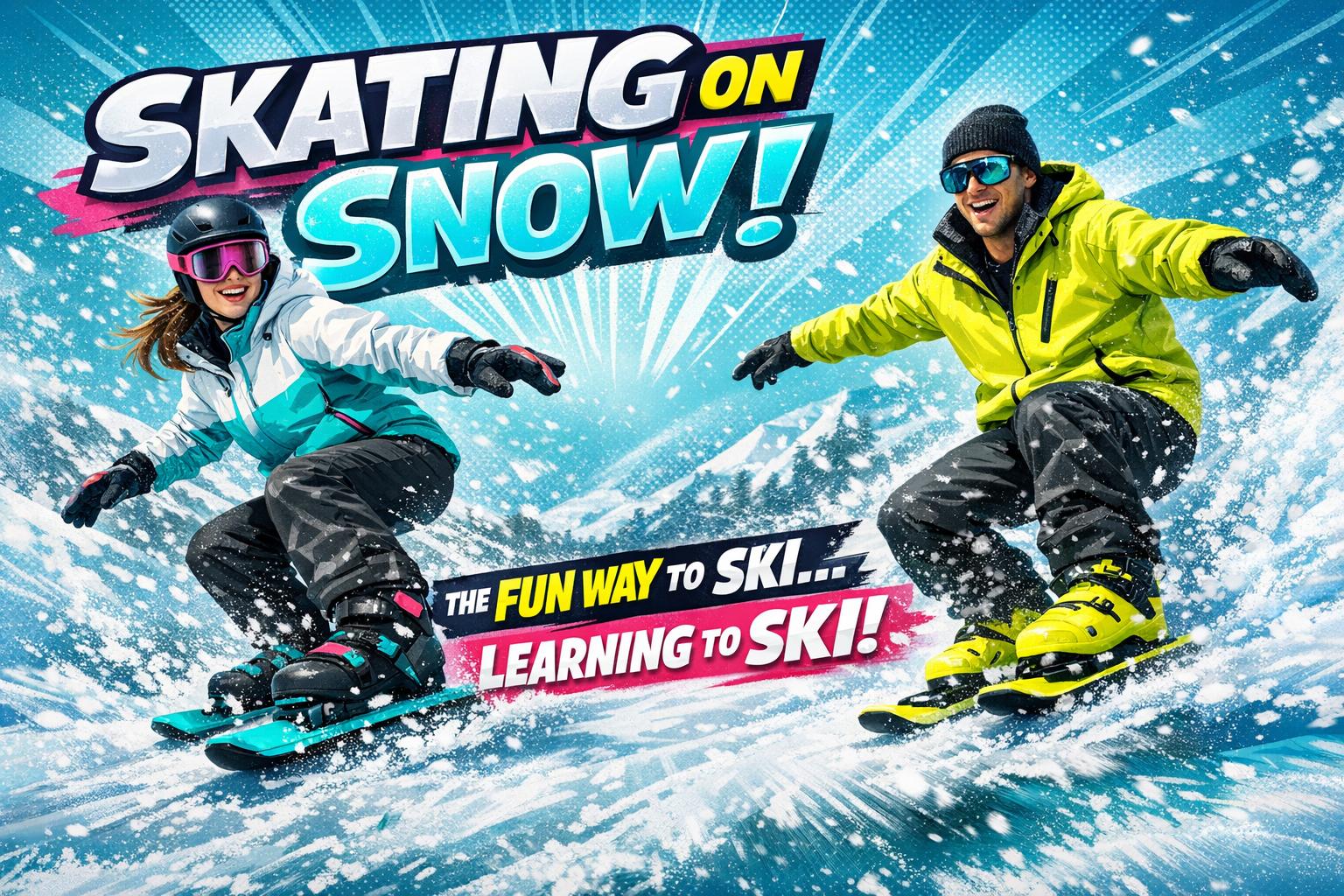
Snowfeet* Skiskates are designed with ice skaters in mind, making the shift to snow effortless. At just 44 cm long, these compact skates feel much like your ice skates, giving you the same agility and control you’re used to. Compare that to traditional skis that can be over 150 cm long, and it’s easy to see why skiskates feel so natural.
Their lightweight design means you can toss them in your backpack and head out without lugging around heavy gear. Plus, they work with your regular winter or snowboard boots, so there’s no need to invest in expensive, bulky equipment. The bindings are simple and quick to attach, letting you gear up in minutes instead of hours.
"It genuinely feels like you are ice skating, just on the snow." - Snowfeet Team
The centered weight distribution mimics the feel of ice skating, triggering your muscle memory almost instantly. Most ice skaters get the hang of skiskating in about five minutes. Whether you’re weaving through narrow hiking trails, gliding down gentle slopes, or carving through fresh powder, the 44 cm length lets you move naturally without battling oversized equipment. It’s skating, just with a snowy twist!
Snowfeet* Skiskates TUTORIAL - Skiskating Technique & Tricks
sbb-itb-17ade95
Snowfeet* Skiskates vs. Traditional Skis and Snowboards
For ice skaters, Snowfeet* Skiskates bring a refreshing twist to winter sports. Unlike traditional skis that require a forward-facing stance with a toe-weight shift - or snowboards that lock you into a sideways position - Snowfeet* let you stick to the natural lateral push-off motion you’ve already mastered on the ice. This key difference makes them a standout option for skaters looking to transition to snowy terrain.
Measuring just 17 inches (44 cm), Snowfeet* Skiskates are compact enough to fit in your backpack, making them far easier to carry and store than traditional skis, which often exceed 60 inches in length. Their design prioritizes the push-off technique familiar to ice skaters, so there’s no need to relearn balance or posture. You can hit the slopes with confidence, relying on skills you already have.
Another bonus? Snowfeet* work with the winter footwear you likely already own. Whether you prefer regular winter boots or snowboard boots, their adjustable bindings make setup a breeze. All you need is a simple screwdriver, and you’re ready to go - no extra trips to a ski shop required.
Comparison: Snowfeet* Skiskates vs. Traditional Skis and Snowboards
| Comparison Aspect | Snowfeet* Skiskates (44 cm) | Traditional Skis | Snowboards |
|---|---|---|---|
| Length/Portability | 17 inches; fits in a backpack | Over 60 inches; bulky | Large and hard to carry |
| Skill Transfer from Ice Skating | High (similar push-off motion) | Low (diagonal stride needed) | Low (sideways stance) |
| Boot Compatibility | Works with winter or snowboard boots | Requires ski boots | Requires snowboard boots |
| Terrain Options | Slopes, parks, flat trails, backcountry | Groomed slopes only | Best for powder/resorts |
| Learning Curve for Ice Skaters | Short and intuitive | Longer, unfamiliar technique | Longer, unfamiliar technique |
Snowfeet* Skiskates shine in their versatility. While traditional skis are at home on groomed slopes and snowboards thrive in powder or resort settings, Snowfeet* open up a world of possibilities. From hills and parks to flat trails and backcountry adventures, you can explore snowy landscapes your way. Their design isn’t just about convenience - it’s about giving you the freedom to enjoy winter on your own terms.
Why Snowfeet* Skiskates Work Best for Ice Skaters
Easy Transition from Ice to Snow
Snowfeet* Skiskates make it simple for ice skaters to adapt to snow. The familiar lateral push-off and V-shaped glide that you’ve already mastered on ice work just as well on snow. The edging technique - using your inside edges to propel forward - translates seamlessly. Plus, the smooth gliding motion keeps your momentum steady.
Unlike traditional skiing, where you need to lean forward, Snowfeet* let you keep your weight centered or slightly back, much like skating. Most ice skaters pick up the basics in under an hour since they’re just applying skills they already know. And because these skates are so portable, switching from ice to snow is even easier.
Lightweight and Convenient
Weighing just 2–3 lbs per pair, Snowfeet* Skiskates are incredibly easy to carry. Toss them in your backpack, and you’re good to go - no need to lug around bulky skis. The strap bindings are simple and work with any winter boots or shoes you already own, so there’s no need for specialized equipment. They’re adjustable to fit US shoe sizes 6–13 (EU sizes 38–47), making them perfect for sharing with friends or family.
Versatile Across Snowy Terrain
Snowfeet* Skiskates aren’t just for groomed slopes - they can handle almost any snowy terrain. Whether you’re on snow parks, hiking trails, backyards, or powder, these skates deliver. Their compact size gives you the agility to carve tight turns, much like you would on an ice rink. You can even navigate narrow wooded trails or remote areas that are off-limits to longer skis. For ice skaters, this versatility turns nearly any snowy spot into a fun playground.
Affordable and Built to Last
At a starting price of $575, Snowfeet* Skiskates are a budget-friendly alternative to traditional skis (which often cost $800 or more) or snowboards (frequently over $1,200). Plus, you don’t need to spend extra on special boots or gear, making them an economical choice for winter sports.
Durability is another strong point. With reinforced carbon fiber edges, impact-resistant polymer bases, and weatherproof straps, these skates are built to handle crashes and rugged use. With proper care, they can last over five years - and they don’t require the frequent waxing that traditional skis demand. When you combine their durability with their price, Snowfeet* Skiskates are a smart, long-lasting option for ice skaters looking to embrace the snow.
Why 2026 Is the Right Time for Skiskating with Snowfeet*
Snowfeet* Is Leading the Skiskating Movement
Snowfeet* is shaking up winter sports with a product lineup designed to bring the joy of ice skating to snowy slopes. Their 2026 collection includes three standout models:
- 44 cm Skiskates: Built with a high-performance wood core, these start at $490.
- 50 cm PRO/Ski Skates: Featuring a lightweight fiberglass core, these are priced from $207.
- 38 cm Mini Ski Skates: Compact and versatile, starting at $190.
What makes these skiskates special? Each model has a short base - less than 20 inches - so ice skaters can maintain their natural balance while transitioning to snow. It's like taking what you already love about skating and giving it a winter twist.
The numbers speak for themselves: over 50,000 riders worldwide and more than 5,500 verified reviews with an impressive 4.9/5 average rating. Clearly, skaters are loving the chance to blend ice and snow sports. As the Snowfeet team puts it:
"If you can't decide whether skiing or ice skating is your favorite sport, skiskating will push your options even further so you can enjoy the best of both!"
The materials also take things up a notch. The 44 cm models feature sustainable wood cores, handcrafted in the European mountains, while the 38 cm and 50 cm versions use fiberglass for a lightweight feel. Plus, all models come with metal edges that meet ski resort safety standards - so no worries about being turned away at the lift.
Why Ice Skaters Should Switch to Skiskating
If you already ice skate, you're halfway there. The skills transfer seamlessly: the lateral push-off, V-shaped glide, and edging techniques are all the same. Most ice skaters can master skiskating in under an hour. As Snowfeet explains:
"Skiskating feels easy and natural to those who play ice hockey, ice skate, or use inline skates."
Another big plus? These skiskates are ultra-portable. They fit into any backpack and work with standard winter boots, making it easy to hit narrow trails, snow parks, or even your backyard. And with prices ranging from $190 to $490, they offer a more affordable alternative to traditional ski gear.
FAQs
How are skiskates easier to use than traditional skis?
Skiskates, like the short skis from Snowfeet, are a breeze to use compared to traditional skis. They strap right onto your regular winter boots - no need for clunky ski boots, bindings, or poles. At just 17 inches long and weighing only a few pounds, they’re light, compact, and easy to carry. Perfect for those spur-of-the-moment snow adventures or quick trips to the slopes.
Now, compare that to traditional skis, which are usually over 5 feet long and come with a whole checklist of gear. They’re heavier, take more time to set up, and can feel like a hassle. Skiskates, thanks to their shorter length and simple design, are also quicker to pick up - especially if you’ve got some ice skating experience. They let you glide and have fun on the snow without the steep learning curve or all the extra baggage of traditional skiing.
Can you use skiskates on all types of snow?
Skiskates are a fun and flexible option for tackling various snowy terrains. Whether you're cruising down a slope, exploring hiking trails, hitting a snow park, or just messing around on the neighborhood sledding hill, these little guys can handle it. Thanks to their compact size and lightweight build, they’re easy to control and great for quick, playful moves on packed or groomed snow.
That said, they’re not a one-size-fits-all solution for every snow condition. Deep, fluffy backcountry powder? Probably not their strong suit. Super icy surfaces? You might want something with a bit more grip. But in places where traditional skis or snowboards can feel clunky, skiskates offer a fresh, lively way to enjoy winter.
Why is skiskating more budget-friendly than skiing or snowboarding?
Skiskating offers a budget-friendly alternative to skiing or snowboarding. For about $150, you can grab a pair of Snowfeet Skiskates that work seamlessly with your regular winter boots. That means no need to splurge on pricey, specialized equipment.
Compare that to the cost of skiing or snowboarding, where a full setup - skis or a snowboard, bindings, and dedicated boots - can easily run over $1,500. Skiskating lets you hit the snow without breaking the bank, all while delivering plenty of fun and excitement.











Leave a comment
This site is protected by hCaptcha and the hCaptcha Privacy Policy and Terms of Service apply.