







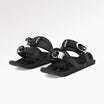












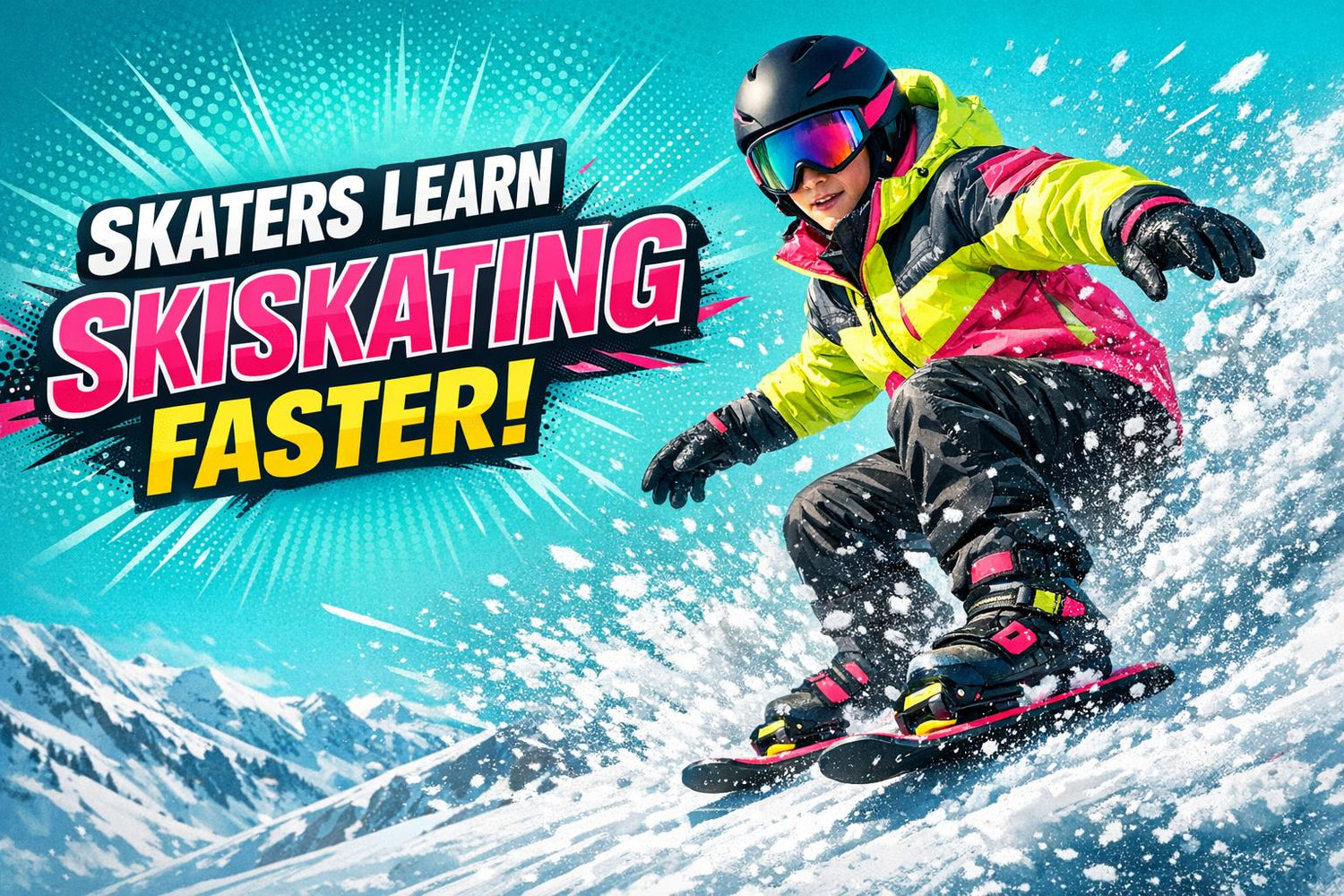
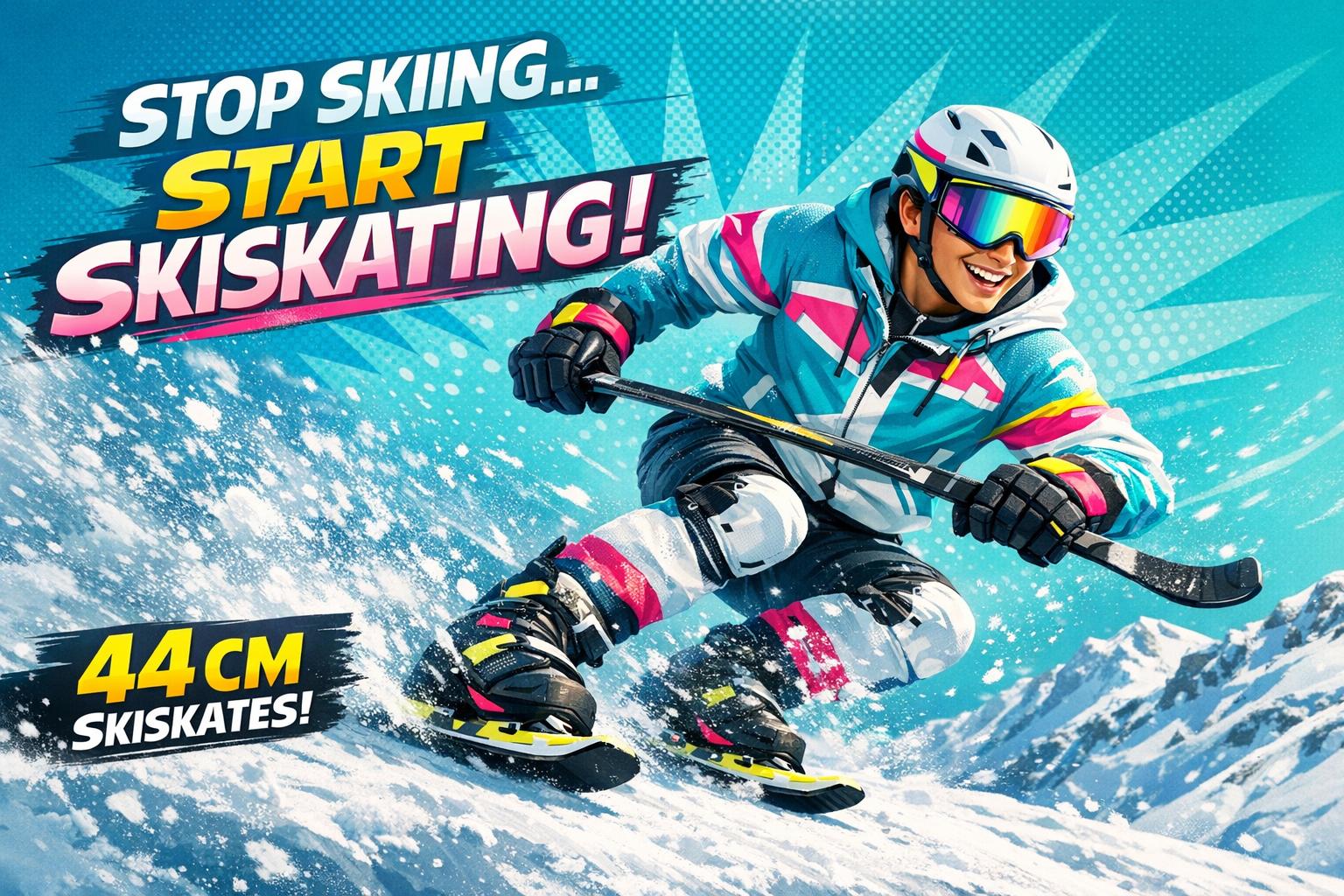
If you’re a skater, skiskating is your shortcut to enjoying snow sports. Unlike skiing, which demands learning new techniques and bulky gear, skiskating feels natural for anyone with skating experience. Why? It mirrors the side-to-side motion and balance you already know from ice or inline skating. Plus, the gear - like Snowfeet Skiskates - is compact, lightweight, and works with regular winter boots. Most people pick it up in just five minutes.
Here’s the breakdown:
- Familiar Motion: Skiskating uses the same lateral push and edge control as skating.
- Comfortable Gear: No stiff ski boots; use snowboard boots or even winter shoes.
- Easy to Learn: Many skaters feel confident on skiskates almost immediately.
- Portable: Skiskates are short (44 cm) and fit in a backpack, unlike traditional skis.
Skiskating is the perfect way for skaters to hit the slopes without the hassle of learning to ski. It’s skating, but on snow. Simple, right? Let’s dive into the details.
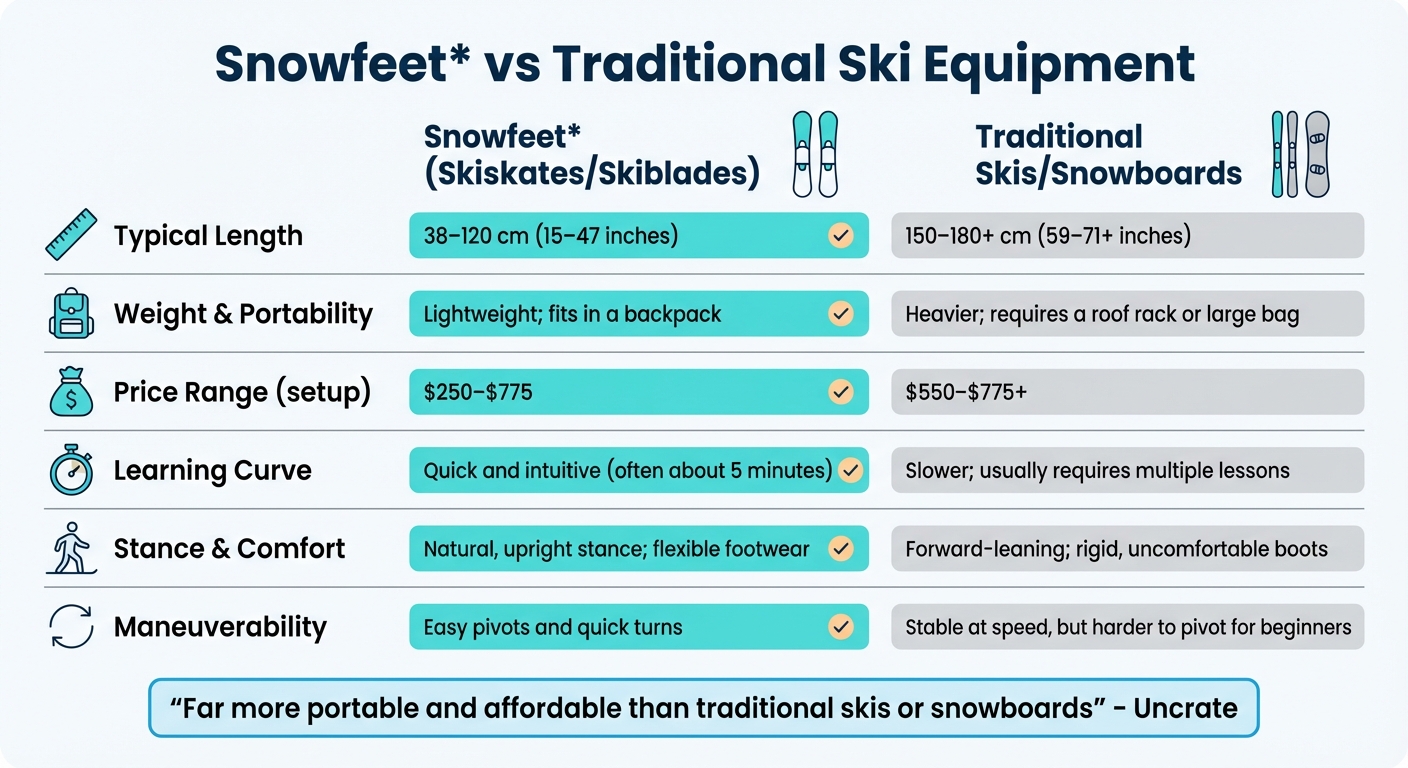
Snowfeet Skiskates vs Traditional Skis Comparison Chart
How Skiskating Mirrors Skating Mechanics
Shared Techniques: Lateral Push and Edge Control
If you've ever laced up inline skates or hit the ice, you'll feel right at home with skiskating. The movement on Snowfeet* Skiskates taps into the same lateral push you use when skating. Picture this: you push off to the side, just like on ice or pavement, and then execute a hockey stop - turning your skates perpendicular to your direction to evenly distribute weight and grip the snow. That familiar motion translates seamlessly to snow. The metal edges on Snowfeet* Skiskates act like skate blades, giving you the traction to dig in and power forward. As the Snowfeet Team explains, "The best way to start your ride is to skate like a hockey player."
This connection between skating and skiskating doesn’t stop at propulsion. It also makes balancing on snow feel intuitive, as we’ll explore next.
Body Position and Balance Similarities
The stance you’ve perfected on skates carries over perfectly to skiskating. Think bent knees, feet shoulder-width apart, and a low center of gravity - that athletic posture is your foundation on snow, too. Unlike traditional skiing, which shifts your weight forward, skiskating keeps you centered. It’s a natural fit for anyone used to balancing on skate blades. Add in a slightly forward-leaning upper body and staggered foot positioning, and you’ll find your stability boosted even more. It’s almost like your muscle memory takes over, making the transition smooth and comfortable. This familiar stance not only helps you get started but also shortens the time it takes to feel confident on the slopes.
Why Skaters Learn Skiskating Faster
Here’s the kicker: if you’re already a skater, you’ve got a head start. The skills you’ve built on ice or pavement make skiskating feel second nature. Compared to traditional skiing, which can feel foreign at first, skate skiing - or skiskating - clicks faster for those with strong balance and coordination. While classic skiing might seem easier for total beginners since it mimics walking, skate skiing’s lateral motion is a dream for skaters. Fun fact: American skier Bill Koch showcased this back in the 1982 World Championships, using an ice-skating-like stride with lateral pushes to dominate the competition.
And with Snowfeet* Skiskates measuring just 44 cm (17.3 inches), you’re free to move without the hassle of bulky equipment. This compact design lets you skate naturally, ditching the steep learning curve that comes with traditional skis. It’s no wonder over 50,000 riders worldwide have embraced skiskating. It’s skating, but on snow - pure and simple.
The Advantages of Snowfeet* Skiskates and Skiblades
Short, Lightweight Design for Better Maneuverability
Snowfeet* Skiskates and Skiblades are designed to make your time on the slopes feel as natural as skating on ice or pavement. With lengths of 44 cm (17.3 inches) for Skiskates and 65–120 cm (25.6–47.2 inches) for Skiblades, they’re much shorter than traditional skis, which typically measure 150–180+ cm (59–71+ inches). This compact size lets you make sharp turns, pivot effortlessly, and stop quickly. Plus, their lightweight design reduces fatigue and gives you the freedom to execute twists, jumps, and tricks with ease. And here’s a bonus: they’re so compact, you can toss them in a backpack - no need for a bulky roof rack.
Product Lineup for Different Skill Levels
Whether you’re just starting out or pushing your limits on the slopes, Snowfeet* has a model to match your style and skill level. If you’re looking for something that feels like inline or ice skating, the Snowfeet* Mini Ski Skates (38 cm, starting at $250) or the Snowfeet* PRO (50 cm, $275) are great options. They’re perfect for tight turns and groomed slopes.
For those ready to explore more challenging terrain, the Skiblades - available in 65 cm, 99 cm, and the Snowfeet* Short Skis at 120 cm (priced between $635 and $775) - offer added stability while maintaining speed. And if backcountry adventures are calling your name, the Walkski (100 cm, starting at $690) is built for tackling varied terrain. No matter your experience level, there’s a Snowfeet* product tailored to your needs.
Comparison with Traditional Ski and Snowboard Brands
Snowfeet* takes a completely different approach compared to traditional ski and snowboard setups. Traditional gear often comes with rigid plastic boots, lengthy lessons, and equipment so bulky it requires a roof rack. For many skaters, that’s a dealbreaker. Snowfeet* flips the script with lightweight, portable designs and a price range of $250–$775 - making it more accessible than traditional setups, which typically cost $550–$775 or more.
And here’s the kicker: while traditional skiing often requires days of lessons, many Snowfeet* users report feeling comfortable in just five minutes. Snowfeet* gear is not only easier to learn but also more comfortable, allowing for a natural, upright stance and flexible footwear. Compare that to the forward-leaning, boot-locked posture of traditional setups, and the difference is clear.
| Feature | Snowfeet* (Skiskates/Skiblades) | Traditional Skis/Snowboards |
|---|---|---|
| Typical Length | 38–120 cm (15–47 inches) | 150–180+ cm (59–71+ inches) |
| Weight & Portability | Lightweight; fits in a backpack | Heavier; requires a roof rack or large bag |
| Price Range (setup) | $250–$775 | $550–$775+ |
| Learning Curve | Quick and intuitive (often about 5 minutes) | Slower; usually requires multiple lessons |
| Stance & Comfort | Natural, upright stance; flexible footwear | Forward-leaning; rigid, uncomfortable boots |
| Maneuverability | Easy pivots and quick turns | Stable at speed, but harder to pivot for beginners |
As Uncrate said it best, "Far more portable and affordable than traditional skis or snowboards."
How similar is skiing to skating?
sbb-itb-17ade95
Practical Benefits of Skiskating for U.S. Skaters in 2026
Snowfeet* products bring a fresh twist to winter sports, offering practical perks that go well beyond the slopes. Here's why they’re a game-changer for skaters in the U.S.
Portability and Convenience
Say goodbye to bulky gear! Snowfeet* products are compact enough to fit in a backpack or the trunk of your car. The 120 cm Short Skis measure just 47.2 inches, and the 44 cm Skiskates are a mere 17.3 inches long. Compare that to traditional skis, which are much longer and harder to store. This makes Snowfeet* perfect for quick weekend getaways or spontaneous slope adventures. Plus, with UPS and FedEx shipping across the U.S., your gear can be at your doorstep in as little as 3 business days.
And it’s not just about size - Snowfeet* takes convenience to the next level with their adaptable footwear options.
Footwear Flexibility
One of the standout features of Snowfeet* is its compatibility with different types of footwear. Whether you’ve got waterproof winter boots, snowboard boots, or ski boots, you’re good to go. That means you can skip the rigid, uncomfortable ski boots and save some cash in the process.
"I love how easy it is to put snowboard boots on and walk with them; they don't hurt like ski boots, and I feel more flexible during the ride."
The bindings are fully adjustable and can be tweaked at home with just a screwdriver, making it easy to set up your gear for your favorite boots.
Performance Across U.S. Snow Conditions
Snowfeet* isn’t just about convenience - it performs impressively across a variety of snow conditions in the U.S. Whether you’re carving on the icy slopes of the East Coast or floating through powder in the Rockies, these products deliver. The high-quality metal ski edges provide excellent grip and control on groomed runs and icy patches. Skiskates handle light powder up to 4 inches, while longer options like the 99 cm and 120 cm Skiblades are designed for deeper snow.
With an average rating of 4.9 out of 5 from over 5,500 verified reviews, riders love the versatility of Snowfeet*. They’re accepted at most U.S. ski resorts, meeting standard safety requirements, and their compact design makes them perfect for all kinds of terrains - from hiking trails to sledding hills and even your backyard.
Conclusion: Why Skaters Should Try Skiskating
Key Takeaways
If you're a skater who's hesitant about diving into traditional skiing, skiskating might be your perfect match. Thanks to the familiar lateral push technique, you can get the hang of skiskating in just about 5 minutes. Plus, you can stick with your favorite boots, making it easier and faster to hit the snow without the hassle of new gear.
The stats back it up: over 50,000 riders around the globe have embraced skiskating, and Snowfeet* has earned a stellar 4.9 rating from 5,500+ reviews. With several models to choose from, there's something for every style and skill level.
What makes skiskating stand out is its versatility. Unlike traditional skis, which are often limited to groomed slopes at resorts, Snowfeet* gear shines on hiking trails, sledding hills, or even your backyard. It's lightweight, compact enough to fit in a backpack, and handles the variety of snow conditions across the U.S. with ease.
With all these perks, jumping into skiskating couldn’t be simpler.
Getting Started with Skiskating
Ready to give skiskating a try? Start by picking the Snowfeet* model that matches your vibe. For that true "skating on snow" feel, go for the 44 cm Skiskates. If you’re eyeing deeper powder or faster, more stable turns, the 65 cm or 99 cm Skiblades are your go-to options.
Setting up is a breeze. You can adjust the bindings at home and head straight to the slopes. The best part? Many U.S. ski resorts allow Snowfeet* gear since it features the same metal edges as regular skis. That means less time dealing with rentals and more time enjoying the snow.
Skiskating is winter sports made simple for skaters - no long lessons, just pure fun and freedom on the snow.
FAQs
Why is skiskating easier to learn than traditional skiing?
Skiskating with Snowfeet’s short skis is much easier to learn than traditional skiing. Their compact design - ranging from 44 cm Skiskates to 120 cm Skiblades - makes them lighter, more agile, and surprisingly intuitive, especially for anyone with skating experience. If you're comfortable on inline or ice skates, you'll find it a breeze to transfer those balance and weight-shifting skills to the snow.
In fact, a 2026 study revealed that beginners using Snowfeet’s short skis picked up basic skills like turning and stopping 30% faster than those using full-length skis. Traditional skis require more time to master because of their longer edges and the need for a wider stance, which often means days of lessons. Snowfeet’s clever design eliminates that steep learning curve, letting you dive straight into the fun on the slopes!
What kind of shoes or boots can you use with Snowfeet Skiskates?
Snowfeet Skiskates are designed to pair with a range of footwear, making them a super flexible choice. Whether you’ve got standard ski boots, snowboard boots, or just your regular winter shoes, you’re good to go. This versatility makes them a great option for both skaters and winter sports fans looking for something different.
For the best performance, it’s a good idea to stick with sturdy, supportive footwear that fits snugly and offers solid ankle support. Thanks to Snowfeet's clever design, you can hit the slopes without needing heavy, specialized boots. It’s a refreshing break from the usual gear required for skis or snowboards.
Can Snowfeet Skiskates handle all types of snow conditions in the U.S.?
Snowfeet Skiskates are built to handle a variety of snow conditions you’ll find across the U.S. - from groomed slopes to trails and even snowparks. That said, they’re not the best choice for tackling deep powder, where longer skis or snowboards tend to shine.
What sets Snowfeet Skiskates apart is their compact size and clever design, which give you impressive control and adaptability. They’re especially great on packed snow and icy surfaces. If you’re a skater looking to dip your toes into winter sports, these skiskates offer a fun, lightweight alternative to traditional ski gear - no bulky equipment required!












Leave a comment
This site is protected by hCaptcha and the hCaptcha Privacy Policy and Terms of Service apply.