



















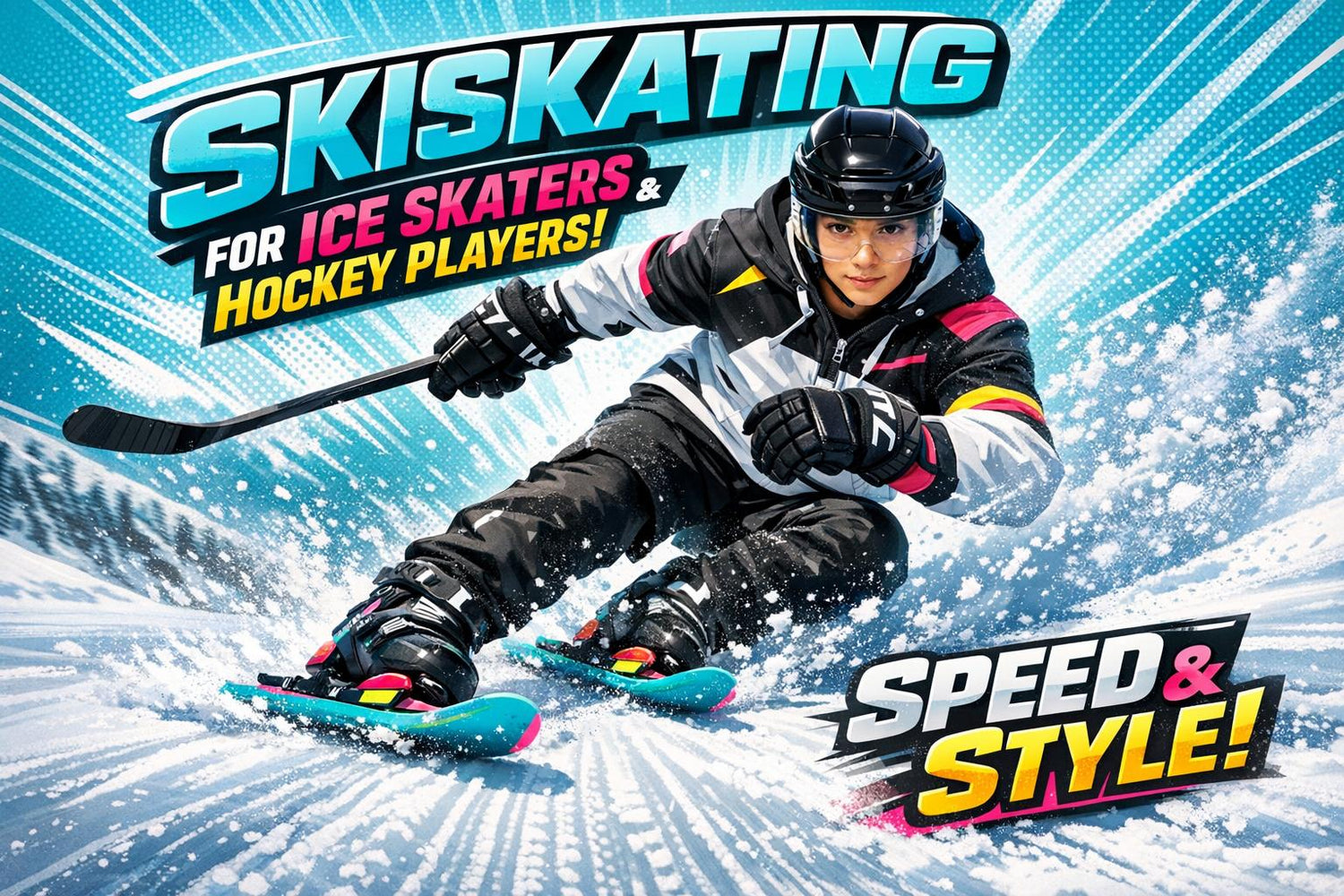
Skiskating is the snow sport that feels like ice skating but on short skis. If you’re an ice skater or hockey player, this could be your new winter go-to. Here’s the deal:
- What is it? Skiskating uses compact skis (15–20 inches long) that attach to your regular winter or snowboard boots. You push off like skating, stop with a hockey stop, and keep your weight centered or slightly back - just like on ice.
- Why now? In 2026, more U.S. ski resorts are opening slopes to short skis, and gear like Snowfeet PRO offers better control and portability. These mini skis fit in a backpack and are easy to learn in minutes.
- Who’s it for? Perfect for hockey players, ice skaters, and even inline skaters. The movements feel natural, and the learning curve is short.
- Terrain? Works best on groomed slopes, light powder (up to 4 inches), and even local trails. Avoid deep snow or steep slopes until you’re more experienced.
With gear starting at $250, skiskating is a fun, portable way to enjoy winter sports without the bulk or hassle of traditional skis. Ready to give it a shot? Let’s dive into the details.
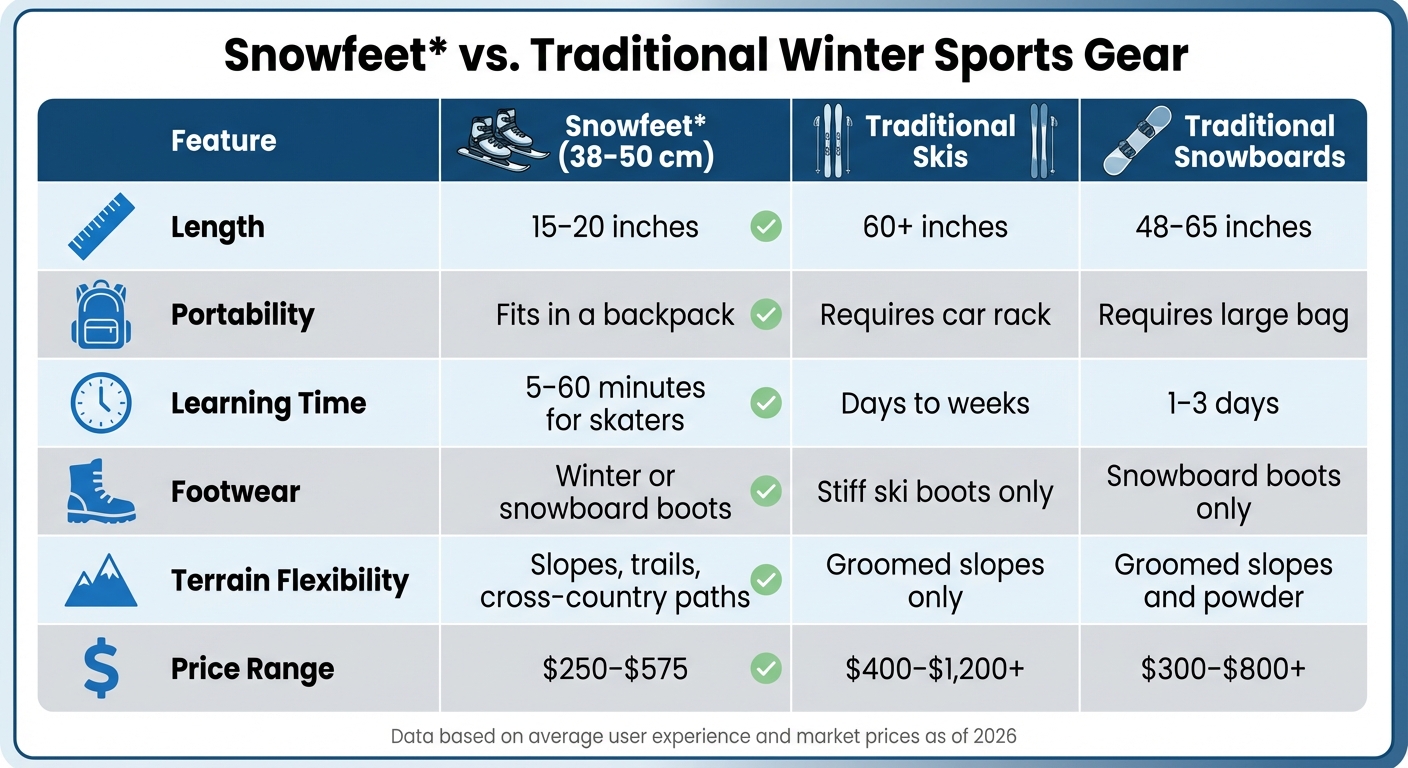
Snowfeet vs Traditional Skis and Snowboards Comparison Chart
How Ice Skating and Hockey Movements Translate to Skiskating
Core Body Mechanics
If you’ve spent any time on the ice, skiskating will feel surprisingly familiar. It uses the same lateral push from hockey - shifting your weight diagonally while gliding - but with a slight twist. Unlike traditional skiing, where you lean forward over your toes for control, skiskating keeps your weight centered over the middle or back of your feet. This adjustment feels natural for hockey players or ice skaters.
Your stance is key: keep your legs shoulder-width apart with your knees slightly bent, mimicking the athletic "ready" position from hockey. This setup gives you the foundation to nail precise stops and turns on snow.
Stopping and Turning Techniques
Once you’ve got the mechanics down, stopping and turning on snow becomes almost second nature. The hockey stop works nearly the same way on snow as it does on ice. Snowfeet* products come equipped with metal edges that function like skate blades, letting you push sideways to create friction and stop effectively. As the Snowfeet Team puts it:
"You can stop the same way that you stop with your skis or skates. This is also called a hockey stop." (Snowfeet Team)
When stopping, aim to distribute your weight evenly across both feet. If the hockey stop feels tricky at first, no worries - there’s a heel brake you can use to slow down smoothly. Turning is all about edge control, similar to crossovers or tight pivots on ice. The main difference is that snow offers more resistance, so you’ll need to apply a bit more pressure. Thankfully, Snowfeet's* metal edges give you the grip and precision needed for sharp turns.
Balance and Agility
Once you’ve mastered the basics, balance becomes second nature. Your experience with single-leg glides, edge holds, and quick weight shifts on ice transitions seamlessly to skiskating. Snowfeet's* compact design - ranging from 15 to 20 inches - makes them far more agile than traditional skis, which can be over five feet long.
For uneven terrain, try adopting a staggered stance: place one foot slightly ahead of the other and lean your upper body forward. This small adjustment helps maintain front-to-back balance. Hockey players, in particular, will appreciate how their skills - like rapid starts, stops, and lateral cuts - translate into quick, responsive movements on groomed slopes. It’s like taking your game from the rink to the mountain.
Choosing the Right Snowfeet* Gear for Skiskating
Overview of Snowfeet* Products
Snowfeet* has crafted three main models to suit different skating styles and terrains. Let’s break them down:
- Mini Ski Skates (38 cm): These are the original compact option, starting at $250. They’re perfect for trails, hills, and cross-country paths. The best part? You can use them with regular waterproof winter boots, making it super easy to get started.
- Snowfeet PRO (50 cm): Priced at $275, this model features a fiberglass-reinforced core for added stability. It’s great for groomed slopes and light powder (up to 4 inches). With over 2,260 reviews averaging 4.9 out of 5 stars, it’s a favorite among skaters. If you’re an ice skater, you’ll love how natural carving feels with these.
-
Skiskates (44 cm): Designed for hockey players and experienced skaters, these are the top-tier option at $575. They feature a wood core for maximum stability and are built for groomed slopes and snow parks. According to the Snowfeet Team:
"Skiskates (44 cm long) aka the world's tiniest skis... are especially suitable for hockey player, ice skaters, or rollerbladers".
With a perfect 5.0 out of 5 rating, these skiskates provide a skating-on-ice experience like no other.
All models are compact enough to fit in a standard backpack, so no need for bulky bags or roof racks. Next up, let’s see how Snowfeet* gear stacks up against traditional skis and snowboards.
Snowfeet* vs. Traditional Skis and Snowboards
Snowfeet* gear comes with some serious advantages over traditional equipment. For starters, the learning curve is much shorter - most experienced skaters can pick it up in just 5 minutes, while skiing often takes days or even weeks to master. Plus, they’re lightweight, portable, and work with regular winter boots. This makes them a fantastic option for ice skaters and hockey players looking to hit the snow.
Here’s a quick comparison:
| Feature | Snowfeet* (38–50 cm) | Traditional Skis | Traditional Snowboards |
|---|---|---|---|
| Length | 15–20 inches | 60+ inches | 48–65 inches |
| Portability | Fits in a backpack | Requires car rack | Requires large bag |
| Learning Time | 5–60 minutes for skaters | Days to weeks | 1–3 days |
| Footwear | Winter or snowboard boots | Stiff ski boots only | Snowboard boots only |
| Terrain Flexibility | Slopes, trails, cross-country paths | Groomed slopes only | Groomed slopes and powder |
| Price Range | $250–$575 | $400–$1,200+ | $300–$800+ |
Traditional skis and snowboards lock you into specific terrains and require expensive, specialized boots. Snowfeet* gear, on the other hand, gives you the freedom to explore a variety of environments without the hassle or cost of conventional equipment.
Bindings and Footwear Options
The versatility of Snowfeet* gear doesn’t stop at portability - it extends to bindings and footwear, too. Both the Mini Ski Skates and PRO models feature universal bindings that work with most waterproof winter or snowboard boots (US sizes 6–13). That means you can use the boots you already own. Just adjust the straps with a screwdriver before heading out to ensure a snug fit.
The Skiskates (44 cm) take things up a notch with two binding options:
- Snowboard boot bindings for comfort and flexibility.
- Ski boot bindings for maximum edge control.
Most users prefer snowboard boots because they allow for natural ankle movement and make walking between runs much easier. As the Snowfeet Team explains:
"Snowboard boots seem to be the best option for ski slopes, but if you take Snowfeet on a hike or just to have fun on a ski slope or sledding hill, winter shoes are the most practical choice".
Whichever option you choose, ankle support is key. Make sure your footwear holds your ankle securely to handle quick stops and sharp turns. If you have smaller feet, snowboard boots often provide a better fit. For those with larger snowboard boots using the PRO model, the package includes extra-long toe straps to ensure everything stays snug and secure.
Step-by-Step Guide: From Ice Skating to Skiskating
Gear Setup and Safety Tips
Before you head out to the slopes, make sure your gear is ready to go. Start by adjusting your bindings using your boots and a screwdriver. Tighten all screws to avoid any surprises later. As the Snowfeet Team puts it:
"To avoid hassle on the slopes, take your time and adjust the bindings at the comfort of your home, using a screwdriver and a shoe you are going to wear."
Straps should fit snugly, and if your boots are on the larger side, use the extra-long toe straps for a secure hold. Choose waterproof boots with solid ankle support. Snowboard boots are your best bet for groomed slopes, while tough winter boots work well for trails and sledding hills.
When you're ready to start, stick to groomed slopes or flat trails. Stay away from deep powder (anything over 4 inches) and avoid steep or bumpy terrain until you're more confident. Keep your gear in top shape by waxing the base regularly, which helps with speed and prevents snow from sticking. After each session, dry your gear completely and lightly oil the metal edges to keep them in good condition.
Once your setup is dialed in, it's time to move on to the basics.
Learning Basic Techniques
If you already know how to ice skate, you’re in luck - those skills will come in handy here. Start with a balanced stance: feet shoulder-width apart and knees slightly bent. The key difference? Keep your weight centered or slightly back, not forward like you would on skis. As the Snowfeet Team advises:
"Don't place your weight over your toes as you would with skis, because you will fall. Instead, place your weight over the middle or back of your feet."
To get moving, push off with one foot while gliding on the other, just like skating on ice. Alternate feet in a smooth, rhythmic motion. If you’ve skated before, you’ll likely pick this up within 5 to 10 minutes.
For stopping, you’ve got a couple of options. Use a hockey stop by pushing both edges sideways, keeping your weight evenly distributed. Or, if you prefer a smoother deceleration, use the heel brake.
When it’s time to turn, angle your skiskates and shift your body in the direction you want to go. The shorter length of skiskates makes quick turns feel natural and easy. If you’re feeling adventurous and want to skate backward (also known as riding switch), shift your weight to your toes and lift your heels slightly.
Intermediate and Advanced Skills
Once you’ve nailed the basics, it’s time to step it up. Start experimenting with advanced techniques to take your skiskating to the next level.
For high-speed runs or uneven terrain, try a staggered stance - place one foot slightly ahead of the other. This stance improves your balance and control. Keep your knees bent to absorb shocks and stay steady, especially on rougher surfaces.
When carving, lean into your turns with confidence while keeping your weight centered. The metal edges on Snowfeet* give you great grip for sharp, controlled turns on groomed slopes. Want to push your limits? Practice small jumps and tricks in snow parks. Thanks to their compact design, Snowfeet* make aerial maneuvers easier to manage than traditional skis.
To keep your skiskates performing at their best, sharpen the edges regularly with a tuner or sharpening stone - this is especially important for icy conditions where sharp edges are essential for precision. When you’re tackling rough terrain, lean back slightly and lift your toes to avoid catching the tips on obstacles.
With enough practice, the skating motion will feel as natural as breathing, and you’ll be carving down slopes with the same ease and confidence you have on ice.
Why Snowfeet* Works Better for U.S. Skaters
Portability and Convenience
Let’s face it - traditional skis can be a hassle. They’re long, bulky, and require roof racks or dedicated storage. Enter Snowfeet*, the compact game-changer. Measuring just 15-20 inches (38-50 cm), these skiskates are small enough to fit in your backpack right next to your lunch and an extra layer. No need to wrestle with oversized gear or worry about storage space.
For skaters in the U.S., this is a big deal. You can stash Snowfeet* in a closet, an entryway, or even on a shelf - no special racks required. Heading to a local hill? Toss them in a duffel bag and hop on a city bus, campus shuttle, or rideshare. Families can pack multiple pairs in a car trunk alongside regular luggage, something that’s nearly impossible with traditional skis. It’s a grab-and-go experience, perfect for busy lifestyles.
This level of convenience mirrors how most skaters already treat their gear - think of grabbing ice skates for a quick session at the rink or on a frozen pond. Snowfeet* brings that same ease to snowy slopes, making skiskating an accessible addition to everyday life. As Uncrate puts it, they’re "far more portable and affordable than traditional skis or snowboards".
Faster Learning Curve
If you’ve ever nailed a hockey stop or carved edges on ice, you’re already ahead of the game. Snowfeet* builds on those skills, making it easy for ice skaters to pick up the basics in just a few minutes.
The Snowfeet Team explains:
"You have to keep the front-back balance, so it feels very natural to those who play ice hockey, ice skate, or even use inline skates".
Take Falk, for example - a lifelong inline skater who had never tried skiing. He shared:
"I hoped for something similar in snow and this absolutely nailed it".
Unlike traditional skiing, which often requires hours of lessons, Snowfeet* lets you skip the rental shop and jump straight into the action. Just strap them onto your waterproof winter boots or snowboard boots, and you’re ready to go. Once you’ve mastered the basics, you’ll have the skills to handle a variety of terrains with confidence.
Performance Across Different Terrains
Snowfeet* shines on groomed slopes, snowparks, and local trails, making them a versatile option for skaters who don’t live near major ski resorts.
On groomed runs, the metal ski edges provide excellent control for sharp hockey stops and smooth turns. In snowparks, their compact size (just 44 cm) makes tricks and aerial moves easier compared to traditional skis. For those who prefer exploring cross-country trails or forest paths, Snowfeet* offers the flexibility to hike and skate without changing out of your winter boots. Even neighborhood hills and backyard slopes become fun practice spots.
The gear performs best on packed snow and light powder up to 4 inches. For deeper powder or high-speed mountain runs, traditional long skis still have the advantage. But for skaters focused on agility, park-style fun, and quick sessions after work or school, Snowfeet* delivers exactly what they need. Plus, most U.S. ski resorts classify them as "short skis", so you can use them on chairlifts without any issues.
With over 50,000 riders worldwide and more than 5,500 verified reviews averaging 4.9 out of 5 stars, Snowfeet* has proven its popularity. As a finalist for the ISPO Innovation Award and a winner of the A' Design Award, it’s clear this isn’t just a gimmick - it’s a fresh take on winter sports gear, perfectly tailored to the way skaters move.
sbb-itb-17ade95
Practical Tips for Skiskating in the U.S.
Warm-Up and Drills
Before hitting the snow, warm up just like you would for a hockey game or an ice skating session. Start with a basic athletic stance: keep your feet shoulder-width apart, bend your knees and ankles slightly, and position your hips directly over your feet. This stance mirrors the ready position used in ice skating and serves as the foundation for everything you'll do on Snowfeet*. If you're already familiar with ice skating or hockey, these drills will feel like second nature.
Ken Knapp, Editor Emeritus at REI, highlights the importance of practicing balance on one foot:
"Being proficient and remaining balanced atop one foot is a trait shared by advanced skiers, so the more you practice this skill... at home, the better you'll be the next time you hit the snow".
To get started, try the Waddle Skate drill. Shift your weight from one foot to the other, lifting the non-weight-bearing ski slightly to find your glide. For uphill movement, practice the Herringbone technique: form a "V" shape with your skis (tips wide, tails close) and roll your feet inward to dig the metal edges into the snow. According to the Snowfeet Team, beginning each ride with a hockey-style skating motion can make a big difference. Unlike traditional skiing, keep your weight centered or slightly toward the back of your feet to maintain control and avoid pitching forward.
Stick to groomed slopes or flat trails while you're learning. Steep terrain and deep powder can wait until you've mastered the basics.
Clothing and Layering for U.S. Winters
When it comes to dressing for skiskating, think layers. Start with a moisture-wicking base layer to keep sweat at bay, add an insulating mid-layer for warmth, and top it off with a waterproof outer shell to shield yourself from wind and snow. This three-layer system works perfectly in U.S. winter conditions and pairs well with the versatility of Snowfeet*, letting you switch between casual and high-performance activities with ease.
Your footwear is just as important. Waterproof snowboard boots are ideal for groomed slopes and offer excellent control with Snowfeet*. For less intense outings, like hiking trails or gentle hills, sturdy waterproof winter shoes with firm ankle support will do the trick. Snowfeet* models are designed to fit U.S. shoe sizes 6–13, making them accessible for most users.
Don’t forget your protective gear! Gloves, a helmet, and goggles are essential for both safety and comfort. Once you're dressed right, it's time to ensure your gear is in top shape.
Gear Maintenance and Care
Keeping your Snowfeet* gear in good condition is simple and hassle-free. After each session, make sure to wipe down and oil the metal edges to prevent rust and maintain a smooth glide. The Snowfeet Team advises:
"Keep the metal edges dry after each use to prevent them from rusting. You can also wipe the edges using oil before storage".
Regularly waxing the base is another must. This prevents snow from sticking to the fiberglass or wood core and keeps your glide smooth. Liquid wax works well for this. If you notice your edges aren't gripping icy slopes, use a handy edge tuner or take them to a professional ski service shop. Don’t worry if you see small bits of plastic shaving off during tuning - this is normal and won’t affect performance.
Before storing your Snowfeet* for the season, apply a thin layer of oil to the metal edges and keep them in a dry spot. With over 5,500 verified reviews averaging 4.9 out of 5 stars, users frequently praise how easy these skiskates are to maintain compared to traditional skis - no complicated bindings or expensive tune-ups required.
Snowfeet* & Skiskates Tutorial - How to Become a PRO Skiskater
Conclusion
If you're an ice skater or hockey player aiming to stay sharp and active this winter, 2026 might just be your year to take those skills from the rink to the slopes. Snowfeet* skiskates make it easy to glide from ice to snow without missing a beat. Your skating techniques? They translate effortlessly to skiskating.
What makes Snowfeet* stand out is how it simplifies snow sports. These compact skiskates fit neatly in your backpack, pair perfectly with snowboard boots or sturdy winter shoes, and take just about five minutes to get the hang of. With more than 5,500 verified reviews averaging an impressive 4.9 out of 5 stars and a thriving community of over 50,000 riders, it’s clear that Snowfeet* is helping skaters turn snowy terrains into their new playground.
Unlike traditional skis that can be bulky and inconvenient, Snowfeet* offers a lightweight, portable option. Forget roof racks and complicated gear - these let you easily tackle local sledding hills, hiking trails, or even ski resorts. For skaters in the U.S. who face limited ice time or want a fun way to cross-train, skiskating brings all the thrill and intensity of skating, minus the rink schedule.
Your skating background gives you a head start. Moves like the hockey stop work just as well on snow, and the side-pushing motion feels second nature. With minimal prep, you can quickly move from basic techniques to exciting maneuvers. Whether you're carving through groomed trails or weaving through snowy forests, skiskating keeps the spirit of skating alive while offering a whole new way to enjoy the winter season.
FAQs
How does skiskating with Snowfeet compare to traditional skiing and snowboarding?
Skiskating with Snowfeet blends the forward-facing stance of skiing with the smooth, fluid motion of ice skating. This makes it an easy pick-up for ice skaters and hockey players. Unlike traditional skiing or snowboarding, Snowfeet skiskates are super lightweight, easy to carry, and attach directly to any winter boots. No need for bulky gear like special boots, poles, or oversized boards.
Another big plus? The price. Snowfeet skiskates cost between $150 and $490, a fraction of the $1,500+ you’d typically spend on a full ski or snowboard setup. They’re incredibly versatile too - you can use them on slopes, trails, parks, or even in your backyard. Traditional skis or snowboards can feel limiting, but Snowfeet lets you enjoy winter fun almost anywhere. And the best part? The learning curve is much easier, making it great for beginners or anyone wanting a low-stress way to dive into snow sports.
In a nutshell, Snowfeet skiskating combines affordability, convenience, and versatility while delivering an exciting snow sport experience - without the hefty price tag or complicated gear.
What are the best conditions for skiskating with Snowfeet skiskates?
The ideal spots for using Snowfeet skiskates are groomed trails with packed snow or corduroy runs on slopes that are gentle to moderate. These surfaces strike a great balance - they’re smooth enough for easy gliding but still offer enough grip to keep you in control and having fun.
Steer clear of steep slopes and deep powder. Those conditions can make skiskating trickier and take away from the fun. For the best experience, stick to well-maintained trails where you can really enjoy the lightweight and portable design of Snowfeet skiskates.
Is skiskating easy to learn for beginners, even without ice skating experience?
Skiskating is perfect for beginners - even if you’ve never tried ice skating before. The learning curve is similar to skiing or skating, so it’s easy to pick up and enjoy right away.
With their compact and lightweight design, Snowfeet Skiskates make it simple to find your balance and get comfortable on the snow. The movements feel surprisingly natural, so you’ll be gliding, turning, and having fun in no time. It’s a great way to dive into winter sports without the challenge of mastering skiing or snowboarding.












Leave a comment
This site is protected by hCaptcha and the hCaptcha Privacy Policy and Terms of Service apply.