







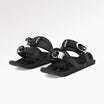












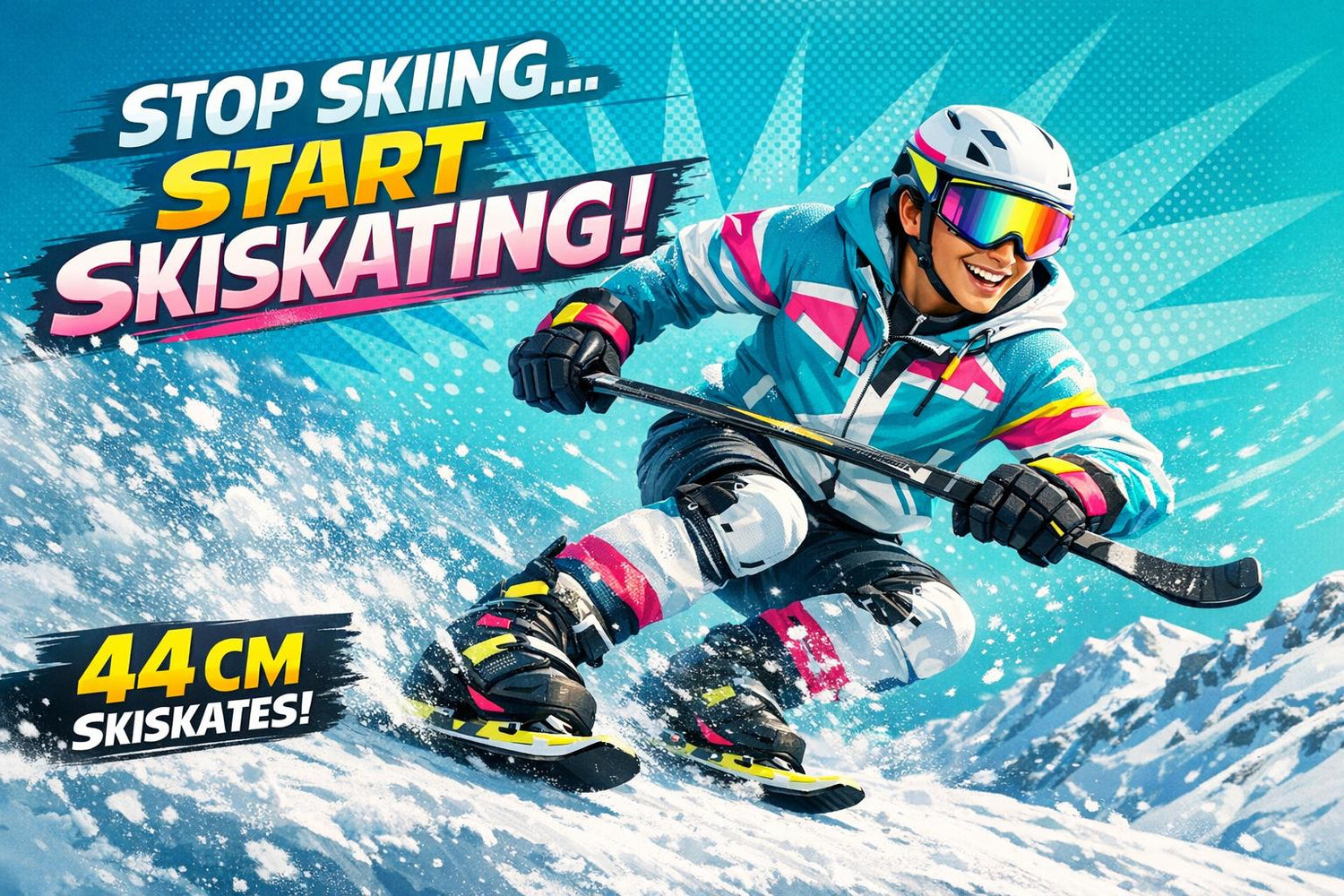
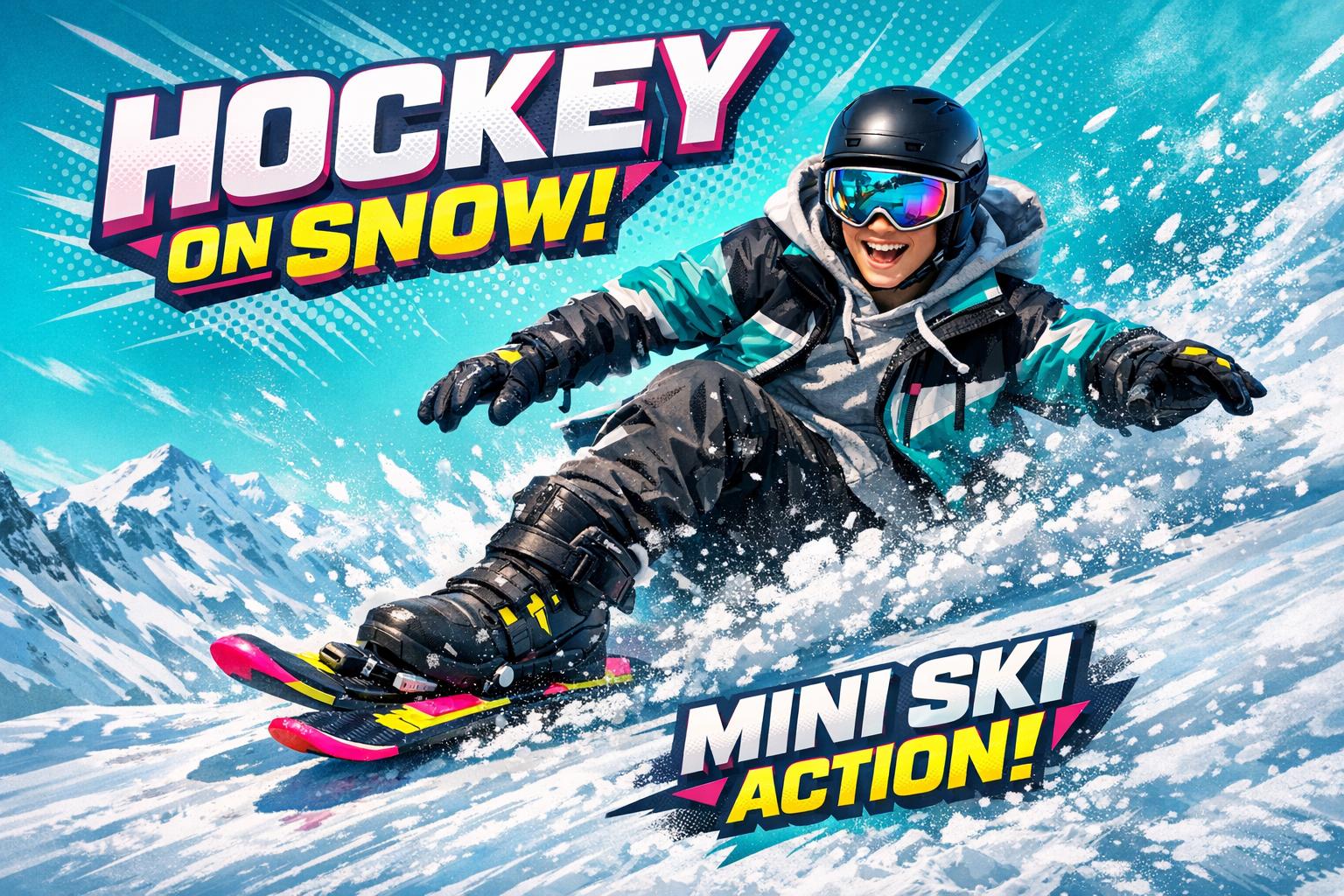
Hockey players are ditching long skis in favor of Snowfeet* Skiskates, and it’s a no-brainer. These compact 17-inch skates mimic ice skating movements, letting players perform sharp turns, quick stops, and even backward riding - just like on the rink. Unlike skis, which are bulky and awkward for hockey players, skiskates fit easily into a backpack and work with regular winter shoes or snowboard boots. Bonus: they’re quick to learn if you’ve skated before (about 5 minutes).
With the Winter Olympics heating up in 2026, this shift makes sense. Skiskates offer hockey players a way to train on snow while keeping their on-ice skills sharp. Starting at $490, the 44 cm model is the go-to choice for agility and control. Hockey stops on snow? Yep, it’s a thing now.
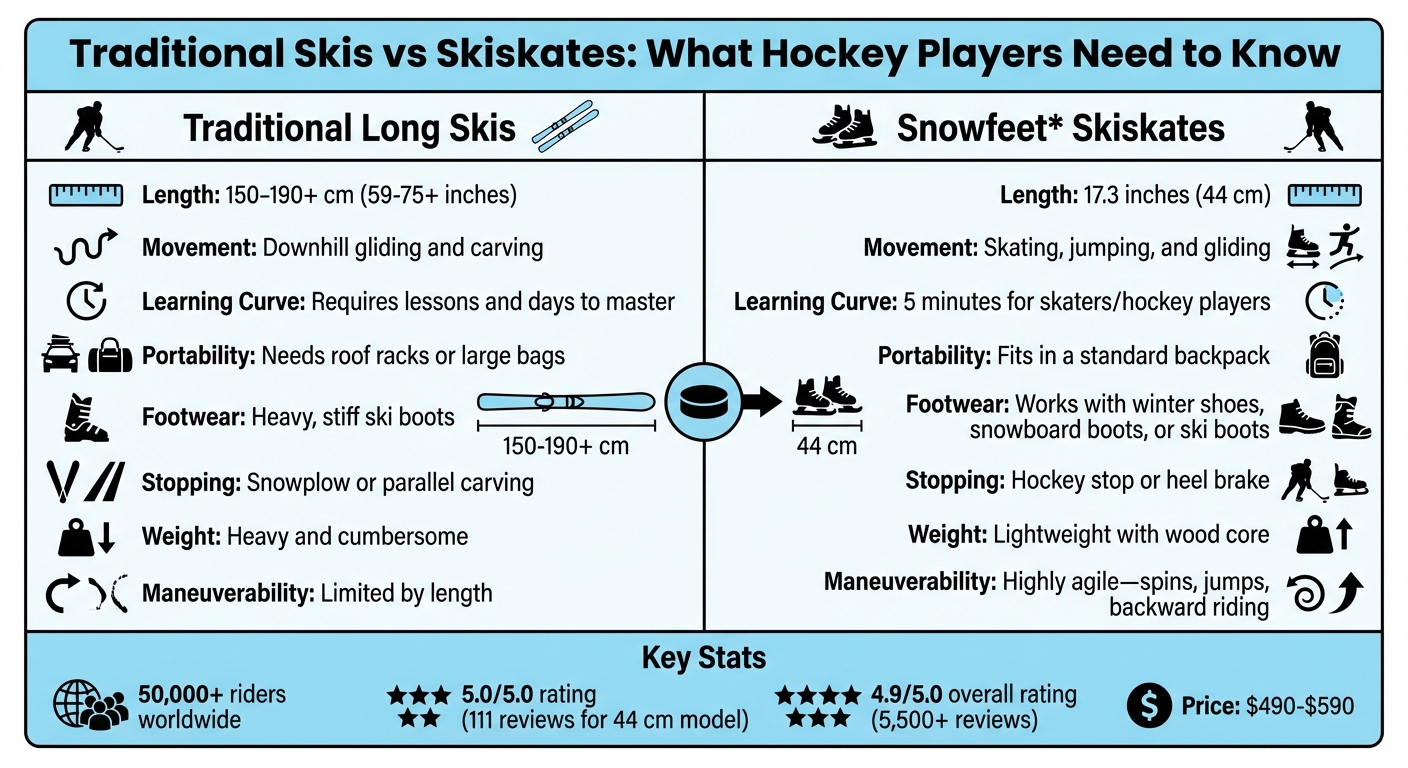
Snowfeet Skiskates vs Traditional Skis Comparison for Hockey Players
Snowfeet* & Skiskates Tutorial - How to Become a PRO Skiskater
The Problem: Why Traditional Skiing Doesn't Work for Hockey Players
For hockey players, traditional skiing gear feels like a mismatch. The equipment and movements required on the slopes just don’t align with the skills they’ve perfected on the ice.
Long Skis Limit Quick, Explosive Movements
Traditional skis, often over 5 feet long, are a major roadblock for hockey players. These skis are designed for downhill stability, but their length and weight make quick pivots and sharp stops nearly impossible. That’s a problem for hockey players, who are used to short, curved skate blades that allow for explosive turns and instant stops.
"Hockey skates are designed with a shorter blade that curves on both ends. Hockey skates are designed to turn, stop, and gain speed quickly." - Indian Creek Plaza
On the ice, hockey shifts last just 30 to 60 seconds. During that time, players rely on bursts of high-intensity movement and rapid changes in direction. Traditional skis simply can’t keep up with that level of agility.
A Tough Learning Curve and Balance Issues
Skiing forces hockey players to rethink the way they move. On the ice, hockey players naturally maintain a centered or heel-weighted stance, which helps them stay stable and explosive. But skiing demands a forward-leaning posture with weight on the toes. This shift in balance feels unnatural and frustrating, making even skilled hockey players feel like beginners on the slopes.
Heavy Gear and Storage Headaches
Traditional ski gear isn’t just bulky - it’s a logistical nightmare. Long skis need roof racks or tons of trunk space, turning a trip to the mountain into a packing challenge. And ski boots? They’re stiff, heavy, and awkward to walk in.
Now compare that to skiskates, which are just 17.3 inches (44 cm) long and can fit in a standard backpack. For hockey players who value speed and efficiency, traditional ski gear feels like a hassle they’d rather avoid. The heavy, cumbersome equipment only highlights the need for something that matches their fast, agile style.
The Solution: Snowfeet* Skiskates Match Hockey Players' Skills
Snowfeet* Skiskates offer a clever way for hockey players to take their on-ice skills to the slopes without needing to master a whole new sport. These skiskates bring the quickness and precision of ice skating to snowy terrain, seamlessly connecting the two worlds.
Skiskates Mimic Ice Skating Movements
The beauty of Snowfeet* Skiskates lies in their design, which mirrors the side-to-side push used in ice skating rather than the forward-gliding motion of traditional skis. Hockey players can easily perform hockey stops by shifting their weight evenly on both feet, using the same technique they’re already familiar with on ice. Unlike regular skiing, which demands leaning into your toes, skiskating keeps your weight centered or slightly on your heels. This setup allows for quick turns, spins, and even backward riding - maneuvers that are nearly impossible with long skis.
"You have to keep the front-back balance, so it feels very natural to those who play ice hockey, ice skate, or even use inline skates." – Snowfeet Team
This thoughtful design not only enhances agility and control but also makes these skiskates incredibly easy to carry around.
Lightweight and Portable
Measuring just 17.3 inches (44 cm) long, Snowfeet* Skiskates are compact enough to fit in a standard backpack. Their size mimics the short contact point of a skate blade, giving hockey players the same quickness and responsiveness they’re used to. Forget about bulky roof racks or oversized ski bags - these skiskates can be tossed into a regular gear bag with ease. Built with a wood core, they’re lightweight but still deliver excellent performance on the slopes.
Quick to Learn for Hockey Players
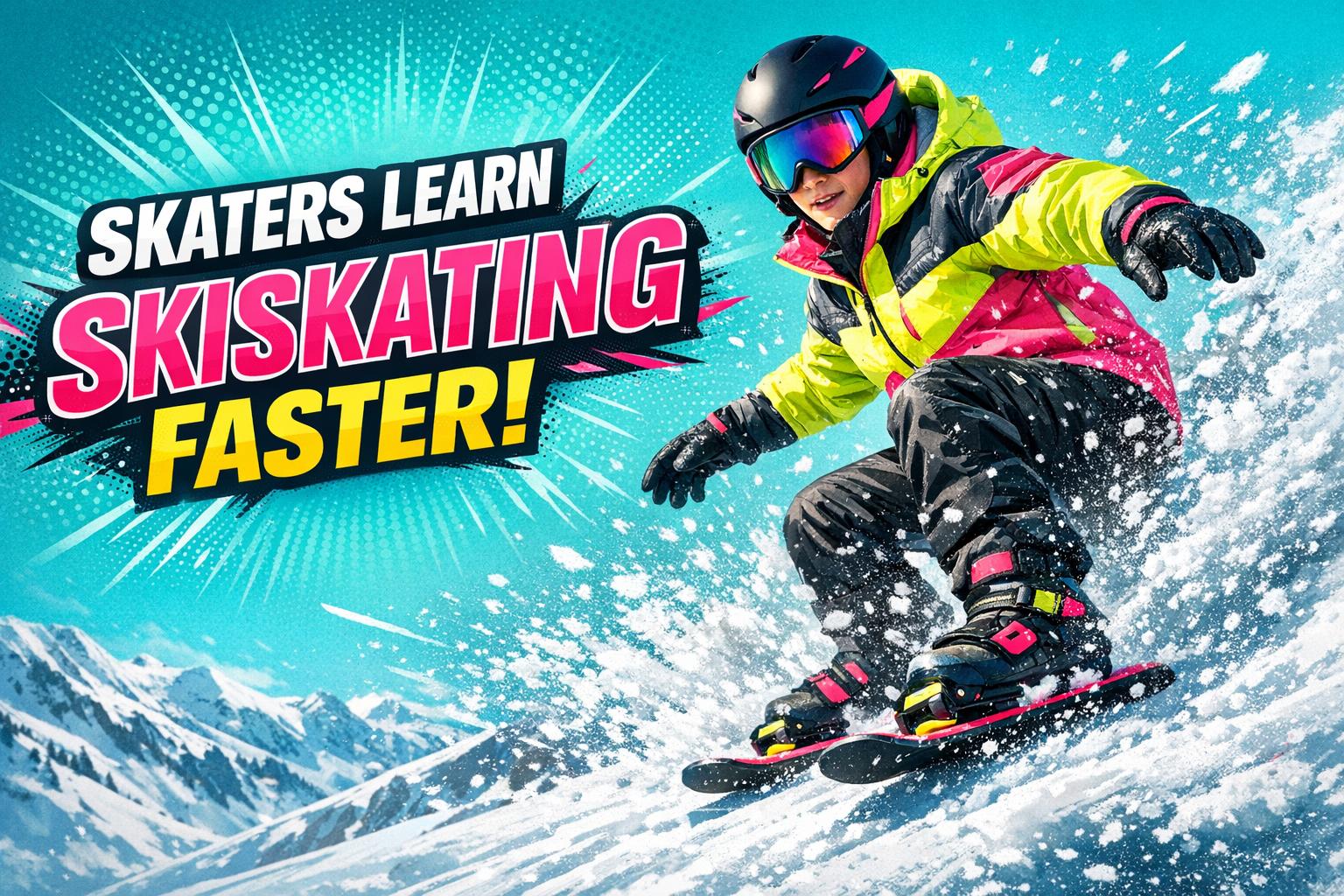
What’s even better? If you’ve played hockey or ice skated before, you’ll likely get the hang of skiskating in just about 5 minutes. No lessons or practice sessions are needed - your muscle memory does all the work.
"If you're a hockey player or ice skater, you'll pick it up in no time." – Snowfeet Team
With over 50,000 riders worldwide and a glowing 5.0 out of 5-star rating from 111 verified reviews for the 44 cm model, Snowfeet* Skiskates have become the go-to choice for hockey players looking to bring their skills to the snow.
Snowfeet* Skiskates vs. Traditional Skis: Direct Comparison
Taking a closer look at the challenges of traditional skiing, it’s easy to see why Snowfeet* Skiskates are a natural fit for hockey players who value speed, precision, and control.
Feature Comparison Table
Side by side, Snowfeet* Skiskates and traditional long skis couldn’t be more different - especially when it comes to what matters most for hockey players.
| Feature | Traditional Long Skis | Snowfeet* Skiskates (17.3 inches/44 cm) |
|---|---|---|
| Length | 150–190+ cm (59–75+ inches) | 17.3 inches (44 cm) |
| Movement Style | Downhill gliding and carving | Skating, jumping, and gliding |
| Learning Curve | Requires lessons and days to master | About 5 minutes for skaters and hockey players |
| Portability | Needs roof racks or large bags | Fits in a standard backpack |
| Footwear | Heavy, stiff ski boots | Works with winter shoes, snowboard boots, or ski boots |
| Stopping Technique | Snowplow or parallel carving | Hockey stop or heel brake |
| Weight | Heavy and cumbersome | Lightweight with wood core construction |
| Maneuverability | Limited by length | Highly agile - easy spins, jumps, and backward riding |
This table makes it clear: Snowfeet* Skiskates prioritize agility, portability, and ease of use, making them a standout choice for hockey players.
Why Snowfeet* Outshines Traditional Skis
When it comes to movement and design, Snowfeet* Skiskates are a game-changer for hockey players. Traditional skis force you into movements that can feel unnatural if you’re used to skating. In contrast, Snowfeet* work seamlessly with the skills you already have.
At just 44 cm long, these skiskates let you make sharp turns and quick maneuvers - even on narrow trails like forest paths. That’s something you just can’t do with skis that are over 5 feet long. Plus, say goodbye to lugging around heavy, bulky gear - Snowfeet* easily fit in your backpack, leaving room for your hockey equipment.
"These skiblades are so much fun and easy to control. Never going back to regular skis." – Andrew B.
With more than 50,000 riders worldwide and an impressive 4.9 out of 5-star rating from over 5,500 verified reviews, it’s clear that hockey players are embracing the freedom and control that come with shorter, more versatile skates. Shorter really is better when it comes to winter sports.
sbb-itb-17ade95
Main Benefits of Snowfeet* Skiskates for Hockey Players
Better Agility and Control
At just 44 cm, Snowfeet* Skiskates give hockey players the same level of control they’re used to on the ice. Their short length eliminates the awkward tip-crossing that happens with longer skis, letting you make sharp, precise turns with ease. Thanks to their metal edges and narrow base, these skiskates allow for precise carving and smooth transitions - skills that mirror the inside-edge control hockey players use during games. Plus, the design promotes a naturally centered balance, keeping your weight where it needs to be - centered or slightly on your heels - so you can pull off hockey stops and maintain a ready stance effortlessly.
Works on Multiple Terrains
These skiskates aren’t just about control; they’re also incredibly versatile. Snowfeet* Skiskates let hockey players train on a variety of terrains, from groomed ski slopes and snow parks to hiking trails, forest paths, cross-country tracks, and even local sledding hills. Their compact size makes it easy to navigate narrow trails and weave through trees - places where longer skis just can’t go. While they’re optimized for groomed snow, they can handle powder up to 4 inches deep. And here’s the kicker: you can use them with regular winter shoes or snowboard boots, skipping the hassle (and discomfort) of stiff ski boots. It’s like getting a cross-country skiing workout without the extra gear.
Built to Last and Fun to Use
Durability matters, especially for training tools, and Snowfeet* Skiskates deliver. Made with a certified sustainable wood core, cap construction, and steel edges, these skiskates are built to handle serious use. Their compact design also opens the door to tricks, jumps, and spins that would be nearly impossible with traditional skis. The graphite or sintered bases add speed and ensure they hold up over time. Zbyněk, the founder of Snowfeet*, sums it up perfectly:
"In my opinion, Skiskates is the best product for slopes we developed so far. I love how easy they are to ski and skate and how many different kinds of tricks I can perform without much effort and almost no restrictions."
Regular maintenance, like keeping the edges sharp, keeps them performing at their best over the long haul.
Snowfeet* Product Options and Prices for Hockey Players
Best Models for Hockey Players
Snowfeet* has a range of options tailored to different budgets and needs. For hockey players who want top-notch performance, the 44 cm Skiskates are a standout choice. These come with a professional wood core and are priced between $490 and $590. They’re perfect for those seeking a smooth, authentic experience on the slopes [2, 21].
If you're after something a bit more budget-friendly, the 50 cm Ski Skates might be the way to go. Priced from $207 to $299, they feature a fiberglass-reinforced core, which makes them versatile enough for both slopes and trails [19, 21]. For casual fun, the 38 cm Mini Ski Skates are available for $190 to $250. These are great for backyard adventures or gentle slopes, though they’re not ideal for aggressive carving [3, 21].
For those who want a longer option, Snowfeet* also offers 65 cm Skiblades starting at $550 and 99 cm Skiblades starting at $590. While these models provide a smoother skiing experience, they lack the quick-turn agility that makes shorter skiskates so appealing to hockey players [2, 3]. Among all the choices, the 44 cm Skiskates stand out for their excellent balance of agility and performance.
Why the 44 cm Skiskates Are the Best Choice
Measuring just 17.3 inches, the 44 cm Skiskates are tailor-made for hockey players. Their compact size is perfect for quick, precise movements without the bulk of traditional skiing gear. As Giovanni from Italy shared:
"I used to play ice hockey so Skiskates are perfect for me. It's exactly like ice skating on snow."
These skiskates are built with a professional wood core that offers a responsive feel, similar to high-end skis. They also include metal edges for sharp carving and hockey stops. The optimal length prevents tip-crossing while maintaining stability at higher speeds. Designed for control and agility, the 44 cm model performs exceptionally well for hockey players who demand precision on snow. With a perfect 5.0 out of 5.0 rating and handmade craftsmanship from Europe’s mountains, it’s no wonder this model is a favorite among athletes seeking top-tier performance [2, 21, 31].
Conclusion: Skiskating Is the Future for Hockey Players
By 2026, hockey players are swapping out traditional skis for skiskates that mimic the movements of ice skating. At just 44 cm long, these skiskates allow for quick turns, hockey stops, and the agility players rely on during games - all without the cumbersome length of skis that are over 150 cm. With more than 50,000 riders worldwide and an impressive 4.9 out of 5 rating from over 5,500 verified reviews, Snowfeet* has shown that sometimes, smaller really is better.
Skiskates solve a key challenge for hockey players: transitioning from the rink to the slopes while keeping their skills sharp. The learning curve? Practically nonexistent for experienced skaters - it takes just 5 minutes to get the hang of it. Plus, their compact size means you can toss them in a backpack, head to your favorite slope or trail, and start carving right away, using the same muscle memory you've built on the ice.
With a price range of $490 to $590, the 44 cm skiskates perform well on groomed slopes, snow parks, hiking trails, and even your backyard. They’re designed for snowboard boots, offering a comfortable fit without the stiffness of traditional ski boots.
For hockey players craving ice-like control and speed on snow, skiskating feels like a natural progression. The gear is lighter, the learning curve is almost instant, and the fun factor? Through the roof. This is why Snowfeet* continues to be the go-to for hockey players looking to embrace winter sports in a whole new way.
FAQs
Why are skiskates better for hockey players' agility than traditional skis?
Skiskates give hockey players an on-ice feel that regular skis just can’t match. Measuring only 17 inches long, Snowfeet Skiskates let you pull off quick, sharp turns and lateral moves - much like ice skating. Unlike traditional skis that require big, sweeping turns, these let you carve tight lines with ease. Plus, their compact size makes them super lightweight and easy to carry, which is a win for anyone who values portability.
Equipped with non-release bindings and sharp metal edges, skiskates are built for fast stops, quick starts, and precise edge control - perfect for the split-second moves hockey players rely on. Unlike shorter skis that can feel wobbly at high speeds, Snowfeet Skiskates stay responsive and agile, making them a great option for hockey players who want to bring their rink skills to the slopes.
Why are Snowfeet Skiskates a better choice for hockey players compared to regular skiing gear?
Snowfeet Skiskates are built to mimic the speed and agility of ice skates, making them a great option for hockey players. Measuring just 17 inches in length, these skates are much shorter than traditional skis. This compact size allows for sharp turns, quick stops, and smooth edge-to-edge transitions - movements that hockey players are already pros at. Plus, their lightweight, strap-on design easily attaches to any winter shoe or snowboard boot, so you won’t need clunky bindings or specialized ski boots.
Unlike standard skis that require a wider stance and slower weight shifts, Snowfeet Skiskates allow players to stick to the low, dynamic posture they’re used to on the ice. They’re super portable and simple to use - just strap them on and hit the snow. Whether you’re heading out for a quick session or just looking for some casual fun, these skiskates are up for the task. Priced at $390 and earning glowing reviews from hockey fans, Snowfeet Skiskates offer unmatched control, maneuverability, and pure fun - something traditional ski gear just can’t replicate.
Can you use skiskates on different types of snow terrain?
Skiskates are built to tackle all kinds of snow terrains - from groomed slopes to terrain parks and even pipes. Their compact and agile design lets you ski, jump, ride bumps, and skate with ease, no matter the conditions.
Because of their smaller size and maneuverability, skiskates offer incredible control, making them a great choice for exploring a variety of snow environments. Whether you're carving down a slope or pulling off tricks at the park, they bring an exciting and playful vibe to your winter adventures.











Leave a comment
This site is protected by hCaptcha and the hCaptcha Privacy Policy and Terms of Service apply.