




















If you’ve ever ice skated, you’ll feel right at home with Snowfeet Skiskates. These compact, 44 cm skates let you glide on snow with the same lateral movements as ice skating. Unlike long skis, which lock you into forward motion, skiskates let you push off sideways, carve sharp turns, and even perform tricks. They’re lightweight, fit in a backpack, and work with regular winter boots - perfect for slopes, parks, or even your backyard. Here’s how they compare to skis and ice skates:
- Skiskates (44 cm): Agile, portable, and great for tricks. Feels like skating on snow.
- Long Skis (150–180 cm): Stable at high speeds but bulky and less nimble.
- Ice Skates: Precise and maneuverable on ice but limited to rinks.
Skiskates combine the best of both worlds - skating’s agility and skiing’s snow versatility. Starting at $490, they’re a fun choice for anyone craving a fresh way to enjoy winter sports.
1. Snowfeet Skiskates (44 cm)
Edge Control and Turning
At just 17.3 inches long, Snowfeet Skiskates bring a level of edge control that feels like carving on ice. Unlike traditional alpine skis, which are typically 59–71 inches long and favor wide, sweeping turns, these compact skiskates let you make sharp, quick directional changes. It’s similar to the way you’d turn on hockey skates - just tilt and shift your weight. Thanks to their metal ski edges (the same as those on full-sized skis), you get dependable grip for carving and stopping. With over 5,500 glowing reviews highlighting their responsiveness and ease of control, Snowfeet Skiskates deliver the kind of precision ice skaters dream of - on snow.
Stance and Balance
Riding Snowfeet Skiskates feels more like ice skating than skiing. To stay balanced, keep your weight centered or slightly back on your heels, rather than leaning forward as you would on longer skis. For extra stability on steep slopes or at higher speeds, stand with your feet shoulder-width apart, knees relaxed and slightly bent, and one foot just a bit ahead of the other. This stance not only feels natural but also reduces muscle strain compared to the forward-leaning position required by traditional ski setups. These adjustments make Snowfeet Skiskates not just fun but also practical for everyday use.
Portability and Everyday Use
One of the best things about Snowfeet Skiskates is how portable they are. At 17.3 inches, they easily fit into a regular backpack - no need for bulky ski bags or roof racks. The wood core version starts at $490, while the 50 cm fiberglass Snowfeet PRO model is available for $250. They’re compatible with regular winter boots, snowboard boots, or ski boots, depending on the binding you choose. This means you can go straight from your car to the slopes without stopping at a rental shop. Talk about convenience!
On-Snow Tricks and Terrain
Thanks to their compact design and precise control, Snowfeet Skiskates shine on dynamic terrain. Their short length makes them perfect for tricks, jumps, and playful riding - things that can be tricky with traditional skis. Forget about crossing ski tips; these skiskates are built for confident spins, switch riding, and navigating tight spots like moguls, narrow trails, or terrain parks. As one happy rider put it:
"These skiblades are so much fun and easy to control. Never going back to regular skis." – Andrew B., Verified User
The wood core construction offers a faster, more stable ride compared to fiberglass models, and the built-in heel brake gives you an extra stopping option beyond the classic hockey stop. Snowfeet Skiskates perform great on groomed slopes, snow parks, and even light powder (up to 4 inches). Plus, many riders say they can pick up the basics in just five minutes.
2. Traditional Alpine Skis (150–180 cm)
Edge Control and Turning
Traditional alpine skis, ranging from 150 to 180 cm, are all about grip and stability on hard-packed snow. Their longer edges provide more contact with the surface, giving you solid control when carving smooth, wide turns. This makes them a great choice for high-speed descents. But there’s a trade-off: that extra length can feel like a burden when you need to make quick, sharp directional changes.
As the Snowfeet Team explains:
"Long skis are for most of skiers too clunky and heavy. In a snowpark or on a slope, you will have more fun with short skis, which are easy to control and fun to slide."
So, while traditional skis are built for speed and precision, they don’t offer the quick, skating-style agility that some winter sports enthusiasts might prefer.
Stance and Balance
When you’re on traditional skis, your stance naturally shifts forward, with your weight over your toes. This helps with balance and stability, especially at higher speeds. The length of the skis works in your favor here, reducing the need for constant readjustments. However, this setup doesn’t allow for much lateral movement, which takes away the fluidity you’d get from something like ice skating.
The downside? These longer skis can feel tiring to maneuver, especially after a full day on the slopes. They demand more physical effort and a technical approach, which might not appeal to everyone.
Portability and Everyday Use
Here’s where traditional skis really show their limitations. At 150–180 cm, they’re a hassle to transport and store. You’ll need roof racks, oversized ski bags, or a car with plenty of cargo space just to get them to the mountain. And let’s not forget the heavy, rigid ski boots - they’re designed for performance on the slopes, but you definitely can’t wear them anywhere else.
This bulky setup means traditional skis are best suited for groomed ski resorts. Want to hit a local hill, a hiking trail, or even your backyard? Forget about it - traditional skis just aren’t practical for casual outings.
On-Snow Tricks and Terrain
When it comes to freestyle fun, traditional skis fall short. They’re not built for quick spins, jumps, or playful tricks. Their size and design make them ideal for aggressive downhill runs and deep powder, but they lack the flexibility and freedom needed for snow parks or skating-like maneuvers.
If you’re looking to twist, turn, or pull off some tricks, you’ll likely find them limiting. Traditional skis are all about power and precision, but they don’t offer the playful versatility that makes snow sports feel like a mix of skiing and skating.
3. Ice Skates (Figure/Hockey)
Edge Control and Turning
Ice skates are all about precision. Their thin steel blades are designed for sharp turns and quick direction changes on ice. Snowfeet Skiskates take that same concept to the snow, offering hockey-stop-like maneuverability thanks to their metal ski edges, which grip firmly on packed snow. As Hannah P., a verified buyer, shared:
"They're not as slippery as skates so you have more control on the snow, but going downhill I definitely felt like I was wearing real skis!!"
This blend of control and agility creates a smooth transition from the rink to snowy slopes.
Stance and Balance
Ice skating demands balance. Skaters keep their weight centered over the blade, distributing it evenly for maximum control - something hockey and figure skaters know well. Snowfeet Skiskates mimic this natural balance on snow. As the Snowfeet Team explains:
"You have to keep the front-back balance, so it feels very natural to those who play ice hockey, ice skate, or even use inline skates."
Unlike traditional skis that push you forward into stiff boots, skiskates let you stay upright in a familiar skating stance. Your weight stays centered (or slightly back), with legs at shoulder width - just like on the ice.
Portability and Everyday Use
Ice skates are easy to carry but limited to rinks. Snowfeet Skiskates, on the other hand, pair with regular winter boots and work across various terrains. Weighing just 3.3 lbs (1.5 kg), they’re light enough to fit into a standard backpack. This opens up endless possibilities - you can glide on groomed slopes, explore snow parks, hit hiking trails, tackle sledding hills, or even ride in your backyard.
On-Snow Tricks and Terrain
Here’s where Snowfeet Skiskates really shine. While ice skates stick to flat ice, skiskates unlock the potential for tricks on snowy terrain. You can pull off hockey stops, spins, and jumps on hills, parks, and trails - bringing an unmatched sense of freedom. Nathan F., a happy customer, put it best:
"Absolute game-changer! They're light, fast, and incredibly fun to ride."
With over 5,500 verified reviews and a stellar 4.9/5-star rating, Snowfeet Skiskates take the thrill of ice skating and let you experience it in entirely new ways.
sbb-itb-17ade95
Snowfeet* & Skiskates Complete Guide | All you need to know about Skiskating
Pros and Cons
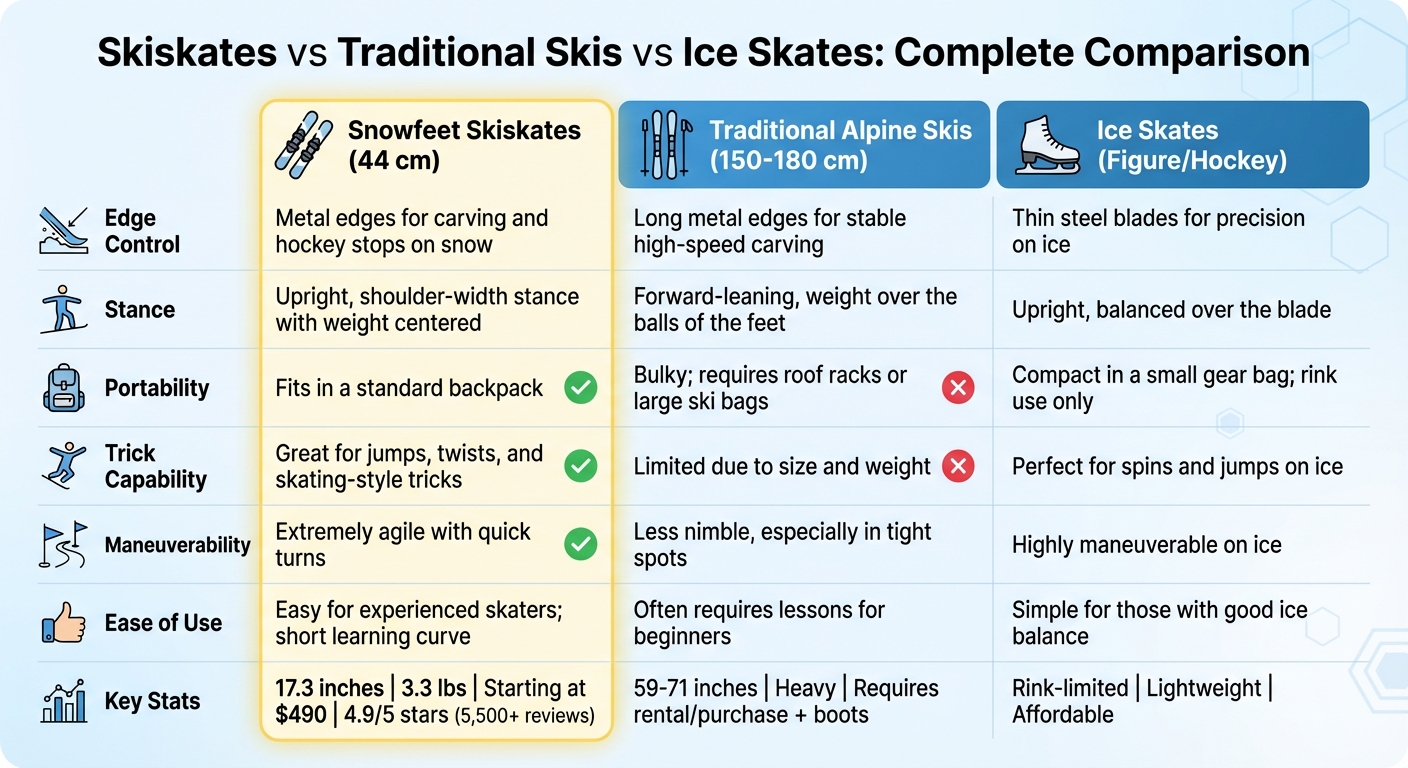
Skiskates vs Traditional Skis vs Ice Skates Comparison Chart
Here’s a quick comparison of how Snowfeet Skiskates stack up against traditional alpine skis and ice skates. Check out the table below for a breakdown of their features:
| Feature | Snowfeet Skiskates (44 cm) | Traditional Alpine Skis (150–180 cm) | Ice Skates (Figure/Hockey) |
|---|---|---|---|
| Edge Control | Metal edges for carving and hockey stops on snow | Long metal edges for stable high-speed carving | Thin steel blades for precision on ice |
| Stance | Upright, shoulder-width stance with weight centered | Forward-leaning, weight over the balls of the feet | Upright, balanced over the blade |
| Portability | Fits in a standard backpack | Bulky; requires roof racks or large ski bags | Compact in a small gear bag; rink use only |
| Trick Capability | Great for jumps, twists, and skating-style tricks | Limited due to size and weight | Perfect for spins and jumps on ice |
| Maneuverability | Extremely agile with quick turns | Less nimble, especially in tight spots | Highly maneuverable on ice |
| Ease of Use | Easy for experienced skaters; short learning curve | Often requires lessons for beginners | Simple for those with good ice balance |
What stands out here is how Snowfeet Skiskates blend the precision of skating with the versatility of skiing. Unlike ice skates, which are limited to rinks, skiskates shine on groomed slopes, snow parks, and trails. Their compact 44 cm design makes them far more portable and agile than traditional skis, which are bulky and harder to manage. Plus, when it comes to tricks and jumps, skiskates are in a league of their own - longer skis just can’t keep up.
One happy customer, Rebecca, shared her son’s experience with skiskates:
"He was zipping down the hill in minutes and doing jumps in a half hour - they were SUPER easy to learn."
Starting at $490 for the 44 cm wood core model, Snowfeet Skiskates offer an exciting option for anyone looking to combine the thrill of skating with the adventure of skiing.
Conclusion
Snowfeet Skiskates bring the thrill of ice skating to snowy slopes in a way that traditional ski gear just can’t. If you’ve ever glided across an ice rink, their 44 cm design will feel second nature - offering the same sharp edge control and fluid movement. Unlike the long, bulky 150–180 cm skis, these compact skiskates let you pull off tricks and stop with precision, thanks to a hockey-style edge dig. Plus, their small size means you can leave the heavy gear behind.
Pick the right pair for you:
- Snowfeet Skiskates (44 cm): Perfect for experienced skaters, starting at $490.
- Snowfeet PRO (50 cm / about 20 inches): Designed for extra stability while keeping that skating feel, priced at $275.
- Snowfeet MINI KIDS (38 cm): Great for kids or smaller riders, starting at $250.
Of course, there’s a trade-off: these skiskates aren’t made for deep powder (they shine in up to 4 inches of fresh snow) or high-speed racing. But if you’re after a fun, skating-like experience with smooth gliding, carving, and jumping, Snowfeet Skiskates deliver unmatched agility on the slopes. Toss them in your bag, and you’re ready to bring your skating skills to the mountains!
FAQs
Why are Snowfeet Skiskates more portable than traditional skis?
Snowfeet Skiskates are a game-changer when it comes to portability. Thanks to their compact size - ranging from just 15 to 47 inches (about 38–119 cm) in length - they can easily slide into a regular backpack. This makes them a breeze to take along on your next adventure, whether you're heading to the slopes for a quick session or traveling farther afield.
Compare that to traditional skis, which are often over 5 feet long and require a roof rack or a special ski bag. Snowfeet Skiskates skip all that hassle. No more struggling with bulky gear or figuring out how to store it.
Their lightweight design is another bonus. You can toss them in with your winter gear and take them anywhere - on a plane, in your car, or even on a train. And since they’re so light, you won’t have to deal with the strain of lugging heavy equipment around. Instead, you can focus on what really matters: having fun in the snow!
What type of snow or terrain works best with Snowfeet Skiskates?
Snowfeet Skiskates shine on groomed slopes, like ski runs or park-style terrain, where the snow is smooth and even. These conditions make it easier to control your movements, whether you're gliding, turning, or trying out some tricks.
That said, they’re not limited to just groomed trails. Snowfeet Skiskates work well on other compact or lightly packed snow surfaces too, letting you venture into different areas without much hassle. Thanks to their lightweight and short design, they’re a fun, portable option compared to traditional skis or snowboards.
Are Snowfeet Skiskates beginner-friendly, even for those who’ve never ice skated?
Snowfeet Skiskates are built with beginners in mind, making them super easy to pick up - even if you’ve never been on ice before. Their short, lightweight design means you’ll have no trouble controlling them, which makes learning feel natural and straightforward.
Because they’re compact and easy to maneuver, you’ll gain confidence fast. Whether you’re gliding on snow for the first time or switching over from skiing or snowboarding, these skiskates deliver a fun, skating-like experience without the hassle of a tough learning curve.













Leave a comment
This site is protected by hCaptcha and the hCaptcha Privacy Policy and Terms of Service apply.