



















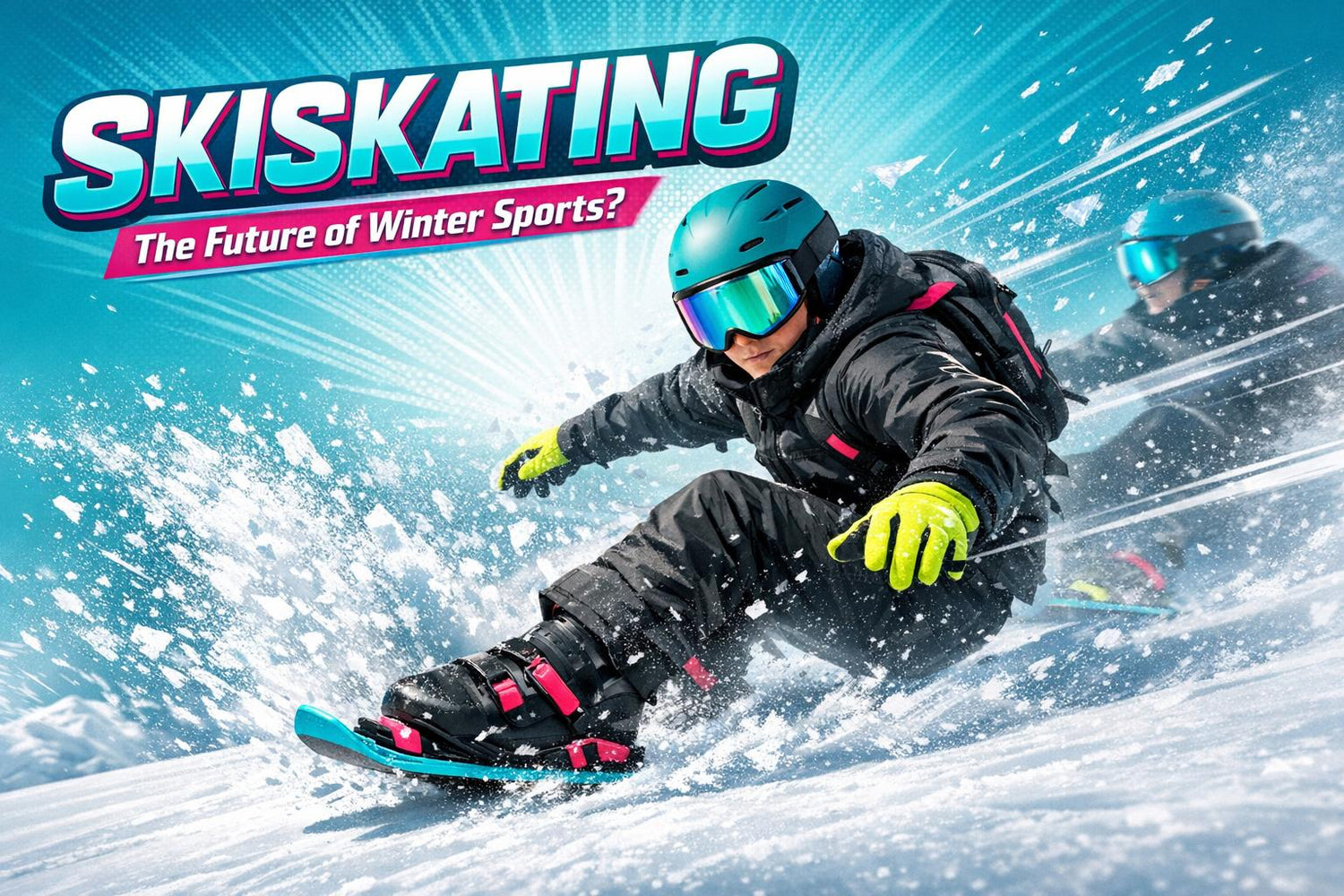
Short answer? Maybe. Skiskating (think: skiing meets ice skating) is gaining traction as a lightweight, easy-to-learn winter sport. Unlike skiing, you don’t need bulky gear or special boots. Unlike ice skating, you’re not stuck on frozen surfaces. You just strap on compact, 17-inch skis (like Snowfeet Skiskates), and you’re ready to glide on snow - whether it’s a sledding hill, hiking trail, or ski slope.
Here’s what makes skiskating stand out:
- Portable: Fits in a backpack. No roof racks or oversized bags.
- Easy to Learn: If you’ve ice skated or rollerbladed, you’ll get it in minutes.
- Affordable: Starting at $190, it’s cheaper than skiing gear.
- Versatile: Works on snow-covered trails, slopes, or even your yard.
It’s not replacing skiing or ice skating anytime soon, but it’s carving out its own space for casual fun. If you’re tired of lugging heavy equipment or want something new, skiskating might be worth a shot.
Ever heard of skiskating? 🎿❄️ It’s where skiing meets skating, and it’s a total game-changer!
1. Skiskating (Snowfeet* Skiskates)
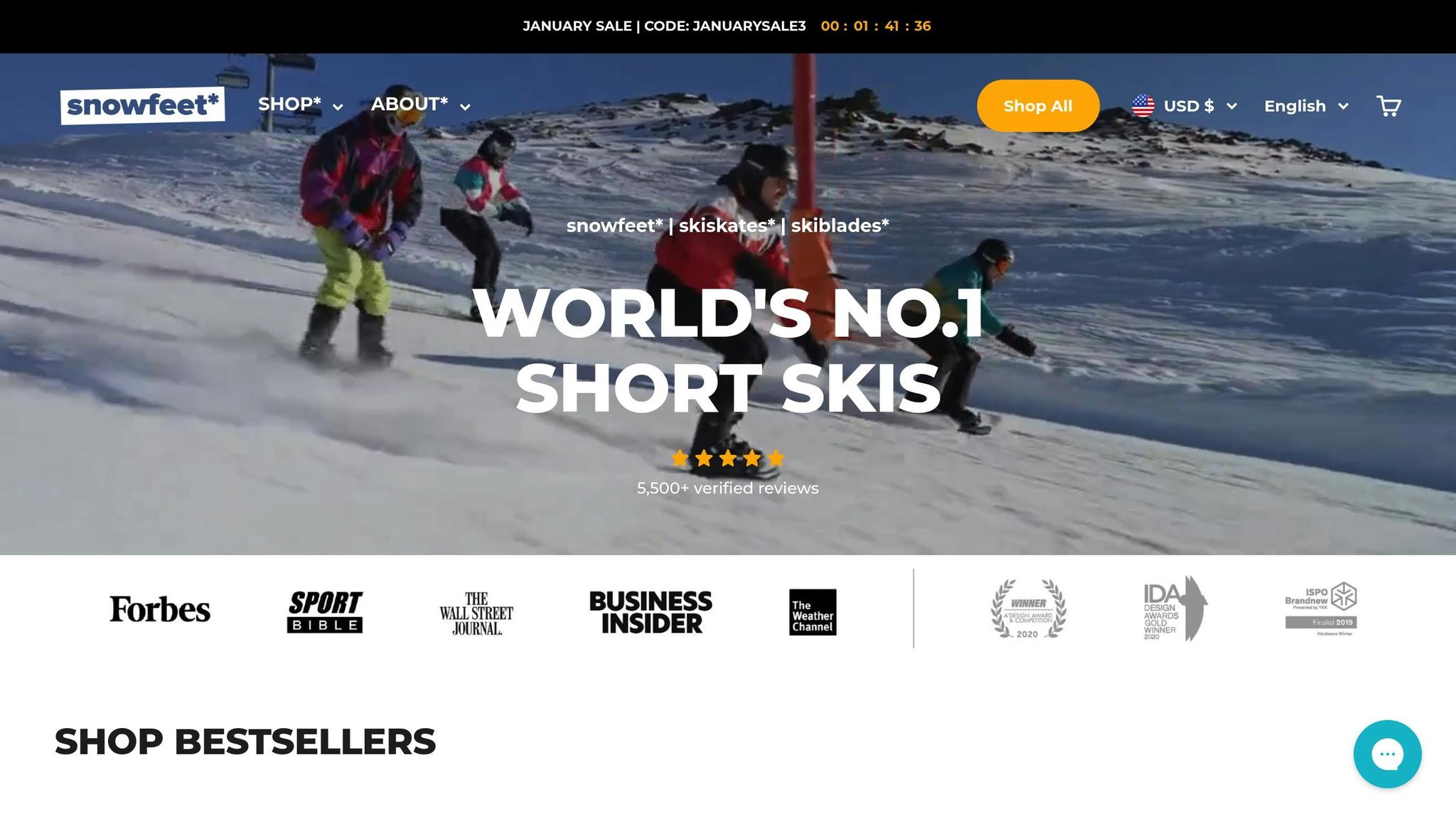
Snowfeet* Skiskates are redefining what skiing can look like. These compact skis are just 44 cm (about 17 inches) long, built with a durable wood core and metal edges. They’re tough enough to handle mountain terrain but small and light enough to toss into a backpack.
Portability
When it comes to portability, Snowfeet* Skiskates are in a league of their own. Traditional skis, which range from 150 to 200 cm, can be a headache to transport, often requiring roof racks or oversized bags. Skiskates, on the other hand, fit neatly into a standard backpack. This means you can hike up a mountain with ease, stash them until you’re ready, and strap them on at the summit - no bulky gear or awkward setups required. It’s a game-changer for anyone who’s tired of lugging around oversized equipment.
Versatility
What makes Snowfeet* so impressive is their ability to handle a variety of terrains. Unlike traditional skis, which are mostly limited to groomed runs or powder fields, or ice skates that need frozen surfaces, Skiskates are ready for almost anything. Whether it’s groomed slopes, snow parks, hiking trails, sledding hills, or even your backyard, they perform well as long as there’s snow - up to about 4 inches of powder. Plus, the adjustable bindings fit most winter or snowboard boots (sizes 6–13 US), so you don’t need to invest in stiff, specialized ski boots. This adaptability makes them not only practical but also incredibly easy to use.
Learning Curve
One of the best parts? Snowfeet* Skiskates are designed to be beginner-friendly. If you’ve ever ice skated, played hockey, or used inline skates, you’ll feel right at home. Forget the steep learning curve of traditional skiing, with its lessons on weight distribution, pole planting, and parallel turns. Skiskates rely on natural skating movements, and their shorter length makes turning much easier. As one happy buyer, Ingrid, shared:
"I love them. They are very easy to handle and control especially if you have experience on roller skates or ice skates."
Cost
At $575 for the 44 cm wood core model, Snowfeet* Skiskates offer a wallet-friendly alternative to traditional ski setups. Compared to the $750+ you’d spend on skis, bindings, and boots, they’re a bargain - and they work with the boots you already own. That means fewer costs, less storage hassle, and more convenience. Snowfeet* Skiskates combine affordability with performance, making them a standout choice for anyone looking to shake up their winter sports routine.
2. Ice Skating
Ice skating requires a frozen surface - whether that’s an indoor rink or a naturally frozen lake - which makes it less accessible for many people.
Versatility
Traditional ice skates are strictly for use on ice. That’s it. But Snowfeet* Skiskates? They’re a game-changer. You can use them on groomed slopes, hiking trails, snow parks, or even in your backyard if there’s enough snow. Ice skates just can’t compete with that kind of flexibility.
Learning Curve
Ice skating comes with a steep learning curve. You need to master balance, lateral pushes, and specific stopping techniques, all while using stiff, specialized boots. Snowfeet* Skiskates, on the other hand, are designed to work with your regular winter or snowboard boots. Most beginners can pick up the basics in about five minutes. That ease of use makes Snowfeet* an awesome option for anyone looking to dive into winter sports without a ton of practice.
sbb-itb-17ade95
3. Skiing
Portability
Let’s face it - traditional skiing gear is a hassle to lug around. Long skis, heavy boots, poles, and other accessories often mean you’re stuck strapping everything to a roof rack or cramming it into your car. Enter Snowfeet* Skiskates. At less than 20 inches long, these compact skates are a game-changer. They’re small enough to toss into a backpack, making transport and setup a breeze. No more wrestling with oversized gear just to hit the snow.
Versatility
Skiing usually ties you to groomed slopes and predictable snow conditions, which can be a buzzkill if you’re itching for a spontaneous adventure. Snowfeet* Skiskates, however, thrive on variety. Whether it’s a snowy hiking trail, a forest path, a sledding hill, or even your backyard, these skates work just about anywhere there’s snow. Their shorter length makes them ideal for navigating narrow trails or uneven terrain, something traditional skis just can’t handle. Plus, their adaptability makes learning easier and more accessible for everyone.
Learning Curve
Traditional skiing takes time to master, with its steep learning curve for balance, turning, and controlling speed. Snowfeet* Skiskates simplify the process. Thanks to their compact design, most people can learn the basics in just a few minutes. Turning feels more intuitive, and the reduced surface area means less strain on your knees, making them a great option for newcomers or those who want a fun, low-pressure alternative.
Cost
Then there’s the cost. Traditional skiing isn’t just about the gear - it’s a full-on investment. Skis, boots, bindings, poles, and lift tickets can add up fast. Snowfeet* Skiskates, on the other hand, are way more budget-friendly. Prices start at $190 for the 38 cm model and go up to $490 for the 44 cm wood core version. Compared to the hefty price tag of a full ski setup, these skates offer a more affordable way to enjoy the snow without sacrificing fun or functionality.
Pros and Cons
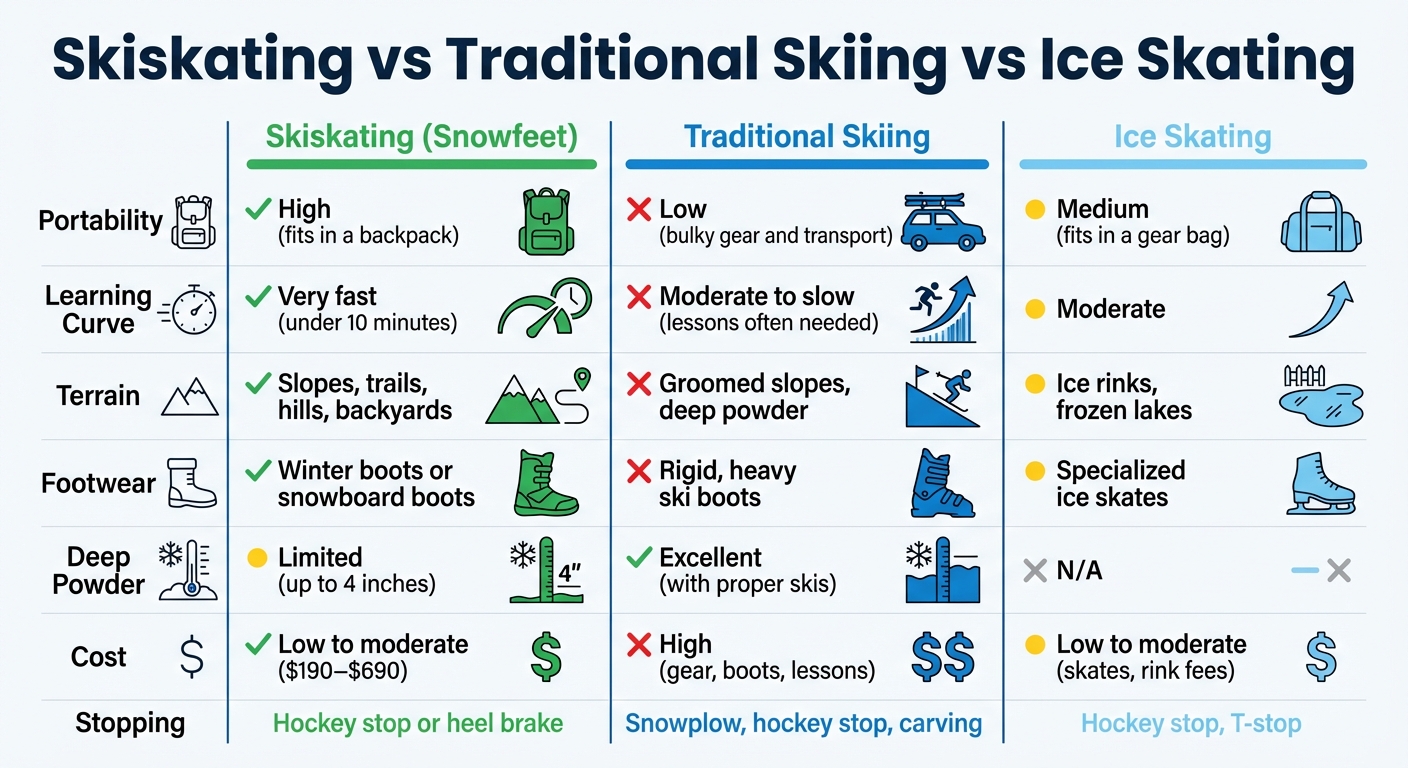
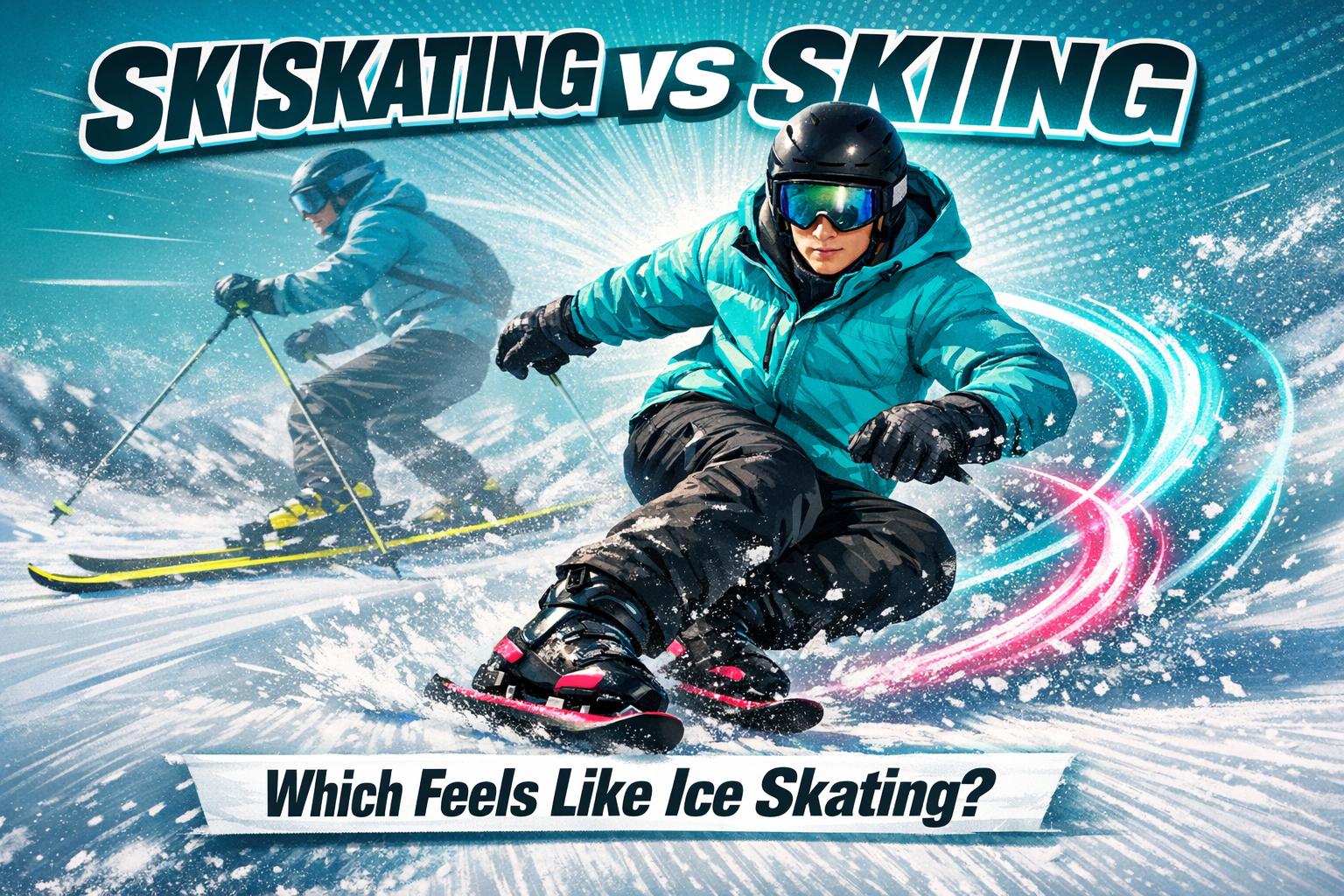
Skiskating vs Traditional Skiing vs Ice Skating: Complete Comparison
When it comes to winter sports, each option has its perks and challenges. Let’s break it down, starting with Snowfeet Skiskates. These little wonders are all about convenience and simplicity. They’re super portable - just toss them in your backpack - and easy to pick up, especially if you’ve tried ice skating or inline skating before. Plus, they work with your regular winter boots or snowboard boots, so there’s no need to deal with those clunky, rigid ski boots. That said, their sweet spot is powder up to about 4 inches deep, and stopping takes a bit of practice - think hockey stops or using the heel brake.
Traditional skiing, on the other hand, is the go-to for tackling deep powder and diverse mountain terrain. But let’s be honest: the gear is bulky, pricey, and a hassle to haul around - roof racks and oversized bags, anyone? The learning curve is steeper, too, often requiring lessons to get the hang of those long skis. Meanwhile, ice skating offers smooth, controlled movement, but you’re limited to ice rinks or frozen lakes, which can be a dealbreaker depending on where you live.
Here’s a quick comparison to help you weigh your options:
| Feature | Skiskating (Snowfeet*) | Traditional Skiing | Ice Skating |
|---|---|---|---|
| Portability | High (fits in a backpack) | Low (bulky gear and transport) | Medium (fits in a gear bag) |
| Learning Curve | Very fast (under 10 minutes) | Moderate to slow (lessons often needed) | Moderate |
| Terrain | Slopes, trails, hills, backyards | Groomed slopes, deep powder | Ice rinks, frozen lakes |
| Footwear | Winter boots or snowboard boots | Rigid, heavy ski boots | Specialized ice skates |
| Deep Powder | Limited (up to 4 inches) | Excellent (with proper skis) | N/A |
| Cost | Low to moderate ($190–$690) | High (gear, boots, lessons) | Low to moderate (skates, rink fees) |
| Stopping | Hockey stop or heel brake | Snowplow, hockey stop, carving | Hockey stop, T-stop |
So, what’s the takeaway? Snowfeet Skiskates offer a fun, flexible, and budget-friendly way to hit the snow without the hassle of heavy gear. They’re perfect for anyone who wants to get outside and start having fun right away. While ice skating is limited to smooth, frozen surfaces, and traditional skiing demands a serious investment of time and money, skiskating strikes a great balance. It’s a winter sport that’s easy to love.
Conclusion
After stacking skiskating against traditional skiing and ice skating, one thing stands out: Snowfeet* Skiskates offer a level of freedom that bulky gear just can't match. For ice skaters, hockey players, or anyone fed up with lugging around oversized equipment, skiskating offers a refreshing alternative. You can hit the snow without splurging on pricey lessons, strapping into rigid ski boots, or dealing with roof racks and oversized bags.
Traditional skiing takes time, money, and dedication to master. Skiskating, on the other hand, is a breeze to pick up - especially if you're already comfortable on ice or inline skates. And while ice skating limits you to rinks or frozen lakes, skiskating opens up a whole new world: groomed slopes, hiking trails, snow parks, or even your backyard. Ice skaters and hockey players will find the transition seamless, recreational skiers will enjoy the nimble feel, and beginners or travelers on a budget will love the convenience and lower costs.
Will skiskating replace traditional skiing or ice skating? Probably not. Powder hounds and competitive skiers will stick with their long skis, and certain ice skating styles will always hold their charm. But as a versatile, affordable, and fun option that's easy to learn and even easier to enjoy, skiskating is carving out its own space in winter sports. It combines portability, quick learning, and the ability to explore diverse terrains, bringing together the best of skiing and ice skating - without the usual headaches. Judging by its growing fan base, skiskating might just be shaping the future of winter fun.
FAQs
What makes skiskating better than traditional skiing?
Skiskating, introduced by Snowfeet, shakes up the snow sports scene with a fun twist on traditional skiing. These nifty little skiskates are a game-changer - compact, lightweight, and super easy to carry. Toss them in your backpack, and you're ready to hit the snow without the bulk of full-size skis. And the price? A steal at around $150, especially when you compare it to the $1,500+ you'd shell out for a full ski setup.
What’s even better? Skiskating is a breeze to pick up, especially if you’ve got ice skating experience. The motion feels natural, and you can use your regular winter boots - no need for special gear. Their design also opens up a world of possibilities. Whether you're gliding down slopes, exploring forest trails, or even messing around in your backyard, skiskates handle it all. Unlike traditional skis, they thrive in places that might otherwise be off-limits.
Think of skiskating as the perfect mash-up of ice skating and snow sports, but with way less hassle and a much friendlier price tag. It’s portable, budget-friendly, and just plain fun.
Is skiskating easier to learn than ice skating?
Skiskating with Snowfeet skates is a breeze compared to traditional ice skating. Their compact design and the convenience of attaching them to regular winter boots mean most beginners can find their balance and start making turns in just a few minutes. This makes skiskating a fantastic option, even for those who are completely new to winter sports.
On the other hand, ice skating often requires mastering the fine control of narrow blades and building up ankle strength - a process that can take weeks or even months before you feel truly confident. If you already have ice skating experience, though, you'll find the transition to skiskating surprisingly easy. Many of the skills you’ve learned on the ice carry over, so you can pick it up almost instantly. With Snowfeet skates, having fun in the snow has never been this simple or inviting!
Can you skiskate on all types of snow?
Skiskating is a fantastic way to enjoy winter, no matter where you are. It shines on groomed slopes, giving you smooth and controlled rides. But it doesn’t stop there! You can take it to your backyard for some casual fun or even push your limits on tougher terrain with the PRO model. Whether you're gliding over packed snow or tackling more rugged spots, skiskating brings a fresh and exciting twist to winter sports.











Leave a comment
This site is protected by hCaptcha and the hCaptcha Privacy Policy and Terms of Service apply.