






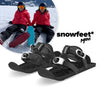













Skiskates are a fun, simple way to enjoy the snow without all the hassle of skiing. They’re small (17 inches long), lightweight, and fit in a backpack. You can use them with your regular winter or snowboard boots - no need for clunky ski boots or expensive gear. Think of them as a mix between skiing and ice skating, with an easy learning curve that lets you glide, turn, and stop smoothly, even if you’re a beginner.
Here’s why Skiskates might be perfect for you:
- No bulky equipment: No long skis or heavy boots - just strap them on and go.
- Easy to learn: Most people get the hang of it in a day.
- Portable: Fits in a backpack, unlike skis or snowboards.
- Affordable: Starting at $250, they’re cheaper than most skiing setups.
- Versatile: Use them on groomed slopes, snowparks, or light powder.
If skiing feels too complicated or intimidating, Skiskates make it easier to hit the slopes without the stress. They’re great for casual snow lovers, beginners, or even advanced riders looking to try something new.
Snowfeet* & Skiskates Complete Guide | All you need to know about Skiskating
What Are Skiskates and How Do They Work?
Skiskates are like the lovechild of skis and skates - compact mini ski skates that are just 17.3 inches (44 cm) long, roughly the size of a skateboard. They attach directly to your regular winter boots or snowboard boots using adjustable bindings, which means you can skip the rental line and forget about those stiff, clunky ski boots. Skiskates work with natural skating motions, making them intuitive and easy to use.
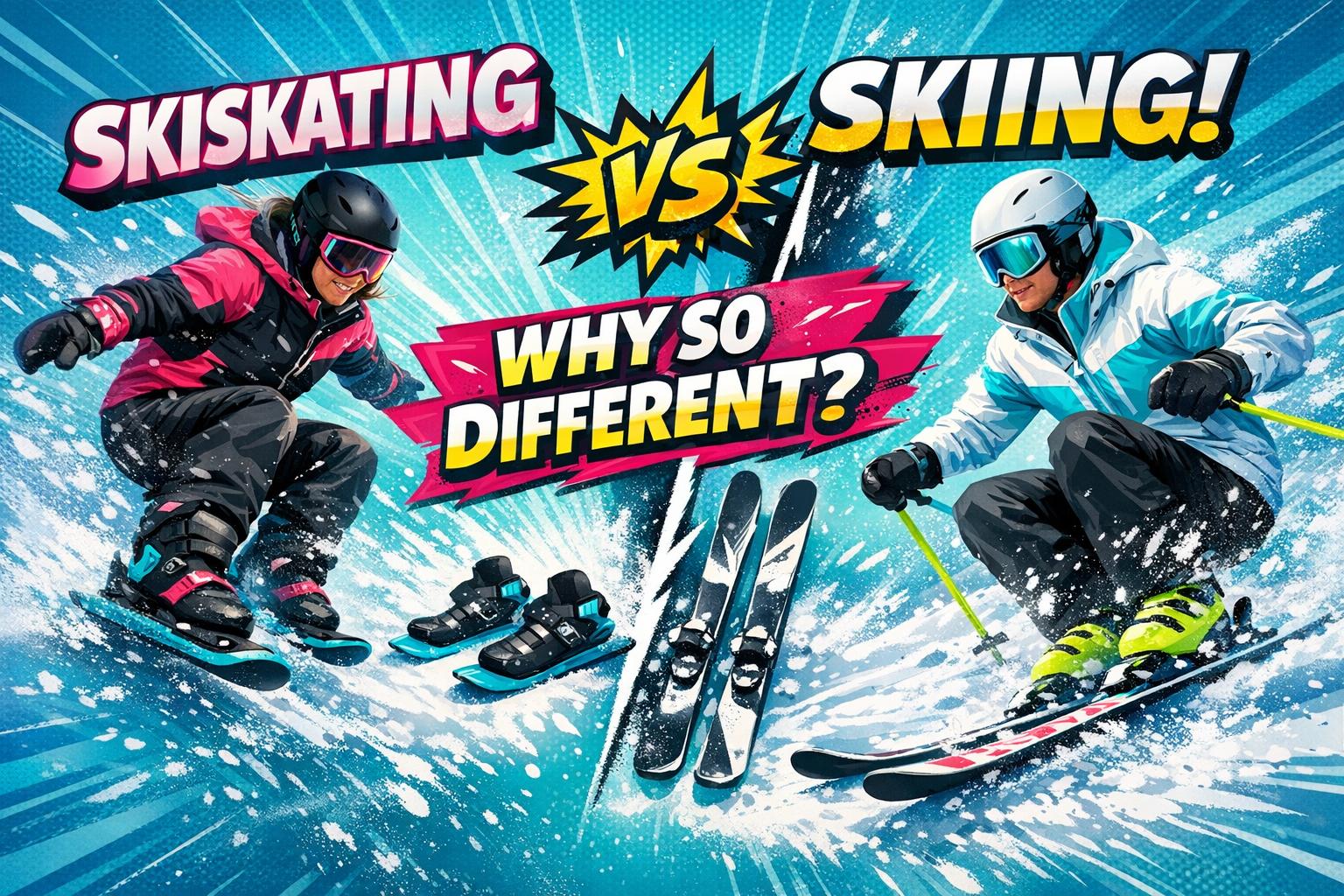
Unlike traditional skis that require parallel sliding, Skiskates use a push-and-glide motion. You push off with a side step, turn by shifting your weight, and stop using either a hockey-style edge stop or the built-in heel brake. Since they’re so short, you don’t have to worry about crossing tips or catching edges like you would with long skis. This makes them easier to control and reduces the chance of falling - even if it’s your first time trying them out. Let's dive into their specs and how to use them.
Skiskates Specifications: Size, Materials, and Build
Snowfeet* Skiskates are designed to pack a punch in a small package. At just 44 cm (17.3 inches) long and about 3 inches wide at the waist, they’re compact enough to fit in your backpack - no need for roof racks or bulky ski bags. The construction features a fiberglass-reinforced composite core, with premium models adding wood core elements for extra durability. They’re lightweight but tough enough to handle everything from snowparks to groomed slopes.
The metal ski edges provide grip on icy or hard-packed snow, while the graphite base ensures smooth, fast rides without slowing you down. Borrowing from professional ski design, Skiskates feature a parabolic shape, a raised platform for better control, and high-radius tips and tails for added maneuverability. Anti-slip surfaces and adjustable bindings make them compatible with most winter boots, fitting sizes from US 4.5–14.5 for ski boots and US 6–14.5 for snowboard boots.
Snowfeet’s patented design has gained international recognition, earning a spot as an innovation finalist at ISPO (the world’s largest sports equipment trade show) and winning the A' Design Award. Unlike cheaper knockoffs, these are high-quality, precision-engineered pieces of winter sports gear. Made in Europe, they’re built to last - and yes, they fit in your luggage.
How to Use Skiskates
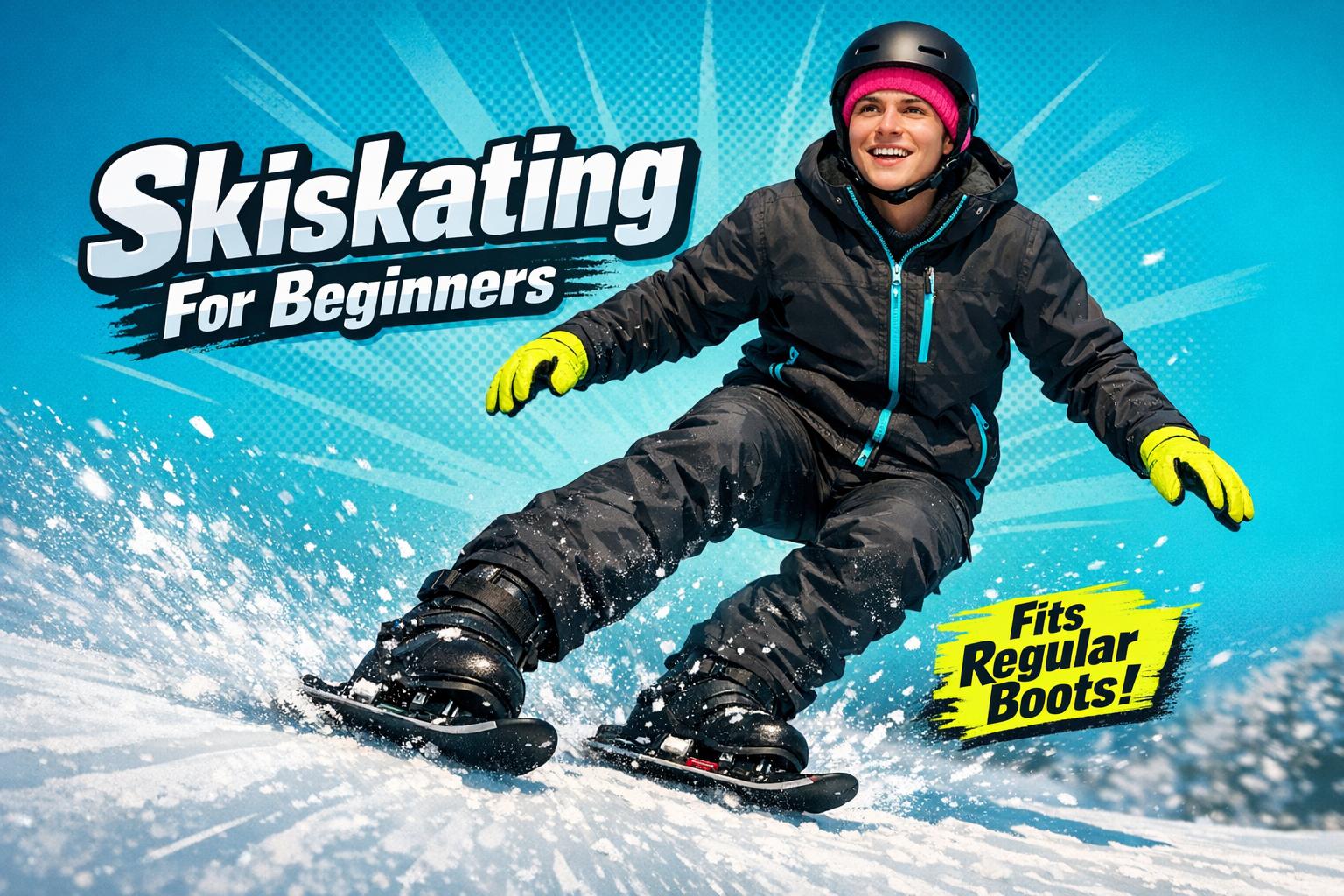
Using Skiskates couldn’t be simpler. Adjust the bindings to fit snugly around your boots, then head out to a groomed slope, snowpark, or even a snowy hiking trail. Keep your weight centered or slightly on your heels - leaning forward onto your toes can cause the tips to catch in the snow. For balance, bend your knees and keep your feet about shoulder-width apart.
Turning is easy: just shift your weight to one side and let the metal edges do the carving. Skiskates perform best on groomed slopes, snowparks, or powder up to 4 inches (10 cm) deep. They’re not ideal for deep powder, very steep ungroomed terrain, or bumpy areas, so stick to packed surfaces for the smoothest ride. Stopping is straightforward - use a hockey stop or the heel brake to slow down. Most people pick up the basics right away, especially if they’ve ice skated or rollerbladed before. No lessons, no hassle - just strap in and start having fun.
Why Skiskates Beat Traditional Skis and Snowboards
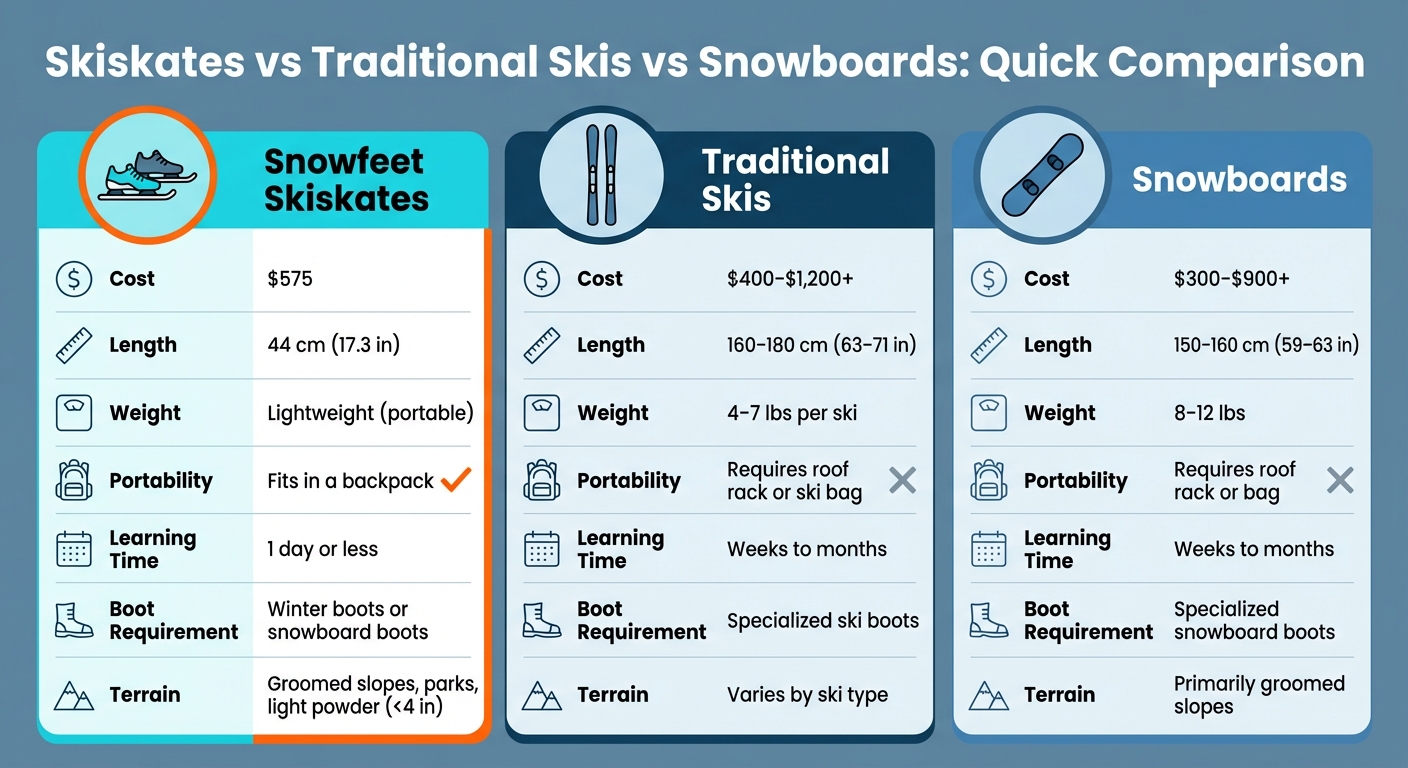
Skiskates vs Traditional Skis and Snowboards Comparison
If you've ever wrestled with long skis in a crowded parking lot or lugged a snowboard through an airport, you know how clunky traditional winter gear can be. It's heavy, awkward, and a hassle to transport. Enter Skiskates: a game-changer that ditches the bulk while keeping all the fun. Let's break down why their portability and ease of use make them a standout choice.
Portability Benefits
Snowfeet* Skiskates are just 44 cm (17.3 inches) long - roughly the size of a skateboard. That compact design means you don’t need extra carrying gear. Compare that to traditional skis, which are 160–180 cm (63–71 inches) long, or snowboards, which measure 150–160 cm (59–63 inches). Skiskates easily fit into a standard backpack, making transportation a breeze.
Weighing significantly less than traditional options, Skiskates are made from a lightweight fiberglass-reinforced composite. For context, traditional skis weigh 4–7 lbs each, and snowboards tip the scales at 8–12 lbs. When you're hiking to find fresh snow or hauling gear from your car to the lift, every pound counts. With Skiskates, you can simply toss them in your bag until it’s time to ride.
Faster Learning Curve and Better Accessibility
Skiskates are designed for quick mastery - you can get the hang of them in just a day. Compare that to traditional skiing or snowboarding, which often involves weeks (or months) of lessons, falls, and frustration. Their short length eliminates the dreaded "crossed tips" that plague beginner skiers, and the narrow 7.8 cm waist makes turning a breeze.
"My daughter was always discouraged to go to the mountain because she couldn't stay up on regular skis. With Snowfeet, she said, 'this is the best day of my life.'" – Megan, verified rider
Another bonus? You don’t need specialized ski boots. Snowfeet* Skiskates work with regular winter boots or snowboard boots, so you can skip the rental lines and avoid the discomfort of stiff, clunky ski boots.
Comparison Table: Skiskates vs. Traditional Skis and Snowboards
Here’s a quick look at how Skiskates stack up against traditional options:
| Feature | Snowfeet* Skiskates | Traditional Skis | Snowboards |
|---|---|---|---|
| Cost | $575 | $400–$1,200+ | $300–$900+ |
| Length | 44 cm (17.3 in) | 160–180 cm (63–71 in) | 150–160 cm (59–63 in) |
| Weight | Lightweight (portable) | 4–7 lbs per ski | 8–12 lbs |
| Portability | Fits in a backpack | Requires roof rack or ski bag | Requires roof rack or bag |
| Learning Time | 1 day or less | Weeks to months | Weeks to months |
| Boot Requirement | Winter boots or snowboard boots | Specialized ski boots | Specialized snowboard boots |
| Terrain | Groomed slopes, parks, light powder (<4 in) | Varies by ski type | Primarily groomed slopes |
The takeaway? Skiskates are lighter, easier to transport, and get you on the snow faster - all without the headaches of traditional gear. They’re perfect for anyone looking to enjoy the slopes without the usual baggage. Literally.
sbb-itb-17ade95
Getting Started with Snowfeet* Skiskates
Snowfeet* Skiskates make it easy to hit the slopes without a complicated setup or lengthy lessons. With more than 50,000 riders worldwide and an impressive 4.9/5 rating from over 5,500 verified reviews, these compact skiskates are a go-to for beginners. Here’s how to kick off your skiskating journey with confidence.
Step-by-Step Guide to Using Skiskates
Adjust your bindings at home. Before heading to the slopes, take a few minutes to set up your bindings. Grab a screwdriver and the boots you’ll be wearing, then adjust everything for a snug fit. If your shoe size is US 6–7, use alternate strap holes and trim any excess strap. For larger snowboard boots, Snowfeet* includes extra straps to ensure everything stays secure.
"To avoid hassle on the slopes, take your time and adjust the bindings at the comfort of your home, using a screwdriver and a shoe you are going to wear." – Snowfeet Team
Learn the stance and balance. Once on the snow, stand with your feet shoulder-width apart and keep your knees slightly bent. Center your weight or lean it slightly back, and position one foot slightly ahead to help with stability.
Stick to groomed terrain. For your first session, head to groomed slopes or packed snow (up to 4 inches of light powder). These conditions are ideal for learning, and many riders find their footing within minutes - some even master it in under a day.
Practice stopping techniques. To stop, try a hockey stop by tilting the edges or use the built-in heel brake. Both methods are straightforward and easier to pick up compared to traditional skiing stops.
Once you’ve nailed the basics, you can explore different models to match your riding style.
Best Models for Beginners and Advanced Users
Snowfeet 44 CM Skiskates*
This flagship model is a solid choice for most riders. Starting at $575, it features a professional-grade wood core and cap construction, offering excellent responsiveness whether you’re cruising down slopes or hitting the snow park. Designed to fit US shoe sizes 6–13, these skiskates work with both winter and snowboard boots. With thousands of glowing reviews highlighting their portability and control, they’re perfect for beginners and riders eager to try tricks and park riding.
Snowfeet PRO (50 CM)*
For those looking for more stability and speed, the PRO model is a great option. Priced at $275, it features a fiberglass core for a smooth glide and added durability. The extra 6 cm in length provides more surface area, making carving easier while still being compact enough to fit in a backpack.
Both models are ready to ride right out of the box - just strap them on and get moving!
Snowfeet* Skiskates Models and Pricing
Snowfeet* Product Line Overview
Snowfeet* offers two main categories of snow gear: Skates on Snow and Skiblades. The Skates on Snow are shorter and give you a skating-like experience on snow, while the Skiblades are longer and provide a short ski feel, perfect for carving and handling powder.
-
Snowfeet Mini Ski Skates (38 CM)
Price: From $250
Made with a fiberglass core, these work with regular waterproof winter boots or snowboard boots, making them super versatile. -
Snowfeet PRO (50 CM)
Price: $275
With a slightly longer design, this model offers better balance and stability, making it perfect for landing tricks in snow parks. -
Skiskates (44 CM)
Price: From $575
Built with a traditional wood core, these deliver a faster, more responsive ride on groomed slopes and in park settings - great for those seeking a professional-grade experience. -
Skiblades
-
65 CM: Price from $635
Designed with a wood core, these excel at carving on various slopes. -
99 CM: Price from $675
Also featuring a wood core, this model is ideal for powder, snow parks, and steeper terrain.
-
65 CM: Price from $635
If you're looking for something compact and fun, these models offer a range of options to match your style and skill level.
Price Comparison: Skiskates vs. Traditional Skiing Gear
When you compare Snowfeet* to traditional ski setups, the cost difference is clear. A full set of traditional ski gear - including skis, bindings, and boots - can run anywhere from $600 to $1,200. Add in the cost of lift tickets, rentals, and storage, and it all adds up fast. In contrast, Snowfeet* models start at just $250, are compact enough to fit in a backpack, and many even come pre-waxed with free priority shipping.
"Far more portable and affordable than traditional skis or snowboards." – Uncrate
With over 50,000 riders worldwide and an average rating of 4.9/5 from more than 5,500 verified reviews, Snowfeet* has proven to be a hit. Whether you’re spending $250 or $675, you’re getting gear that’s lighter to carry, easier to learn, and offers a fun, fresh way to enjoy the snow.
Conclusion
If traditional skiing has ever felt overwhelming, overpriced, or just plain inconvenient, Skiskates might be the perfect solution. At just 44 cm long, these compact mini skis are portable and versatile, offering a fresh take on winter sports. Say goodbye to clunky gear, stiff boots, and endless lessons - Skiskates make it simple.
The numbers back it up: over 50,000 riders across the globe have chosen Snowfeet*, with a stellar 4.9/5 rating from more than 5,500 verified reviews. Whether you go for the $250 Mini Ski Skates or the $575 professional model, you're investing in gear that's lighter, easier to handle, and more adaptable than traditional skis.
"Far more portable and affordable than traditional skis or snowboards." – Uncrate
Thanks to their shorter design, Skiskates are beginner-friendly, gentler on your knees, and eliminate the frustration of crossing tips - a common problem with longer skis. They let you turn, spin, and even ride backward with ease, all without the steep learning curve of conventional skiing. If you've been steering clear of winter sports because of the hassle, Skiskates could be the game-changer you've been waiting for. They strip away the complications and replace them with pure, streamlined fun.
FAQs
Are Skiskates easier to learn than traditional skiing?
Yes, Skiskates are much easier to pick up than traditional skiing, especially if you’re a beginner. Unlike those long, bulky skis that demand you master tricky techniques like carving and weight shifting, Skiskates are compact - just 17 inches long - and lightweight. They’re designed to feel a lot like inline skating, but on snow. This makes balancing and controlling them way simpler, so you can get the hang of it pretty quickly.
Another plus? Skiskates attach right to your regular winter boots. That means no need for pricey, specialized ski gear that can feel a bit intimidating. Their small size also makes them super portable and easy to handle. If skiing seems a bit too much to tackle, Skiskates are a fun, beginner-friendly way to dive into snow sports without the stress of a steep learning curve.
Can Skiskates handle all types of snow conditions?
Skiskates shine on groomed slopes and packed snow, making them a solid pick for most recreational winter outings. That said, they’re not the best option for deep powder or icy conditions - areas where traditional skis or snowboards usually take the lead.
Thanks to their compact size and lightweight build, skiskates are super easy to handle and great for casual snow adventures. But if you're tackling extreme terrains or specific snow conditions, traditional gear might be the better call. Skiskates are all about mixing fun with convenience for your everyday snow escapades!
What are the main differences between the Snowfeet models?
The key differences between the Snowfeet models boil down to their size, compatibility, and intended use. Let’s break it down:
The Snowfeet 38 CM model is compact and super lightweight, measuring just 15 inches. This makes it ideal for beginners or anyone who wants a small, easy-to-carry option for snowy fun. It’s perfect for casual outings and quick adventures, offering a simple and portable way to enjoy the slopes.
Meanwhile, the Snowfeet Basic model is a bit larger and accommodates a broader range of shoe sizes (men’s 6-13). It’s designed to attach to most winter or snowboard boots, giving users more flexibility. If you’re looking for an alternative to skis or snowboards that works with different footwear, this could be your go-to.
Both models are beginner-friendly, portable, and made to keep snow days easy and fun. The 38 CM model is great for light, casual use, while the Basic model steps it up with more versatility and options for slightly more advanced adventures.











Leave a comment
This site is protected by hCaptcha and the hCaptcha Privacy Policy and Terms of Service apply.