



















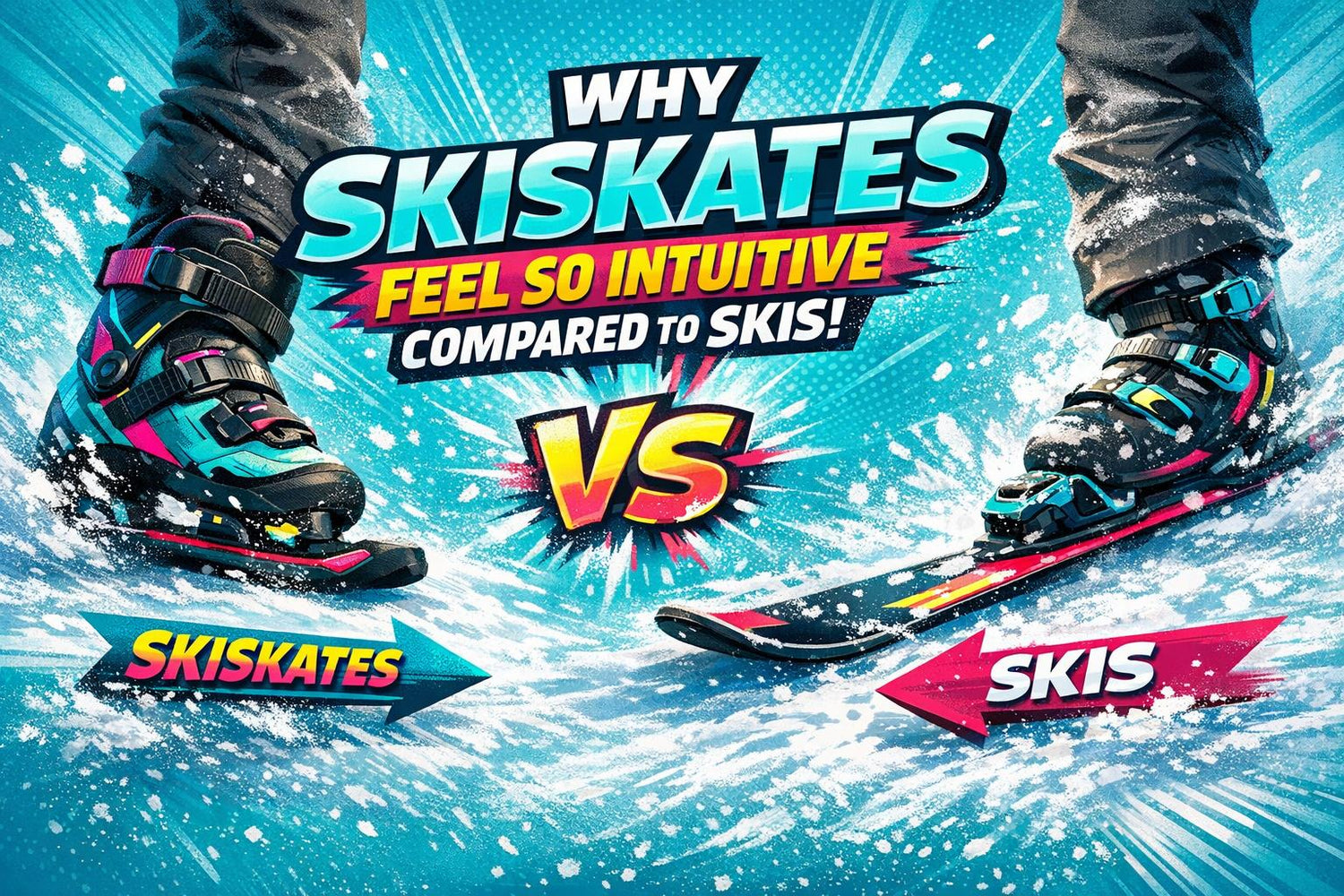
Skiskates, like Snowfeet*, are changing the way people think about winter sports. At just 44 cm (17 inches) long, they’re compact, lightweight, and easy to learn - most people master them in just 5 minutes. Unlike skis, which can be bulky and hard to control, skiskates combine the balance of skating with the thrill of skiing. They’re portable enough to fit in a backpack, work with regular winter boots, and are perfect for a variety of terrains like slopes, trails, and even backyards. Plus, they’re safer and more affordable than traditional ski setups.
Quick Highlights:
- Size: 44 cm vs. 150–190 cm for skis.
- Weight: Light and easy to carry.
- Learning Curve: 5 minutes vs. hours of lessons for skis.
- Terrain: Handles slopes, parks, light powder, and more.
- Cost: Starts around $575, no need for specialized boots.
If you’re tired of lugging heavy gear or struggling with ski techniques, skiskates might be your new go-to for winter fun. They’re perfect for beginners or anyone looking for a playful alternative to skis. Let’s dive into what makes them so different.
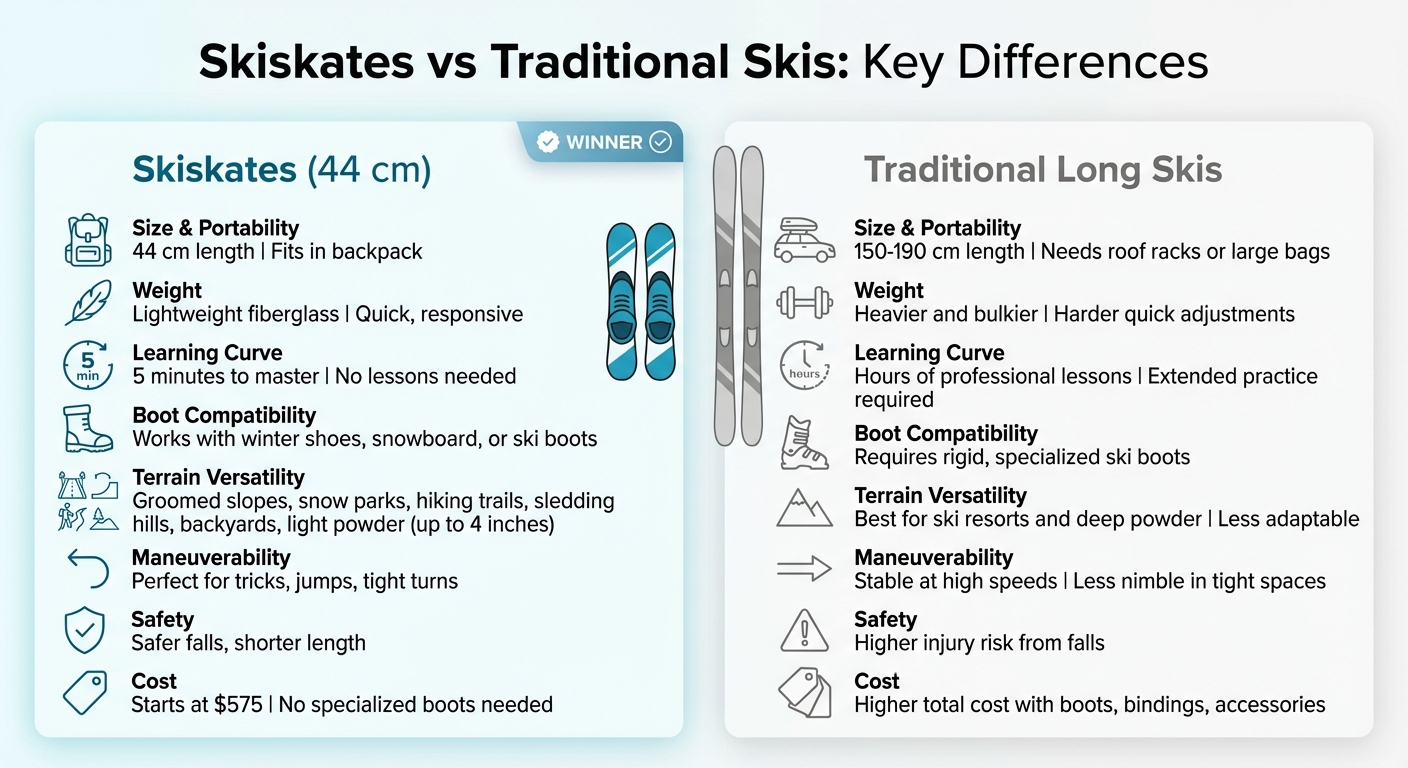
Skiskates vs Traditional Skis Comparison Chart
1. Snowfeet* Skiskates (44 CM)
Size and Portability
At just 7.8 cm wide, Snowfeet* Skiskates are compact enough to fit in a standard backpack. No need to worry about bulky ski bags - just slide them into your pack, and you’re ready to go. Their small size makes them incredibly easy to carry, so you can hit the slopes without the extra hassle of traditional ski gear.
Weight and Control
These skiskates are all about agility and control. Unlike heavy skis that can leave your legs feeling like jelly, Snowfeet* Skiskates are lightweight and designed for quick, responsive movements. Their parabolic shape and short length make sharp turns a breeze, offering a level of precision that’s tough to achieve with longer skis. The narrow waist helps with smooth carving, while the wood core keeps them light yet sturdy. Many users rave about how easy they are to handle, even during long days on the slopes.
Learning Curve
If you’ve ever ice skated, played hockey, or tried inline skating, you’ll feel right at home with Snowfeet* Skiskates. Their design eliminates the common beginner struggle of crossing ski tips, and the skating-like motion feels natural for those with prior balance experience. Most people pick up the basics in just a few minutes. Plus, the built-in heel brake and hockey stop technique make controlling your speed straightforward - no lessons required.
Terrain Compatibility
Snowfeet* Skiskates shine on all kinds of terrain. Whether you’re cruising down groomed slopes, tackling moguls, or showing off tricks in a snowpark, these skiskates handle it all with ease. They’re also great for hiking trails, sledding hills, cross-country paths, or even your backyard. However, they’re best suited for powder up to 4 inches deep. For deep, ungroomed snow or extremely steep runs, you’ll want to stick to traditional skis.
2. Traditional Long Skis
Size and Portability
Traditional long skis are, well, long - and that means they’re not the easiest to haul around. You’ll need roof racks or a spacious trunk to transport them. On top of that, they come with bulky bags and require careful handling to avoid damage. Compared to the compact and easy-to-carry Snowfeet* Skiskates, they’re a bit of a headache for anyone who values convenience. Plus, all that bulk doesn’t just make transportation tricky - it also impacts how they perform on the slopes.
Weight and Control
Let’s talk about weight. Long skis are heavy, which means they require more effort to maneuver. If you’re trying to make sharp turns or quick adjustments, that extra weight can really slow you down - not to mention tire you out faster. For casual skiers who just want to enjoy a laid-back day on the mountain, this can be a real downside. As Snowfeet* puts it:
"Short skis are lighter, more fun, and easier to control - long skis are heavier and less playful."
That added heft also makes learning and mastering turns more challenging, especially for beginners.
Learning Curve
Traditional skiing isn’t exactly beginner-friendly. It often comes with a steep learning curve, and professional lessons are usually a must if you want to avoid spending the day tangled up in your skis. A common beginner frustration is dealing with crossed tips, which can lead to falls and require a lot of practice to fix. The technical movements involved in skiing don’t feel as natural as the skating-like motion you’d use with Snowfeet* Skiskates. Bottom line? It takes more time, effort, and money to get the hang of traditional skis.
Terrain Compatibility
While traditional skis are great for downhill stability, they’re not exactly the most versatile option. Unlike Snowfeet* Skiskates, they’re not designed for flat terrain or hiking trails. Add to that the rigid ski boots, and you’re looking at a setup that prioritizes performance over comfort and flexibility. If you’re hoping to explore a variety of terrains, long skis might leave you wanting more.
Hockey Player Tries Snowfeet* Skiskates | See What He Thinks | Skiboards | Short Ski | Mini Ski
sbb-itb-17ade95
Pros and Cons
Here’s a side-by-side look at why Snowfeet* Skiskates might just be the ultimate alternative to traditional long skis. This breakdown highlights the key differences that make Snowfeet* Skiskates a lighter, more versatile, and beginner-friendly option.
| Feature | Snowfeet* Skiskates (44 cm) | Traditional Long Skis |
|---|---|---|
| Size & Portability | Compact at 44 cm - small enough to fit in a backpack | Long and bulky (150–190 cm); need roof racks or large bags |
| Weight | Lightweight fiberglass design for quick, responsive moves | Heavier and bulkier, making quick adjustments harder |
| Learning Curve | Easy skating motion mastered in about 5 minutes | Requires professional lessons and extended practice |
| Boot Compatibility | Works with winter shoes, snowboard, or ski boots | Needs rigid, specialized ski boots |
| Terrain Versatility | Handles groomed slopes, snow parks, hiking trails, sledding hills, backyards, and light powder up to 4 inches | Best suited for ski resorts and deep powder; less adaptable |
| Maneuverability | Perfect for tricks, jumps, and tight turns | Stable at high speeds but less nimble in tight spaces |
| Safety | Safer falls due to shorter length and lighter weight | Higher injury risk from falls due to long ski leverage |
| Cost | More affordable - no need for exclusive ski boots | Higher total cost with boots, bindings, and accessories |
This comparison makes it clear: if you're after portability, ease of use, and versatility, Snowfeet* Skiskates might be the better fit. But for those chasing high-speed stability in deep powder, traditional skis still hold their ground.
Conclusion
Snowfeet* Skiskates bring a whole new level of fun and convenience to winter sports. At just 44 cm (about 17.3 inches) long, these compact skates are designed for an intuitive skating motion that most people pick up in about 5 minutes - no need for pricey lessons or stiff, uncomfortable ski boots. Their lightweight and portable design works with any winter footwear, and you can use them almost anywhere: ski slopes, snow parks, hiking trails, sledding hills, or even your own backyard. Unlike traditional skis that tie you down to groomed resort slopes, Skiskates can handle light powder up to 4 inches without all the bulky gear.
What’s more, they’re easy on the wallet. Starting at around $575, they offer a more affordable way to enjoy winter sports without compromising on performance. With their responsive design, you can make sharp turns, try out tricks, or even catch some air - all things that are tough to do with long, heavy skis. Plus, their lighter weight means safer falls and better control, giving them an edge over traditional skis.
Whether you’re 15 or 75, Snowfeet* Skiskates are perfect if you want to skip the hassle of traditional ski gear and dive right into the action. They’re ideal for beginners who want a quick learning curve and for seasoned skiers looking for a playful, versatile alternative. With their portability, ease of use, and ability to tackle all kinds of terrain, Snowfeet* Skiskates are a game-changer for winter enthusiasts.
FAQs
Why are skiskates easier to learn than traditional skis?
Skiskates, like Snowfeet, are a breeze to pick up, especially when compared to traditional skis. Thanks to their compact size and lightweight design, measuring just 44 cm, they’re far easier to control. This makes them ideal for beginners who want to skip the steep learning curve of long skis and dive into the fun right away. You’ll find yourself mastering the basics quickly and enjoying the snow in no time.
Unlike traditional skis that demand balancing on long, heavy surfaces and learning complex techniques, skiskates provide a more natural and intuitive experience. Their compact design makes turns quicker and maneuvering simpler, giving you the confidence to tackle different terrains. They’re not just beginner-friendly, though - they’re also a great choice for seasoned skaters looking to shake things up with a fresh, exciting challenge.
What kind of terrain works best for skiskates?
Skiskates, much like Snowfeet, are a fun and flexible option for winter adventures. They handle a variety of terrains with ease - whether you're gliding down slopes, exploring groomed trails, zipping through parks, or even cruising around snow-covered backyards. Thanks to their small size and lightweight build, they’re super easy to control, making them a great pick for both beginners testing the waters and seasoned pros looking for something different.
What sets skiskates apart from traditional skis is their ability to thrive in mixed and casual settings. While regular skis are often made for specific terrains like steep alpine runs or deep powder, skiskates shine on gentler inclines, packed snow, or even snowy urban streets. They’re all about quick turns and smooth rides, offering a simple yet exciting way to enjoy the snow without the hassle of bulky gear. Whether you're out for a casual glide or some quick, nimble fun, skiskates are ready to roll with whatever the winter throws at you.
Are skiskates an affordable and practical alternative to traditional ski gear?
Yes, skiskates - like the popular Snowfeet - offer a wallet-friendly and practical alternative to traditional ski gear. Think about it: a full set of skis, boots, and poles can easily set you back over $1,500. Meanwhile, Snowfeet skiskates cost between $150 and $490. That’s a huge difference, making them a great option for anyone who loves winter sports but doesn’t want to break the bank.
But it’s not just about saving money. Snowfeet skiskates are super lightweight, compact, and easy to use, which makes them a great choice whether you’re just starting out or already have some skating experience. They’re also designed to work with regular winter boots, so you can skip the pricey specialized footwear. Add in their ability to handle different terrains and how quickly you can pick them up, and you've got a fun, hassle-free alternative to traditional skis or snowboards.













Leave a comment
This site is protected by hCaptcha and the hCaptcha Privacy Policy and Terms of Service apply.