



















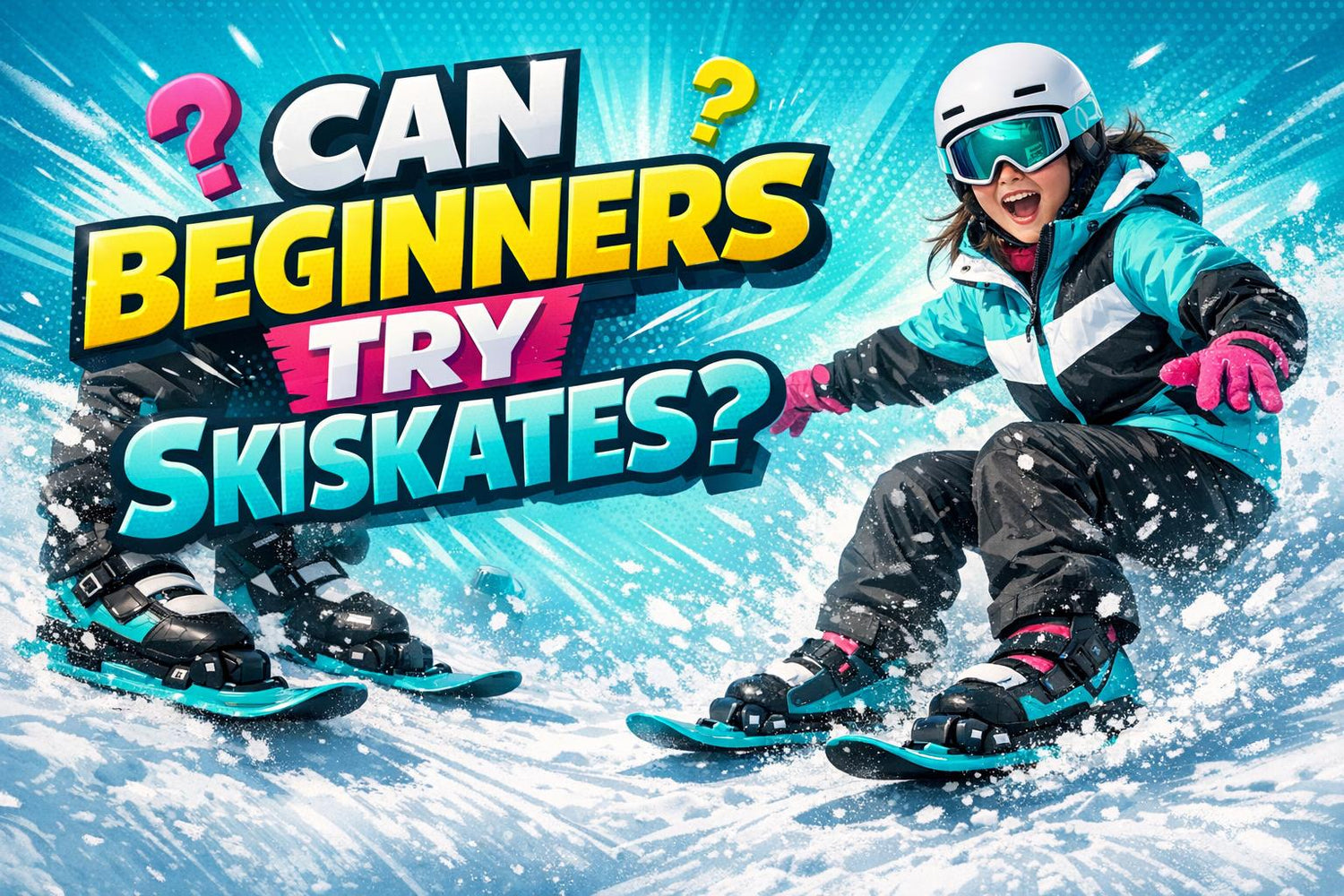
Yes, beginners can absolutely try skiskates! They're a simple, fun way to enjoy snow sports without the hassle of traditional skis or snowboards. Here's why they work so well for first-timers:
- Easy to Learn: If you’ve ice skated or rollerbladed, the motion will feel familiar. Many people get the hang of skiskates in about an hour.
- Light and Portable: At just 17 inches long, they’re way smaller than skis. Toss them in your backpack - no bulky gear needed!
- No Special Boots: They attach to regular winter boots or snowboard boots. No need to spend extra on ski boots.
- Safer and Less Intimidating: Their small size makes them easier to control and reduces the risk of injury.
Skiskates are perfect for anyone wanting to try snow sports without a steep learning curve or big investment. Whether you’re cruising down a gentle slope or practicing in your backyard, they’re a fun, beginner-friendly option to get started. Let’s dig into how they work and why they’re such a game-changer for newcomers.
Problems Beginners Have with Traditional Skis and Snowboards
Heavy and Hard to Carry
Traditional skis are long - often over 59 inches (150 cm) - which makes them a hassle to carry around. Add in the need for extra gear like boots, poles, and bindings, and the weight can quickly feel overwhelming. For someone just starting out, lugging all of this equipment can be downright intimidating.
Takes a Long Time to Learn
Learning to ski or snowboard isn’t something you pick up in an afternoon. Beginners typically need lessons and lots of practice just to get the hang of the basics. The long length of traditional skis forces you into a specific front-to-back stance that can feel awkward and tough to balance. And let’s not forget the added challenges of icy patches, deep powder, or steep slopes - these can make the learning curve feel even steeper for newcomers.
Fear of Falling and Getting Hurt
Let’s face it, strapping into skis that are nearly 5 feet long can be scary. The size makes them harder to control, and for beginners, that fear of falling is very real. There’s always the worry of twisting an ankle, tweaking a knee, or worse, taking a hard fall and getting seriously hurt. This fear of injury can be a huge mental block, stopping many people from fully enjoying what winter sports have to offer.
These challenges highlight why Snowfeet Skiskates are such an appealing option for beginners - they offer a simpler, less intimidating way to hit the slopes.
How Snowfeet Skiskates Solve These Problems
Light and Easy to Carry
Measuring just 17 inches (44 cm), Snowfeet Skiskates are a game-changer when it comes to portability. They're less than a third of the length of traditional skis, which means no more lugging around heavy, awkward equipment. Instead, you can simply toss them into your backpack - saving yourself the hassle of wrestling with bulky gear in parking lots or crowded shuttle buses. Skier Cameron Asbell summed it up perfectly:
"I didn't get injured because with how small they are it's easier to pick them up and it doesn't put stress on your knees as much also making it easier to control and regain balance when falling."
Quick to Learn
Thanks to their compact design, Snowfeet Skiskates make learning a breeze. Most beginners can pick up the basics - like movement, turning, and stopping - in about an hour. Their short length allows for easy foot lifting and quick recovery when you lose balance. The experience feels intuitive, especially if you're familiar with ice skating or inline skating. Max H. shared his experience:
"Easier to handle and turn, of course, it also takes time to get used to, but it is quicker than anything else."
With over 2,265 reviews and a stellar 4.9/5 star rating, it's clear that beginners love how natural and approachable Snowfeet Skiskates feel.
Works with Regular Winter Boots
Forget about investing in expensive ski boots. Snowfeet Skiskates feature a universal binding system that works with any waterproof winter or snowboard boots. They fit U.S. shoe sizes 6–13 (EU sizes 38–47) and can be adjusted at home with just a screwdriver. This setup not only saves you money but also makes it super convenient to transition from walking around the lodge to hitting the slopes.
All these features make Snowfeet Skiskates an ideal choice for beginners, removing common barriers and making the learning process smoother and more enjoyable.
How to Use Snowfeet* Skiskates 44 CM | Skates for Snow | Mini Ski | Snowblades | Snowskates
sbb-itb-17ade95
Snowfeet Skiskates vs. Traditional Skis and Snowboards
Snowfeet Skiskates vs Traditional Skis and Snowboards Comparison
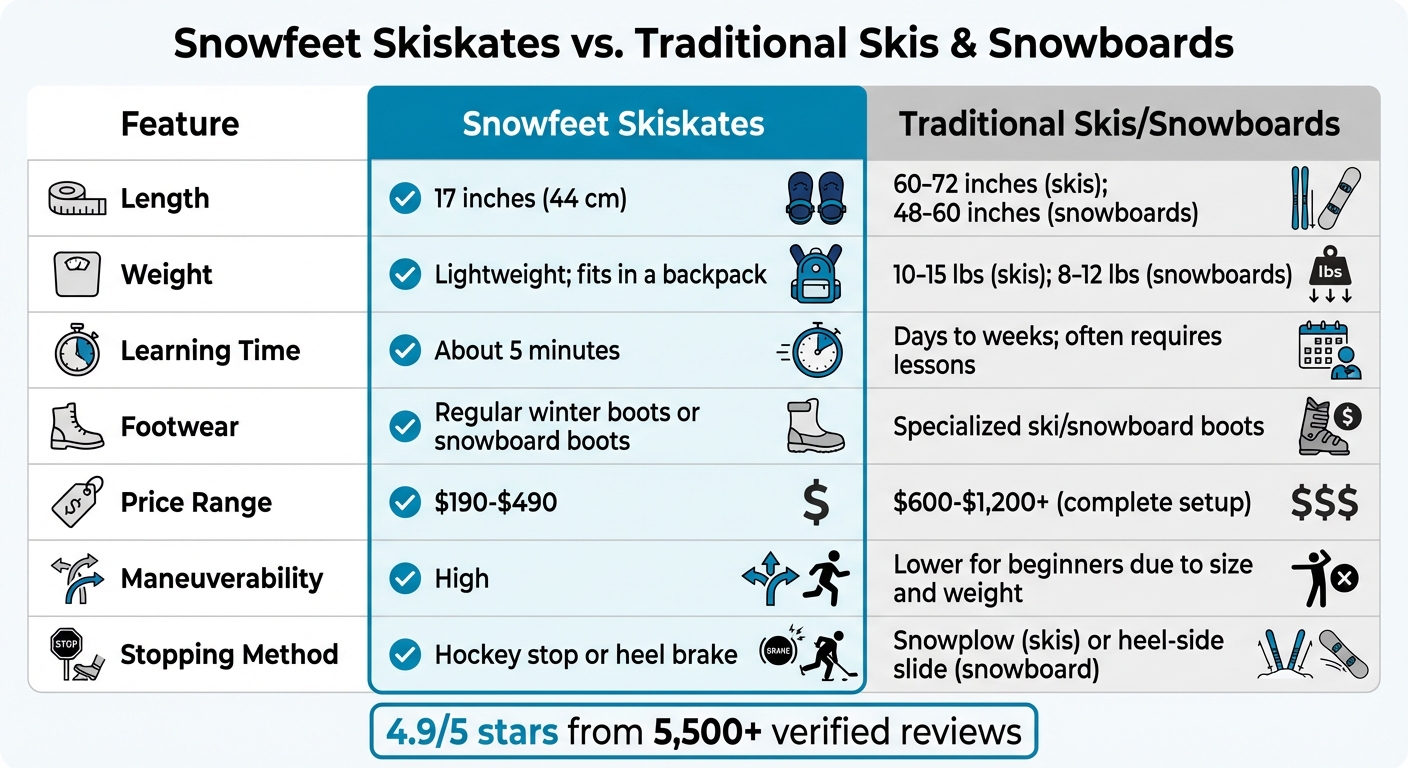
Let’s break down how Snowfeet Skiskates stack up against traditional skis and snowboards. For starters, their compact size is a game-changer. Traditional skis are typically 5–6 feet long and weigh around 10–15 lbs, while snowboards are 4–5 feet long and weigh 8–12 lbs. Compare that to Snowfeet Skiskates, which are just 17 inches (44 cm) long and light enough to fit in a backpack. This portability makes them incredibly easy to carry around, whether you're heading to the slopes or just storing them at home.
Then there’s the learning curve. Picking up skiing or snowboarding often takes days or even weeks, not to mention lessons to master techniques like weight-shifting and edge control. Snowfeet Skiskates, on the other hand, are designed to mimic the natural motion of skating. Most beginners can get the hang of them in about 5 minutes - yes, 5 minutes! This simplicity makes them an excellent choice for those who want to hit the slopes without the steep learning curve.
Let’s talk money. Traditional setups can cost anywhere from $600 to over $1,200, and that doesn’t even include the specialized boots. Snowfeet Skiskates are much more budget-friendly, ranging from $190 to $490. Plus, they work with regular winter boots or snowboard boots, so you don’t need to splurge on extra gear.
Side-by-Side Comparison: Snowfeet Skiskates vs. Traditional Equipment
| Feature | Snowfeet Skiskates | Traditional Skis/Snowboards |
|---|---|---|
| Length | 17 inches (44 cm) | 60–72 inches (skis); 48–60 inches (snowboards) |
| Weight | Lightweight; fits in a backpack | 10–15 lbs (skis); 8–12 lbs (snowboards) |
| Learning Time | About 5 minutes | Days to weeks; often requires lessons |
| Footwear | Regular winter boots or snowboard boots | Specialized ski/snowboard boots |
| Price Range | $190–$490 | $600–$1,200+ (complete setup) |
| Maneuverability | High | Lower for beginners due to size and weight |
| Stopping Method | Hockey stop or heel brake | Snowplow (skis) or heel-side slide (snowboard) |
With over 5,500 verified reviews and an impressive 4.9 out of 5 rating, Snowfeet Skiskates have already made waves in the winter sports world. As Uncrate puts it, they’re “far more portable and affordable than traditional skis or snowboards.”
For those just starting out, the combination of portability, quick learning, and affordability makes Snowfeet Skiskates a fantastic alternative to traditional skiing or snowboarding gear.
How to Start Using Snowfeet Skiskates
Snowfeet Skiskates are designed to be lightweight and simple to use, making it easy to get started. With a little practice, you’ll be cruising in no time.
Body Position and Balance
Start by standing with your legs about shoulder-width apart, keeping your knees slightly bent. Your weight should stay centered or just a bit toward your heels - leaning forward onto your toes can throw off your balance and lead to falls. Since Snowfeet are much shorter than traditional skis, this centered or slightly back-weighted stance is key. For extra stability, try a staggered stance, where one foot is slightly ahead of the other.
Moving Forward and Making Turns
To get moving, use a skating motion similar to ice skating or hockey. Push off with one foot while gliding on the other to build momentum. If you’re on flat terrain, ski poles can give you some extra push. When it’s time to turn, use the classic "snowplow" or "pizza" technique: push the tails of your Snowfeet outward to form a triangle shape. Shift your weight - putting more weight on your right foot will help you turn left, and vice versa. This will give you better control over your direction and speed.
How to Stop
Stopping takes a little practice. You can tilt your feet back to engage the built-in heel brake, or try a hockey stop. For the hockey stop, push the metal edges of your Snowfeet sideways against the snow to create friction. The Snowfeet Team offers this tip:
"Stopping is a little bit harder with Snowfeet so distribute your weight evenly over both feet to make you stop easier and slower."
Stick to flat, groomed areas while you get the hang of stopping and controlling your speed. This will also help you understand how the metal edges interact with the snow before you tackle steeper slopes.
Conclusion
If you're a complete beginner wondering if you can give skiskates a shot, the answer is absolutely yes. Snowfeet Skiskates are designed to suit all ages and offer a beginner-friendly alternative to traditional skis or snowboards.
These skiskates are lightweight, easy to carry, and work with regular winter boots - making it simple for newcomers to get the hang of it. Unlike traditional skis, which often require days of lessons and a hefty investment in rentals or gear, Snowfeet Skiskates let you dive into the fun right away without breaking the bank.
Whether you're cruising down groomed slopes, wandering along snowy trails, or just playing around in your backyard, Snowfeet Skiskates give you the flexibility to enjoy winter sports your way. They're easier to pick up, less intimidating, and bring a whole new level of fun and versatility to the experience. If you're looking for a hassle-free way to embrace winter adventures, these skiskates might just be your perfect match.
FAQs
Are Snowfeet Skiskates easier to learn than traditional skis?
Yes, Snowfeet Skiskates are much easier to pick up than traditional skis, especially if you’re just starting out. Their small, lightweight design makes them much simpler to handle. Unlike traditional skis - which can be over 5 feet long and require you to master techniques like carving and edging - Skiskates feel a lot more approachable.
Another bonus? You can use your regular winter boots with them. No need to splurge on specialized ski boots, which saves both money and hassle. Most beginners feel comfortable using them after just a few hours of practice. If you’re searching for a fun, beginner-friendly way to dive into snow sports, Snowfeet Skiskates are an awesome option!
Are Snowfeet Skiskates suitable for all types of snow conditions?
Snowfeet Skiskates shine on groomed slopes, packed snow, and moderate trails. Thanks to their small size and lightweight build, they’re a great match for controlled environments with firm, even snow.
That said, they’re not the best choice for deep powder or super steep terrain. If you’re a beginner or just looking for a fun, low-key way to enjoy winter sports without lugging around heavy gear, Snowfeet Skiskates are an awesome option.
What kind of boots work with Snowfeet Skiskates?
Snowfeet Skiskates are made to pair seamlessly with most winter or snowboard boots, which makes them super easy to use - especially for beginners. They strap right onto the boots you already own, so if you’ve got a solid pair of winter boots or snowboard boots, you’re all set.
This means no need to spend extra on specialized gear. Snowfeet Skiskates offer a simple and budget-friendly way to jump into the fun of winter sports.













Leave a comment
This site is protected by hCaptcha and the hCaptcha Privacy Policy and Terms of Service apply.