



















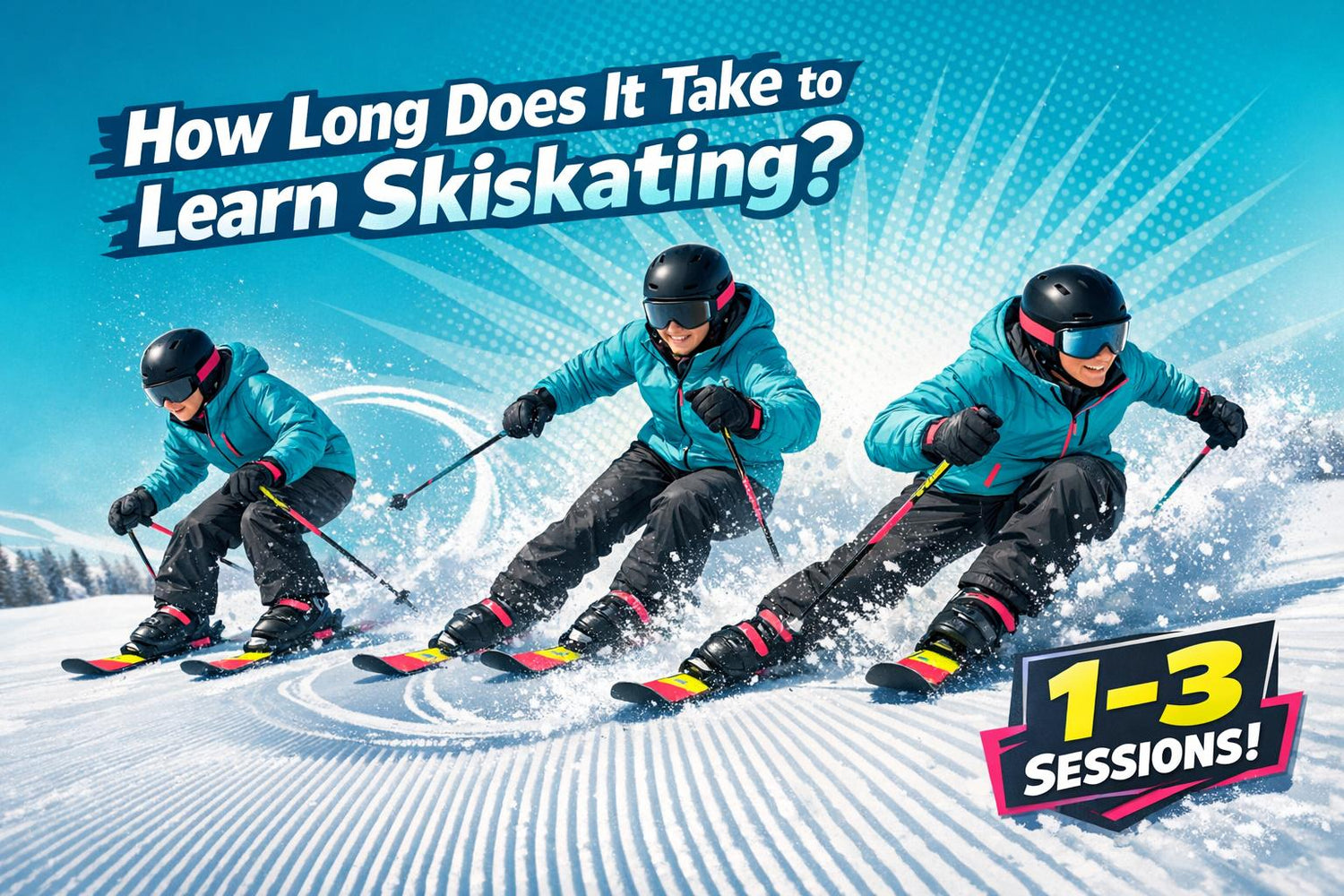
Skiskating is a mix of skiing and ice skating, using short skis like Snowfeet* that attach to your winter boots. The best part? You can learn the basics - gliding, turning, and stopping - in just 1–3 sessions (about 1–3 hours each). If you’ve ever ice skated or rollerbladed, you’ll likely pick it up even faster. Unlike skiing or snowboarding, which can take days to feel comfortable, skiskating is quick to learn and way less bulky to gear up for. Here’s why:
- Easy to Learn: Shorter skis (44 cm) make balancing simpler.
- No Special Boots: Use your regular winter boots (EU sizes 36–47).
- Portable: Lightweight and fits in a backpack.
Snowfeet* Skiskates are perfect for beginners, offering a fun, fast way to enjoy the snow without the hassle of traditional gear. Ready to give it a shot? Let’s dive into the details!
Snowfeet Skiskates vs Traditional Skiing and Snowboarding Learning Comparison
How Long Does It Take to Learn Skiskating?
Average Learning Time for Beginners
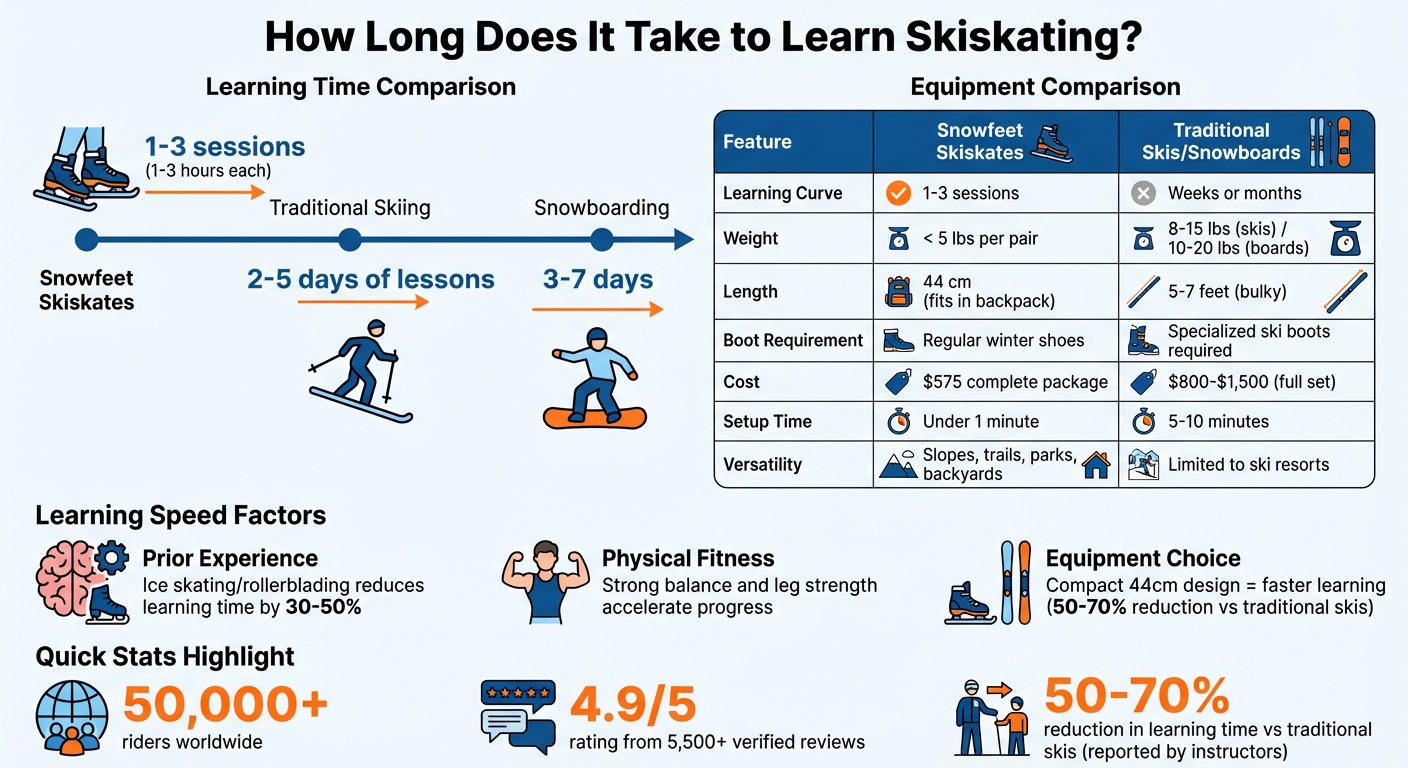
Thanks to Snowfeet*'s simple and approachable design, most beginners can pick up the basics of skiskating in just 1–3 sessions. Each session typically lasts 1–3 hours on gentle slopes. That means, with just a few hours of practice, you could be confidently gliding, turning, and stopping.
This quick learning curve is a game-changer compared to traditional winter sports. For example, skiing often takes 2–5 days of lessons before beginners feel comfortable on green runs. The first day is usually spent on balance and getting used to the gear, while learning snowplow turns and stopping can take another 2–3 days. Snowboarding? That usually takes even longer - about 3–7 days to get the hang of basic heel-edge control and turning.
Traditional skiing also comes with its challenges, like mastering snowplow and parallel turns, which can feel tricky and frustrating during the first week. In contrast, Snowfeet* Skiskates, with their compact 44 cm size, eliminate the bulkiness of traditional gear, making the experience far less intimidating.
Why Snowfeet* Skiskates Are Easier to Learn
The secret to the rapid progress lies in Snowfeet*’s clever design. Their compact 44 cm length provides a naturally low center of gravity, making it easier to find your balance right from the start. Unlike traditional skis, which are heavier and demand precise edge control, Snowfeet* Skiskates are lightweight and straightforward to use.
One of the standout features is how they mimic the motion of ice skating. If you’ve ever been on skates - whether at a rink or playing hockey - you’ll notice the familiar push-and-glide movement. This familiarity makes learning feel natural and intuitive. In fact, ski instructors have observed that skate-style devices like these can reduce learning time by 50–70% compared to full-length skis. That’s a huge time saver!
What Affects Your Learning Time
Prior Experience with Skating or Skiing
If you've spent time ice skating, rollerblading, or skiing, you're already ahead of the game when it comes to skiskating. Why? Your body has built muscle memory for gliding and balancing, which directly translates to skiskating. Research shows that people with experience in sports like skateboarding, surfing, or skating benefit greatly because:
Your body is already accustomed to the feeling of sliding and balancing, allowing you to make faster progress on the slopes.
This familiarity can shave 30–50% off your learning time. So instead of taking three sessions to master the basics, you might nail it in just one or two. The Snowfeet Team sums it up perfectly:
The best way to start your ride is to skate like a hockey player.
If you've played hockey or spent time on an ice rink, that push-and-glide motion will feel second nature on snow. Similarly, skiing skills like weight distribution and edge control transfer well. Just keep in mind that Snowfeet* skiskates require you to keep your weight centered or slightly back for better control.
Pairing prior experience with good physical fitness can make your learning curve even shorter.
Physical Fitness and Balance
Your fitness level plays a big role in how quickly you pick up skiskating. Strong balance and overall fitness make it easier to master the basics. Athletes often have an edge here since skiing demands leg strength, coordination, and endurance.
This is where Snowfeet* Skiskates shine. Their compact, 44 cm length means you don’t need as much balance as you would with traditional skis, which can stretch up to 190 cm. While core strength, ankle stability, and leg endurance still matter, the shorter design helps you find your center of gravity faster. That makes staying upright during those critical first sessions a lot more manageable.
Equipment Choice: Snowfeet* vs. Traditional Skis and Snowboards
The gear you choose has a huge impact on how quickly you learn. Traditional skiing often requires:
A few days of detailed instruction to grasp the basics such as stopping, turning, and riding a ski lift,
with most beginners needing 2–3 days just to safely navigate beginner slopes. Snowboarding can take even longer - up to 3–7 days to gain basic control.
Snowfeet* Skiskates flip the script. Their lightweight design means less fatigue, allowing for longer practice sessions. Plus, they work with regular winter shoes, so you can skip the hassle of specialized ski boots. Thanks to their compact size, you can practice on a variety of terrains - slopes, trails, parks - without being tied to traditional ski runs. Here’s a quick breakdown:
| Feature | Snowfeet* Skiskates | Traditional Skis/Snowboards |
|---|---|---|
| Learning Curve | 1–3 sessions | Weeks or months |
| Portability | Fits in a backpack | Bulky and heavy |
| Compatibility | Works with winter shoes | Requires specialized boots |
| Versatility | Easy on slopes, trails, parks | Limited to specific terrains |
The smaller size of Snowfeet* Skiskates gives you instant feedback, helping you build confidence quickly. That’s why they’re a game-changer for beginners looking to learn fast compared to traditional equipment.
Step-by-Step Guide to Learning Skiskating with Snowfeet*
Mastering Balance and Stance
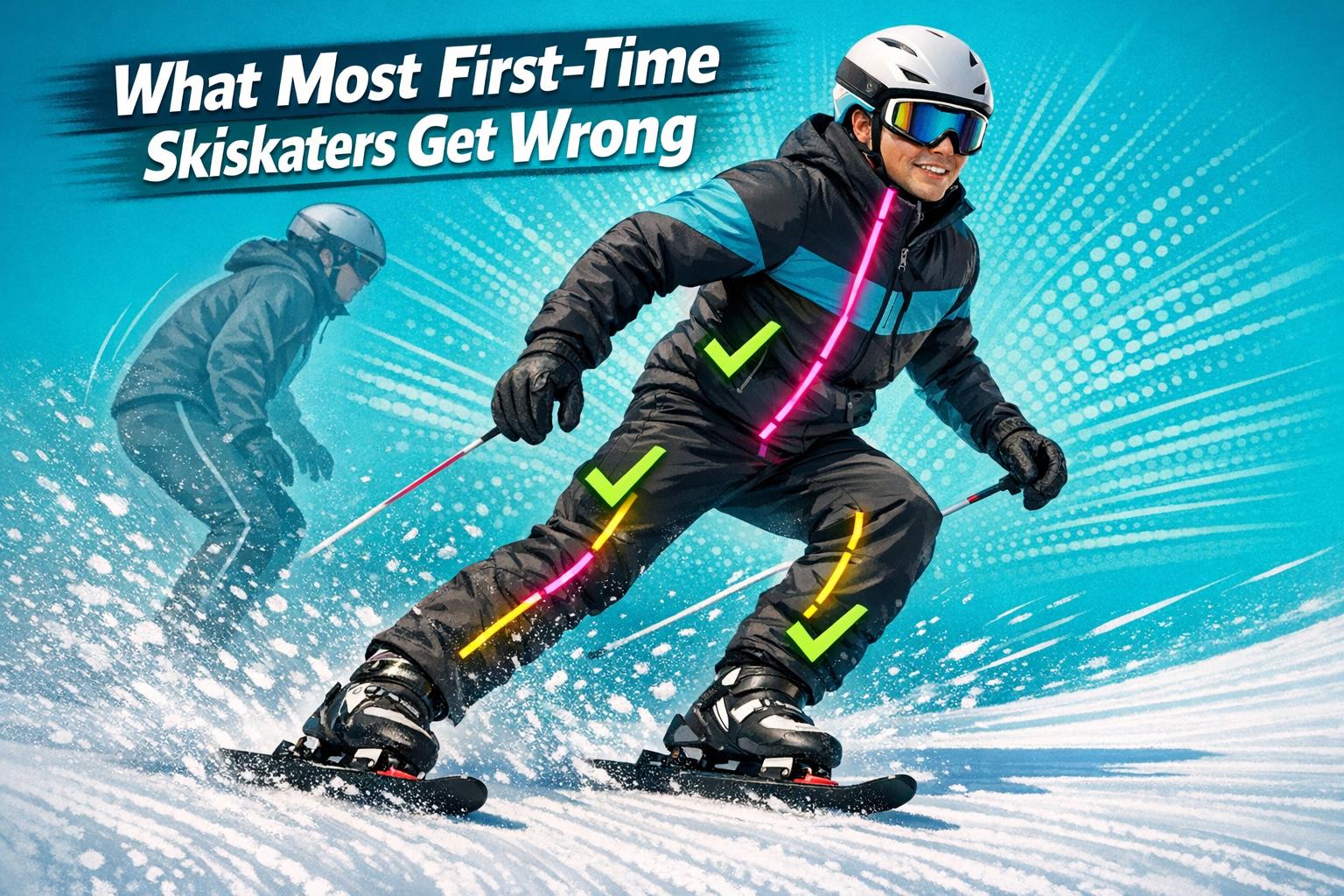
Start by standing with your legs about shoulder-width apart and your knees bent at a 20–30° angle. Keep your shoulders aligned over your toes and let your arms extend slightly outward to help with balance. This stance, similar to what you’d use in ice skating, is the foundation for a smooth ride.
Snowfeet* Skiskates make balancing easier thanks to their compact and clever design. Unlike traditional skis, they don’t require you to lean forward. Instead, keep your weight centered or slightly shifted back:
"Don't place your weight over your toes as you would with skis, because you will fall. Instead, place your weight over the middle or back of your feet."
Because these skiskates are only 44 cm long, they lack the extended front-end support of regular skis. To add stability, try positioning one foot slightly ahead of the other. This shorter design lowers your center of gravity, reduces wobbling, and lets you adjust your balance more quickly than with longer skis.
Once you’re steady, you’re ready to move on to gliding.
Learning Basic Motion and Gliding
Find a flat, groomed area of snow to start practicing. Push off with one leg while gliding on the other, using a V-push motion - just like skating on ice:
"The best way to start your ride is to skate like a hockey player."
Alternate your pushes in a rhythmic motion, keeping your knees bent and your core engaged. With a bit of practice, you should be able to glide 10–20 feet with each push. The rocker base of Snowfeet* is designed to feel like ice skates, making the motion feel natural. Many beginners find they can pick up this technique in just one or two sessions, which is much quicker than learning traditional skiing.
Once you’ve got the hang of gliding, you can start working on stopping and turning.
Stopping and Turning Techniques
To stop, use the classic "pizza slice" or snowplow method. Point your toes inward to form a V-shape, press your heels back, and lean slightly backward to engage the metal edges. Make sure your weight is evenly distributed over both feet. Snowfeet’s built-in heel brake can help you slow down in a controlled way. As the Snowfeet Team explains:
"Stopping is a little bit harder with Snowfeet so distribute your weight evenly over both feet to make you stop easier and slower."
For turning, start with snowplow turns. Shift your weight to your outside leg while steering with your inside foot to create an arc. Once you feel more confident, you can try carving turns by rolling your ankles onto the edges of the skiskates. The compact design of Snowfeet* provides quicker edge responses and allows for sharp pivots, making it easier to navigate slopes and build confidence on beginner terrain.
With these basics under your belt, you’ll be gliding, stopping, and turning like a pro in no time!
sbb-itb-17ade95
Snowfeet* Skiskates vs Traditional Winter Sports Gear
Portability and Convenience
When it comes to portability, Snowfeet* Skiskates take the crown. Traditional skis are bulky - measuring 5 to 7 feet long and weighing 8 to 15 pounds. Snowboards aren’t much better, coming in at around 5 feet and weighing 10 to 20 pounds. Transporting this gear often means strapping it to roof racks or lugging around oversized ski bags. Snowfeet*, on the other hand, are a game-changer. They weigh less than 5 pounds per pair and fold down to just 44 cm, small enough to slip into your backpack without a fuss.
The setup is a breeze too. Traditional skis need dedicated boots, bindings, and poles, which can take 5 to 10 minutes to assemble - not to mention the space they take up in your car or closet. Snowfeet* skip all that hassle. They strap right onto your regular winter shoes, and you’re ready to hit the snow in under a minute. Plus, they’re compact enough to toss into a small daypack.
Cost and Accessibility
Let’s talk about the price tag. A full set of traditional ski gear can run you anywhere from $800 to $1,500 once you factor in skis, boots, and poles. Snowfeet* Skiskates? They start at $575, and that’s for the whole package. Even better, they work with your everyday winter shoes - no need for pricey custom boots. They’re available online, with free shipping in the US for orders over $100. Maintenance is minimal too: just give them a quick wipe-down after use. And with an adjustable fit for US shoe sizes 5 to 12, there’s no need for custom fittings.
Best Option for Beginners
Learning traditional skiing or snowboarding takes time - typically 2 to 3 days for basic skiing techniques like snowplow turns and stopping. Snowboarding? It’s even trickier, often requiring 3 to 5 days to get the hang of balancing [6,7]. Snowfeet* simplify the process. Thanks to their short 44 cm blades and a movement that feels more like skating, most beginners can master balance, gliding, and stopping in just 1 to 2 hours.
The proof is in the experiences of real users. A beginner in Colorado reported feeling confident on Snowfeet* after just 30 minutes - no lessons required. Compare that to weeks of ski school! Parents have also noticed that kids who start with Snowfeet* pick up regular skiing much faster. Even ski instructors agree: Snowfeet* tap into the balance skills from ice skating, cutting traditional ski learning time by 50–70%. They’re especially appealing for adults over 40 who might find traditional skiing more physically demanding [7,9].
For quick snow adventures, urban settings, or those looking to skip expensive resort trips, Snowfeet* are a fantastic option. Traditional gear, while great for long days on the slopes, can feel like overkill for casual outings or beginners looking for something simple and fun.
Up next, we’ll share some practical tips to help you master skiskating with Snowfeet*. Stay tuned!
Tips for Mastering Skiskating Faster
Start in Easy, Beginner-Friendly Areas
When you're just starting out with skiskating, flat and groomed terrain is your best friend. These areas, like backyards or small sledding hills, let you focus on finding your balance without worrying about tricky conditions. As you get more comfortable, you can move on to groomed ski slopes or cross-country trails. These offer a steady surface where you can practice a skating motion similar to hockey or ice skating. For now, steer clear of deep powder (anything over 4 inches), steep slopes, or uneven, ungroomed terrain. Once you've nailed the basics, you can start refining your technique and focus on gear maintenance to keep improving.
Optimize Your Gear with Snowfeet* Accessories
Taking care of your Snowfeet* gear can make a huge difference in how you perform. For example, applying liquid wax to the base of your Snowfeet* helps prevent snow from clinging and improves your glide - this quick fix costs just $6. After each session, dry the metal edges thoroughly to avoid rust, and use a sharpening stone to maintain a strong edge grip. It’s also a good idea to oil the edges occasionally for extra protection. Adjusting your bindings at home with a screwdriver ensures a snug fit with your footwear and saves you time at the slopes. If you're tackling steeper terrain, pairing your Snowfeet* with snowboard boots can give you the ankle support you need. With your gear in top shape, you’ll be ready to hit the snow with confidence.
Take It One Step at a Time
The beauty of skiskating with Snowfeet* is that you can progress at your own pace. Start small - maybe practice in your backyard one day, then head to a ski resort when you’re ready. There’s no need to rush. Over 50,000 riders worldwide have embraced this approach. During your early sessions, use the built-in heel brake to manage your speed and stay in control. Focus on practicing a hockey-style skating stride on flat ground, and with time and consistency, your skills will naturally improve. Skiskating is all about finding your rhythm, so enjoy the journey!
Conclusion: Why Snowfeet* is the Best Choice for Learning Skiskating
Snowfeet* Skiskates make jumping into skiskating quick and fun. In just 5 minutes, you can be gliding around without the hassle of long lessons or complicated setups. With over 5,500 verified reviews and an impressive 4.9/5 rating from more than 50,000 riders worldwide, it's clear these skates are winning people over. Their clever design ensures they're easy to carry and incredibly versatile.
Forget lugging around heavy gear - Snowfeet* fits right into your backpack. Plus, you can use your regular winter shoes or snowboard boots instead of clunky ski boots. As Uncrate perfectly sums it up:
"Far more portable and affordable than traditional skis or snowboards."
And here's what one happy rider, Nathan F., had to say:
"Absolute game-changer! They're light, fast, and incredibly fun to ride."
Snowfeet* aren’t just about convenience - they’re also incredibly versatile. Unlike traditional skis or snowboards that are stuck at resorts, these skiskates work on groomed slopes, hiking trails, sledding hills, or even in your backyard. Their compact design also reduces the risk of injury by limiting leverage during falls.
Whether you're a kid, adult, or somewhere in between, Snowfeet* makes skiskating easy to pick up - especially if you've tried ice skating or inline skating before. With fast U.S. shipping (usually within 3 business days) and a reputation for helping beginners succeed, Snowfeet* is the perfect way to start your skiskating adventure.
FAQs
Does experience in skating or skiing help you learn skiskating faster?
Yes, if you’ve got experience with activities like skiing, skateboarding, or even roller skating, you’re already ahead of the game! These sports help develop balance, coordination, and confidence - all key skills for skiskating. If you’re used to controlling your movements on skis or a skateboard, you’ll probably find yourself picking up skiskating much faster.
Even if your background is in ice skating or rollerblading, that can still work in your favor. Snowfeet Skiskates are designed to make learning feel natural and fun, especially for folks with experience in similar activities. Their compact size and lightweight build make them easier to manage than traditional skis or snowboards, which is a big plus for beginners or anyone eager to get the hang of skiskating quickly.
How are Snowfeet Skiskates different from traditional skis?
Snowfeet Skiskates bring a fresh twist to hitting the slopes. Unlike traditional skis that stretch over 5 feet and require clunky, specialized boots, these little wonders are just 17 inches long and strap right onto your regular winter boots. Yep, no need to lug around heavy gear or invest in pricey ski boots. They're lightweight, easy to carry, and perfect for those who want to keep things simple.
Their shorter design isn’t just about convenience - it’s also a game-changer for beginners. With Snowfeet Skiskates, you can make sharp turns, maintain balance more easily, and pick up the basics faster than with traditional skiing, which often takes more time and practice to master. Plus, they’re wallet-friendly and way more accessible. Whether you're a casual snow enthusiast or just want to try something different, Snowfeet Skiskates let you enjoy the slopes without the hassle or cost of bulky ski gear.
Can I use Snowfeet Skiskates on any type of snow?
Snowfeet Skiskates work best on smooth, groomed snow - think ski slopes or packed trails. They’re not built for deep powder or rough, uneven terrain. Their compact design is all about control and agility, which really comes to life on firmer surfaces.
To get the most out of them, stick to well-maintained snow areas. Thanks to their lightweight and portable build, they’re perfect for quick, fun runs without the hassle of lugging around traditional skis or snowboards.












Leave a comment
This site is protected by hCaptcha and the hCaptcha Privacy Policy and Terms of Service apply.