



















Skiskating is an exciting way to enjoy the slopes, blending skiing and ice skating into one fun activity. But for beginners, common mistakes like poor posture, uneven weight distribution, or using the wrong gear can make learning frustrating. The good news? These are easy to fix with a few simple tips.
Here’s what you need to know to avoid beginner pitfalls:
- Posture matters: Keep your weight centered or slightly back, and avoid leaning forward like you would on skis.
- Balance is key: Distribute your weight evenly between both skates for better control and easier braking.
- Right gear is essential: Use boots with solid ankle support and skiskates designed for this style, like Snowfeet Skiskates, which are lightweight and easy to use.
Start on flat, groomed snow, practice your stance and balance, and stick to gentle slopes before moving on to steeper terrain. With the right approach and equipment, skiskating can be a quick and enjoyable skill to pick up. Let’s dive into the details!
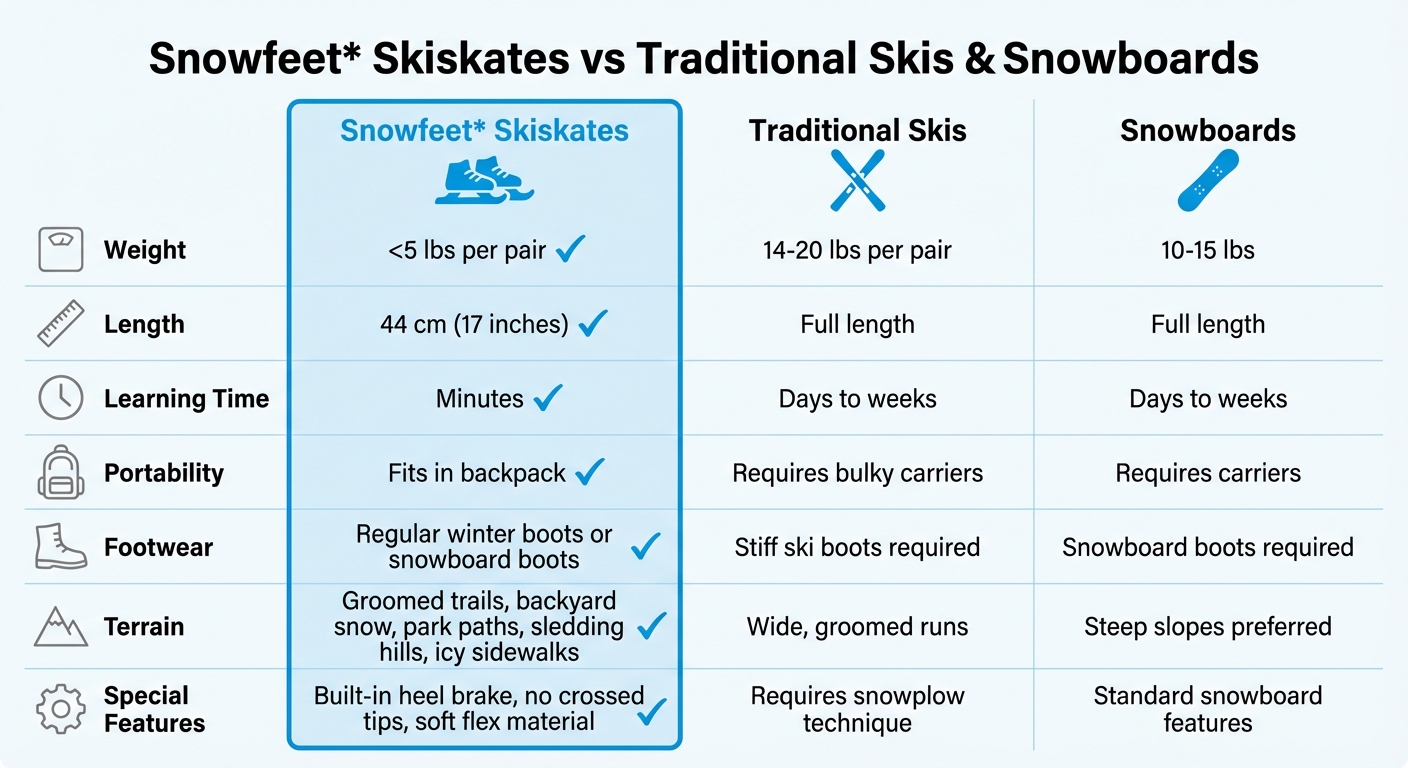
Snowfeet Skiskates vs Traditional Skis and Snowboards Comparison
Common Mistakes First-Time Skiskaters Get Wrong
Starting out on skiskates is exciting, but it’s easy to stumble (literally) into a few common pitfalls. The good news? These mistakes are easy to avoid once you know what to watch for. Let’s dive into the three most frequent missteps that can trip up beginners - and how to fix them.
Wrong Stance and Posture
Your stance is the foundation of your control and balance. A common rookie error is leaning too far back. Matt Appleford, Founder of The Adventure Project, explains it best:
The most common flaw with a beginner student's basic position is what we call 'back and inside,' that is too much weight back on the heels and back of the skis.
When you lean back, you lose control of the front of your skates, which can cause drifting or instability. Another mistake? Staring down at your feet. This habit stiffens your shoulders, locks up your body, and limits your ability to see where you’re going. Instead, keep your head up and your gaze forward - it’ll make a world of difference.
For better balance, keep your arms slightly bent and in front of you. Avoid clenching or flailing them, as this throws off your stability. Also, resist the urge to spread your legs too wide. A shoulder- or hip-width stance will give you much better control, especially when turning.
Poor Weight Distribution
Skiskating isn’t just mini-skiing - it’s a whole different game. On traditional skis, you lean forward into your boots for support. But try that on skiskates, and you’ll likely end up face-first in the snow. As the Snowfeet team puts it:
Don't lean forward like you would do with skis, because you don't have the support of regular-length skis to hold you and with almost inevitable certainty, you would fall down.
The trick is to keep your weight centered or slightly back. Staggering your feet can also help with balance, especially when braking. Unlike traditional skiing, where you might shift most of your weight to one ski, skiskating requires an even 50/50 weight distribution to stop effectively. Putting too much weight on one skate makes braking harder and increases the risk of falling.
This balanced approach works hand-in-hand with the unique design of Snowfeet* skiskates, which are built for this style of movement.
Picking the Wrong Equipment
Using the right gear can make or break your first skiskating experience. One of the most common issues is boot compatibility. Snowfeet skiskates are designed for both winter boots and snowboard boots, but the key is ankle support. If your boots don’t hold your ankles firmly, you’ll struggle with control and end up frustrated. Ski instructor Deb Willits highlights this point:
You want the boot to move the same time your foot does, as opposed to a slight lag.
Another mistake is using generic snowboard bindings on short skis. These setups are often clunky and don’t work well with the skating motion. Snowfeet’s specialized bindings, however, are designed specifically for the “long enough to ski, short enough to skate” style, offering better grip and flexibility.
And here’s the payoff: Snowfeet riders frequently rave about how easy the gear is to turn and control, making it a favorite choice for beginners and pros alike.
How to Learn Skiskating Basics
If you're new to skiskating, don't worry - getting started is easier than you might think, especially with Snowfeet* Skiskates. Let’s break it down step by step so you can build confidence and have fun from the get-go.
Getting Your Stance and Balance Right
Your stance is the foundation of everything. Start by standing with your feet about hip-width apart - this mirrors your natural walking stance and gives you solid control. Bend your knees slightly (around 20–30 degrees) and press your shins against the tongues of your boots. That forward pressure is key to staying balanced and steering your skiskates.
Keep your core engaged to stabilize your upper body, and position your hands forward, almost like you're pushing a heavy door downhill. To build muscle memory, try holding this athletic stance on flat ground for about 30 seconds. Another helpful drill is to practice a wedge position on a gentle slope while simulating that "pushing a door" motion for 6 to 9 feet. For edge control, try a side-slipping exercise: rotate your ankles so you skid sideways without moving forward.
Snowfeet* Skiskates make all of this easier. Their compact 44 cm length and lightweight design (under 5 pounds per pair) help you learn faster than traditional skis. Plus, their forgiving edges make it simpler to master forward shin pressure. Many beginners find they can go from flat ground drills to making smooth turns in just a few hours.
Starting on Easy Terrain
Before you head for the steep stuff, start small. Begin on flat, groomed snow where you can practice the basic skating motion - think of a hockey player gliding on ice. This lets you get a feel for how the skiskates respond without worrying about speed.
Once you're comfortable, move to gentle inclines. Stick to green circle slopes with inclines under 10 degrees or wide, flat areas near magic carpet lifts. Aim for 10 to 20 easy runs to build confidence before tackling steeper terrain. Avoid deep powder over 4 inches or uneven surfaces, as Snowfeet* work best on groomed snow or light powder. Take a moment to check the resort's slope map so you don’t accidentally end up on advanced trails.
One of the best things about Snowfeet* is their versatility. You can practice on groomed paths, gentle slopes, or even sledding hills - no lift lines required. Their short length also eliminates the classic beginner mistake of crossing ski tips, making them more intuitive to use. Many users say they feel more confident faster, thanks to the walkable, lightweight design.
Learning Faster with Snowfeet*
Snowfeet* Skiskates are designed to speed up the learning process. At just 17 inches long, they’re "long enough to ski, short enough to skate", giving you stability without the bulk of traditional skis. The soft flex material makes turning easier and reduces the chance of catching an edge - one of the main reasons beginners fall. Plus, the built-in heel brake lets you control your speed without having to master the snowplow technique that’s standard with traditional skiing.
Most people find they can pick up the basics in minutes with Snowfeet* - a far cry from the days or weeks it often takes to get comfortable with regular skis. And forget about those stiff, uncomfortable ski boots. Snowfeet* work with your regular waterproof winter shoes or snowboard boots. Just adjust the bindings at home with a screwdriver, and you’re ready to hit the slopes.
With these tips and the right gear, you'll be skiskating confidently in no time. Snowfeet* make the process fun, fast, and surprisingly simple.
sbb-itb-17ade95
Why Snowfeet* Skiskates Beat Traditional Skis and Snowboards
Still on the fence? Here’s why Snowfeet* Skiskates are a game-changer for beginners compared to traditional skis and snowboards.
Lightweight and Easy to Carry
Let’s talk weight. Traditional skis can tip the scales at 14–20 lbs per pair, and snowboards aren’t much lighter at 10–15 lbs. Meanwhile, Snowfeet* Skiskates? They weigh less than 5 lbs for the pair. Their compact 44 cm size means they can slide right into your backpack - no bulky carriers or awkward straps needed. This makes them an ideal choice if you’re heading to a backcountry spot or just want a hassle-free day on the slopes. Unlike traditional skis that can leave your shoulders aching from the haul, Snowfeet* make getting to your destination a breeze. Plus, their portability means you’ll have more energy left for the fun part: skiskating.
Easier to Learn
Learning to ski or snowboard can feel like a steep uphill battle - literally. It often takes days (or weeks) to get the hang of it. But with Snowfeet*, you can grasp the basics in just minutes. Their short 44 cm length means you won’t have to worry about crossing your tips, which is a common struggle with longer skis. And if you’ve ever ice skated or played hockey, the skating motion will feel second nature. The softer flex material makes turning smoother and reduces the chances of getting caught on an edge. Plus, the built-in heel brake lets you slow down easily - no need to master the snowplow technique. And here’s the kicker: you can use your regular waterproof winter shoes or snowboard boots instead of stiff, uncomfortable ski boots. Talk about convenience.
Works on More Types of Terrain
Traditional skis are happiest on wide, groomed runs, and snowboards need steep slopes to shine. But Snowfeet*? They’re up for anything. Whether it’s groomed trails, backyard snow patches, park paths, sledding hills, or even icy sidewalks, Snowfeet* handle it all. This flexibility means you’re not tied to the ski resort. You can practice in your neighborhood, on a nearby hiking trail, or even a snowy field close to home. From gentle green circle slopes to local snowy spots, Snowfeet* make skiskating accessible and fun, no matter where you are. It’s a confidence boost that traditional gear just can’t offer.
Conclusion
What Beginners Need to Remember
When it comes to skiskating, the basics boil down to three key things: your stance, weight distribution, and having the right gear. Keep your stance about shoulder-width apart, with your knees slightly bent, and focus on keeping your weight centered or leaning just a bit back. Unlike traditional skiing, leaning forward over your toes can throw you off balance and lead to falls. Start practicing on flat, groomed terrain - it’s way easier to get the hang of things without worrying about steep slopes. Nail down these fundamentals before moving on to advanced techniques, and you’ll be cruising in no time. Skipping these steps could lead to bad habits that are tough to shake later on. Once you've got the basics down, you're ready to see what makes Snowfeet* so special.
Why Snowfeet* Skiskates Are Your Best Option
If you're ready to dive into skiskating, Snowfeet* Skiskates are a game-changer. Their lightweight, 17-inch design makes learning quicker and easier, and they’re super portable - no need for bulky carriers or extra gear. Unlike traditional skis, these skiskates are designed to reduce common beginner issues like crossed tips, and the built-in heel brake makes stopping a breeze. Another bonus? You can use your regular waterproof winter boots or snowboard boots, so there’s no need to deal with stiff, uncomfortable ski boots. Whether you’re hitting groomed slopes, a snowy backyard, or even a local sledding hill, Snowfeet* offers a hassle-free way to enjoy winter fun. Trusted by thousands of riders, they’re perfect for solo adventures or family outings. With Snowfeet*, skiskating has never been easier - or more fun!
FAQs
What’s the best posture for beginners learning to skiskate?
Getting your posture right is crucial for staying balanced and safe while skiskating. Start by positioning your feet about shoulder-width apart and keeping your knees slightly bent - this will give you better stability. Make sure your weight is evenly distributed, focusing more on the middle or back of your feet rather than your toes. This helps you maintain control and lowers the chance of losing your balance. Lean your upper body slightly forward, mimicking the natural stance used in skiing or skating, to improve both balance and movement.
These tips are especially handy when using Snowfeet skiskates. These skiskates are lightweight, easy to handle, and designed with beginners in mind. Unlike traditional skis or snowboards, they offer greater maneuverability and a smoother learning curve. That’s why nailing the right posture is so important - it’ll help you master the basics faster and with more confidence!
Are Snowfeet Skiskates easier to learn than traditional skis?
Yes, Snowfeet Skiskates are much simpler to pick up than traditional skis, especially if you're new to snow sports. Traditional skiing can be a bit intimidating with all the techniques like snowplow turns and mastering edge control. Snowfeet, on the other hand, offer a more natural feel - kind of like roller skating or skateboarding - which makes them easier for beginners to get the hang of.
They're lightweight, work with your regular winter boots, and don’t demand as much technical skill to balance or steer. This helps first-timers build confidence quickly and enjoy the slopes without the usual challenges of skiing. If you want an easy, fun way to dive into snow adventures, Snowfeet Skiskates are a great option!
What kind of terrain works best for Snowfeet Skiskates?
Snowfeet Skiskates are a great match for various snowy terrains, especially groomed slopes, trails, and smaller local hills. They’re a solid choice for beginners because they’re easier to control and maneuver than traditional skis. This makes learning how to balance and master the basics a lot less intimidating. Plus, if you’re just looking for some casual fun, you can even use them on flatter spots like a snowy backyard, giving you plenty of freedom to practice wherever you find snow.
That said, these skiskates are best suited for more manageable terrain. They’re not built for tackling steep slopes, deep powder, or rugged off-piste areas - situations where traditional skis or snowboards would perform better. But thanks to their lightweight, portable design, Snowfeet Skiskates are perfect for everyday snow adventures, offering an easy, fun way to enjoy the snow without the bulk of traditional gear.












Leave a comment
This site is protected by hCaptcha and the hCaptcha Privacy Policy and Terms of Service apply.