




















You don’t need to be a balance pro to ride skiskates. These compact, lightweight Snowfeet Skiskates (just 17 inches long) are designed to make learning easy, even for beginners. Here’s why:
- Low Center of Gravity: Being closer to the ground helps you feel stable and reduces the risk of falling.
- Familiar Motion: If you’ve ice skated, rollerbladed, or played hockey, the movements will feel natural.
- Simple Stance: Keep your weight centered or slightly back - no need for the forward lean required with long skis.
- Easy Gear: Use regular winter shoes or snowboard boots - no bulky ski boots needed.
With quick-to-learn techniques and a design that prioritizes control, skiskates are perfect for exploring slopes, trails, or even your backyard. Whether you’re new to winter sports or looking for a fun alternative, skiskates make it easy to get started.
Why Skiskates Work Well for Beginners
Compact and Lightweight Design
Snowfeet* Skiskates, measuring just 44 cm, are a game-changer for beginners. Their short length means they require far less effort to turn and stop compared to traditional skis, which can be over 150 cm long. This compact size reduces leverage, giving you more control as you learn the basics.
The lightweight build is another bonus. Traditional skis can feel bulky and cumbersome, but Snowfeet* Skiskates are easy to carry - so light that they can slip into a backpack without weighing you down. This makes transportation a breeze, whether you're heading to the slopes or just storing them at home.
Easy-to-Use Bindings
One standout feature of Snowfeet* is their simple binding system, which eliminates the need for heavy, expensive ski boots. Instead, you can use regular waterproof winter shoes or snowboard boots you likely already own. This not only saves money but also makes the whole experience more convenient.
The bindings are adjustable to fit US sizes 6–13 (EU 38–47) with just a screwdriver, making them versatile enough for a wide range of users. Snowfeet* even offers three adjustable options to ensure compatibility with various winter and snowboard boots. Plus, snowboard boots add an extra layer of flexibility for tricks and make walking around much easier compared to clunky ski boots. As the Snowfeet team explains:
"Affordable, easily adjustable to snowboard boots of any size, with an anti-slippery surface for perfect shoe grip."
Stability on Different Terrains
Whether you're on groomed slopes, snow parks, hiking trails, or even your backyard, Snowfeet* Skiskates deliver stability and control. Thanks to their metal edges - similar to those on regular skis - you can carve turns and perform hockey stops on packed snow with confidence.
Their shorter length gives beginners an edge, making it easier to stay steady on varied terrain. Unlike long skis that demand advanced skills, Snowfeet* feel intuitive, even on uneven surfaces. Their flat design enhances balance, which is especially helpful for those new to skiing. As Lynn shared:
"I found these so easy to turn and control. I have recreational Nordic experience but was able to manage these great."
While they excel on groomed trails, Snowfeet* can also handle light powder up to about 4 inches deep. For beginners, this means you're not stuck waiting for perfect conditions. Their lower center of gravity boosts confidence, whether you're practicing at a park or trying them out in your backyard. This versatility and ease of use make them a fantastic option for anyone starting their skiskating journey.
Snowfeet* & Skiskates Tutorial - How to Become a PRO Skiskater
How to Build Confidence on Skiskates
Getting comfortable with Snowfeet* Skiskates is all about starting small and practicing a few smart techniques. Begin on flat, groomed terrain where you can get used to how the skiskates respond to your movements - without worrying about steep slopes just yet. Think of it as your warm-up lap before diving into the real action. Once you feel steady, focus on nailing your stance for better control.
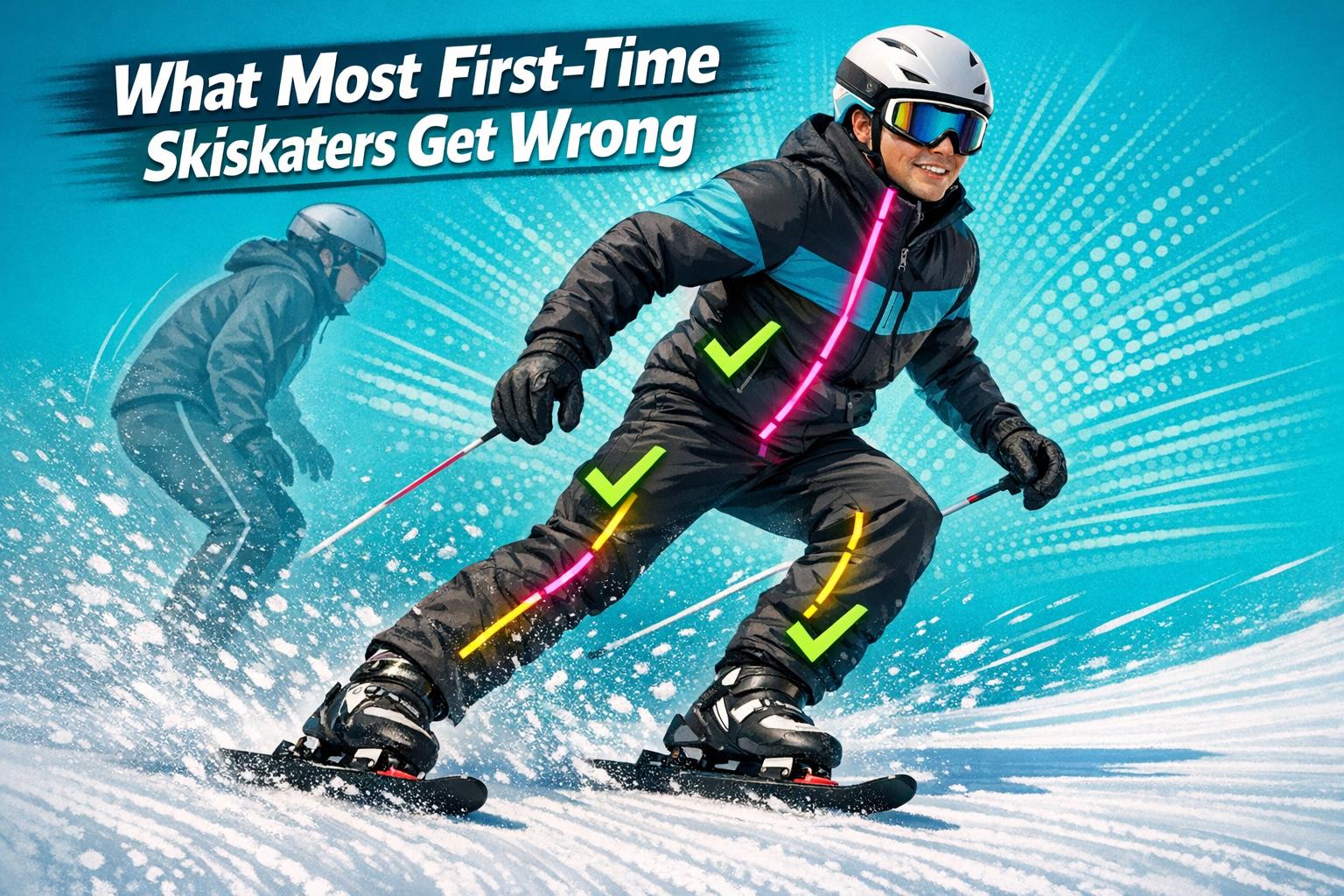
Position your legs shoulder-width apart, bend your knees slightly, and stagger one foot forward to help maintain balance from front to back. Unlike traditional skis, where leaning forward is the norm, skiskates work best with your weight centered - or even slightly shifted back. The Snowfeet team explains it best:
"The key is to keep the front-back balance. Keep your legs at about shoulder width and slightly bend your knees to have a better balance."
They also caution:
"Don't lean forward like you would do with skis, because you don't have the support of regular-length skis to hold you and with almost inevitable certainty, you would fall down."
Once your stance feels solid, it’s time to add movement into the mix. Start by using a "hockey skate" motion - push your legs sideways to propel yourself forward. If you’ve ever ice skated, this should feel pretty natural. To stop, you’ve got options: try a hockey stop by pushing the edges sideways while keeping your weight balanced, or use the built-in heel brake by leaning back.
If you feel wobbly, don’t panic. Lean slightly forward, spread your arms for balance, and lower your center of gravity. On uneven terrain, shift your weight to your heels and lift your toes to stay steady. Practice these moves, and you'll be gliding confidently in no time!
sbb-itb-17ade95
Snowfeet* Skiskates vs. Traditional Skis and Snowboards
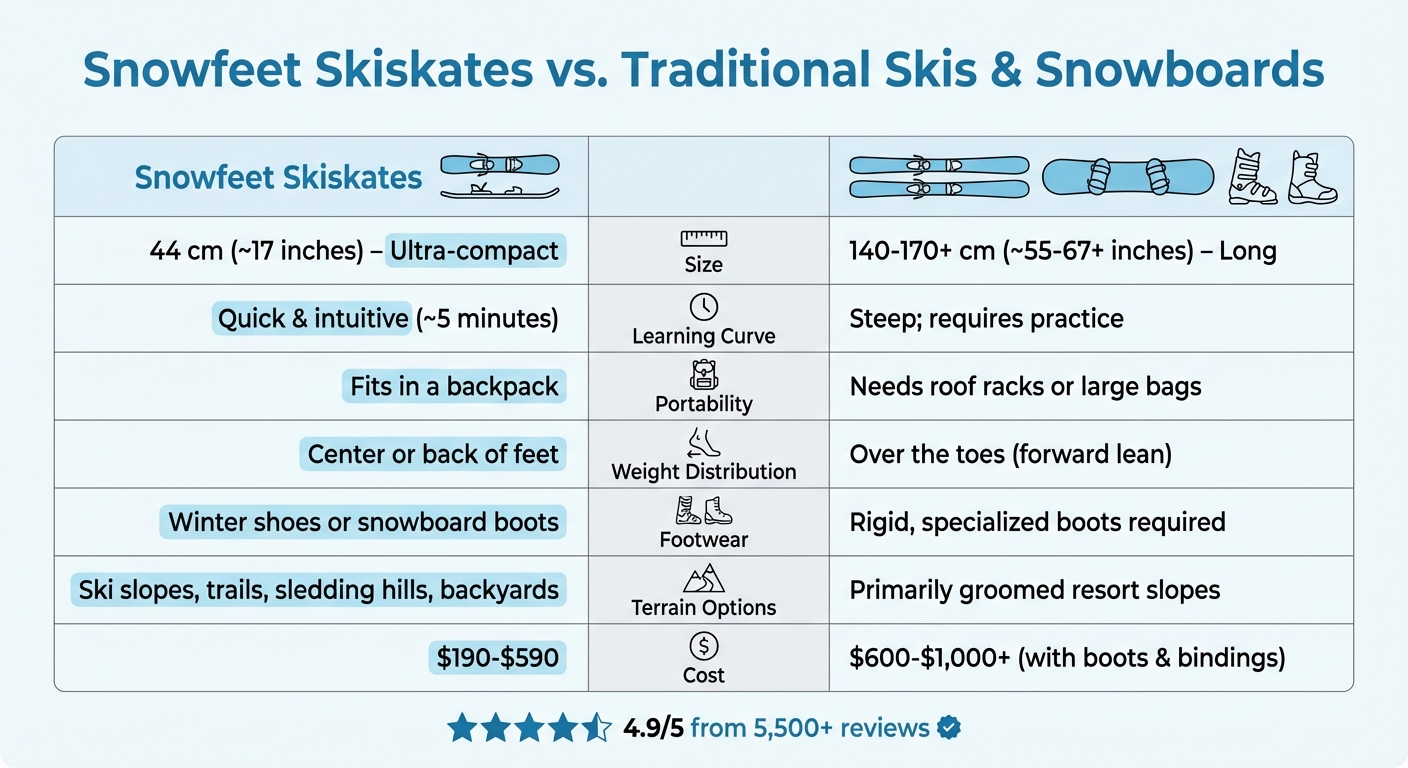
Snowfeet Skiskates vs Traditional Skis and Snowboards Comparison
Ever tried lugging traditional skis through an airport or cramming them into your car? It's no picnic. That’s where Snowfeet* Skiskates shine. At just 44 cm (about 17 inches), they easily fit in a backpack - no roof rack or oversized bag required. Compare that to traditional skis, which range from 140 cm (55 inches) to over 170 cm (67 inches) and demand bulky carriers or specialized storage.
As the Snowfeet Store puts it:
"Snowfeet fit your gear, your car, and your lifestyle."
- Snowfeet Store
When it comes to learning, traditional skiing can be a steep hill to climb (literally). Techniques like the forward-leaning stance and mastering parallel turns take time and practice. Snowfeet*, on the other hand, offers a much quicker learning curve. Thanks to their natural skating motion, anyone familiar with ice skating or rollerblading can pick them up in no time. With over 5,500 verified reviews averaging 4.9 out of 5, it’s clear they’ve nailed the ease-of-use factor. Plus, unlike traditional skis that require rigid, specialized boots, Snowfeet* work with your regular winter shoes or snowboard boots. How convenient is that?
Another major win for Snowfeet*? The price. Models range from $190 to $590, making them far more budget-friendly than traditional ski packages, which typically start at $600 and can climb past $1,000 when you factor in skis, bindings, and boots. Combine that affordability with their portability and simplicity, and you’ve got a game-changer.
Comparison Table: Snowfeet* Skiskates vs. Traditional Gear
Here’s a side-by-side look at how Snowfeet* stacks up against traditional skis and snowboards:
| Feature | Snowfeet* Skiskates | Traditional Skis / Snowboards |
|---|---|---|
| Size | Ultra-compact (approx. 44 cm, ~17 in) | Long (typically 140–170+ cm, ~55–67+ in) |
| Learning Curve | Quick and intuitive (around 5 minutes) | Steep; requires practice and technique |
| Portability | Fits in a backpack | Needs roof racks or large carry bags |
| Weight Distribution | Center or back of the feet | Over the toes (forward lean) |
| Footwear | Works with winter shoes or snowboard boots | Requires rigid, specialized boots |
| Terrain Options | Ski slopes, hiking trails, sledding hills, backyards | Primarily groomed resort slopes |
| Cost | $190–$590 | $600–$1,000+ (including boots and bindings) |
Traditional skis are fantastic for groomed slopes and deep powder, but they’re not exactly versatile. Snowfeet* Skiskates, however, thrive in all kinds of environments - ski slopes, hiking trails, sledding hills, and even your backyard. One happy user summed it up perfectly:
"These skiblades are so much fun and easy to control. Never going back to regular skis."
- Andrew B., Verified User
With their small size, straightforward bindings, and ability to adapt to different terrains, Snowfeet* make winter sports accessible for everyone, no matter your skill level.
Conclusion
Snowfeet* Skiskates make winter sports feel like a breeze. Thanks to their compact size of 44 cm (about 17 inches), built-in heel brake, and easy-to-use bindings, you don’t need advanced balance skills to hop on and enjoy the ride. They’re designed to be fun and accessible for all ages.
The motion feels natural - especially if you’ve ever ice skated or rollerbladed before. With over 50,000 riders around the world and an impressive 4.9 out of 5 rating from more than 5,500 verified reviews, Snowfeet* has nailed the art of making winter sports simple and enjoyable for everyone.
FAQs
Are Snowfeet Skiskates easier to learn than traditional skis?
Yes, Snowfeet Skiskates are much simpler to pick up than traditional skis. At just 17 inches (44 cm) long, their compact size and ability to pair with regular winter boots make them super approachable for beginners. Unlike traditional skis, which often require mastering longer equipment and dealing with specialized boots, Snowfeet are lightweight and designed to feel natural right away.
Their shorter length means you get better control and stability, which helps new riders gain confidence quickly. They take away the intimidating learning curve that comes with traditional skiing. So, if you're looking for a fun and easy way to enjoy winter sports without bulky gear or advanced skills, Snowfeet Skiskates are a fantastic choice!
Can I wear my regular winter shoes with Snowfeet Skiskates?
Yes, you can absolutely use your regular winter shoes with Snowfeet Skiskates! These nifty skates are designed to work with most standard winter footwear, making them super convenient for all kinds of riders. That said, if you want to up your game in terms of stability and control, sturdy shoes or boots with solid ankle support are the way to go. They’ll help you feel more secure and confident as you glide across the snow.
What makes Snowfeet Skiskates stand out is how beginner-friendly they are. Unlike traditional skis or snowboards, you don’t need any special boots - saving you both money and the hassle of extra gear. Plus, they still deliver a fun and exciting ride, whether you’re a newbie or a seasoned snow enthusiast.
What type of terrain works best for Snowfeet Skiskates?
Snowfeet Skiskates are at their best on smooth, well-maintained surfaces like groomed ski slopes and compacted snow trails. These kinds of terrain offer the perfect mix of stability and control, making them ideal for beginners or anyone just dipping their toes into winter sports.
Although Snowfeet Skiskates are designed to be easy to use and beginner-friendly, they’re specifically made for packed snow and moderate slopes. Unlike traditional skis or snowboards that can tackle a variety of terrains, these skiskates excel on flat or gently sloping groomed areas. They’re a fun, laid-back option for casual riders and anyone wanting a fresh, exciting way to enjoy the snow.











Leave a comment
This site is protected by hCaptcha and the hCaptcha Privacy Policy and Terms of Service apply.