



















Quick Summary
Choosing the right boots for Skiskates depends entirely on your riding style and terrain. Regular winter boots are lightweight and comfortable for casual trails or beginners but lack the ankle support needed for steep or icy slopes. Ski boots deliver maximum stability, precision, and edge control for fast, aggressive downhill carving, though they are heavy and rigid to walk in. Snowboard boots offer the ideal middle ground, blending excellent comfort, flexibility for freestyle tricks, and reliable ankle support. Ultimately, regardless of your choice, ensure your footwear is waterproof and provides solid ankle support to guarantee safety and peak performance.
Winter Boots: Comfortable, lightweight, and great for casual slopes or hiking trails. They work best with the shorter 50 cm skiskates. However, they lack the ankle support needed for aggressive runs or steep slopes.
can-you-skip-the-bulky-ski-boots-and-just-wear-your-regular-winter-shoes-on-skiskates-yes-but-your-choice-can-make-or-break-your-winter-ride-while-your-comfy-winter-boots-are-perfect-for-casual-trails-and-hiking-taking-them-down-steep-slopes-is-a-recipe-for-a-wipeout-due-to-lack-of-ankle-support-want-to-know-exactly-how-to-adjust-your-bindings-for-the-perfect-fit-which-skiskate-length-matches-your-boots-and-how-to-avoid-the-most-common-safety-mistakes-dive-into-the-full-breakdown-below-1
Ski Boots: Offer the best control and stability for fast, sharp turns. Perfect for more intense downhill riding but can feel heavy and stiff.
Snowboard Boots: A middle ground. They’re comfy, provide good ankle support, and are ideal for tricks and freestyle moves on slopes.
Pro Tip: Whichever boots you choose, make sure they’re waterproof and offer solid ankle support for safety and performance. Snowfeet Skiskates are fun, nimble, and easy to use, making them a great option for winter sports without the bulk of traditional skis.
Want the full breakdown? Keep reading for a closer look at how each boot type performs with skiskates.
can-you-skip-the-bulky-ski-boots-and-just-wear-your-regular-winter-shoes-on-skiskates-yes-but-your-choice-can-make-or-break-your-winter-ride-while-your-comfy-winter-boots-are-perfect-for-casual-trails-and-hiking-taking-them-down-steep-slopes-is-a-recipe-for-a-wipeout-due-to-lack-of-ankle-support-want-to-know-exactly-how-to-adjust-your-bindings-for-the-perfect-fit-which-skiskate-length-matches-your-boots-and-how-to-avoid-the-most-common-safety-mistakes-dive-into-the-full-breakdown-below-1-1
Want the full breakdown? Keep reading for a closer look at how each boot type performs with skiskates.
1. Regular Winter Boots
Compatibility with Skiskate Bindings
The 50 cm model works better with ski or snowboard boots. The bindings are adjustable to fit shoe sizes 6–13 US (38–47 EU) and can be tweaked easily with a screwdriver. If you’re using smaller boots, you can move the strap to a tighter hole for a snug fit. For larger boots, an extra-long strap does the trick. The Snowfeet team suggests choosing waterproof boots with solid ankle support. If you’ve got smaller feet, snowboard boots might give you a better fit, though they’re not a must. For added flexibility, Snowfeet offers binding options, including the Standard version, which comes with an extra strap for bigger boots. A proper fit is key for better control and performance on the slopes.
 Product Link: Snowfeet* 50 CM | Ski Skates
Performance on Slopes
Once your bindings are dialed in, let’s talk about how winter boots perform on the slopes with Snowfeet*. Paired with winter boots, these skates are great for quick turns, jumps, and tricks. That said, winter boots don’t offer the same leverage as ski boots, so balance becomes even more important. Keep your weight centered over your midfoot, with knees slightly bent and ready to move. Snowfeet work best on groomed snow, hiking trails, or sledding hills. However, they’re not ideal for deep powder (anything over 4 inches) or steep, icy slopes. To stop, you can use hockey stops by turning your feet perpendicular to the slope or rely on the built-in heel brake. A slight forward stance helps you handle bumps and vibrations.
Comfort and Fit
When it comes to comfort and mobility, winter boots take the win over ski boots. They’re lightweight, making hiking and quick transitions much easier. The 38 cm Snowfeet model has earned a solid 4.9/5 rating from over 5,800 reviews, with users loving how portable and easy these skates are compared to traditional skis. Snowfeet* make it possible to enjoy winter sports without needing specialized footwear.
"Snowboard boots work well on ski slopes, but for hiking or having fun on slopes or hills, winter shoes are more convenient." – Snowfeet Team
Safety Considerations
Regular winter boots are a safe choice for Snowfeet* Skiskates, as long as they provide good ankle support. The metal ski edges and built-in heel brake offer dependable stopping power. With over 50,000 riders worldwide, the Snowfeet team has observed that falls tend to be less severe compared to traditional skiing or snowboarding. However, since winter boots lack the rigid protection of ski boots, wearing wrist guards and helmets is a smart move - especially to protect against falls caused by catching a tip or hitting a rut. Stick to groomed terrain and avoid deep powder or uneven slopes. After using, make sure to dry the metal edges to prevent rust.
2. Ski Boots
Compatibility with Skiskate Bindings
The 44 cm Skiskates model comes with a ski boot binding option that's super easy to use. It features a non-release binding system that adjusts quickly - no tools needed - to fit boot sizes ranging from 4.5–14.5 US (36–49 EU or 22.5–32.5 MP). Unlike traditional ski bindings, these don’t pop off automatically if you fall. That’s why safety leashes are included to keep your skiskates securely attached. The setup is straightforward and doesn’t require any on-slope tinkering. If you already own ski boots and prefer maximum stability for more intense riding, this binding option is a solid pick. It’s designed to give you confidence and control on the slopes.
 Product Link: Snowfeet* 44 CM | Skiskates | Snowblades Skiboards Mini Skis
Performance on Slopes
Ski boots are all about control. Their rigid design helps transfer power precisely, which makes them ideal for groomed slopes. The 44 cm Skiskates have earned a stellar 5.0/5 rating from 113 verified reviews. Many riders love how natural they feel, especially if they have a background in ice skating or inline skating.
"Skiskates offer an easy, versatile ride that enables a wide range of tricks with minimal restrictions." – Zbyněk, Snowfeet Founder
These skiskates combine the movement of ice skating with the thrill of downhill skiing. Compared to traditional long skis, they offer unmatched agility. Even with the stiffness of ski boots, Snowfeet skiskates deliver a unique mix of control and flexibility, making them a standout choice for adventurous riders.
Comfort and Fit
Here’s the trade-off with ski boots: they deliver fantastic control but aren’t exactly the most comfortable. They’re heavy, rigid, and make walking more of a chore compared to snowboard or winter boots. But if you’re all about performance and love a fast, aggressive ride, the ski boot binding option is the way to go. As the Snowfeet team puts it, "If you're used to wearing your ski boots and love the fast aggressive ride, go for the ski bindings".
Safety Considerations
Ski boots are excellent for keeping your ankles firmly supported, which is a key safety feature when skiskating. Since the bindings don’t release automatically, the included safety leashes are a must to keep your skiskates secure if your boots loosen. The skiskates also come with metal edges and an anti-slip surface for reliable control. To keep them performing at their best, make sure to wax the base regularly - especially on wood core models - to maintain speed and prevent snow from sticking. And remember, these skiskates are not built for deep powder (anything over 4 inches) or extremely steep slopes. A little maintenance and the right conditions will go a long way in keeping your skiskates in top shape.
3. Snowboard Boots
Compatibility with Skiskate Bindings
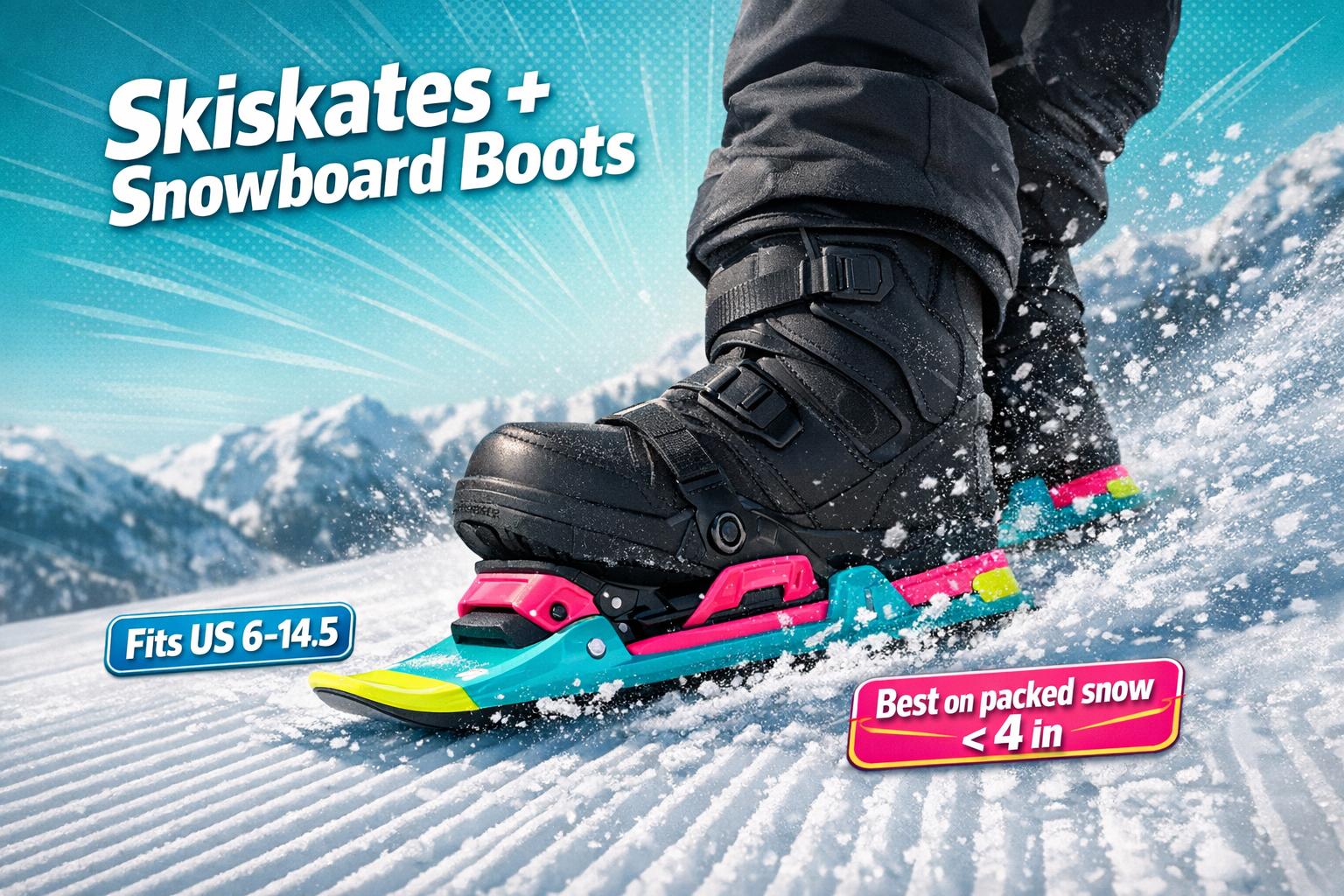
Snowboard boots bring a great mix of comfort and flexibility to the table, making them a solid choice for pairing with Snowfeet* Skiskates. Specifically, they work perfectly with the 44 cm Snowfeet* Skiskates, thanks to specialized bindings. These bindings use a two-strap system - one strap goes around your ankle, and the other across your toes. The design is adapted to the slim profile of skiskates and fits US sizes 6–14.5 (EU 38–49). The bindings are non-release, meaning they stay secure even if you take a tumble, which is essential for equipment under 100 cm in length. You can fine-tune the fit with the included adjustment tool, using different strap holes for smaller boots or extra-long straps for larger sizes (US sizes 12–13).
 Product Link: Snowfeet* 44 CM | Skiskates | Snowblades Skiboards Mini Skis
"At snowfeet we developed a unique snowboard bindings specifically designed for skiboards. They are affordable, easily adjustable to snowboard boots of any size, with an anti-slippery surface for perfect shoe grip." – Snowfeet Team
Performance on Slopes
When it comes to performance, snowboard boots shine in areas like tricks, jumps, and freestyle moves. They offer a more natural, skating-like motion on the slopes, unlike ski boots, which are better suited for aggressive carving. Riders using the 44 cm Skiskates often highlight how lightweight and easy they feel compared to traditional ski gear, earning them a 5.0/5 rating in verified reviews. However, while snowboard boots provide excellent flexibility, they might sacrifice a bit of stability. To balance this, opt for high-quality boots that offer strong ankle support.
"Snowboard bindings give you more flexibility while performing all kinds of tricks, they're super comfortable and you can walk with them anywhere without a problem." – Snowfeet Team
In short, snowboard boots are all about dynamic movement and freedom, making them a favorite for freestyle enthusiasts.
Comfort and Fit
One of the standout perks of snowboard boots is their comfort. Unlike the rigid plastic shells of ski boots, snowboard boots are soft and easy to walk in - whether you're strolling around the resort or heading back to your car. They also avoid the painful pressure points that ski boots can cause. High-quality snowboard boots are built to last, often enduring 50–70 days of intense use. To keep them in good shape, make sure to fasten the straps snugly before each ride and air-dry the liners after use.
"I love how easy it is to put snowboard boots on and walk with them, they don't hurt like ski boots, and I feel more flexible during the ride." – Snowfeet Team
Safety Considerations
Snowfeet* prioritizes safety with snowboard boot bindings that provide moderate to high ankle support. The non-release bindings ensure a secure fit, but it’s always a good idea to double-check that your straps are tight before hitting the slopes. Like any gear, proper adjustment and fit play a big role in getting the most out of your Snowfeet* Skiskates.
sbb-itb-17ade95
Snowfeet* & Skiskates Complete Guide
Pros and Cons
Choosing the right boots for your Snowfeet* ride can make or break your experience. Here's a quick comparison of regular winter boots, snowboard boots, and ski boots when paired with skiskates:
| Boot Type | Pros | Cons | Best For |
|---|---|---|---|
| Regular Winter Boots | Comfortable, lightweight, and no extra gear needed; great for walking or hiking | Limited ankle support; not ideal for pro-level Skiskate bindings; less control on fast runs | Beginners, casual rides on trails, and sledding hills |
| Snowboard Boots | Comfortable with good ankle support; flexible for tricks and easy to walk in | Bulky; may not fit larger binding straps; less aggressive than ski boots | Freestyle sessions, snow parks, and all-day slope comfort |
| Ski Boots | Excellent stability and edge control; perfect for fast, aggressive carving | Heavy, often uncomfortable, hard to walk in; can be pricey if you don’t already own a pair | Experienced riders and high-speed downhill skiing |
Here’s the deal: For longer skiskates, like the 50 cm models, you’ll need better ankle support and control. If your goal is to hit real ski slopes, snowboard boots strike a nice balance between comfort and performance. Meanwhile, ski boots are your go-to for stability and precision, ideal for carving at high speeds.
Whatever you choose, make sure your boots are waterproof and offer solid ankle support. This not only improves your boot-binding connection but also reduces the chance of injuries.
One last tip: keep your skiskates waxed daily for peak performance.
With 90% of 2,265 reviewers giving Snowfeet products a 5-star rating, picking the right boot can take your ride from good to unforgettable.
Conclusion
When it comes to picking the right boots for your Snowfeet* 50 cm Ski Skates, it all boils down to your riding style and the terrain you’re tackling. Each boot type brings its own perks to the table.
For those planning to hit the slopes more seriously, snowboard boots are a fantastic choice. They provide excellent ankle support, all-day comfort, and the flexibility you need for tricks and freestyle riding. Plus, they’re warm and much easier to walk in compared to traditional ski boots, making them a great middle ground between performance and convenience.
Now, if you’re all about speed and precision - think steep runs and sharp carving - ski boots are your best bet. They deliver top-notch stability and edge control, giving you that high-performance feel. Just keep in mind, they’re stiffer and heavier, which can make walking around a bit of a chore.
Whichever boots you go with - winter, snowboard, or ski - make sure they’re waterproof and provide strong ankle support. With over 50,000 riders worldwide and a stellar 4.9/5 rating from 5,800+ verified reviews, Snowfeet* proves its reliability across all boot types. Choose the boots that fit your vibe, and enjoy a winter sport that’s lightweight, portable, and way more affordable than traditional skiing.
No chairlifts? No problem. Get out there and embrace the freedom.
FAQs
What kind of boots work best for skiskating?
For an awesome skiskating experience, you’ll want to go with waterproof winter boots or snowboard boots. These boots strike the perfect balance between comfort, support, and flexibility - exactly what you need to stay safe and perform well on the slopes. Snowfeet skiskates are designed to work perfectly with these types of footwear, making them a top choice for skiskating fans.
Now, while you can use regular winter boots as long as they’re waterproof and supportive, they might not give you the snug fit and mobility that high-performance skiskating calls for. What sets Snowfeet gear apart is its lightweight and portable design. Unlike bulky ski or snowboard equipment, Snowfeet skiskates are easy to carry and super versatile, letting you enjoy the sport without hassle.
To get the most out of your time on the snow, go for boots that focus on comfort and stability. Pair them with Snowfeet skiskates, and you’re all set to take your winter adventures to the next level!
Can you safely use regular winter boots with skiskates on steep slopes?
Using regular winter boots with skiskates on steep slopes? Not the best idea. These boots usually don’t offer the right support or binding compatibility for skiskating, especially when things get tricky on challenging terrain. Without solid ankle support and a snug, secure fit, you’re looking at less control and a higher risk of injury - definitely not worth it.
If you want a safer and smoother ride, go for specialized boots made for skiskating, like those designed to work with Snowfeet skiskates. These boots are built to give you the stability, comfort, and precise fit you need to handle skiskating confidently. Sure, regular winter boots might get you by on flat or gentle slopes, but they just can’t keep up when the terrain gets steeper.
Are snowboard boots or ski boots better for tricks and freestyle skiskating?
Snowboard boots and ski boots each have their strengths, but when it comes to tricks and freestyle skiskating, snowboard boots tend to take the spotlight. Thanks to their softer flex and better ankle mobility, they make jumps, spins, and other dynamic moves feel more natural. Ski boots, while excellent for precision and control on the slopes, can feel too rigid for the fluid movements freestyle activities demand.
Now, pair those snowboard boots with Snowfeet skiskates, and you've got a winning combo. Snowfeet’s lightweight and portable design works perfectly with the flexibility of snowboard boots, creating a setup that’s both fun and user-friendly. Whether you’re just starting out or looking to try something new, this pairing delivers a mix of comfort, ease, and performance that’s hard to beat for freestyle tricks and playful adventures.
Editor: Karolina R.
Last Update: July 14, 2026











Leave a comment
This site is protected by hCaptcha and the hCaptcha Privacy Policy and Terms of Service apply.