


















Quick Summary
Skiskates are a game-changing winter sports innovation that packs the thrill of skiing into an ultra-portable, 17-inch frame, perfectly blending the agile, side-to-side freedom of ice skating with the smooth glide of a ski. Fitting easily into a standard backpack and compatible with ski boots, snowboard boots, or sturdy winter shoes, these lightweight powerhouses offer a budget-friendly and low-maintenance alternative to heavy, expensive traditional gear.
Skiskates are like a mix of skis and ice skates - short, lightweight, and designed for quick, fun rides on snow. They’re small enough to fit in a backpack and work with ski or snowboard boots. Perfect for groomed slopes and snow parks, they’re great for anyone with ice skating or inline skating experience. Beginners can learn in minutes, but balancing takes some practice. They’re not ideal for deep powder or steep terrain but excel on packed snow. At $299–$550, they’re a compact, affordable alternative to full ski setups.
Key Highlights:
- Length: 17 inches (44 cm) – fits in a backpack.
- Best for: Groomed slopes, snow parks, and light powder (up to 4 inches).
- Learning Curve: Easy for skaters; beginners need to focus on balance.
- Price: $550–$690
- Boot Options: Works with ski boots, snowboard boots, or sturdy winter shoes.
- Portability: Lightweight (under 5 lbs) and easy to store.
These are a fun, simple way to enjoy the slopes without heavy gear. Whether you’re an experienced skater or just looking for something new, they’re worth trying out.
How Skiskates Work and Who Should Use Them
Skiskate Design and Function
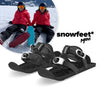
Snowfeet's Skiskates are compact yet powerful. At just 17 inches (44 cm) long, they’re built with the same wood core and cap construction you’d find in high-performance skis. Add in metal edges for precise carving and stopping, plus a ski-style base for smooth gliding, and you’ve got gear that’s more than just a novelty - it’s the real deal.
What makes them unique is how they shift movement. Instead of the straight-line motion of traditional skis, Skiskates mimic the side-to-side push you’d use in ice skating or rollerblading. If you’ve spent time on hockey skates or inline blades, you’ll feel right at home. The metal edges grip the snow for sharp turns and quick stops, while the 50 cm model take it up a notch with a raised platform that makes carving on groomed runs even smoother.
Bindings come in two flavors: one for ski boots, giving you maximum control, and another for snowboard boots, which are comfier and easier to walk in. Both setups use the same sturdy 44 cm frame and feature non-release bindings that stay locked in place, so you can focus on having fun without worrying about accidental slips.
Now that we’ve covered the design, let’s talk about who will get the most out of these little powerhouses.
 Product Link: Snowfeet* 44 CM | Skiskates | Snowblades Skiboards Mini Skis
Best Users for Skiskates
If you’re an ice hockey player or an inline skater, you’ll pick up Skiskates in no time. The lateral push they require will feel second nature, making the transition seamless.
Families love them too. Their small size means you can toss them in a backpack - no need for a roof rack or extra baggage. Plus, with the option to use either snowboard or ski boots, it’s easy to share them between parents and kids. They’re a great choice for all ages, from 5 to 105, and perfect for quick trips to the sledding hill or beginner slopes.
Already own traditional skis? Skiskates make an excellent backup or playful alternative. They’re ideal for snow parks, short groomed runs, or testing out tricks and spins. Reviews consistently praise their agility and stability, offering a fun, nimble experience that’s hard to match with longer skis.
For beginners, there’s a bit of a learning curve. Since they’re shorter, they require more focus on balancing front-to-back compared to traditional skis, which naturally encourage a more upright stance. But once you get the hang of it, the control and responsiveness are worth the effort. Skiskates deliver a ride that’s both dynamic and incredibly fun.
How Skiskates Actually Feel When You Use Them
Learning to Use Skiskates: What to Expect
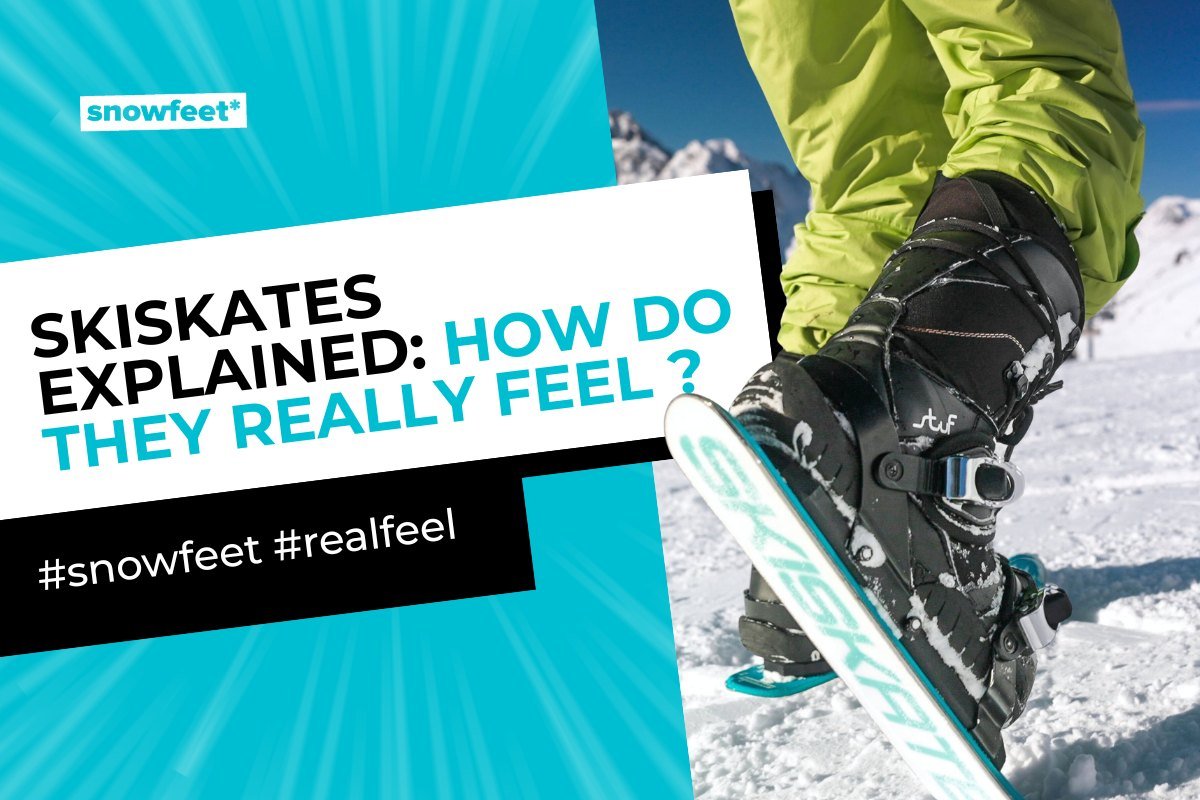
Strapping on Snowfeet*'s 44 cm (about 17-inch) Skiskates for the first time feels more like ice skating than skiing. The lightweight design gives you a free and almost weightless sensation - none of that bulky, heavy gear you’d associate with traditional skis. If you’ve ever tried hockey skates or inline blades, you’ll probably get the hang of these in just 5 to 10 minutes. Even if you’re new to skating altogether, most people feel comfortable after a couple of trips to the slopes. The trick? Mastering the front-to-back balance. Keep your weight centered or slightly back; leaning forward can cause the tips to catch in the snow. A good starting stance is shoulder-width apart, knees bent, with one foot slightly ahead for stability.
"I found these so easy to turn and control. I have recreational Nordic experience but was able to manage these great." - Lynn, Verified Customer
Unlike traditional skis, which naturally push you into a forward-leaning stance, Skiskates require you to actively engage your balance. But once you adapt, they’re surprisingly easy to control. Start on groomed runs - where the snow is firm and consistent - to practice techniques like the hockey stop, where you distribute weight evenly and push your heels out. The built-in heel brake is a handy feature for managing speed. These basics set you up for tackling more varied snow conditions.
 Product Link: Snowfeet* 44 CM | Skiskates | Snowblades Skiboards Mini Skis
Movement and Control on Snow
Once you’ve got the basics down, Skiskates shine on groomed trails. They’re incredibly nimble and responsive, letting you carve tight turns, pivot quickly, and even pull off jumps with ease. Their compact 17-inch length makes them super maneuverable, giving you a playful, dynamic experience. Instead of the straight gliding motion of traditional skis, you’ll find yourself pushing side-to-side, making sharp cuts, and transitioning smoothly across the terrain.
That said, managing speed takes a bit more focus. The smaller surface area requires you to stay actively balanced, especially when moving fast. On packed snow or light powder (up to 4 inches deep), they perform exceptionally well, with metal edges that grip securely for precise turns.
"These skiblades are so much fun and easy to control. Never going back to regular skis." - Andrew B., Verified Customer
However, these aren’t designed for every condition. Avoid steep slopes and deep powder (anything over 4 inches). For those situations, longer skiboards in the 99–120 cm range are a better fit. But on groomed runs, snow parks, and even hiking trails, Skiskates deliver a fast, light, and intuitive ride that’s hard to beat.
How Skiskates Perform in Different Snow Conditions
Where Skiskates Work Best
Snowfeet* Skiskates shine on groomed slopes and packed snow - exactly the type of terrain that over 50,000 riders swear by. Thanks to their metal edges, they grip hard-packed surfaces with ease, letting you carve tight turns or pull off hockey stops just like traditional skis. But here’s the twist: they offer the agility of skating, without the bulk of full-length skis.
These little powerhouses aren’t just for resorts. They’re great for urban areas and local hills too. On icy patches, those metal edges provide solid traction, though you’ll need to stay sharp since their shorter length can make balance trickier. In snow parks, their quick response makes jumps and tricks feel more natural. And if you’re in light powder - up to about 4 inches deep - they hold up well as long as you shift your weight slightly to the back. A little pro tip: keep them waxed to maintain speed, especially in sticky or wet snow. That said, like any gear, they have their limits.
Conditions That Challenge Skiskates
While Skiskates dominate on packed snow, they do hit a wall in certain conditions. Deep powder? Not their strong suit. With snow deeper than 4 inches, their small size struggles to keep you afloat, and you’ll find the tips catching more often, increasing the risk of falls.
"Using Snowfeet in deep powder is not a good idea. They work better on packed or groomed snow rather than in soft, deep snow."
– Snowfeet Official FAQ
Steep slopes can also be tricky. Their short 44 cm length demands precise balance, especially on uneven terrain with bumps, holes, or crusty patches. If you’re planning a backcountry adventure with steep descents or lots of deep snow, you might want to check out Snowfeet’s longer Skiblades. These are designed to offer better stability in those conditions. But for resort runs, snow parks, and well-maintained trails, the 44 cm Skiskates are hard to beat.
sbb-itb-17ade95
Why Skiskates Are Easy to Transport and Store
When it comes to gear, Snowfeet* Skiskates stand out not just for their performance but also for how easy they are to carry around and maintain.
Size and Weight Perks
Measuring only 44 cm (about 17 inches), Snowfeet* Skiskates are compact enough to fit snugly into a standard backpack. Compare that to traditional skis, which are typically 59 to 75 inches long and require bulky storage options like a roof rack or oversized ski bags.
And the weight? Skiskates come in at less than 5 lbs, while traditional ski setups (not even counting the boots) can weigh between 8 and 12 lbs. That lightness makes them perfect for hiking to remote backcountry spots or simply commuting from your apartment to the nearest hill. As Snowfeet rider Def Acres puts it:
"Super easy, super light; don't need to lug my skis around and you can wear them pretty much all day."
For those living in tight spaces, like city apartments, Skiskates are a dream. You can stash them on a shelf, in a closet, or even under your bed - no need for bulky storage solutions.
Simple Setup and Low Maintenance
Getting your Snowfeet* Skiskates ready is a breeze. All you need is a screwdriver to adjust the binding straps for a snug fit with your ski boots, snowboard boots, or even sturdy winter shoes. Compare that to traditional skis, which often require professional mounting and fine-tuning (like DIN adjustments) before you can even start.
Maintenance is just as hassle-free. A quick wipe to remove snow after use and drying the metal edges to prevent rust is usually all it takes. Occasionally, you might sharpen the edges with a file and apply a bit of oil before storing them to keep moisture at bay. Unlike traditional skis, which often need waxing, base grinding, and professional tuning, Skiskates have a durable wood core and a simple base design that keep upkeep minimal. That means more time enjoying the slopes and less time fussing with your gear.
Skiskates Compared to Traditional Skis and Snowboards
Let’s break down how Snowfeet* Skiskates measure up against traditional skis and snowboards. These compact skates are ready to use in just 5–15 minutes, especially if you’ve got some ice skating or inline skating experience. That’s a huge time saver compared to the days - or even weeks - it can take to get comfortable with skis or snowboards. Plus, they’re easier on the wallet. While a full ski setup can run $600–$1,000+ and requires specialized boots, Snowfeet* Skiskates start at $550 and work with your regular waterproof winter boots or snowboard boots. Their lightweight, compact design also makes them more agile and responsive than the clunky resort rentals you might be used to.
Side-by-Side Comparison Table
| Factor | Snowfeet* Skiskates (44 cm) | Traditional Skis | Snowboards |
|---|---|---|---|
| Learning Time | 5–15 minutes | Days to weeks | Days to weeks |
| Length | 17 inches (44 cm) | 59–75 inches | 48–65 inches |
| Weight | Under 5 lbs | 8–12 lbs (without boots) | 6–10 lbs |
| Portability | Backpack-friendly | Bulky storage required | Bulky storage required |
| Boot Compatibility | Winter shoes, snowboard boots, or ski boots | Ski boots only | Snowboard boots only |
| Price Range | $550–$690 | $600–$1,000+ | $400–$800+ |
| Best Terrain | Groomed slopes, snow parks, trails | All-mountain, powder | All-mountain, parks |
| Maintenance | Minimal – wipe down, dry edges | Regular waxing, edge tuning, professional service | Regular waxing, edge tuning |
Of course, there’s a trade-off. Traditional skis and snowboards are better suited for deep powder and steep, uneven terrain. But if you’re sticking to groomed runs, snow parks, or want the freedom to explore off the beaten path without hauling heavy gear, Snowfeet* Skiskates deliver a lighter, faster, and more budget-friendly way to hit the slopes.
Conclusion: Should You Try Skiskates?
If you’re after a quicker, simpler way to embrace winter fun without lugging around heavy ski gear, Snowfeet* Skiskates might be just what you need. These compact skates work with your regular waterproof winter boots or snowboard boots, and you can pick them up in no time - no weeks of practice required like with traditional skis or snowboards.
With prices ranging from $550 to $690, they’re a more affordable option compared to a full ski setup, and they offer tons of flexibility. You can glide down groomed slopes, tackle snow parks, or even explore hiking trails. Maintenance is a breeze - just wipe them down and dry them off - and they’re more responsive than your typical resort rental gear. Plus, with over 50,000 riders worldwide and an impressive 4.9/5 rating from 5,800+ verified reviews, it’s clear they’re making a splash in the winter sports scene.
That said, they’re not built for deep powder or super steep, uneven terrain. But for groomed runs and casual snow adventures, they shine. If you’re looking for the freedom to move easily on snow without the hassle of bulky equipment or sky-high costs, Snowfeet* Skiskates are worth a shot. Designed for all ages - from 5 to 105 - they’re perfect for beginners or anyone ready to ditch traditional gear for something fresh and fun.
FAQs
How easy is it to learn Skiskates compared to traditional skis?
Skiskates, much like Snowfeet, are a breeze to pick up compared to traditional skis. Thanks to their small size and lightweight build, they feel natural and easy to handle, especially for beginners. Plus, here’s the kicker: you can use them with your regular winter boots. No need for fancy, specialized gear, which makes them way less daunting for first-timers.
Now, traditional skis? They’re awesome for diving into advanced techniques, but let’s be honest - they’re not exactly beginner-friendly. Their longer length and the need for precise balance can make those first few runs feel more like a workout than fun. Skiskates, on the other hand, are all about building confidence fast. They let you move freely and enjoy the slopes without the steep learning curve. It’s a playful, stress-free way to dip your toes into snow sports and have a blast from the get-go.
Can you use Skiskates in deep powder or on steep slopes?
Skiskates, much like Snowfeet, shine on groomed slopes, park trails, and even hiking paths. However, they’re not ideal for deep powder or tackling steep terrain. Their compact size - about 17 inches - doesn’t offer the float or stability needed for those more challenging conditions.
But here’s the upside: their lightweight, portable design is perfect for casual, playful rides on packed snow. They make winter sports easy to try and add a fun twist for anyone looking to enjoy the season.
What kind of boots can I use with Skiskates?
Skiskates work well with most winter footwear, including snowboard boots and waterproof winter shoes. To get the best experience, go for shoes that offer solid ankle support. This helps with better control and keeps you comfortable while you're out on the snow.
Steer clear of soft or low-cut shoes - they just don’t provide the stability you need for a smooth ride. With the right pair of shoes, Skiskates let you dive into winter sports without dealing with the heft of traditional skis or snowboards.
Editor: Karolina R.
Last Update: July 8, 2026













Leave a comment
This site is protected by hCaptcha and the hCaptcha Privacy Policy and Terms of Service apply.