




















If you want to skate on snow, Skiskates are your best pick. At just 44 cm long, they’re designed to mimic the quick, agile moves of ice skating or rollerblading. Think sharp turns, spins, and hockey stops. On the other hand, Short Skis (Skiblades), available in 65 cm and 99 cm lengths, blend skiing and skating. They’re more stable and better for carving or handling powder but feel closer to skiing than skating.
Quick Takeaways:
- Skiskates (44 cm): Closest to skating. Great for tricks, agility, and flat terrain.
- Short Skis (65 cm & 99 cm): Mix of skating and skiing. Better for speed, control, and varied snow conditions.
Quick Comparison:
| Feature | Skiskates (44 cm) | Short Skis (65 cm) | Short Skis (99 cm) |
|---|---|---|---|
| Feel | Like skating | Skating + skiing | More like skiing |
| Best For | Tricks, agility | Carving, tight turns | Speed, powder |
| Price | From $490 | From $550 | From $590 |
| Learning Curve | Easy for skaters | Easy | Easy |
If you’ve got skating or hockey experience, Skiskates will feel natural. Want more control and versatility? Go for Short Skis. Both options are compact, lightweight, and way easier to carry than long skis. Ready to hit the slopes? Let’s dive into the details!
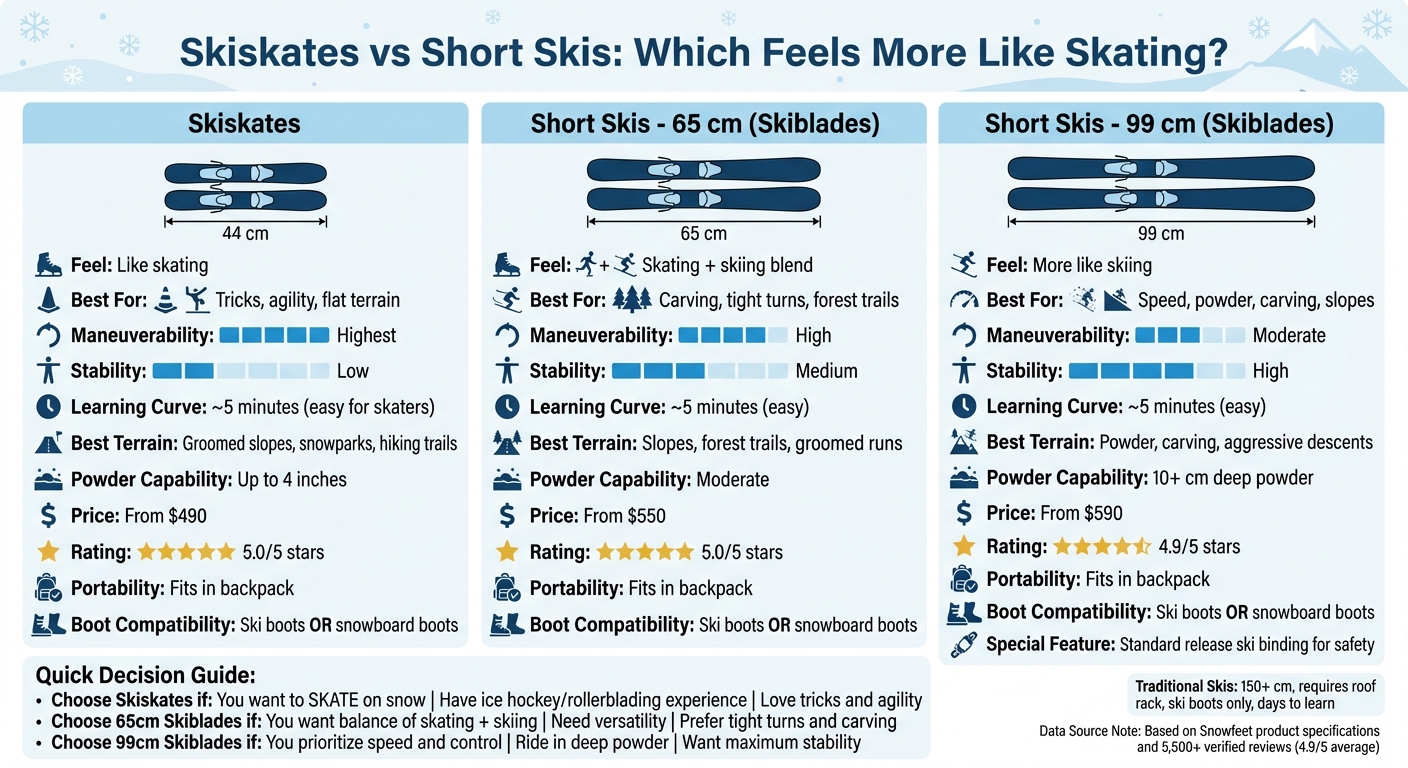
Skiskates vs Short Skis Comparison Chart: Length, Performance, and Price
Snowboarder tries Snowfeet* | Which Snowfeet* Short Ski is the Best? | Snowblades 44, 65, 99 Review
What Are Skiskates and Short Skis?
Skiskates and short skis bring a skating-inspired twist to snowy slopes. Both are much shorter than the traditional 150+ cm skis, but they each offer a unique way to move on snow.
The main difference lies in their length and how they handle. Snowfeet* Skiskates are just 44 cm (17.3 in) long, giving you a skating-like experience. On the other hand, Snowfeet* Skiblades, which come in lengths ranging from 65 cm to 99 cm (26 to 39 in), combine skiing techniques with quick, sharp movements. Both options are compatible with ski boots and snowboard boots, offering versatility that traditional setups can't. Plus, their compact size makes them super easy to transport - no need for roof racks or oversized bags. Let’s dive into what makes each option stand out.
What Are Skiskates?
If you’ve ever wanted to skate on snow, skiskates are your answer. Measuring just 44 cm, Snowfeet* Skiskates are the shortest skis in the world, designed to mimic skating movements. Think of them as snow skates. Built with a wood core and cap construction like high-end skis, they pack a lot of performance into a tiny package.
Their short length allows for moves you’d struggle to pull off with regular skis - like quick spins, backward riding, and sharp turns. It’s a lot like inline skating or ice hockey on snow. You can choose bindings for either ski boots (for added stability) or snowboard boots (for extra comfort). Starting at $490, these skiskates have earned rave reviews, with a perfect 5.0/5 star rating from users.
They’re best suited for groomed trails, packed snow, and snow parks. While they can handle up to 4 inches of light powder, they’re not made for deep powder. And here’s the cool part: if you’ve got skating or hockey experience, you’ll likely master them in just one day.
What Are Short Skis?
Short skis offer a blend of traditional skiing and skating-style agility. Snowfeet* Skiblades come in two lengths - 65 cm (26 in) and 99 cm (39 in) - making them a middle ground between skiskates and long skis. They feature a durable wood core and a wider base for added stability.
The 65 cm version is perfect for carving on groomed slopes and navigating tight spaces like forest trails. Meanwhile, the 99 cm model handles deeper powder better and provides extra stability. The 99 cm option even includes a standard release ski binding for added safety.
"Basically Snowblades are longer than Skiskates and feel more like skis rather than skates." - Snowfeet Team
Prices start at $550 for the 65 cm model and $590 for the 99 cm version. The 65 cm model boasts a 5.0/5 star rating, while the 99 cm version comes in close with 4.9/5 stars. Thanks to their wider base and slightly longer length, they’re beginner-friendly and offer a more balanced ride compared to the ultra-short skiskates. Like skiskates, they’re compatible with both ski boots and snowboard boots, so you can choose the setup that feels right for you.
Design and Build Comparison
Snowfeet* Skiskates and Skiblades bring a lightweight, portable twist to the world of skiing, offering a practical alternative to traditional skis from brands like Rossignol and K2. Picture this: instead of lugging around skis that are over 150 cm (59+ in) long and require roof racks or oversized bags, you’ve got gear that fits neatly into a backpack. Snowfeet* Skiblades, available in 65 cm and 99 cm lengths, are compact enough to toss in your car without a second thought. This clever design makes hitting the slopes easier than ever.
All three models - the 44 cm Skiskates, 65 cm Skiblades, and 99 cm Skiblades - are crafted with a durable, lightweight wood core and cap construction, the same materials you’d expect in premium traditional skis. This setup offers a balance of stability, flexibility, and responsiveness. The wood core ensures smooth performance, while the cap construction keeps the weight down, making these products ideal for all-day use. Unlike cumbersome traditional skis or bulky snowboards, Snowfeet* gear is designed for comfort without sacrificing performance.
"Light, compact, and ready to go. Snowfeet fit your gear, your car, and your lifestyle." - Snowfeet Team
One standout feature of Snowfeet* products is their binding versatility. Traditional skis lock you into rigid plastic ski boots, which can be a pain to walk in. Snowfeet* gear, however, works with both ski boots and snowboard boots. Want the stability of ski boots? You’ve got it. Prefer the comfort and walkability of snowboard boots? That’s an option too. Imagine navigating a ski lodge in snowboard boots versus clunky ski boots - it’s a game-changer.
Design Comparison Table
| Feature | Skiskates (44 cm) | Skiblades (65 cm) | Skiblades (99 cm) | Traditional Skis |
|---|---|---|---|---|
| Length | 44 cm (17.3 in) | 65 cm (26 in) | 99 cm (39 in) | 150+ cm (59+ in) |
| Core Material | Wood Core | Wood Core | Wood Core | Wood/Metal/Composite |
| Weight | Ultra-lightweight | Lightweight | Lightweight | Heavy |
| Portability | Fits in backpack | Fits in backpack | Fits in backpack | Requires roof rack/large bag |
| Bindings | Ski or Snowboard Boots | Ski or Snowboard Boots | Ski or Snowboard Boots | Ski Boots Only |
| Price | From $490 | From $550 | From $590 | $400-$1,200+ |
| Rating | 5.0/5 stars | 5.0/5 stars | 4.9/5 stars | Varies |
The shorter design of Snowfeet* products also reduces common annoyances like tip-crossing, making them easier to handle for modern riders. With over 5,500 verified reviews and an average rating of 4.9/5 stars, it’s clear that shorter doesn’t mean cutting corners - it means smart design for riders who prioritize fun and freedom over outdated traditions. Up next, we’ll dive into how these clever designs deliver a skating-like experience on snow.
sbb-itb-17ade95
How Each Product Mimics Skating
The thrill of skating on snow boils down to one key element: the push-and-glide motion. Snowfeet* Skiskates, measuring 44 cm (17.3 in), nail this sensation because they’re specifically crafted as "skates for snow". The mechanics are simple: push off using the same sideways leg motion you’d use in hockey or rollerblading. Their short length prevents the dreaded tip-crossing while still providing enough surface to glide. It’s all wrapped up in Snowfeet*’s motto: "long enough to ski, short enough to skate".
Skiblades, on the other hand, come in longer sizes - 65 cm (26 in) and 99 cm (39 in) - and offer a different vibe. You can still push sideways to get started, but once you’re cruising, they lean more into traditional skiing techniques like carving. Think of them as a mash-up: a touch of skating blended with the stability and flow of skiing. They’re more forgiving and great for beginners or powder riders, but they don’t quite deliver that pure skating thrill.
When it comes to balance, Skiskates keep things simple. You maintain front-to-back balance by centering your weight over the middle of your feet or heels, bending your knees slightly, and leaning your upper body forward. If you’ve ever ice skated, this posture will feel second nature. In fact, hockey players and inline skaters often master the technique in just a few minutes. Skiblades, with their longer base, add extra stability but require side-to-side weight shifts, similar to traditional skiing.
"Skiskates are very easy for inline skaters, hockey players and people who have experience with shorter skis." – Snowfeet Team
Stopping also feels natural. With Skiskates, you can pull off a classic hockey stop by turning your feet perpendicular to the slope and digging in the edges - just like on ice. Skiblades and longer skis, however, typically rely on snowplow or carving techniques to slow down. As Cameron Asbell, a Snowfeet* rider, shared:
"I learned how to do them on my first day and they were a blast... the skating mechanic is beyond compare".
This push-and-glide motion creates a skating experience that stands apart from traditional skiing setups. While both Skiskates and Skiblades incorporate skating mechanics, their execution feels worlds apart.
Why Skiskates Feel Most Like Skating
Snowfeet* Skiskates deliver an experience that’s as close to skating as you can get on snow. Unlike traditional skis, which confine you to downhill runs, these let you glide on flat terrain, hiking trails, and even uphill. You’re free to move in any direction, on almost any terrain.
This freedom of movement is a game-changer. You can twist, jump, and maneuver with the same agility as inline skates. Imagine skating right to your doorstep. With over 50,000 riders singing their praises and the 44 cm Skiskates boasting a perfect 5.0/5 rating from verified users, the hype is real.
For hockey players or rollerbladers, the transition is ridiculously easy. Max H., a verified Snowfeet* user, summed it up perfectly:
"Easier to handle and turn... since I do like ice skating and inline skating, this was the right choice!".
You can push sideways, hold a skating stance, and pull off hockey stops - no need to relearn the basics like you might with snowboarding.
The lightweight wood core design keeps everything feeling smooth and natural. You’re not lugging around heavy gear; instead, you get what riders call the "joy of light feet". It’s all about that effortless glide across snow, with the same precision you’d expect from skates. Plus, the versatile binding system lets you seamlessly switch between aggressive slope riding and easy off-slope mobility.
This skating-like design doesn’t just change how you move on snow - it opens up a whole new level of control and agility, setting the stage for even more possibilities in the next section.
Performance on Snow: Maneuverability, Speed, and Stability
Snowfeet* products bring a fresh twist to snow sports, combining the thrill of skating with the fun of skiing. When it comes to performance, choosing between Skiskates and Skiblades really depends on what kind of ride you're after. The 44 cm Skiskates are all about quick turns and sharp moves. Their compact size makes them incredibly nimble, but they do demand a focused, balanced stance to stay steady.
On the other hand, the 65 cm Skiblades strike a balance between stability and agility. They’re great for carving through groomed slopes or weaving through forest trails. If you’re chasing speed and longer, smoother turns, the 99 cm Skiblades are your go-to. They shine in deeper powder (up to 10+ cm) and handle aggressive descents like a pro. Each model is tailored to deliver a unique experience depending on the terrain and style of riding.
Another big win for Snowfeet* is how versatile they are compared to traditional long skis. Skiskates thrive on groomed slopes, hiking trails, and even snowparks. They make it easy to skate on flat ground or climb uphill. Skiblades take things up a notch, handling steeper slopes and powder with ease. Their shorter length also means you can say goodbye to the hassle of crossed ski tips.
Performance Comparison Table
| Feature | Skiskates (44 cm) | Skiblades (65 cm) | Skiblades (99 cm) | Traditional Long Skis |
|---|---|---|---|---|
| Maneuverability | Highest (perfect for tight turns) | High | Moderate | Low (better for wide turns) |
| Stability | Low (needs precise balance) | Medium | High | High (can feel heavy) |
| Speed Control | Moderate | High | Highest | Moderate |
| Best Terrain | Groomed slopes, snowparks | Slopes, forest trails | Powder, carving, slopes | Primarily groomed slopes |
| Learning Curve | About 5 minutes | About 5 minutes | About 5 minutes | Usually days to weeks |
| Portability | Fits in a backpack | Highly portable | Portable | Bulky; needs a roof rack |
These features highlight how Snowfeet* products bring together the agility of skating with the stability needed for snowy adventures. With over 5,500 reviews averaging 4.9 stars, they’ve earned a reputation for being easy to use and incredibly versatile. Verified rider Andrew B. summed it up perfectly:
"These skiblades are so much fun and easy to control. Never going back to regular skis".
It’s clear: Snowfeet* offers a fresh and fun alternative to traditional long skis.
Conclusion: Which Feels More Like Skating?
If you're after that true skating-on-snow vibe, Snowfeet* Skiskates (44 cm) are your best bet. Their super-short design mimics the mechanics of ice skating and inline skating, making them perfect for quick turns, jumps, and tricks. As the Snowfeet* team puts it:
"Go for Skiblades if you want short skis - choose Snowfeet or Skiskates if you want skating on snow." - Snowfeet Team
This design makes them a standout option for those who want a skating-first experience.
On the other hand, Skiblades (available in 65 cm and 99 cm lengths) offer a mix of skating agility and skiing stability. The 65 cm version strikes a sweet spot, balancing quick movements with solid control. Meanwhile, the 99 cm model leans more toward traditional skiing, providing better speed control and stability on varied terrain. If you're looking for versatility, Skiblades might be the way to go.
So, which should you pick? It all comes down to what you're looking for. Skiskates are ideal for those with ice hockey or rollerblading experience who want to skate freely on snow and pull off tricks. Skiblades, however, are better suited for those who prefer a more classic skiing feel, offering easier balance and reliable performance across different conditions. Both options are easier to learn and far more portable than traditional long skis.
And here's a bonus: Snowfeet* gear is priced competitively and trusted by thousands of happy riders around the globe.
FAQs
How portable are Skiskates compared to traditional skis?
Skiskates are a game-changer when it comes to portability. Thanks to their compact and lightweight design, they’re incredibly easy to carry around. Take Snowfeet Skiskates, for instance - they’re only about 17 inches (44 cm) long. That’s small enough to fit into a backpack or even your luggage, making them perfect for travelers or anyone tight on storage space.
Now, compare that to traditional skis, which usually measure between 5 and 6.5 feet (150 to over 200 cm). Lugging those around can be a real hassle, especially if you’re just looking for some casual fun on the slopes.
Snowfeet has designed Skiskates with convenience in mind. No more struggling with oversized equipment - just toss them in your bag, and you’re ready to hit the snow. Whether you’re heading out for a quick adventure or traveling light, they’re a solid choice for winter sports enthusiasts who value ease and simplicity.
What type of terrain works best for Skiskates compared to Short Skis?
The choice between skiskates and short skis really comes down to their design and how you plan to use them. Skiskates, like the ones from Snowfeet, are all about agility. They're perfect for groomed slopes, terrain parks, and even urban areas. Thanks to their compact size, they’re fantastic for freestyle tricks and quick, skating-like moves - especially in tight spaces or technical spots.
On the other hand, short skis, such as Snowfeet's skiblades or mini skis, bring more versatility to the table. They handle a variety of snow conditions with ease, from groomed trails to open slopes and even freeride terrains. Their slightly longer length compared to skiskates gives you more stability, making them a solid choice for faster speeds and wider runs.
So, if you’re after a skating-inspired, playful experience on snow, skiskates are your go-to for parks and urban escapades. But if you want something more traditional that can handle diverse snow conditions, short skis strike a great balance between stability and fun.
Are Snowfeet Skiskates a good choice for beginners who don’t have skating experience?
Snowfeet Skiskates, like the 44 cm models, can feel a bit tricky at first, especially if you’re new to skating. They’re compact and combine elements of skiing and skating, which means you’ll need a decent sense of balance and coordination to get the hang of them. But don’t worry - it’s all part of the fun!
These skiskates are lightweight and super easy to carry around, making them a fantastic option if you’re up for a little challenge. The key is to start slow. Begin practicing on flat, groomed terrain to build your confidence and get used to the movement. With some patience and practice, many beginners find that Snowfeet Skiskates open up a whole new way to enjoy the snow - and they’re a blast once you get the hang of it!













Leave a comment
This site is protected by hCaptcha and the hCaptcha Privacy Policy and Terms of Service apply.