



















Short skis, like Snowfeet’s Mini Ski Skates or Skiblades, are compact, fun, and easy to learn. They let you ski in winter boots, skip bulky gear, and explore slopes, trails, or even your backyard. But to get the most out of them, you need the right technique. Here’s the deal:
- Balance is key: Keep your weight centered or slightly back, not leaning forward like with long skis.
- Stance matters: Stand hip-width apart or stagger your feet for better control.
- Use your arms: Keep hands at belly height to stay balanced.
- Look ahead: Don’t stare at your skis - focus on where you’re going.
In just five minutes, you’ll feel confident on these lightweight, portable skis. Whether you’re carving turns on slopes or gliding over powder, short skis make winter adventures simple and fun.
Want to avoid common mistakes and master short skis? Keep reading for tips on stance, braking, and terrain tricks.
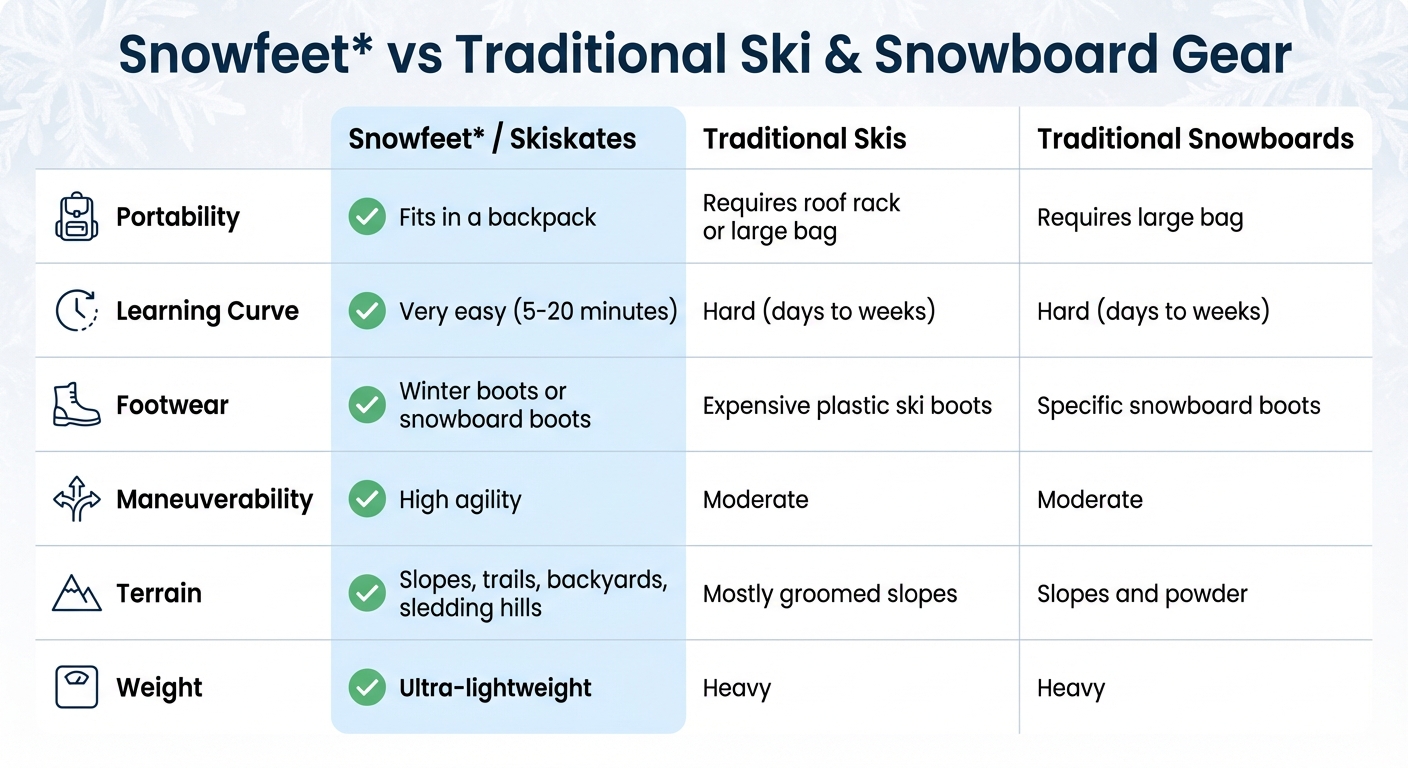
Snowfeet vs Traditional Skis vs Snowboards Comparison Chart
Common Mistakes When Using Short Skis
Short skis are designed to be beginner-friendly, but even the easiest gear can trip you up if you're not using it right. The good news? These common mistakes are easy to fix.
Leaning Too Far Back
Getting stuck in the "backseat" is probably the most common issue for beginners. It often happens when fear kicks in - leaning backward feels safer than leaning forward. But here's the catch: when you lean back, you lose control over your skis. As FemiGnarly explains:
"If you've ever felt like your skis have a mind of their own or that they're impossible to control, you're probably in the backseat. You lose active control."
Short skis, like Snowfeet*, require a different stance than traditional skis. Instead of leaning forward as you would on long skis, you’ll want to stand upright, keeping your weight centered or slightly toward the back of your feet. The Snowfeet Team puts it like this:
"Don't lean forward like you would do with skis, because you don't have the support of regular-length skis to hold you... instead, stand up straight and place your weight over the middle and back of your feet."
A quick tip: align your belly button with the middle of your feet. This helps keep your weight balanced, giving you more control and stability.
Wrong Stance and Ski Positioning
Standing with your legs too far apart or too close together can throw off your balance. A stance that's about shoulder-width or hip-width apart works best for Snowfeet* products. For even more stability, especially if you're using shorter models like the Mini Ski Skates (15"), try a staggered stance. Place one foot slightly ahead of the other - it’s a small adjustment that makes tight turns much easier.
Stiff Upper Body and Arm Movements
Your arms play a bigger role in skiing than you might think. Dropping your hands to your sides or letting them flail around can pull you off balance and push you into the dreaded backseat. Keep your hands at belly button height, slightly wider than your hips. This helps you stay relaxed up top while your legs do the work of steering. Oh, and avoid twisting your shoulders with your skis - it just complicates things.
Poor Weight Distribution
Getting your weight distribution right is key to mastering short skis. On traditional skis, advanced skiers often put most of their weight on the outside ski during a turn. But with Snowfeet*, the technique is different. When you’re braking, focus on spreading your weight evenly between both feet. Press equally on both edges to create the friction you need to stop, compensating for the shorter length of the skis.
Looking Down or Bad Hand Position
If you’re staring at the tips of your skis, you’re setting yourself up for trouble. Looking down pulls your head forward, which drags your shoulders out of alignment and throws off your balance. Instead, keep your head up and your eyes focused on where you want to go. Not only does this improve your posture, but it also keeps you more aware of obstacles or other skiers around you. Mastering this simple habit will make a world of difference as you progress with Snowfeet* models.
Advanced Tips for Mastering Snowfeet* Short Skis
Ready to take your Snowfeet* skills up a notch? These advanced tips will help you make the most of your gear, whether you're carving groomed slopes, hitting the park, or exploring powdery backcountry trails.
Choosing the Right Snowfeet* Model
Picking the right Snowfeet* model is key to improving your performance. If you're just starting out, go for the 99 cm or 120 cm Skiblades - they offer more stability, helping you build confidence. Once you've got the basics down, you can step up to the 65 cm Skiblades, which are perfect for quick maneuvers and park tricks.
Terrain matters too! For groomed slopes, Skiskates (44–50 cm) deliver a skating-like experience that's both fun and precise. In light powder (less than 4 inches), shorter models perform well, but if you're tackling deeper snow, the 99 cm Skiblades or the specialized 99 POWDER model are your best bet. For backcountry adventures, pair the 38 cm Snowfeet Mini Ski Skates with winter boots, or try the 100 cm Walkski for a more traditional touring setup.
Once you've got the right model, tweak your technique to suit the terrain you're tackling.
Techniques for Different Terrains
- Snow Parks: The 65 cm Skiblades or Skiskates shine here. Their agility makes quick turns a breeze, and they help you stick those landings with control.
- Groomed Runs: Carving is all about edge control. Tilt your Snowfeet* onto their metal edges - similar to ice skating - for smooth, precise turns.
- Powder: Float through the fluff with the 99 cm models. Stay loose, keep your knees bent, and let your body absorb the terrain for better balance and control.
Each terrain has its quirks, so practice adapting your stance and movements to get the best results.
Maintaining Your Snowfeet* Skis
Keeping your Snowfeet* in top shape is just as important as picking the right model. Here’s how to do it:
- Wax Regularly: Use liquid wax daily to prevent snow buildup and maintain speed.
- Sharpen Edges: Use a sharpening stone or tuner to keep the metal edges sharp - this ensures better control, especially on icy surfaces.
- Prevent Rust: After each session, dry the edges thoroughly. Before storing them for the off-season, wipe the edges with a bit of oil for extra protection.
- Adjust Bindings: The bindings fit US shoe sizes 6–13 and can be adjusted with a screwdriver. If your boots are unusually large or small, swap out the straps for a better fit.
A little care goes a long way in keeping your Snowfeet* ready for action whenever you are!
sbb-itb-17ade95
Comparing Snowfeet* to Traditional Skiing and Snowboarding
Let's see how Snowfeet* measures up against traditional long skis and snowboards, building on the benefits we've already covered.
Why Short Skis Outperform Long Skis
Long skis might seem like the go-to for stability and speed, but Snowfeet* short skis bring something extra to the table: better control, agility, and a whole lot more fun.
Traditional long skis can feel awkward in tight spots like moguls, tree runs, or crowded slopes. Snowfeet* short skis, on the other hand, let you pivot effortlessly and carve sharp turns without all the bulk. And here's the kicker: while it can take days or even weeks to feel comfortable on regular skis, many Snowfeet* users pick it up in just five minutes. That’s because their design feels natural, borrowing movements from ice skating or inline skating.
"I hate getting stuck on a hill in skis because they're so long and bulky. Since these are shorter, you can just skate right up." - Sophia Kane, Verified Customer
Portability is another huge win for Snowfeet*. Forget the hassle of roof racks or oversized gear bags - these short skis fit right in your backpack. Plus, you don’t need to shell out for stiff, pricey plastic ski boots. Snowfeet* straps onto your regular waterproof winter boots or snowboard boots, making them convenient and budget-friendly.
Comparison Table: Snowfeet* vs Traditional Ski and Snowboard Gear
Here’s a side-by-side breakdown of how Snowfeet* stacks up against traditional skiing and snowboarding gear. The differences speak for themselves.
| Feature | Snowfeet* / Skiskates | Traditional Skis | Traditional Snowboards |
|---|---|---|---|
| Portability | Fits in a backpack | Requires roof rack or large bag | Requires large bag |
| Learning Curve | Very easy (5–20 minutes) | Hard (days to weeks) | Hard (days to weeks) |
| Footwear | Winter boots or snowboard boots | Expensive plastic ski boots | Specific snowboard boots |
| Maneuverability | High agility | Moderate | Moderate |
| Terrain | Slopes, trails, backyards, sledding hills | Mostly groomed slopes | Slopes and powder |
| Weight | Ultra-lightweight | Heavy | Heavy |
Looking at the table, it’s clear: Snowfeet* stands out for its convenience, ease of use, and versatility. Whether you’re cruising groomed runs, tackling backcountry trails, or just having fun in your backyard, these short skis let you enjoy the snow your way.
Conclusion
Getting the hang of short skis really comes down to a few key tweaks: keep your stance shoulder-width apart, center your weight over your mid and back foot, and stay relaxed in your upper body. These small changes make a big difference, helping you carve cleaner turns, stop with ease, and enjoy the slopes without the hassle of managing long, clunky skis.
With these tips in mind, the perks of Snowfeet* become even more obvious. Snowfeet* bring a whole new level of freedom to your winter adventures - something we've highlighted throughout this guide. With over 50,000 riders around the globe and 5,500+ verified reviews averaging an impressive 4.9 out of 5 stars, it’s clear that shorter skis like Snowfeet* are delivering a more enjoyable, hassle-free experience.
What sets Snowfeet* apart is how easy they are to pick up and their ultra-compact design. Forget lugging around heavy gear - these let you seamlessly switch from groomed runs to backyard snow fun. Whether you're gliding down slopes, trekking snowy trails, or just playing around in your yard, Snowfeet* let you move naturally and with confidence.
If you’re ready to break free from the restrictions of traditional skis or snowboards, it’s time to give Snowfeet* a try. They offer the control, versatility, and sheer fun that bulky gear just can’t match. Make the switch, master the basics, and unlock the freedom and enjoyment that Snowfeet* bring to every snowy adventure.
FAQs
How are Snowfeet different from traditional skis?
Snowfeet are compact mini-skis that offer a fresh spin on winter sports. Ranging from about 25 to 39 inches in length, they’re much shorter than traditional skis, which makes them super easy to handle. Whether you’re navigating sharp turns or tackling steep slopes, Snowfeet give you solid control and precision. The best part? You don’t need bulky ski boots. These mini-skis attach directly to your regular winter boots, hiking boots, or even snowboard boots. Talk about convenience!
Made from lightweight yet durable materials, Snowfeet are designed with portability in mind. They’re small enough to fit into a standard backpack, so you can carry them effortlessly wherever you go. This makes them perfect for impromptu snow adventures - no need to wrestle with heavy, awkward gear like traditional skis. Plus, they’re easier to learn and incredibly versatile, giving you the freedom to explore snowy terrains on your own terms.
Which Snowfeet model is best for different terrains?
Choosing the right Snowfeet model comes down to where you’ll be riding and what you prefer. If you’re sticking to groomed runs, ski parks, or even just having some fun in the backyard, the Snowfeet Skiblades/Skiskates (25 inches) are a solid pick. These are great for quick, sharp turns and help reduce fatigue with their easy edge-to-edge control.
For those planning to tackle mixed terrain - think steeper groomed slopes or light off-piste areas - the Snowfeet Pro Mini-Ski (47 inches) is a better fit. It offers more stability while still being lightweight and easy to use with regular winter boots. Heading into the backcountry? For steep trees or deep powder, the Snowfeet WALKSKI (39 inches) is your go-to. It’s ultra-compact, ideal for maneuvering tight spaces, and even makes uphill climbs easier.
What makes Snowfeet stand out compared to traditional skis or snowboards? For starters, they’re lighter, more portable, and easier to control. Plus, you don’t need special bindings - they work with standard winter or snowboard boots. This makes them a budget-friendly and versatile option for all kinds of riders.
Here’s a quick guide to help you pick:
- Groomed runs or parks → Snowfeet Skiblades/Skiskates (25 inches)
- Mixed terrain or light off-piste → Snowfeet Pro Mini-Ski (47 inches)
- Backcountry or deep powder → Snowfeet WALKSKI (39 inches)
No matter what terrain you’re eyeing, there’s a Snowfeet model to match your adventure.
What are the most common mistakes to avoid when using short skis like Snowfeet?
One mistake people often make is standing with their legs too far apart. This can throw off your balance and make it harder to stay in control. Instead, keep your stance about shoulder-width apart or slightly staggered. This helps you stay stable and makes it easier to maneuver.
Another common slip-up? Overusing your upper body to steer. The key is to let your legs and feet do the work. With short skis like Snowfeet, they’re built for quick, sharp turns without much effort. Mastering the right posture and technique not only makes your runs smoother but also keeps things safer out there on the slopes.













Leave a comment
This site is protected by hCaptcha and the hCaptcha Privacy Policy and Terms of Service apply.