



















Want to ski fast on short skis without feeling wobbly? It’s all about technique and setup. Short skis, like Snowfeet Skiblades (65 cm, 99 cm, or 120 cm), are compact, fun, and easy to carry. But they demand precise control at high speeds. Wobbling happens when your stance or weight distribution is off. The fix? Center your weight, stay upright, and use your edges properly. Here’s the gist:
- Stance: Keep feet shoulder-width apart, knees bent, and weight centered.
- Turns: Shift 70–80% of your weight to the outside ski during turns.
- Stopping: Use a hockey stop or finish turns uphill to control speed.
- Gear: Keep edges sharp and skis waxed for smooth rides.
Short skis are lightweight and responsive, making them great for carving and quick stops. Regular practice and proper maintenance will keep you steady and in control, even at high speeds. Ready to ditch the wobble? Let’s dive in.
Essential Techniques for High-Speed Control on Short Skis
3 types of speed for short turn skiing SLOW MEDIUM and FAST
Getting Your Stance and Balance Right
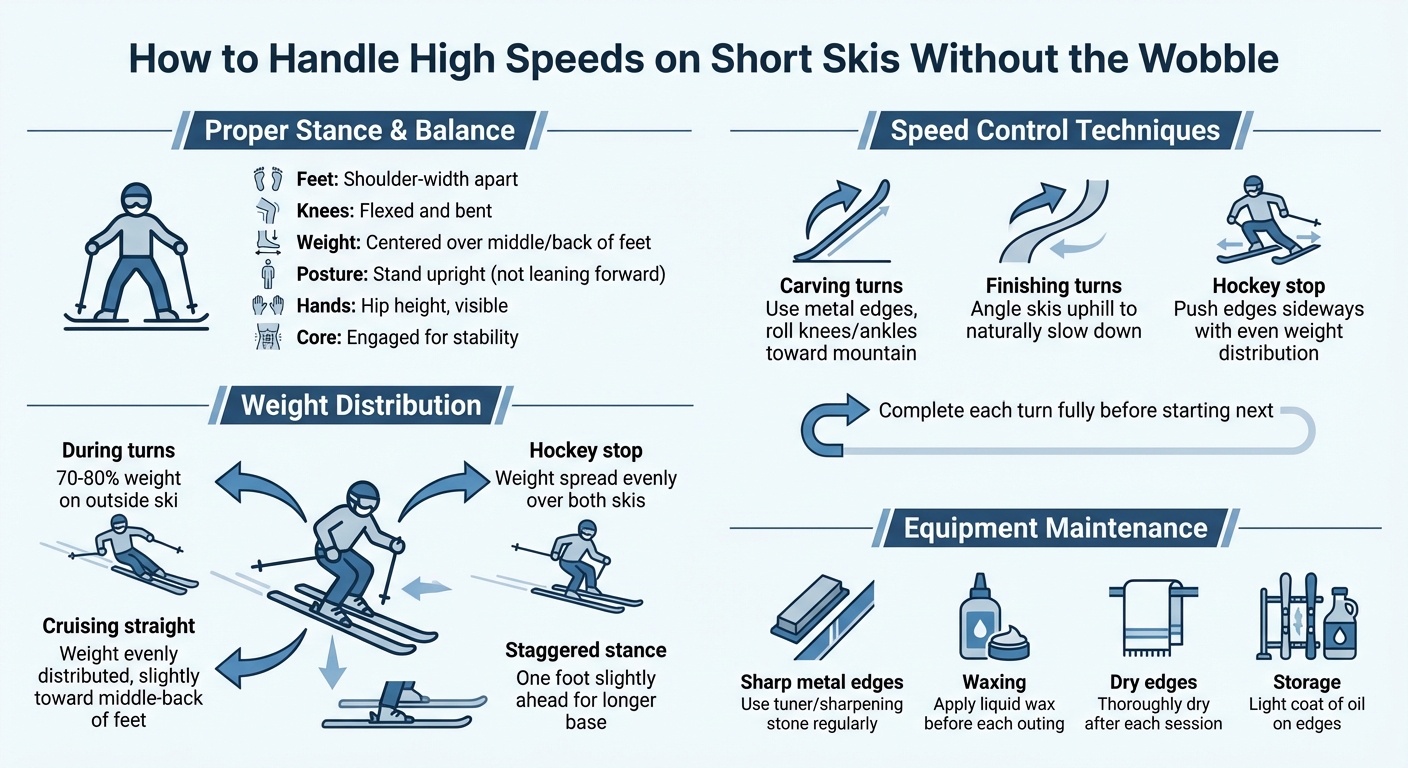
When it comes to short skis, your stance plays a massive role in staying in control and avoiding that dreaded wobble. A common mistake? Treating Snowfeet* Skiblades like traditional long skis. On longer skis, you might lean forward into your boots, but short skis don’t have that extended tip to catch you. Lean too far forward, and you’re bound to lose your balance. Instead, stand tall with your weight centered over the middle and back of your feet. This upright posture keeps you steady, especially as you pick up speed. Nail this, and you’re already on your way to smoother, wobble-free runs.
How to Stand Correctly on Short Skis
Stability starts with how you position your legs. Keep your feet shoulder-width apart - spreading them too wide is a rookie move that’ll make it harder to control your edges. For added stability, try a staggered stance, where one foot is slightly ahead of the other. This setup gives you a longer base to balance on, especially helpful when you’re flying downhill.
Your knees should always be flexed, ready to absorb any bumps or changes in terrain. Think of it as an athletic stance: ankles, knees, and hips slightly bent, with your hands at hip height where you can easily see them. Keep your upper body stable and facing downhill, engaging your core for extra control. This separation between your upper body and your legs is key - your legs handle the turns while your torso stays steady.
Where to Put Your Weight and How to Position Your Body
Weight distribution on short skis is a bit different than on traditional skis or snowboards. With less length underfoot, you’ll need to stay on top of your front-back balance. During turns, aim to shift about 70-80% of your weight to the outside ski, aligning your head and shins over it. This helps you hold your edge and avoid tipping inward during the turn.
When cruising straight, keep your weight evenly distributed but lean slightly toward the middle to back of your feet. For stopping - like the signature hockey stop Snowfeet* riders love - spread your weight evenly over both skis and push your edges sideways. This balanced approach keeps both skis under control and prevents any unexpected slips.
Exercises to Improve Your Balance
Before hitting high speeds, practice on flat terrain to get a feel for how short skis respond to weight shifts. Try skating like a hockey player on level snow. This helps you get comfortable with how the skis move without the added challenge of a slope. Slide forward and backward to fine-tune your weight distribution.
Another great drill is the staggered stance. If you feel a wobble coming on during your run, adjust by moving one foot slightly ahead of the other. This simple tweak boosts your stability and helps you regain control. Practice this on easy slopes until it becomes second nature, then take it to steeper runs. The 99 cm and 120 cm Snowfeet* Skiblades are perfect for these exercises - they offer a nice balance of stability and responsiveness, making them a great choice for building confidence and control.
Setting Up Your Equipment for Better Performance
Getting your equipment just right can make all the difference when it comes to stability and control at high speeds. Snowfeet* Skiblades are built for speed without the bulk of traditional long skis, but fine-tuning your setup and keeping your gear in top shape is key to a smooth, confident ride.
Why Snowfeet* Skiblades Excel at High Speeds

Snowfeet* Skiblades are designed with features that help you stay steady and in control, even at high speeds. Both the 99 cm and 120 cm models use a durable wood core construction that minimizes vibrations, so you’re less likely to experience wobbles when pushing your limits. Plus, they’re equipped with high-quality metal edges, giving you the precision and control of traditional skis while being significantly lighter. This reduced weight makes it easier to manage your momentum and adjust your speed.
Another standout feature is the binding system. The 99 cm and 120 cm models come with regular ski bindings that include standard release safety, perfect for aggressive riders. For those who want even more control, the snowboard bindings provide extra ankle support and flexibility. Unlike fixed systems often found on traditional skis, Snowfeet* bindings offer options to match your riding style.
Keeping Your Skis in Peak Condition
Even the best skis need regular maintenance to perform their best. Start with sharp metal edges - they’re essential for clean, high-speed turns. Keep them sharp by using a tuner or sharpening stone, focusing on the base edges that grip the snow during carving. Don’t worry if you see small plastic shavings during tuning; they won’t affect performance.
Waxing is another must. A quick coat of liquid wax before each outing improves glide and reduces jerky movements. Factory wax wears off quickly, so reapplying liquid wax regularly ensures a smooth ride.
"We recommend waxing the base regularly to make Snowfeet* and Skiskates even faster and prevent snow from sticking to the base." - Snowfeet Team
After every session, dry the metal edges thoroughly to avoid rust. For longer storage, applying a light coat of oil will help preserve the edges, keeping your gear in great shape for future runs.
Comparing Snowfeet* Short Skis to Traditional Long Skis
Long skis have long been associated with stability, but Snowfeet* Skiblades prove that shorter skis can offer incredible control and maneuverability. The 99 cm and 120 cm models are specifically designed for carving and maintaining balance at high speeds - they’re not just smaller versions of traditional skis.
One major difference is weight. Traditional long skis, like those from Rossignol or Salomon, are heavy and can feel cumbersome, especially at high speeds. Snowfeet* models, on the other hand, are lightweight and highly responsive, allowing you to adapt quickly to changing terrain and avoid wobbling.
Portability is another huge plus. Unlike long skis that require roof racks, Snowfeet* Skiblades can fit in your car or even a backpack. This convenience encourages regular maintenance and gives you more opportunities to practice, helping you build the muscle memory needed for precise speed control. With over 5,500 verified reviews averaging 4.9 out of 5 stars, it’s clear that shorter skis don’t mean sacrificing performance - they mean more fun and better handling. When your gear is dialed in, you’re ready to master advanced speed techniques with confidence.
sbb-itb-17ade95
Advanced Methods for Controlling Speed
Once your gear is dialed in, it’s time to level up with advanced techniques that help you ride faster and more confidently. Snowfeet* Skiblades have unique handling characteristics compared to traditional skis, so mastering them requires a slightly different approach. With the right stance and setup already in place, let’s dive into how you can take control of your speed like a pro.
How to Carve Turns for Smoother Runs
Carving is key when it comes to staying in control at higher speeds. Instead of skidding through your turns, focus on using the metal edges of your skiblades to carve clean arcs. This not only helps you avoid wobbling but also gives you better stability. To carve effectively, roll your knees and ankles toward the mountain, engaging the edges for a smooth, controlled turn. Keep your stance staggered at shoulder-width to link your turns seamlessly and avoid picking up too much speed.
Short skis, like Snowfeet* Skiblades, don’t have the same built-in stability as traditional longer skis (which are often 170 cm or more). That means you’ll need to pay extra attention to managing your front-to-back balance, especially during deep carves.
"Shorter skis are great for carving turns, so make sure to use your edges to initiate turns and control your speed." - Snowfeet Team
When finishing a turn, angle your skiblades uphill to naturally slow down. Completing each turn fully before starting the next one helps you maintain control and avoid unintended bursts of speed.
Reading and Adapting to Different Terrain
Short skis require quick reflexes, especially on varied terrain. Groomed slopes are your best bet for taking full advantage of the wood core and metal edges of Snowfeet* Skiblades. Light powder - up to about 4 inches - is also manageable, but anything deeper can be trickier.
On ungroomed terrain with bumps or holes, you’ll need to stay sharp. Unlike long skis, which can glide over uneven surfaces, short skis demand constant balance adjustments. If the conditions get rough, tweak your weight distribution. For general riding, keep your weight centered over the middle and back of your feet. If you notice shaking at higher speeds, try shifting slightly more weight toward your toes. And here’s a tip: stand upright rather than leaning forward. Since short skis don’t have the same front support as traditional skis, leaning too far forward can lead to spills.
How to Brake and Manage Your Speed
Braking with Snowfeet* Skiblades is all about the hockey stop. Push your edges sideways and distribute your weight evenly across both skis. Unlike with long skis, where you might rely more on your inner ski, short skis require equal balance during stops.
For smoother, gradual speed control, finish each turn by pointing your skiblades uphill at the end of the arc. This technique acts as a natural brake, especially on steeper runs, and prevents you from gaining too much momentum. Some Snowfeet* models even come with a heel brake for added stopping power. Whichever method you prefer, practice on groomed slopes until it becomes second nature. Building muscle memory is crucial for reacting quickly when you need to slow down in a pinch.
Conclusion: Ski Fast and Stay in Control
Tackling high speeds on short skis means focusing on the basics: keep a shoulder-width staggered stance and center your weight over the middle or back of your feet. Unlike traditional long skis that rely on their length for stability, Snowfeet* Skiblades call for active balance and precise technique. This combo gives you unmatched control and responsiveness, letting you get the most out of your gear.
Snowfeet* proves that shorter skis can deliver top-tier performance. Whether you’re eyeing the 99 cm Skiblades priced at $675 or the 120 cm Short Skis for $775, you’re investing in equipment designed with wood cores and metal edges - perfect for high-speed carving and stability. While long skis may offer steadiness through their length, they can’t match the agility and reduced fatigue that Snowfeet* brings to the table.
To build confidence, start practicing on groomed slopes and keep your gear in top shape with regular waxing and edge tuning. Most riders feel comfortable after just one day. These steps ensure you can ski fast while staying fully in control, no matter the conditions.
Ready to feel the difference? Check out Snowfeet* products and find the perfect fit for your style.
FAQs
How can I stay stable on short skis at high speeds?
To stay steady on short skis like Snowfeet Skiblades (25.6–47 inches), it’s all about nailing your technique and getting your setup just right. Start with an athletic stance: bend your knees, keep your weight centered, and engage your core. Lean slightly forward to press the ski tips down - this helps reduce wobbling and gives you better control.
Snowfeet’s compact design (65–120 cm) is built for stability. The shorter length keeps your center of gravity low and directly over the skis, making them easier to handle compared to longer skis or snowboards. Plus, the integrated bindings are designed to support a natural stance and provide sharp, responsive edge control. This means smoother, less tiring runs, even at higher speeds.
If you notice any wobbling, adjust by shifting your weight forward and bending your knees a bit more. This absorbs vibrations and helps you regain control. With some practice and these tweaks, you’ll be carving down the slopes confidently and without the frustration of instability.
What is the best gear setup for maintaining control on short skis?
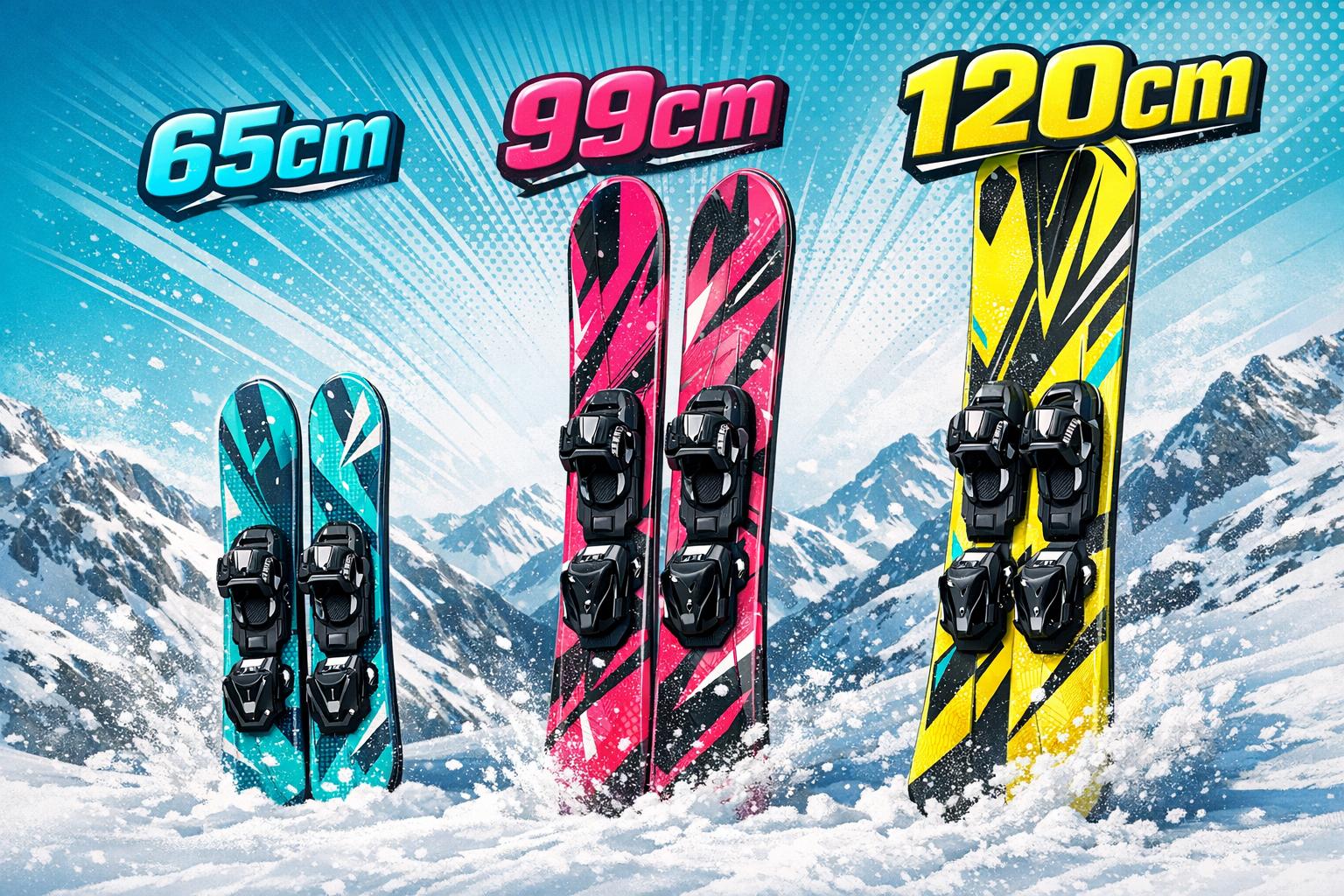
For the best experience with short skis, Snowfeet suggests their complete system designed to deliver stability and control, even at high speeds. The setup includes their Skiblades, which come in three lengths to suit different styles: 65 cm for sharp, quick turns, 99 cm for all-around versatility, and 120 cm for those who crave speed. Each Skiblade features an integrated low-profile binding that works perfectly with Snowfeet’s stiff-flex ski boots, helping to keep your center of gravity low for better control.
For added stability and safety, they recommend pairing this system with high-ankle boots that have a hard-shell cuff, ensuring better edge response. Don’t forget a lightweight helmet, wrist and knee protectors, and - if needed - short, adjustable poles that won’t get in the way of the compact skis. This setup reduces the wobble often associated with traditional short skis, giving you the confidence to carve and glide with ease.
How are Snowfeet Skiblades different from traditional long skis?
Snowfeet Skiblades, available in 65 cm, 99 cm, and 120 cm lengths, bring a fresh twist to skiing. Their shorter length means tighter turns, quicker edge-to-edge movements, and a centered stance that minimizes wobble and boosts control, even at high speeds. On the flip side, traditional long skis (usually 170 cm or more) can feel less nimble because of their wider turning arcs and greater inertia.
The compact build of Snowfeet Skiblades also enhances balance by positioning the binding closer to your center of mass. This design makes them steadier on steep slopes or when you're flying down the mountain. Plus, they handle bumpy or icy terrain like pros - less surface area means fewer chances of snagging on rough patches, giving you a smoother, more predictable ride. If you're after a skiing experience that's fast, fun, and a little different from the norm, Snowfeet Skiblades are worth a try.











Leave a comment
This site is protected by hCaptcha and the hCaptcha Privacy Policy and Terms of Service apply.