




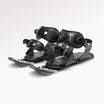
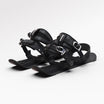
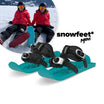
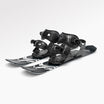
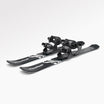
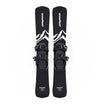
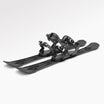
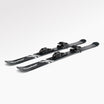
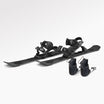
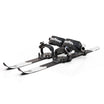

If you’re wondering which skiblade length is right for you, here’s the quick answer:
- 65cm: Best for tricks, sharp turns, and moguls. Feels like skating on snow. Great for beginners and freestyle enthusiasts. Works with ski or snowboard boots. Costs $550.
- 99cm: The all-rounder. Balances agility and stability. Handles groomed runs, light powder, and park tricks. Compatible with ski or snowboard boots. Prices range from $450 (fiberglass) to $590 (wood core).
- 120cm: Built for speed, carving, and deeper powder. Offers stability at higher speeds but needs ski boots for proper support. Priced at $790.
Each size fits different needs, so it depends on your style, terrain, and goals. Below, we’ll break down what makes each one special and who they’re best for.
Quick Comparison
| Length | Best For | Speed Stability | Maneuverability | Terrain | Boot Compatibility | Price |
|---|---|---|---|---|---|---|
| 65cm | Tricks, moguls, sharp turns | Low | High | Groomed slopes, parks | Ski or snowboard boots | $550 |
| 99cm | Versatility, light powder | Moderate to High | High | Groomed runs, light powder | Ski or snowboard boots | $450-$590 |
| 120cm | Speed, carving, deep powder | Highest | Moderate | Powder, steep slopes | Ski boots only | $790 |
So, whether you’re a trickster, a cruiser, or a speed demon, there’s a skiblade for you. Let’s dive into the details for each size.
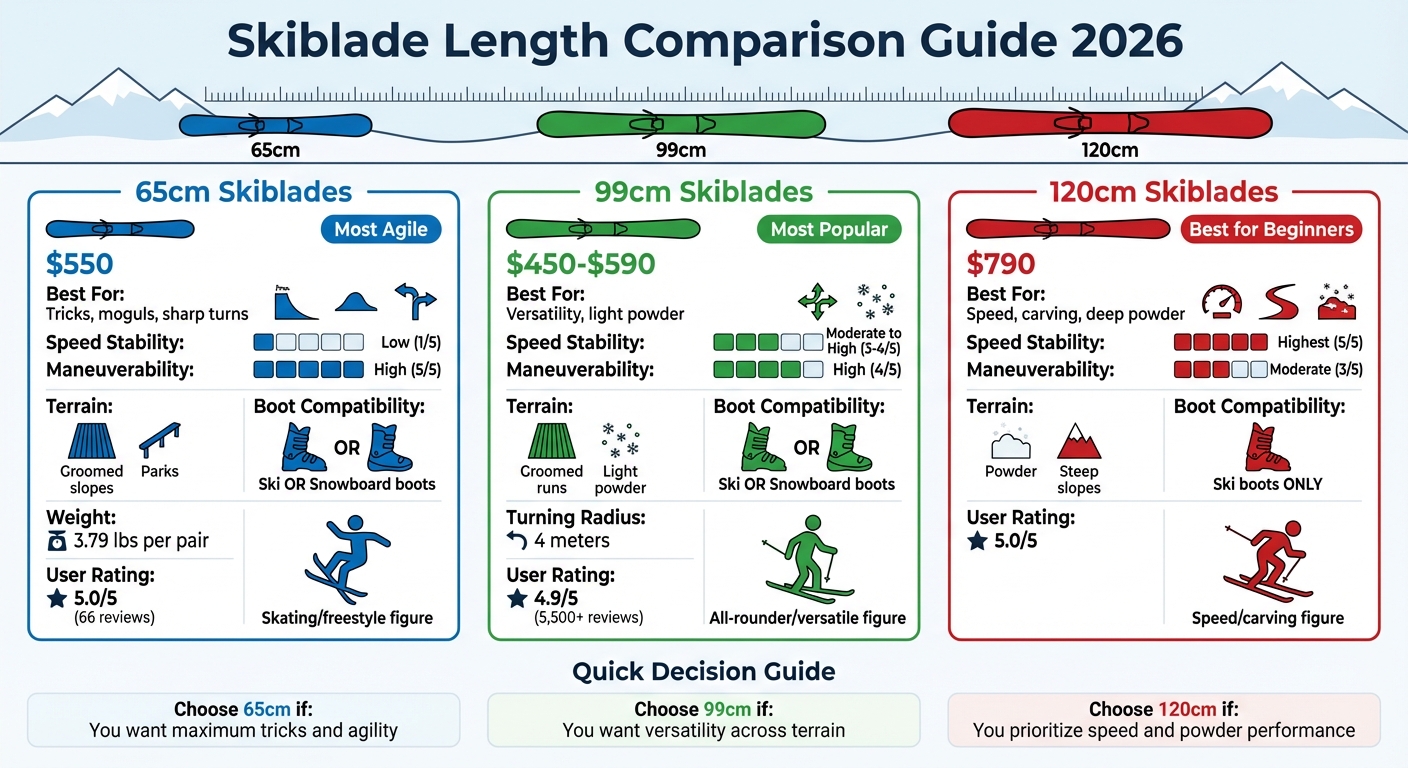
Skiblade Length Comparison: 65cm vs 99cm vs 120cm Features and Specifications
How to choose Snowfeet* Snowblades | Skiblades | Skiboards | Short Ski
1. 65cm Skiblades
The 65cm skiblades (26 inches) from Snowfeet are their shortest option, priced at $550. These blades are all about agility. Weighing just 3.79 lbs per pair (including bindings) and featuring a wood core with a 4-meter turning radius, they’re designed for quick pivots, spins, and sharp turns. The reduced surface area gives them a "skiskating" vibe, similar to ice or inline skating, making them far more responsive than traditional long skis. If you’re into tight, dynamic runs, these are built for you.
Maneuverability
At just 65cm in length, these skiblades excel in tight spaces and quick transitions. They’re perfect for weaving through narrow trails, tackling moguls, and navigating bumpy terrain with ease. Their short size gives you precise control, which is especially handy when helping younger skiers on the slopes or pulling off tricks.
Stability at Speed
What they gain in agility, they lose a bit in high-speed stability. As Doc Roberts, PhD, President of Skiboards Superstore, Inc., puts it:
Shorter skiboards are more maneuverable, easier to learn on, great in moguls, glades and have the feel of inline skates.
If speed is your main priority, consider the 99cm or 120cm models instead - they’re better suited for high-speed adventures.
Terrain Compatibility
These skiblades shine on groomed slopes, terrain parks, and mogul fields, making them a solid choice for freestyle enthusiasts. They handle narrow trails and light powder well, but they’re not built for deep snow. With graphite bases, they strike a balance between speed and control, giving riders a safe and enjoyable experience, especially at moderate speeds.
Ideal User Profile
These skiblades are perfect for anyone looking to capture the freedom of skiskating. They’re easy to pick up, with most users mastering them in a single day. Beginners, trick lovers, and those transitioning from skating or hockey will appreciate their quick responsiveness and reduced knee strain compared to traditional skis. Ski instructors working with kids will also find them invaluable due to their precise control. Plus, their bindings work with both ski and snowboard boots, offering flexibility and comfort.
With a 5.0/5 rating from 66 reviews and 97% positive feedback, it’s clear these skiblades are a hit among riders who want a nimble, fun, and fresh skiing experience.
2. 99cm Skiblades
The 99cm skiblades (39 inches) from Snowfeet strike a great balance between agility and stability. Priced at $590 for the wood core version and $450 for the fiberglass flex core, they offer versatility that’s hard to beat. They’re short enough for freestyle tricks but long enough to tackle powder and high-speed carving - something the smaller 65cm models can’t quite handle. Let’s dive into what makes these skiblades stand out.
Maneuverability
These skiblades are lighter and quicker to respond than traditional long skis, making them feel lively and fun on the slopes. While they don’t match the super-tight turning ability of the 65cm models, they excel in balance and control, especially when carving. Groomed slopes are a breeze, with smooth hockey stops and sharp direction changes. Their shorter turning radius is perfect for weaving through moguls and navigating tricky terrain without the bulk of full-length skis. As Sophia Kane puts it:
This is literally a perfect combination of [skiing and rollerblading]. My favorite part about these is that hills are not an issue anymore.
Stability at Speed
When it comes to speed, the 99cm skiblades hold their own. They offer solid stability for carving and cruising, even during aggressive runs. Snowpark enthusiasts will appreciate their ability to stick stable landings. Daniel Siouffi, a seasoned rider, shares his experience:
Going fast I was in complete control of every move turns and stops. Your product is indeed the best and thank you for allowing me to rediscover the joy and happiness of skiing with such ease.
With over 5,500 verified reviews and an impressive 4.9/5 rating across the Snowfeet lineup, it’s clear these skiblades deliver on performance.
Terrain Compatibility
The 99cm skiblades shine on a variety of terrain. On groomed trails, they carve like traditional skis while offering more freedom of movement. In moguls, their nimbleness makes tight bump lines feel manageable. They’re also built for powder, especially the Powder 99 CM model, which features a wider design for better floatation in soft snow. And in terrain parks? The extra surface area helps with stable landings while still allowing for spins and jumps that are tough to pull off with bulky full-length skis.
Ideal User Profile
So, who are these skiblades best for? They’re a fantastic choice for beginners transitioning from skating and for advanced riders looking for a nimble, fun alternative. Compatible with both snowboard and ski bindings, they’re incredibly versatile. With over 50,000 Snowfeet riders worldwide and a perfect 5.0/5 rating as the "Ultimate Short Skis", these skiblades offer a portable, affordable, and way more exciting option compared to the heavier skis from brands like Rossignol or K2.
sbb-itb-17ade95
3. 120cm Skiblades
The 120cm skiblades are the longest in the short ski category, priced at $790. They’re the top pick for anyone looking for stability and speed without the bulk of traditional long skis from brands like Rossignol or Salomon. These skiblades are designed for riders who want to carve hard, float through powder, and stay in control at higher speeds - all while keeping things lightweight and playful.
Maneuverability
At 120cm, these skiblades aren’t as quick to pivot as the shorter 65cm or 99cm options, but they still offer way more agility than standard long skis. They’re light enough for tight turns and quick adjustments, though their added length means you’ll need to commit more to each turn. Think of them as the perfect middle ground: short ski agility combined with traditional ski stability. This mix makes them easier to handle than full-length skis while still giving you enough surface area for strong, confident carving.
Stability at Speed
This is where the 120cm skiblades truly stand out. The extra length provides better stability at high speeds compared to shorter models. The increased surface area keeps you steady as you fly down the mountain. To get the best performance, focus on keeping your weight forward over your toes - this helps prevent tip wobble and ensures smooth, controlled turns. As Daniel Siouffi, a verified rider, shares:
Going fast I was in complete control of every move, turns, and stops. Your product is indeed the best, and thank you for allowing me to rediscover the joy and happiness of skiing with such ease and with so much control.
With a perfect 5.0/5 star rating from verified buyers, it’s clear these skiblades can handle fast, aggressive skiing without breaking a sweat.
Terrain Compatibility
The 120cm skiblades are the best option for powder within the short ski category. Their wider design and extra surface area provide the flotation you need for backcountry adventures. On groomed slopes, they carve like traditional skis but with less weight and more flexibility. However, to get the most out of these skiblades, you’ll need ski boots with standard release bindings to ensure proper ankle support, especially at higher speeds .
Ideal User Profile
These skiblades are a great choice for beginners looking for extra balance and support. The wider shape and longer length make them forgiving and easy to learn on. They’re also perfect for intermediate and advanced skiers who want a more aggressive ride without the hassle of traditional long skis. Whether you’re transitioning from conventional skiing or just looking for a playful yet capable option, the 120cm skiblades deliver. As the Snowfeet team explains:
120 cm Skiboards are perfect in case it's your first time on the slopes. As a beginner, you will surely appreciate their length and wider shape providing support but still maintaining a light and easy ride.
Advantages and Drawbacks
Choosing the right skiblade length is all about balancing trade-offs to match your riding style. Thanks to Snowfeet*'s refined designs, each size offers distinct perks tailored to specific preferences. Let’s break it down:
The 65cm skiblades are all about agility. Their short length delivers a skating-like feel, perfect for pulling off tricks or tackling moguls. However, they’re less stable at high speeds and demand precise balance. On the other hand, the 99cm skiblades strike a middle ground. They’re versatile enough for groomed runs and light powder while still letting you dabble in tricks. That said, they might struggle a bit in deeper powder. For those chasing speed and stability, the 120cm skiblades are the go-to. They shine in carving and powder but sacrifice some nimbleness in tight spaces and require ski boots with release bindings.
Let’s dive deeper into how these sizes compare in terms of speed handling, terrain adaptability, and boot compatibility.
When it comes to speed handling, there’s a noticeable difference across the lengths. The 65cm skiblades are more challenging to stabilize at higher speeds, requiring a skilled touch. Meanwhile, the 120cm models thrive on fast, aggressive carving, offering unmatched control. The 99cm blades sit comfortably in the middle, delivering balanced performance without demanding the same level of commitment as their longer counterparts. As Rick Paris, Technical Director at The Short Ski Shop, explains:
"The shorter the ski, the quicker you'll gain confidence - especially if you're unsure of your ability."
Terrain adaptability is another key factor. The 65cm skiblades excel on groomed slopes, snow parks, and moguls but falter in powder conditions. The 99cm blades perform well on groomed runs and light powder, making them a solid all-around choice. For deeper powder or steep, icy slopes, the 120cm skiblades stand out, offering the extra support and surface area needed to handle challenging terrains.
Lastly, there’s boot compatibility to consider. Both the 65cm and 99cm skiblades are compatible with ski or snowboard boots, giving you flexibility - especially if you’re transitioning from snowboarding or prioritizing comfort. The 120cm skiblades, however, require ski boots with release bindings to provide the necessary ankle support and control for high-speed runs.
Here’s a quick comparison of the key features for each skiblade length:
| Feature | 65cm Skiblades | 99cm Skiblades | 120cm Skiblades |
|---|---|---|---|
| Primary Strength | Maximum agility, tricks | Versatility, balance | Stability, carving |
| Speed Stability | Low (requires balance) | Moderate to high | Highest |
| Maneuverability | Highest (skating style) | High | Moderate |
| Best Terrain | Groomed slopes, parks, moguls | Groomed runs, light powder | Powder and steep slopes |
| Boot Options | Ski or snowboard boots | Ski or snowboard boots | Ski boots only |
| Price | $550 | $590 (wood core) / $450 (fiberglass) | $790 |
Each size has its strengths, so the best choice depends on what you prioritize - whether it’s tricks, versatility, or stability.
Conclusion
Picking the right skiblade length depends on where you ski, what you want to do, and your experience level. If you're cruising groomed runs at resorts like Vail or Park City and want to nail tricks, spins, or navigate tight mogul lines, the 65cm skiblades (26 inches) are a great choice. They’re super agile, perfect for skaters and trick enthusiasts, and priced at $550. These are for riders who value playfulness over speed.
For most skiers hitting blue and black groomers at U.S. resorts, with the occasional light powder day, the 99cm skiblades (39 inches) are the sweet spot. They’re versatile for carving, stable enough for moderate speeds, and nimble enough for park laps. You can grab the wood core version for $590 or the fiberglass flex core for $450. On the other hand, if you're all about speed, carving steep slopes, or tackling deeper powder in the Rockies, the 120cm skiblades ($790) are your match. They provide the stability and float you need but require ski boots for proper control.
Beginners will love the forgiving nature of the 120cm blades. They’re easier to control than traditional skis and help build confidence quickly. Intermediate and advanced skiers will appreciate the 99cm blades as a do-it-all option for most U.S. mountain conditions. Meanwhile, skaters or boarders who crave maximum freedom should go for the 65cm blades - they're perfect for playful, freestyle riding.
Regional terrain also plays a role in your decision. East Coast skiers, who often face icy conditions and tighter terrain, will find the 65cm or 99cm lengths more practical. Western skiers, exploring larger mountains, will get the most out of the 99cm blades. And if you're regularly skiing deep powder or carving hard, the 120cm length offers the stability and flotation you need.
Unlike bulky, expensive traditional skis or snowboards, Snowfeet* skiblades bring a totally different vibe to the mountain. Both the 65cm and 99cm models work with ski or snowboard boots, are lighter, easier to carry (the 65cm even fits in a backpack), and don’t need poles. They give you a fresh, agile, and playful way to experience winter sports - perfect for anyone looking to shake things up on the slopes.
FAQs
What’s the difference between 65cm, 99cm, and 120cm skiblades, and how do I choose the right size?
The three sizes of Snowfeet skiblades cater to different skiing styles and skill levels:
- 65cm skiblades: These ultra-short blades are all about quick turns and a playful vibe. They’re great for beginners who want to build confidence or for park riders who need maximum control for tricks and tight maneuvers.
- 99cm skiblades: Offering a mix of agility and stability, these are the go-to choice for intermediate to advanced skiers. They handle everything from smooth carving on groomed runs to freestyle jumps and even light off-piste adventures.
- 120cm skiblades: The longest option, these blades deliver top-notch stability, edge grip, and speed. They shine on steep slopes, in deeper snow, and during long, fast cruising sessions - perfect for seasoned skiers tackling tougher terrain.
To sum it up, shorter blades are ideal for quick moves and fun, mid-length blades bring versatility, and longer blades are built for speed and challenging slopes. Snowfeet skiblades offer a fresh take on skiing, combining innovative design with performance that stands out from traditional skis and snowboards.
What skiblade length is best for beginners?
For those just starting out, the 65 cm skiblade is a fantastic option. Its shorter length makes it much easier to maneuver, allowing beginners to turn, stop, and control their movements with confidence. This size helps new skiers focus on learning the basics without feeling overwhelmed. Plus, it’s ideal for groomed runs and offers a smooth, forgiving ride - perfect for building skills.
While longer options like the 99 cm or 120 cm skiblades are better for tricks or maintaining stability at higher speeds, the 65 cm version is crafted specifically for beginners. Snowfeet products are known for their user-friendly design and attention to detail, making them a solid pick for anyone taking their first steps on the slopes.
Can I use snowboard boots with 65cm, 99cm, or 120cm skiblades?
Yes, snowboard boots work with all Snowfeet skiblade sizes - 65 cm, 99 cm, and 120 cm. Snowfeet skiblades come with adjustable bindings that snugly fit most snowboard boots, giving you the flexibility to use gear you already have while enjoying a different kind of ride.
This compatibility is part of what makes Snowfeet skiblades such a cool option compared to traditional skis or snowboards. You get the comfort and support of your snowboard boots while diving into a fun and dynamic skiing experience. Just make sure your boots are in good shape and properly adjusted to keep things safe and smooth on the slopes.













Leave a comment
This site is protected by hCaptcha and the hCaptcha Privacy Policy and Terms of Service apply.