



















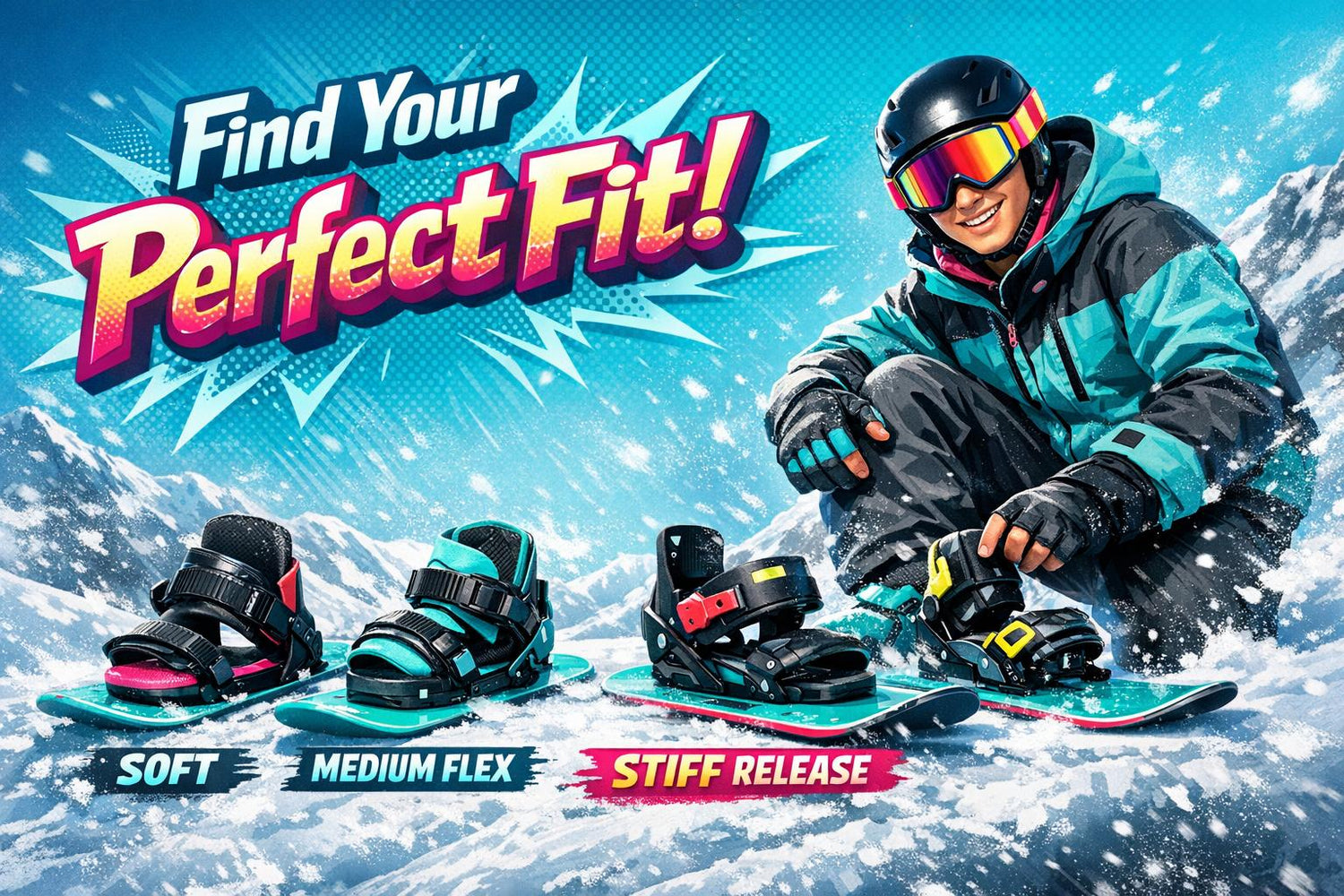
Bindings are the unsung heroes of skiboarding. They connect your feet to your gear, turning your movements into smooth turns, quick stops, or even tricks. But they’re not just about fun - they’re key to staying safe on the slopes. The right bindings can make learning easier for beginners, improve control for intermediate riders, and deliver precision for advanced skiers.
Here’s the gist:
- Beginners should go for softer bindings with forgiving flex and lower release settings for safety.
- Intermediate riders need medium-flex bindings for balance and control on varied terrain.
- Advanced skiers benefit from stiff bindings for precision and higher DIN settings for aggressive runs.
Snowfeet® offers bindings designed specifically for short skis and skiboards. Options range from integrated bindings for winter shoes to release bindings for ski boots. Whether you’re just starting out or a seasoned rider, matching your bindings to your skill level is crucial for both safety and performance. Ready to gear up? Let’s dive into the details.
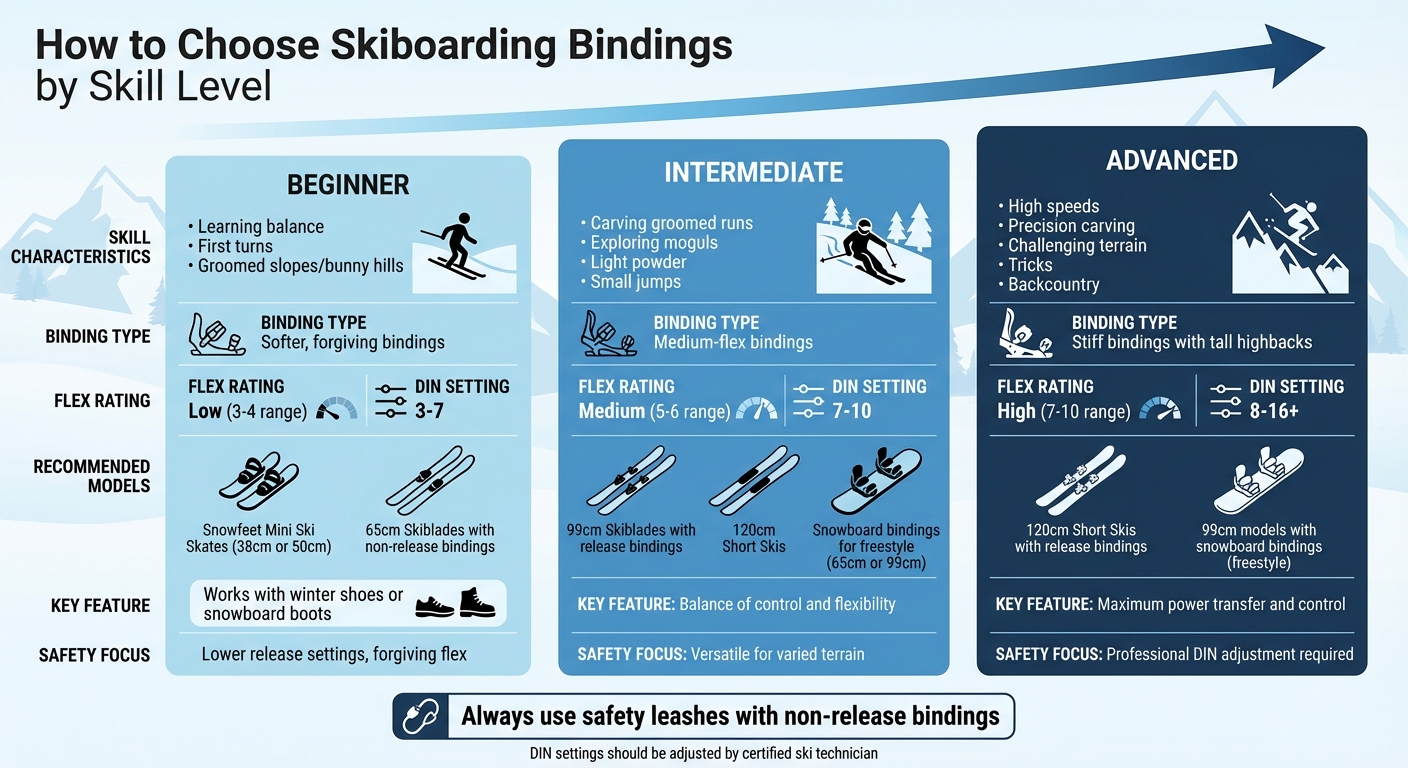
Skiboarding Binding Selection Guide by Skill Level
How to Identify Your Skiboarding Skill Level
Beginner, Intermediate, and Advanced: What Each Level Means
Beginners are just starting out, learning to balance, make their first turns, and stick to easy groomed slopes or bunny hills. At this point, staying upright and mastering how to stop without tumbling are your main goals. Skiblades like the Snowfeet* 99 cm models make this process easier compared to traditional skis. They're lighter, more responsive, and designed to be picked up in as little as five minutes. Shorter models, like the 38 cm or 44 cm options, mimic the gliding movement you’d recognize from ice skating, hockey, or inline skating.
Intermediate riders have left the bunny hill behind and feel at home carving on groomed runs. You’re likely exploring moguls, dabbling in light powder, or even attempting small jumps in the snowpark. Snowfeet* skiblades between 99 cm and 120 cm hit the sweet spot here - they’re long enough to improve carving but still compact compared to traditional skis.
Advanced riders are all about speed, precision, and tackling challenging terrain. Whether it’s carving down steep slopes, pulling off tricks in the park, or heading into the backcountry, you need equipment that delivers maximum power and control. Stiffer bindings with taller highbacks are essential at this level, ensuring every movement translates into precise power transfer.
Each skill level comes with its own set of needs, particularly when it comes to bindings, which play a key role in both control and safety.
How Your Skill Level Determines Binding Requirements
Your binding setup should match your skill level to ensure safety and performance. Beginners should look for softer, more forgiving bindings with lower release settings. These bindings help cushion early mistakes and provide much-needed support as you learn the basics.
"Beginners are generally advised to use bindings with a more forgiving and moderate flex. Softer bindings are more forgiving, allowing beginners to make mistakes without risking injury." - Snowfeet Team
Intermediate riders need bindings with a medium flex (rated around 5–6). This setup strikes a balance: it offers enough control for carving while staying flexible enough for tricks and quick recoveries. Whether you’re cruising groomed runs or venturing into light powder, medium-flex bindings are versatile enough to handle it all.
Advanced riders should go for stiffer bindings with a flex rating between 7 and 10, paired with higher DIN settings. This combination ensures precise power transfer, especially during high-speed or aggressive runs. Every weight shift, edge change, or landing will respond exactly as you intend, giving you the control you need for technical and demanding lines.
Binding Systems Available for Snowfeet* Products
Main Binding Systems Explained
Snowfeet* products come with several binding options tailored to different needs and preferences. Here's a breakdown of the main systems:
Integrated bindings, featured on the Snowfeet* Basic, Standard, and Pro X models, are designed for winter shoes or snowboard boots. These bindings offer versatility for various riding styles. The Standard model is a favorite among users, thanks to its extra strap that accommodates larger boots. For those seeking top-notch durability and adjustability, the Pro X is the go-to choice.
Snowboard boot bindings are a game-changer for short skis. Designed as a lightweight and narrow alternative to traditional bindings, they provide excellent ankle flexibility and anti-slip surfaces. These bindings are compatible with Skiskates (44 cm) and Skiblades (65 cm and 99 cm), making them ideal for riders who value comfort and performance.
"In my opinion, the snowboard bindings is the best type for skiboards. I love how easy it is to put snowboard boots on and walk with them, they don't hurt like ski boots." - Snowfeet Team
Non-release ski boot bindings offer a lightweight option, although they are limited to skiboards under 100 cm. Since these bindings don’t release during a fall, they can increase the risk of injury on longer skis, which is why safety leashes are required. However, they are budget-friendly, especially compared to traditional release bindings that can cost anywhere from $200 to $600 when purchased separately.
For those prioritizing safety, release ski boot bindings are the standard for the 99 cm and 120 cm Skiblades. These bindings automatically release your boot during a fall, reducing the risk of injury, particularly at higher speeds or during aggressive carving.
Each binding system is designed to balance safety and performance, aligning with Snowfeet*'s commitment to delivering a fun and dynamic skiing experience.
| Binding Type | Compatible Footwear | Best For | Available Models |
|---|---|---|---|
| Integrated | Winter Shoes / Snowboard Boots | Versatility | Snowfeet* Basic, Standard, Pro X |
| Snowboard | Snowboard Boots | Tricks, Flexibility | Skiskates (44 cm), Skiblades (65/99 cm) |
| Non-Release Ski | Ski Boots | Lightweight | Skiskates (44 cm), Skiblades (65/99 cm) |
| Release Ski | Ski Boots | Safety, Aggressive Carving | Skiblades (99/120 cm) |
These binding systems are specifically designed to enhance the agility and unique feel of short skis.
How Bindings Perform Differently on Short Skis
The performance of bindings on short skis is distinct from traditional setups. While classic ski bindings focus on long-distance stability and carving at high speeds, Snowfeet* bindings emphasize agility and that signature "skating on snow" sensation. The smaller surface area of short skis requires better front-to-back balance, but it also makes turning and stopping much easier than with longer skis.
Traditional snowboard bindings can feel bulky on short skis because of their width. Snowfeet* solved this by creating bindings that are proportionate to skiboards, eliminating the awkward, oversized feel while maintaining the comfort and walkability of snowboard boots. Plus, unlike traditional release bindings that often need professional adjustments, Snowfeet*'s non-release and snowboard bindings are user-friendly and can be adjusted at home with just a screwdriver. This convenience adds to their portability - you can literally pack Snowfeet* models into a backpack, something you’d never manage with a traditional ski setup.
Bindings for Short Skis | All You Need to Know
sbb-itb-17ade95
Choosing Bindings Based on Your Skill Level
Your bindings are the heart of your skiboarding setup, connecting you to your gear and ensuring both control and safety. Picking the right bindings for your skill level can make all the difference in your experience on the slopes. Let’s break it down.
Bindings for Beginners
If you’re just starting out, simplicity and ease of use are key. Snowfeet* Mini Ski Skates (available in 38 cm or 50 cm lengths) come with integrated bindings that work with regular winter shoes or snowboard boots - no need to invest in pricey ski boots. The Standard model includes an extra strap for larger boots, while the Pro X model offers added durability and adjustability, priced at $290.
For slightly longer 65 cm Skiblades, non-release bindings are a great choice. They’re lightweight, easy to adjust, and come with safety leashes to secure your gear in case of a fall. Adjustments are a breeze - just grab a screwdriver. The 65 cm model starts at $635 and strikes a sweet spot between short skis and skates. It’s easier to learn on than ultra-short models but still more maneuverable than traditional long skis.
Snowfeet* gear is designed to be simple and beginner-friendly, offering a lightweight, responsive ride that helps build confidence right from the start.
Bindings for Intermediate Riders
Once you’ve got the basics down, it’s time to look for bindings that provide more control and adaptability across different terrains. Intermediate riders can choose from three options: ski release bindings for sharper carving, non-release bindings for a lighter feel, or snowboard bindings for added lateral flexibility.
For deeper carves and higher speeds, the 99 cm Skiblades and 120 cm Short Skis with release bindings are fantastic. These bindings include safety mechanisms that release your boots during a fall, while still maintaining the flex and responsiveness of shorter skis.
If you’re into park riding or freestyle tricks, snowboard bindings on the 65 cm or 99 cm models offer a surf-like feel, giving you the freedom to experiment with jumps and spins.
"In my opinion, the snowboard bindings is the best type for skiboards. I love how easy it is to put snowboard boots on and walk with them, they don't hurt like ski boots, and I feel more flexible during the ride." – Snowfeet Team
Snowfeet* has designed snowboard bindings specifically for their gear, with anti-slip surfaces and a proportional fit. This makes them much more practical and fun compared to oversized snowboard bindings on traditional short skis.
Bindings for Advanced Riders
Advanced riders need bindings that can handle high speeds, aggressive turns, and precision control. Depending on your style, you’ll want either ski release bindings for carving or snowboard bindings for freestyle tricks.
For those focusing on speed and precision, the 120 cm Short Skis paired with release bindings provide unmatched power transfer and control. To get the most out of this setup, professional tuning is recommended.
Freestyle enthusiasts will love the flexibility and comfort of snowboard bindings on the 99 cm models. These bindings let you move freely and walk easily - no stiff ski boots holding you back.
"Professional skiers typically prefer stiffer bindings. These bindings provide a more direct transfer of power and control, allowing pros to push their limits and execute precise movements at high speeds." – Snowfeet Team
With over 5,500 verified reviews averaging 4.9 out of 5 stars, Snowfeet* gear has earned a reputation for being lighter, faster, and more agile than traditional long skis. Both the 99 cm and 120 cm models boast perfect 5.0/5 ratings, proving that shorter skis can deliver incredible performance while keeping things fun and dynamic.
Binding Setup and Safety Guidelines
Getting your bindings set up correctly is key to both enjoying your ride and staying safe.
Checking Boot Compatibility
Snowfeet* products are designed to work with a variety of boots, making them more accessible than traditional skis that require pricey, specialized boots. Most Snowfeet* models, like the 38 cm and 50 cm Mini Ski Skates, fit regular winter shoes or snowboard boots, covering US sizes 6–13 (EU 38–47). For the best experience, use waterproof boots with strong ankle support.
If your feet are on the smaller side (under US size 6), snowboard boots usually provide a snugger fit. On the flip side, if you’ve got larger boots, you can improve the fit by swapping the front toe straps for extra-long ones.
For the Skiskates and Skiblades, which come in lengths of 44 cm, 65 cm, 99 cm, and 120 cm, you’ll need to pick a binding type when ordering. Options include ski boot bindings (fitting US sizes 4.5–14.5) or snowboard boot bindings (for US sizes 6–14.5). Snowfeet* has even designed a lightweight snowboard binding tailored specifically for short skis, avoiding the usual bulkiness of traditional snowboard bindings.
"Snowfeet bindings can be comfortably adjusted at home, using a screwdriver." – Snowfeet Team
This flexibility is a game-changer compared to traditional ski setups that often require a shop visit. With just a screwdriver and a properly fitting pair of boots, you’re ready to hit the slopes.
Once you’ve confirmed your boots are compatible, it’s time to run a quick safety check before heading out.
Safety Checks and Professional Adjustments
Before every session, make sure your boots are securely fastened with no sideways movement. If you’ve taken a tumble, double-check that all straps and brackets are still tight.
Always use the safety leash on non-release bindings to keep your gear from sliding away. For models like the 99 cm and 120 cm Skiblades, which feature release bindings, it’s essential to have a certified ski technician set the DIN (release pressure). This setting depends on factors like your weight, height, age, and skill level. Beginners typically need a DIN setting between 3 and 7, while more experienced skiers may require settings from 8 to 16 or higher. After any major fall or impact, have your gear inspected by a professional to ensure the release mechanism is still working properly.
"The DIN setting directly impacts how easily your skiblades release, so always confirm it's set appropriately before your ride." – Snowfeet Team
At the start of each ski season, inspect your bindings. Most manufacturers support their binding models for about 10–12 years, but regular upkeep is crucial. Dry the metal edges to prevent rust and wax the bases to reduce snow buildup, keeping your gear in top shape.
As you improve your skills, your binding setup should evolve too.
When to Upgrade Your Bindings
As you gain confidence and tackle more challenging terrain, you’ll need bindings that can keep up. Upgrading ensures you get the stability and safety required for faster speeds and steeper slopes.
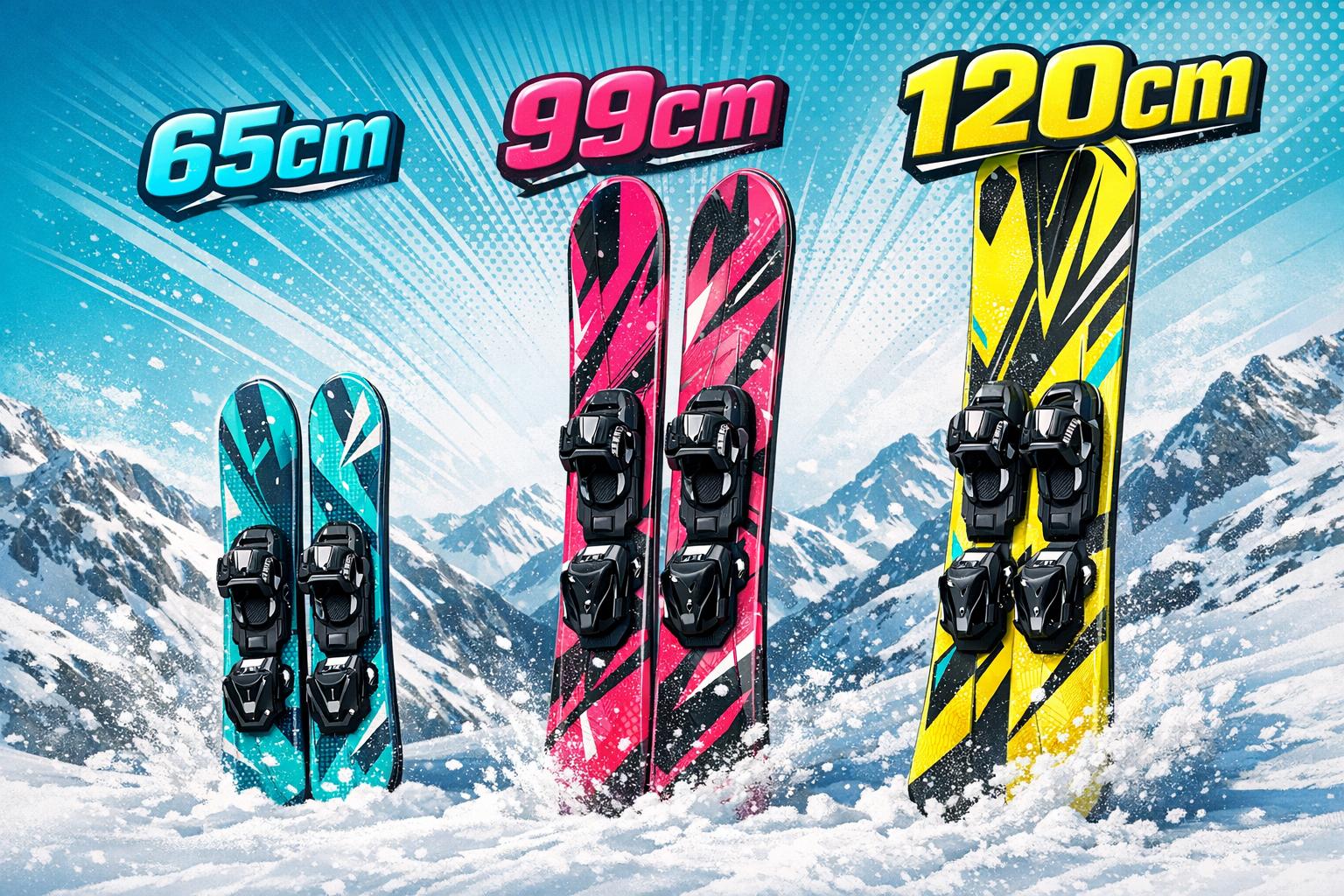
If you started with the 38 cm or 50 cm Mini Ski Skates on easy trails or sledding hills, stepping up to the 44 cm Skiskates or 65 cm Skiblades will give you the extra stability needed for groomed slopes. When you’re ready to take on faster runs or steeper terrain, the 99 cm or 120 cm models - with their release bindings - offer better support for carving and landing jumps, plus the added safety of an automatic release mechanism.
For those diving into freestyle tricks or park riding, bindings designed for snowboard boots are a great choice. They provide extra lateral flexibility and make transitions between runs smoother.
Snowfeet* has you covered with models that grow alongside your skills, helping you expand your abilities and take on new challenges on the mountain.
Conclusion
Choosing the right bindings can make or break your experience on the slopes. For beginners, softer, easy-to-use setups help build confidence, while advanced riders need stiffer, more responsive bindings for precise control at high speeds. Snowfeet* has something for everyone, from the compact 15-inch (38 cm) Mini Ski Skates - perfect for first-timers - to the 47-inch (120 cm) Short Skis designed for seasoned riders tackling tougher terrain. This thoughtful range ensures you’ll find gear tailored to your skill level and riding style.
Unlike traditional skis that demand pricey, rigid plastic ski boots, Snowfeet* bindings work with snowboard boots or even regular winter shoes. That means you get comfort and flexibility from day one. Plus, most people pick up the basics in just one session, and the lightweight design makes everything - from carrying your gear to cruising down the slopes - a whole lot easier.
"Your product is indeed the best and thank you for allowing me to rediscover the joy and happiness of skiing with such ease and with so much control." – Daniel Siouffi
Whether you're weaving through narrow trails, hitting the terrain park, or carving smooth turns on groomed runs, Snowfeet* bindings bring a level of safety, performance, and fun that long skis just can’t match. Take a look at Snowfeet*’s full lineup and see how the right gear can completely change your mountain adventures.
FAQs
What should I consider when choosing bindings for my skiboarding skill level?
When picking bindings, think about your skill level and the safety features you’ll need. If you’re a beginner, look for bindings with forgiving release systems and lower DIN settings. These make falls safer and less stressful. For intermediate or advanced riders, higher DIN ranges offer better performance and power transfer. The good news? Snowfeet bindings come pre-set for safety and performance, so there’s no need to deal with mounting or drilling like you would with traditional ski gear.
Next, make sure the bindings match your Snowfeet model and boot type. If you’re just starting out, the 44 cm Skiskates work well with casual winter shoes or soft snowboard boots. For those with some experience, the 65 cm Skiblades provide more stability and pair nicely with standard ski boots. Advanced riders will appreciate the control and responsiveness of the 99 cm or 120 cm Skiblades. Plus, Snowfeet bindings are flexible - they’re designed to work with both ski and snowboard boots, so you won’t have to worry about compatibility issues like you might with traditional skis.
Lastly, think about ease of use. Snowfeet bindings are super simple to adjust - no tools required. This means you can get them set up quickly and spend more time enjoying the slopes instead of wrestling with your gear.
What makes Snowfeet bindings different from traditional ski bindings?
Snowfeet bindings are crafted specifically for short skis like skiboards and skiskates, offering a lightweight and easy-to-use alternative to traditional ski bindings. Unlike the heavier, more complex conventional bindings that require specialized ski boots and professional installation, Snowfeet bindings keep things simple. They’re compatible with regular winter shoes, snowboard boots, or ski boots, so you don’t need to invest in extra gear.
This simplicity makes them a great choice for beginners or anyone who wants a no-fuss way to hit the slopes. You get a fun, low-maintenance ride without sacrificing safety or performance - perfect for casual, recreational adventures.
Why is it important to choose bindings that match my skiboarding skill level?
Choosing the right bindings for your skiboarding skill level isn’t just about performance - it’s about staying safe and in control. When your bindings are properly matched to your ability, they ensure the release settings are dialed in to reduce the chance of injury and prevent equipment mishaps. Plus, they strike the perfect balance between support and flexibility, so you can make the most of every ride.
Beginners should prioritize bindings that are simple to use and focus on safety, while advanced riders often look for options that deliver sharper precision and quicker response. Snowfeet bindings are built to suit all skill levels. They’re perfectly compatible with Snowfeet products like Skiblades and Skiskates, offering a smoother, more enjoyable ride compared to standard ski or snowboard gear.












Leave a comment
This site is protected by hCaptcha and the hCaptcha Privacy Policy and Terms of Service apply.