



















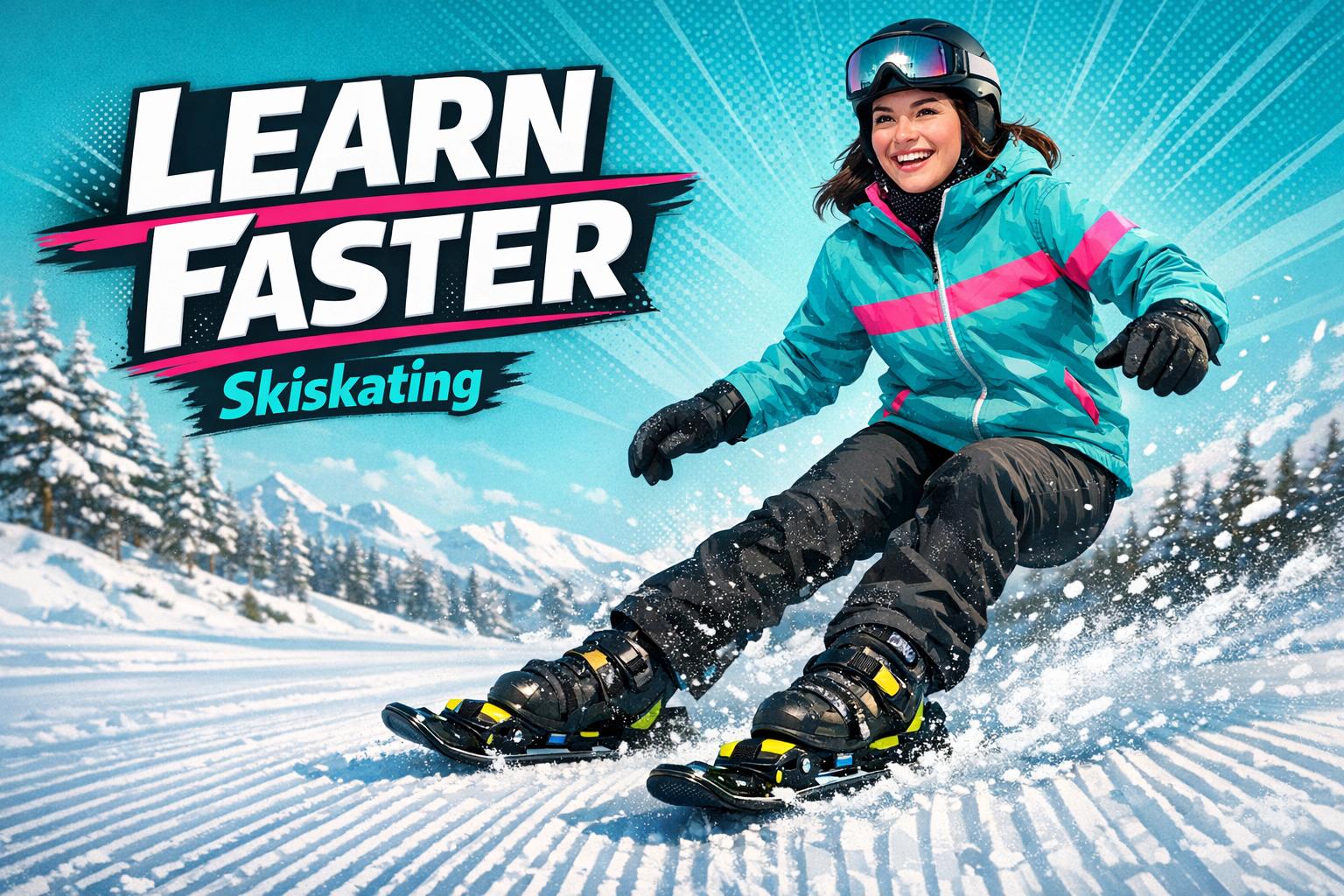
If you’re new to winter sports, skiskating could be the easiest way to hit the snow without the hassle of long skis or heavy snowboards. Picture this: compact gear that fits in your backpack, works with your regular winter boots, and takes just 5 minutes to learn. Unlike skiing or snowboarding, which can take days (or weeks) to master, skiskating feels natural - more like ice skating on snow. Plus, it’s safer and easier to control, making it beginner-friendly.
Here’s why skiskating is worth a shot:
- Compact gear: Skiskates are only 17 inches long and lightweight.
- No special boots: Use your waterproof winter boots or snowboard boots.
- Quick learning curve: Most people get the hang of it in minutes.
- Budget-friendly: No need for expensive ski equipment or lessons.
- Easy transport: Fits in a backpack - no roof racks or oversized bags needed.
Skiskating lets you enjoy the snow on your terms - whether it’s a sledding hill, a trail, or your backyard. It’s a simple, fun way to try winter sports without the steep learning curve or bulky gear. Ready to glide?
Common Problems Beginners Face with Regular Skis and Snowboards
Steep Learning Curve and Balance Issues
Traditional skis can feel like a nightmare for beginners. They’re long, awkward, and not exactly user-friendly. First-timers often find themselves battling to stay upright, with legs strapped into what feels like oversized planks. It’s no wonder that surveys reveal 40–50% of first-time skiers and snowboarders throw in the towel after just one trip, frustrated by constant falls and balance struggles.
"My daughter was always discouraged to go to the mountain because she couldn't stay up on regular skis." – Megan
Snowboarding isn’t much easier. Balancing on a single wide board, typically 150–165 cm long, is a whole new challenge. It requires mastering edge control and learning to recover from frequent tumbles. Rental shops report that 70% of beginners need group lessons just to grasp the basics like staying upright, turning, and side-sliding. And let’s not forget the injury rate - around 2–3 per 1,000 skier days for novices. For many, the combination of balance issues and repeated falls makes the learning curve feel more like a brick wall.
On top of that, the sheer size of the equipment can make the whole experience even more daunting.
Size and Transportation Problems
If balance wasn’t enough of a hurdle, lugging around traditional ski or snowboard gear can feel like its own mini workout. Most Americans drive 2–4 hours to reach ski resorts, and if you don’t have an SUV, you’re looking at spending $200–$500 on a roof box or rack to transport your gear. For city folks, the situation is even worse - imagine trying to carry full-sized skis on a crowded subway. Spoiler alert: it’s not fun.
Flying? Get ready to shell out $50–$100 in airline baggage fees for each pair of skis or snowboard. For someone who’s just dabbling in winter sports, these extra costs can be a serious deal-breaker.
Then there’s the storage issue. Traditional skis and snowboards take up a ton of space, whether it’s in your garage, closet, or apartment. For beginners, the hassle of finding room for bulky gear can be just one more reason to think twice about hitting the slopes.
How Snowfeet* Skiskates Make Learning Easier for Beginners
Small Size and Lightweight Design
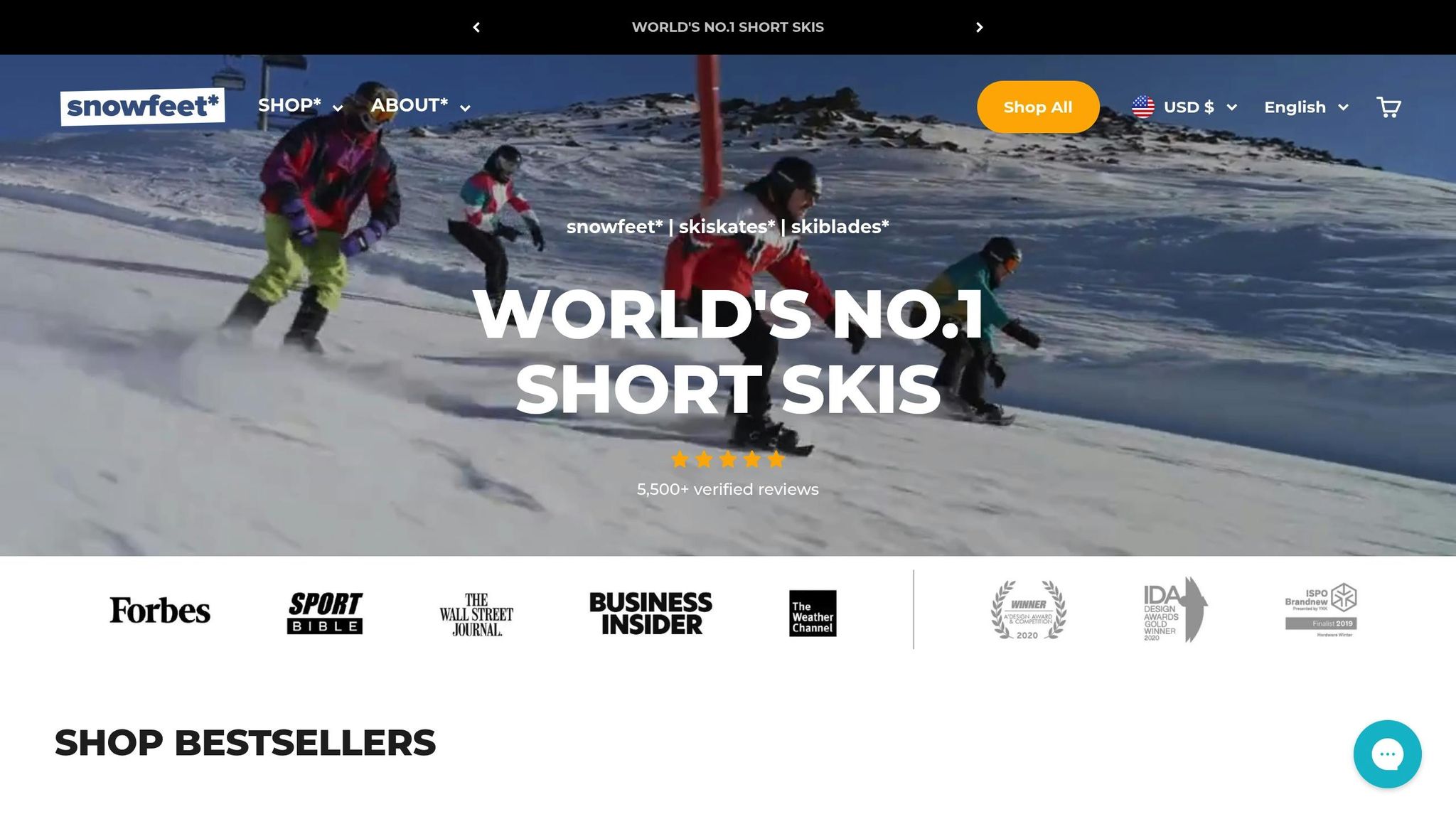
Snowfeet* Skiskates are just 44 cm long, a stark contrast to traditional skis that often exceed 150 cm. This compact size isn't just about convenience - it completely changes the learning curve for beginners. With shorter skates, you can actually lift your feet when needed, which can be a lifesaver if you start to lose balance. A quick lift can stop a fall before it happens. As skier Cameron Asbell put it:
"I didn't get injured because with how small they are it's easier to pick them up and it doesn't put stress on your knees as much, also making it easier to control and regain balance when falling."
Another huge plus? They’re so small they fit in a backpack. Forget about roof racks or hauling heavy gear around. For beginners who aren’t ready to fully commit to traditional skiing, this portability makes trying out snow sports way more approachable. Plus, the compact design helps with control, making it easier to find your footing - literally.
Easy to Learn and Use
If you’ve ever ice skated, rollerbladed, or even gone for a brisk walk, you’ll find the motion of skiskating surprisingly familiar. The transition feels natural, which is why beginners often pick it up so quickly. Max H., a snowboarder giving skiskates a try, shared:
"Easier to handle and turn, of course, it also takes time to get used to, but it is quicker than anything else."
Another advantage of the short design? Less leverage working against you. Long skis can amplify every little mistake - one wrong move and you’re tumbling. Snowfeet* Skiskates are far more forgiving, keeping movements manageable and making it easier to stay in control.
Compatible with Regular Winter Boots
One of the standout features of Snowfeet* is that you don’t need specialized ski boots. Instead, you can use any waterproof winter boots you already own. If you want extra ankle support for steeper slopes, snowboard boots work great too. This eliminates the need for stiff, expensive ski boots, which are often a major hurdle for beginners.
Adjusting the bindings is simple - just grab a screwdriver and you’re good to go. They’re designed to fit shoe sizes 6–13 US (38–47 EU), so most people won’t have any trouble.
For those just dipping their toes into winter sports, this flexibility means you can try skiskating without splurging on pricey gear. It’s an easy and accessible way to get started on the slopes.
Snowfeet* Skiskates vs. Regular Skis and Snowboards
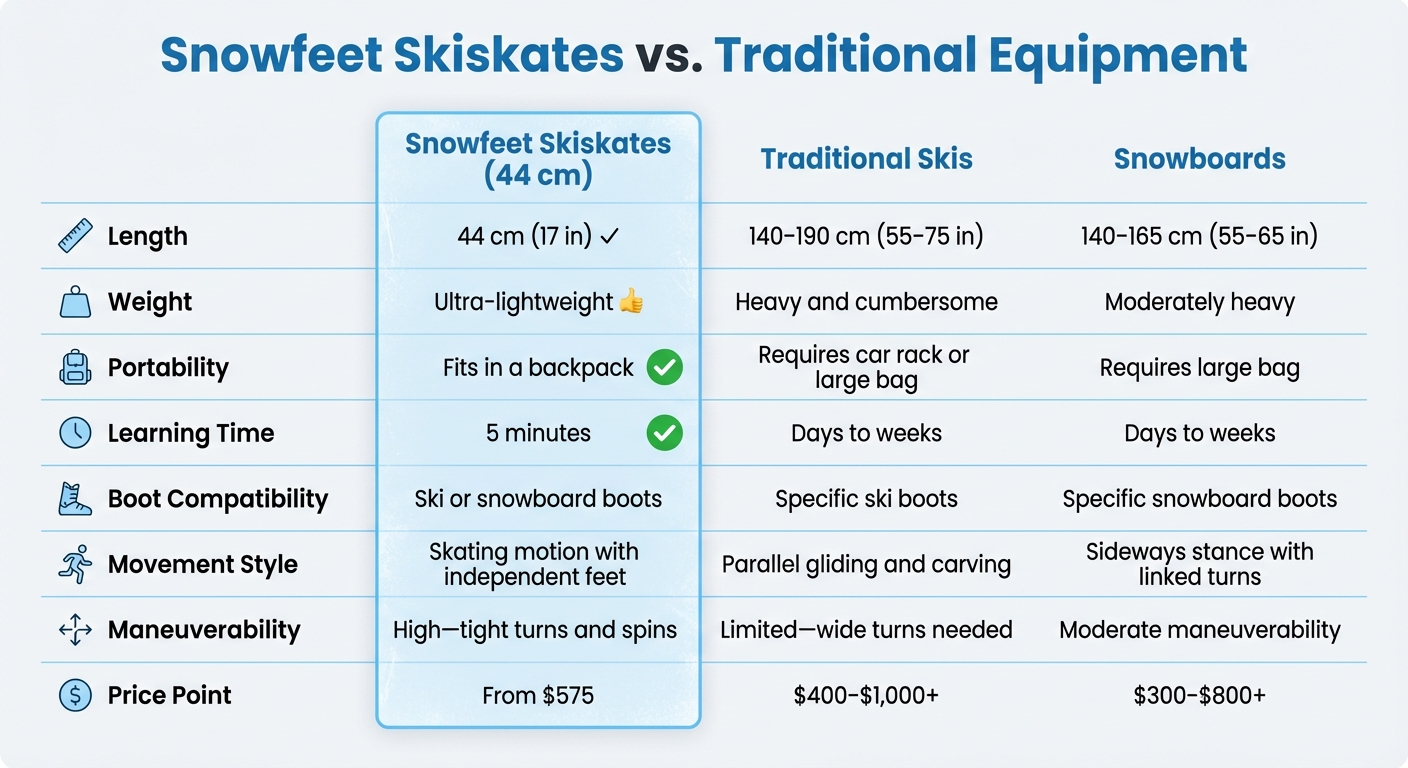
Snowfeet Skiskates vs Traditional Skis and Snowboards Comparison Chart
Let’s take a closer look at how Snowfeet* Skiskates stack up against traditional skis and snowboards in terms of design and usability.
Main Differences in Design and Use
Snowfeet* Skiskates are compact, measuring just 44 cm (17 inches) in length. Compare that to snowboards, which typically range from 140–165 cm (55–65 inches). This smaller size allows for independent foot movement, making it easier to perform tight turns, spins, and quick direction changes - things that are much harder with longer equipment. Traditional skis, with their longer edges, are built for carving and stability, which means they require wide, sweeping turns. Snowfeet* Skiskates, on the other hand, mimic the motion of ice skating, making them a lot more approachable for beginners.
Another big win for Snowfeet* is portability. While traditional skis and snowboards are bulky and need car racks or oversized bags for transport, Snowfeet* Skiskates are lightweight and fit neatly into a regular backpack.
Boot compatibility is another area where Snowfeet* shines. They work with both ski and snowboard boots, unlike traditional gear that requires specialized boots for each sport.
Now, let’s see how these design features translate into practical advantages when it comes to ease of use, safety, and performance.
Side-by-Side Comparison: Snowfeet* Skiskates vs. Traditional Equipment
Here’s a quick breakdown of how Snowfeet* Skiskates compare to skis and snowboards:
| Feature | Snowfeet* Skiskates (44 cm) | Traditional Skis | Snowboards |
|---|---|---|---|
| Length | 44 cm (17 in) | 140–190 cm (55–75 in) | 140–165 cm (55–65 in) |
| Weight | Ultra-lightweight | Heavy and cumbersome | Moderately heavy |
| Portability | Fits in a backpack | Requires car rack or large bag | Requires large bag |
| Learning Time | 5 minutes | Days to weeks | Days to weeks |
| Boot Compatibility | Ski or snowboard boots | Specific ski boots | Specific snowboard boots |
| Movement Style | Skating motion with independent feet | Parallel gliding and carving | Sideways stance with linked turns |
| Maneuverability | High - tight turns and spins | Limited - wide turns needed | Moderate maneuverability |
| Price Point | From $575 | $400–$1,000+ | $300–$800+ |
One of the standout features of Snowfeet* is how quickly you can get the hang of them. Most users pick up the basics in just 5 minutes. That’s backed by over 5,500 verified reviews, averaging an impressive 4.9/5 stars. In contrast, skiing and snowboarding often take days or even weeks of practice - and sometimes pricey lessons - before you feel confident on the slopes.
For beginners, this ease of use is a game-changer. Instead of wrestling with oversized gear or trying to master complicated techniques, Snowfeet* lets you enjoy a movement style that feels as natural as skating on snow. It’s not just a compact alternative - it’s an entirely new way to enjoy winter sports from the very first day.
sbb-itb-17ade95
How to Start with Snowfeet* Skiskates
Which Snowfeet* Product to Buy First
If you're new to winter sports, the Snowfeet* Skiskates (44 cm) are a great starting point. At just 17 inches long, they strike a nice balance: small enough to feel easy to control but sturdy enough to handle groomed slopes with ease.
Looking for a bit more stability? The Snowfeet* 38 cm Mini Ski Skates in the Carbon Fiber Edition might be your go-to. These offer a slower, more controlled ride and start at $190.
For steeper slopes, consider pairing your skiskates with snowboard boots - they provide extra ankle support. That said, both models work just fine with regular waterproof winter boots. Plus, the "one size fits most" design fits US shoe sizes 6–13 (EU 38–47), so there’s no need to wrestle with complicated sizing charts like you would with traditional skis.
Once you've picked your skiskates, you're ready to hit the snow. Here's how to get started.
Beginner Tips for Your First Time
Before heading out, adjust your bindings at home using the boots you plan to wear. Trust me, it’s much easier to do this in the warmth of your living room than in freezing temperatures on the slopes.
Start on flat, groomed terrain - skip the deep powder for now. Stand with your legs shoulder-width apart, knees slightly bent, and your weight centered. Unlike traditional skiing, there’s no need to lean forward.
"The best way to start your ride is to skate like a hockey player." - Snowfeet Team
Move using an ice skating motion. If you feel wobbly, stagger your feet slightly for better balance. To stop, you can either perform a "hockey stop" by sliding your edges sideways or use the built-in heel brake. Most people get the hang of these basics in about 5 minutes. Practice a bit, and you’ll be gliding with confidence in no time!
Conclusion: Should You Try Skiskating as a Beginner?
If you're new to winter sports, Snowfeet* Skiskates might just be the perfect way to ease into the fun without the usual hurdles.
Forget the steep learning curve, pricey gear, and stiff, uncomfortable boots that come with traditional skiing. Snowfeet* Skiskates have already won over 50,000 riders worldwide, boasting an impressive 4.9-star rating from more than 5,500 verified reviews. And here's the kicker: most beginners feel comfortable using them in about 5 minutes. No lessons, no hassle - just strap them onto your regular winter boots and you're good to go.
What’s even better? You don’t need a fancy ski resort to enjoy them. Your neighborhood sledding hill, a nearby trail, or even your backyard can turn into your personal winter playground. Skiskating is all about making winter sports simple, fun, and accessible for everyone.
Whether you're a kid or young at heart at 105, Snowfeet* Skiskates offer a safe, easy, and exciting way to hit the snow. With their short design and natural skating motion, you'll feel confident and in control in no time. So why not give skiskating a try? It’s a fresh, fun way to enjoy the snowy season!
FAQs
What makes skiskating a great option for beginners compared to skiing or snowboarding?
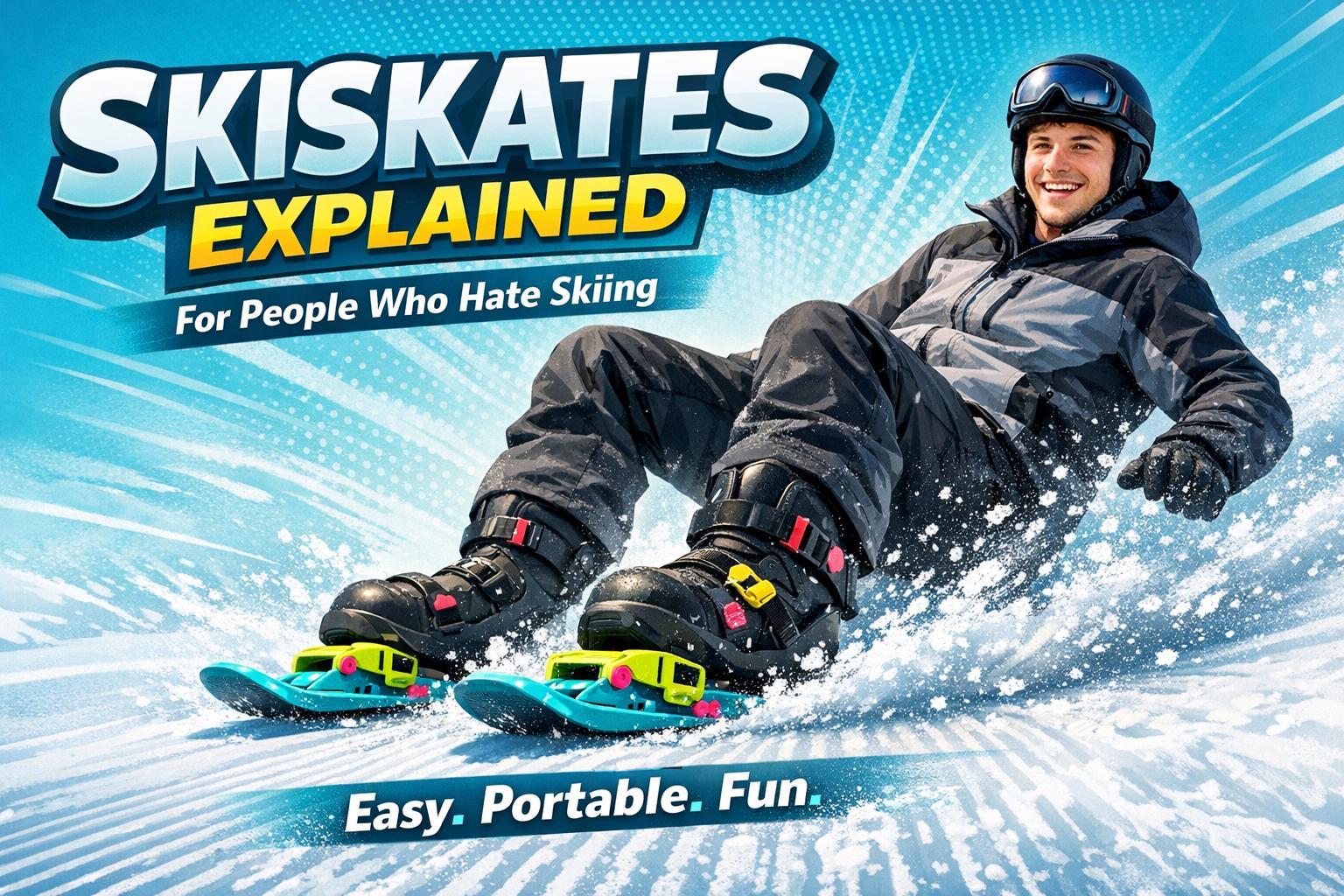
Skiskating is a fantastic option for beginners because it’s lightweight, compact, and super easy to pick up. Unlike traditional skis or snowboards, Snowfeet Skiskates are small enough to toss in your backpack - no need for bulky gear or complicated techniques. This makes them a great choice for anyone curious about winter sports but not ready for a steep learning curve.
The experience of skiskating is a lot like ice skating on snow, which feels natural and less daunting compared to learning the ropes of skiing or snowboarding. And here’s the best part: you can use them almost anywhere - on slopes, trails, or even in your backyard. They make enjoying the snow simple, fun, and stress-free. If you’re looking for an easy and enjoyable way to dive into winter sports, skiskating is definitely worth a try!
Can you skiskate anywhere there's snow, or do you need special terrain?
Skiskating offers a fun and flexible way to enjoy the snow, no matter where you are. From cruising down groomed slopes to exploring snowy hiking trails or even tackling your neighborhood hill, this activity works well on all kinds of snowy terrains. What sets Snowfeet Skiskates apart is their compact size and simplicity, making them a great choice for beginners and anyone craving an easy, no-fuss winter sport.
The best part? You don’t need a fancy ski resort or specialized terrain to dive in - just some snow and a bit of adventurous spirit!
Is skiskating an affordable and beginner-friendly winter sport?
Skiskating with Snowfeet* is a fun and wallet-friendly way to dive into winter sports. Compared to the hefty price tag of traditional skiing or snowboarding gear - which can easily climb above $1,500 for skis, boots, and bindings - Snowfeet* skiskates are a steal, starting at just around $150. This makes them an excellent option for anyone curious to try something new without breaking the bank.
What’s even better? Snowfeet* skiskates are super lightweight and compact. They’re designed to work with your regular winter boots, so there’s no need to splurge on extra gear. Their straightforward design means they’re easy to pick up, even if you’ve never set foot on a slope before - no steep learning curves here! If you’re after a simple, fun, and budget-friendly way to enjoy the snowy season, skiskating with Snowfeet* might just be your next favorite winter activity.











Leave a comment
This site is protected by hCaptcha and the hCaptcha Privacy Policy and Terms of Service apply.