



















Tree skiing is all about quick turns, tight spaces, and staying in control. So, what’s the best gear for the job? Short skis. Unlike long skis, which are harder to maneuver and exhausting in dense forests, shorter options like Snowfeet Skiblades (44–120 cm) are designed for agility, control, and ease. Here’s the scoop:
- Short Skis: Perfect for fast, sharp turns and navigating narrow gaps. Lightweight and less tiring, they’re ideal for tight tree runs. Bonus: They’re compact enough to fit in a backpack.
- Long Skis: Great for open terrain and deep powder but clunky and tough to handle in confined spaces. They require more effort and skill, which can lead to fatigue.
Quick takeaway: If you love tree skiing, short skis like Snowfeet Skiblades are the way to go. They’re nimble, easy to use, and make skiing through trees a breeze. Long skis? Save them for powder days or wide-open groomers.
1. Short Skis (Snowfeet* Skiblades and Skiskates)
Turn Radius and Agility
Snowfeet* Skiblades and Skiskates are built for making sharp, precise turns - something that longer skis often struggle with. Unlike traditional long skis, which demand more effort to engage their edges, Snowfeet* models make edging feel almost effortless. This means you can transition between turns quickly, making them a dream for tackling tight tree runs. These come in sizes ranging from 44 cm Skiskates ($490) to 99 cm Skiblades (starting at $590). Their design focuses on delivering unmatched performance in narrow and challenging tracks.
Maneuverability in Tight Spaces
The compact size of Snowfeet* products makes them perfect for navigating through narrow gaps and tight spaces where longer skis just can't keep up. As the Snowfeet Team puts it:
"Shorter skis are much easier to turn and navigate, making them perfect for skiing in tight and narrow spaces."
For example, the 65 cm Skiblades (starting at $550) strike a great balance between stability and nimbleness, making them ideal for weaving through tree runs. This easy maneuverability also adds an extra layer of safety to your ride.
Safety and Control
The combination of agility and maneuverability in Snowfeet* products translates to exceptional control, even on tricky terrain. Their shorter length makes them easier to handle, especially for beginners, while also reducing physical strain. Plus, their lightweight construction helps cut down on fatigue, giving you better responsiveness for sharp stops or tight carving. With consistent 5.0 out of 5 ratings across their Skiskates and Skiblades lineup, it’s clear that riders trust these skis when precision is critical. Whether you're navigating dense trees or tight trails, Snowfeet* delivers the control you need.
2. Traditional Long Skis
Turn Radius and Agility
When it comes to turning, traditional long skis (over 170 cm) have a larger turn radius, meaning they need more effort and knee pressure to execute quick turns. This becomes a real challenge in tight tree runs, where fast, back-to-back turns are the name of the game. Sure, these skis shine on wide-open groomers or in deep powder, but their design makes them clunky and far less agile in dense forest terrain. That lack of nimbleness can lead to some frustrating - and even risky - moments when weaving through trees.
Maneuverability in Tight Spaces
Navigating narrow wooded areas with long skis can feel like trying to steer a cruise ship through a canal. Their length often leads to control issues, especially on moguls, where weight shifts become harder to manage. And if you’re using wider long skis, you might find yourself battling another problem: tip dive. When the tips catch on snow or obstacles, it can throw you off balance and make things even trickier. Many experienced skiers and guides suggest going for shorter skis if tree skiing is your thing. Unlike long skis, Snowfeet* products are designed to glide effortlessly through these tight spots, giving you the control you need.
Stability and Speed
Now, to give credit where it’s due, long skis are fantastic on open terrain. They offer better stability at high speeds, minimize vibrations, and provide excellent grip. Plus, their larger surface area helps you stay afloat in deep powder, keeping you on top of the snow instead of sinking in. But here’s the catch: these perks are perfect for wide, open spaces and fast, straight descents - not for the stop-and-go, quick-turn demands of tree skiing. Advanced skiers may love them for bombing down groomers or exploring untouched backcountry, but their size and weight make them a hassle when rapid directional changes are required.
Safety and Control
The weight and length of traditional long skis don’t just make them harder to handle - they can also become a safety issue in tight tree runs. Their bulk demands a refined technique, and the extra effort they require can lead to fatigue, reducing your ability to make quick, precise moves. In dense forests, where split-second reactions are critical, the space needed to execute turns leaves little room for error. This can make long skis a risky choice for tree skiing. On the other hand, Snowfeet* products are built for responsiveness, offering the precision and control that dense terrain demands.
How To Ski Trees - 12 Tips To Improve Your Tree Skiing
sbb-itb-17ade95
Pros and Cons
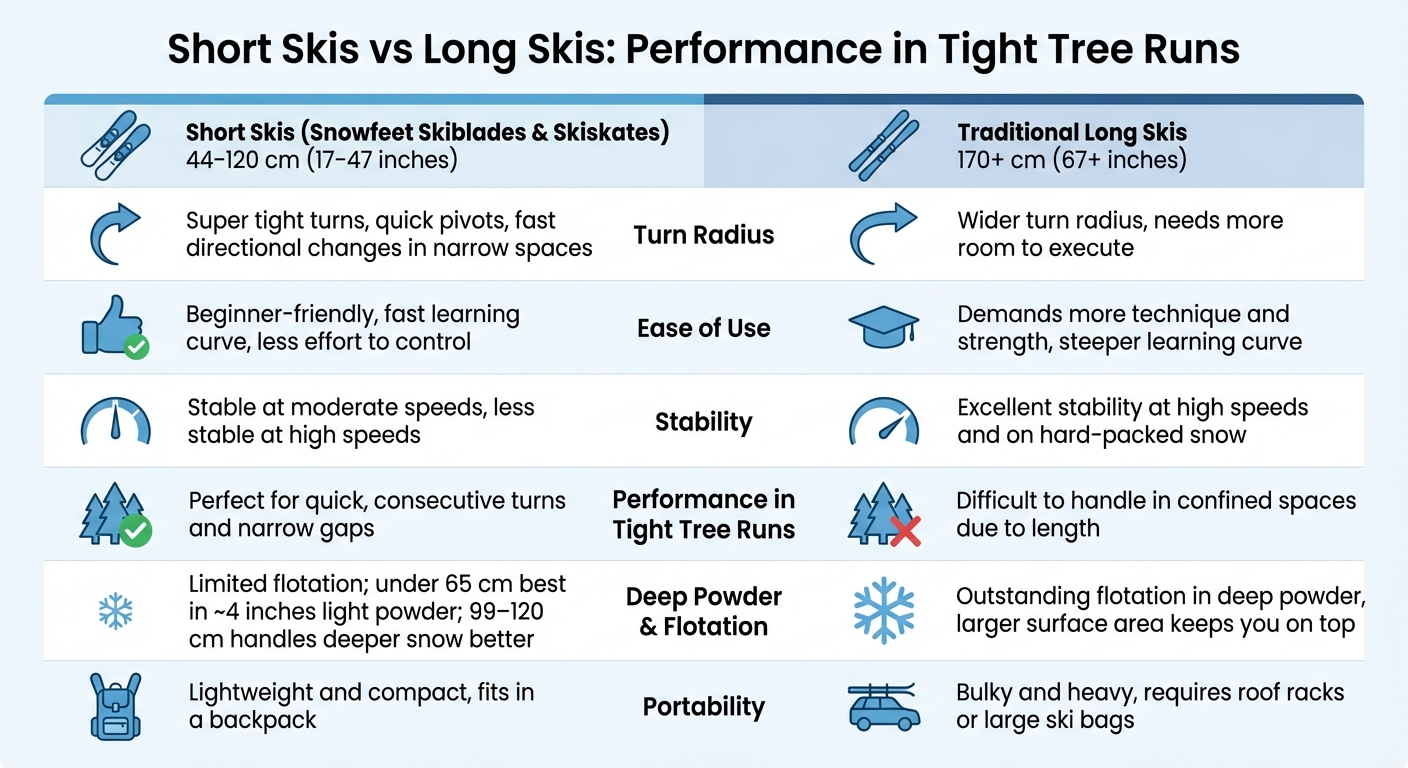
Short Skis vs Long Skis Comparison for Tree Skiing
When deciding between short skis and traditional long skis for navigating tight tree runs, it's all about weighing the pros and cons. Here's a side-by-side comparison to help you understand how each option performs in dense, technical terrain.
| Aspect | Short Skis (Snowfeet* Skiblades & Skiskates, 44–120 cm [≈17–47 inches]) | Traditional Long Skis (typically 170 cm+ [≈67 inches+]) |
|---|---|---|
| Turn Radius | Super tight, allowing for quick pivots and fast directional changes in narrow spaces | Wider turn radius, which needs more room to execute |
| Ease of Use | Beginner-friendly, with a fast learning curve and less effort needed to control | Demands more technique and strength, with a steeper learning curve - professional lessons may help |
| Stability | Stable at moderate speeds on groomed runs but less so at high speeds, requiring precise balance | Excellent stability at high speeds and on hard-packed snow, thanks to longer edge contact |
| Performance in Tight Tree Runs | Perfect for quick, consecutive turns and squeezing through narrow gaps | More difficult to handle in confined spaces due to their length |
| Deep Powder & Flotation | Limited flotation - shorter models (under 65 cm [≈26 inches]) are best in light powder (around 4 inches), while longer Skiblades (99–120 cm [≈39–47 inches]) manage deeper snow better | Outstanding flotation in deep powder, with a larger surface area that helps keep you on top of the snow |
| Portability | Lightweight and compact - fits easily in a backpack, making transportation and storage a breeze | Bulky and heavy, requiring roof racks or large ski bags for transport |
Short skis shine when it comes to agility and portability, making them great for weaving through tight trees. On the other hand, long skis dominate in open terrain and deep powder, offering superior stability and flotation. Each option has its strengths, so your choice depends on the type of skiing you enjoy most.
Conclusion
For tackling tight tree runs, short skis like Snowfeet* Skiblades and Skiskates are a game-changer. Their compact size - ranging from 44 to 120 cm (about 17 to 47 inches) - gives you the agility and quick-turn precision needed to weave through dense glades and narrow chutes. Unlike traditional long skis, which can feel clunky and awkward in confined spaces, Snowfeet* products make it easy to pivot and slide through gaps that would otherwise seem impossible. Whether you're navigating the tightest trees or carving down narrow trails, there's a Snowfeet* model that fits the bill.
The lightweight design is another huge plus. It not only reduces fatigue on demanding runs but also allows for better control in technical terrain. And here's the kicker: you can pack Snowfeet* Skiskates right into a backpack. That means you can easily access remote tree runs without lugging around heavy, cumbersome gear. From unmatched maneuverability for the tightest glades to models offering extra stability for faster, more aggressive skiing, Snowfeet* has something for everyone.
Short skis provide easier handling, lighter movement, and a much more forgiving experience in confined spaces compared to traditional long skis. With over 50,000 riders worldwide and a stellar 4.9-star rating from more than 5,500 verified reviews, Snowfeet* has earned its reputation as the go-to choice for skiers looking to conquer technical terrain without the bulk of conventional gear.
FAQs
Why are short skis better for skiing in tight trees?
Short skis shine when it comes to tree skiing. Their compact size makes quick turns and edge-to-edge transitions a breeze, giving you precise control in tight spaces. This means you can confidently weave around trees and obstacles with agility. Plus, their lightweight design reduces swing weight, so you can pivot effortlessly and adapt to sudden terrain changes without breaking a sweat.
On the other hand, longer skis are all about stability and speed, but they can feel awkward on narrow, twisty trails. Their larger turning radius and slower response time make them less ideal for the sharp, quick movements tree skiing demands. Short skis, such as Snowfeet Skiblades (65 cm to 120 cm) and Snowfeet Skiskates (44 cm), excel in this environment. Their unmatched maneuverability makes navigating dense forests and tight lines feel like second nature.
Why are Snowfeet Skiblades better for navigating tight tree runs?
Snowfeet Skiblades are a game-changer for navigating tight tree runs. Their short length - measuring between 44 cm and 120 cm - makes sharp, quick turns a breeze. Compare that to traditional skis, which usually fall in the 160–180 cm range, and you’ll see why these compact skiblades are perfect for weaving through narrow trails with ease.
Another big plus? Their lightweight build, typically under 11 lbs. This means less strain on your legs, so you can stay nimble and in control, even during rapid, back-to-back turns. And since Snowfeet Skiblades are designed to work with regular winter or snowboard boots, you won’t have to deal with clunky bindings holding you back. It’s all about smooth, effortless maneuvering in those tricky, confined spots.
Why are short skis safer for skiing in dense forests?
Short skis, like Snowfeet Skiblades and Skiskates, bring a serious edge when it comes to safety in dense forests. Their compact design lets you make sharper turns and react faster, helping you dodge trees and other obstacles with ease. Take the Snowfeet Skiblade, for instance - available in lengths of 25.6 in, 39 in, or 47 in. These shorter skis need much less space to pivot than traditional long skis, which typically measure around 67–71 in. That smaller turning radius? It’s a game-changer, reducing the chance of collisions and making tight spaces way less intimidating.
Another bonus? Short skis are lighter, which means they create less momentum during turns. If you lose your balance, it’s easier to regain control. Snowfeet Skiskates (just 17.3 in long) take this even further. Their low, stable stance not only eases the strain on your knees but also lowers the risk of tipping over - a common headache with longer skis or snowboards in uneven, tree-filled terrain. All these features combined make short skis a safer, smarter choice for tackling tight, forested runs.













Leave a comment
This site is protected by hCaptcha and the hCaptcha Privacy Policy and Terms of Service apply.