




















Yes, short skis are better for kids learning to ski. Here’s why:
- Easier to control: Short skis are lightweight and simple to maneuver, making it less stressful for kids to learn basic turns and stops.
- Faster progress: Kids can avoid common beginner issues like crossed ski tips and leaning back too much, helping them stay balanced and confident.
- Kid-friendly size: Unlike long, bulky skis, short skis (like Snowfeet's models ranging from 44 cm to 120 cm) are less intimidating and even small enough for kids to carry themselves.
Long skis might work for advanced skiers, but for beginners, they can feel clunky and overwhelming. Short skis make skiing less about frustration and more about fun, helping kids enjoy their time on the slopes while building skills quickly.
Are Short Skis Better for Beginners?
1. Snowfeet* Short Skis and Skiskates
Snowfeet* offers four models designed to make skiing more accessible and fun for young learners: Skiskates (44 cm) and Skiblades (65 cm, 99 cm, and 120 cm). These models focus on being lighter, easier to control, and more intuitive for beginners.
Weight and Portability
Snowfeet* short skis are incredibly lightweight, which means kids can ski longer without getting tired. Thanks to their compact size, they even fit into a regular backpack, making it easy for kids to carry their own gear. This not only adds to the excitement of skiing but also encourages independence - something you don’t always get with bulky rental skis. Plus, the lightweight design makes them much easier to maneuver, an essential feature for young learners.
Control and Maneuverability
One of the biggest hurdles for beginners is dealing with long skis and the dreaded crossed tips. Snowfeet* short skis eliminate this issue entirely. Traditional skis can feel like unwieldy levers, but these shorter models require less physical effort to turn and pivot. The 65 cm version is especially great for kids who already have experience with hockey or ice skating since the movement feels very similar, making the transition from ice to snow much smoother.
Learning Curve
These short skis are designed to help kids succeed right away. Instead of spending weeks trying to master the "pizza" or snowplow stance, they can quickly move on to parallel skiing and skating-like movements. The lightweight design and ability to move each leg independently make it easier for kids to learn how to turn and stop. Snowfeet* skis not only speed up the learning process but also grow with the child, helping them build confidence as they progress.
Suitability for Beginners
For first-time skiers, the ideal ski length is about 16 inches (40 cm) shorter than their height. Snowfeet* models meet this recommendation, with sizes ranging from 44 cm to 120 cm, allowing kids to find the perfect fit as they grow. The playful design feels less intimidating than traditional skis, making it easier for beginners to get started. Many of the models also come with adjustable bindings, which adapt to different boot sizes - a practical feature that saves money and keeps kids skiing season after season.
2. Traditional Long Kids' Skis
Traditional kids' skis, like those from Atomic and Rossignol, have been a go-to for many ski schools. These skis typically range from 70 cm for toddlers to over 150 cm for teenagers. While they’ve remained a classic choice for years, they can present unique challenges for young beginners trying to find their footing on the slopes.
Weight and Portability
One major drawback of traditional skis is their weight and size. For example, a pair of skis for a 10-year-old can easily exceed 4 feet in length, making them awkward to carry and transport - especially for smaller kids. Compared to more lightweight, compact options like Snowfeet*, traditional skis feel bulky and unwieldy, both on and off the mountain.
Control and Maneuverability
Controlling long skis can be tough for beginners. Ski expert Marietta Hoffmann from INTERSPORT Rent puts it bluntly:
"Skis that are too long are an absolute no-go for children. Beginners have a much harder time with equipment that is too big - and that affects not only their ability, but more importantly, their enjoyment of skiing!"
The extended length of traditional skis makes edge-to-edge transitions slower and turning more strenuous. For kids just starting out, this added difficulty can feel overwhelming, especially when trying to master basic turns. It’s no surprise that many children find these skis intimidating.
Learning Curve
Traditional skis demand proper technique right from the start, which can be a tall order for young learners. A common beginner mistake - leaning too far back - causes the ski tips to lose pressure, leading to chatter or flapping. This makes the skis feel out of control and often results in more falls. For kids, this can quickly turn into frustration and take the fun out of the experience. In contrast, shorter, more agile options like Snowfeet* make it easier to stay balanced and in control, helping kids avoid these early pitfalls.
Suitability for Beginners
Even when sized correctly, traditional skis leave little room for error. They demand stamina and solid technique, rewarding those who can maintain forward pressure and proper posture. But for young beginners, these skills take time - weeks or even months - to develop. On the other hand, Snowfeet* products are designed to make skiing accessible and enjoyable right away, helping kids build confidence and have fun from day one.
sbb-itb-17ade95
Pros and Cons
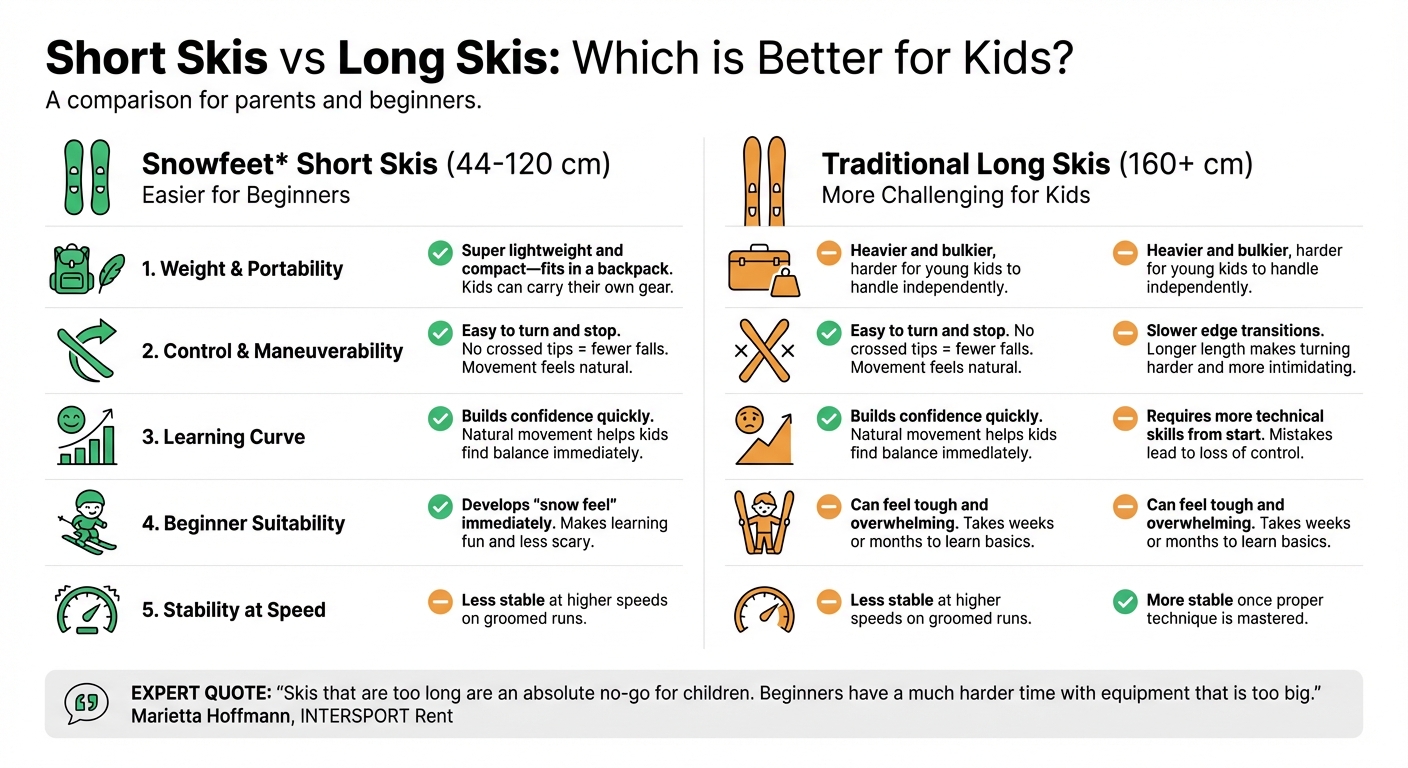
Short Skis vs Long Skis Comparison for Kids Learning to Ski
Snowfeet* short skis and traditional long skis offer distinct advantages and challenges for young beginners. Here's a side-by-side look at how they compare:
| Feature | Snowfeet* Short Skis / Skiskates (44–120 cm) | Traditional Long Kids' Skis (typically 160+ cm) |
|---|---|---|
| Weight & Portability | Super lightweight and compact - small enough to fit in a backpack. Kids can carry their own gear with ease. | Heavier and bulkier, making them harder for young kids to handle independently. |
| Control & Maneuverability | Easy to turn and stop. No crossed tips, which means fewer falls. Movement feels natural, like walking or running. | Slower transitions between edges. The longer length can make turning harder and more intimidating for beginners. |
| Learning Curve | Builds confidence quickly. The natural movement helps kids find balance right away. | Requires more technical skills from the start. Mistakes like leaning back can lead to loss of control. |
| Beginner Suitability | Great for helping kids develop a "snow feel" immediately. Makes learning fun and less scary. | Can feel tough and overwhelming at first, often taking weeks or months to learn basic skills. |
| Stability at Speed | Less stable at higher speeds on groomed runs. | More stable once proper technique is mastered. |
Snowfeet* short skis stand out for giving kids a quick confidence boost and making skiing feel like second nature from the get-go. They’re lightweight, easier to control, and help kids stay on the slopes longer without getting tired. Plus, they turn learning into play, which keeps the experience fun and stress-free.
While traditional long skis are better suited for advanced techniques and higher speeds, short skis remove many of the hurdles beginners face - both physical and mental. For young learners, shorter skis make all the difference in turning those first runs into a fun and rewarding experience.
Conclusion
For beginners hitting the slopes, Snowfeet* short skis stand out as a game-changer. They tackle common beginner struggles like crossed ski tips and clunky equipment, turning skiing into an enjoyable experience right from the start. Kids can handle their own gear, turn smoothly, brake with ease, and build confidence faster. This simplicity paves the way for success on the snow.
On the other hand, long skis, while great for seasoned skiers chasing speed on groomed trails, often overwhelm beginners with their size and technical demands. As INTERSPORT Rent points out, shorter skis are "more maneuverable, more agile, and more forgiving of mistakes". These qualities are exactly what young learners need to thrive.
For parents selecting beginner ski gear, the choice couldn’t be clearer: Snowfeet* products are the way to go. The 44 cm Skiskates are perfect for the youngest skiers, while the 65 cm, 99 cm, and 120 cm Skiblades adapt as your child’s skills grow. With adjustable bindings and a compact design, this gear evolves with your child.
As discussed earlier, Snowfeet* is changing the game for beginner skiers with its lightweight and agile design. Shorter skis don’t just make skiing easier - they make it more fun. Snowfeet* products turn the challenge of learning to ski into an exciting adventure, setting kids up for a lifetime of snowy memories.
FAQs
What ski length is best for my child’s height?
When picking the right ski length for your child, it’s all about their height, age, and skill level. For beginners, shorter skis are the way to go. Options ranging from 65-120 cm, such as Snowfeet’s lightweight Skiblades or Skiskates, provide better control and help build confidence on the slopes. A good rule of thumb? Look for skis that reach somewhere between your child’s chin and nose. Going shorter makes handling easier and keeps the learning process fun and stress-free.
Are Snowfeet* short skis safe for first-time kids?
Snowfeet* short skis are a great option for kids hitting the slopes for the first time. Thanks to their lightweight build and easy-to-control design, they’re perfect for beginners. These skis help young skiers gain confidence while being much easier to handle than traditional long skis. This makes learning not just simpler but also more fun for kids.
Can kids use Snowfeet* with regular ski boots?
Kids can absolutely use Snowfeet* with regular ski boots! These are specifically designed to work with standard ski footwear, making it easy for young skiers to get started with confidence and comfort.













Leave a comment
This site is protected by hCaptcha and the hCaptcha Privacy Policy and Terms of Service apply.