



















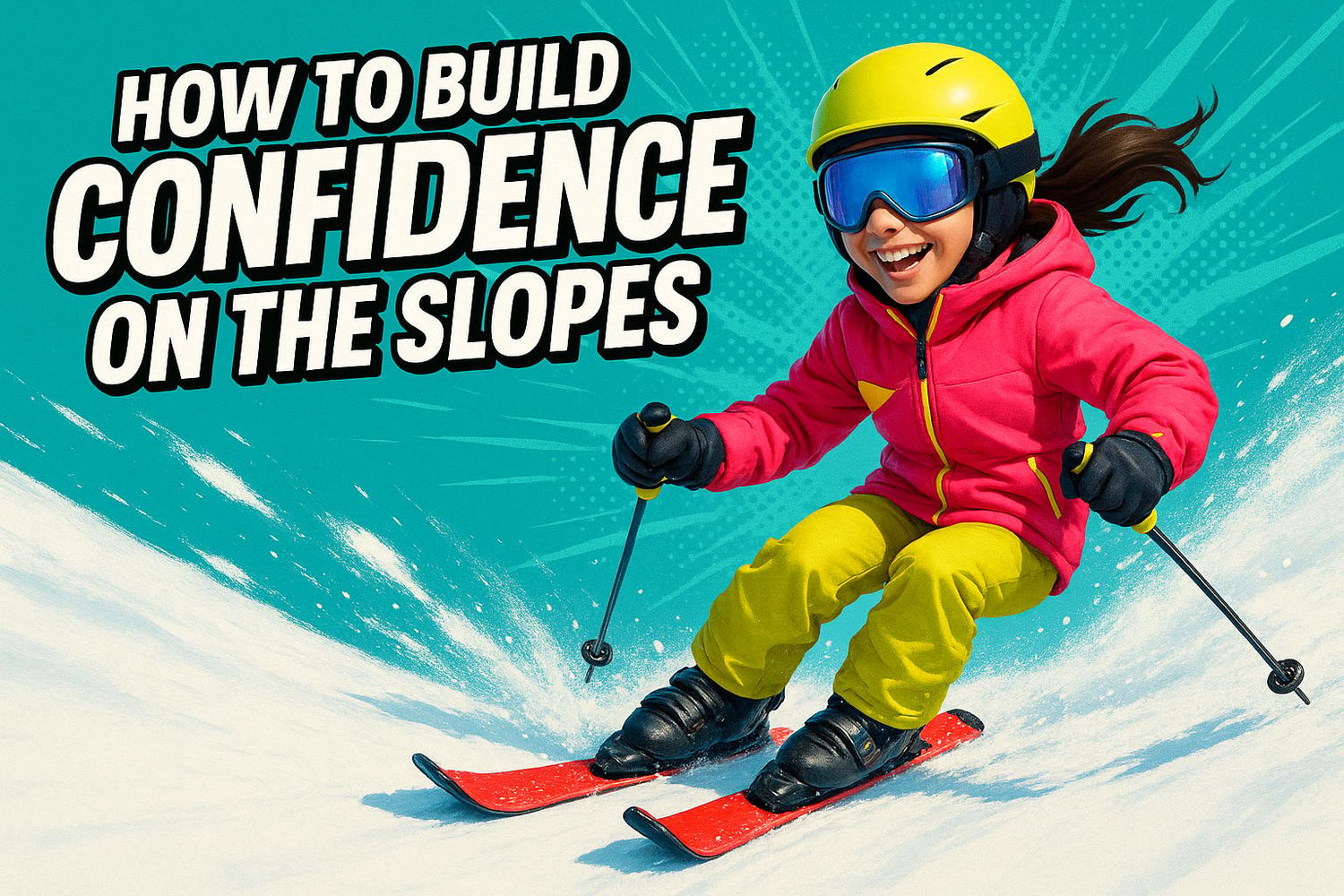
Looking to feel more in control on the slopes? Confidence is the key to enjoying winter sports, and the right gear can make all the difference. Snowfeet* offers compact, lightweight ski gear that’s easy to use, especially for beginners. Unlike bulky skis or snowboards, Snowfeet* products are portable, attach to regular winter shoes or snowboard boots, and help you master turns and stops faster.
Key Points:
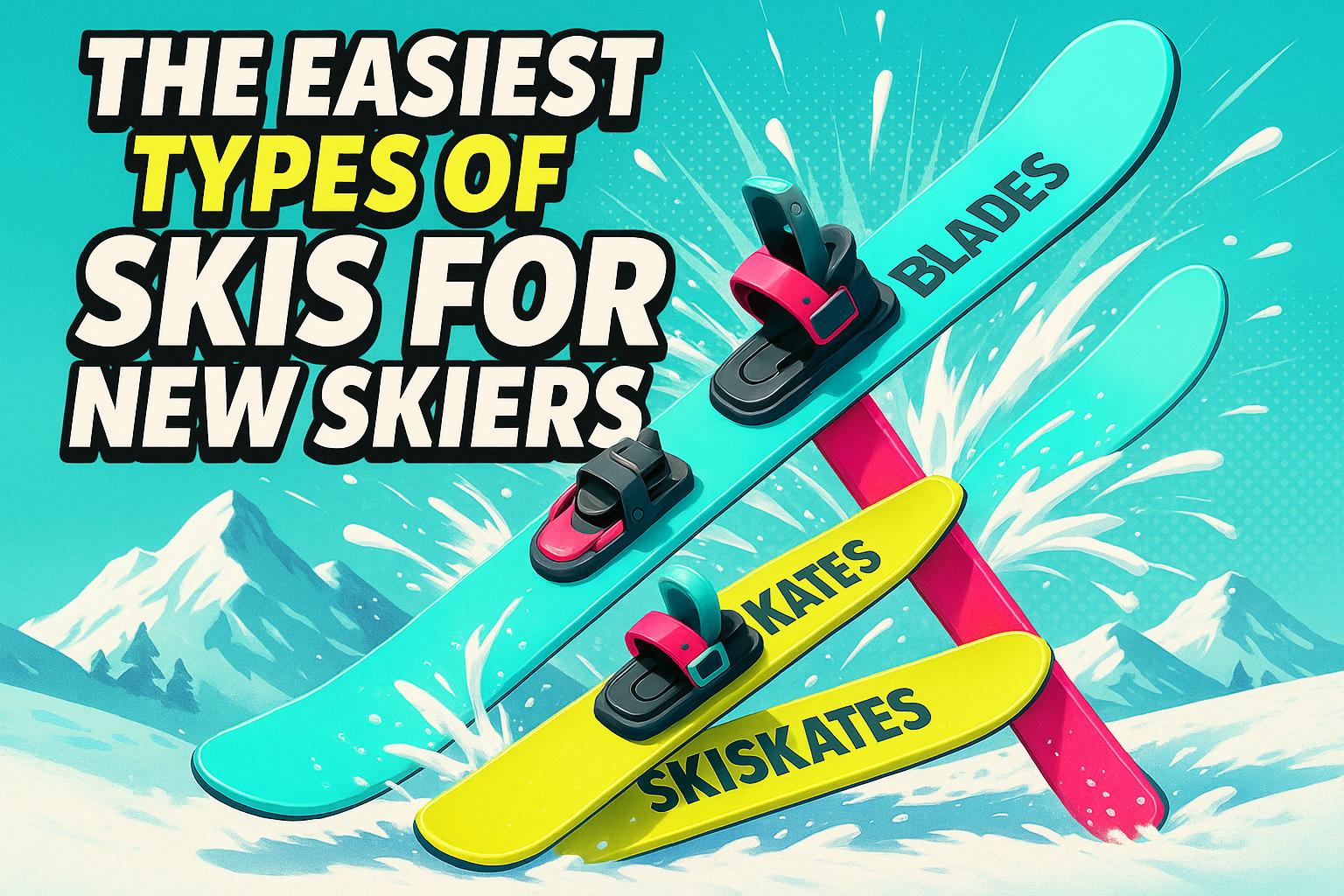
- Snowfeet* Gear Options: Mini Ski Skates (38 cm, $160), Skiskates (44 cm, $440; 50 cm, $199), Skiblades (65 cm, $499; 99 cm, $540), and Short Skis (120 cm, $775).
- Why Choose Snowfeet*: Lightweight, easier to learn, and compatible with regular winter shoes or snowboard boots.
-
Learning Tips:
- Start on flat terrain and practice skating movements.
- Use a balanced stance with knees slightly bent.
- Avoid leaning too far forward or spreading your feet too wide.
- Mindset and Safety: Stick to slopes that match your skill level, practice positive self-talk, and keep your gear well-maintained.
Whether you're new to skiing or looking for a simpler way to hit the slopes, Snowfeet* makes it easier to focus on fun and build confidence. With over 50,000 riders and thousands of positive reviews, these compact skis are a game-changer for winter sports. Ready to give them a try? :)
How to Overcome Fear & Truly Enjoy Your Skiing (for nervous skiers)
Picking the Right Gear
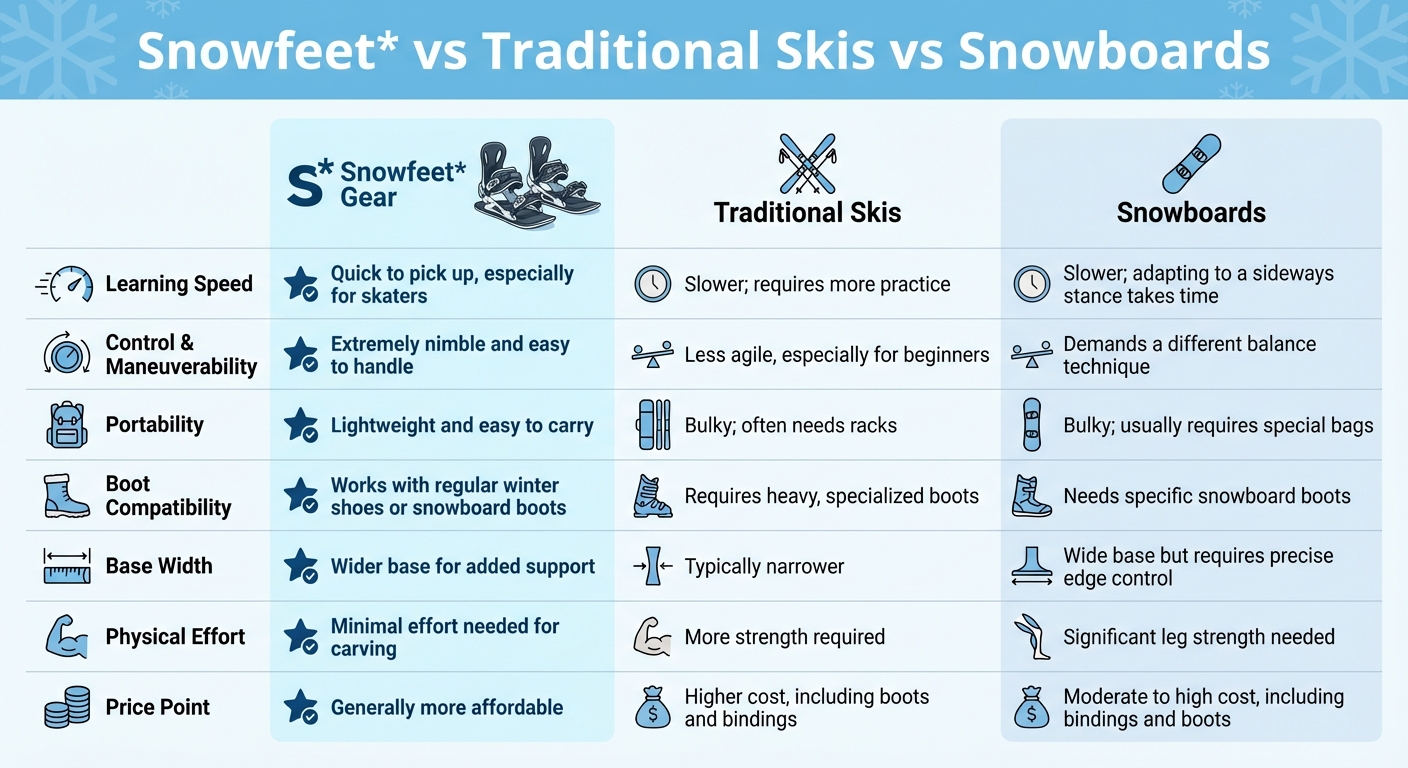
Snowfeet vs Traditional Skis vs Snowboards Comparison Chart
Snowfeet* Product Options
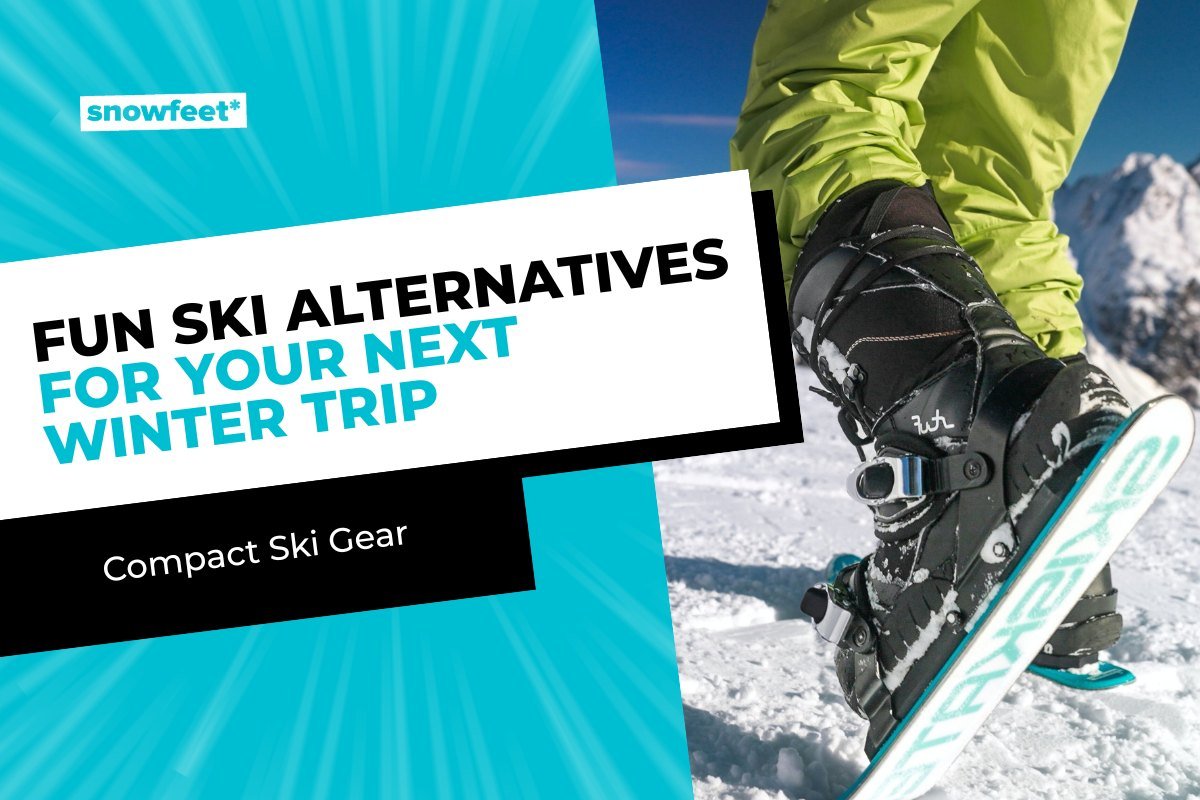
Snowfeet* offers a range of gear to suit different styles and terrains. The original Mini Ski Skates (38 cm) are a great entry point, starting at $160. These come with a fiberglass core and can be used with regular winter shoes or snowboard boots - no need for specialized ski boots. Perfect for beginners who want to skate on snow with ease.
Looking for something different? Check out the 44 cm Skiskate with a wood core, priced from $440 and boasting a 5.0-star rating. Or go for the 50 cm fiberglass-cored model, available from $199 with a 4.9-star rating.
For steeper slopes, the Skiblades are a solid choice. The 65 cm version starts at $499, while the 99 cm model is priced at $540 - both rated 5.0 stars. If you're after something closer to traditional skiing but still compact, try the 120 cm Short Skis for $775. They combine the feel of classic skis with Snowfeet*'s signature agility.
Snowfeet* vs Traditional Skis and Snowboards
Here’s a quick breakdown of how Snowfeet* gear compares to traditional skis and snowboards:
| Feature | Snowfeet* Gear | Traditional Skis | Snowboards |
|---|---|---|---|
| Learning Speed | Quick to pick up, especially for skaters | Slower; requires more practice | Slower; adapting to a sideways stance takes time |
| Control & Maneuverability | Extremely nimble and easy to handle | Less agile, especially for beginners | Demands a different balance technique |
| Portability | Lightweight and easy to carry | Bulky; often needs racks | Bulky; usually requires special bags |
| Boot Compatibility | Works with regular winter shoes or snowboard boots | Requires heavy, specialized boots | Needs specific snowboard boots |
| Base Width | Wider base for added support | Typically narrower | Wide base but requires precise edge control |
| Physical Effort | Minimal effort needed for carving | More strength required | Significant leg strength needed |
Snowfeet* puts it simply:
"Skiboards are amazing skis for beginners and even for skiers with knee injuries, since it doesn't take too much of strength to carve or take turns."
With over 50,000 riders worldwide and 90% positive reviews from 2,239 customers, it’s clear that Snowfeet* gear delivers on its promises.
Now that the gear options are covered, let’s look at how to pair them with the right boots and bindings for the best experience.
Choosing Boots and Bindings
One standout feature of Snowfeet* gear is its compatibility with various footwear. Many models work seamlessly with regular winter shoes or snowboard boots, saving you the cost of specialized ski boots.
For the best performance, pick boots that offer strong ankle support and have a stiff sole. Snowboard boots are a great choice since they’re designed for excellent edge control. If you’re using winter shoes, make sure they’re waterproof and have a firm, supportive sole - overly flexible shoes can make balancing tricky.
Snowfeet* gear also comes with adjustable bindings, letting you customize the fit for your specific footwear. Make sure the straps are snug but not too tight, and give your setup a test run on flat terrain before tackling steeper slopes. A little preparation goes a long way toward a smooth ride!
Body Position and Balance
How to Stand Correctly
Getting the right stance on Snowfeet* is simple - imagine you're ice skating or inline skating. Unlike skiing, where you lean forward with parallel skis, Snowfeet* calls for a front-to-back balance approach.
Here’s what to do: keep your legs flexible and about shoulder-width apart. Bend your knees slightly and lean your upper body forward just enough to center your weight. This posture gives you the freedom to move without the bulk of traditional ski gear. As Snowfeetstore explains:
"You have to keep the front-back balance, so it feels very natural to those who play ice hockey, ice skate, or even use inline skates. You are able to move freely as opposed to wearing heavy clunky skis."
For extra stability, try placing one foot a little ahead of the other. When doing a hockey stop, make sure your weight is evenly distributed. And here’s a tip: stay loose! Tensing up can make it harder to maintain control and balance.
Once you’ve nailed your stance, it’s time to fine-tune by avoiding some common pitfalls.
Common Mistakes to Avoid
Everyone makes mistakes at first, but knowing what to watch out for can save you time and frustration. One common misstep is spreading your feet too far apart. A compact, balanced stance works best.
Another frequent issue is leaning too far forward, which might feel natural if you’re used to skiing. But with Snowfeet*, there’s no extra ski length to support you, so leaning too much forward can send you tumbling. Instead, aim for an upright posture, keeping your weight centered over the middle and back of your feet. And when stopping, don’t dump all your weight onto one foot - balance is everything.
Adjusting to the shorter design of Snowfeet* can be tricky at first, but correcting these habits early will make the learning process much smoother.
Balance Drills for Beginners
Start on flat terrain and try skating movements, like a hockey player, to get a feel for the balance. Practice shifting your weight from side to side - this helps build muscle memory, strengthens your core, and improves ankle stability. While standing on your Snowfeet*, shift your weight between feet and notice how the gear responds. You can also work on skating strides: push off with one foot and glide on the other, just like ice skating.
These drills make the most of Snowfeet*’s agility and help you pick up the technique faster.
For extra prep off the slopes, try exercises like single-leg squats or balance board drills. These will boost your stability and confidence before you tackle steeper terrain.
sbb-itb-17ade95
Learning Techniques Step by Step
Starting on Flat Ground
Before hitting the slopes, make sure your Snowfeet* are securely attached to your waterproof, supportive shoes. For ski slopes, snowboard boots are a solid choice, while winter shoes work great for hiking trails or sledding hills.
Once you're set up, head to a flat, snowy area to get started. The best way to move is by skating - kind of like a hockey player. This helps you get a feel for how your Snowfeet* respond to your movements. Keep your legs about shoulder-width apart, bend your knees slightly, and lean your upper body forward just enough to center your weight. Placing one foot slightly ahead of the other can give you extra stability.
The Snowfeet Team sums it up nicely:
"Not really, it is actually pretty easy. It is the same as learning to ski or skate. It takes some time but you will definitely have a lot of fun."
Take your time and keep practicing. It won't take long before you start feeling comfortable.
Gliding, Turning, and Stopping
Once you've got the hang of flat-ground skating, it's time to work on gliding, turning, and stopping. As you pick up speed, practice making quick, controlled turns. For stopping, try a hockey stop: push the edges of your Snowfeet* into the snow while evenly distributing your weight. This technique is essential for handling different types of terrain and will boost your confidence as you prepare for steeper slopes.
Stopping with Snowfeet* can be trickier than with regular skis, but the compact design keeps you closer to the ground, making falls less intimidating. To slow down more gradually, use the heel brake. When practicing the hockey stop, focus on keeping your weight balanced over both feet - this is different from traditional skis, where you might shift your weight to one side.
Moving to Steeper Slopes
After you've nailed gliding and turning, start testing your skills on gentle slopes. Look for wide, well-groomed green runs to build confidence. Snowfeet* work best on compact, groomed snow, so steer clear of deep powder or very steep slopes until you're ready.
When you're feeling more confident, try tackling a tougher run twice. The first attempt is usually the hardest, but going back for a second round can make the experience feel more manageable. Another great way to ease into harder terrain is by practicing on challenging sections within easier runs. For example, look for a short, steep stretch - like a 130-foot red-like section on a blue run - to practice tighter turns without committing to an entire difficult slope.
Pay attention to snow conditions and aim for optimal times. Freshly groomed pistes in the morning are ideal, especially early in the winter season. Later in the season, stick to the window between 10:00 AM and 2:00 PM to avoid icy or slushy conditions. Regularly waxing your Snowfeet* helps keep snow from sticking and sharpens the edges, giving you better control on hardpack. Their compact size makes quick adjustments easier, giving you the confidence to handle higher speeds and steeper terrain as you improve.
Mindset and Safety Tips
Developing a Confident Mindset
Once you've polished your technique, the next step to conquering the slopes is building the right mindset. Often, the biggest challenge isn't the terrain - it's the doubts swirling in your head. As Style Altitude puts it, "fear is only in your head. Lack of confidence is a self-created illusion of failure. And it can be overcome." The trick? Be kind to yourself. Pick runs that align with your current skill level; there’s no need to dive into something that feels overwhelming.
Push yourself, but stay within your limits. Take on challenges you can reasonably handle - like a slightly steeper section on a familiar trail - instead of jumping straight into the toughest runs. Skiing with supportive friends or even someone less experienced can also help. Guiding someone else can do wonders for your own confidence.
When faced with a tough moment, lean on positive self-talk. Tell yourself, "I've got this", focus on steady breathing, or hum a tune to lighten the mood. Skip the alcohol before or during skiing - it’s not worth the risk. Most importantly, reconnect with the simple joy of gliding down the snow. As the Snowfeet Team puts it, "If you don't Snowfeet* like a pro for the first time, just don't give up and keep on trying. It may take some time to get used to not having the length of regular skis on your feet. However, you'll surely get into it quicker than you might think!"
How to Structure Your Practice Sessions
A great practice session has three parts: warming up, focused skill work, and free practice. Start on flat ground. Spend about 10–15 minutes skating around to get your muscles moving and to reacquaint yourself with how your Snowfeet* respond before hitting the slopes.
Next, dedicate 30–45 minutes to honing one or two specific techniques, like mastering your hockey stop or refining your weight distribution. Focus on the skills that gave you trouble last time. Then, wrap up with some free-riding. This is your chance to apply what you’ve practiced without the pressure of drills. The Snowfeet Team encourages, "Practice makes perfect, so don't give up and start over and over again until you're a pro!"
This simple structure helps you improve while keeping things fun and safe.
Staying Safe on the Slopes
Safety starts with the right gear. Waterproof boots with solid ankle support are a must - snowboard boots work perfectly on ski slopes. Always stick to terrain that matches your skill level. Snowfeet* work best on packed or groomed snow, so steer clear of deep powder until you’ve gained more experience.
Snowfeet*'s compact design offers another safety advantage. Being closer to the ground gives you better control and lowers the risk of catching an edge. Snowfeet* also notes, "Falling is usually safer compared to skiing or snowboarding."
To keep your Snowfeet* in top shape, dry the metal edges after each use and wax the base regularly - ideally every day during a ski trip. Sharp edges mean better control, which directly boosts your confidence on the slopes.
Conclusion
Getting comfortable on the slopes starts with gear that’s lightweight and easy to handle. Snowfeet* products are designed to simplify your skiing experience with their compact size - ranging from just 38 to 120 cm compared to traditional skis - making turns feel natural and control effortless.
And this isn’t just marketing talk; it’s backed by thousands of happy users. With 4.9 out of 5 stars from over 5,500 verified reviews, people are raving about how quickly they’ve adapted to these shorter skis. Michael Hirsch shared his experience:
"In a couple of descents I had them mastered and their short length helped me better control my daughters who were learning to ski"
Another user, Karen Pierson, saw a big change in her partner’s confidence:
"She tried the Snowfeet and they made a big difference in making turns and maneuvering on the slopes. She actually enjoyed coming down the Blue intermediate trails with her kids instead of being afraid of them and her confidence level has soared!"
By ditching the bulk and complexity of traditional gear, Snowfeet* helps you avoid early fatigue and reduces the risk of injury, so you can enjoy longer, more carefree runs. It’s about keeping things simple so you can focus on what really matters - having fun.
Whether you’re a beginner or switching from traditional skis, Snowfeet* makes it easy to enjoy every moment on the slopes. With gear that’s designed for ease and confidence, you’ll be gliding down with a smile in no time. Winter sports should feel exciting, not intimidating - and Snowfeet* is here to make sure they do.
FAQs
How are Snowfeet easier to learn and maneuver compared to traditional skis?
Snowfeet are all about making your time on the slopes easier and more fun - especially if you're just starting out. Thanks to their small size and lightweight design, they give you more control, helping you stay balanced and nail those quick, sharp turns. That means less stress and a faster path to getting the hang of things compared to traditional skis.
Unlike long skis that can feel awkward and tough to maneuver, Snowfeet’s shorter length makes them super agile and versatile. They’re a great choice for anyone wanting to boost their confidence while enjoying a more relaxed, fun experience on the slopes - without the steep learning curve that often comes with standard ski gear.
What kind of footwear works best with Snowfeet gear for top performance?
Snowfeet gear works with most winter or snowboard boots, so you don’t have to buy special footwear. Just go for sturdy, snug-fitting boots that offer solid ankle support and keep your feet warm and dry. This way, you’ll stay comfortable and ready to take on the slopes while getting the most out of your Snowfeet gear.
Can I use Snowfeet in all snow conditions and on any terrain?
Snowfeet work best on groomed slopes, packed snow, and easy trails. They're perfect for skiers and snowboarders who want a fun, flexible way to enjoy smoother terrain. But keep in mind, they're not built for steep slopes, deep powder, or icy patches - those conditions call for more specialized gear.
To get the most out of Snowfeet, stick to well-maintained runs and take advantage of their quick, nimble feel!











Leave a comment
This site is protected by hCaptcha and the hCaptcha Privacy Policy and Terms of Service apply.