



















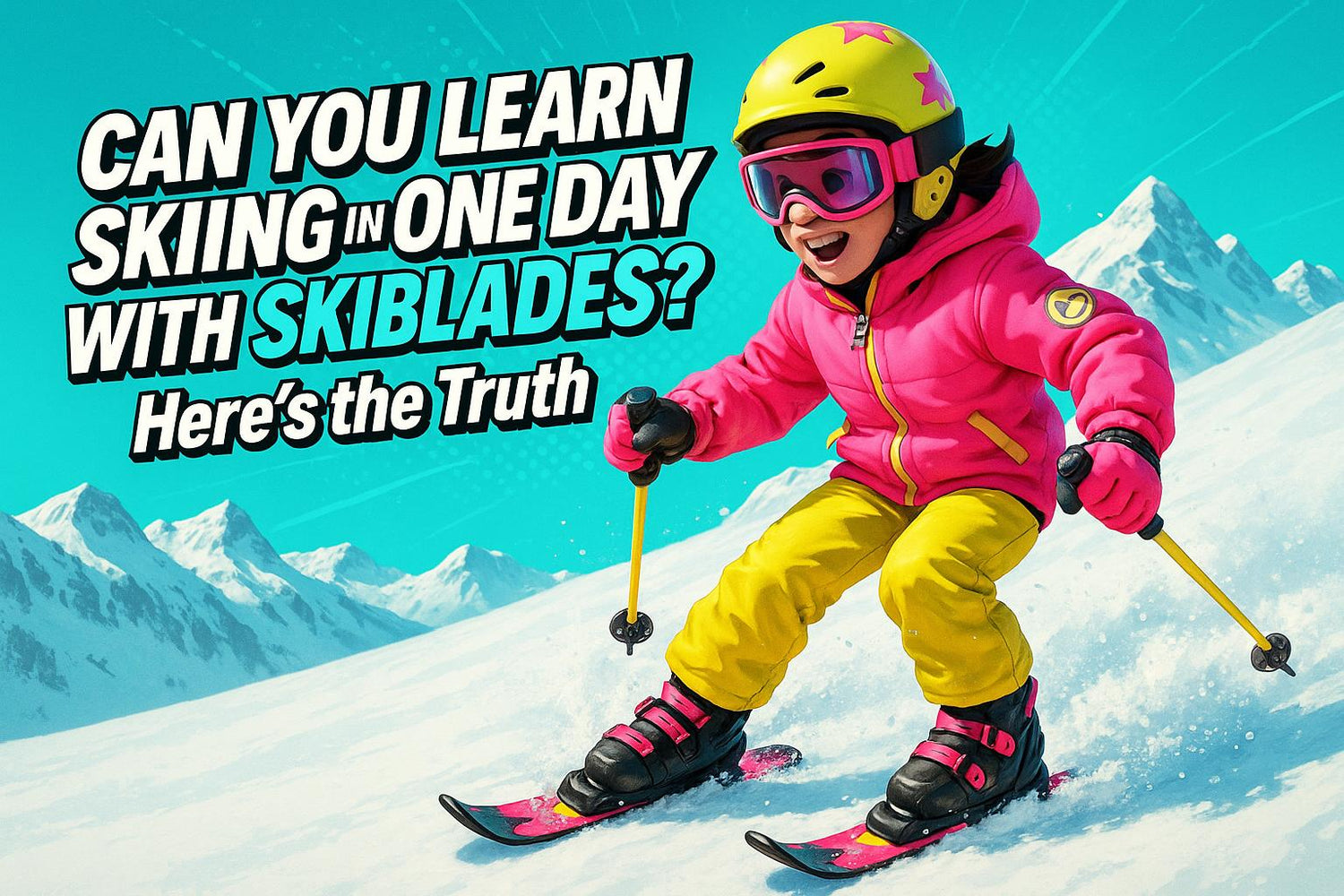
Yes, you can learn skiing in just one day with skiblades. These shorter, lighter skis make it easier for beginners to control their movements and feel confident on the slopes. Unlike traditional skis, which can feel bulky and take days to master, skiblades let you start linking turns and stopping safely in just a few hours.
Here’s why skiblades are ideal for beginners:
- Shorter Length (26–47 inches): Easier to handle and more responsive, similar to ice skating.
- Lightweight Design: Reduces strain on your legs, so you can practice longer without feeling wiped out.
- Faster Learning Curve: Most people can navigate green runs on their first day.
- Compatible with Regular Boots: Some models work with winter boots, saving you money on gear.
If you’ve got limited time or want a simpler way to enjoy skiing, skiblades are a great option. Start with a beginner-friendly model like the 26-inch version, and you’ll be cruising down slopes in no time. Ready to ditch the frustration and focus on fun? Let’s dive in!
How to Use Snowfeet* Snowblades 99 CM | Short Skis | Skiblades | Tutorial
Why Traditional Skiing Takes So Long to Learn
Watching a beginner tackle traditional skis can feel like watching someone try to walk in clown shoes for the first time - awkward and full of stumbles. Most ski schools suggest three to five days of lessons before a novice even starts to feel remotely confident on the slopes. The real issue isn’t how athletic you are; it’s the gear. And this is exactly where skiblades step in, offering a quicker and more enjoyable way to learn.
How Long Skis Make Learning Tougher
Traditional skis, ranging from 59 to 79 inches in length, are like trying to steer two oversized, heavy boards strapped to your feet. These long planks extend far beyond your body, making even basic movements tricky. Balance becomes a challenge, and the risk of crossing ski tips is almost guaranteed for beginners.
The weight and bulk of these skis demand a lot from your legs. Controlling them takes serious effort, leaving many beginners with sore knees and tired muscles after a day of constant falls and recoveries.
Then there’s edge control, which is a whole other beast. Traditional skis are built with a deep sidecut designed for smooth, carving turns at high speeds - moves that are way out of a beginner’s league. To make even the simplest turn, you need to master precise body positioning and weight shifts, which can feel as complicated as solving a Rubik’s Cube.
On top of all this, the sheer size and complexity of the equipment can be intimidating, especially for someone just starting out. And if you’re only on the mountain for a short trip, the learning curve of traditional skiing can feel like an uphill battle - literally.
The Struggles of Short Ski Trips
Let’s face it: most people can’t take weeks off to learn how to ski. If you’ve booked a long weekend at a resort, you’re probably working with just three or four days to figure it out. Unfortunately, traditional skis don’t make that easy.
Day one? You’re likely wrestling with the basics - getting up after a fall, figuring out how to stop, and just trying not to crash. By day two, maybe you’ve made it onto a green run, but chances are you’re still sliding down awkwardly, legs burning from the effort of controlling those long, clunky skis. By day three, you might see a little progress, but it’s often not enough to feel confident or truly enjoy yourself.
For casual skiers with limited time, this steep learning curve can be discouraging. Instead of building confidence and having fun, you’re stuck battling oversized gear, which might leave you questioning whether skiing is even for you. This is where Snowfeet* skiblades come in, offering a beginner-friendly alternative that’s easier to handle and way more fun right out of the gate.
What Are Skiblades and Why Are They Easier?
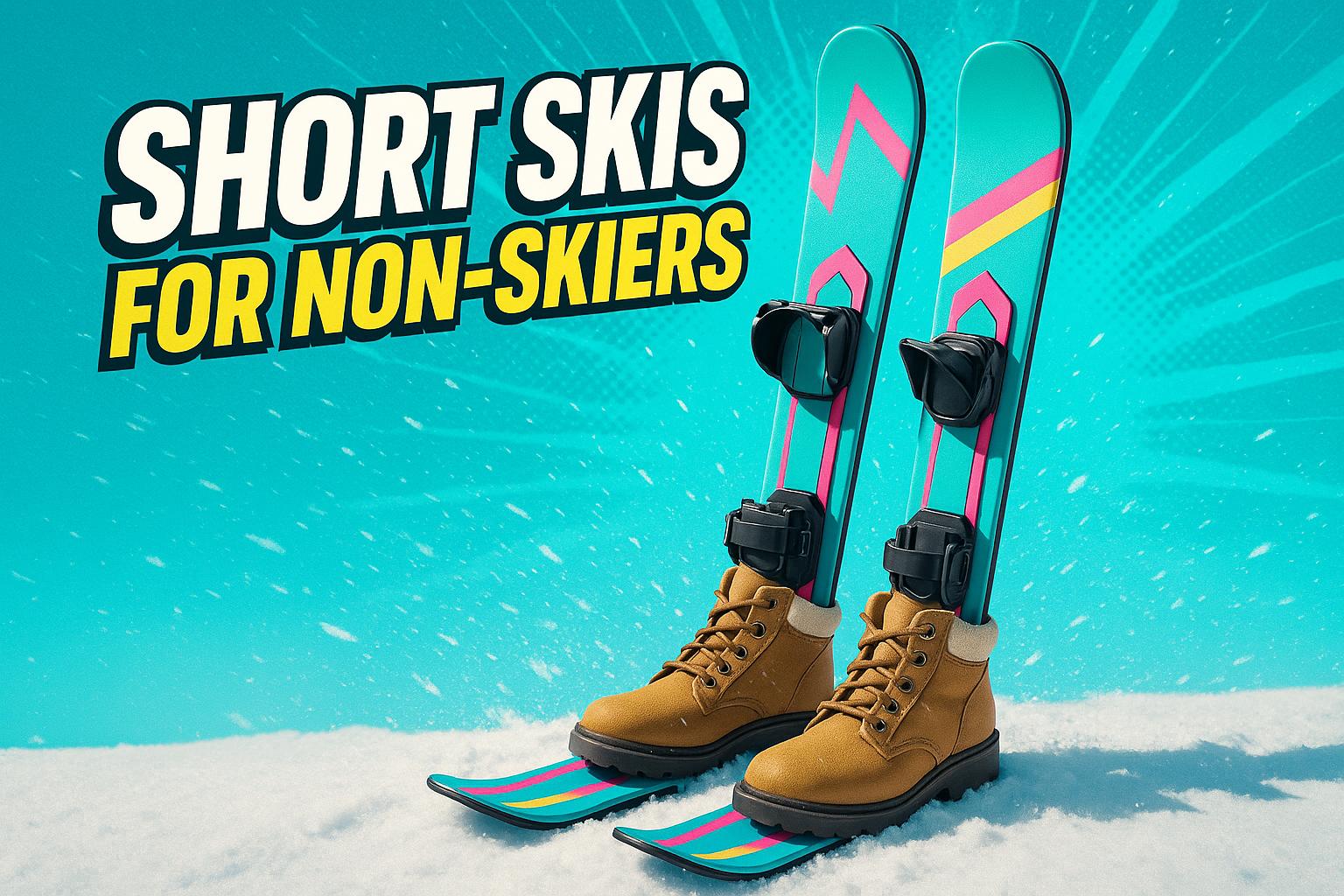
Think of skiblades like the compact car of skiing - small, agile, and perfect for tight spots. These short skis measure between 26 and 47 inches (65 to 120 cm), about half the length of traditional skis. That shorter size tackles one of the biggest challenges for beginners: control. Instead of wrestling with long skis that feel unwieldy, skiblades keep things simple and manageable.
Because they’re closer to your natural body dimensions, skiblades feel intuitive right away. You can turn, stop, and adjust without the delay that comes with handling longer skis. With traditional skis, your brain has to account for all that extra length trailing behind you. Skiblades cut out that hassle, making them a beginner’s dream.
What makes skiblades even better is how they eliminate the common frustrations of traditional skiing. Forget about crossed tips or struggling to manage long, heavy skis. Skiblades give you instant feedback, making it easier to learn and improve quickly.
How Skiblades Are Built: Shorter, Lighter, Easier to Control
The secret to skiblades lies in their design: shorter skis mean less weight, less effort, and way more control. A typical pair of skiblades is significantly lighter than traditional skis, which reduces strain on your legs and helps you stay on the slopes longer without feeling wiped out.
Turning is a breeze. With traditional skis, you have to shift your weight across a long surface and wait for the skis to respond. Skiblades react instantly because there’s less material to move. A simple weight shift is all it takes to initiate a turn.
Stopping is just as easy. The shorter edges make it simple to dig in and brake, even for total beginners. The snowplow stop - often a challenge with long skis - becomes straightforward with skiblades. You can master this essential safety skill right from the start.
In crowded areas or narrow trails, skiblades are a game-changer. Traditional skis can feel bulky and awkward in tight spaces, making you constantly worry about bumping into others. Skiblades, on the other hand, let you weave through busy spots with ease and confidence. No stress, just smooth navigation.
Why Snowfeet* Skiblades Work Better for Beginners
Snowfeet* has taken the advantages of skiblades and fine-tuned them for beginners. They offer three lengths - 26 inches (65 cm), 39 inches (99 cm), and 47 inches (120 cm) - to suit different skill levels and riding styles.
- 26-inch (65 cm) model ($635): Perfect for beginners. These are so short they feel like an extension of your feet, giving you complete control from your very first run. They’re ideal for carving, snow parks, or just learning the basics on groomed trails.
- 39-inch (99 cm) model ($675): A versatile choice that balances ease of use with a bit more length for varied terrain and higher speeds. There’s even a powder-specific version for those ready to explore beyond the groomed runs.
- 47-inch (120 cm) model ($775): The longest option in the lineup, designed for skiers who’ve mastered the basics and want more performance without the bulk of traditional skis.
Another huge plus? Snowfeet* skiblades work with regular ski boots, snowboard boots, or even winter shoes, depending on the model. That means you don’t have to invest in expensive, specialized gear just to get started. You can literally try skiing with boots you already own. Plus, their portability is unbeatable. Skiblades fit in a backpack, so you can easily toss them in your car or take them on public transport - no need for roof racks or oversized luggage fees like with traditional skis.
Skiblades vs. Traditional Skis and Snowboards
When you compare Snowfeet* skiblades to traditional skis from brands like Rossignol or Salomon, the differences stand out. Traditional skis are designed for experienced skiers who already know how to carve and control long edges. For beginners, that kind of equipment can be overwhelming.
Snowboards aren’t much easier for first-timers. While they’re shorter than skis, learning to snowboard often means spending your first few days falling - hard. Your body has to adjust to being strapped in sideways, which feels unnatural at first. Skiblades, on the other hand, let you face forward in a stance that feels natural and intuitive.
The time it takes to get comfortable says it all. Traditional ski schools usually recommend three to five days of lessons before you’re ready for blue runs. Snowboarding? Similar timeline, with plenty of falls along the way. But with Snowfeet* skiblades, beginners often feel confident on green runs within hours. That’s because the equipment is designed to match your skill level, not overwhelm you.
Edge control, a skill that takes weeks to master on traditional skis, becomes manageable almost immediately with skiblades. The shorter edges respond to even subtle weight shifts, so you’re not fighting with the equipment to make it work. Traditional skis require precise technique, but skiblades work with your natural movements.
And when it comes to speed, skiblades make learning safer. Traditional skis might be faster at expert levels, but for beginners, it’s all about finding a comfortable cruising speed. Skiblades help you get there quickly, building your confidence without scaring you off.
Cost is another win for Snowfeet*. Traditional ski packages - including skis, bindings, boots, and poles - can easily cost $800 to $1,500 or more. Snowfeet* skiblades start at $635 and often work with boots you already own, making them a far more budget-friendly option for newcomers to the sport.
All these benefits make skiblades an ideal choice for anyone looking to dive into skiing without the usual hurdles. Whether you’re a first-timer or someone looking for a simpler, more fun way to hit the slopes, skiblades have you covered. Snowfeet* makes it easy to pick the right model for your skill level and start enjoying the snow right away.
Can You Actually Learn Skiing in One Day With Snowfeet* Skiblades?
Yes, you can pick up the basics in just one day! With Snowfeet* skiblades, beginners can quickly grasp the essentials for safe and enjoyable skiing - like navigating gentle slopes, linking simple turns, and stopping with confidence.
Unlike traditional skis, which can feel bulky and overwhelming for first-timers, Snowfeet* skiblades are designed to make learning easier. They’re shorter and lighter, with lengths ranging from 26 inches (65 cm) to 47 inches (120 cm). This compact design keeps your center of gravity closer to your natural stance, making it easier to find your balance and get comfortable on the snow. The result? You spend less time struggling and more time actually skiing.
What Does "Learning in One Day" Really Mean?
Let’s be clear - learning in one day doesn’t mean you’ll be carving down black diamond runs by sunset. It’s about mastering the basics: controlling your speed with a snowplow (or "pizza"), linking a few smooth turns, and handling gentle slopes with ease. These foundational skills are enough to enjoy your first slope and build confidence.
Traditional skiing often requires several days to get the hang of things. Ski schools typically break the process into stages - starting with balance and stance, then moving on to turns, and finally tackling green runs. Snowfeet* skiblades streamline this process, allowing you to progress faster and enjoy the mountain sooner.
Why Skiblades Make Learning Easier
Snowfeet* skiblades are specifically crafted to address the common hurdles beginners face. Their compact size makes them highly responsive to even small shifts in weight, so turning feels natural and intuitive. The shorter length also makes it easier to maintain a wedge position for stopping, simplifying techniques like the snowplow.
Plus, their lightweight design means less fatigue, so you can get in more practice runs without feeling worn out. The more time you spend on the slopes, the quicker you’ll build confidence and start having fun.
Snowfeet* Skiblades vs. Traditional Skis: A Quick Look
Compared to traditional skis, Snowfeet* skiblades offer a faster, more accessible learning experience. They’re lighter, easier to handle, and more portable. On top of that, they’re budget-friendly, making them a great option for anyone looking to hit the slopes without breaking the bank. If you’re a beginner eager to learn skiing quickly, Snowfeet* skiblades might just be your perfect match.
sbb-itb-17ade95
How to Choose the Right Snowfeet* Skiblades
Snowfeet* skiblades are known for their ease of use and quick learning curve, but picking the right model is crucial to getting the most out of your time on the slopes. With three different sizes - 26 inches (65 cm), 39 inches (99 cm), and 47 inches (120 cm) - each designed for specific riding styles and comfort levels, there's something for everyone. Here’s how to decide which one suits you best.
What to Consider When Choosing Skiblades
Start with your physical build. If you weigh under 180 lbs, the 65 cm model is a great choice for its quick responsiveness, especially for smaller individuals. On the other hand, if you're taller than 6 feet or weigh over 200 lbs, the 99 cm or 120 cm models will offer better balance and stability.
Your fitness level is another factor. Shorter skiblades demand quicker, more agile movements, while the longer ones require a steadier balance. That said, all Snowfeet* models are much shorter and easier to manage than traditional skis, which are typically 150–180 cm long.
Do you have experience with ice skating, rollerblading, or skateboarding? If so, you’ll find it easier to master edge control and weight shifting, making the 65 cm or 99 cm models a good starting point. If you’re completely new to these types of activities, the 99 cm skiblades offer a balanced mix of stability and ease of use.
Finally, think about your choice of boots. The 65 cm model works well with regular winter boots, while the 99 cm and 120 cm models are designed for ski or snowboard boots, providing better ankle support and control.
Which Snowfeet* Model Fits Your Profile
- 65 cm Skiblades: Perfect for first-time skiers or casual users. They’re easy to control, turn effortlessly, and pair with winter boots you likely already own. These are ideal for building confidence quickly.
- 99 cm Skiblades: A great option for athletic beginners or anyone with skating experience. They balance agility and versatility, making them suitable for green runs and offering room to progress to more challenging slopes.
- 120 cm Short Skis: Best for returning skiers or confident athletes looking for a skiing experience closer to traditional skis. They provide excellent stability at higher speeds and perform well in varied snow conditions, all while being far easier to learn on than conventional long skis.
Snowfeet* Skiblades Model Comparison
| Feature | 65 cm Skiblades | 99 cm Skiblades | 120 cm Short Skis |
|---|---|---|---|
| Best For | First-time skiers, casual users | Beginners with skating experience | Returning skiers, athletic beginners |
| Boot Compatibility | Regular winter boots | Ski or snowboard boots | Ski or snowboard boots |
| Ideal Terrain | Green runs, snowparks | Green to blue runs, parks | Blue runs, varied conditions |
| Learning Curve | 2–4 hours | 3–5 hours | 4–6 hours |
| Portability | Fits in a backpack | Fits in a large backpack | Requires a ski bag |
| Price | From $635 | From $675 | $775 |
| Weight Range | Under ~180 lbs | 140–220 lbs | 160 lbs and up |
No matter which model you go for, all Snowfeet* skiblades deliver a fun and approachable skiing experience. Even the longest model is far shorter than traditional skis, making them easier to transport, quicker to learn, and more enjoyable to use.
If you’re still on the fence, the 99 cm skiblades are a solid choice. They strike a great balance between beginner-friendliness and room for growth, giving you the chance to enjoy skiing from day one while leaving plenty of space to develop your skills.
Your First Day: Step-by-Step Learning Plan With Snowfeet* Skiblades
Starting with Snowfeet* Skiblades is simple, and most beginners can see real progress within just a few hours. Thanks to their shorter length and quick responsiveness, these skiblades are easier to pick up than traditional skis. With the right approach, your first day can be fun and productive. Here’s a step-by-step guide to help you build confidence without feeling overwhelmed.
Step 1: Getting Comfortable on Flat Terrain
Begin your journey by spending about 30-45 minutes on flat snow. This is your chance to get familiar with how Snowfeet* Skiblades feel and move under your feet.
Stand in a balanced position: keep your legs shoulder-width apart, knees slightly bent, and one foot slightly ahead of the other. Keep your weight centered over the middle of your feet - there’s no need to lean forward like you would with traditional skis. Snowfeet* Skiblades work best when you stand naturally.
Use this time to practice simple movements. Try lateral skating motions to see how the skiblades respond and to develop muscle memory for balance and edge control. Once you feel steady and comfortable, you can move on to practicing basic turns and stops on gentle slopes.
Step 2: Mastering Basic Turns and Stops
One of the best things about Snowfeet* Skiblades is how easy they make stopping and turning. Their shorter length allows you to pick up these essential skills much faster than with traditional skis.
Start by practicing controlled stops. Dig in the edges of your skiblades (or use a heel brake, if available) until stopping feels second nature. For turns, shift your weight to the opposite leg - use your left leg for right turns and your right leg for left turns. Because of their design, the skiblades will respond almost instantly to your movements.
To control your speed, try pointing the tips of your skiblades inward and pushing on the inside edges. This creates resistance and helps you stay at a comfortable pace. As you gain confidence, gradually straighten the skiblades to pick up speed.
Spend at least an hour practicing these movements. Once you’re comfortable stopping, turning, and controlling your speed, you’re ready to take on a beginner-friendly slope.
Step 3: Tackling Green Runs
Now it’s time for the exciting part - putting everything together on a gentle slope. Green runs at most US ski resorts are perfect for beginners, offering smooth, easy terrain for your first real experience.
Start with the easiest green run you can find. Focus on linking your turns together using the weight-shifting technique you practiced earlier. Connecting S-shaped turns will help you control your speed. When using a ski lift, let the natural momentum guide you for easy loading and unloading.
Stick to groomed slopes during your first day. Snowfeet* Skiblades perform best on well-maintained terrain, so avoid areas with bumps, holes, or deep powder over 4 inches. Most ski resorts welcome Snowfeet* and other short skis, so you’ll have plenty of options to explore.
By the end of your first day, you should be able to navigate green runs with linked turns, control your speed, and stop when needed. That’s a huge milestone - one that often takes several days to achieve with traditional skis. Snowfeet* Skiblades’ lightweight and responsive design make this quicker learning curve possible.
Don’t forget to take breaks when needed. Your thighs and calves might feel tired as you’re using muscles in new ways. That’s a good sign - it means you’re learning and building the strength you’ll need for more advanced terrain down the line.
When Traditional Skis or Snowboards Work Better
Snowfeet* skiblades are a fantastic choice for beginners, but there are certain situations where traditional skis or snowboards take the lead. Knowing when to use which can make all the difference in your experience on the slopes.
Where Traditional Skis and Snowboards Excel
Traditional skis and snowboards truly shine in deep powder and high-speed scenarios. When you're dealing with ungroomed powder, the longer length of traditional skis helps spread your weight more evenly, giving you that much-needed float. And when speed is the name of the game, their stability and superior edge grip provide the control you need.
For activities like backcountry touring or ski mountaineering, longer skis are essential. They handle steep terrain and unpredictable conditions far better than shorter alternatives. Snowboards, on the other hand, dominate in half-pipes and big mountain freeriding, thanks to their fixed stance and ability to carve through challenging terrain.
That said, most beginners stick to groomed resort runs - where Snowfeet* skiblades really shine.
How Snowfeet* Handles These Situations
While traditional equipment excels in specific conditions, Snowfeet* offers a range of skiblades tailored to everyday skiing and evolving skill levels. With options designed for everything from beginner-friendly slopes to more advanced challenges, Snowfeet* ensures you're not stuck with one setup as you progress.
- 99 cm POWDER skiblades: If you're hitting resort powder, these are your go-to. They’re built to float better in softer snow, making them a great pick for the type of powder most beginners encounter on groomed runs. While not meant for extreme backcountry use, they’re perfect for resort conditions.
- 120 cm short skis: At almost 4 feet long, these provide added stability for steeper terrain and higher speeds without losing the responsive, nimble feel Snowfeet* is known for. They’re ideal for skiers looking to step up to more challenging runs.
- 99 cm standard skiblades: A versatile choice for intermediate skiers. These handle groomed runs with ease, perform well in terrain parks, and can even manage light powder. They’re a great all-around option that balances fun and performance as your skills grow.
- 65 cm skiblades: The best pick for absolute beginners. These are lightweight, easy to control, and make learning a breeze. Plus, they’re super portable. Once you’ve mastered the basics, you can move up to a longer model to match your growing confidence and tackle more varied conditions.
Whether you’re sticking to the bunny slopes or venturing into more advanced terrain, Snowfeet* has options to keep your ride fun and functional.
Conclusion
So, can you actually learn skiing in a day with skiblades? The answer is a pretty confident yes! Snowfeet* skiblades, with their compact size (ranging from 65 to 120 cm) and lightweight design, make skiing far more approachable. They let you pick up the basics - like turning, stopping, and managing your speed - in just a few hours.
Compared to traditional skis, which can take days (or even weeks) to get comfortable with, skiblades cut that learning curve way down. Their smaller size makes them easier to control and maneuver, so you can focus on improving your technique instead of wrestling with oversized gear.
Another bonus? These skiblades are super portable. They’re compact enough to fit in a backpack, meaning you can skip the hassle of lugging around bulky ski gear and get straight to the slopes.
There’s also a clear growth path. Start with the 65 cm model to get the hang of things, and as your skills improve, you can level up to the 99 cm or 120 cm versions for more advanced control.
Sure, traditional skis shine in deep powder or at high speeds, but for beginners sticking to groomed slopes, Snowfeet* skiblades are a game-changer. They’re forgiving, easy to handle, and make skiing less intimidating - plus, they’re just plain fun. You won’t have to deal with the usual fatigue or frustration that often comes with learning on standard gear.
If skiing has always seemed too tricky or time-consuming to learn, Snowfeet* skiblades might just be the perfect solution. They make skiing simple, enjoyable, and something you can actually master in a single day. Why not give them a try and see how fun and hassle-free skiing can be?
FAQs
Are Snowfeet* skiblades safer for beginners compared to traditional skis?
If you're new to skiing, Snowfeet* skiblades might just be your best friend on the slopes. Their shorter length makes them far easier to control compared to traditional skis, giving beginners a chance to build confidence without feeling overwhelmed. Plus, this added control can help reduce those dreaded wipeouts that come from losing balance or steering.
What’s more, these skiblades are lightweight and compact, which makes them less intimidating for first-timers. That means you can focus more on enjoying the ride rather than worrying about managing bulky equipment. If you want to ease into skiing without the steep learning curve that comes with standard skis, Snowfeet* skiblades are a great way to start.
How do I pick the right length of Snowfeet* skiblades for my first time skiing?
Choosing the right length of Snowfeet* skiblades comes down to your goals and comfort level. If you're just starting out and want something easy to handle with a quick learning curve, the 65 cm skiblades are a fantastic pick. They’re super nimble, making it easy to turn and build confidence on the slopes.
Looking for a bit more balance between control and stability? Go for the 99 cm skiblades. They strike a nice middle ground, giving you the best of both worlds.
If stability and a smoother ride are your priorities, the 120 cm skiblades are your go-to. They’re great for a steadier, more relaxed experience while still delivering solid performance.
Whichever length you go with, Snowfeet* skiblades are all about making skiing easier and more enjoyable - especially for beginners. Their short, lightweight design helps you feel in control, so you can focus on having fun out there.
Are there situations where traditional skis work better than Snowfeet* skiblades?
When it comes to certain situations, traditional skis can have the upper hand over Snowfeet* skiblades. They shine in deep powder, provide better stability at really high speeds, and are ideal for advanced techniques like carving or competitive racing. That’s because their longer length and specialized design are built for these demanding conditions.
But for the average skier just looking to have a good time, Snowfeet* skiblades bring something special to the table. They’re super versatile, easy to use, and incredibly portable. Whether you’re cruising on groomed slopes or packed snow, they’re a great option for quick learning and plenty of fun.











Leave a comment
This site is protected by hCaptcha and the hCaptcha Privacy Policy and Terms of Service apply.